When to Pick Tomatoes for the Best Harvest
Learn how to judge tomato ripeness by variety, color, feel, and harvest goal, plus when to pick before rain or frost and finish fruit indoors.
The quick answer: pick by color, feel, and what comes next
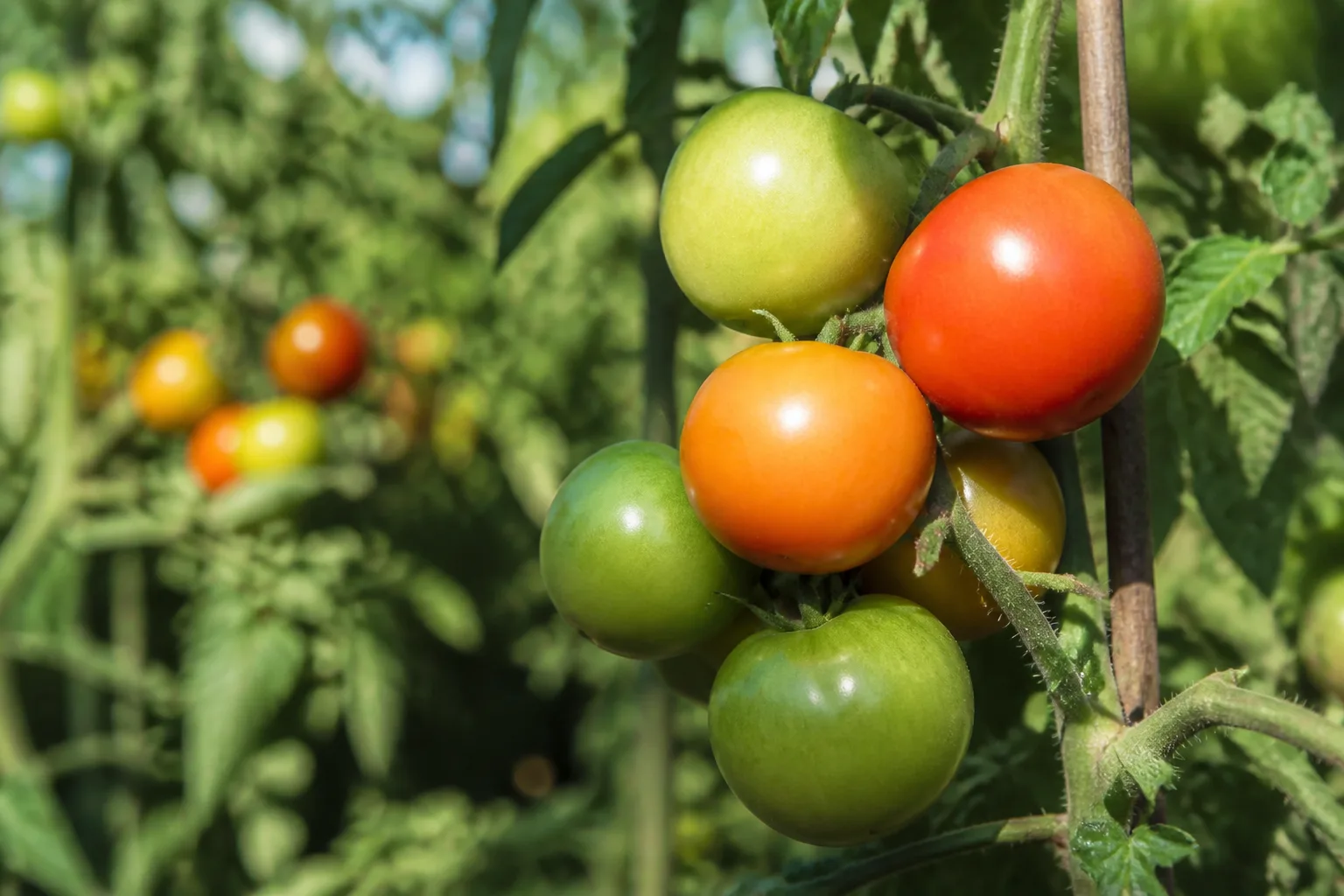
For a tomato you plan to eat today, wait until it has the mature color expected for its variety and gives slightly to gentle pressure. It should feel full and firm, not hard like an unripe fruit or soft and collapsing. Red is only the right color for red varieties; yellow, orange, pink, purple, striped, and green-ripe tomatoes all have their own finish.
You can also harvest a tomato earlier, once its first mature color appears. This is called the breaker stage. A breaker-stage tomato is mature enough to continue ripening indoors, so it is a practical choice before a storm, a trip away, pest damage, or a late-season frost. If the plant is healthy and the weather is mild, leaving fruit longer is also reasonable. The best picking point depends on whether you want a tomato for tonight, a fruit that can wait on the counter, or one protected from a risk in the garden.
Understand tomato ripeness before using the calendar
Seed packets give an estimated days to maturity, but that number helps you anticipate the first harvest; it does not tell you that a particular tomato is ready on a particular date. Variety, transplant size, temperature, sunlight, and garden conditions all affect the pace. As the estimate approaches, start checking fruit rather than counting down to one exact picking day. Penn State Extension describes six color stages that make the decision easier to see.
Mature green and breaker are different stages
At the mature-green stage, a tomato is near its expected full size but has not yet developed visible color on the skin. Some mature-green fruit can ripen after harvest, but it is harder for a home gardener to distinguish from a tomato picked too young. If the fruit is still small, hard, and uniformly dull green, it may stay green or ripen with poor flavor. For reliable indoor finishing, wait for a visible color break whenever conditions allow.
At breaker, the first patch of the variety’s mature color becomes visible, often near the blossom end opposite the stem. Penn State and Texas A&M AgriLife describe this as physiological maturity: the fruit has begun the ripening process and can continue changing color after it is picked. The first color might be pale yellow, orange, pink, or another shade, not necessarily red. Penn State Extension’s ripeness guide walks through these stages; Texas A&M AgriLife’s color-break advice explains why a breaker tomato can finish ripening off the plant.
Turning, pink, light red, and fully ripe
After breaker, the fruit passes through turning, pink, light red, and then the fully colored stage. Commercial color standards describe these as increasing portions of the skin changing color: breaker is just beginning, turning is roughly 10–30 percent, pink is 30–60 percent, light red is 60–90 percent, and red is more than 90 percent. Those percentages are useful labels, not a requirement to measure a homegrown tomato. The UF/IFAS tomato-handling guide reproduces the USDA stages and their color definitions.
Most gardeners can use the sequence without calculating percentages. A tomato showing a small blush can come indoors to finish; one that is mostly colored is close to eating ripe; one at its full cultivar color with a slight give is ready for the plate. Color tells you where the fruit is in the process, while firmness and variety help confirm what you are seeing.
Use four cues to judge a tomato on the vine
No single test works for every tomato. Use the variety’s expected color first, then check whether the fruit has reached a normal size and whether it has begun to soften. A quick look at the skin and stem helps you avoid harvesting a fruit that is damaged or already past its best.
Match the color to the variety
Check the seed packet, plant label, or a reliable variety description for the ripe color. A red slicer should turn red; a Sun Gold becomes orange; Cherokee Purple develops dusky purple-brown shoulders and redder undersides; Green Zebra remains green with warmer yellow stripes. Heirlooms and striped varieties can look uneven even when ripe, so compare with a photo of that exact cultivar rather than waiting for a uniform red surface.
Look for a change from the fruit’s earlier, flat green. Ripening often begins at the blossom end, but the pattern and contrast vary by variety. A green-ripe type may never show a dramatic red blush, so use expected mature color along with feel and size. Savvy Gardening’s tomato-harvest guidance also recommends checking a cultivar’s mature color instead of treating redness as the universal cue.
Check mature size and gentle firmness
The fruit should be close to the size and shape described for the variety. Size alone does not prove ripeness, but a full-sized fruit with a color change is more promising than a small fruit that has only been on the plant for a certain number of days. If you do not know the variety, compare it with another fruit from the same plant that has already ripened.
Touch the tomato lightly with one finger. A ripe fruit usually has a little give while still feeling resilient; a very hard tomato is earlier, and a mushy spot suggests overripening or damage. Avoid squeezing hard. Pressure bruises fruit even when the skin looks intact, and repeated squeezing does not make it ripen faster.
Look at the skin and stem without pulling
Many ripening tomatoes develop a smoother, slightly glossy skin, while immature fruit can look dull. Treat this as a supporting clue, since some cultivars have naturally matte, striped, or dusky surfaces. Check for splits, punctures, soft spots, or leaking juice; any fruit with an open crack is a harvest-now candidate because damage will not heal on the vine.
Do not make the “it should twist off easily” test your main measure. Some ripe varieties release readily and others stay attached; yanking can break a branch or knock nearby fruit to the ground. A tomato’s own foliage also has a strong smell, so fragrance is a weak cue in a dense plant. If color and feel say the fruit is ready, use clean snips to remove it.
Choose a harvest stage for your goal
The usual choice is between letting a tomato finish on the plant and picking it at color break or later to finish indoors. Both can give you good fruit. Penn State Extension and Texas A&M AgriLife describe breaker-stage tomatoes as mature enough to complete ripening; the University of Georgia notes that gardeners can leave them longer when they are eating the harvest at home and conditions are favorable. Taste preference is real, but no single harvest day is best for every garden.
Pick fully colored fruit for eating now
If you want to slice a tomato for dinner, choose one that has reached its characteristic color and yields slightly to a gentle touch. A healthy vine can continue supplying water while the fruit finishes, and picking close to mealtime gives you the pleasure of eating it warm from the garden. For many people, that is the point of growing tomatoes in the first place.
The tradeoff is that a fully ripe tomato is softer and more vulnerable to cracking, insects, birds, and bruising. It also has less time before it becomes overripe. Check the plant every day or two once the first fruit colors, and more often during a spell of hot weather or rain. This is especially helpful for large beefsteak fruit, which can split or sag on the vine when left until very soft.
Pick at color break for a steady, safer harvest
Choose breaker or turning fruit if you cannot visit the garden daily, need to carry tomatoes somewhere, or see a weather or pest risk developing. Place the fruit on a dry counter to finish at room temperature. Texas A&M AgriLife reports that harvesting at color break reduces exposure to cracking and pests while allowing the tomato to complete its color and flavor development. The University of Georgia’s guidance on breaker-stage harvest makes the useful distinction: the fruit is mature at breaker, but a home gardener can leave it longer when there is no reason to protect it.
If you are unsure how the taste compares, try a small test with two similar tomatoes from the same plant: pick one when its color first breaks and leave the other until full color. Let the first finish indoors, then taste them at the same temperature. That gives you a personal answer for your variety and conditions, without risking the whole crop on a fixed rule.
Pick cherry tomatoes one fruit at a time
Do not wait for an entire cluster of cherry or grape tomatoes to turn color together. Fruits on one truss often ripen at different times, so remove each one when it reaches its mature shade and is firm with a slight give. If you wait for the last tomato in the cluster, earlier ones may split or soften before you pick them.
Once the first cherry tomatoes begin to ripen, check the plant daily or every other day, especially after rain. Small fruit can change quickly, and dense leaves hide ripe clusters. Snip a small section of stem when individual fruit are tightly packed; this helps avoid squeezing or tearing the neighboring tomatoes. Savvy Gardening’s practical advice for cherry tomatoes likewise emphasizes picking by individual fruit rather than waiting for the whole truss.
Adjust harvest timing for weather and garden risk
Weather changes the value of waiting. If a tomato is almost ready and the next few days look calm, leaving it on the plant is a reasonable option. If heavy rain, high heat, hungry animals, or the first frost is approaching, protecting mature fruit may matter more than waiting for the final color change.
Before heavy rain, heat, or pest damage
After a dry spell, heavy rain can drive a sudden surge of water into nearly mature fruit and cause radial cracks or rings around the stem end. Pick ripe, nearly ripe, and breaker-stage tomatoes before the rain when the forecast calls for a substantial soak. Prioritize fruit that is already blushing, softening, or showing hairline cracks. A very small, hard green tomato is not suddenly ready just because it may rain.
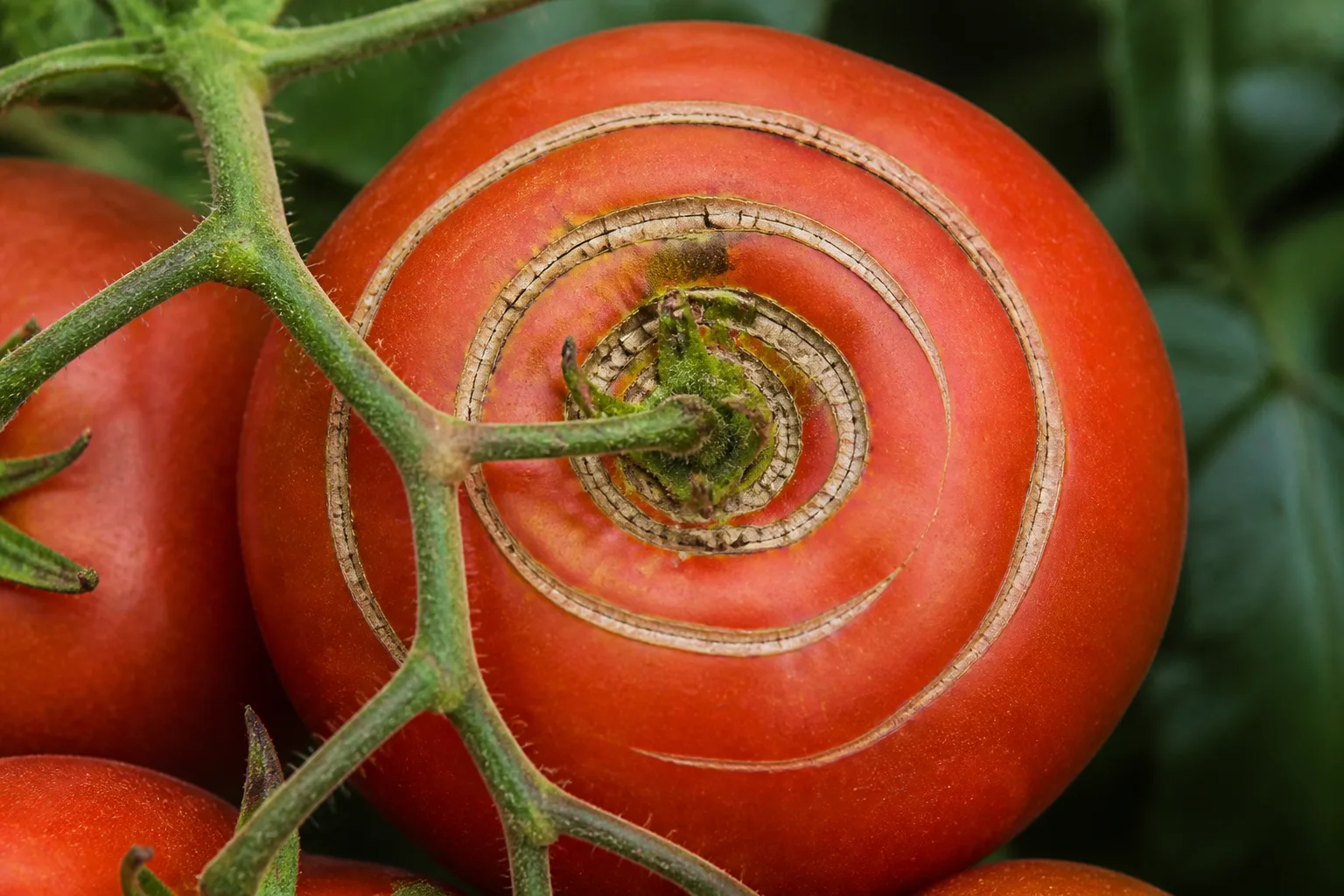
During sustained heat, tomato color development can slow or become uneven; Penn State’s harvest guidance notes that temperatures above about 85°F can slow or stop ripening. If fruit has reached breaker and a hot spell is forecast, you can bring it inside to finish in a more stable place. Check exposed fruit for sunscald and pick any that are damaged or split. For an ongoing cracking issue, see the guide to why tomatoes split before ripening.
Pest pressure is another reason to shorten the time ripe fruit stays outdoors. Pick fully colored tomatoes when you notice peck marks, insect feeding, or repeated losses. If wildlife is taking fruit before it ripens, breaker-stage harvest is a practical compromise while you improve exclusion or protection around the plants.
Before frost or the end of the season
Before a frost, harvest tomatoes that have reached breaker or a later stage and bring them inside. If the plant still carries mature-green fruit, pick the largest, full-sized tomatoes with glossy skin and no damage; some will finish indoors, but results are less predictable than with a visible color break. Tiny, hard fruit may be better used green rather than kept for ripening. The first frost can damage both plant and fruit, so check your local forecast and use the evening before a cold night as your decision point. For plant protection and late-season options, see how to protect tomato plants from frost in fall and how to ripen green tomatoes.
Do not uproot or strip a healthy plant just because the calendar says harvest season is nearly over. Pick fruit by maturity and forecast, then leave sound green tomatoes that still have time to develop. If frost is imminent, gather the best candidates and sort them indoors rather than gambling on the whole vine.
Harvest tomatoes without bruising fruit or vines
Harvest when the fruit is dry if you can, and bring a shallow basket or clean container to the plant. Support a branch with one hand and use clean garden snips or small pruners to cut the stem just above the calyx, the green leafy cap. Leave a short stem if that makes handling easier, but trim sharp stems that could puncture neighboring fruit in a basket.
Avoid pulling down on a cluster or dropping fruit into a deep bucket. Soft, ripe tomatoes bruise from their own weight when piled high. Set them down gently, keep them out of direct sun while you finish picking, and separate cracked or damaged fruit so it does not rub against sound tomatoes. Gardening Know How’s tomato harvest guide also recommends snips for a clean cut, particularly when twisting could damage the plant or fruit nearby.
Sort, store, and finish tomatoes after picking
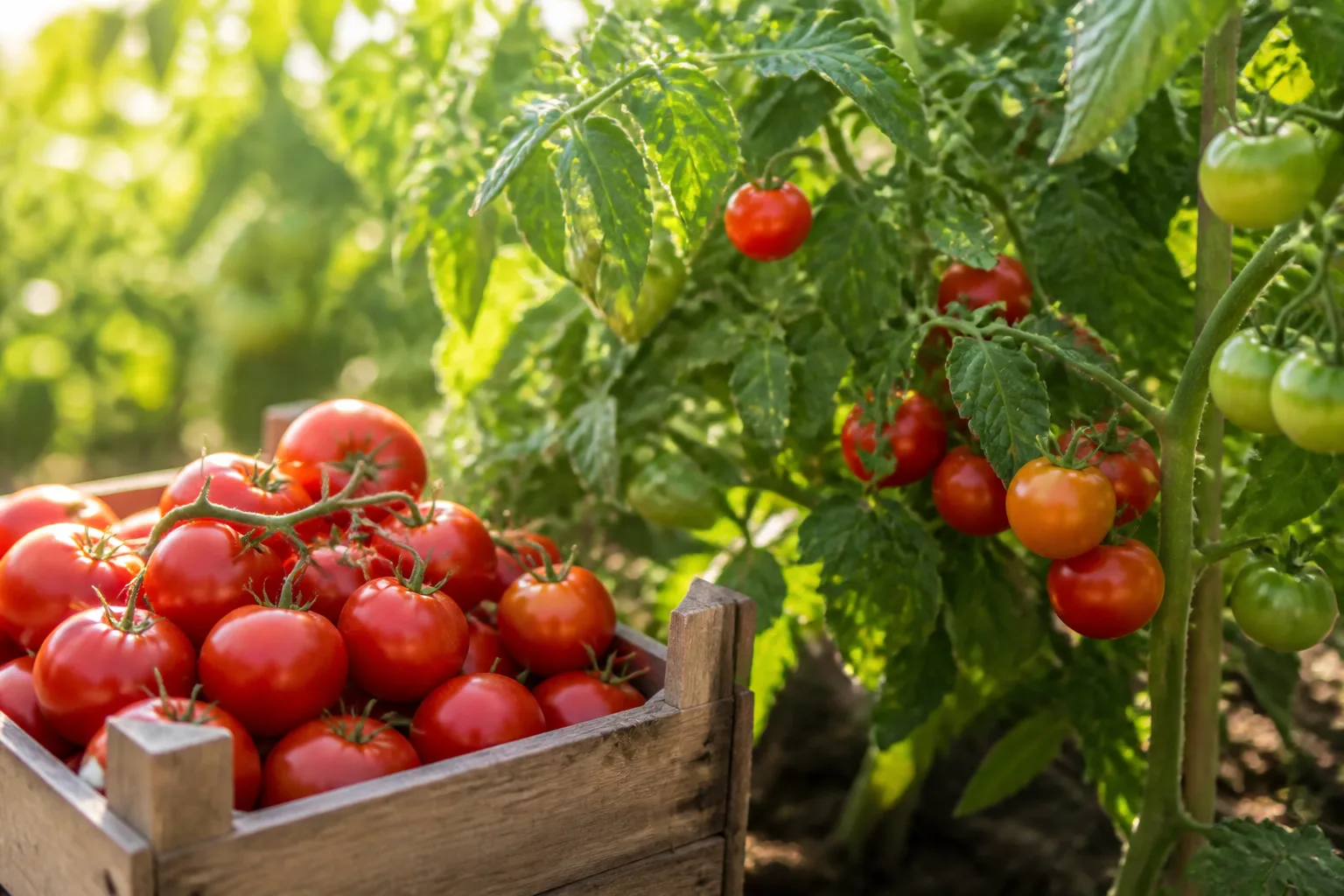
Sort the harvest into three groups: ready to eat, sound fruit that needs more color, and fruit with cracks or blemishes. Eat or cook fully ripe tomatoes promptly. For breaker and turning fruit, arrange tomatoes in a single layer on a counter or shallow tray at normal room temperature, away from hot sun, a cold window, and a heater. Leave a little space between fruits so you can inspect each one.
Check the tray daily and remove fruit as it colors or softens. Discard fruit that begins to leak, develops mold, or becomes mushy; a sound tomato with a shallow dry scar can be used sooner, but open cracks shorten its keeping time. A paper bag can help a small batch ripen faster by holding the naturally produced ethylene near the fruit, but leave the bag loose and check it often so moisture does not build up. For larger batches, a shallow box with airflow is easier to manage.
Avoid using direct sunlight as a ripening trick. A bright window can heat fruit unevenly, while light itself is not required for ripening. The Texas A&M AgriLife storage guide recommends letting ripening tomatoes finish on the counter and spacing them for air circulation. Refrigeration can extend the life of fully ripe fruit if you cannot eat it in time, but it may reduce flavor and texture; allow it to warm before serving. For more options and limits, see how to ripen green tomatoes.
Common tomato-picking mistakes to avoid
Treating days to maturity as a harvest appointment. That estimate tells you when to start looking, not the exact day to pick. Weather, transplant age, and cultivar shift the schedule, so judge each fruit on the plant.
Waiting for red on every variety. Use the mature color for that specific tomato. Purple, yellow, orange, striped, and green-ripe cultivars can be ready while they still look unlike a standard red slicer.
Picking any green tomato for indoor ripening. Breaker-stage fruit is a safer bet because color change has started. Large, mature-green fruit can sometimes ripen, but small, hard, immature tomatoes often remain bland or fail to color well.
Pulling fruit off by force or stacking it deeply. A tug can break the vine, and a heavy pile can bruise fruit at the bottom. Snip stems and carry tomatoes in a shallow basket.
Leaving ripe fruit until it feels very soft. A little give is enough. Once the tomato becomes mushy, split, or leaky, quality is declining and the chance of rot rises. Pick at the stage that suits your meal plan and check again soon.
Conclusion
For the best harvest, match the fruit’s color to its variety, confirm it has reached normal size, and feel for a slight give without squeezing. Pick fully colored tomatoes when you want to eat them now; pick at breaker or later when rain, heat, pests, a trip, or frost makes waiting risky. Snip fruit gently, sort it by ripeness, and let sound tomatoes finish indoors at room temperature. Once color begins, frequent short checks beat a calendar guess.