When to Mow Your Lawn After Seeding
Learn when to mow your lawn after seeding using grass height, root tests, dry soil, mowing height, and species-specific timing.
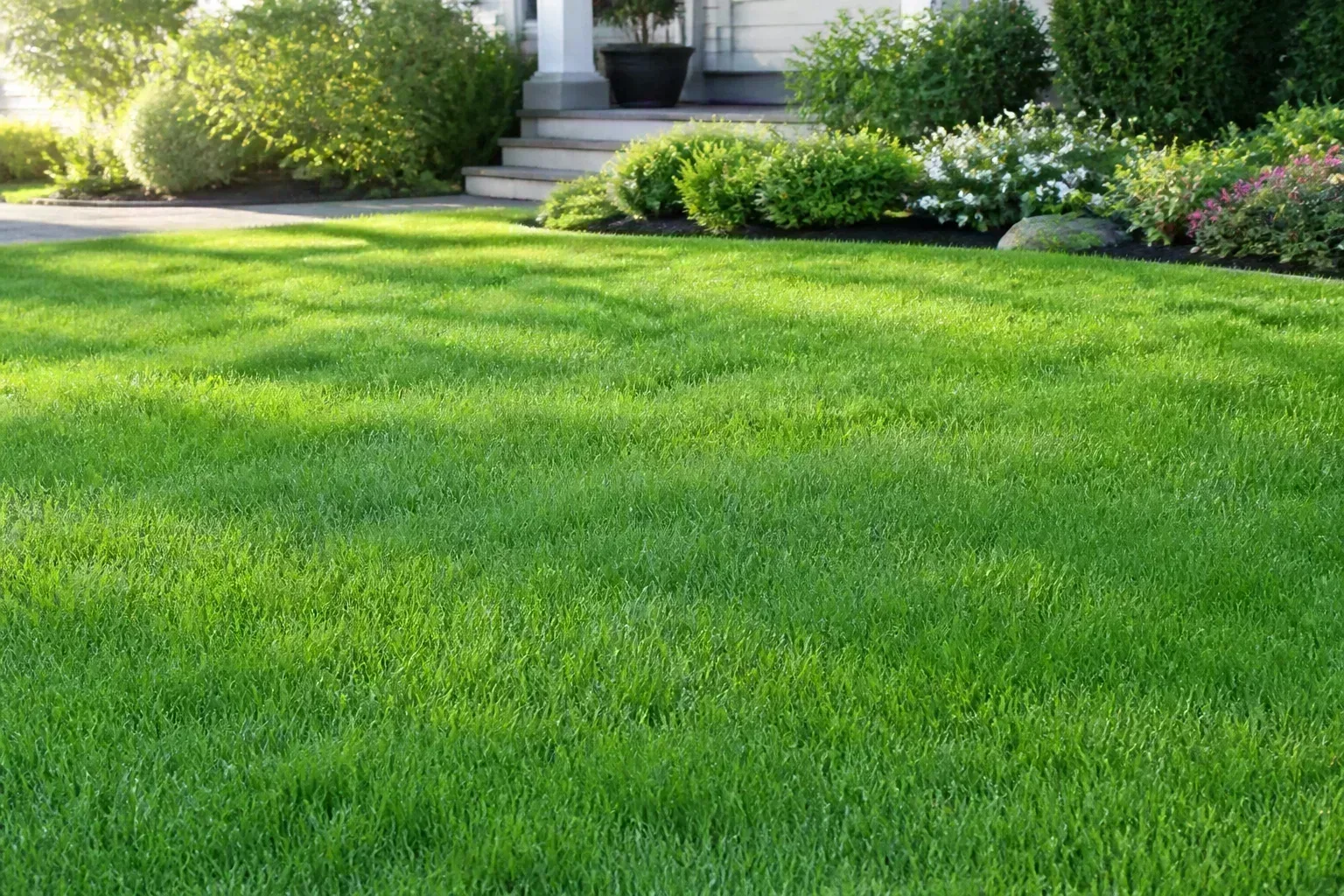
The safest time to mow a seeded lawn is when the new grass is tall enough for its normal cutting height, anchored well enough to resist a gentle pull, and growing in soil that will not rut under the mower. That may be roughly two to four weeks for fast-growing ryegrass or fescue, four weeks or more for slower species, or close to two months when cool weather, drought, shade, or a slow-germinating blend holds the lawn back. The calendar is a useful estimate; it is not the decision.
Treat the first mowing as an establishment test, not a routine appointment. Penn State Extension recommends starting when the plants are no more than one-third higher than the desired cutting height and checking whether the turf springs upright after a step. The University of California’s Integrated Pest Management guide likewise says seeded lawns may take up to two months, and advises waiting for germination, dry conditions, and established roots before mowing (Penn State Extension; UC Integrated Pest Management).
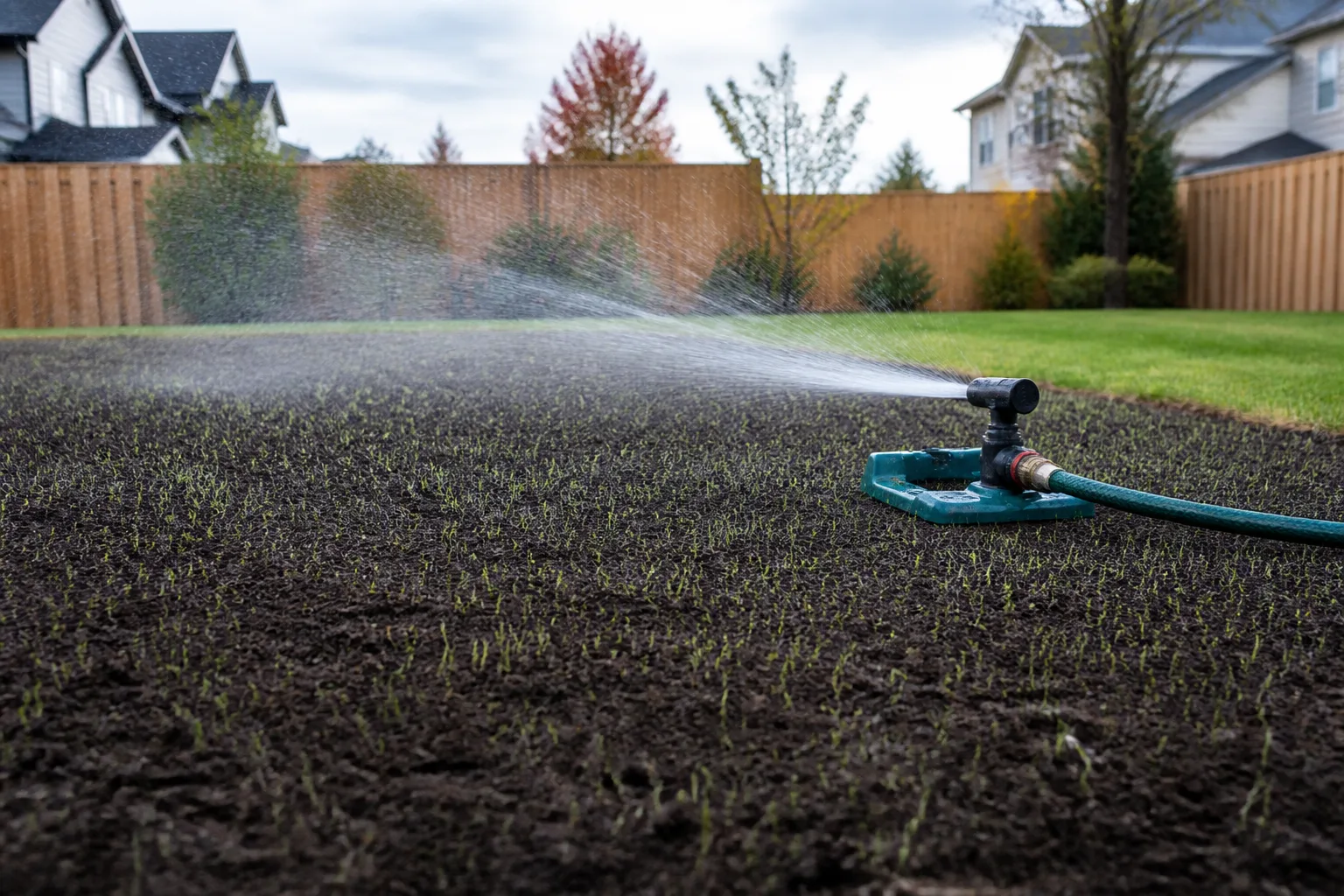
The Short Answer: Use Height and Rooting, Not Calendar Days
For most newly seeded lawns, wait until the new blades are about 3 inches tall and firmly attached to the soil. If the finished lawn is kept taller—such as a tall-fescue lawn cut around 3 to 4 inches—the first cut may need to wait until the seedlings are nearer 4 to 6 inches so you can remove no more than one-third. If the finished lawn is kept low, do not force a generic 3-inch rule; use the intended mowing height and the one-third limit instead.
You can make the decision in this order:
- Find the new seedlings. Measure the new grass, not the older turf surrounding it.
- Check the target height. The stand should be about one-third taller than the height you plan to leave.
- Test the roots. A few representative seedlings should resist a very gentle tug rather than lifting out of the soil.
- Test the surface. The soil should be dry enough that shoes and mower wheels do not leave footprints or grooves.
- Check recovery. If you step on a small area and the blades remain flattened, the lawn is not ready for a heavy pass.
If one of these checks fails, wait. A few extra days usually cost less than replacing seedlings that were pulled out or buried under a wheel rut.
First, Identify What You Seeded
The seed label is more helpful than a generic internet timetable. It tells you whether you planted one species, a blend, or a mixture with very different germination and growth speeds. In a mixed lawn, the slowest important section often determines the first-mow date because cutting for the tallest grass can injure the short, poorly rooted seedlings.
Cool-Season Grasses
Perennial ryegrass, tall fescue, fine fescue, and Kentucky bluegrass are common cool-season choices. Ryegrass and fescues often emerge relatively quickly under good conditions, while Kentucky bluegrass can take longer to germinate and fill in. In a new full-lawn seeding, expect the first mow to vary by weather and soil moisture even when the same seed mix is used in two yards.
Cool-season seedlings also face a seasonal trade-off. A spring seeding may reach mowing height quickly but then enter summer heat with a shallow root system. A late-summer or early-fall seeding may take longer to look full, yet enjoy better establishment conditions. Do not cut a spring lawn early just to make it look finished; protecting the roots matters more than making the surface look uniform for one afternoon.
Warm-Season Grasses
Bermudagrass, zoysiagrass, St. Augustinegrass, and centipedegrass grow when soil and air are warm. Their first cut may be delayed by cool weather even when the calendar says the lawn should be growing. Warm-season lawns can also be seeded, but some are more commonly established from sod, plugs, or sprigs; those materials have different rooting checks.
If you overseeded a warm-season lawn with a cool-season grass for winter color, treat the new seedlings as the fragile part of the lawn. The established warm-season base can hide them, and a mower set for the old turf can cut the new grass too short. Look for the new blades and use a setting that protects them.
Three Checks Before the First Mow
Height alone is not enough. New grass can grow upward before it has developed enough roots to survive the vibration, weight, turning, and suction of a mower. Use all three checks below; together they are more reliable than “it has been three weeks.”
The New Blades Have Reached the Mowing Target
Measure in several parts of the lawn, especially the slowest or shadiest section. For a lawn you intend to maintain at 3 inches, Penn State’s one-third guidance points to a first cut just before the grass reaches 4 inches. For a 2-inch target, begin before the new stand reaches about 3 inches. This does not mean every blade must be exactly the same length; it means you should not have to remove a large percentage of the leaf in one pass.
Ignore the temptation to measure only the tallest tufts. Tall tufts may reflect a wet low spot, a sunny strip, or an older grass that germinated earlier. The first mow should serve the seedlings you are trying to keep, not just the section that makes the lawn look untidy.
Seedlings Hold When Gently Tested
Choose a few seedlings in an average-looking area and pinch the blade close to the soil. Pull upward very gently. A rooted seedling should stay in place. If it slides out easily, brings loose soil with it, or feels like a thread with no resistance, stop and give the lawn more time.
Do not turn the tug test into a strength contest. You are checking whether roots have begun anchoring, not trying to measure a maximum force. Test several spots because a single protected seedling can be rooted while a dry or poorly contacted patch is still loose.
The Turf and Soil Can Carry the Mower
Penn State Extension suggests stepping on a small area and watching whether the plants return upright. That simple test reveals both plant resilience and surface firmness. If the blades stay pressed down, the roots may not yet be able to tolerate traffic.
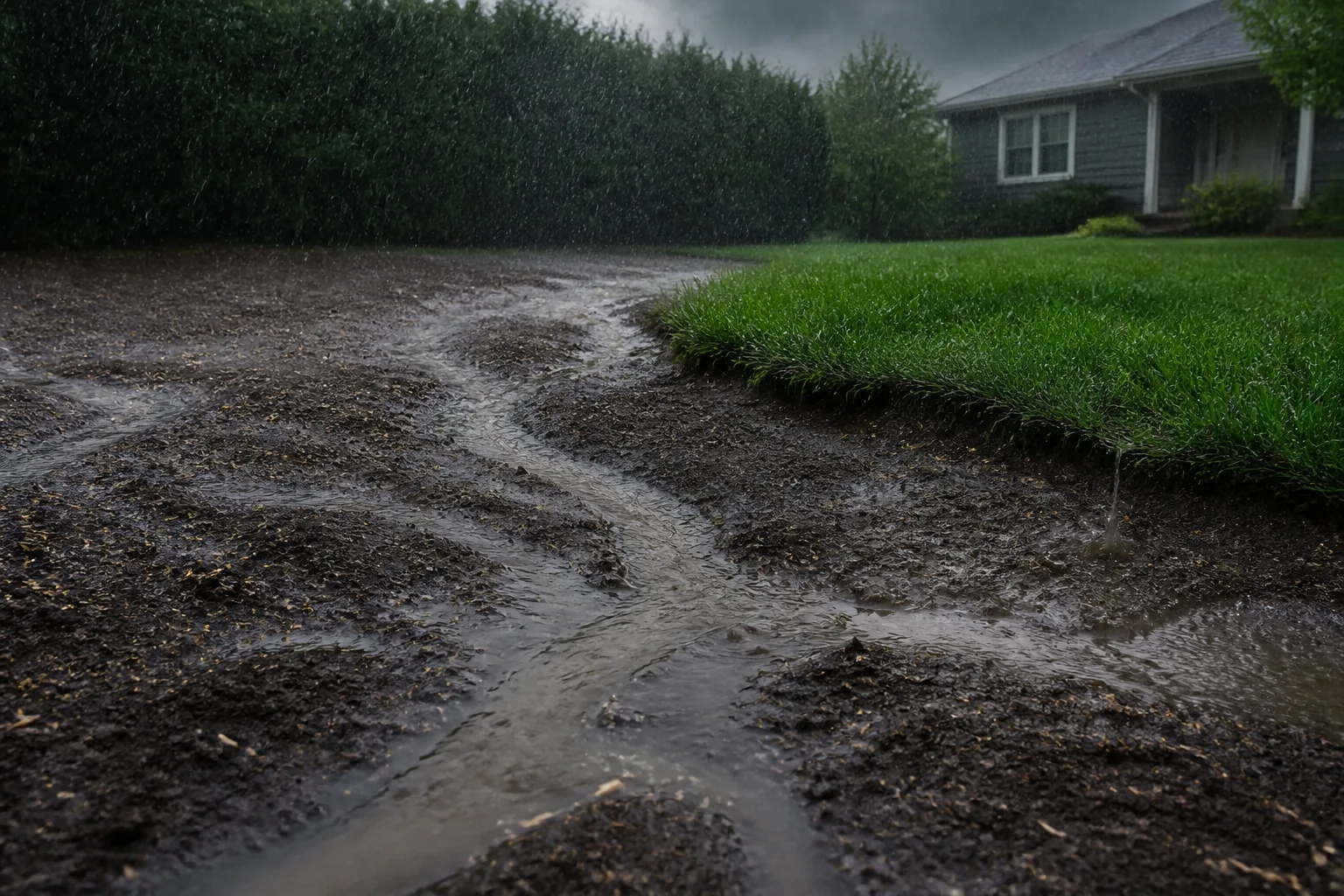
Look at the soil as well. New seedbeds can be loose even when the grass looks tall. If a shoe leaves a deep print, the mower will leave a deeper one. Ruts can bury seedlings, expose seed, divert irrigation, and create a low spot that stays wet. Wait for the surface to dry enough to support a light mower without tracking.
Timing Guide by Grass Type
These windows are planning estimates, not permission to mow on a specific day. A recent Lawn Love review puts ryegrass near two weeks, fescues around two to three weeks, and slower species such as Kentucky bluegrass, zoysiagrass, centipedegrass, and buffalograss at about four weeks or more after overseeding when conditions are favorable (Lawn Love). A practical turf guide from Turf Mechanic reaches the same height-first conclusion and notes that low-cut grasses and climate can change the timing. A full renovation, heavy shade, drought, cold soil, or a poorly prepared seedbed can extend every range.
| Grass or situation | Approximate first-mow window in good conditions | What to verify before cutting |
|---|---|---|
| Perennial ryegrass | About 2 weeks | New blades meet target height and resist a gentle tug |
| Tall or fine fescue | About 2 to 3 weeks | Seedlings are anchored and the surface is firm |
| Bermudagrass | About 3 to 4 weeks | Warm growth is active and the new stand is not loose |
| Zoysiagrass | About 4 weeks or more | Germination is even enough to avoid scalping thin patches |
| Kentucky bluegrass | About 4 weeks or more | Enough seedlings have emerged to withstand traffic |
| Centipedegrass or buffalograss | About 4 weeks or more | Height, roots, and dry soil all pass the test |
| Mixed seed lawn | Use the slowest vulnerable section | Do not mow for the tallest grass alone |
UC IPM gives a wider upper boundary—seeded lawns can take up to two months—because climate, seed, and establishment method change the outcome. That broader range is a useful reminder for anyone who has seeded late in the season or is waiting on a lawn that receives little sun.
How to Mow the First Time
Once the lawn passes the checks, make the first cut deliberately. The goal is to remove a small amount of leaf tissue while disturbing as little soil as possible. Penn State describes regular removal of small amounts as less stressful than allowing the lawn to become very tall and then removing a large amount.
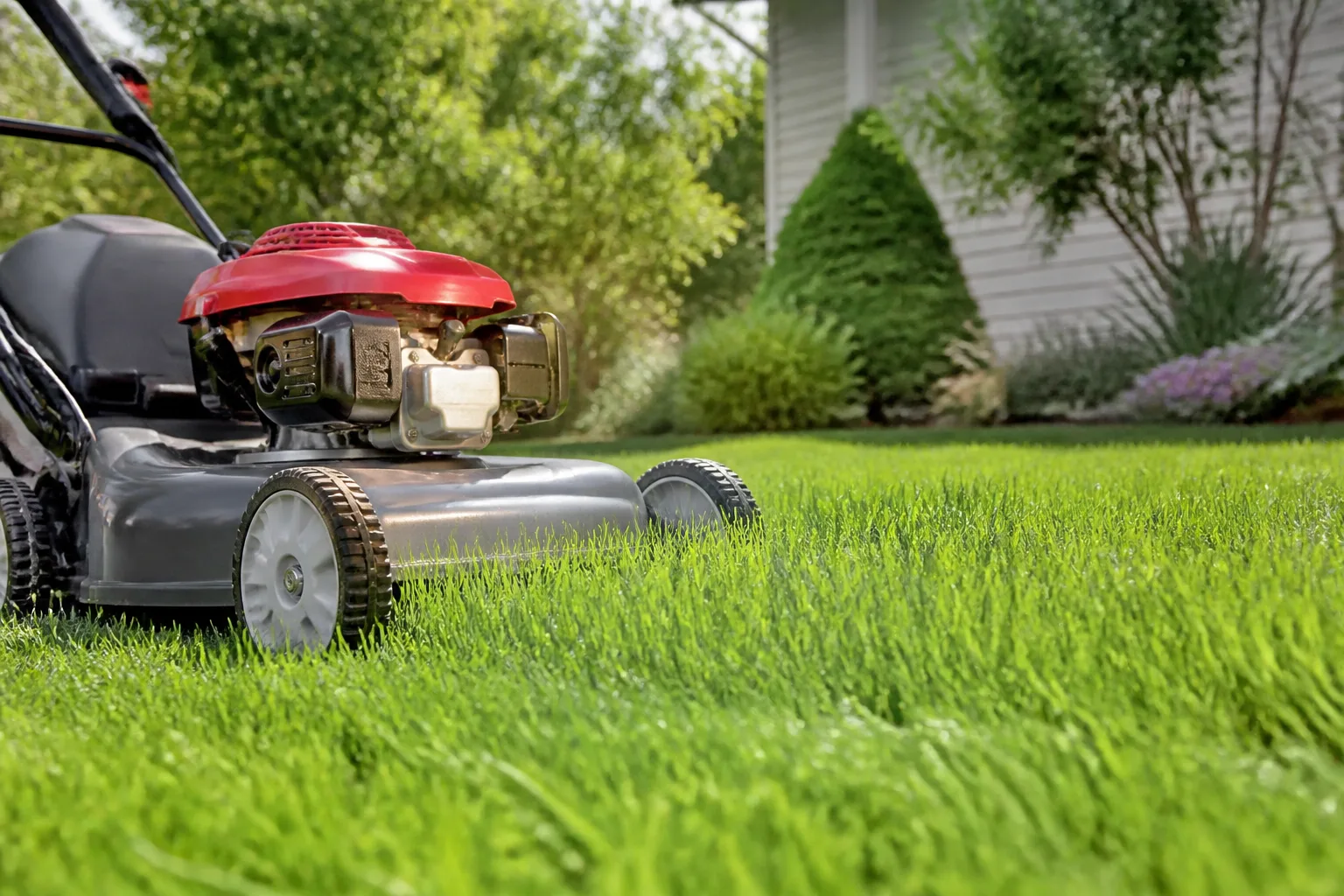
Mow Only When the Lawn Is Dry
Wait until dew, irrigation, and rain have dried from the blades and the upper soil. Wet grass clumps, bends under the wheels, and is easier to tear than cleanly cut. Wet soil is the bigger danger for new seed: the mower can press tire tracks into the seedbed and pull plants loose during turns.
“Dry” does not mean drought-stressed. Choose a day when the grass is hydrated but the surface is firm. If the seedlings are already curling, gray-green, or wilting, postpone the cut and correct moisture first. Mowing a drought-stressed new lawn adds another demand at the moment the roots have the least reserve.
Set the Deck High and Remove Only One-Third
Set the mower at the upper end of the range for your grass type, then confirm the measurement if the mower has an uncertain dial. Never scalp the first cut to make a patchy lawn look even. Removing more than one-third of the leaf can reduce the photosynthetic area the seedling needs to build roots and recover.
If the grass is already much too tall, raise the mower and make a light pass. Wait for recovery, then lower the deck gradually over later cuts if the species and season call for a shorter finish. A high first cut is safer than one aggressive correction.
The one-third rule applies to the individual blade, not one-third of the lawn’s total height. A 6-inch blade cut to 4 inches has lost about one-third of its length. A 6-inch blade cut to 2 inches has been scalped, even if the lawn still looks green from above.
Use a Light Touch and Gentle Turns
Use the lightest mower that can do the job and avoid loading the lawn with extra equipment or repeated passes. UC IPM specifically recommends a dry lawn, a mower set to the recommended species height, and no more than one-third removed. Penn State also advises keeping traffic off new turf until it is well rooted and has been mowed several times.
Walk slowly in straight, simple passes. Turns are where wheels and blades pivot against the soil, so make broad turns on a firm edge when possible instead of spinning in place. Avoid tight decorative patterns, sudden stops, and repeated passes over the same thin strip. If you use a reel mower, it must be sharp and suitable for the species and height; a light reel mower can be gentle, but poor adjustment can still tear or flatten young grass.
Inspect the cut when you finish. Cleanly cut tips are a good sign. Ragged ends, clumps of wet clippings, exposed roots, or fresh tire grooves mean the conditions or equipment were not right. Correct the cause before the next mow rather than simply increasing frequency.
What to Do With Uneven Growth
Uneven emergence is common and does not automatically mean the seed failed. Different parts of one yard may have different soil temperatures, shade, moisture, seed depth, compaction, or seed-to-soil contact. A sunny edge can be ready while a shaded center is still below the mowing threshold.
If established grass is getting long but new seedlings are still too short, do not automatically mow the whole lawn at the old setting. First ask whether the mature turf can wait a few more days. If it cannot, mow only the established sections with a high deck and a light pass, or hand-trim a small edge while keeping wheels and foot traffic away from the tender areas.
If the lawn has clear bare strips, keep them moist and check seed contact rather than adding more seed immediately. Heavy watering, birds, crusted soil, and seed that was buried too deeply can all create gaps. Reseeding before diagnosing the cause can repeat the same failure.
When the seedlings are ready but the old grass is much taller, mow high enough to protect the new stand and take down the lawn in stages. A first cut that leaves the established grass a little taller is preferable to a low pass that removes too much from both old and new plants.
Aftercare Between the First and Second Mows
The first cut is not the finish line. The seedlings are still shallow-rooted, and the next few days determine whether they recover and branch into a denser stand. Resume the watering pattern appropriate for your stage of establishment: keep the seedbed evenly moist during germination, then begin spacing irrigation as roots and shoots develop without allowing the surface to dry hard.
Limit children, pets, shortcuts, and furniture on the new area. Penn State recommends keeping foot and vehicle traffic off newly established turf until it is well rooted and has been mowed several times. A single walk is not always fatal, but repeated traffic compacts soil and bends or uproots seedlings that are not yet wear-tolerant.
Do not add fertilizer, herbicide, or a growth stimulant simply because the first mow is complete. Starter fertilizer may already be present, and new turf is sensitive to excess inputs. Follow the seed label and a local extension recommendation; herbicide timing in particular depends on the product and the number of mowings or weeks since establishment.
Check the blades before the next cut. A sharp blade makes a clean cut with less tearing, and a clean cut is especially valuable while the new stand is thin. Mow again when the grass reaches the same one-third threshold, rather than using a weekly schedule that ignores weather and growth rate.
When to Delay the First Cut Again
Delay even when the grass appears tall if any of these conditions apply:
- The seed pulls up. Root anchoring is not strong enough.
- The soil is soft. Wheels or shoes will create ruts.
- The lawn is wet. Wait for blades and soil to dry.
- The seedlings are heat- or drought-stressed. Restore moisture and choose a milder mowing day.
- Growth is still too patchy. Mowing for tall clumps can scalp or flatten the slower areas.
- A heavy mower is the only option. Keep waiting or use a lighter, properly adjusted alternative.
- A cover or mulch is still blocking light. Remove or manage it according to the product guidance once germination is established.
If you already mowed too early, do not immediately rake, fertilize, or flood the lawn. Stay off it, maintain even moisture without making it soggy, and watch for seedlings that remain upright over the next week. Small damage can recover; areas that were uprooted or rutted may need repair after you can see the true pattern.
Conclusion
When to mow your lawn after seeding depends less on the date on the calendar than on what the young grass can withstand. Wait until the new blades reach the intended mowing height, resist a gentle tug, stand back up after a step, and sit in soil firm enough to carry the mower without ruts.
Plan with grass type and weather in mind, but let the lawn make the final call. For the first cut, choose dry conditions, a sharp blade, a high deck, a light mower, and a simple route. Remove no more than one-third, keep traffic limited afterward, and take the next cut only when the recovering grass has earned it.