When Can You Trim a Neighbor's Plants?
Can you trim branches, vines, or shrubs crossing the fence? Use this practical guide to check boundaries, avoid damage, and talk with your neighbor.

The safest answer is conditional: you may have a right to manage growth that crosses onto your side of a boundary, but that does not give you a blanket right to enter your neighbor’s yard, cut a plant back to the trunk, kill it, remove it, pick its produce, or ignore local rules. A light, careful trim from your own property can be reasonable in some places. A major tree cut, root cut, chemical treatment, or work that threatens the plant is a different matter.
Before reaching for loppers, confirm three things: where the actual property line is, what your local ordinance or agreement allows, and whether the proposed cut could damage the plant. Then give the owner a chance to respond when the work affects the plant’s appearance, health, safety, or value. That short pause prevents many avoidable boundary disputes.
The short answer
If a branch, hedge, or vine has crossed into your yard, you can often maintain the portion occupying your airspace or soil, but the exact legal right depends on your jurisdiction and the plant’s situation. General gardening etiquette is more consistent: stay on your side, make the least damaging cut, do not assume the plant is yours, and ask first when the work is substantial.
A small trim of a few thin shoots that are brushing a walkway is not the same as removing a mature limb from a boundary tree. The first is a maintenance conversation. The second can change the tree’s balance, expose it to decay, reduce shade, or make it unsafe. If a tree could fall, the cut is high, a fence is carrying the plant, or a utility line is involved, stop and use the appropriate professional or authority.
This is general gardening and neighbor-communication guidance, not a determination of property law. Trees, easements, leases, HOA covenants, and municipal rules can change the answer. If ownership or the boundary is disputed, use local records and qualified advice before cutting.
Start with the boundary, not the branch
Confirm the line and your right to access it
Do not use the fence as automatic proof of the property line. Fences may have been built several inches or several feet off the surveyed boundary, and hedges often hide the markers. A boundary can also be affected by an easement, a shared driveway, a drainage strip, or a landlord’s retained area.
Begin with your deed, a recent survey, closing documents, or the local property map. Treat an online parcel map as a clue rather than the final measurement. If the cut matters enough to create a dispute, have the line confirmed before anyone climbs, digs, or removes material.
Then ask where the work would occur. Can you make the cut while standing entirely on your property? If not, do not enter through an open gate or reach over a fence without permission. A plant crossing the line does not automatically invite you into the other yard.
Also identify who has authority over the plant. A neighbor may be a tenant, a landlord may own the tree, or an HOA may control a shared hedge. If you are renting, check your lease before making a lasting change. If the plant sits in a shared boundary bed, agree on maintenance rather than treating one side as the sole owner.
What counts as a reasonable trim?
A reasonable trim is limited, necessary, and unlikely to harm the plant. Examples might include removing a few flexible shoots that scrape your siding, lifting a small branch away from a walkway on your side, or cutting a vine that has entered your garden and can be removed cleanly. Even then, use the plant’s growth habit and season as a guide; a technically legal cut can still be poor horticulture.
The more a cut changes the plant, the stronger the case for permission or professional help. Removing a large branch, reducing one side of a mature tree, topping a tree, cutting a structural root, severing a trunk, or taking an entire hedge section is not ordinary boundary maintenance. These actions can create a lopsided canopy or an opening where pests and decay enter.
Avoid “solving” shade by stripping the neighbor’s tree. Shade can be inconvenient, but severe reduction may stress the tree without giving you a durable light solution. Discuss pruning objectives instead: clearance from a roof, visibility at a driveway, a walkway hazard, or a specific branch that is rubbing a structure.
The permission line: what to ask before cutting
Use this practical rule: if the work affects the plant on the owner’s side, its health, its shape, its fruit, or its future maintenance, ask first. Permission is especially important when the plant is valuable, sentimental, protected by a local rule, or large enough that a mistake could injure someone.
| Situation | Ask first? | Safer approach |
|---|---|---|
| A few thin shoots crossing a walkway | Yes if appearance or health changes | Explain the clearance needed and offer a small, clean trim |
| Large tree branch over a roof or fence | Yes | Photograph the issue and consult an arborist if elevated |
| Hedge growing through a fence | Yes | Agree on which side is maintained and how often |
| Roots lifting a path | Yes | Identify the root and get advice before cutting; roots can destabilize trees |
| Flowers or fruit hanging over your yard | Always ask before picking | Request permission or let the owner harvest it |
| Herbicide, fertilizer, or pesticide on the other side | Never assume permission | Do not spray; drift can damage plants, pets, soil, or people |
| Branches touching power lines | Do not DIY | Contact the utility or an approved line-clearance professional |
Trees, major shrubs, roots, and vines
Tree work deserves the highest caution. A branch can look like it belongs to your side while still being structurally connected to a trunk or union across the line. Do not cut a large limb flush to the trunk, leave a dangerous stub, or “top” the canopy to make the problem disappear. The International Society of Arboriculture and local extension services both recommend qualified arborist assessment for hazardous or high work; use a professional who carries appropriate insurance where available.
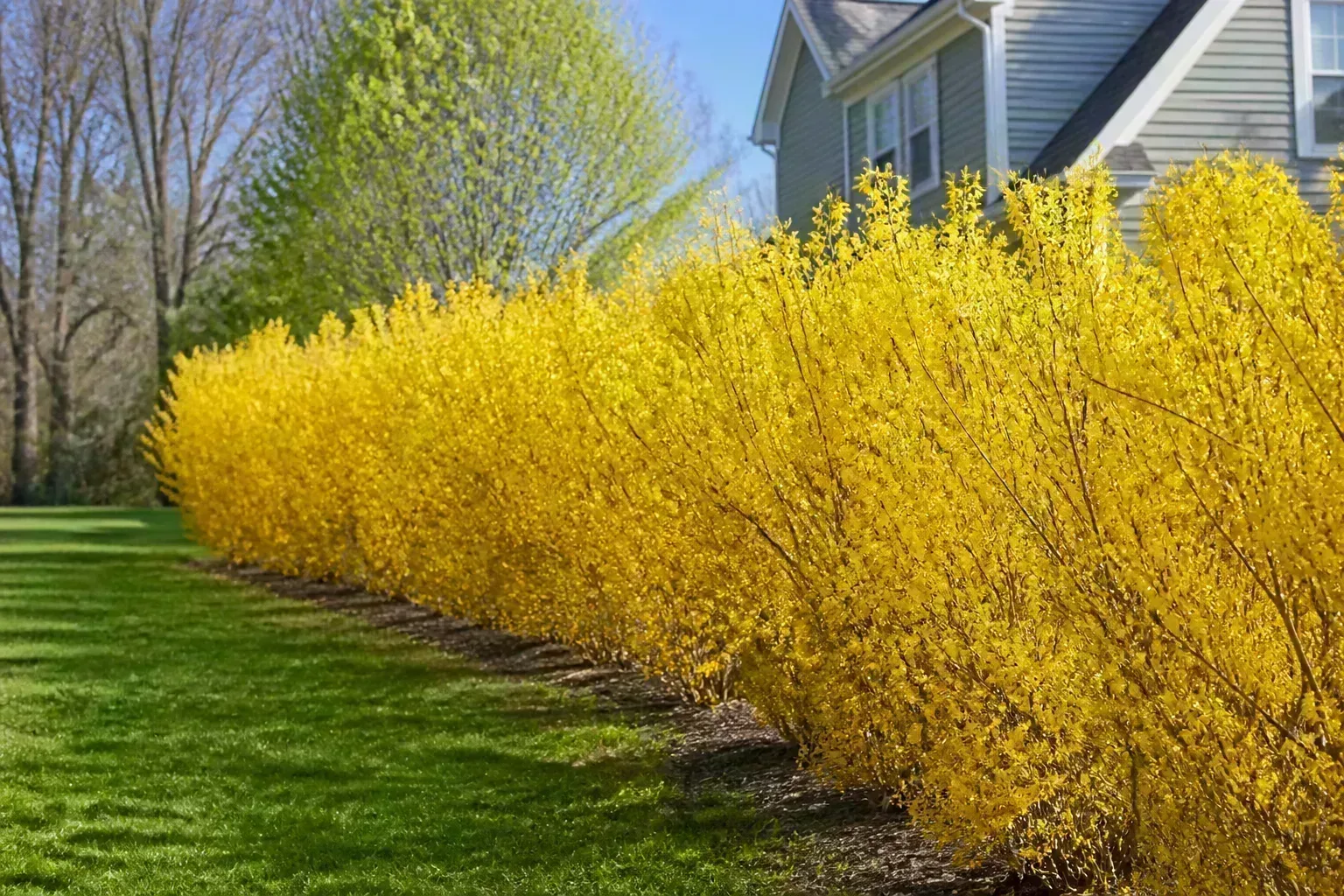
Shrubs and hedges are more forgiving, but hard cutting can still remove flower buds, expose scorched interior wood, or create a dead gap. Ask whether the owner wants to prune it from their side. For flowering shrubs, timing matters: cutting immediately before bloom may remove the season’s flowers, while cutting at the wrong time can encourage weak regrowth.
Roots are not the underground equivalent of branches. Cutting a root near a trunk can reduce stability or introduce decay, especially in mature trees. A vine may be easier to sever at the boundary, but first check whether it is a desirable climbing plant, a protected habitat, or attached to a fence that could be pulled down when the vine dies.
Fruit, sprays, and tools
A fruit or flower hanging into your yard is still not automatically yours to pick. Ask before harvesting, and agree whether fallen fruit can be collected. This matters even when the fruit is physically over your property because the owner may be saving it, treating it, or worried about contamination from animals or chemicals.
Never spray a neighbor’s plant, soil, fence line, or pests without explicit agreement and a legally appropriate label. Drift can cross the boundary, and “natural” does not mean harmless. Do not borrow a neighbor’s saw or trimmer and return it dirty, damaged, or with plant disease residue. If you share equipment, clean blades between plants and communicate what you are cutting.
Check rules before a difficult cut
Look for municipal tree-protection rules, heritage-tree lists, nuisance ordinances, HOA or condominium documents, utility easements, and lease terms. Some places regulate removal or major pruning by species, trunk size, location, or hazard status. Others assign notice or maintenance duties to the owner, tenant, or adjacent property holder.
The key questions are simple: Is the tree protected? Is the area governed by a shared covenant? Is there an easement? Is the plant on public land or in a utility corridor? Is there a formal notice process for a nuisance or dangerous condition? A local planning, code, parks, utility, or extension office can point you to the correct rule; do not rely on a neighbor’s confident summary of what is “always allowed.”
Document the issue before the conversation. Take dated photos from your property, note what is being affected, and describe the requested outcome rather than labeling the neighbor careless. “Two branches are rubbing the gutter during wind” is more actionable than “your tree is out of control.”
How to talk with your neighbor
Choose a calm time, show the specific growth, and ask an open question. A useful script is: “Could we look at the branches over the fence together? They are rubbing the roof when it is windy. Would you prefer to prune them, or would you be comfortable with me arranging a small trim from my side?”
That wording preserves three choices: the owner can do the work, approve you doing it, or agree to hire someone. Put substantial permission in writing, even if the writing is a friendly text. State the plant, the section to be cut, who will do the work, who pays, how access will happen, and whether cleanup is included. A photo with a marked branch can prevent two people from imagining different jobs.
Do not lead with a threat or a legal conclusion. If the neighbor says no, ask what outcome would work for them and what timing they prefer. You may discover that they are already planning a seasonal prune, need to wait for a flowering period, or have an arborist scheduled.
Pruning that protects the plant
If permission is granted for a small cut, use sharp, clean tools and make a proper pruning cut just outside the branch collar. Do not paint every cut, leave long stubs, rip bark, or remove more foliage than necessary. Avoid cutting during extreme heat, drought, freezing weather, or when a species is actively vulnerable to disease unless a qualified source recommends it.
Work only from stable ground. Do not climb a fence, use a makeshift platform, or hold a running tool above shoulder height. Wear eye protection and keep children and pets away. If a branch is thick enough to require a saw, too high to reach safely, under tension, or near a structure, stop. The cost of a professional trim is usually smaller than the cost of an injury, broken window, damaged roof, or dead tree.
Clean tools between plants when disease could move through sap or debris. Bag or remove cut material if it contains a known pest or disease, and ask before placing branches in the neighbor’s yard. A clean cut is not enough if the cleanup itself crosses the boundary.
Special cases that need extra care
Storm damage and utility lines
After a storm, a hanging limb can look urgent, but tensioned wood is unpredictable. Keep people away, photograph the condition, and contact the owner, emergency services when there is an immediate danger, the utility when lines are involved, or a qualified tree professional. Never cut a branch touching or near an energized line, and do not move a fallen tree that is pinning a wire.
Wildlife can add another limit. A hedge or tree may contain an active nest, shelter, or pollinator resource. Before major seasonal work, check local wildlife guidance and avoid disturbing occupied nests where laws apply. If a plant is invasive, the answer is still not “remove it secretly.” Explain the spread risk, identify an agreed control method, and keep herbicides and disposal within the rules.
If the plant is damaging your fence or yard
Separate the symptom from the cause. A branch rubbing a fence may need clearance; a fast-growing vine may need support or removal at its base; roots lifting paving may require an engineer, arborist, or redesign rather than a single cut. Photograph the damage, note when it happens, and ask the owner to inspect it with you.
If the plant is leaning, a fence post is failing, or branches are striking a roof, do not wait for a dispute to become an emergency. Propose a temporary safety measure that does not destroy the plant, such as restricting access below a limb or arranging an inspection. Keep receipts and written communications if repair responsibility may later matter, but avoid accusatory messages that make cooperation harder.
What to do when the neighbor says no
A refusal does not automatically mean you can proceed, and it does not automatically end your options. Recheck the boundary, the local rule, and the exact harm. A plant merely crossing an airspace may be a different case from one blocking a required sight line or damaging a structure.
Offer a narrower solution: a particular branch, a licensed professional, a mutually chosen date, or a written cleanup plan. If the problem is governed by an HOA, landlord, property manager, or formal local process, use that channel with factual photos. For a dangerous tree, contact the relevant authority or qualified professional rather than escalating at the fence.
Do not retaliate by cutting more, poisoning the plant, blocking access, picking fruit, or moving debris onto the other side. Those actions turn a solvable maintenance issue into evidence of bad faith and may create new damage. If a dispute remains material, seek local legal advice or mediation before taking irreversible action.
A before-you-cut checklist
- Identify the plant and describe the actual problem: clearance, damage, shade, access, or safety.
- Confirm the property line instead of assuming the fence is exact.
- Check for an easement, HOA rule, lease term, protected-tree rule, or utility hazard.
- Decide whether the work is light maintenance or a major structural change.
- Ask the owner before work that changes appearance, health, fruit, roots, or access.
- Agree in writing on the cut, person doing it, timing, cost, access, and cleanup.
- Use clean tools, safe footing, correct pruning technique, and the least damaging cut.
- Stop and call a professional for height, tension, large limbs, roots near a trunk, or power lines.
- Recheck the result and tell the neighbor what was done.
Conclusion
Trimming a neighbor’s plant can be appropriate when growth has crossed into your space, the work is limited, you can do it safely from your side, and local rules allow it. The best practice is still to talk first whenever the cut affects the plant’s health, shape, value, or future stability. Confirm the line, document the problem, ask for a specific solution, and use a professional for trees, roots, hazards, and utility conflicts. A few minutes of clarity can protect the plant and the relationship at the same time.