Daylily vs. True Lily: Key Differences Explained
Compare daylily vs. lily by leaves, stems, roots, blooms, and care. Learn the fastest ID test, tiger lily clues, and an important cat safety warning.
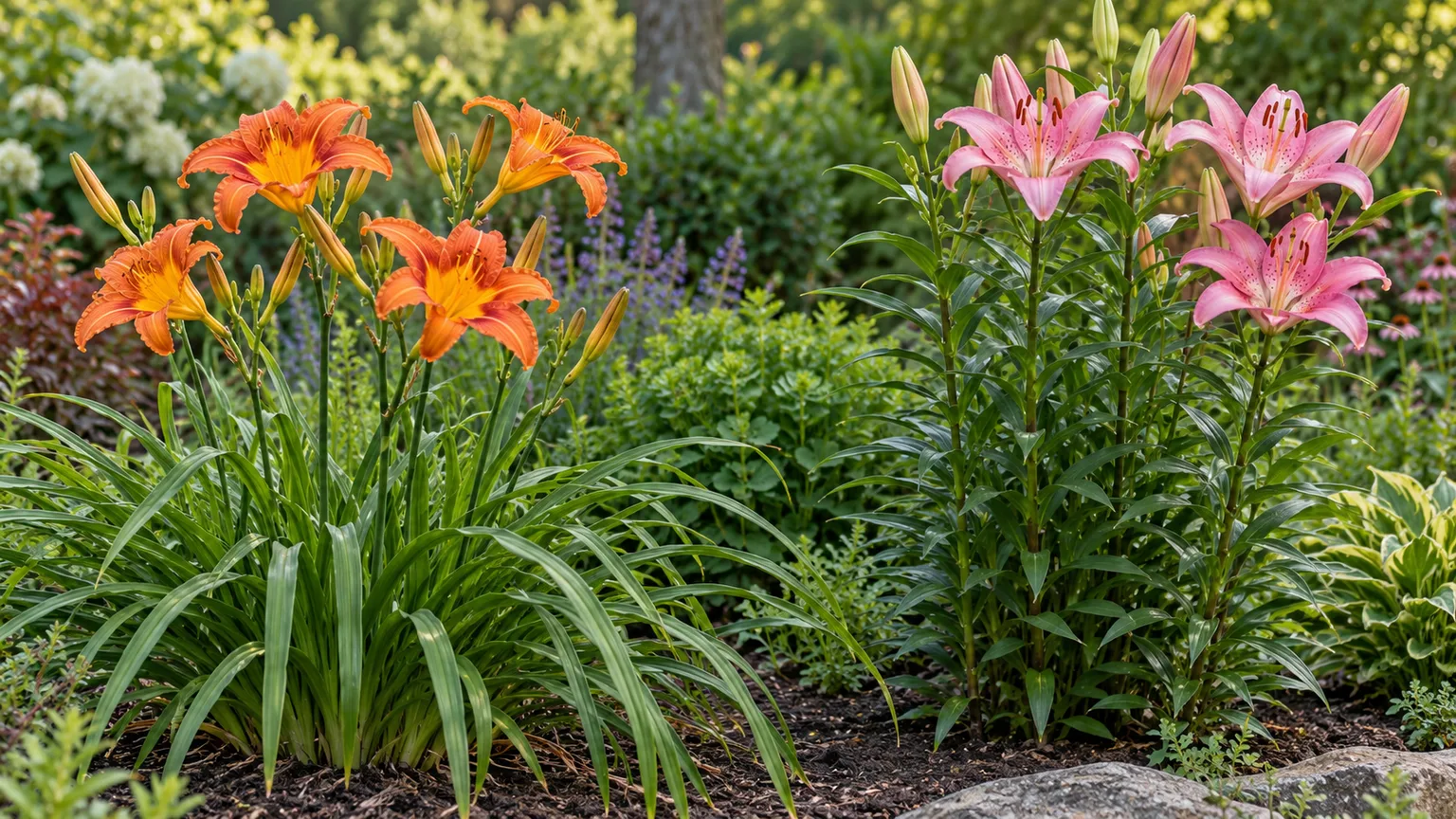
A daylily and a true lily can look alike when both are flowering, but they are different plants with different roots, growth habits, and care needs. The fastest way to tell them apart is to follow the flower stalk downward: a daylily sends up a mostly leafless scape from a low fan of leaves, while a true lily carries leaves on the same upright stem that bears its flowers.
Their names reflect a long-lived common-name tangle, not close botanical kinship. A daylily is Hemerocallis; a true lily is Lilium. That distinction matters when you are deciding whether to divide a clump, how to plant an underground structure, and whether a bouquet or garden plant belongs anywhere a cat can reach.
The five-second test before you dig
Stand back far enough to see the whole plant, then trace the flowering stem toward the soil. If the leaves form a fountain-like fan at ground level and the flower stalk rises separately with few or no leaves, you are probably looking at a daylily. If narrow leaves attach along a leafy stalk that ends in the flowers, you are looking at a true lily.
This test works better than judging color, flower size, or the word on an old garden tag. Orange, yellow, pink, white, and red blooms occur in both groups, and modern daylily hybrids can have large, ruffled, double, or spider-shaped flowers. If the plant is not blooming, examine its leaves and look for a label or planting record; if you later dig it up for a legitimate reason, the underground structure will settle the question. There is no need to excavate a healthy plant just to identify it.
The rule is a strong clue, not a substitute for a botanical key when a plant has been mislabeled or crossed. A large established lily bulb can produce offsets and multiple stems, so “one stem versus many” is less dependable than whether the flowering stems themselves carry leaves.
Daylily vs. true lily at a glance
| Clue | Daylily | True lily |
|---|---|---|
| Botanical name | Hemerocallis | Lilium |
| Family | Asphodelaceae | Liliaceae |
| Main growth form | Expanding crown or clump | Upright shoots from a scaly bulb |
| Leaves | Long, arching blades in fans at soil level | Leaves attached along the flowering stem |
| Flower stalk | Separate, mostly leafless scape; may branch | Leafy stem carries both leaves and flowers |
| Underground part | Fleshy roots from a crown; not a true bulb | Bulb built from overlapping fleshy scales |
| Single bloom | Usually open for about a day | Commonly attractive for several days, depending on type and weather |
| Best routine division | Split a crowded clump into rooted fans | Replant offsets or propagate bulbs carefully; do not treat as a daylily clump |
These traits describe the usual garden forms, not every unusual specimen. Use the leaves and the relationship between the leaves and flower stalk together; then confirm with a botanical name on the nursery label or a reliable plant profile. NC State Extension lists Hemerocallis in Asphodelaceae and Lilium in Liliaceae, and its separate profiles describe the different crown and bulb habits (daylily profile; true lily profile).
What counts as a true lily?
In horticulture, “true lily” means a member of the genus Lilium. Asiatic, Oriental, trumpet, Martagon, and Easter lilies are examples of true lilies; the categories include many species and hybrids, so flower shape and height vary widely. A true lily is an herbaceous perennial that grows from a bulb made of fleshy scales, and its leaves grow on the upright stem.
The phrase “true lily” is useful because common names are not a dependable map of plant relationships. A shop tag that says only “lily” may leave out the genus, and a plant called a lily may belong to an entirely different family. When you are buying bulbs, look for a botanical name that begins with Lilium rather than assuming that every flower called a lily will have the same structure or care needs.
True lilies also differ among themselves. A Martagon lily may carry whorled leaves and many nodding flowers, while another type has alternate leaves and a few large blooms near the top. NC State Extension notes these horticultural groups and their differing habits, so the genus-level clues are more dependable than expecting every true lily to resemble a florist’s Easter lily (NC State Extension Plant Toolbox).
What a daylily is—and why its name misleads
A daylily belongs to Hemerocallis, a genus separate from Lilium. NC State Extension classifies it in the family Asphodelaceae and describes daylilies as clump-forming perennials; the plant’s crown sends out fans of leaves and fleshy roots rather than a scaly true-lily bulb (NC State Extension’s daylily profile).
The “day” in the name refers to an individual flower’s short display, not to the whole plant’s flowering season. A mature plant carries buds that open in sequence, so a bed can stay colorful even though yesterday’s bloom has wilted. Depending on cultivar and growing conditions, a clump may bloom across a longer stretch or send up another flush; do not mistake the loss of one flower for the end of the show.
The most recognizable garden daylilies are hybrids with long, strap-shaped leaves and trumpet-like flowers. Their petals, colors, and sizes vary enough that a photograph of the bloom alone can mislead you. The plant’s low leaf fan and separate scape are more useful clues than whether a flower appears “lily-shaped.”
Follow the foliage and flowering stalk
Foliage tells you how the plant is built. Daylily leaves emerge from the crown in overlapping fans and arch outward, often forming a wide clump; their flower scapes rise independently from among the leaves. True-lily leaves attach to the flowering stem at intervals, either alternately or in a whorl depending on the species or hybrid, so foliage travels upward with the flower stalk.
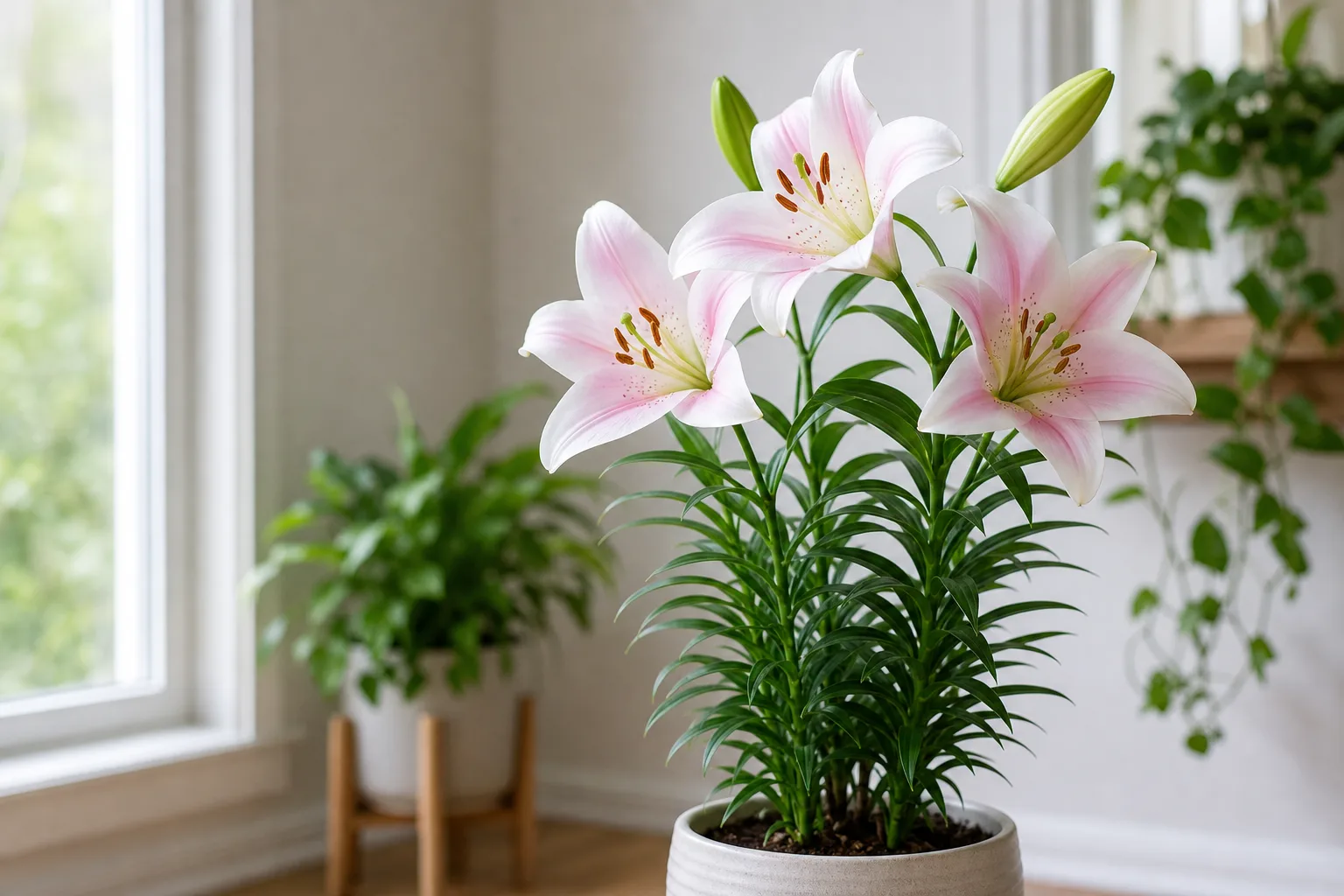
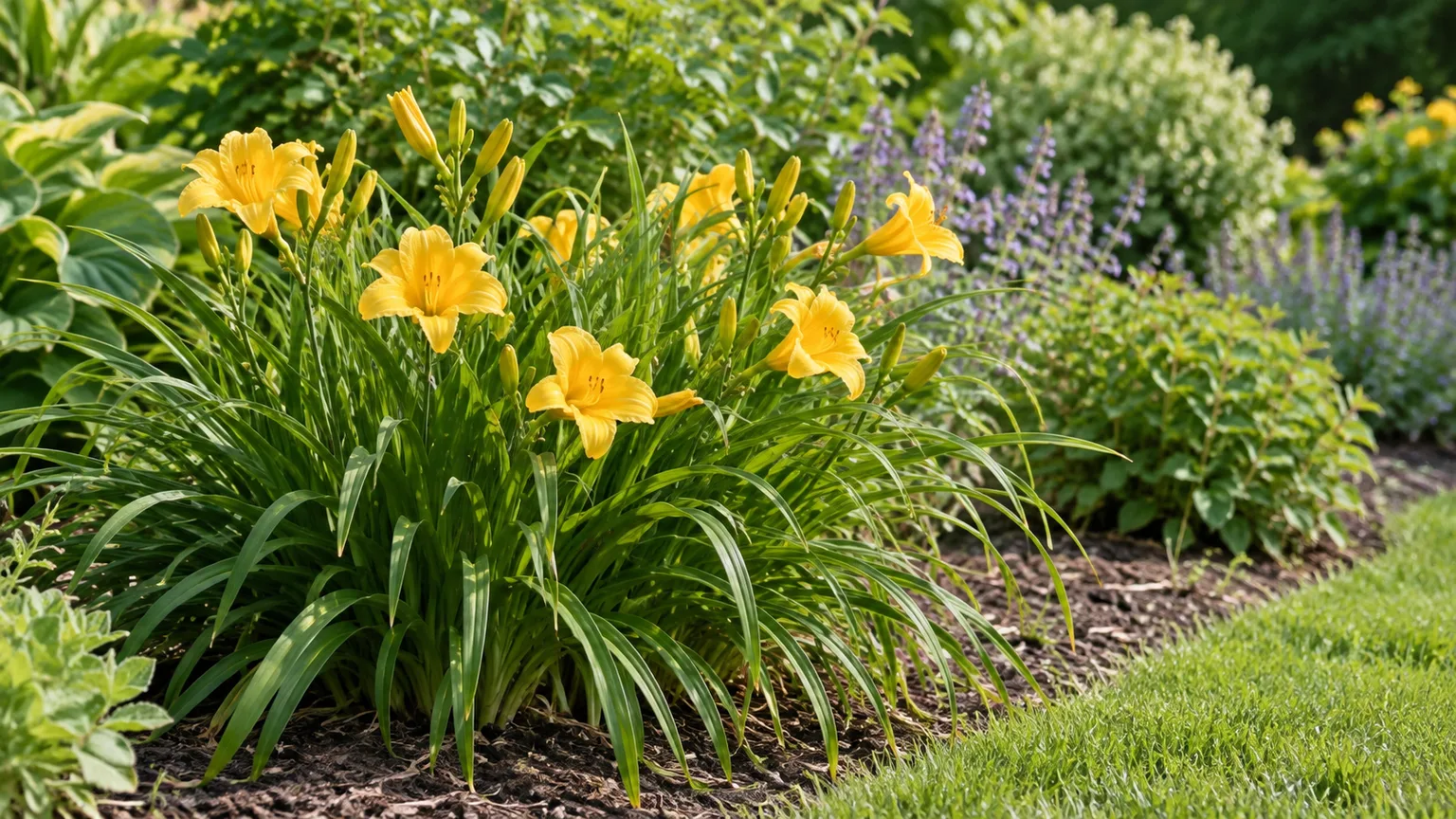
Look closely at an apparently bare daylily scape before making a decision. It can have small bracts or branches, and several buds may sit along the upper portion, but it does not carry the normal fan of leaves that defines the daylily plant. By contrast, a lily’s leaves are part of the same green stem that supports its flower cluster.
If your plant has only leaves, this comparison still helps: a dense, grass-like fan points toward Hemerocallis, whereas shoots with their own leafy vertical stems suggest Lilium. Neither clue is exclusive to those two genera, though. Use a plant label, a local extension office, or a botanical profile if the specimen could be another perennial with similar foliage.
Flowers can fool you; bloom timing helps
Do not identify the plant by counting visible petal-like parts or stamens. Both groups usually have six showy flower segments, and hybrid forms can change the apparent outline; the shared flower architecture is one reason their common names are easy to confuse. Flowers may be trumpet-shaped, recurved, starry, or open and bowl-like in either group.
The lifespan of an individual flower is more useful. A daylily bloom generally opens for roughly a day, then fades, while a true lily bloom often stays attractive for several days. That comparison has limits: heat, rain, cultivar, and the stage at which a cut flower was picked all affect how long a bloom looks fresh. Colorado State University Extension notes that some newer daylily hybrids may last two or three days, so one-day duration is a typical trait rather than an infallible stopwatch (Colorado State University Extension).
The whole plant’s display is different from one bloom’s lifespan. Daylilies usually have multiple buds opening successively on a scape or on later scapes, which can extend the clump’s color over days or weeks. A true lily may also carry several buds that open in sequence, but an individual flower tends to remain open longer; Birds & Blooms’ comparison similarly emphasizes this difference between a single daylily flower and the plant’s repeated buds (Birds & Blooms).
Underground: scaly bulb or fleshy roots?
The underground parts make the distinction unmistakable. A true lily grows from a bulb composed of overlapping, fleshy scales, often white, yellowish, or purplish; it is not the dry, papery bulb familiar from many tulips. A daylily grows from a crown with fleshy roots, sometimes thickened into tuber-like swellings, but it does not form a true Lilium bulb.
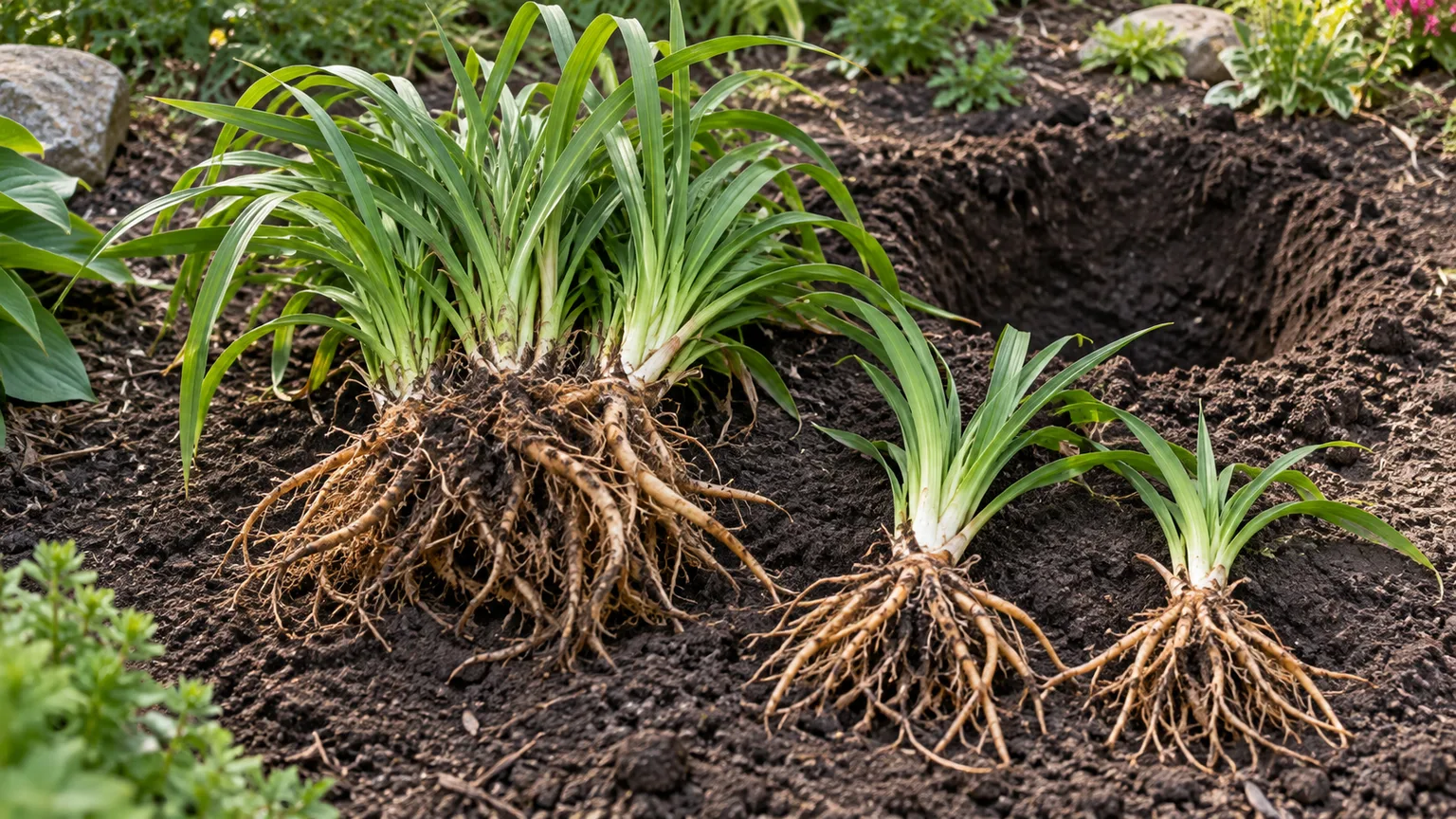
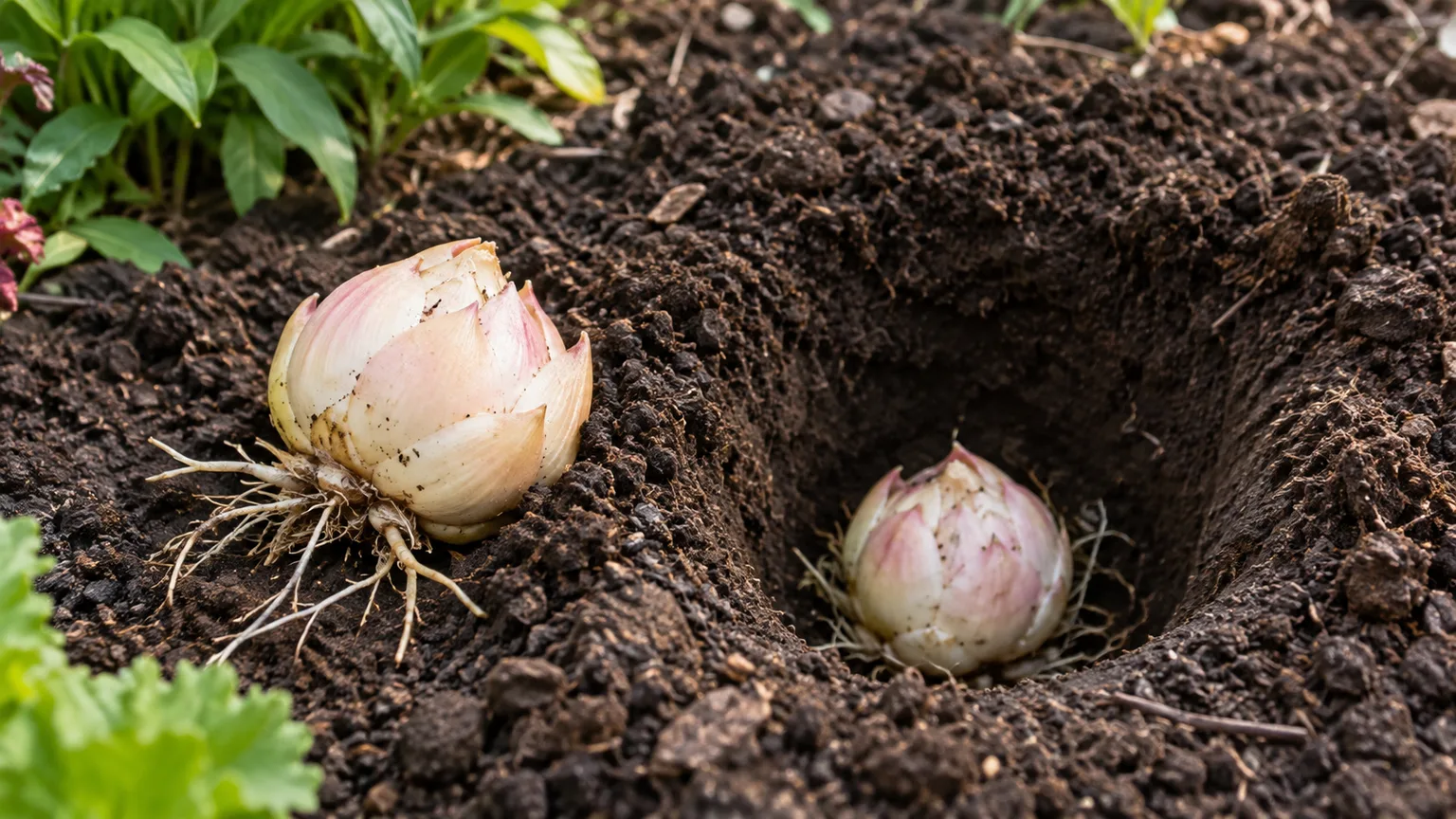
This difference changes how you handle the plants. A daylily clump can be lifted and divided into sections that each retain healthy roots and a fan of leaves. A lily bulb is a compact living structure whose scales can dry or break; plant it at the depth recommended for its type and avoid leaving it exposed while you finish other garden work.
If a plant is dormant and you are already moving it, inspect the crown or bulb rather than trying to infer the answer from a faded label. But do not dig solely for identification: disturbing a healthy clump can delay flowering, break roots, or expose a bulb unnecessarily. A clear photograph of the foliage and flowering stalk, along with the nursery label, is usually enough for an extension office or a plant society to help with identification.
Plants with “lily” in the name that are neither
A common name containing “lily” does not prove that a plant is a daylily or a true lily. Peace lilies (Spathiphyllum) and calla lilies (Zantedeschia) are not Lilium; their conspicuous flower is a spathe surrounding a central spadix, not a six-part lily flower. Lily-of-the-valley (Convallaria) has small hanging bells and a very different growth habit, while water lilies are aquatic plants in a different group altogether.
Peruvian lilies (Alstroemeria) are another frequent source of confusion in bouquets. Their spotted, lily-like flowers do not make them members of Lilium. Gardenia’s overview of common-name lookalikes is a useful reminder to check the genus before transferring a care rule from one “lily” to another (Gardenia’s lily and daylily guide).
The botanical name is the cleanest shortcut: Lilium means true lily, and Hemerocallis means daylily. If the label gives only “lily,” search the full cultivar or species name, or ask the nursery for the genus. This extra step matters because lookalikes differ in planting needs and pet risks, even when their common names sound interchangeable.
Tiger lily or orange ditch lily?
The tiger lily is a true lily, not a daylily. NC State Extension identifies the familiar tiger lily with Lilium lancifolium, a Lilium species; its orange flowers are usually marked with dark spots and have strongly recurved segments. The stems are leafy, and the plant grows from a true bulb.
The roadside orange flower often called a ditch lily is an orange daylily, commonly Hemerocallis fulva. Its flowers are also orange, but the leaves form a low fan and the flower scapes rise separately from it. The color alone is nearly useless as an identification clue; check the stem and foliage first, then look for the tiger lily’s distinctive spotted, recurved bloom as confirmation.
Common names for naturalized flowers vary by region, and an old garden may contain hybrids or mislabeled plants. If the plant is not a textbook match, photograph the whole clump, a close view of the stem where leaves attach, and the flower from the side. That set of views is much more helpful for identification than a close-up of a single orange bloom.
Choose by garden job, not by name
A daylily is a good fit when you want a spreading perennial clump, arching ground-level foliage, and a succession of short-lived flowers. Many cultivars tolerate a range of garden conditions once established, and the clump can be divided when it becomes crowded. Colorado State University Extension recommends sunny placement for stronger flowering and says occasional deep watering supports growth; local climate, soil, and cultivar still matter (CSU Extension’s daylily guidance).
Choose a true lily when you want a more upright, stem-based display, a distinct bulb plant, or longer-lasting individual blooms. True lilies vary dramatically in height, fragrance, direction, and bloom time, so select a type for the site instead of buying an unspecified “lily.” Their bulb needs good drainage and should not sit in persistently wet soil, a point emphasized in NC State’s growing profile (NC State Extension’s Lilium profile).
A quick decision guide:
- Choose a daylily for a dense border clump, adaptable foliage, and repeated blooms from successive buds.
- Choose a true lily for upright stems, a bulb-grown perennial, and larger individual flowers suited to a border or cutting garden.
- Choose neither for a cat-accessible spot if you cannot keep the plant fully away from the cat; both Hemerocallis and Lilium create serious risks for cats.
Neither is automatically “easier.” A daylily may be more forgiving of ordinary garden variation, but a mature clump can become difficult to lift. A true lily is straightforward when the bulb is planted correctly and drainage is good, but the bulb is less tolerant of being left dry, broken, or waterlogged.
Care differences that matter after identification
For daylilies, start with a sunny or lightly shaded bed that drains after rain. More sun generally supports more flowers, while shade can reduce bloom; in hot climates, some afternoon shelter may protect dark-colored flowers from fading. Keep new divisions evenly watered while they establish, then water during extended dry spells rather than giving the crown frequent shallow splashes.
For true lilies, protect the bulb from standing water and use the planting depth and spacing specified for its species or cultivar. Many garden lilies prefer fertile, well-drained soil and benefit from mulch that keeps the root zone cooler, but a blanket depth or sun rule will not fit every horticultural group. The NC State Lilium profile notes both the need for drainage and the value of keeping roots cool; it also cautions that overly wet soil can lead to bulb rot.
After flowering, do not cut away healthy green foliage just because the bloom has finished. Leaves replenish the underground storage structure for next season in both kinds of plants; remove spent flowers if you want to limit seed formation, then wait until stems or leaves yellow naturally before cutting them down. The timing of that cleanup depends on climate and the plant’s growth cycle, not on the date the final flower fades.
Divide a daylily without harming the crown
Divide a daylily when its clump is congested, the center has thinned, or flowering has declined despite adequate light and water. In many gardens that takes several years, not one season; Colorado State Extension describes dividing roughly every three to four years as one regional guideline, while actual timing depends on how quickly the cultivar grows and how large you want the clump to remain.
Water the plant beforehand if the soil is dry, then lift a manageable section with a garden fork, keeping the tool away from the crown. Shake or rinse enough soil from the roots to see natural divisions, and separate the clump into rooted fans with a clean knife or two forks. Discard only dead or badly damaged material; small divisions with weak roots may take longer to flower again.
Replant each division promptly at the same crown depth it was growing before. Burying the crown too deeply can weaken growth, while leaving roots exposed can dry them out; water thoroughly after planting and keep the soil evenly moist until the plant is rooted in. This fan-and-crown method is not the right way to split a true lily bulb, so confirm the plant before you start cutting.
Plant a true lily without inviting bulb rot
Handle a true lily bulb gently and plant it soon after purchase, because its fleshy scales can lose moisture if left exposed. Choose a site where rainwater drains away rather than pooling around the bulb, and follow the depth and spacing on the supplier’s label or a regionally appropriate extension guide. Different lily groups and bulb sizes do not all call for the same hole.
Set the bulb with its basal plate—the flatter root-bearing end—down and its growing tip up, then backfill with loose soil. Water the planting to settle the soil, but do not keep it saturated; persistently wet conditions can damage the bulb. A mulch layer can help moderate soil temperature, but avoid piling heavy, soggy material directly over the emerging shoot.
If you need more plants, do not yank apart a lily as though it were a daylily clump. Some lilies make offsets that can be replanted when they are large enough, while specialist growers may propagate from scales; the right method depends on the species and the condition of the bulb. A daylily division is usually a more immediate, forgiving garden task than multiplying a lily from scales.
Cat safety: both groups are dangerous
This is the most consequential difference that has nothing to do with appearance: neither a daylily nor a true lily is a safe choice around cats. The ASPCA specifically warns that both Lilium and Hemerocallis can cause severe kidney injury in cats, and Cornell’s Feline Health Center notes that even tiny amounts of some lilies can cause life-threatening kidney failure (ASPCA’s lily toxicity guidance; Cornell Feline Health Center). Keep bouquets, cut flowers, pollen, plant debris, and garden access away from cats rather than trying to make a lily safe by removing its anthers.
If you suspect a cat has chewed any part of a true lily or daylily, contacted pollen, or drunk water from a vase containing one, call a veterinarian or emergency veterinary clinic immediately. Do not wait for symptoms, and do not try home treatment or induce vomiting unless a veterinarian directs you. Bring the plant label or a clear photo so the clinic can identify the genus, but do not delay the call while you search for a name.
Some plants called lilies create different hazards, not a free pass. VCA notes that peace lilies and calla lilies do not cause the same kidney failure associated with true lilies and daylilies, but their calcium oxalate crystals can irritate the mouth and throat; lily-of-the-valley is also toxic by a different mechanism (VCA Animal Hospitals’ cat plant guide; ASPCA’s comparison of lily types). If you are identifying a plant for pet safety, confirm the exact botanical name and contact a veterinary professional when exposure may have occurred.
Conclusion: identify first, then adjust care
For a quick identification, follow the leaves: a daylily has a ground-level fan and a separate, mostly bare scape; a true lily has leaves attached to its flowering stem. The underground clue confirms it—fleshy roots and a crown for Hemerocallis, overlapping scales in a bulb for Lilium—while bloom color and shape can mislead.
Once you know which plant you have, match the care to its structure: divide crowded daylilies into rooted fans, plant true lily bulbs at the depth their type requires, and keep both in well-drained soil. If a cat can reach the plant, choose a different flower; both groups can cause severe, time-sensitive poisoning.