30 Best Houseplants for Beginners, Chosen by Care Style
Compare 30 houseplants for beginners by light, watering style, growth habit, and pet cautions to choose one that fits your room and routine before you shop.
The easiest houseplant depends on your room
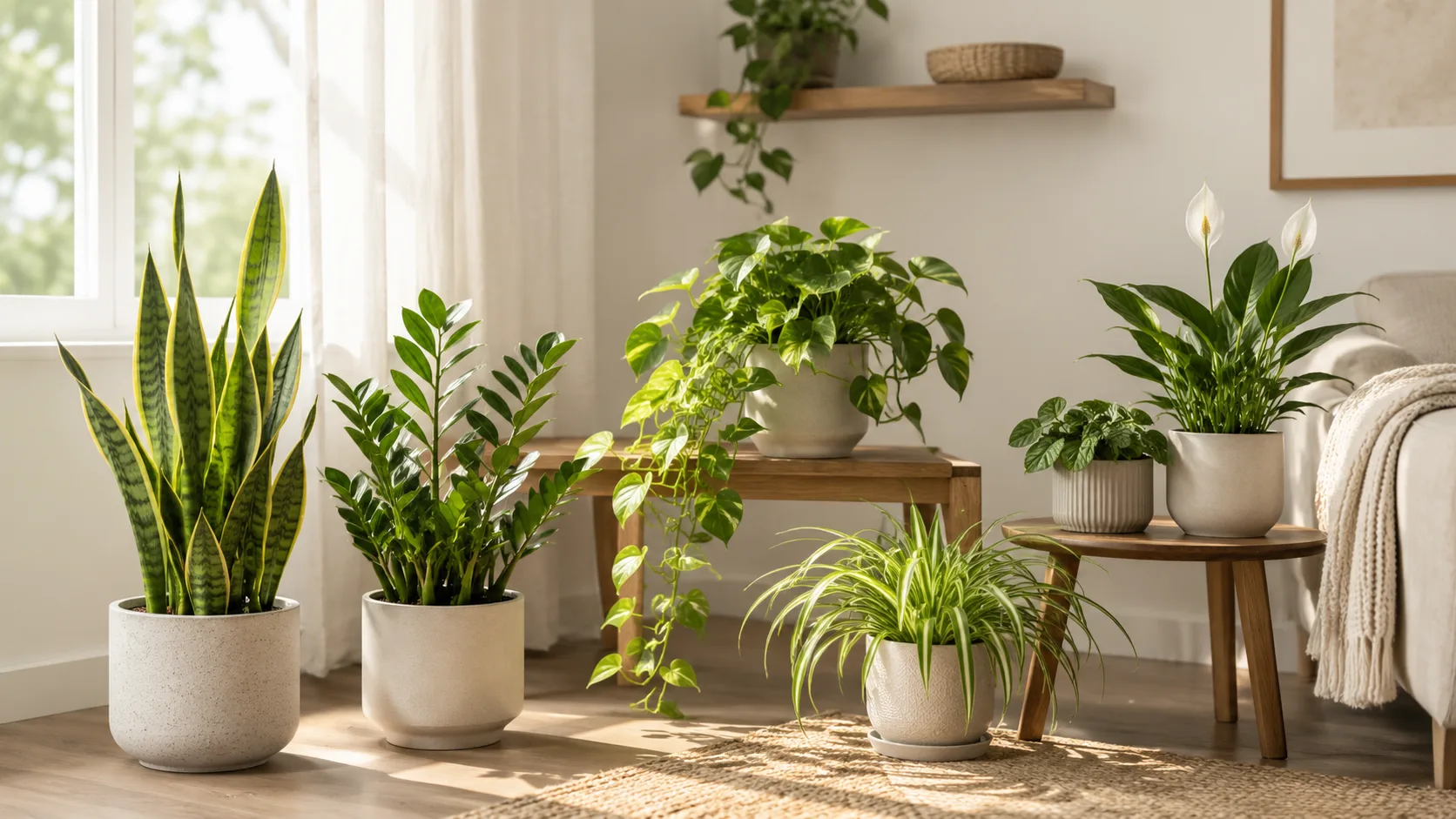
For a low-light spot that still gets daylight, start with a cast iron plant, ZZ plant, snake plant, or green Chinese evergreen. For a bright window and a watering routine that sometimes slips, consider golden pothos, jade, aloe, or a zebra plant. If you want a plant that tells you when it is thirsty, a peace lily can be useful—but it needs more regular attention than those dry-soil choices.
There is no single “easiest” plant for every beginner. A succulent may forgive a missed watering but stretch and weaken in a dim room; a fern can look lush in a humid bathroom but crisp if you let its mix dry out. Iowa State University Extension lists many familiar options—including pothos, spider plant, snake plant, ZZ plant, philodendron, peace lily, cast iron plant, and dragon tree—as low-maintenance, while UNH Extension emphasizes selecting for the light and placement your home actually provides (Iowa State Extension’s low-maintenance houseplants; UNH Extension’s houseplant recommendations).
The useful question is not “Which plant survives anything?” It is “Which plant’s normal care rhythm is easiest for me to repeat?” The 30 choices below are grouped by that rhythm, so you can narrow the list before buying.
How to choose your first houseplant
Start with the light you actually have
Look at the intended spot at midday, then again in the morning and late afternoon. “Bright indirect” usually means the room is bright but the leaves are not sitting in prolonged, harsh sun; a sheer curtain can soften intense rays. A north-facing or shaded window may still work for tolerant foliage plants, but a table several feet from a window can be much darker than it looks to a person.
Low light means less usable light, not darkness. The Royal Horticultural Society notes that plants need daylight to make food and that ordinary household lighting is not a substitute for a grow lamp; even shade-tolerant plants will slowly decline in a windowless room without dedicated plant lighting (RHS easy-care houseplants; RHS guide to choosing houseplants). If you have a very dim room, move the plant closer to a window or use a grow light instead of buying a succulent and hoping it adapts.
Match the plant to your watering habits
If you tend to water too often, pick a plant with water-storing leaves or rhizomes—such as a snake plant, ZZ, aloe, or jade—and use a draining potting mix. If you forget for long stretches, avoid plants that need consistently damp soil, including maidenhair fern and prayer plant. If you enjoy checking plants, a spider plant or peace lily can reward regular observation, but do not use a peace lily’s dramatic wilt as your routine watering signal; repeated stress is not ideal care.
No matter which plant you choose, use a pot with a drainage hole. Water thoroughly until excess drains, then empty the saucer or decorative cover pot. UNH Extension cautions against leaving houseplants in standing water; wet roots lose access to the air they need, so frequent small sips in a sealed decorative pot are often riskier than a proper soak followed by drainage (UNH Extension).
Check pet safety before you buy
Several popular beginner plants are not suitable for a pet that chews foliage. ASPCA Poison Control identifies pothos, peace lily, Chinese evergreen, ZZ plant, philodendron, and Monstera among common houseplants containing insoluble calcium oxalate crystals that can irritate a pet’s mouth and digestive tract. The ASPCA also lists spider plant as non-toxic to cats and dogs, but eating any plant material can still cause stomach upset (ASPCA’s houseplant safety overview; ASPCA spider plant listing).
Common names can hide different species, and lists are not complete for every cultivar. If a pet’s safety is a deciding factor, check the exact botanical name in the ASPCA database before purchase, keep plants beyond reach when possible, and call a veterinarian or animal poison service after a suspected ingestion. Do not assume “natural” or “easy to grow” means safe to nibble.
30 easy houseplants for beginners
Flexible foliage plants for everyday rooms
These are the strongest starting points when your home has ordinary window light rather than a sunny conservatory. Most tolerate some variation in care, but they still need usable light and a pot that drains.
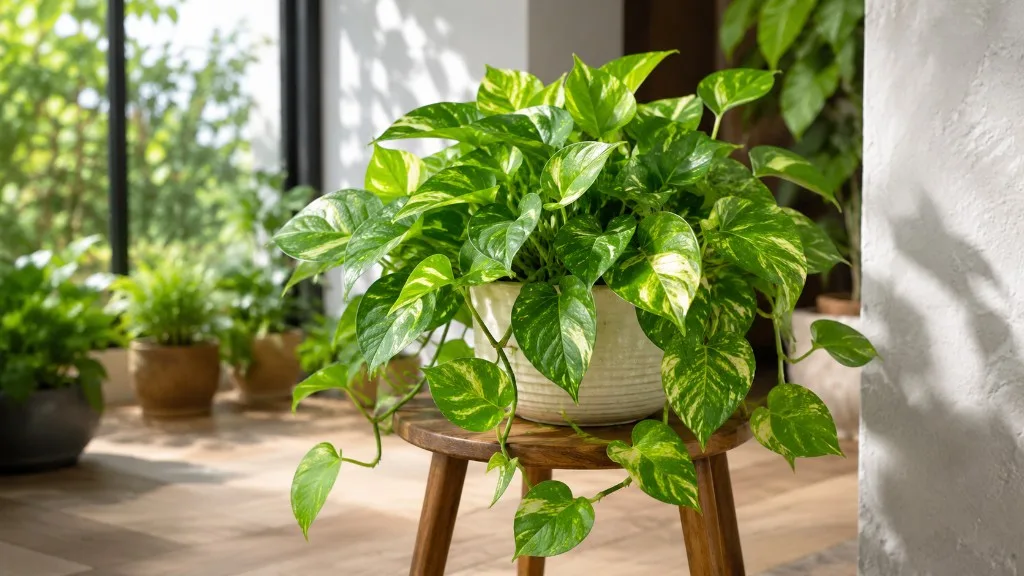
1. Golden pothos (Epipremnum aureum) — Choose this trailing vine if you want visible growth and a plant that can be pruned or trained. It handles a range of indoor light but grows fuller in brighter indirect light; let the upper part of the mix dry before watering again. Its long stems need occasional trimming, and the plant is toxic to pets that chew it.
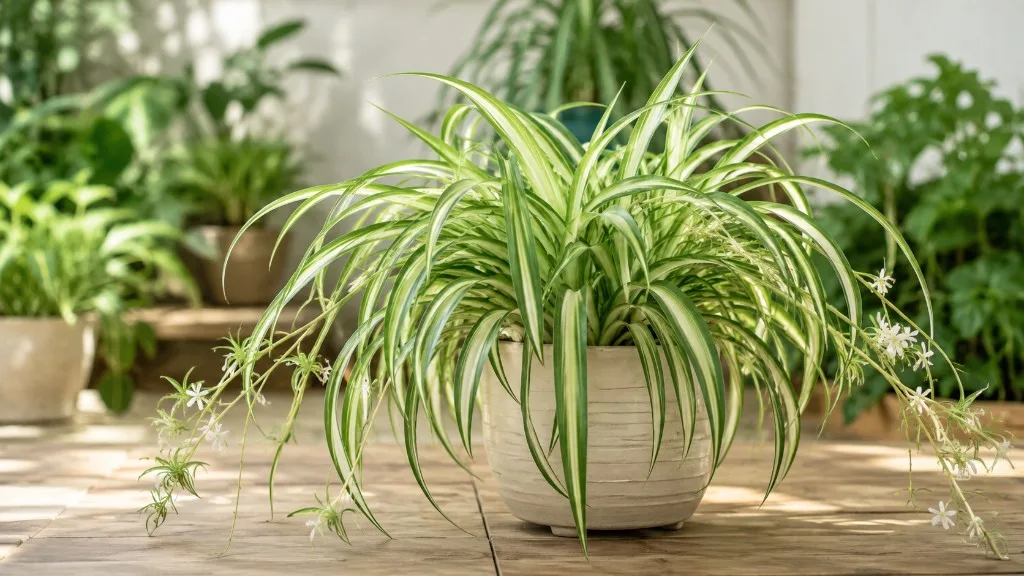
2. Spider plant (Chlorophytum comosum) — Its arching leaves and baby plantlets make it forgiving and easy to share. Give it bright indirect light or gentle morning sun, and water when the surface begins to dry rather than leaving it bone-dry for weeks. It is a useful pet-household option according to ASPCA, though a curious cat may still chew or knock over a hanging pot.
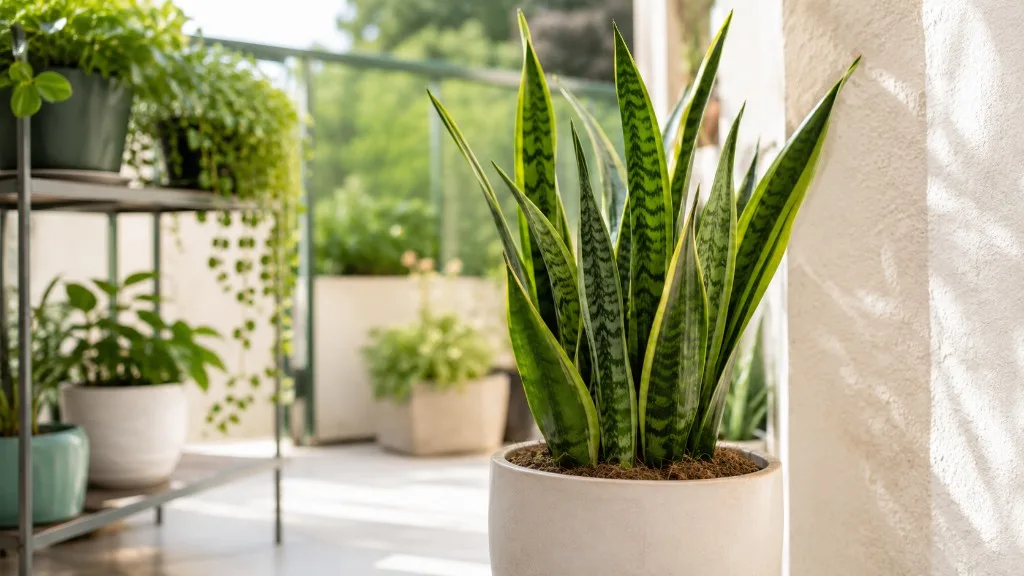
3. Snake plant (Dracaena trifasciata) — Pick it for upright shape and a slower watering routine. It tolerates lower light, but brighter indirect light generally supports steadier growth; let the potting mix dry between waterings and never leave its roots in water. NC State Extension specifically warns that overwatering can rot the roots, and ASPCA lists snake plants as toxic to pets (NC State Plant Toolbox; ASPCA snake plant listing).
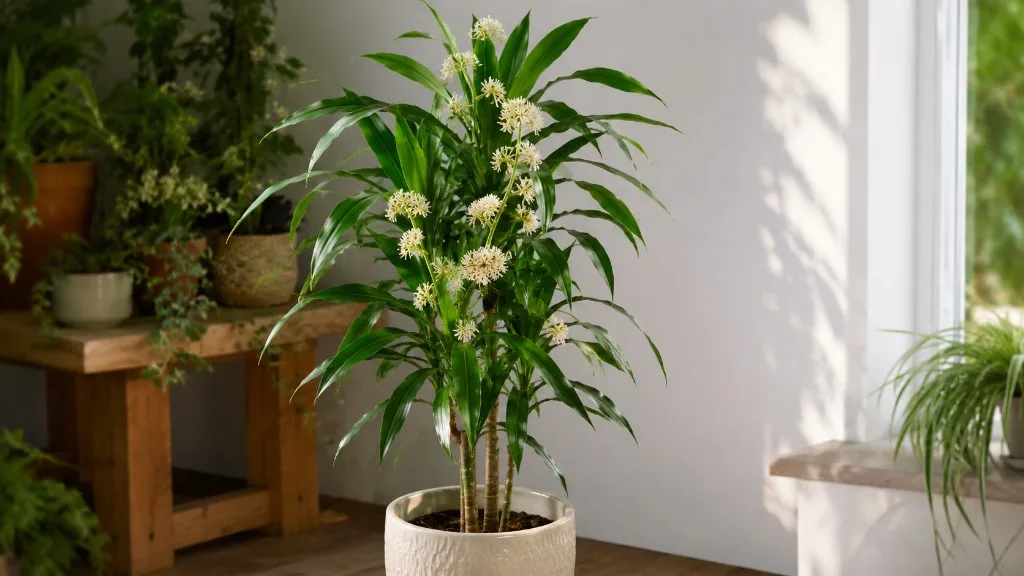
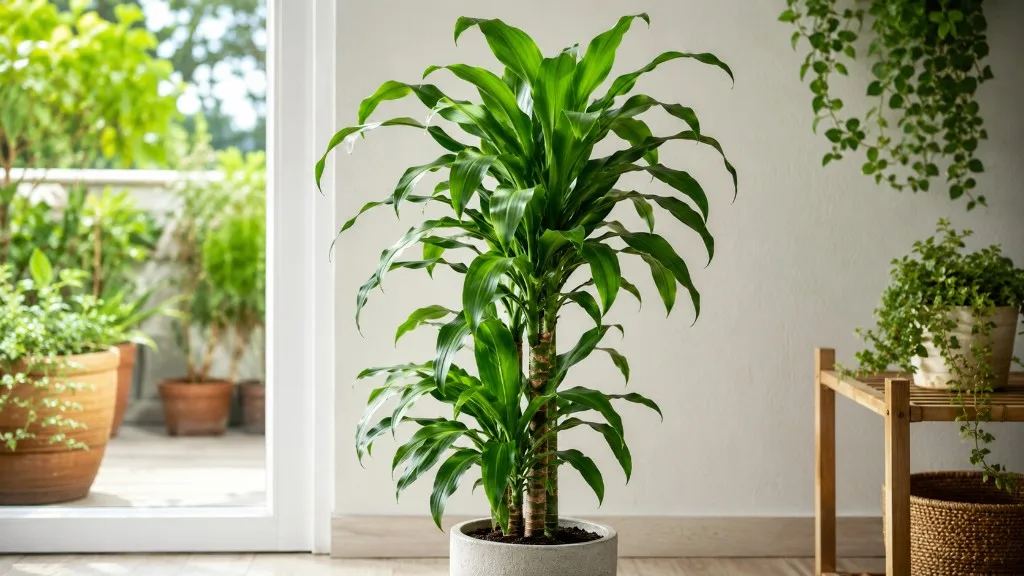
4. Dragon tree (Dracaena marginata) — This is a good choice when you want a tall, narrow plant rather than a trailing vine. Place it in moderate to bright indirect light; in a very dim room, it may stretch and lean. Allow the upper soil to dry before watering, and expect a slow change in height rather than quick, bushy growth. ASPCA lists D. marginata as toxic to cats and dogs (ASPCA straight-margined dracaena listing).
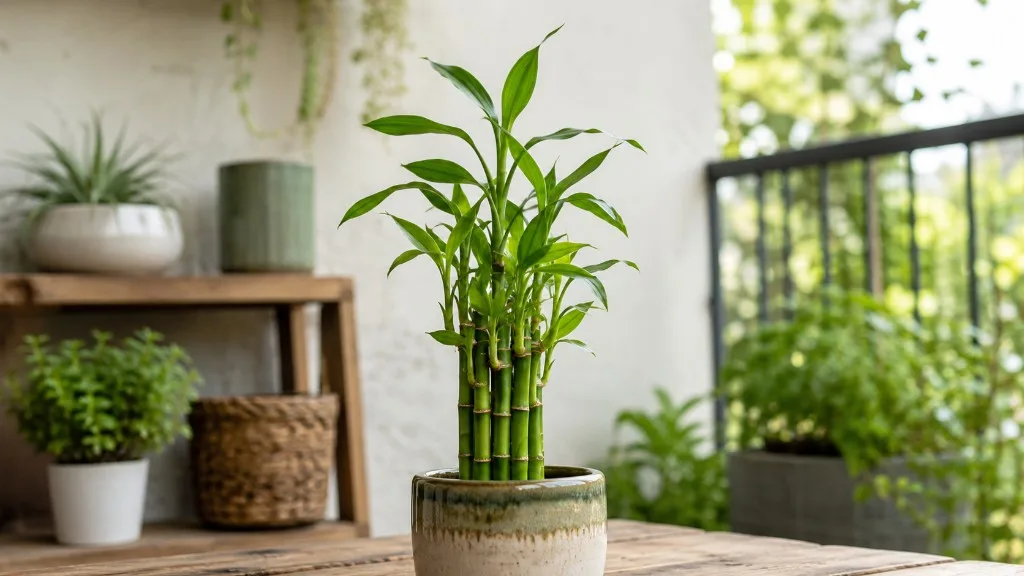
5. Lucky bamboo (Dracaena sanderiana) — Despite the name, it is a dracaena, not a true bamboo. It is often sold growing in water, which can simplify watering but does not mean the stems should sit in stagnant, dirty water; refresh the container and rinse it regularly. A soil-grown plant should be watered when the top layer dries. Keep it away from pets; ASPCA lists Dracaena species, including dragon tree and ribbon plant common names, as toxic to cats and dogs (ASPCA Dracaena listing).
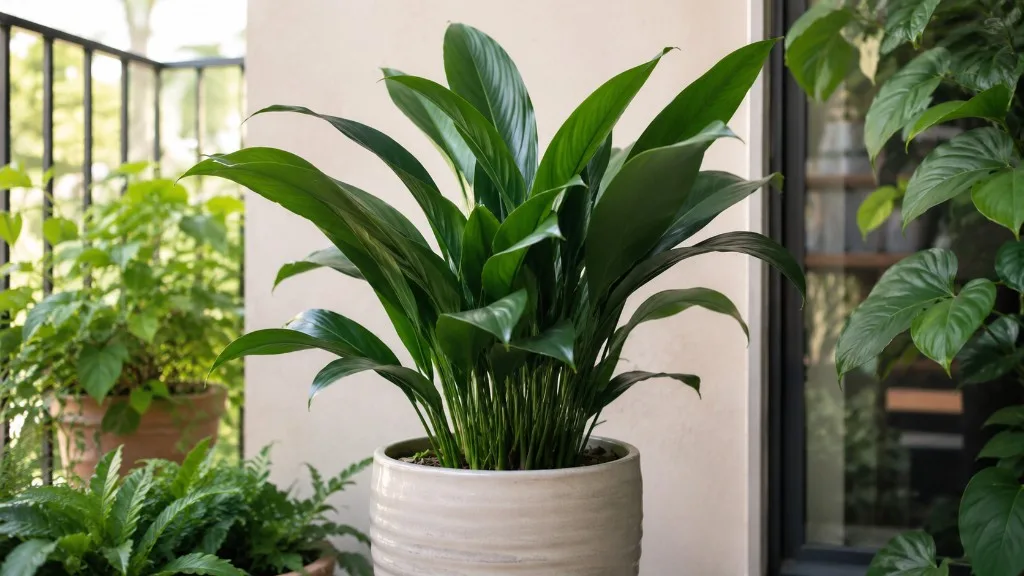
6. Cast iron plant (Aspidistra elatior) — Choose this slow-growing plant for a dimmer, lived-in room where other foliage plants may struggle. It tolerates lower light and occasional dry soil, but will not reward frequent repotting or constant wetness. Its broad leaves build volume gradually, so buy the size you want rather than expecting it to fill a corner in a season. Iowa State and Epic Gardening both describe it as a notably tolerant houseplant (Epic Gardening’s cast iron plant guide).
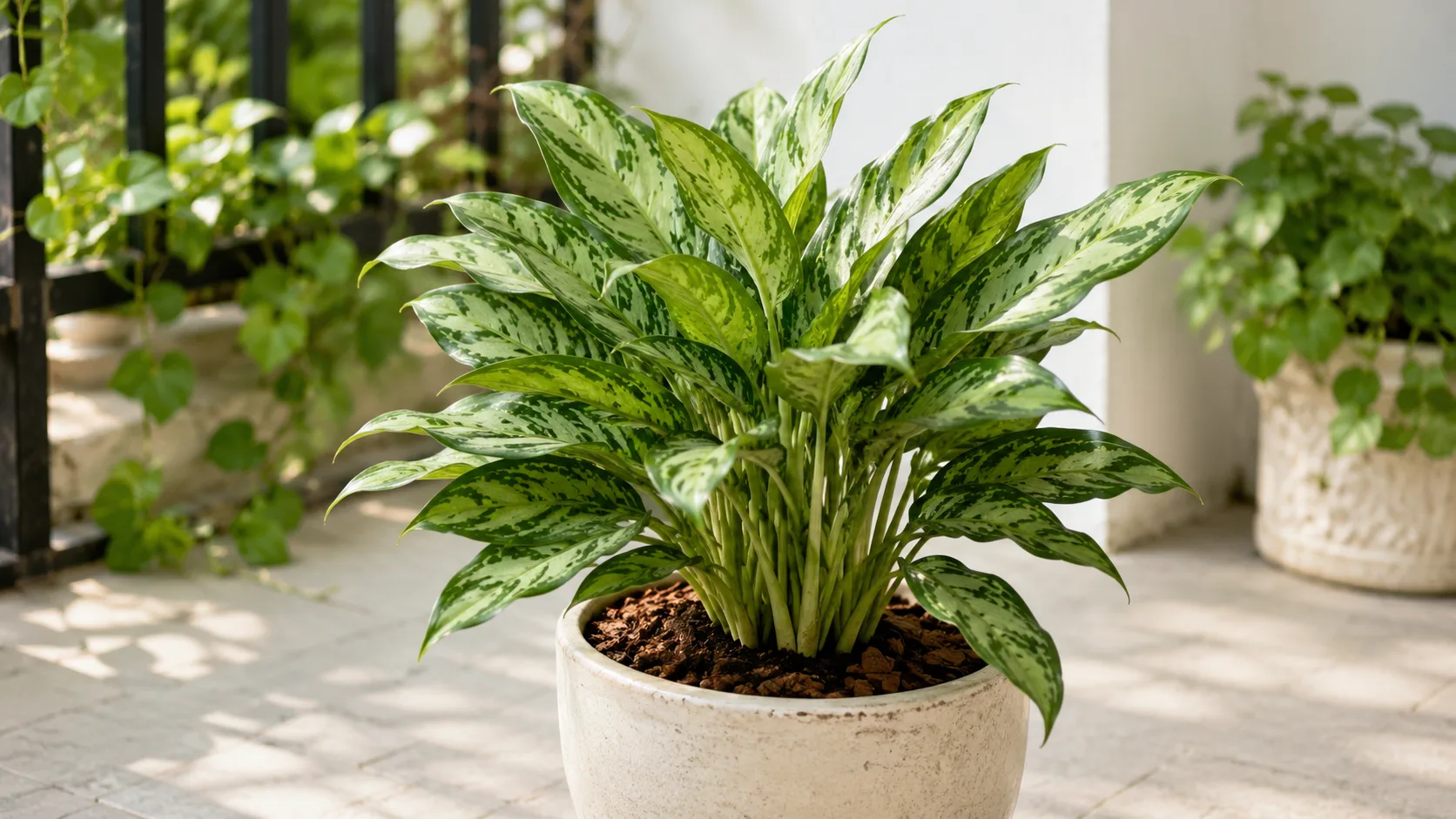
7. Chinese evergreen (Aglaonema spp.) — Aglaonema is a strong choice for a lower-light room when you want patterned, silver, or pink foliage. Green cultivars usually cope with less light than highly colorful ones; keep the mix lightly moist during active growth but not soggy, and reduce watering in winter. NC State notes that it tolerates dryer indoor air but can develop root rot in overwatered soil; ASPCA flags the genus as toxic to pets (NC State’s Chinese evergreen profile).
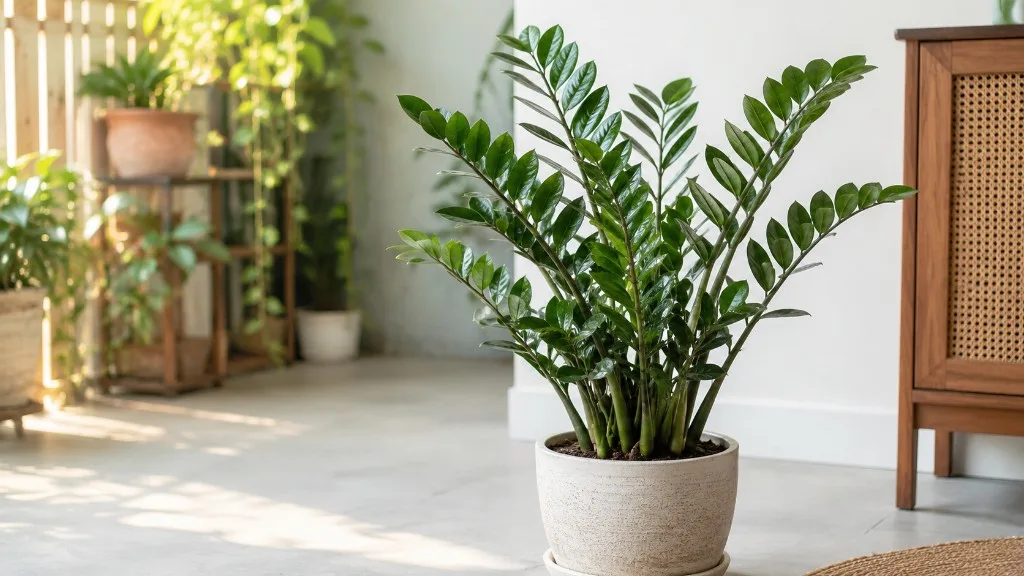
8. ZZ plant (Zamioculcas zamiifolia) — This is one of the better choices for someone who tends to overwater or travel. Its underground rhizomes store water, so wait until the mix has dried substantially before watering; small, frequent drinks are a common way to damage it. It tolerates low light but grows slowly there, and it is not a pet-safe plant.
9. Heartleaf philodendron (Philodendron hederaceum) — A classic trailing plant for a shelf or hanging basket, it is easy to shape and can be shortened when vines become long. Give it bright indirect light for fuller growth, then let the top portion of the soil dry before watering. It may resemble pothos, but is a different plant; both are poor choices where pets can chew the leaves.
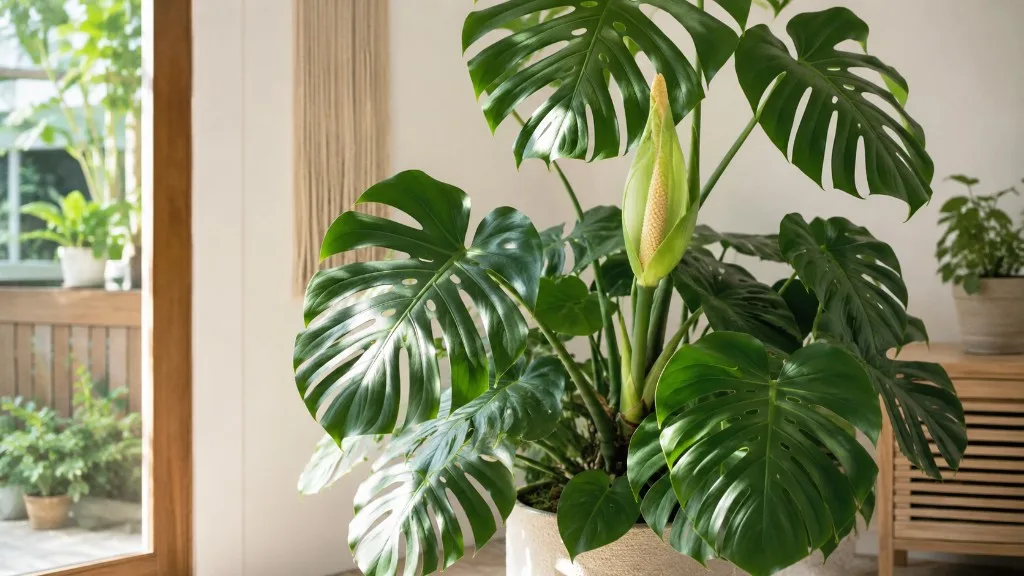
10. Monstera deliciosa — Choose Monstera when you have floor space and want a larger statement plant. Give it bright indirect light and a support if you want the climbing stems to stay upright; young leaves may not yet have the familiar holes. It can outgrow a small apartment corner and needs more frequent checks in warm, bright conditions. Keep it from pets because it contains irritating oxalates.
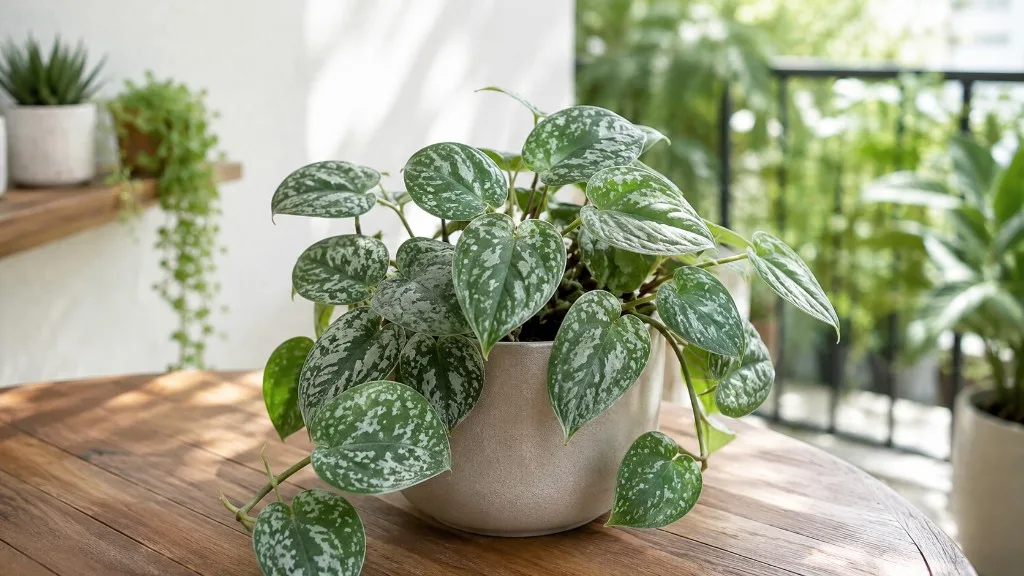
11. Satin pothos (Scindapsus pictus) — Silver-marked leaves make this trailing vine feel more decorative than common pothos, but it prefers brighter indirect light to maintain contrast. Let the upper few inches of mix dry, then water deeply and drain the pot. Its leaves and vines are slower and thicker than golden pothos, so it is not the best choice if you want fast coverage; keep it from chewing pets.
12. Corn plant (Dracaena fragrans) — Its cane-like trunk and long leaves give a room height without a wide footprint. Keep it in moderate indirect light and let the upper soil dry somewhat before watering; a heavy pot that stays wet can cause root trouble. Growth is gradual, and the mature plant can become too tall for a low shelf. It is a dracaena, so verify pet safety before bringing it home.
Bright-window plants for dry-down watering
These choices prefer a bright window and a soil mix that drains quickly. They are not “low light” plants just because they need less water: too little light can leave them thin, pale, or stretched, while damp soil can cause rot.
13. Moon cactus (Gymnocalycium mihanovichii) — The vivid colored top is usually grafted onto a green cactus rootstock, so check the graft is firm and both parts look healthy. Give it a bright spot with some protection from intense afternoon sun, and wait for the mix to dry before watering. Because two plants are joined and the top cannot thrive independently, this is more of a compact novelty than a long-lived, no-effort starter.
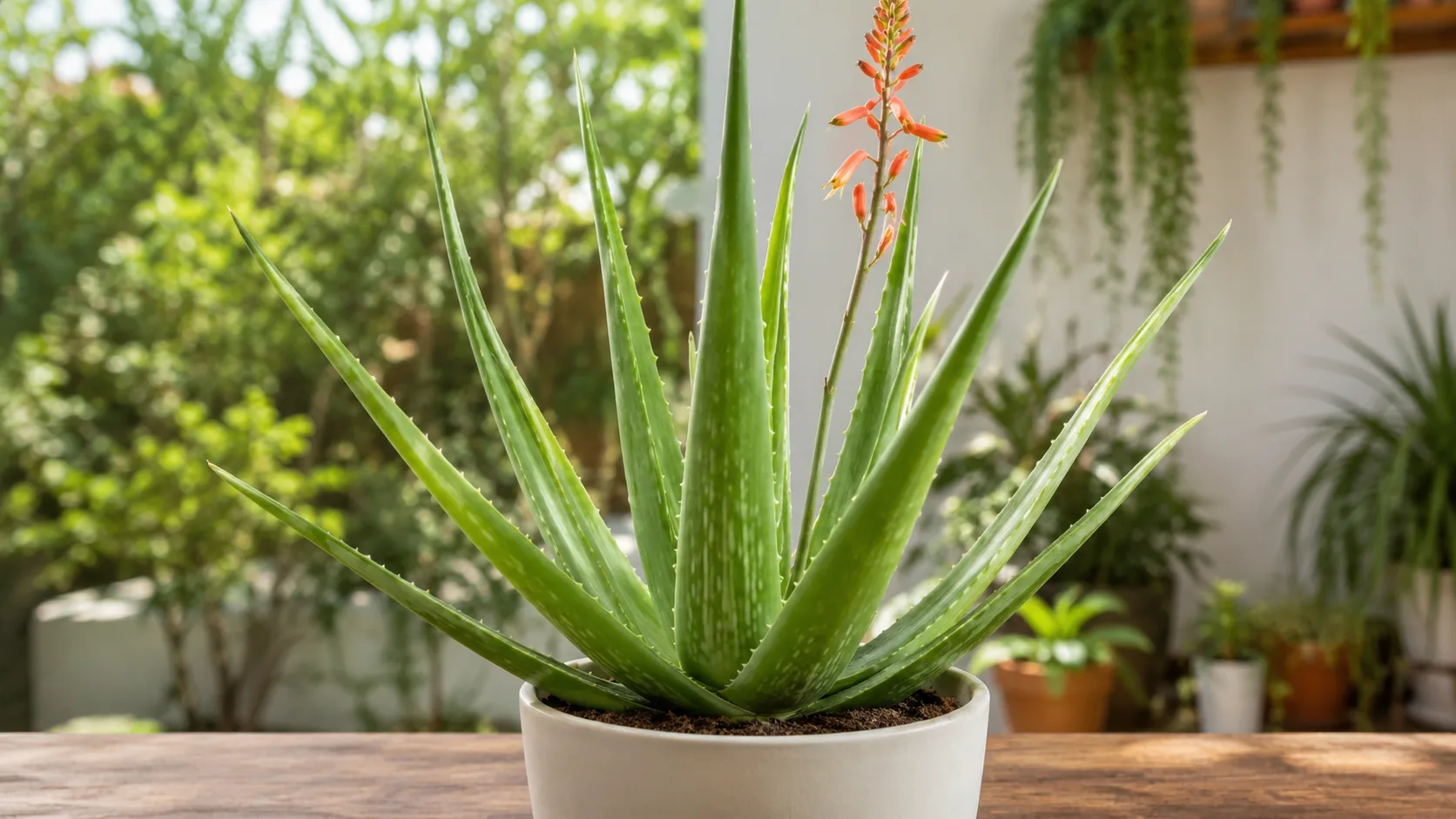
14. Aloe (Aloe vera) — Aloe suits a sunny sill and an owner who remembers to leave the soil alone after watering. Use a gritty, fast-draining mix, water thoroughly, then wait until the pot is dry; increase sun exposure gradually if the plant came from a shaded store. It needs more light than a dark living room provides, and ASPCA lists the plant as toxic to pets (ASPCA aloe listing).
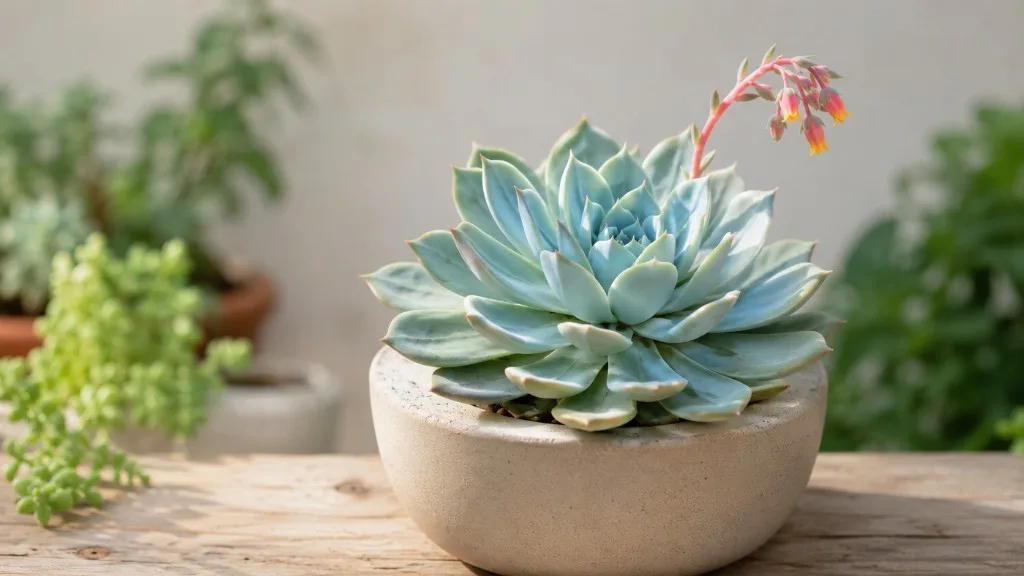
15. Echeveria (Echeveria spp.) — This compact rosette is a good first succulent if you have a bright window and can avoid watering the center of the plant. Let the soil dry fully between waterings and use a pot with drainage. The powdery leaf coating and tight rosette can be damaged by handling or water sitting in the crown, and a dim shelf will make the plant stretch rather than stay compact.
16. Ox tongue (Gasteria spp.) — Gasteria offers thick, often textured leaves without the demanding size of a large aloe. Set it in bright indirect light, use a gritty mix, and allow the soil to dry between waterings. It grows slowly and can tolerate a modest amount of shade, but a dark corner and regular watering together are a poor combination for this succulent.
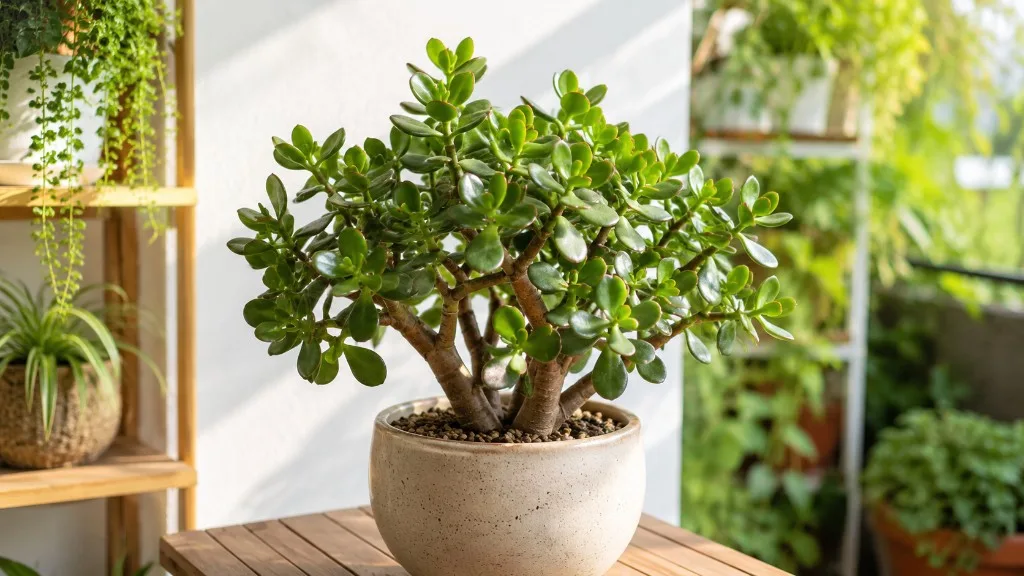
17. Jade plant (Crassula ovata) — Jade works for a sunny windowsill and a patient beginner who can resist watering on a schedule. Give it bright light, let the potting mix dry thoroughly, and turn the pot occasionally so it does not lean toward the glass. Its woody stems can eventually form a small tree, but low light and soggy soil lead to weak growth; ASPCA lists jade as toxic to cats and dogs (ASPCA jade plant listing).
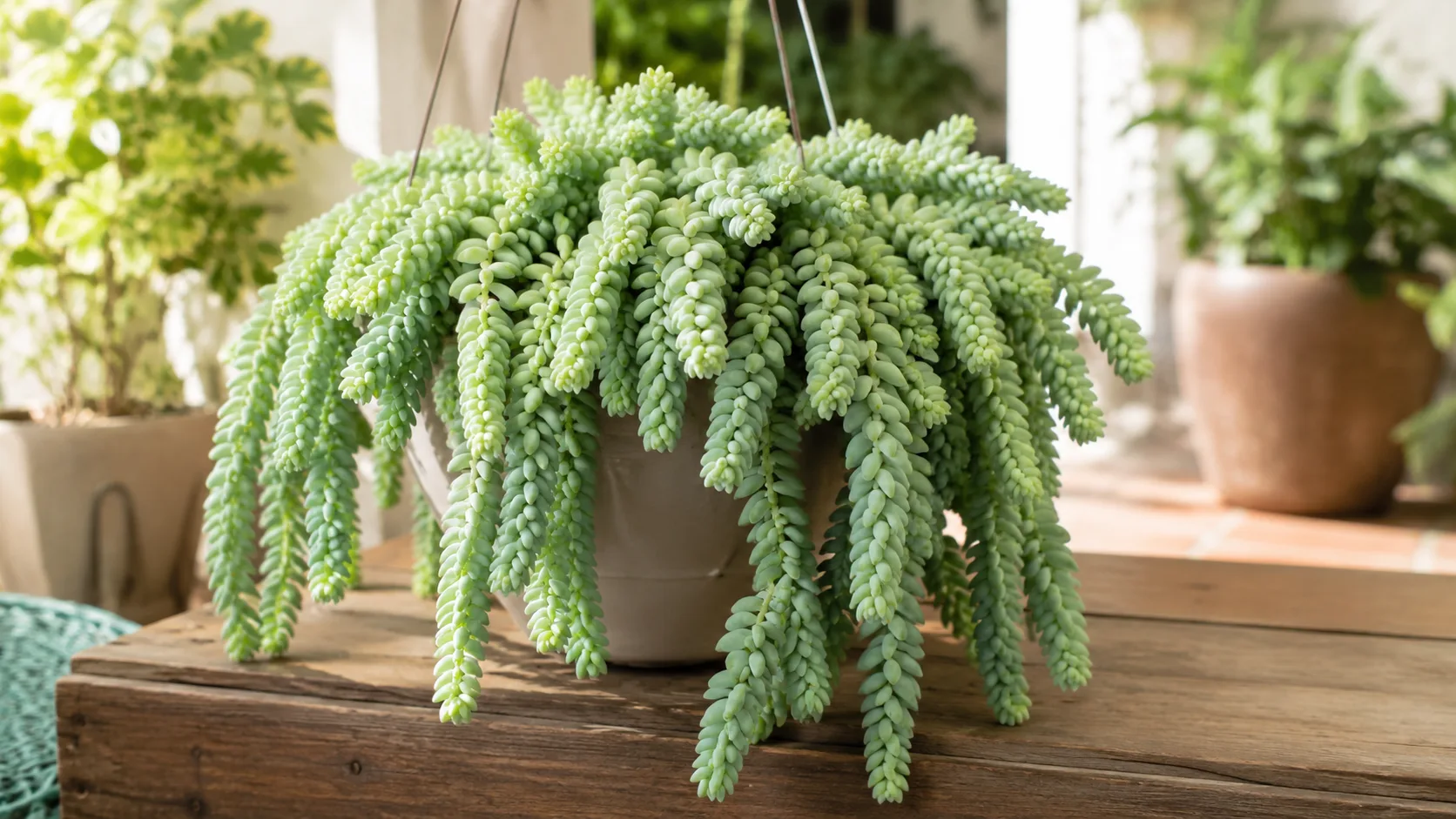
18. Donkey’s tail (Sedum morganianum) — The trailing stems look striking in a hanging planter, but the plump leaves detach easily when brushed. Give it bright light, fast drainage, and a full dry-down between waterings. It is an easy plant if you can give it a stable, out-of-traffic perch; it is frustrating in a busy doorway or where pets bat at dangling stems.
19. String of buttons (Crassula perforata) — The stacked, button-like leaves make this upright succulent distinctive in a small pot. It wants bright light and well-drained soil, with a thorough watering only after the mix has dried. If stems lengthen and leaves spread far apart, the plant likely needs more light; pruning and re-rooting cuttings is easier than trying to make a stretched plant compact again.
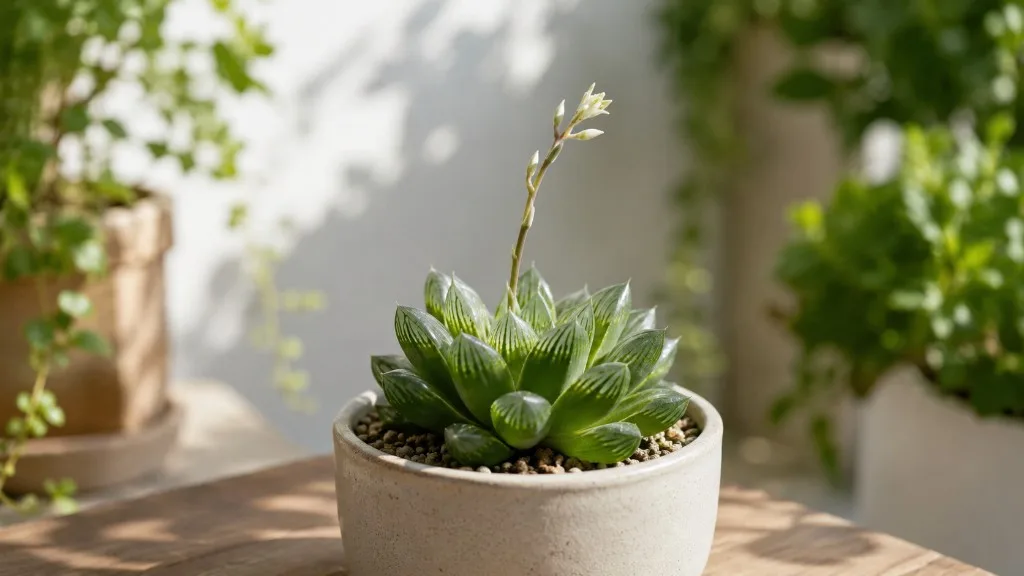
20. Zebra plant (Haworthiopsis attenuata) — This compact succulent is often easier indoors than sun-hungry echeveria because it can handle bright indirect light. Use a small draining pot and let the mix dry between waterings; do not leave water trapped in its tight rosette. It is a practical windowsill starter when a sunny south-facing exposure would be too harsh for more delicate plants.
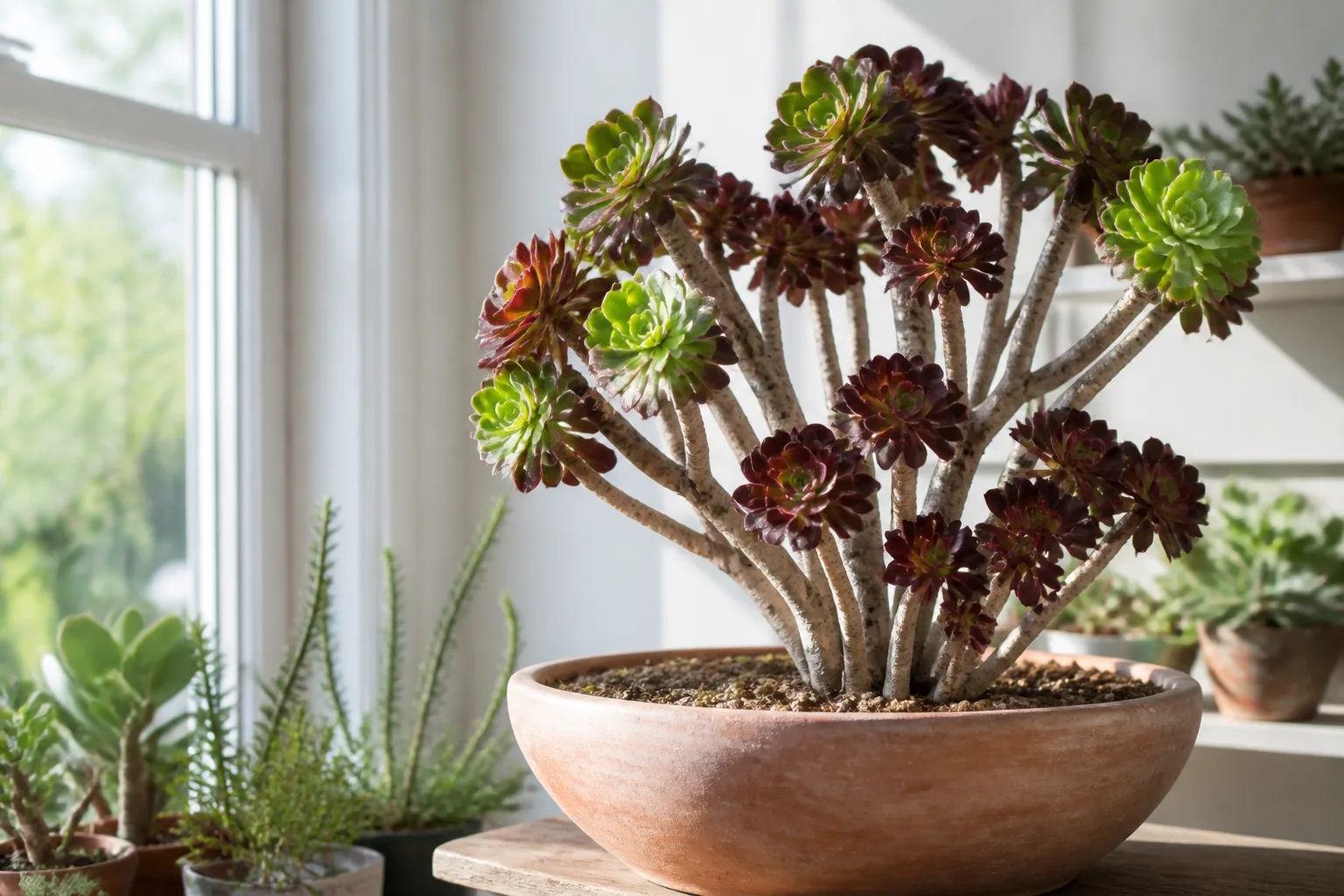
21. Aeonium (Aeonium spp.) — Aeoniums form architectural rosettes and suit a bright window, but they have a seasonal rhythm that beginners should know. Many grow most actively in cooler months and slow in hot summer conditions, so do not keep watering a pot heavily while growth has stalled. Use a draining mix and adjust watering to visible growth rather than assuming every succulent wants the same schedule.
Flowering and texture-rich plants
These plants add blooms, patterned leaves, or unusual shapes. They can still be beginner-friendly, but some need steadier moisture or more attention than a ZZ plant; choose them because their growing conditions fit your home, not only because they are attractive.
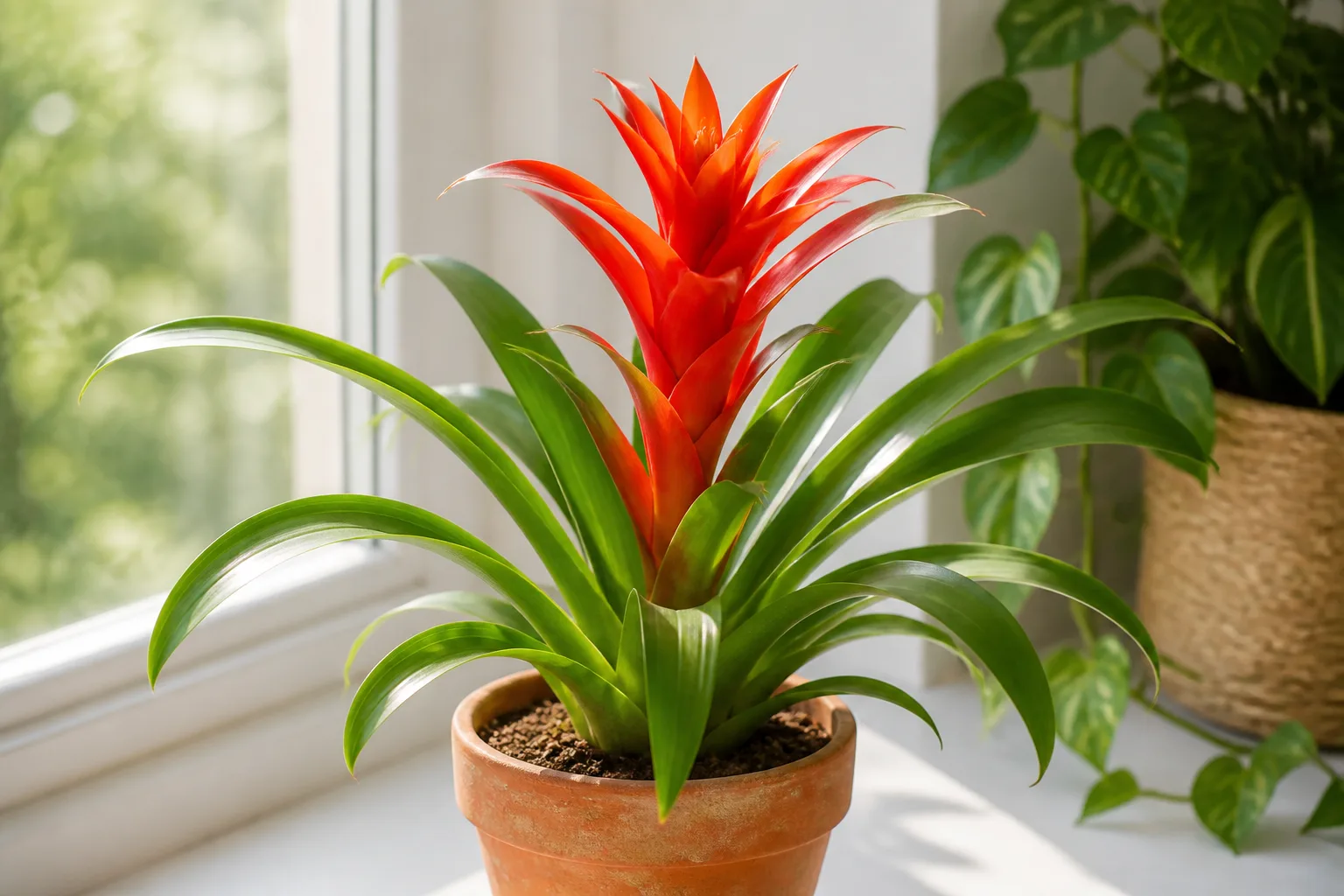
22. Bromeliads (Bromeliaceae spp.) — Many commonly sold bromeliads have a central cup and colorful bracts that last for weeks or months. Follow the label for the exact type: tank-forming varieties can hold clean water in the cup, while others are grown differently; rinse the cup periodically and do not let the potting mix remain saturated. After flowering, the original rosette may fade while offsets grow, so the display is not necessarily permanent.
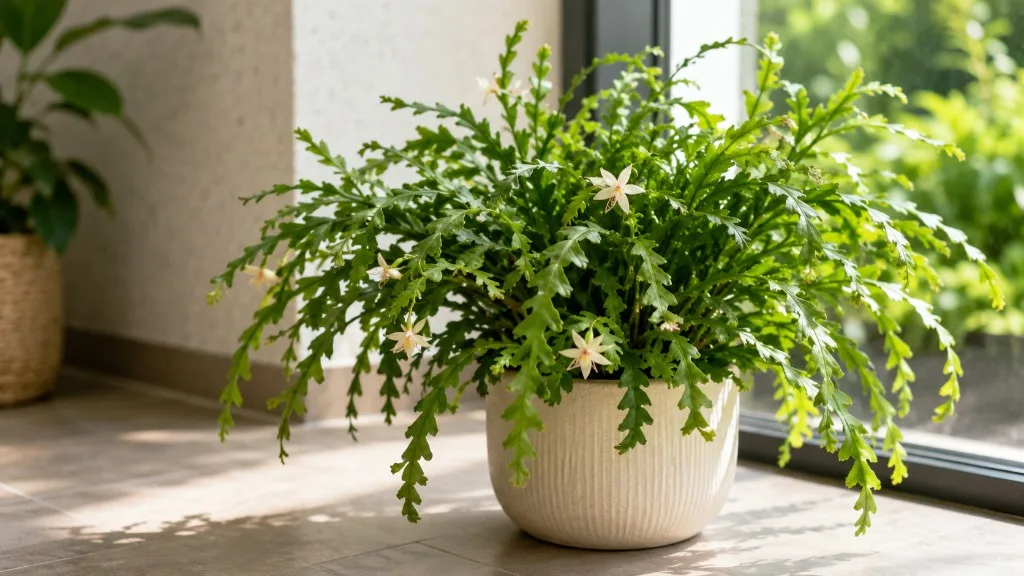
23. Fishbone cactus (Disocactus anguliger) — Its jagged, zigzag stems look like a cactus but its care is closer to a tropical epiphyte than a desert cactus. Place it in bright indirect light, use an airy mix, and water when the upper layer dries rather than leaving it bone-dry for long stretches. A hanging pot shows off the stems, but give them room and protect them from harsh afternoon sun.
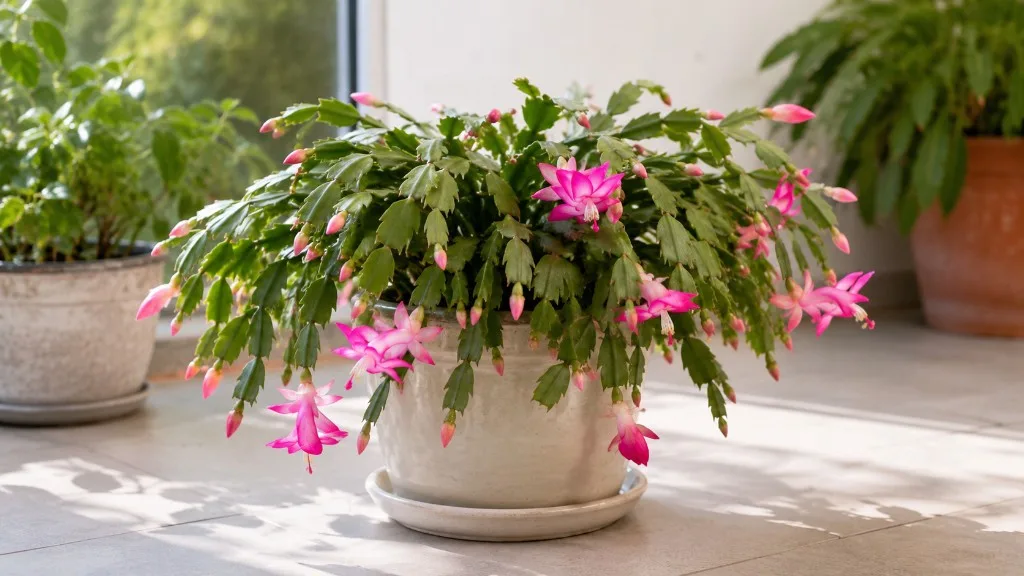
24. Holiday cactus (Schlumbergera hybrids) — Unlike desert cacti, holiday cacti come from humid forest habitats and do better with a little more regular moisture. Give them bright indirect light, water when the top of the mix has dried, and avoid both a waterlogged pot and prolonged drought. They can flower reliably when seasonal light and temperature cues line up, but buying one in bloom does not guarantee year-round flowers.
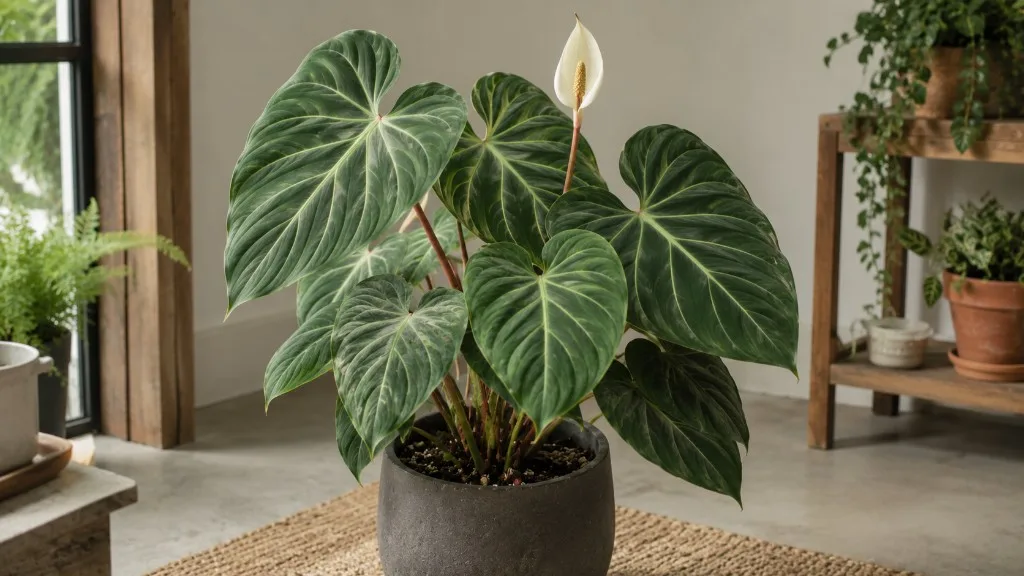
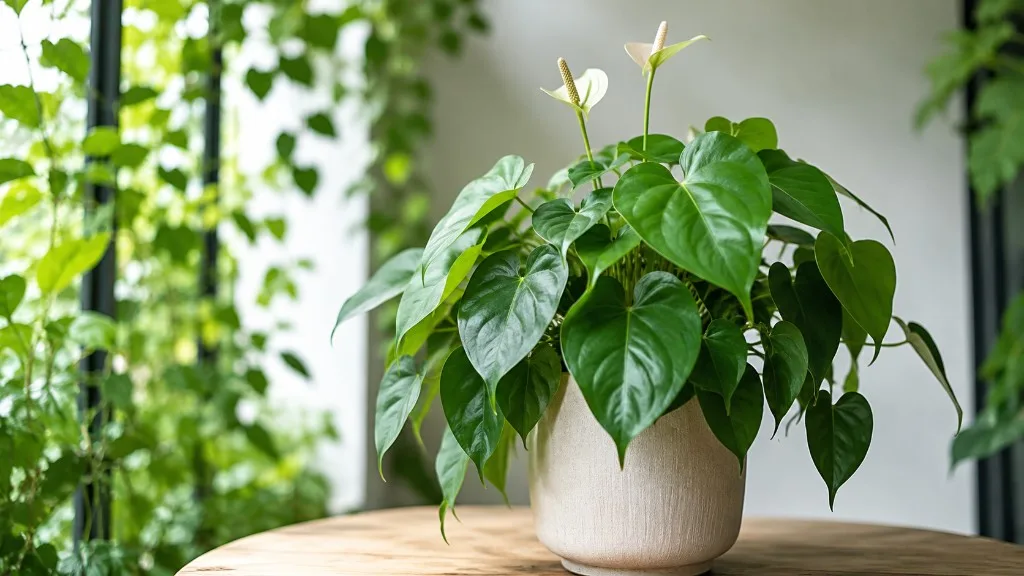
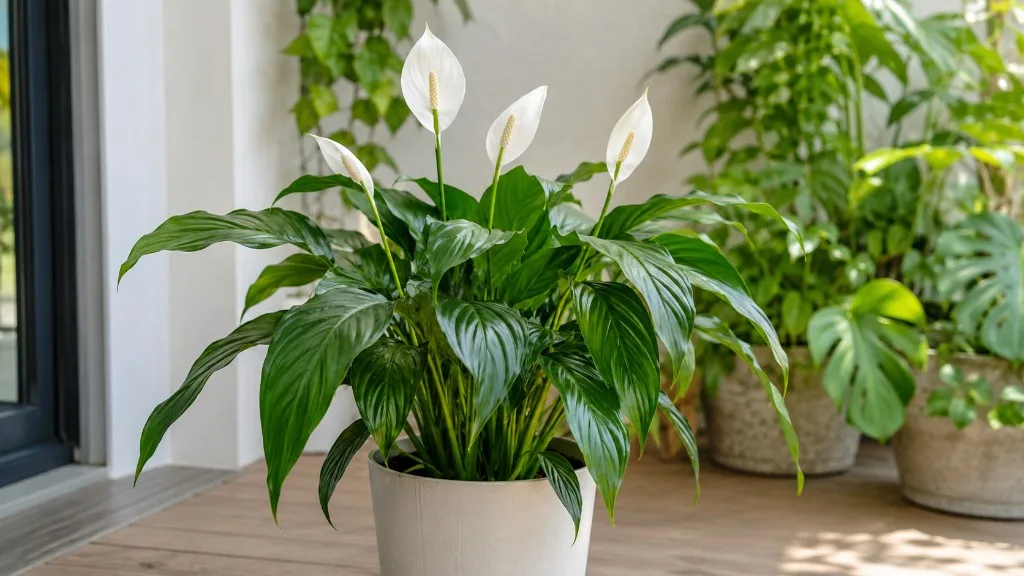
25. Peace lily (Spathiphyllum spp.) — Choose a peace lily if you like broad leaves and occasional white blooms and are willing to check moisture regularly. It tolerates lower light but usually flowers better in brighter indirect light; keep the mix evenly damp, not swampy. A wilt is a clear sign the plant is too dry, but waiting for repeated collapses is stressful. It is not a true lily, yet ASPCA identifies it as a pet-toxicity concern because of calcium oxalate crystals (ASPCA houseplant safety overview).
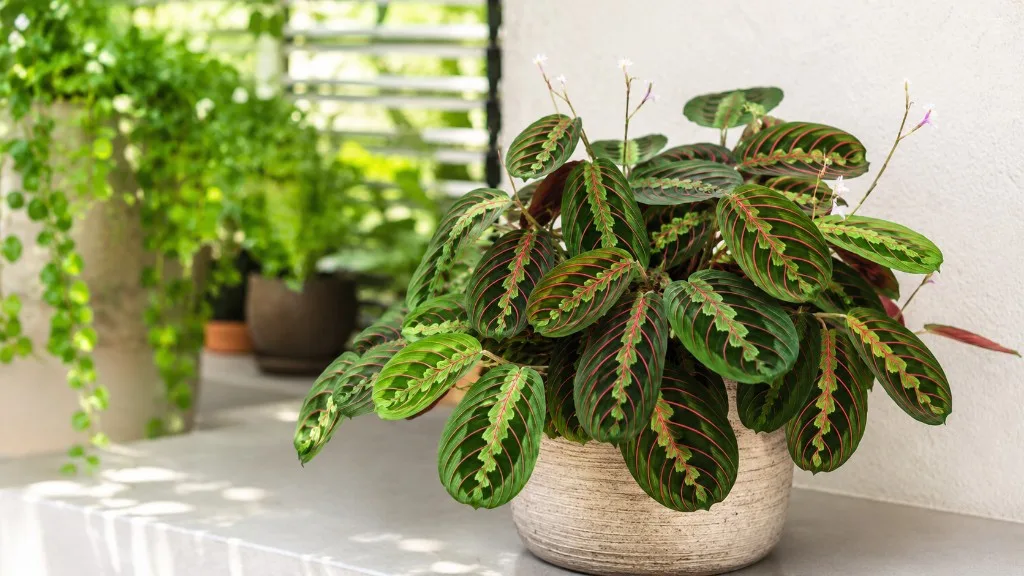
26. Prayer plant (Maranta leuconeura) — Maranta’s patterned leaves fold upward at night, making it a rewarding tabletop plant. It prefers bright indirect light, a lightly and consistently moist mix, and protection from cold drafts. It is a better match for someone who enjoys checking the soil than for a frequent traveler or a habitual underwaterer; waterlogged soil can still damage its roots.
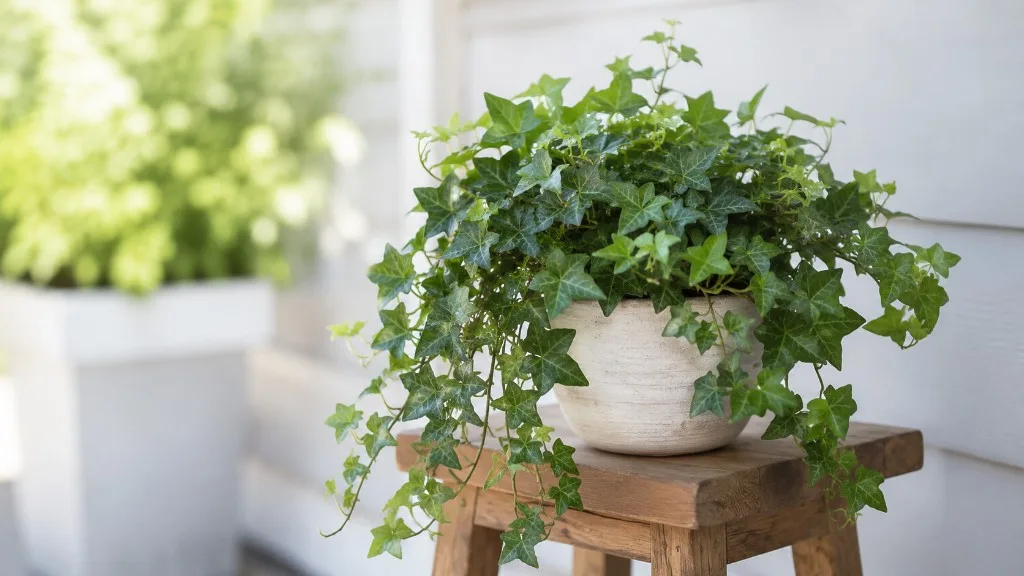
27. English ivy (Hedera helix) — English ivy can trail from a hanging basket and tolerates cooler indoor conditions better than some tropical foliage plants. Give it bright indirect light and airflow, let the upper soil dry slightly, and inspect the undersides of leaves for mites. Its vines need pruning to stay tidy, and ASPCA lists it as toxic to cats and dogs; keep it out of reach rather than assuming a hanging pot is inaccessible to cats (ASPCA English ivy listing).
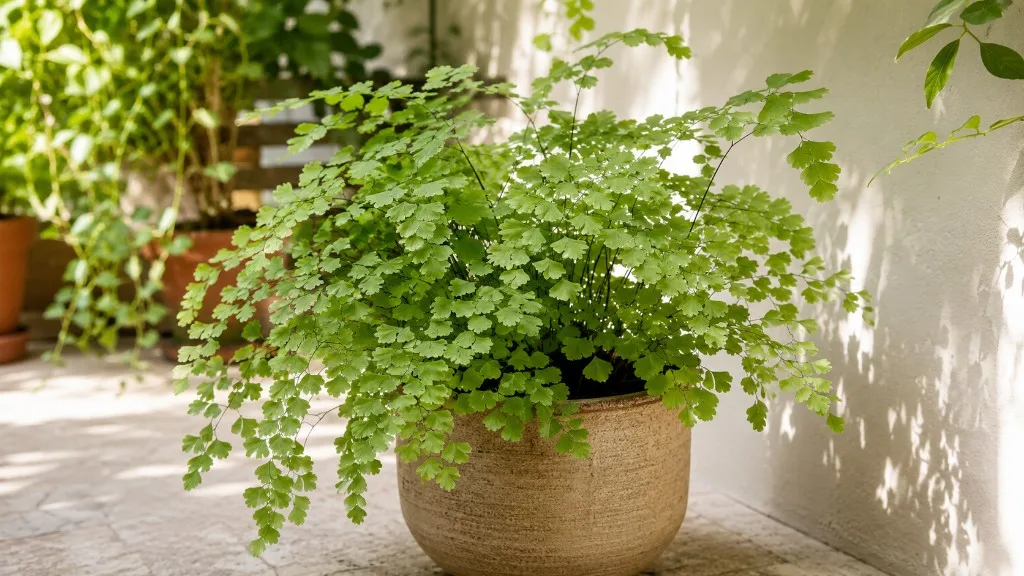
28. Maidenhair fern (Adiantum raddianum) — The delicate, fan-shaped leaflets look beautiful in humid rooms, but maidenhair is not the best plant for a person who forgets watering. Keep its mix evenly moist without waterlogging it, avoid dry heater blasts, and place it in bright filtered light. Choose it only if you enjoy checking soil; once the fine foliage dries and crisps, recovery can be slow.
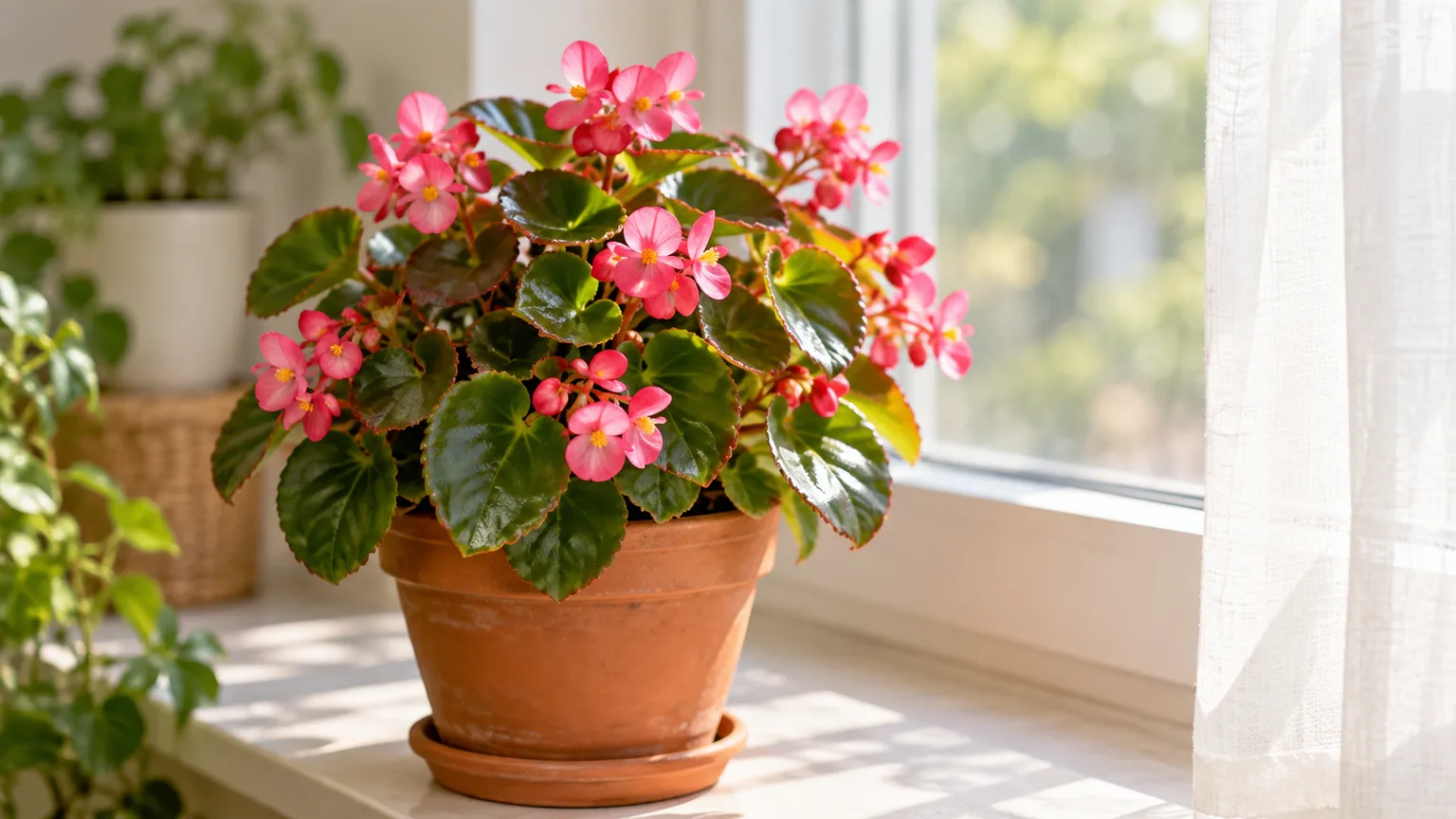
29. Wax begonia (Begonia semperflorens) — This flowering begonia can produce repeated color in bright indirect light or gentle morning sun. Let the surface begin to dry between thorough waterings, and give it good airflow so crowded, wet leaves do not stay damp. It may need pinching to remain bushy and can lose flowers in too little light; ASPCA lists Begonia species as toxic to cats and dogs (ASPCA Begonia listing).
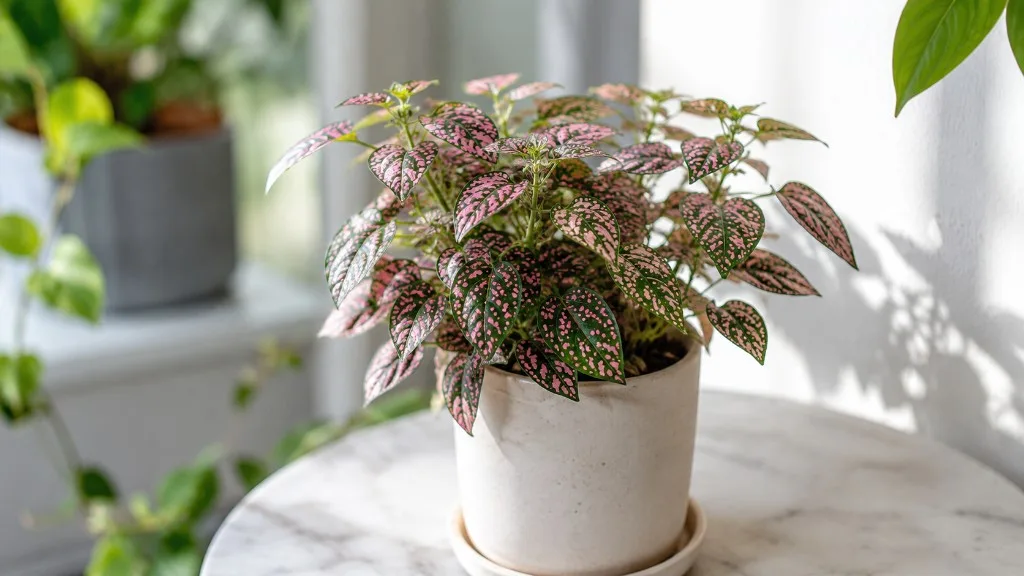
30. Polka dot plant (Hypoestes phyllostachya) — This compact plant adds pink, red, or white speckles, but it is more demanding than a ZZ or cast iron plant. Give it bright indirect light and water when the top layer starts to dry so it does not wilt repeatedly. Pinch leggy tips to encourage branching; if the room is dark, the stems stretch and the leaf color fades.
Best beginner plants by real-life situation
Use the room and routine as your filter, then choose one plant from the matching group rather than buying several at once.
| Your situation | Start with | Why it fits | What to watch |
|---|---|---|---|
| Lower light but a real window | Cast iron plant, ZZ, snake plant, or green aglaonema | These tolerate less light than most picks | Expect slower growth; none can live indefinitely in darkness |
| Bright window and missed waterings | Aloe, jade, snake plant, or ZZ | They store water or tolerate a deeper dry-down | Use gritty or well-drained mix; do not compensate for low light with more water |
| You want a forgiving vine | Golden pothos or heartleaf philodendron | Easy to trim and train | Both are pet-toxicity concerns; give the vine usable light |
| Pet chews plants | Spider plant, after confirming the exact ID | ASPCA lists it as non-toxic to cats and dogs | Non-toxic does not mean edible; chewing can still upset the stomach |
| You like flowers | Holiday cactus or wax begonia | Both can bloom indoors with suitable light | A flowering plant needs a more specific light and watering match than a foliage plant |
| You want one to notice when it is thirsty | Peace lily | Its leaves visibly droop when dry | Water before repeated wilting, and keep it away from chewing pets |
The best short list for most first-time growers is golden pothos, spider plant, snake plant, cast iron plant, and ZZ plant—but they are not interchangeable. Pothos and spider plants show new growth quickly in reasonable light; the snake plant and ZZ are better for a drier routine; cast iron is useful when light is limited and patience is available. AP gardening columnist Jessica Damiano makes a similar practical case for forgiving plants such as spider plant, pothos, ZZ, cast iron, and aloe, while her examples also show why “easy” still depends on the home and the grower’s habits (AP’s beginner-friendly houseplant column).
A first-month care plan
Let a new plant settle before changing everything
When you bring a plant home, check its leaves, stems, and soil before placing it. Keep it away from other plants for a short observation period if you can, especially if you see webbing, cottony clusters, scale-like bumps, or sticky residue. Choose a stable location with the right light, remove any standing water from the cover pot, and avoid a sudden move from a shaded shop to intense direct sun.
Do not repot automatically on day one just because the nursery pot is unattractive. If the mix is draining, the plant is stable, and roots are not forcing their way out in a way that prevents watering, let it acclimate first. When a repot is needed, use a container only modestly larger than the root ball and a mix suited to the plant group; a huge pot can stay wet too long, especially for succulents and drought-tolerant foliage plants.
Learn its soil cue instead of following a calendar
Check the mix with a finger or a wooden skewer before watering. For a moisture-loving prayer plant or fern, water as the upper layer begins to dry; for a pothos or Chinese evergreen, allow a more noticeable dry-down; for a snake plant, ZZ, or succulent, wait until the mix is dry much deeper. Those are starting cues, not universal depths: pot size, root mass, season, room temperature, and window exposure all change drying speed.
Water around the soil surface until it drains from the bottom, then empty the saucer. If water runs down a gap around a dry root ball without wetting it, water slowly in two passes and check the center. In winter, lower light and cooler growth usually mean plants use water more slowly, so repeat the soil check before assuming last month’s interval still applies.
Common beginner mistakes that hurt easy plants
Watering on the same weekday is convenient for the person but ignores changing conditions. A plant near a sunny window can dry quickly in summer and remain wet much longer in winter. Keep a note of the last watering if useful, but let the soil decide whether the next one is due.
Treating every plant as a low-light plant leads to stretched vines, sparse leaves, and succulents that lose their compact shape. Move a plant closer to daylight gradually and watch its new growth. If no suitable window exists, a grow light is more realistic than expecting a plant to live on room lamps.
Using a pot without drainage can trap water around roots. A decorative pot can still work as a cover pot if you remove the nursery pot to water and let it drain before returning it. Avoid leaving the inner pot submerged in the outer container.
Repotting, fertilizing, pruning, and relocating all at once makes it hard to see which change caused a problem. Start with stable light and correct watering. Make one adjustment at a time, and do not fertilize a stressed plant as a substitute for fixing wet soil or inadequate light.
What “easy-care” does not mean
An easy plant is forgiving of ordinary variation, not independent of its environment. A drought-tolerant snake plant still needs light and a draining root zone; a shade-tolerant cast iron plant still needs some daylight; and a maidenhair fern can be easy only for someone willing to maintain steadier moisture. The RHS points out that rooms vary in light, humidity, and temperature, so a plant that thrives in one home may struggle in another (RHS houseplant selection guide).
The word “low maintenance” also says nothing about size, toxicity, or growth speed. Monstera can become a large floor plant, English ivy and pothos need pruning, a ZZ may look nearly unchanged for months, and a pet-toxic plant may be inappropriate even if it is simple to water. Make those trade-offs before you buy, not after the plant becomes a fixture in the room.
How to add a second plant without adding chaos
Start with one plant and observe it through a few watering cycles. Notice how long its pot takes to dry, whether the newest leaves are smaller or stretched, and whether the location gets direct sun at a different time of day than you expected. That small record teaches more than a memorized weekly schedule.
When you are ready for a second plant, choose one with a different visual shape but a similar care rhythm. A spider plant and pothos both appreciate indirect light but differ in pet safety; a snake plant and jade both tolerate dry-downs but one is more tolerant of lower light; a peace lily and maidenhair fern both need closer moisture checks but have different size and humidity needs. Buying by rhythm lets you build a routine before expanding into plants that require a separate schedule.
Conclusion
Choose your first houseplant by matching it to a real window, a real watering habit, and any pets that can reach it. For an everyday room, pothos, spider plant, cast iron plant, snake plant, or ZZ are sensible starting points; for a bright sill, consider aloe, jade, echeveria, or haworthia; for flowers or delicate texture, be prepared for more regular checks. Give the plant drainage, let it settle, and use its soil—not the calendar—to decide when to water.