Houseplant Care Guide: Light, Water, Soil, Humidity & More
Get a practical houseplant care routine for light, watering, potting mix, feeding, pests, and repotting—with clear checks for common problems year-round.
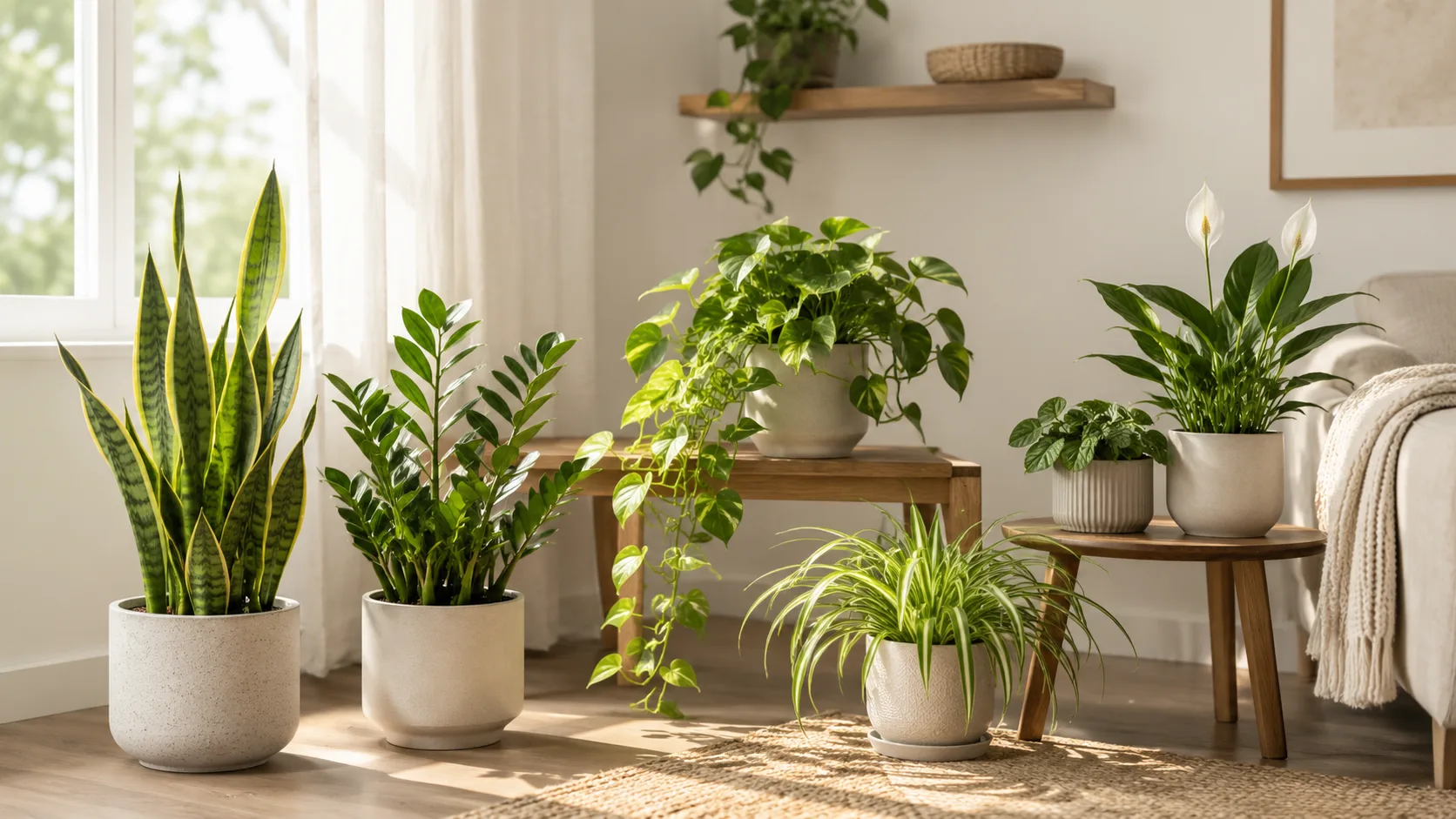
A healthy houseplant is less about remembering a perfect schedule than learning what its own pot and room are telling you. The same plant can dry quickly in a bright, warm window and stay wet for days on a cool shelf. Care gets easier when you make decisions in order: identify the plant, assess its light, check the root zone, then change one thing at a time.
The guidance here covers common foliage plants and explains where plant groups differ. Cacti and succulents usually need a longer dry period than tropical foliage plants; orchids and ferns have their own root and moisture preferences. Use the plant’s botanical name and a reliable species profile when a general rule conflicts with its needs.
Start with the room, not the watering can
Before changing care, note the conditions where the plant actually grows. Record which direction the window faces, how far the leaves are from it, whether nearby buildings or trees block light, and whether heating, air conditioning, or a door creates drafts. These details matter more than a room label such as “bright living room,” because two rooms with the same name can provide very different growing conditions.
A plant that was recently moved, bought, repotted, or turned may need time to adjust. Avoid responding to one drooping leaf with fertilizer, extra water, and a new location all at once; if the plant improves or declines, you will not know which change mattered. The useful habit is to write down the date and the single adjustment you made, then check new growth over the next few weeks.
Read light where the leaves grow
Light intensity drops quickly with distance from a window, and glass, curtains, balconies, and seasonal sun angles all change what reaches a leaf. Look at the plant’s location during the hours it receives daylight, not just at the window itself. A sharp-edged shadow usually signals stronger direct light; a soft shadow suggests brighter diffuse light, though exact needs still depend on the species and how it has acclimated.
Many foliage plants grow well in bright indirect light: near a bright window but outside long periods of harsh direct sun. A sheer curtain can soften intense exposure, while moving a plant a little closer may help if its new leaves are small, pale, or spaced far apart. The Royal Horticultural Society’s houseplant growing guide recommends matching the plant to available light and cautions that strong sun through glass can scorch susceptible foliage.
Supplemental lighting can help when natural daylight is limited, but a grow light only works if its intensity, distance, and daily duration suit the plant. Follow the light maker’s instructions and watch for leaf bleaching, curling, or heat stress if the fixture sits too close. For a deeper setup, see the indoor grow light guide.
Low light means limited light, not no light
“Low-light plant” describes a plant that tolerates less light than many others; it does not mean a plant can live indefinitely in darkness. Plants still need light for photosynthesis, and low-light conditions often mean slower growth and a longer interval between waterings. The Penn State Extension guide to low-light houseplants describes how species and even cultivars respond differently, including changes in leaf color and growth after a move.
If a room has no window, use a suitable grow light or choose a different location. If stems stretch, new leaves shrink, or variegation fades, first compare the plant’s current position with its species needs. Increase light gradually rather than putting a shaded plant straight into intense midday sun, which can burn foliage that has not acclimated.
Water according to the plant and its potting mix
There is no reliable schedule that fits every indoor plant. Species, pot size, root mass, mix, light, temperature, humidity, and season all affect how quickly a pot dries. A weekly check is useful; automatic weekly watering is not. The University of Georgia Extension’s houseplant guidance also emphasizes that water needs vary by plant and that it is better to water less often but more deeply.
Tropical foliage plants commonly need water when the upper part of the mix has dried, while many cacti and succulents need the mix to dry much farther down between drinks. Some moisture-loving plants prefer more even moisture. Check a species profile if the plant’s preference is unclear, and use the root zone rather than a fixed number of days to decide.
Check moisture below the surface
Push a finger into the mix or use a clean wooden skewer to check below the surface. If the skewer comes out cool with damp particles attached, wait for a plant that prefers a partial dry-down; if it comes out nearly clean and dry at the depth appropriate for that plant, it may be ready for water. For a large pot, test more than one spot because the root ball may dry unevenly.
Pot weight is a useful second signal. Lift a small nursery pot after watering and again as it dries; the difference between “heavy” and “light” becomes easier to recognize with practice. A moisture meter can help compare readings, but do not let one number override a wet, sour-smelling mix or a dry root ball; probes vary with soil texture and placement.
Leaves are supporting evidence, not a substitute for checking soil. Wilt can mean dry roots, but roots that have been sitting in saturated mix may also fail to take up water, making the plant droop while the soil is wet. Check both before reaching for the watering can.
Water thoroughly and let excess drain
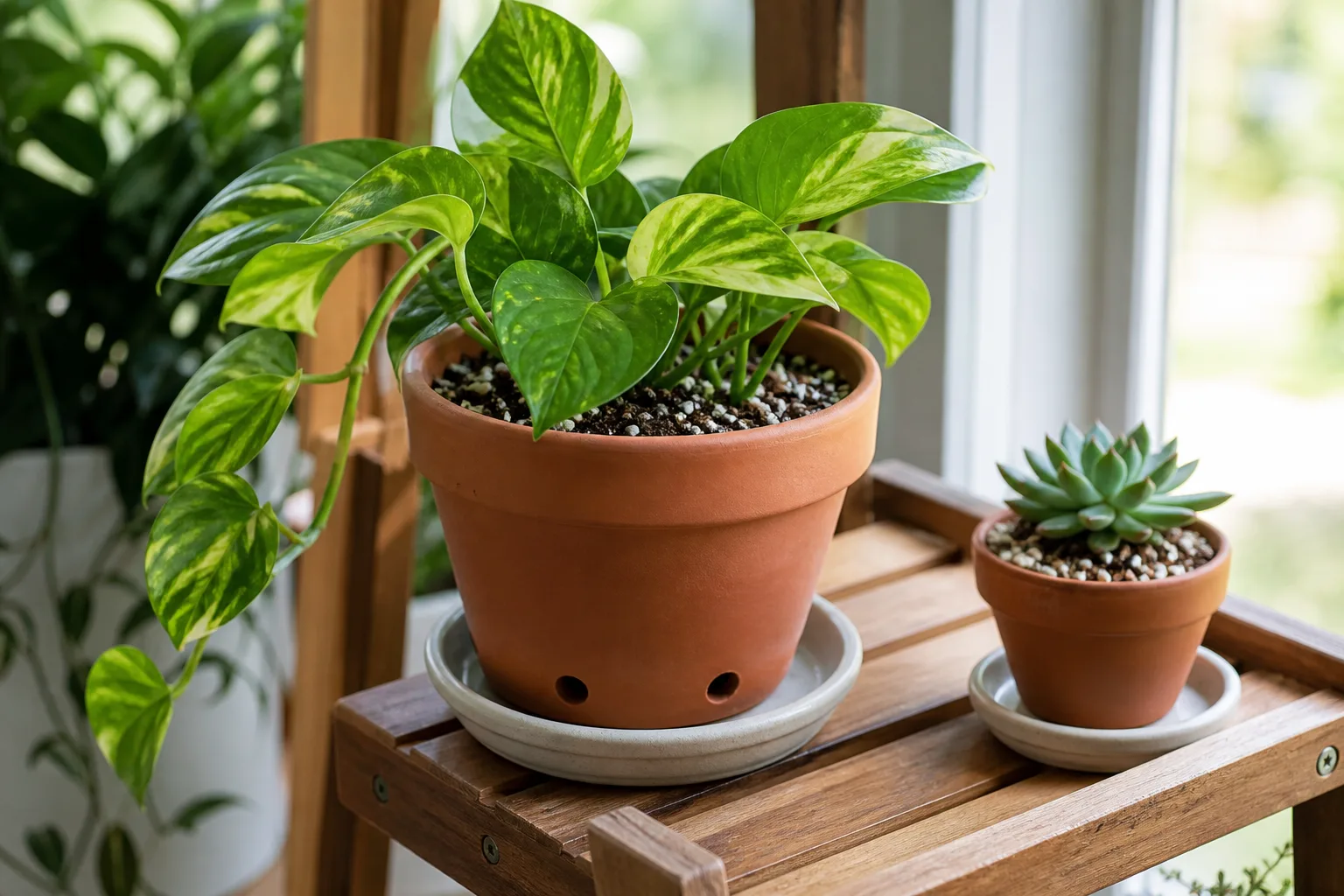
For most plants in a draining pot, water slowly over the surface until the root ball is evenly moist and a little water exits the drainage holes. Then let the pot drain and empty the saucer or cachepot so roots are not left in standing water. This flushes the mix more evenly than repeated small splashes and helps prevent dry pockets that repel water.
If the mix has pulled away from the pot or water runs straight through without wetting it, apply water in stages and allow it to soak in. A very dry peat-heavy mix may need to sit briefly in a shallow basin to rehydrate, but remove it once the root ball is moist and let it drain completely. Bottom watering can be useful for some plants, but it is not a requirement and it does not replace occasional flushing of accumulated salts.
Most tap water is fine for many houseplants. If a sensitive plant develops recurring leaf-tip damage despite sound watering and drainage, check whether the water is softened or high in dissolved minerals and compare a different water source over time. Avoid assuming that every brown tip is caused by chlorine; humidity, fertilizer, roots, and inconsistent moisture can produce similar damage. Better Homes & Gardens’ watering advice likewise stresses plant-specific needs, a moisture check, and draining runoff after watering.
Set up roots for air, moisture, and drainage
Choose a pot with drainage holes and a size that is close to the root ball. A container that is much wider than the roots holds a larger volume of wet mix the plant cannot use yet, increasing the time before it dries. Decorative cachepots are fine if you keep the plant in a draining nursery pot inside them and pour away hidden runoff after watering.
Use a fresh, bagged potting mix made for containers rather than garden soil, which compacts indoors and may drain poorly. The right mix depends on the plant: a general indoor blend suits many tropical foliage plants, while succulents need a faster-draining blend and orchids need a medium designed for their roots. If a mix stays soggy for too long, adding an airy component such as perlite or bark may help, but changing the watering frequency or pot may solve the actual problem more simply.
Drainage is not improved by putting a layer of gravel at the bottom of a pot. Water can collect above the coarse layer instead of draining better, leaving roots in a perched wet zone, as Durham County Extension Master Gardener volunteers explain in their container-soil guidance. Keep the drainage hole open, use a suitable mix throughout the pot, and place mesh over a very large opening only if needed to keep mix from falling out.
Balance temperature, humidity, and airflow
Most common houseplants are comfortable in the same range that people find comfortable, but tropical species may be damaged by a cold windowsill, a draft, or air blowing directly from a heater or air conditioner. Keep foliage from touching cold glass in winter and avoid placing a plant where hot air dries one side repeatedly. Sudden temperature swings can trigger leaf drop even when watering has not changed.
Humidity matters most for plants adapted to moist tropical air, and less for drought-tolerant plants. A hygrometer helps distinguish genuinely dry air from a hunch based on crispy leaves, which can also result from salt buildup, damaged roots, or inconsistent watering. Grouping plants may create a slightly more humid pocket, but it will not transform an arid room; a clean room humidifier is more effective when several plants have high humidity needs.
Misting leaves does not keep a whole room humid, and it does not replace root watering. An occasional mist may suit some plants from humid habitats, but it is not a reliable fix for dry air across a room. Better Homes & Gardens’ misting guide explains that spraying foliage is not equivalent to watering at the roots and that whether misting helps depends on the plant. For several plants with high humidity needs, use a clean humidifier, keep air moving gently, and avoid crowding wet leaves together. The RHS houseplant guide explains that humidity affects water loss through leaves and that temperature, drafts, and placement should be matched to the plant.
Feed only when growth can use the nutrients
Fertilizer supports new growth; it does not rescue a plant with poor light, damaged roots, or the wrong watering pattern. Many houseplants grow most actively when days are longer and conditions are warm. Reduce or pause feeding when growth slows, especially in a cool, dim winter room, unless a species-specific guide or active indoor grow-light setup indicates otherwise.
Use a complete fertilizer labeled for houseplants and follow its dilution directions. More is not better: excess soluble salts can injure roots and leave a crust on the mix or pot rim. Do not fertilize a bone-dry root ball, a severely stressed plant, or a freshly repotted plant whose new potting mix already contains fertilizer; water first when needed, address the stressor, and resume modest feeding after growth restarts.
If a plant is pale or stagnant, check light, roots, moisture, and pests before assuming it needs food. A plant making healthy new leaves in suitable conditions may need only light feeding during active growth. For species that are sensitive to fertilizer or salts, use the lower end of the labeled range and watch the response instead of following a stronger schedule by habit.
Prune and clean without stressing the plant
Remove dead or badly damaged leaves with clean, sharp scissors, cutting close to the stem without tearing healthy tissue. To control size or encourage branching, cut just above a leaf node where new growth can emerge. Avoid taking off a large share of healthy foliage in one session unless the plant’s care instructions call for a hard prune; leaves provide the energy the plant needs to recover.
Dust can block light from reaching the leaf surface, so wipe broad, sturdy foliage with a soft damp cloth or rinse it gently if the plant tolerates water. Use a soft brush for fuzzy or delicate leaves that should not stay wet. Do not apply leaf-shine products or household oils, which can coat foliage and interfere with normal gas exchange.
Pruning is also an opportunity to inspect leaf undersides and stem joints. If pests are present, clean the tool before using it on another plant. A small amount of yellowing on an old lower leaf can be normal; repeated loss of new leaves or decline across the plant deserves a broader check.
Repot when the roots or potting mix need it
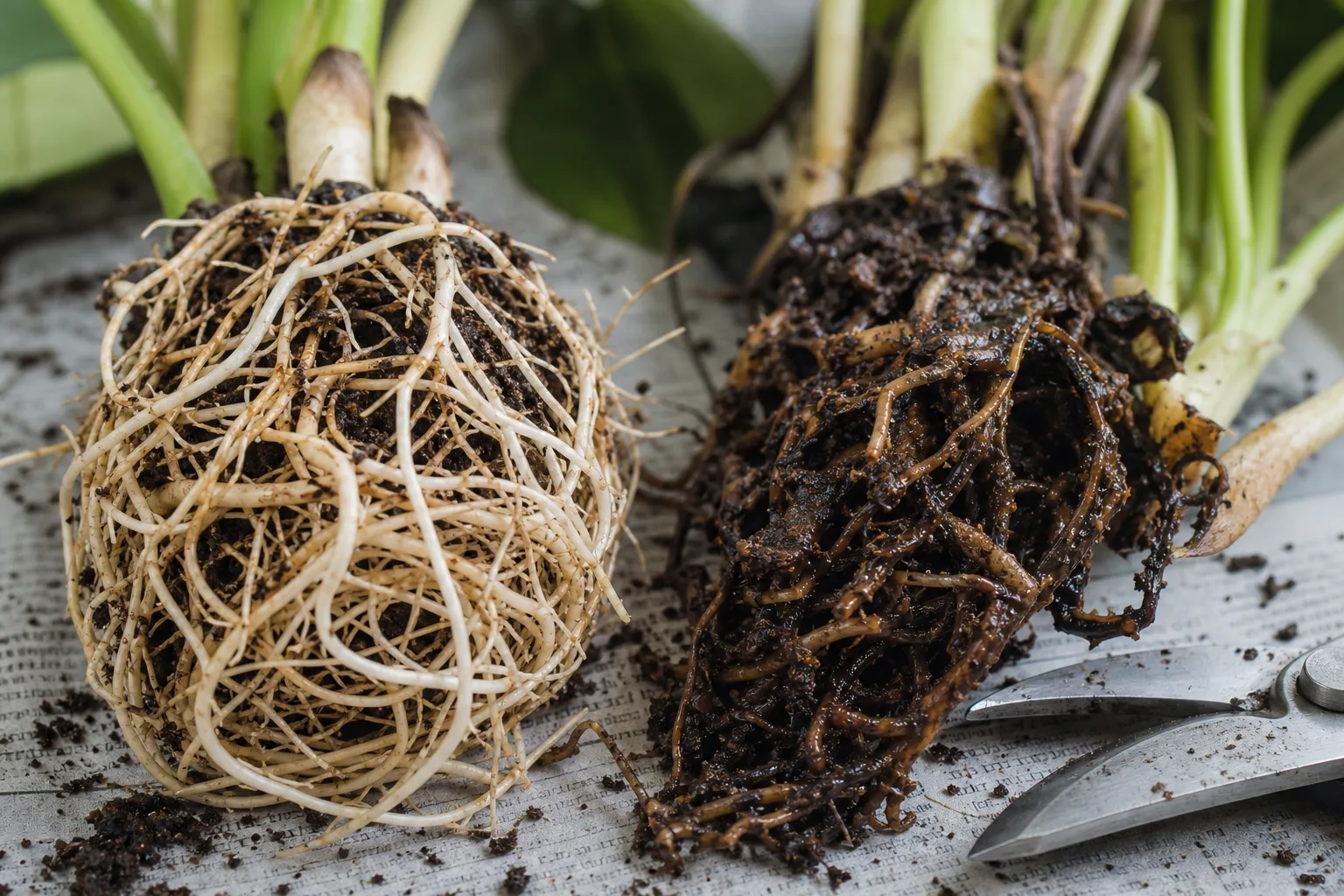
Repotting is useful when roots fill the pot, the plant dries unusually quickly despite appropriate conditions, the mix has broken down or become difficult to wet, or the plant has become unstable. Roots emerging from a drainage hole are one clue, not a rule by themselves; some plants naturally send roots to the bottom while still having room to grow. A healthy plant that is growing steadily in a sound mix does not need a larger pot just because a year has passed.
When repotting is justified, move up only one pot size, usually about 1 to 2 inches wider, and retain a drainage hole. Loosen only roots that are tightly circling or damaged; avoid stripping away all of the old mix from a healthy root system. Set the plant at the same depth it was growing before, fill around the root ball without packing the mix hard, water it in, and let it drain.
Spring or the start of active growth is a convenient time because the plant can establish in new mix, but urgent problems such as rotting roots or a broken pot should be addressed when they occur. Afterward, keep conditions stable and delay fertilizer if the new mix includes nutrients. The RHS guide suggests spring as a useful repotting window; the better signal for your individual plant is whether its roots, container, or mix need attention.
Inspect new plants and stop pests early
Before bringing a new plant near the collection, examine both sides of the leaves, leaf joints, stems, and the soil surface. Look for fine webbing, cottony clusters, hard scale-like bumps, sticky residue, stippling, or insects that fly up when the pot is disturbed. A plant can look healthy from across the room and still carry pests under its leaves.
Keep new arrivals separate for a few weeks and inspect them regularly. If you find a pest, isolate the plant, identify the insect, and start with physical removal where practical: rinse foliage, wipe accessible pests, or trim a badly infested leaf. Repeat inspection matters because eggs and hidden insects may not be removed in one pass.
If an appropriate pesticide is needed, use a product labeled for the specific pest and indoor plant, follow the label exactly, and test it on a small area first because some foliage is sensitive. Do not mix household cleaners or improvised oils into a spray bottle. The Penn State Extension article on indoor plant pest and disease problems provides identification and management guidance; when the pest is uncertain or spreading, a local extension office can help confirm what you are treating.
If pets or children may chew leaves, identify every plant by its botanical name and check a reliable poison-control or extension reference before placing it within reach. Common names can refer to unrelated species, so a plant label or photo alone is not enough to make a safety judgment. Keep unfamiliar plants out of reach until you have verified them.

Diagnose symptoms by checking the whole plant
A symptom points to a question, not a diagnosis. Start with the pattern: Is the damage on old or new leaves, on one side or throughout the plant, and does it appear after a move, a watering change, repotting, or a temperature shift? Then check the mix, drainage, roots if needed, light, and pests before choosing a fix.
This order prevents a common mistake: treating wilt as proof of thirst. The UGA Extension discussion of houseplant problems notes that wilt can be connected to underwatering, overwatering, disease, humidity, temperature, or other stresses. If conditions and symptoms are changing quickly, isolate the plant and get a closer diagnosis rather than stacking several treatments.
Yellow leaves need a pattern and soil check
One older leaf turning yellow near the base while the rest of the plant keeps growing may simply be normal aging. Several leaves yellowing at once, especially when the potting mix remains wet, suggests a problem with watering, drainage, or roots. Check whether the inner pot has an open drainage hole and whether runoff is trapped inside a cover pot.
If yellow leaves occur while the mix is dry, inspect how deeply it dried and whether the plant is receiving enough light. Also check for mites or scale, which can weaken foliage, and note recent changes to the plant’s position. Remove only leaves that are fully yellow or damaged; correcting the cause matters more than stripping the plant bare.
Brown tips, drooping, and leaf drop have different clues
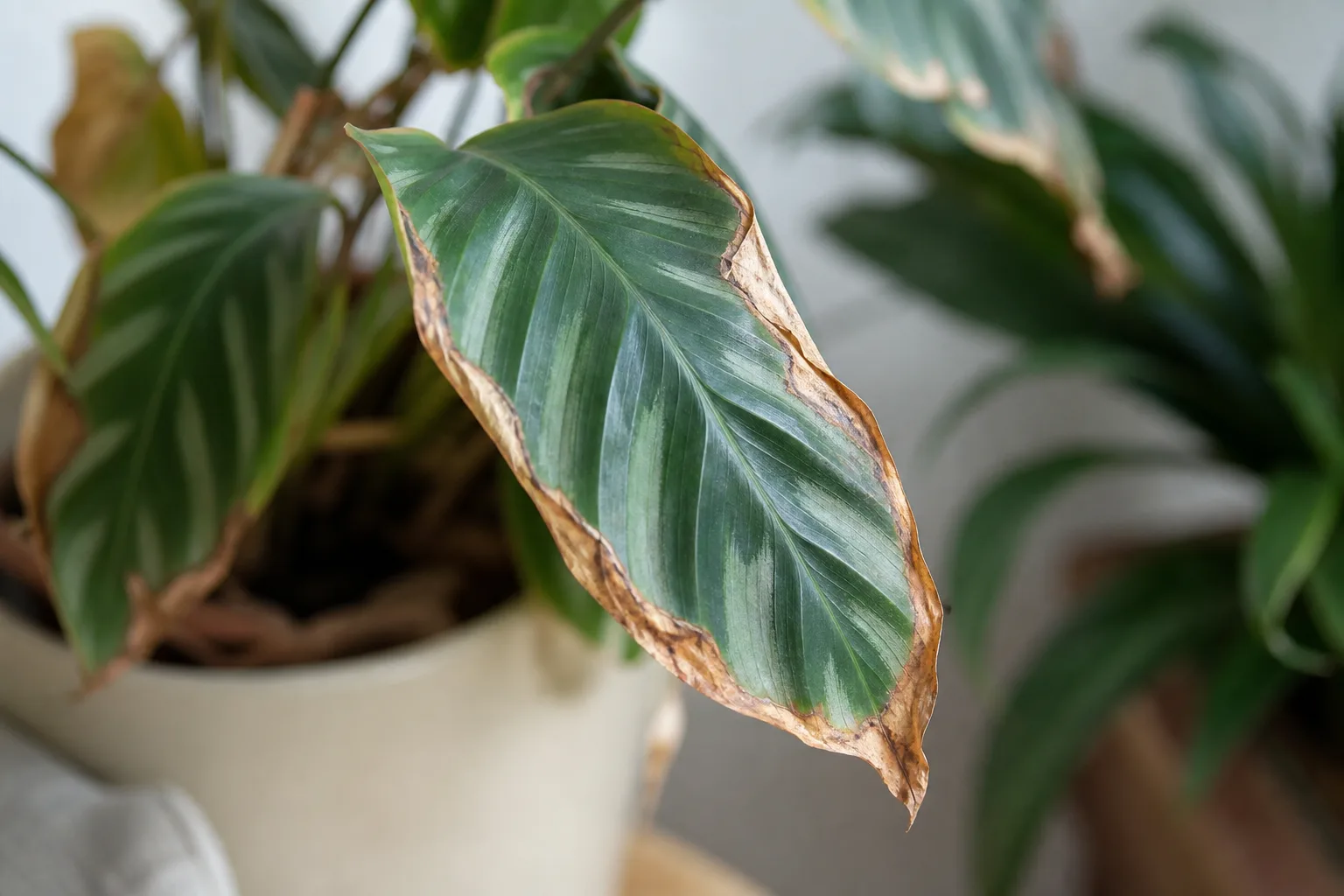
Brown tips can follow low humidity, irregular watering, excess fertilizer, mineral salts, or root damage. Trim only the dead tissue if you want to improve appearance, leaving a narrow brown margin rather than cutting into living green leaf. If the same damage continues on new leaves, check water quality and fertilizer history along with moisture and root health.
For a drooping plant, test the soil before watering. A dry, light pot may need a thorough drink; a heavy pot with wet mix needs better drainage and time to dry, not more water. Sudden leaf drop often follows a move, cold draft, abrupt light change, or overwatering, so review recent events before changing the plant’s whole care routine. The houseplant symptom checker can help compare visible symptoms with these checks.
Adjust care as daylight and growth change
In spring and summer, longer days and active growth often mean a plant uses more water and can make use of fertilizer. In fall and winter, shorter days and cooler conditions may slow growth, so the same pot can take longer to dry. Keep checking the mix and adjust the interval; do not cut water automatically if the plant is under strong grow lights or in a warm, bright room.
Before a seasonal move, acclimate plants gradually. A houseplant moved outdoors for summer needs shade at first and protection from harsh sun, wind, temperature swings, and pests; reverse the process before bringing it inside, and inspect it carefully. Indoors, move plants away from radiators and cold glass, and do not leave them trapped behind drawn curtains on a chilly night.
For a short trip, water only plants that are approaching their normal dry-down point, drain them well, and group them away from hot direct sun. Do not saturate every pot “just in case”; wet roots can be harmed while you are away. For longer travel, ask someone to check plant-specific needs or use a tested watering setup, and trial it before relying on it for a collection.
Choose plants for the conditions you can provide
Choose a plant by matching its needs to the light, temperature, humidity, and time you can actually offer. A bright, sunny sill can suit many succulents but may scorch shade-adapted foliage; a dim hallway is a poor place for a sun-loving flowering plant. If your preferred spot is far from a window, select plants known to tolerate lower light and accept slower growth, or install supplemental lighting.
Think through maintenance before buying. A large fast-growing plant needs room and occasional pruning; a flowering plant may need brighter light than a foliage plant; a fern may be less forgiving of dry air than a waxy-leaved tropical. The RHS recommends checking growing requirements before purchase and selecting a plant that fits the available conditions. That simple match is more effective than buying a plant for its label and trying to make an unsuitable room work.
The BBC Gardeners’ World Magazine houseplant directory groups advice around shade, tricky spots, and common plant problems—a useful reminder to choose for the room you have, not an idealized one.
If you are unsure what you own, keep the nursery tag or record the botanical name before it gets lost. Similar-looking plants can differ in watering, light, toxicity, and mature size. Accurate identification makes every later decision—from fertilizer to pest control—more reliable.
Use a short weekly and monthly care routine
Once a week, walk through the collection and observe before doing anything. Check new growth, leaf undersides, soil at the right depth, pot weight, and water left in cachepots. Water only plants that have reached their species-appropriate dry-down point, then note which pots are drying faster or slower than expected.
Once a month, wipe dusty leaves, rotate pots that are leaning toward light, inspect recent purchases, check for salt crusts or blocked drainage, and review whether the light has shifted with the season. During active growth, look for new leaves that signal when modest feeding may be useful. Every few months, compare the plant’s size and root behavior with its pot rather than repotting on a calendar.
A simple record can be a note on your phone: plant name, location, date watered, and any change made. After several weeks, patterns emerge. You may find that the same plant consistently dries sooner near the window or that a certain pot stays wet far longer than its neighbors; those observations let you improve the setup without guessing.
Conclusion
Good houseplant care comes from matching the plant to its conditions and using evidence from the leaves, light, and root zone. Check light where the plant grows, water according to how its mix dries, give roots drainage and air, and change conditions gradually. When a plant looks unwell, inspect before treating: wet and dry roots can produce similar symptoms, while light, pests, temperature, and recent moves all leave clues.
A weekly check and occasional seasonal reset are enough to build a dependable routine. Learn the exact plant when you can, start with one measured adjustment, and let healthy new growth tell you whether it worked.