How to Grow Herbs at Home: Care, Planting, and Harvesting
Learn how to choose herbs for your climate, group plants by water and light needs, grow them in pots or beds, and harvest well for steady regrowth all season.
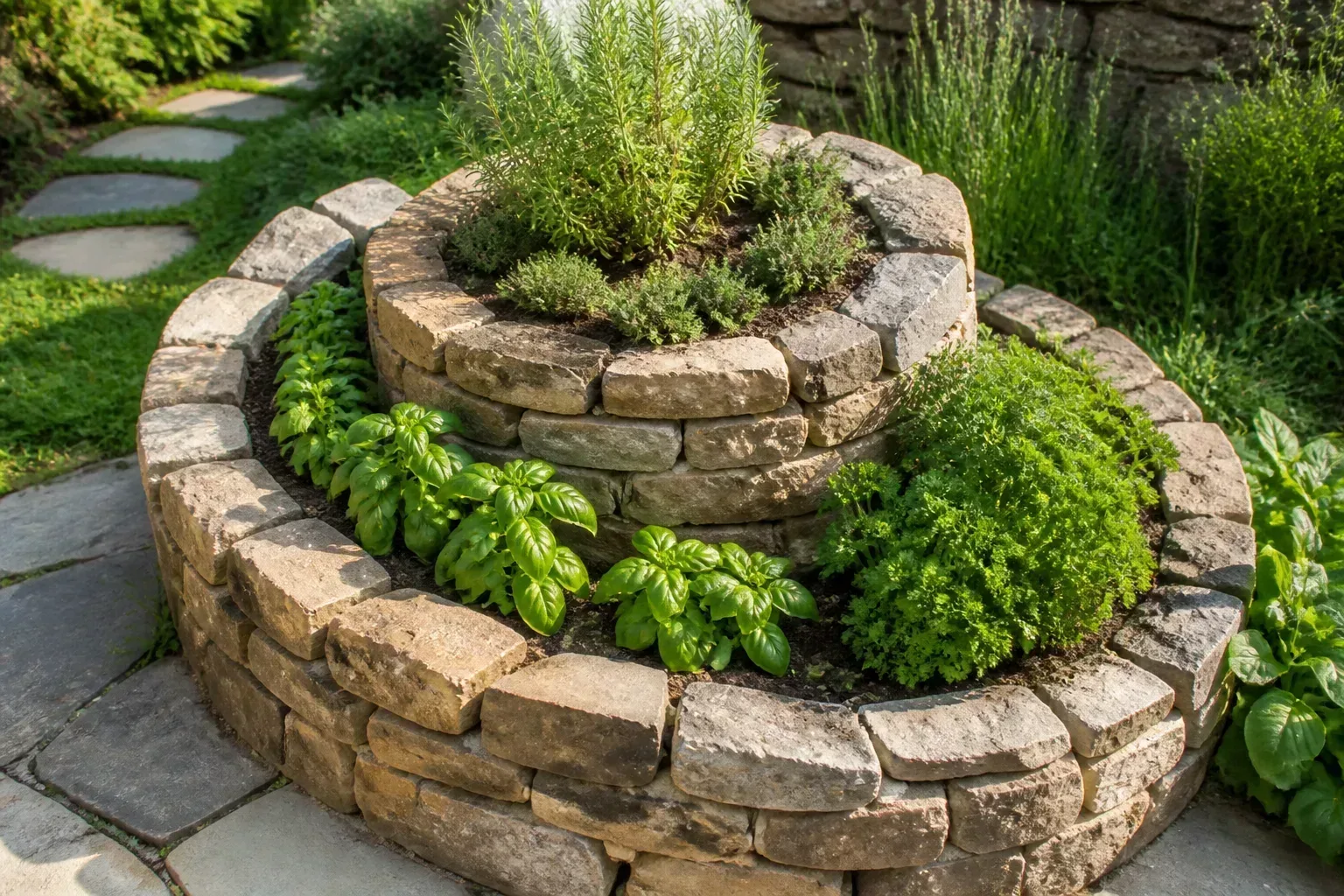
An herb garden works best when it is planned around the plants’ different needs, not arranged as a collection of matching pots. Basil grows quickly in warmth and appreciates more even moisture; rosemary wants strong light and a drier root zone; mint thrives in moisture but can travel through a garden bed. Start with the herbs you use in the kitchen, then give each one the conditions that let it keep producing.
You do not need a dedicated garden plot. A sunny patio, a raised bed near the kitchen, or a bright windowsill can produce useful harvests. The practical challenge is matching each herb’s light, water, growth habit, and life span to the place you have. This guide covers those choices, how to establish plants, when to cut them, and how to make the garden last beyond its first flush of leaves.
Build an herb garden around what you actually use
Begin with meals, not a long seed catalog list. If you make pesto, salads, and tomato dishes, basil, parsley, and chives may be more useful than a dozen herbs you rarely cook with. If you brew tea, a contained pot of mint could earn its space; if you mostly roast vegetables, rosemary and thyme may be the better investment.
A small herb garden is easier to care for and more likely to be harvested. Choose three to five herbs for the first season, then notice which ones you actually cut and which ones ask for more maintenance than their flavor is worth. Penn State Extension recommends that new gardeners begin with familiar culinary herbs and expand as they learn each plant’s habits; that is a sensible way to keep a first garden manageable.
Think about how you want to harvest, too. Frequent small cuts favor leafy, branching herbs such as basil and chives. A few sprigs at a time from woody herbs, such as thyme or rosemary, are enough for many meals, so these plants can fit a smaller menu and often need less frequent watering. Leave room for mature plants instead of sizing a bed by how small the seedlings look on planting day.
Learn each herb’s life cycle before planting
The words annual, biennial, and perennial describe a plant’s life cycle, and they change your expectations for harvest and replacement. Basil, dill, and cilantro are generally grown as annuals: they grow, flower, set seed, and finish in one growing season, although the exact timing depends on temperature and variety. Parsley is commonly biennial, producing leaves in its first year and flowering in its second.
Perennial herbs can return for several years when the species is hardy in the local climate and the site drains well. Chives, oregano, thyme, sage, and mint are familiar examples; rosemary may also be perennial in mild areas but is often grown as a tender potted plant where winter cold is severe. Penn State Extension’s herb guidance describes these different life cycles and notes that conditions such as origin and hardiness affect how well an herb settles into a site.
A plant sold as a perennial is not guaranteed to survive every winter. Check the botanical name and hardiness information on a nursery label, seed packet, or extension profile, then account for exposure, drainage, and whether the plant will be in the ground or in a pot. Container roots experience more cold than roots insulated by garden soil, so a plant that survives in a bed may need shelter when grown above ground.
This distinction also helps you decide which herbs to sow again. Rather than trying to keep aging basil alive after cold weather, many gardeners start a fresh crop when the season turns warm. For longer-lasting herbs, reserve a permanent spot and avoid digging the plant up every spring just to make room for annuals.
Match sunlight and moisture to the herb
Most culinary herbs grow best with generous light and soil that drains rather than stays saturated. A useful starting point is a location with about six hours of direct sun, a benchmark included in UConn Extension’s general herb-growing guidance. In a very hot climate, afternoon shade can help tender leafy herbs avoid heat stress, while rosemary, thyme, oregano, and sage usually need the sunniest, driest place you can offer.
Do not treat “full sun” as an instruction to put a newly purchased plant straight into the hottest afternoon exposure. If it was grown under shade cloth or indoors, harden it off over several days by increasing its outdoor time and light gradually. A pot heats and dries faster than surrounding soil, so a sunny wall or paved patio may be substantially hotter than an open garden bed.
Mediterranean herbs need sun and fast drainage
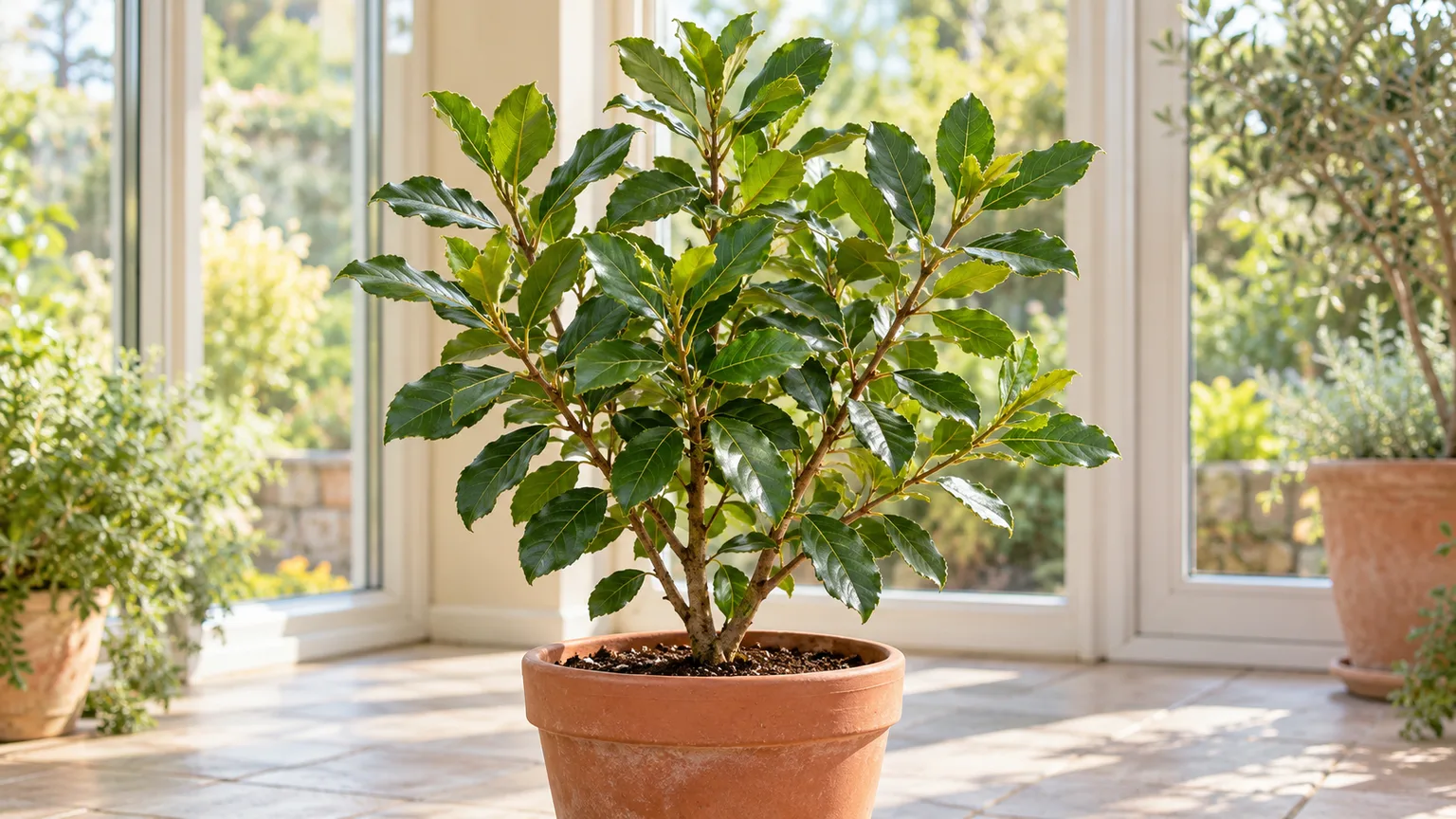
Rosemary, thyme, oregano, and culinary sage are adapted to the bright conditions and leaner, free-draining soils of Mediterranean climates. They usually become less reliable in compacted soil that stays wet, even if the gardener avoids watering often. In a wet garden, try a raised bed, a sloped site, or a pot with open drainage rather than repeatedly adding gravel or fertilizer to the planting hole.
These herbs do not need to be kept bone dry. They still need water while establishing and during prolonged hot, dry spells. The better rule is to let excess water drain away and allow the root zone to dry somewhat before watering again. UConn Extension and Penn State Extension both emphasize well-drained growing conditions for common woody Mediterranean herbs.
Leafy herbs usually need steadier moisture
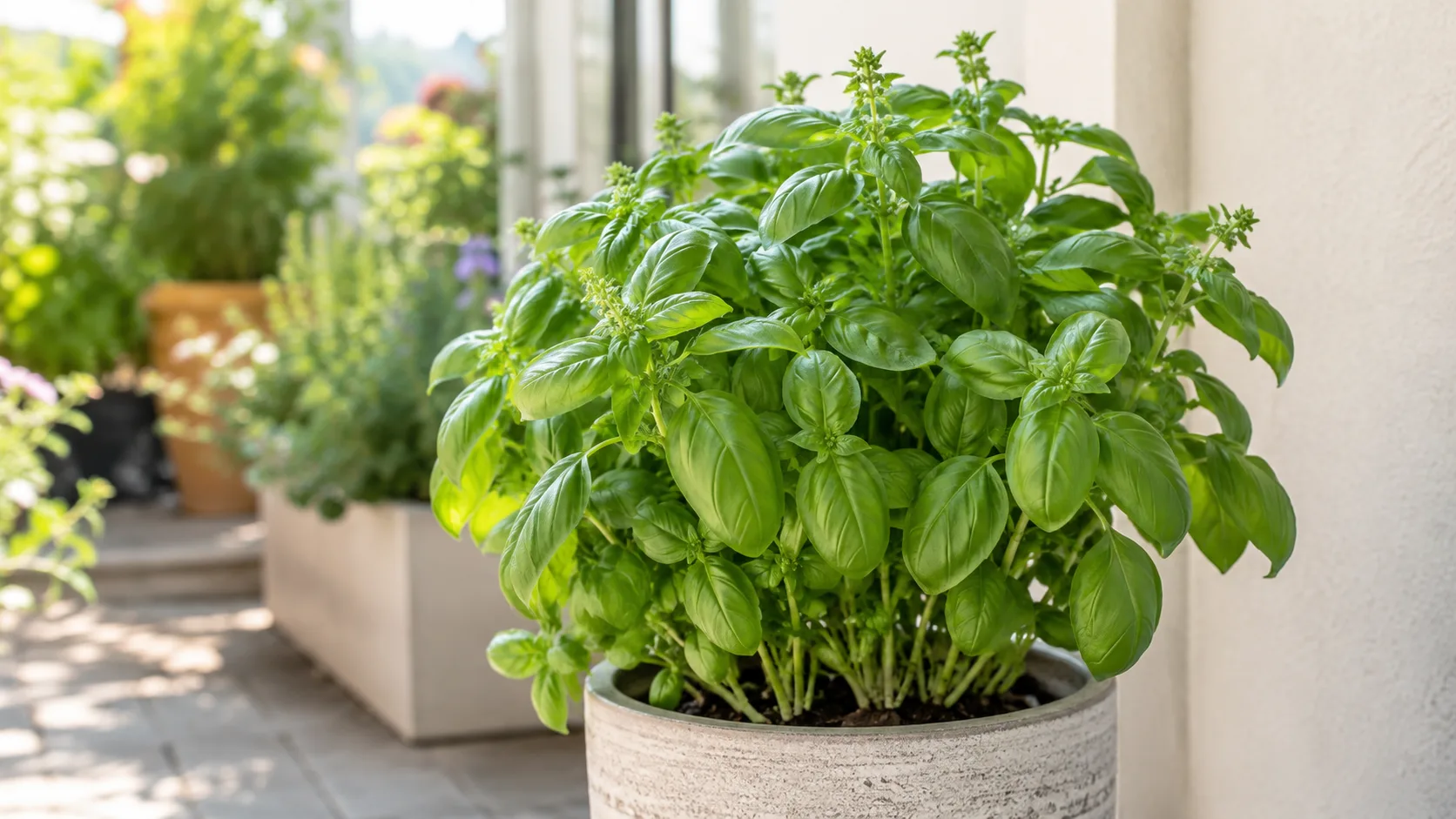
Basil, parsley, cilantro, chives, and mint have softer foliage and generally appreciate more consistent moisture than rosemary or thyme. That does not mean waterlogged soil: roots still need air, and leaves that stay wet for long periods can be more vulnerable to problems. Keep these plants in soil that holds some moisture but drains freely, and check them more often in containers or during hot weather.
Cool-season cilantro often flowers and sets seed quickly when days turn hot or dry. Partial shade in warm weather can slow that transition, but cannot stop it indefinitely; repeat sowing small amounts is more dependable than expecting one planting to yield leaves all summer. The change from leafy growth to flowers is called bolting, and it is a normal part of the plant’s life cycle rather than automatically a sign of poor care.
Choose a bed, raised bed, or container
The right setup is the one that solves your site’s biggest limitation. Epic Gardening’s container-herb guide also highlights that containers are easier to move but demand closer attention to pot size, soil, and drying rate. In-ground beds offer the most root space and tend to hold water longer between irrigations. Containers give you control over soil and placement, and they make it easier to restrain spreading herbs, but their smaller soil volume can dry quickly. A raised bed is useful when garden soil drains poorly or when you want a more accessible space.
Before choosing, watch the area through the day and after rain. Note how many hours of direct light reach the leaves, whether water pools, and how close the site is to a kitchen door. A garden that is convenient to reach gets harvested more regularly. Penn State Extension also notes that herb gardens can be integrated among vegetables and ornamentals; separate beds are optional, while suitable growing conditions are essential.
In-ground gardens suit stable, well-drained sites
Plant herbs in a bed when you have soil that drains adequately and enough sun for the species. Loosen compacted ground and incorporate a modest amount of finished compost if the soil needs structure, but do not assume every herb wants a rich, heavily amended bed. A soil test can help identify pH or nutrient concerns before you add amendments, especially if the site has an unknown history. Savvy Gardening’s beginner herb guide likewise stresses checking drainage and spacing plants for their mature size.
Make a simple plan that accounts for mature width and height. Keep spreading plants where runners can be reached or contained, and put taller herbs where they will not shade shorter ones. A narrow strip of thyme near a path can be convenient for snipping, while dill and fennel can grow tall and cast shade as they mature. Leave air space between plants; crowding makes it harder to inspect leaves, water at the soil line, and recognize a problem early.
Containers offer control but dry out faster
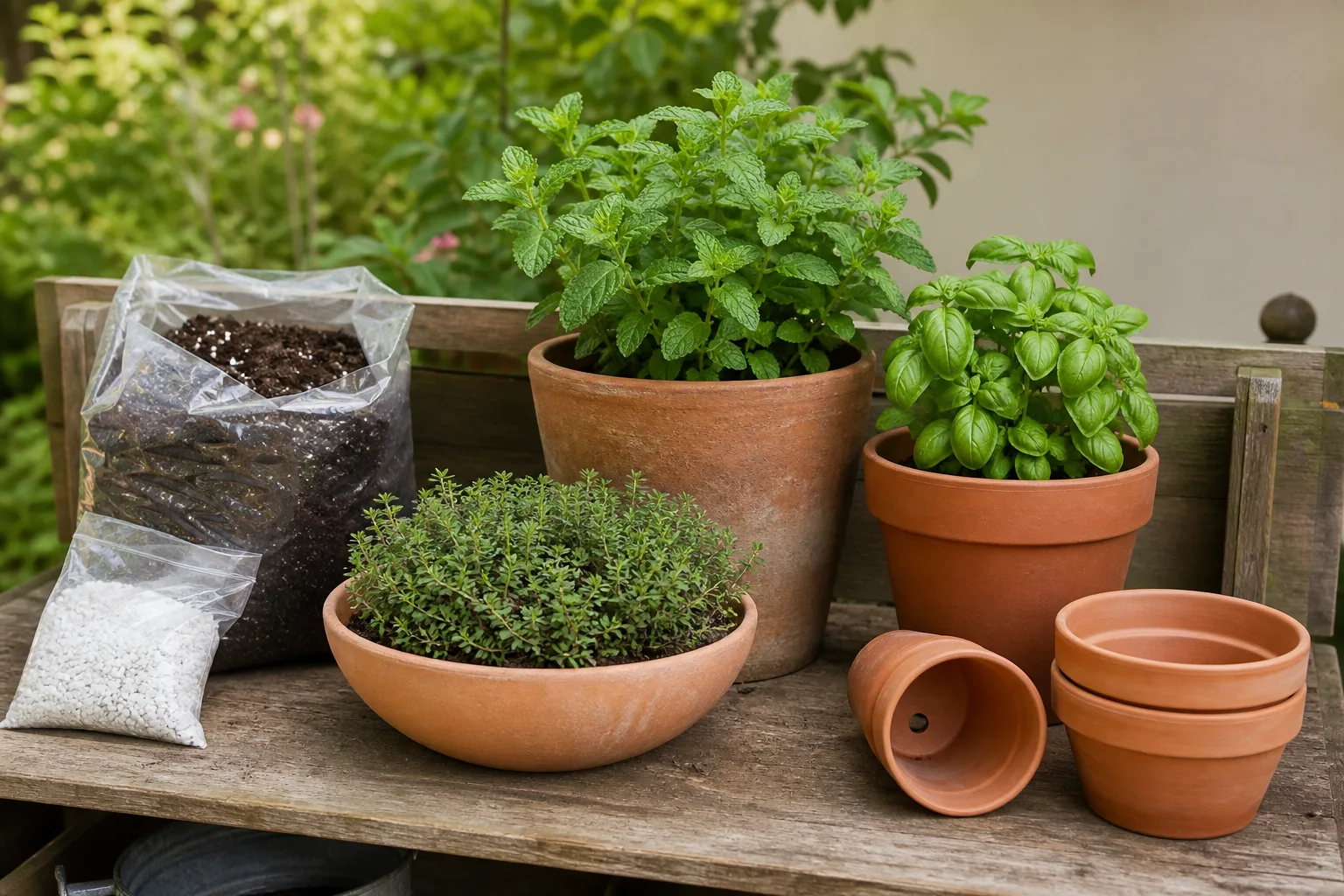
Use a pot with drainage holes and a quality potting mix designed for containers. Garden soil is often too dense for a pot, where it can compact and drain slowly. A larger pot gives roots more room and usually buffers moisture changes better than a tiny one, but it can also stay wet longer if the herb prefers dry conditions. Choose a container size based on the mature plant and whether you plan to keep it for one season or several.
Containers let you group herbs by care pattern instead of by appearance. Put mint in its own pot because its runners can take over; group rosemary, thyme, oregano, or sage only if the pot provides enough room and dries between waterings. Basil and parsley can be more compatible in a shared container, but both need adequate space and consistent moisture. If two herbs require substantially different watering, use separate pots placed together in one tray rather than forcing a compromise.
Grow herbs indoors with realistic light expectations
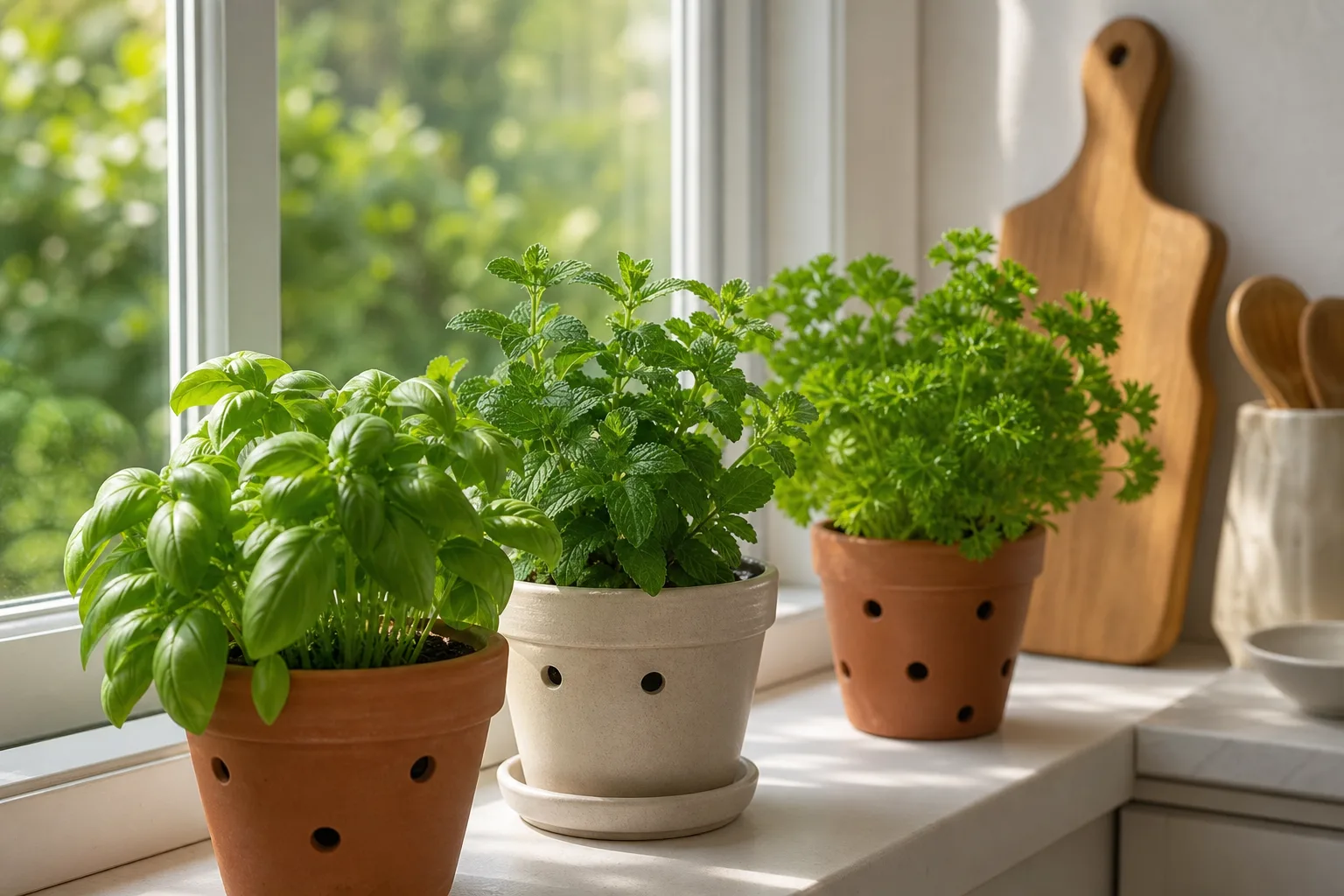
Many culinary herbs can live indoors, but a bright kitchen counter is not necessarily bright enough for strong growth. Place pots at the brightest practical window, and watch whether the plants stay compact and produce new leaves. If stems stretch toward the glass, leaves become smaller, or growth stays weak even when watering seems right, light may be the limiting factor.
For productive indoor growth, use a sunny window and supplement with a grow light when natural light is inadequate. Rotate pots so stems do not lean in one direction, and leave space around foliage for air movement. Avoid putting herbs immediately beside a hot stove, heating vent, or cold draft; rapid temperature swings and dry air can stress leaves even when the window is bright.
Start with herbs that match the light you have rather than buying an assortment and hoping they adapt. Chives, parsley, mint, and cilantro may cope with moderate light better than rosemary or thyme, but “tolerate” does not mean flourish in a dim room. If strong light is unavailable, consider growing only a few herbs under a lamp or bringing pots indoors temporarily instead of expecting a large harvest year-round.
Decide whether to sow seeds or buy transplants
Seeds offer variety and let you sow small successive batches, which is especially useful for annual herbs such as cilantro and dill. They also require patience: germination time varies, seedlings need even moisture, and delicate young plants can be lost to drying, overwatering, or damping off. Read the seed packet for sowing depth and timing; very small seeds are often covered only lightly or pressed onto the surface.
Transplants give you a head start and are convenient when the growing season is short or you need a few plants now. Choose compact, healthy plants with fresh growth and no obvious insect activity. Check the botanical name as well as the common name because names such as “oregano,” “mint,” or “sage” can refer to several different species or cultivars with different size, flavor, and hardiness.
Some herbs resent root disturbance or germinate slowly, so direct sowing is often simpler for them. Dill develops a taproot and is usually best sown where it will grow. Rosemary can be slow from seed, making a healthy transplant or rooted cutting more convenient for many home gardeners. Basil is easy to start from seed in warm conditions, but do not move it outdoors until cold weather has passed.
If you buy a plant for outdoor planting, acclimate it gradually. Set it outside in a sheltered spot for a few hours, then increase sun and exposure over several days. Water the root ball before planting, firm soil around it without burying the stem, and keep the surrounding soil evenly moist while new roots establish. A little transition time reduces the shock of moving from a protected nursery to wind, direct sun, and variable temperatures.
Get the soil, light, and watering basics right
For most outdoor herbs, start with a site that gets strong light and soil that does not remain soggy. UConn Extension recommends at least six hours of sun for many culinary herbs and calls for well-drained soil; its guide also cautions against overfertilizing because excessive nutrients can produce lush growth with less pronounced flavor. Exact soil pH and fertility needs differ, so use a soil test before making major corrections rather than applying lime or fertilizer by guesswork.
In containers, use fresh or refreshed potting mix, keep drainage holes open, and empty decorative cachepots after watering. Do not use a layer of stones at the bottom as a substitute for a drainage hole; water must have a way out of the container. When the potting mix becomes compacted, water runs straight down the sides, or roots fill the pot, refresh the mix or move the herb into a slightly larger container.
Fertilize lightly and only when there is a reason. Herbs in garden soil may need little additional food, while a frequently watered container can gradually lose nutrients. If growth turns pale or stalls, first check the basics: too little light, cold temperatures, root crowding, or soggy soil can mimic a nutrient problem. If feeding is appropriate, use a product labeled for edible plants and follow its directions rather than improvising a concentrated dose.
Use a soil check to decide when to water
There is no reliable universal calendar for watering herbs. A small terracotta pot in afternoon sun can dry in a day, while a larger glazed pot in a mild week may stay moist much longer. Before watering, touch the mix below the surface: if the upper layer is dry and the plant’s group likes even moisture, water thoroughly; if the mix is still wet and the herb prefers a drier root zone, wait and check again.
Water slowly at the base until excess begins to drain, then let the pot finish draining. Do not leave the pot standing in a saucer of water. In beds, a deep watering that reaches the root zone is more useful than a frequent sprinkle across the surface, especially after plants establish. Newly sown seeds and recent transplants are the exception: their shallow roots need more frequent checks so the seed zone does not dry out.
Use the plant as a second signal, not the only one. Wilting can mean dry soil, but it can also happen when saturated roots cannot take up water, so check the soil before adding more. If a container is dry, water it; if it is wet and the plant remains limp, improve drainage and inspect for root damage rather than repeating the same watering response.
Harvest in a way that supports regrowth
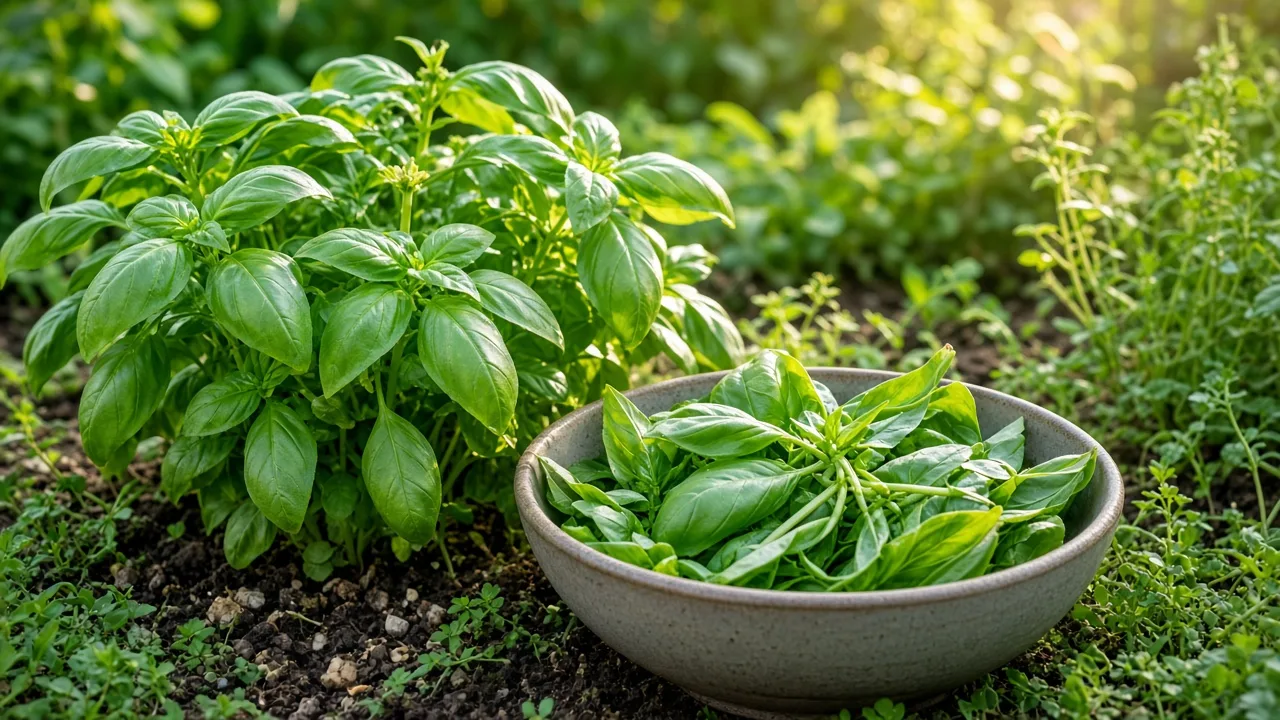
Harvest herbs once they are established and have enough foliage to recover. For leafy herbs grown for repeated cutting, take stems just above a pair of leaves or a healthy node so buds below the cut can branch. Snipping tips often keeps basil bushier; for parsley, take outer stems near the base so the center can continue producing. Clean, sharp scissors make more controlled cuts than tearing handfuls of leaves.
As a cautious rule, avoid removing more than about one-third of a plant’s leafy growth at one time, a guideline also given in UConn Extension’s growing advice. Take less from a seedling, a newly transplanted herb, a drought-stressed plant, or one already recovering from pests. If a plant looks depleted, pause harvesting until new growth shows that it has recovered.
For best kitchen quality, pick leaves when they are dry and clean, ideally before the heat of the day has drawn moisture from them. Some herbs are most tender before flowering, but flowers are not automatically a failure. If you want leaves, pinch off developing flower stems on basil or cilantro when practical; if you want pollinators or seed, allow some plants to bloom and harvest from others.
Regular light harvests can keep leafy herbs branching, but they cannot reverse every seasonal change. A plant that is old, woody, badly root-bound, diseased, or naturally finishing its life cycle may not bounce back from pruning. Harvest sound leaves, remove spent annuals when they are done, and start a new sowing rather than stripping a weak plant to bare stems.
Keep plants productive and diagnose common setbacks
Most herb problems begin with a mismatch between plant and place. Long bare stems often point to insufficient light or excessive crowding. Yellowing combined with wet soil suggests checking drainage and root condition before adding fertilizer. Small, dry pots may wilt repeatedly because their soil volume is too limited for hot weather; move them to a larger pot or a less exposed position if daily watering is not practical.
Observe changes over several days and correct one major factor at a time. When a plant looks off, note whether the leaves are newly affected or old, whether the undersides show insects, and whether the soil is wet or dry. Remove a few damaged leaves, improve air movement, and compare the next growth. A single symptom rarely proves a specific disease or deficiency.
Space plants according to mature size, remove dead foliage, and water close to the soil instead of routinely wetting leaves. Penn State Extension recommends controlling weeds and removing dead material; these simple measures also make it easier to notice changes before a small issue spreads. Avoid crowding a windowsill or filling every gap in a planter: leaves need enough space to dry and the gardener needs enough access to harvest without snapping stems.
Check environment before treating pests or leaf damage
Inspect new nursery herbs before placing them beside established plants. Look beneath leaves and near tender growing tips for aphids, mites, whiteflies, caterpillars, or sticky residue. A light population may be removed by hand or with a firm water rinse outdoors, but first identify what you see; pollinators and other beneficial insects may be present on flowering herbs too.
If a problem persists, photograph the plant and contact a local cooperative extension service or garden diagnostic clinic. Do not spray a plant simply because leaves look spotted or curled: water stress, cold, sun scorch, herbicide drift, and insects can produce overlapping symptoms. For any treatment on a plant grown for food, use only a product labeled for that crop and follow its instructions and harvest interval; when uncertain, leave the spray in the cabinet until the problem is identified.
Plan for flowers, self-seeding, and winter
Flowering can reduce the supply of tender leaves on some herbs, but it has benefits. Penn State Extension notes that pollinators and beneficial insects visit herb flowers, and several culinary herbs also serve as host plants for butterflies. Keep one or two plants in bloom if you have space, then pinch flowers on the plants you want to keep leafy. This split approach serves the kitchen without treating every blossom as a problem.
Dill and cilantro may drop seed and return in a convenient spot, but volunteers can also crowd a small bed. If you want natural reseeding, allow a few seed heads to mature and remove the rest before they scatter. Otherwise, cut plants back or collect seeds before they fall. Self-seeding is an option, not a promise that next year’s plants will land where you want them.
Prepare perennials according to the plant and local climate. Hardy in-ground herbs may need little beyond cleanup and a protective mulch in regions with freeze-thaw cycles, while tender rosemary may need to be brought indoors or replaced in cold-winter areas. Move a potted perennial before a hard freeze if its hardiness is uncertain, and avoid keeping overwintered herbs in a dark, warm room where they stretch while receiving too little light.
Annual herbs such as basil usually finish with cold weather; do not treat the loss of a frost-sensitive annual as a care failure. Save seed only from plants whose flavor and growth you like, or plan a fresh sowing next season. For perennial herbs, remove damaged growth when new growth resumes rather than cutting every plant hard in late fall without knowing how it responds.
Quick care profiles for kitchen staples
Use this table as a starting point, then check the exact variety and local growing season. Water needs change with pot size, soil, wind, and heat, and “full sun” describes a preference rather than protection from extreme afternoon temperatures.
| Herb | Typical life cycle | Best starting conditions | Practical care cue |
|---|---|---|---|
| Basil | Warm-season annual | Sun, warmth, moisture-retentive but draining soil | Pinch tips; replace when cold ends the season |
| Cilantro | Cool-season annual | Direct-sow; sun in cool weather, some afternoon shade in heat | Sow small batches in succession; expect bolting in hot weather |
| Parsley | Usually biennial | Bright site, fertile but well-drained soil | Harvest outer stems; plan to replace after flowering |
| Chives | Hardy perennial in suitable climates | Sun to partial shade; ordinary well-drained garden soil | Cut leaves as needed and divide crowded clumps |
| Mint | Spreading perennial | Moist soil; sun or partial shade depending on climate | Keep in its own container and check for escaping runners |
| Dill | Annual | Direct-sow in a sunny location | Sow where it will grow; allow or prevent self-seeding intentionally |
| Rosemary | Tender perennial in many cold regions | Full sun and excellent drainage | Let mix dry somewhat; shelter or overwinter where cold exceeds its hardiness |
| Thyme, oregano, and sage | Perennials, with local hardiness limits | Sun and free-draining soil | Avoid frequent watering and heavy feeding once established |
These profiles are not interchangeable. If your basil droops, check whether the root zone is dry and whether the pot has overheated. If rosemary droops while the mix is wet, adding more water is more likely to worsen its condition than help. For cilantro that bolts early, shift the next sowing into cooler weather or partial shade instead of applying more fertilizer.
Conclusion
A productive herb garden starts with a few useful plants and a realistic match between their needs and your space. Give sun-loving herbs the brightest, best-drained spot; keep leafy herbs evenly moist without saturating their roots; grow mint where its runners can be contained; and choose containers when mobility or soil control matters more than low-maintenance watering.
Then build a repeatable routine: check light and soil, water according to the herb and container, harvest lightly from established growth, and notice seasonal changes before trying a treatment. Once you know which herbs you use and how they behave, you can expand with confidence—one compatible plant group at a time.