How to Use Grass Clippings as Mulch Without the Mess
Learn how to use grass clippings as mulch safely. Get the right layer depth, drying rules, herbicide cautions, and fixes for mats and odor.
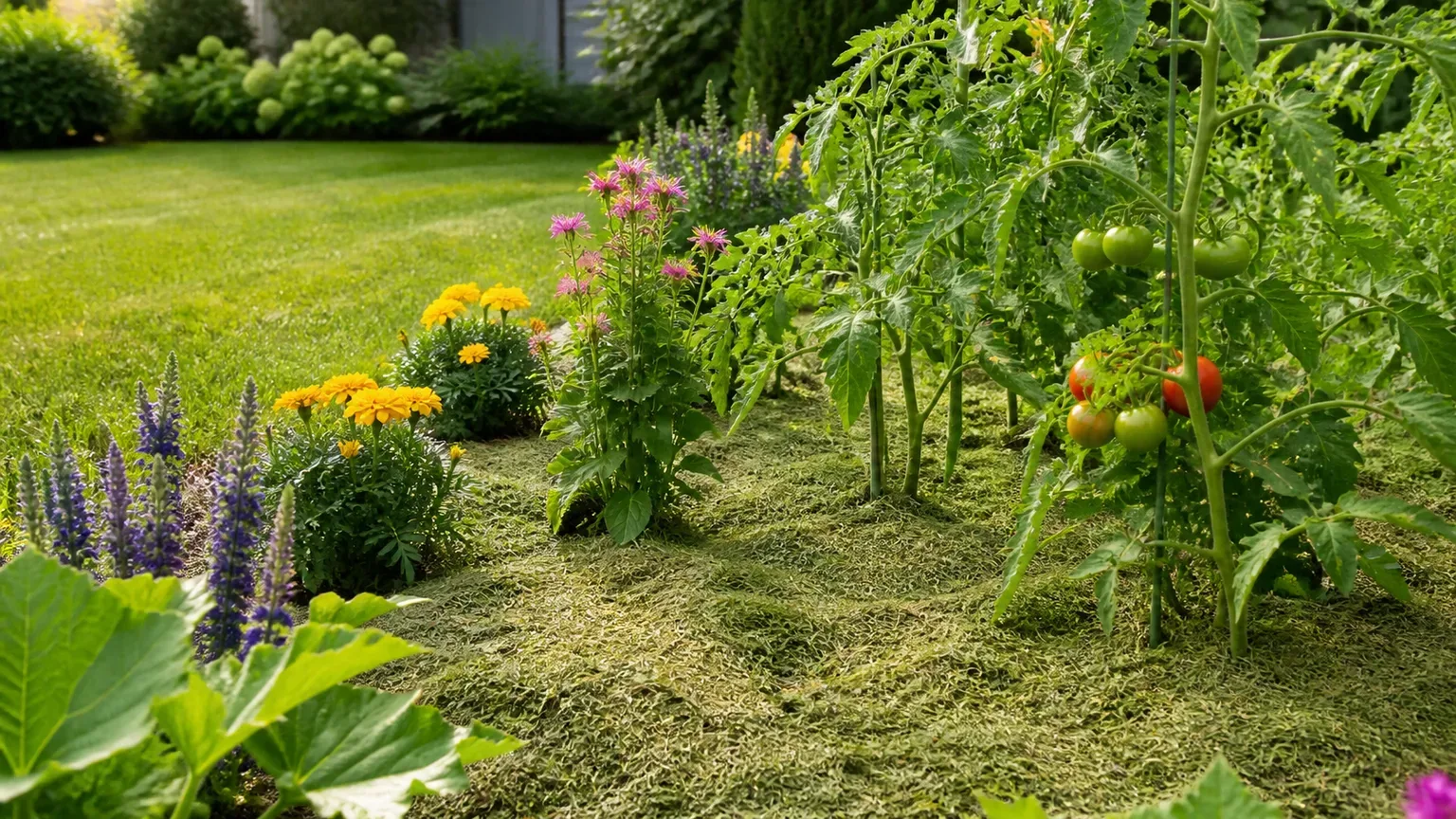
Grass clippings can become useful garden mulch the same day you mow, but they are not a “dump it and forget it” material. They are wet, fine, nitrogen-rich, and quick to decompose, which is exactly why a thick pile can turn slimy while a thin layer can protect soil and return organic matter.
The short answer is yes: use clean clippings as mulch around established garden plants when you can spread them loosely and keep them away from stems. Before you collect a single blade, check the lawn’s treatment history, look for weed seed heads or active disease, and decide whether the clippings belong in a bed, on a path, in a compost pile, or back on the lawn.
Can You Use Grass Clippings as Mulch?
You can use grass clippings as mulch in vegetable gardens, ornamental borders, shrub beds, and paths. The University of Minnesota Extension’s guidance on lawn clippings lists garden mulch and composting as useful ways to recycle clippings rather than treating them as waste.
The important distinction is between grasscycling and garden mulching. Short clippings that fall evenly back onto a regularly mowed lawn can filter down between turf blades and decompose in place. Clippings collected from an overgrown or wet lawn are longer and heavier; those should be spread thinly, dried, composted, or removed instead of left in clumps.
Grass clipping mulch is best treated as a fast, temporary mulch. It can reduce evaporation, shade small weeds, and feed soil organisms as it breaks down, but it will not last like coarse wood chips, and it is more likely to compact when wet. If you want a single thick layer that still looks airy weeks later, choose a coarser material.
The easiest way to decide is to ask what job the clippings need to do. If you are returning short clippings to turf, even distribution is the priority; if you are protecting a bed, airflow and clean placement matter more; if you are trying to build soil over time, composting gives you more control over the finished material.
What Makes Grass Clippings Useful in the Garden
Mulch works at the soil surface. It interrupts direct sun and wind, slows evaporation, reduces soil splash during rain, and creates a less favorable surface for weed seeds to germinate. The Royal Horticultural Society’s mulch guidance describes these broad benefits while also warning that the wrong material or placement can create problems around plant stems.
Grass clippings add a second feature: they decompose quickly. That speed can be helpful when a bed needs a small pulse of organic material during the growing season, but it also means you will need to inspect the layer more often and reapply smaller amounts rather than expecting season-long coverage.
Fast Nutrients, Fast Decomposition
Fresh turf clippings contain a lot of moisture and readily decomposable plant tissue. As microbes break them down, nitrogen and other nutrients return to the soil, so clippings can act like a light surface feed as well as a mulch.
That is not the same as a balanced fertilizer. A thick mass may tie up oxygen and create unpleasant anaerobic conditions, while a large amount mixed into soil can decompose unevenly and temporarily change nutrient availability. Keep clippings on the surface in thin layers unless you are intentionally adding them to a managed compost mix.
The RHS notes that freshly chipped plant material, including grass clippings, can encourage soil microorganisms that use nitrogen while the material is breaking down. That is one reason surface application is the forgiving option: it feeds the soil gradually without burying a wet mass beside plant roots.
Moisture and Weed Benefits Have Limits
A loose layer of clippings shades soil and slows moisture loss. It can also reduce soil splash onto low leaves and fruit, which helps keep edible crops cleaner after rain. But clippings do not eliminate weeds; a thin layer may reduce germination, while a mat can become a new surface for windblown seeds and can make hand-weeding harder.
The benefit disappears when the material forms a continuous, water-resistant crust. Water may run off the top, air movement at the soil surface drops, and the layer can smell. Think of the target as a breathable scattering of fibers, not a green blanket.
The Safety Check Before You Mow for Mulch
The safest clipping mulch starts with a lawn you know. Treat the mower as a sorting tool: it is not only collecting grass, it may also be collecting herbicide residues, weed seeds, diseased plant tissue, pet waste, or small pieces of litter.
Use this quick screen before directing clippings into a garden bed:
- Treatment history: If the lawn recently received an herbicide, weed-and-feed product, insecticide, or other treatment, do not use the clippings in edible beds unless the product label specifically permits that use. When you cannot identify the product or timing, choose composting through an approved local program or another disposal option instead.
- Visible weed seed heads: If crabgrass, annual bluegrass, dandelion, or another weed is flowering or carrying mature seed, bagging it is safer than scattering it through beds. A lawn with a few ordinary weeds is not automatically unusable, but seed-bearing weeds change the decision.
- Active lawn disease: Do not move clippings from a visibly diseased patch into a vegetable bed or clean ornamental border. Rake out suspicious clumps and follow local extension guidance for the turf problem.
- Contamination: Clippings mixed with pet waste, spilled fuel, trash, or roadside debris do not belong around food crops.
- Mowing conditions: Wet grass and very tall grass produce bulky clumps. Wait for the blades to dry and mow often enough that you remove no more than about one-third of the leaf height at a time.
Know What Was Applied to the Lawn
Herbicide caution is not about whether grass is “natural”; it is about where the treated material is going next. A product used safely on turf may still be inappropriate around vegetables, herbs, seedlings, or compost, and labels vary by active ingredient and application site.
If you do not know the product, call the person who applied it, read the label, or skip the clippings. The GrowVeg guide to grass-clipping mulch makes the same practical point from the garden side: growing and harvesting your own clean clipping supply is easier to control than relying on an unknown source.
Do not assume that drying makes treated clippings safe. Drying changes moisture and texture; it does not prove that a chemical residue has disappeared. For a food garden, uncertainty is enough reason to choose leaves, clean straw, finished compost, or a known untreated source.
Watch for Seed Heads, Disease, and Contamination
The mower chops whatever is in its path. If you mow through seed heads, you can redistribute those seeds into beds where they are harder to spot. If the lawn contains a patch of disease, you may also move infected tissue even when the clippings look like ordinary green material.
For that reason, keep a small “clean mulch lawn” if you rely on clippings: mow it regularly, avoid treated areas, and collect on a dry day. A separate bag or rake for clippings also helps prevent a pile of approved material from being contaminated by a single pass through an unapproved area.
Fresh vs. Dried Clippings: Which Should You Use?
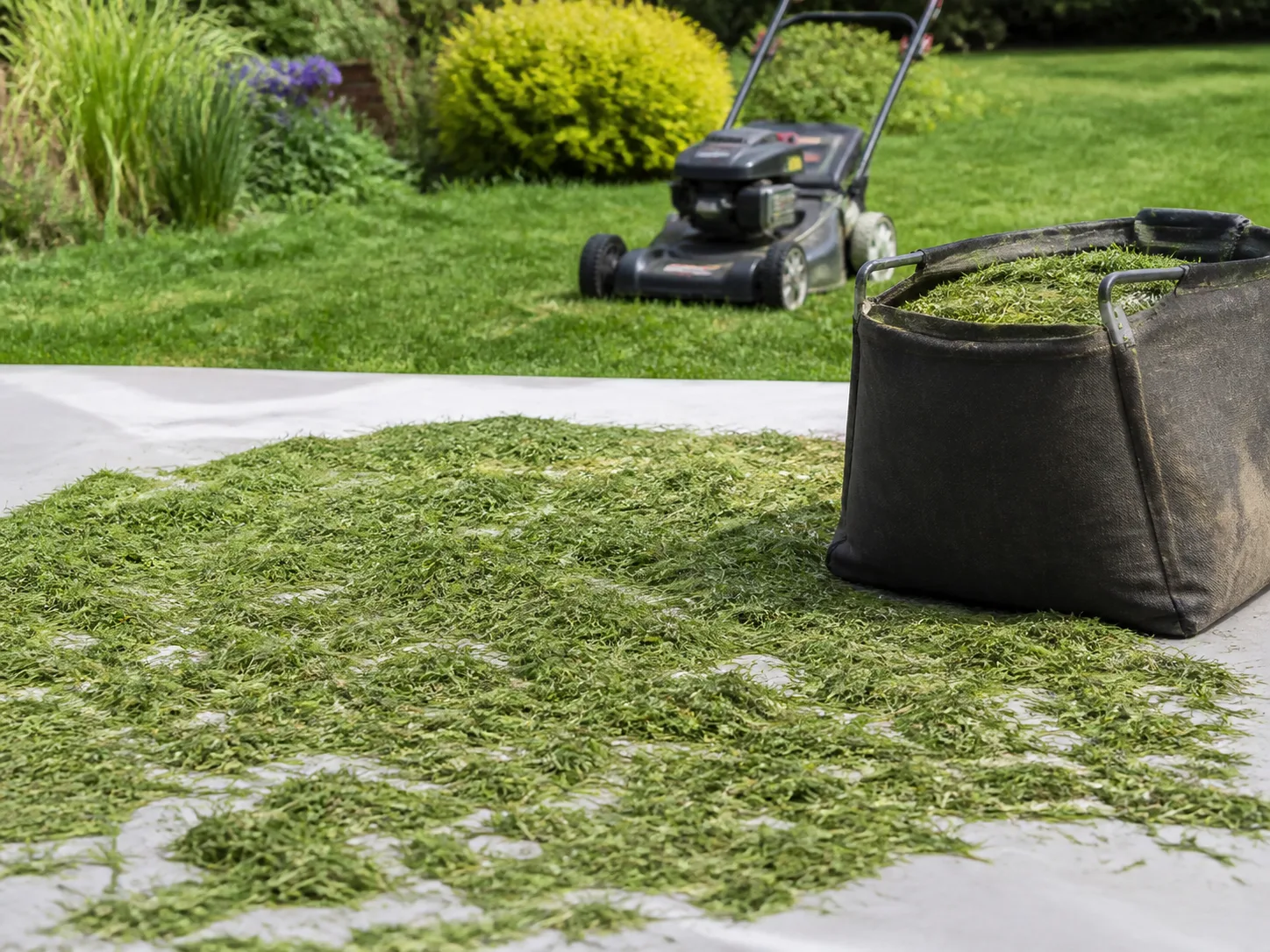
Fresh clippings are convenient but wet. Dried clippings are easier to spread and less likely to collapse into a dense layer, but they take planning and space. Neither state is automatically right; choose according to the size of the batch and the condition of the bed.
| Clipping condition | Best use | Main risk | Starting layer |
|---|---|---|---|
| Fresh and damp | Small side-dress around established plants | Matting, odor, blocked airflow | About ¼ to ½ inch |
| Loose and partly dried | Most garden beds and paths | Uneven coverage | About ½ to 1 inch |
| Fully dry and fluffy | Layered storage, compost mix, or repeat applications | Wind loss and rapid breakdown | Up to about 1 inch, then inspect |
Those are starting points, not a license to pack a bed to a particular measurement. If the clippings are dark, warm, sticky, or clumping in your hand, use less and let the first layer settle before adding more. Gardening Know How’s practical guidance recommends a very thin layer for fresh clippings and explains that dried material can be used more generously.
Fresh clippings work when you can spread them immediately in a loose dusting. They are useful for a small bed after a quick mow, especially when the soil is already moist and the weather is dry enough for the layer to breathe.
Dried clippings are the better choice when the mower produced a large bag, when you need to transport the material across the yard, or when your garden is already damp. Spread them on a tarp, driveway, or other clean surface in a thin layer and turn or rake them until they no longer feel hot or clump together.
Avoid storing wet clippings in a deep, sealed pile. If you need to hold them for later, dry them first and use a container that does not trap rain. A small amount of odor is a signal to spread the pile out; it is not a reason to bury the smelly material in a garden bed.
How to Collect and Prepare Clippings
Start with a clean, dry mower deck and a sharp blade. A bagging attachment is the simplest collection method, but you can also mow in rows and rake the windrows after the grass has dried.
Mow when the lawn is dry enough that the clippings separate instead of sticking together. The GrowVeg method emphasizes removing roughly one-third of the grass height and harvesting in suitable weather; that keeps the clippings shorter and the turf healthier.
Before carrying the bag to a bed, inspect it for stones, plastic, weed seed heads, or visibly diseased material. If you are collecting a large batch, spread it out right away rather than leaving it compressed in the mower bag.
Apply the prepared clippings after weeding and after watering if the soil is dry. Mulch should slow evaporation, not prevent the first irrigation from reaching the root zone. The RHS recommends laying mulch over moist, weeded soil, which is a useful sequence for any organic mulch.
How to Apply Grass Clippings in a Garden Bed
Pull weeds first, then loosen clumps of clippings with your fingers or a rake. Scatter the material across the bare soil in a thin, irregular layer rather than tipping the full bag in one spot.
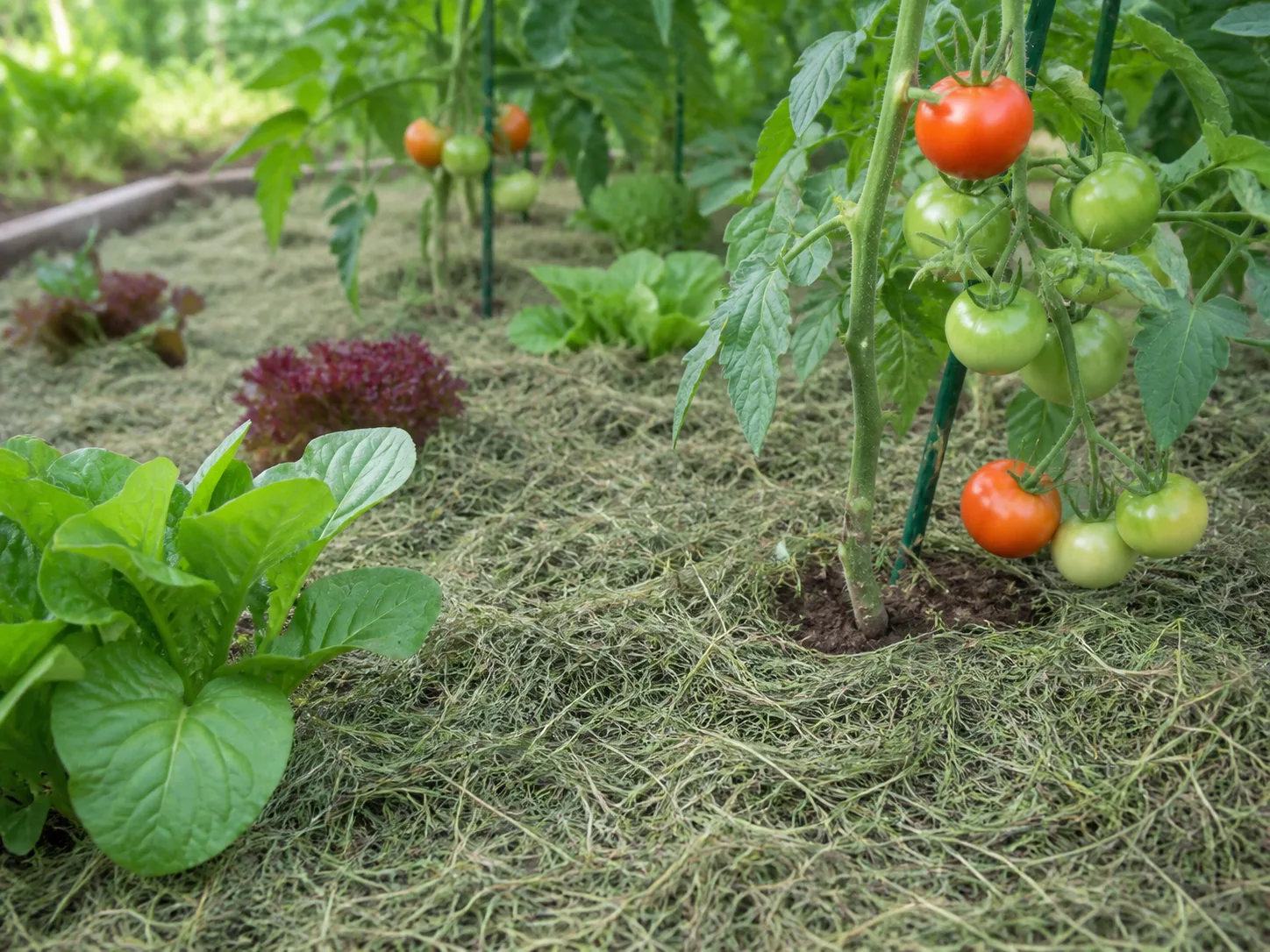
Leave an open ring around each stem, crown, or trunk. For a tomato or pepper, keep the clippings several inches away from the main stem; for a perennial, avoid covering the crown; for a shrub or tree, do not create a wet collar against the woody base.
After the first application, wait and observe. If the clippings remain loose, smell fresh, and do not hold water on the surface, you can add another light layer after they begin to settle. If they darken into a slick sheet, remove or rake apart the material before adding anything else.
Build Thin Layers Instead of One Blanket
Thin-layer application is the central technique. It gives each handful enough exposed surface area for air to move through, lets rain pass into the soil, and makes it easier to stop before the mulch becomes a mat.
For damp clippings, start around a quarter to half an inch. For loose, dry clippings, start around half an inch to one inch. If you cannot see any soil between the fibers and the layer springs back like felt, it is already too dense.
Reapply based on what you can see, not on a weekly calendar. Grass breaks down faster in warm, wet weather and more slowly in cool or dry conditions. A bed that still has an airy layer does not need another load just because the lawn was mowed again.
Keep Clippings Off Stems and Edible Leaves
Clippings belong on soil, not on foliage. They can cling to lettuce, spinach, herbs, and other leafy greens, making harvest and washing needlessly difficult. For sprawling crops, keep the surface layer beneath the fruiting zone where possible and use a wider, coarser mulch if fruit is resting on the ground.
Around tomatoes and peppers, a clipping ring can help reduce soil splash, but keep it away from the stem and do not let the layer touch low leaves. Around shrubs and trees, follow the same principle used for other organic mulch: cover the root-zone soil, not the trunk.
The RHS explains that mulch should not be piled against woody stems because constant moisture can soften tissue and encourage disease. The same caution matters with grass clippings because their fine texture holds together more readily than bark or coarse chips.
Where Grass-Clipping Mulch Works Best
Use clean clipping mulch where a fast-breaking, informal material makes sense. Vegetable rows with established plants are a good fit when you can keep the material off leaves and stems. Ornamental annuals, perennials, and shrubs can also benefit when the bed drains well and the layer is monitored.
Garden paths are another practical use. A thin scattering can reduce mud and temporarily cover bare soil, although clippings may be slippery when wet and will need refreshing. A path that receives heavy foot traffic is better served by chips, straw, gravel, or another material that stays open under pressure.
Grass clippings are also useful in a compost pile when you balance them with carbon-rich material such as dry leaves, shredded paper, or small amounts of untreated woodier material. If the batch is uncertain because of herbicide history, use a municipal composting option or ask your local extension office before adding it to home compost.
Do not use clipping mulch as a top layer over newly sown seeds. Fine material can block light, crust over as it dries, or move into seed furrows during watering. Wait until seedlings are established and you can keep the layer low and away from their crowns.
When to Choose Another Mulch
Grass clippings are a poor fit when the lawn is wet, treated, weedy with mature seed, diseased, or contaminated. They are also a poor fit when you need a clean, long-lasting, decorative layer in a front bed or when the site stays waterlogged after rain.
Choose a different material if you cannot check the source. Finished compost is useful when you want a soil amendment and light mulch in one, while shredded leaves are a good seasonal surface cover if they are chopped so they do not form a whole-leaf mat.
Coarse wood chips last longer around shrubs and trees, but keep them on the soil surface and away from trunks. Straw can be practical around vegetable plants and strawberries, while pine needles suit acid-loving plantings and dry, informal beds. The best mulch is the one that matches the crop, moisture, maintenance schedule, and cleanliness you need.
What to Do If Clippings Mat or Smell
Act as soon as the surface turns slimy, sour, or visibly sealed. Rake the layer apart and leave it spread thinly so it can dry, or remove the worst material to a compost area where it can be mixed with dry carbon-rich material.
Do not cover the problem with more mulch. A new layer hides the wet core, but it does not add oxygen or fix the conditions that caused the smell. Check whether the bed is too wet, whether the clippings were applied too deeply, or whether the material was stored compressed before application.
If plants look wilted after a thick application, inspect the soil instead of watering automatically. A sealed clipping mat can shed water while the root zone below remains unevenly wet. Pull back the material, test the soil several inches down, and reapply only after the surface is breathable.
White fungal threads on decomposing organic material are not automatically a problem. The RHS notes that harmless saprotrophic fungi can appear in enriched or covered soil; remove a mat when it is dense, smelly, or blocking water, not simply because a few pale threads are visible.
Four Free or Low-Cost Mulch Alternatives
If grass clippings fail the safety check or do not suit the bed, you still have several low-cost options:
- Shredded leaves: Run dry leaves over with a mower or leaf shredder so they stay open and do not form a whole-leaf blanket. They break down more slowly than clippings and are excellent for beds and compost.
- Straw: Use clean straw around vegetable crops, strawberries, and paths. It is coarse enough to stay breathable, but check the source if herbicide residues are a concern.
- Arborist wood chips: Fresh chips are long-lasting around trees, shrubs, and ornamental borders. Keep them off trunks and avoid mixing a deep layer into the soil.
- Finished compost or pine needles: Compost is useful where you want fertility and a fine surface; pine needles make a loose mulch for suitable shrubs, blueberries, and informal beds. Neither is a universal replacement, so match the material to soil and crop needs.
The advantage of these materials is not that they are always better. It is that each solves a different problem: leaves provide carbon and coverage, straw creates a coarse barrier, chips last, and compost feeds soil. Grass clippings are most valuable when you use them for the jobs their fast breakdown and high moisture content actually fit.
Conclusion
Use grass clippings as mulch when they come from a clean, untreated lawn, contain no mature weed seeds or suspicious disease, and can be spread in a thin, airy layer. Fresh damp clippings need the lightest touch; dry, loose clippings are easier to handle and store, but still need inspection after application.
Keep them off stems, crowns, and edible leaves, and never pile them against a tree or shrub trunk. When the material smells, mats, or sheds water, rake it out and correct the layer instead of adding more. With that simple discipline, a weekly lawn chore becomes useful organic matter rather than another garden problem.