Best Cat Repellents to Keep Cats Out of Your Yard
Compare scent, physical, water, and sound cat repellents for yards and gardens—with plant picks, safety limits, and a layered plan that beats habituation.

The best cat repellent is not one product—it is the method that matches what the cat is doing in your yard. A granular predator-scent product may discourage a cautious stray from crossing a border, but it will not stop a determined tom from sunning on your mulch. Motion-activated water works well for repeat trespassers on a predictable path; lavender along a fence line is a mild nudge, not a force field. Before you buy anything, decide whether you are fighting digging and defecation, lounging, hunting at bird feeders, or all three—then layer tactics so habituation does not undo your work.
Quick verdict: match the repellent to the problem
Most failed cat-repellent projects share one mistake: treating every visit the same way. Cats come for different reasons, and the fix depends on the behavior you see.
| What you see | Start here | Why it fits | Main limit |
|---|---|---|---|
| Fresh poop or dug-up seedlings in loose soil | Remove marks, then chicken wire or sharp mulch + scent refresh | Breaks litter-box association and blocks digging | Must clean old scent first; mulch needs maintenance |
| Cats crossing a border daily | Predator-scent granules or citrus peels along entry routes | Odor barrier on paths cats use | Rain and habituation require reapplication |
| Repeat lounging on beds or furniture | Spike mats, rough mulch, or motion sprinkler on that zone | Texture or surprise on the exact perch | Sprinklers need hose placement; spikes must stay visible |
| Hunting at bird feeders | Feeder baffles, pole guards, feeder placement away from cover | Protects birds without harming cats | Does not stop cats elsewhere in yard |
| Neighbor’s pet on a schedule | Talk to owner + bell collar suggestion; combine with your barrier | Addresses source, not just symptom | No product replaces courteous neighbor contact |
If one tactic flatlines after two to three weeks, rotate or stack another category—scent plus texture, or water plus cleanup—rather than doubling the same product.
Think in four buckets—scent, physical, water, and sound—then combine them across seasons:
| Type | Best for | Typical tools | Weak when |
|---|---|---|---|
| Scent | Border crossing, mild deterrence | Predator granules, citrus peels, repellent plants | Heavy rain, hungry cats, uncleaned old marks |
| Physical | Digging, lounging, seedling protection | Chicken wire, sharp mulch, spike mats, low fencing | Large open lawns without defined beds |
| Water | Repeat trespass on known paths | Motion sprinklers, manual hose reinforcement | Winter freeze, shared walkways with people |
| Sound | Supplementary surprise | Ultrasonic stakes, wind chimes, DIY noise cans | Cats habituate; some units bother dogs |
Integrated pest management—assessing damage, trying cultural fixes first, then mechanical and behavioral tools—is the durable framework Halton Master Gardeners recommend for garden “pests,” including cats. Repellents are one layer, not the whole program. Before you spend on gadgets, walk the yard at dawn and dusk for a week and note where cats enter, what they touch, and whether they hunt, nap, or defecate. That five-minute log saves money because it tells you which bucket to buy first.
Digging and pooping in soft beds
Loose, freshly turned soil reads like an invitation. Gardening Know How notes that cats mark territory with urine and scent-gland deposits and return while that smell remains. Your first job is not sprinkling repellent on top of old mess—it is removing feces and scraping away the top layer of contaminated soil, then blocking access with chicken wire laid flat (cats hate unstable footing) or sharp mulch such as pine cones and holly cuttings. Halton Region Master Gardeners report anecdotal success with prickly rose or juniper prunings placed in problem spots.
For vegetable rows, consider a temporary frame of 2-foot-wide chicken wire laid between rows during seedling weeks, then rolled up once plants size up. Raised beds with dense planting leave less bare soil exposed than empty corners—another reason mixed herb garden borders beat wide mulch rings around single shrubs.
Lounging on warm mulch or furniture
Texture beats odor here. Plastic carpet runner with the nub side up, coarse stone mulch, or commercial pet spike mats on the exact nap zone make the surface less rewarding than the neighbor’s patio. Pair texture with a motion-activated sprinkler if the cat returns to the same sunny corner every afternoon. On deck furniture, remove cushions when not in use or cover chairs with fitted tarps so cats cannot claim a daily nest.
Why cats treat your yard like a litter box
Understanding why cats choose your property prevents wasted spending on the wrong repellent type.
Territorial scent and repeat visits
Cats communicate heavily through smell. VCA Animal Hospitals explains that a cat’s nose has 45 to 80 million scent receptors—possibly up to 200 million—compared with about 5 million in humans, making feline smell roughly 14 times more sensitive than ours. They also use Jacobson’s organ to detect pheromones ordinary noses miss. When a cat sprays or defecates, that chemical signature invites repeat visits until you remove it. An enzyme-based cleaner on walls, decks, and patio doors breaks down urine markers better than plain water and helps stop respraying on structures.
Soft soil, sun, and prey
Garden beds offer soft digging, warm sun, and prey—mice, voles, and insects in mulch and brush. Reduce prey habitat by clearing clutter under decks, sealing shed gaps, and keeping brush piles away from beds you protect. Outdoor pet food, unsecured trash, and greasy grill residue pull cats in for food, not just bathroom breaks—remove those attractants before blaming random repellent failure.
Health note: Cat feces can carry Toxoplasma gondii. The CDC recommends wearing gloves when gardening in soil that may contain cat feces and washing hands afterward—especially important for pregnant gardeners and immunocompromised people. Daily litter-box cleaning indoors removes infectious-stage oocysts before they mature; outdoor deposits need the same respect: scoop, bag, and wash up. If you build raised beds for vulnerable crops, use clean imported soil in the top 6 inches after removing contaminated native soil from chronic litter-box zones.
Scent barriers that actually help
Scent works on entry routes and freshly cleaned areas. It fails when old territorial odor remains or when cats are highly motivated.
Commercial predator-scent repellents
Granular products such as Shake Away and similar predator-urine-style repellents capitalize on cats’ fear of coyote, fox, and bobcat scent. Sprinkle along borders and reapply after heavy rain per label directions. These are area repellents—they make a zone smell risky—not contact repellents eaten on plants. Organic, non-toxic labels are common, but keep any repellent off edible leaves you plan to harvest and away from children’s play zones unless the label explicitly allows that use.
Rotate predator-scent granules with citrus peels or used coffee grounds (Halton MG notes heavy sprinkling as an anecdotal cat deterrent) so cats do not adapt to one note. Refresh every one to two weeks in dry weather; after storms, start over. Mark calendar reminders—habituation is the main reason scent-only plans fail. If cats still cross after three refreshes, add physical texture on the crossing line instead of a fourth bag of granules.
Commercial spray repellents with putrefied egg, garlic, or capsaicin on registered labels can protect ornamental beds when applied per directions; most are not labeled for edible foliage, so read carefully before treating kale or herbs. Like scent deterrents for rabbits, cat odor barriers work locally and temporarily—they are not perimeter fencing.
Plants cats tend to avoid
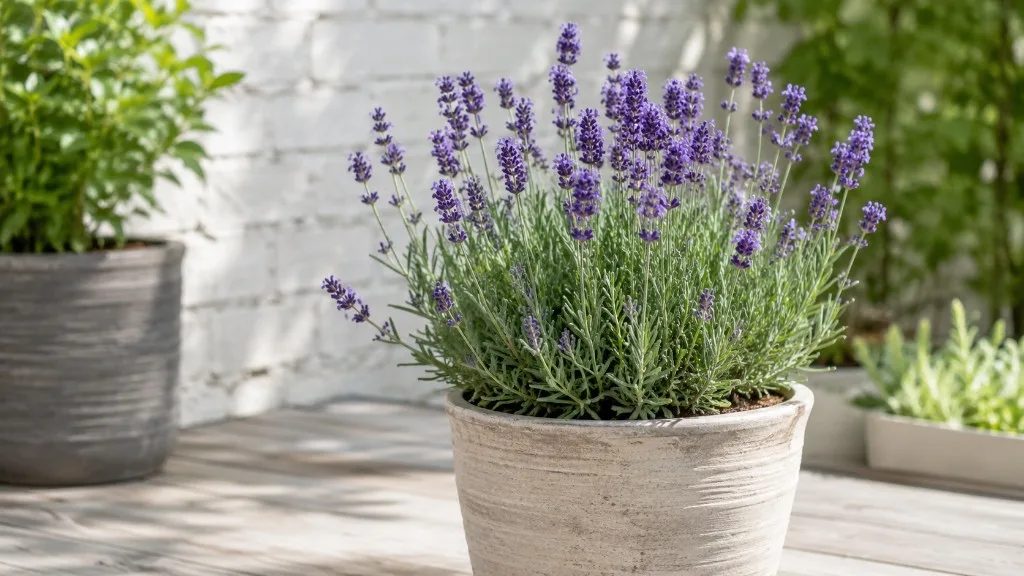
Living plants release far less volatile oil than a concentrated spray, but grouped aromatic herbs and “stinky” ornamentals can nudge cats toward easier yards—especially along fences and paths. Useful species often cited by gardeners and extension-style sources include:
- Coleus canina (scaredy-cat plant)—pungent when brushed; effective but unpleasant to humans near seating areas
- Rue (Ruta graveolens)—strong bitter scent; handle with gloves; toxic if ingested
- Lavender—see our lavender profile and pest-repelling garden guide; cats often dislike intense floral oils
- Rosemary and thyme—woody Mediterranean herbs for sunny edges; pair with our thyme growing guide and herb garden ideas
- Rosemary, curry plant, scented geraniums—border fillers with strong perfume
Plant repellents work best as part of a mixed border, not a single lonely pot. They will not outcompete a sandbox-sized bare soil patch next door. Underplant lavender and rosemary along paths cats use; the oils release when brushed, but expect to replace crushed stems after heavy traffic. In shade, scented geraniums in pots may help doorways where sun-loving herbs struggle.
Do not plant pennyroyal (Mentha pulegium) to repel cats. It is toxic to cats and dogs if ingested, and the ASPCA Poison Control database lists it among plants with systemic animal effects. The smell may repel, but the risk on a cat-accessible bed is not worth it.
Pantry scents—and what to skip
Reasonable pantry trials (after cleaning old deposits):
- Citrus peels (lemon, orange, grapefruit) scattered along borders; replace as they dry
- Used coffee grounds lightly worked into soil edges—not piled against edible stems
- Vinegar sprays on hardscape perimeters; avoid direct contact with plant foliage
- Rosemary-water sprays on fence lines (GKH notes homemade rosemary infusion as a perimeter spray)
Skip these “repellents”—they hurt cats, pets, bees, or you:
- Mothballs — pesticides that volatilize toxic vapor; dangerous to cats, children, and wildlife; never legal or safe loose in a garden
- Dry cayenne or chili flakes — Halton Master Gardeners and NPIC capsaicin guidance warn that capsaicin irritates skin and eyes; windy application can injure cats and harm bees at repellent concentrations. Registered capsaicin products exist, but loose pepper in beds is an cruelty and pollinator risk gardeners should avoid
- Soiled cat litter around vegetables — Halton MG notes it may repel some cats but attracts others and belongs nowhere near food beds
- Essential oil concentrates on soil — eucalyptus and peppermint oils can poison cats if absorbed through paws; dilute sprays on hardscape only, never as a puddle cats walk through
Physical barriers for beds and borders
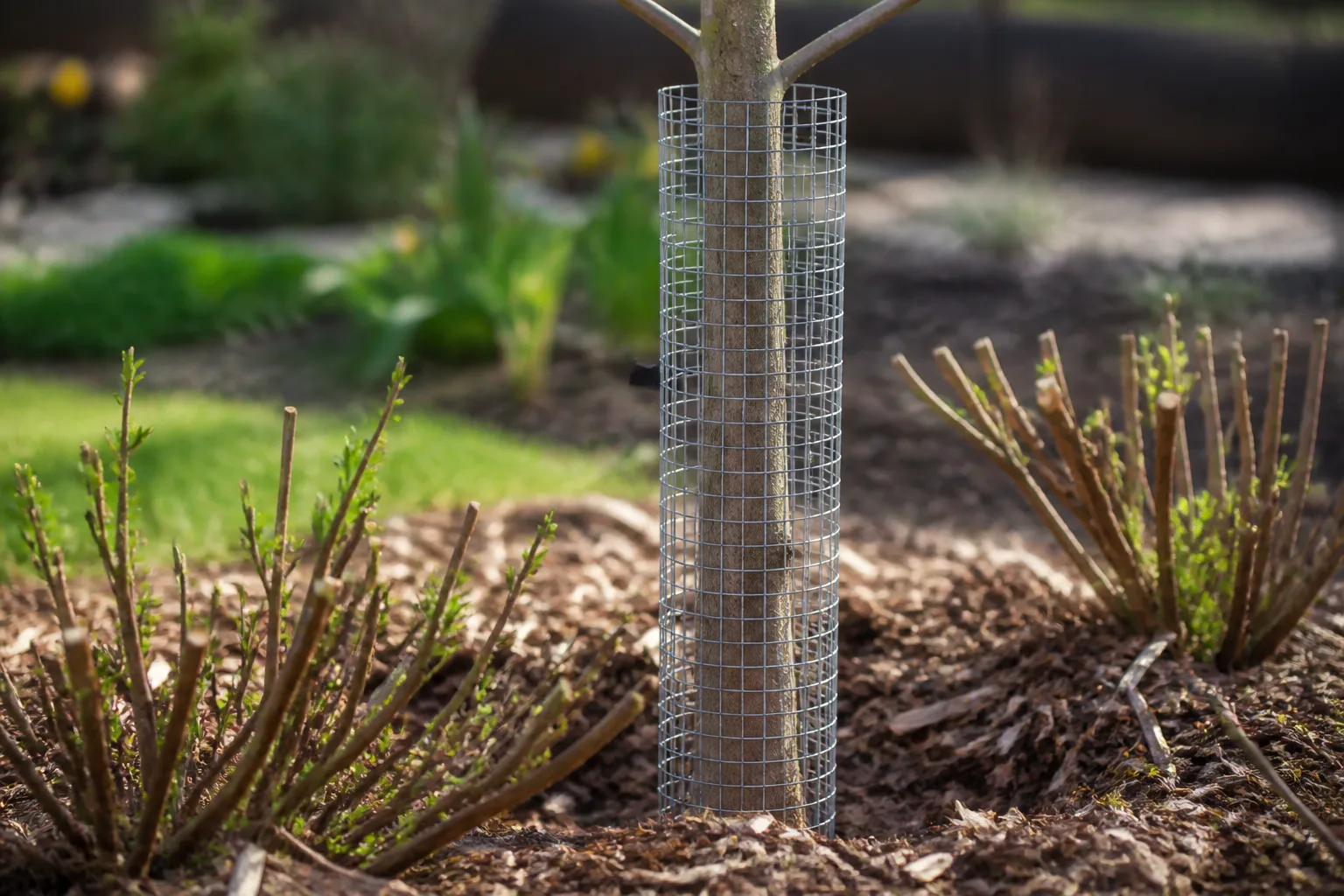
When scent fails, make the surface wrong for the behavior.
Chicken wire, mulch textures, and spike mats
Chicken wire laid flat on planting beds—pinned at edges and cut with holes for transplants—stops digging without a tall fence. Cats dislike the unstable grid under paws. For new beds, lay wire before mulch; for existing plants, use rings around individual crowns.
Sharp mulches—pine cones, holly trimmings, coarse lava rock, or decorative stone—discourage lounging and digging in loose soil. Eggshells help slightly but break down fast.
Spike mats and upside-down carpet runners with nubs create uncomfortable perching on deck rails, window sills, and favorite sun spots. Check that mats will not trap small wildlife; inspect weekly.
For valued shrubs, hardware-cloth cylinders—like those used for rabbit protection in our plants rabbits eat at risk guide—guard young trunks without enclosing the whole yard. On open lawn where cats cut diagonally, low decorative fencing around the bed perimeter—even 12–18 inches of rigid edging plus sharp mulch inside—defines “not a litter box” better than scattershot scent alone.
Temporary garden netting draped over seed trays for two weeks after sowing stops cats from using fresh drill rows as scratch pads. Remove netting once seedlings anchor so birds and pollinators are not trapped later in the season.
When low electric fence makes sense
Low-voltage pet/containment-style electric wire at 4–6 inches above soil can protect vegetable rows from cats and rabbits. Units deliver a mild shock designed to startle, not injure. Use only where children will not grab wires, follow manufacturer grounding instructions, and combine with visible flags during training weeks so cats learn the boundary. This is a last resort for high-value beds, not a suburban default—check local ordinances first.
Water and motion-activated deterrents
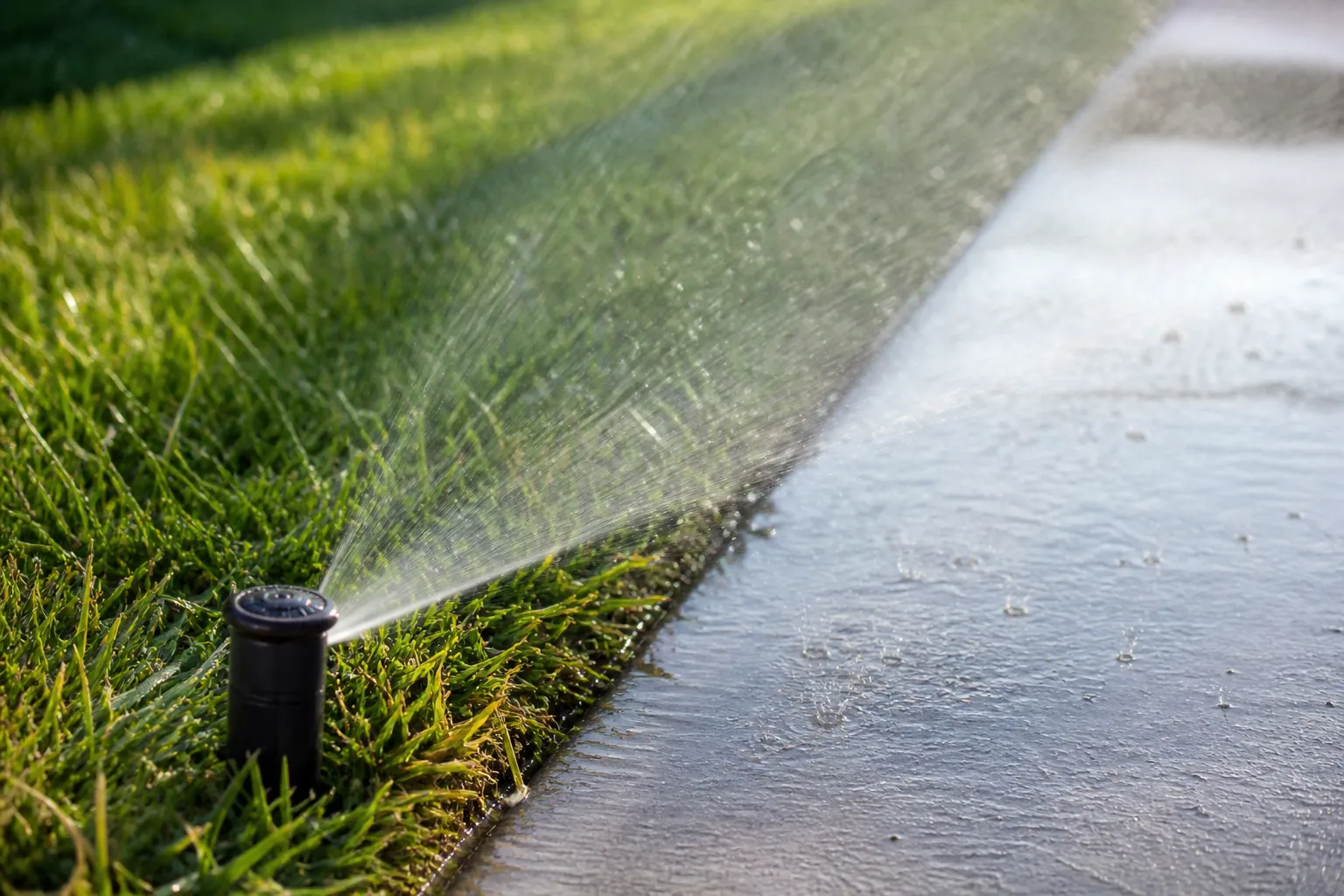
Cats dislike surprise water, and association learning sticks.
Motion-activated sprinklers such as the ScareCrow-style units detect heat and movement, firing a short jet along entry paths. Halton Master Gardeners note they deter deer and some small mammals; cats often learn fastest because they hate soaked fur. Place units where cats enter—not where mail carriers walk—and move them every few weeks so cats do not learn blind spots.
Manual reinforcement with a hose or squirt bottle when you catch a cat in the act still helps, but you cannot patrol all day. Use manual sprays to reinforce sprinkler zones during the first week of installation. Aim for the ground near the cat, not the face—startle without injury.
Position sprinklers low so the jet skims the soil where paws land; high arcs waste water and soak pedestrians on shared paths. If your entry is a gate cats squeeze under, place one unit inside the gate line facing outward so the first step triggers the spray. Pair with a battery backup or check valves if your water pressure drops when other zones run.
Winter note: drain and store units before hard freeze; switch to physical barriers during snow months.
Sound and ultrasonic devices
Ultrasonic stakes (brands such as Cat Stop) emit high-frequency sound when motion triggers. Humans usually cannot hear it; cats often find it irritating. Results vary—some cats ignore units after a week, and household dogs may be affected. Mount facing the problem bed, not your patio seating, and treat ultrasound as a supplement, not a standalone fix.
Low-tech noise—wind chimes, marbles in a can on a fence rail, or bells on a gate—adds random disturbance cheaply. Cats habituate unless noise location changes.
SssCat-style aerosol cans combine a hiss and harmless spray burst; useful for indoor-door thresholds and enclosed porches, less practical for open acreage.
Repellents work faster when the yard stops advertising food, shelter, and bathrooms. Feed pets indoors, secure trash with latching lids, clean grills after cooking, wash urine spray on structures with enzyme cleaner, board deck gaps so ferals cannot den underneath, and reduce rodent habitat that draws hunting cats. Scent deterrents layered on top of uncleaned territorial marks fail predictably—clean first, block second, repel third.
Redirect cats with a distraction zone
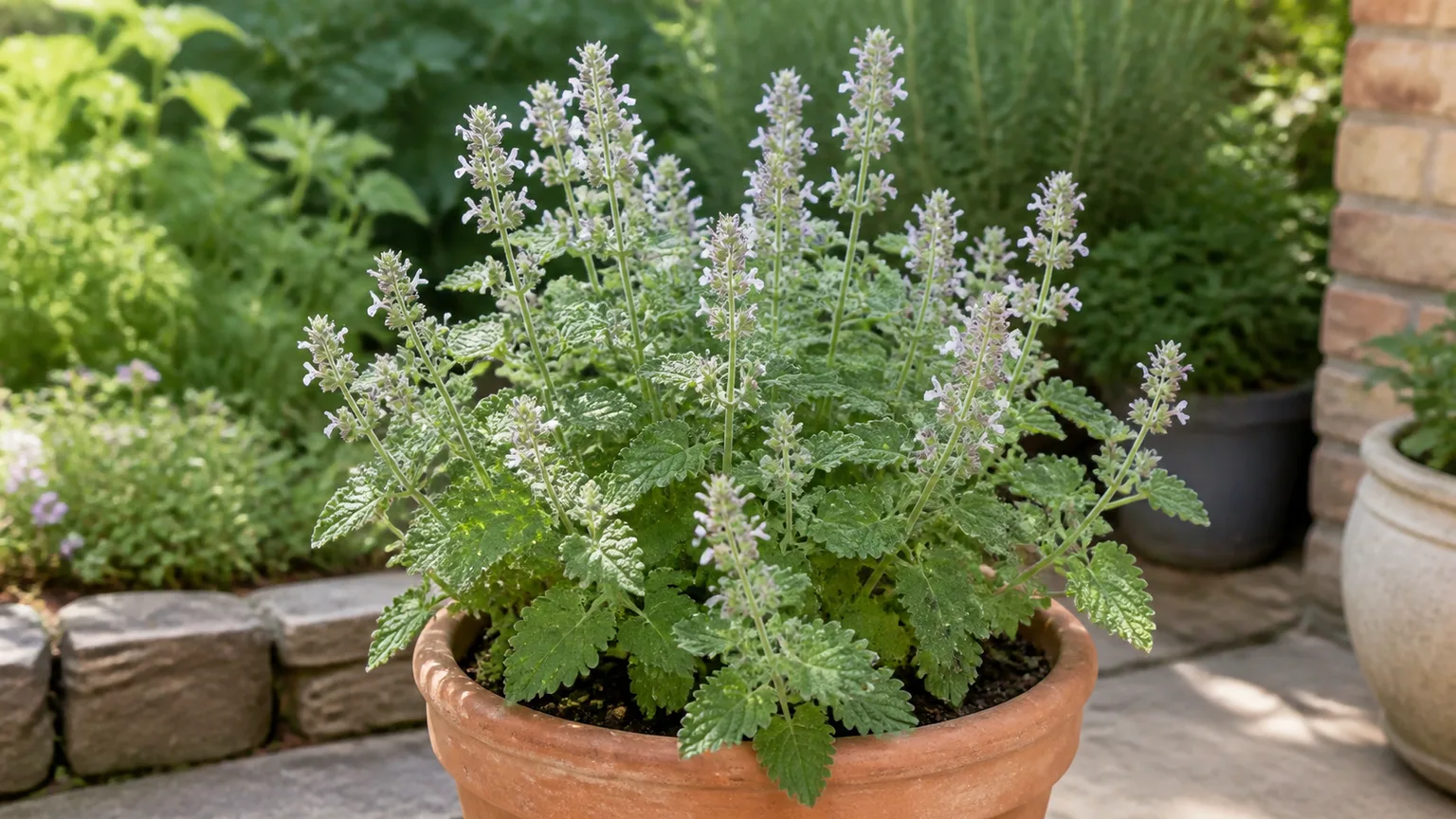
Sometimes the pragmatic fix is containment by attraction—especially when the cat belongs to you or a cooperative neighbor.
- Catnip patch (Nepeta cataria) or cat grass in a sunny back corner draws cats away from vegetables
- Outdoor sandbox “litter box” filled with fine sand, scooped weekly, placed far from edibles—cats prefer it to loose soil if kept clean
- Sheltered nap spots (platform under a tree, outdoor cat house) pull lounging off your raised beds
Diversion does not stop neighbor cats, but it can save a shared household yard when exclusion is impossible. Never bait diversion zones with food that attracts raccoons and rats.
Neighbor cats, bird feeders, and fairness
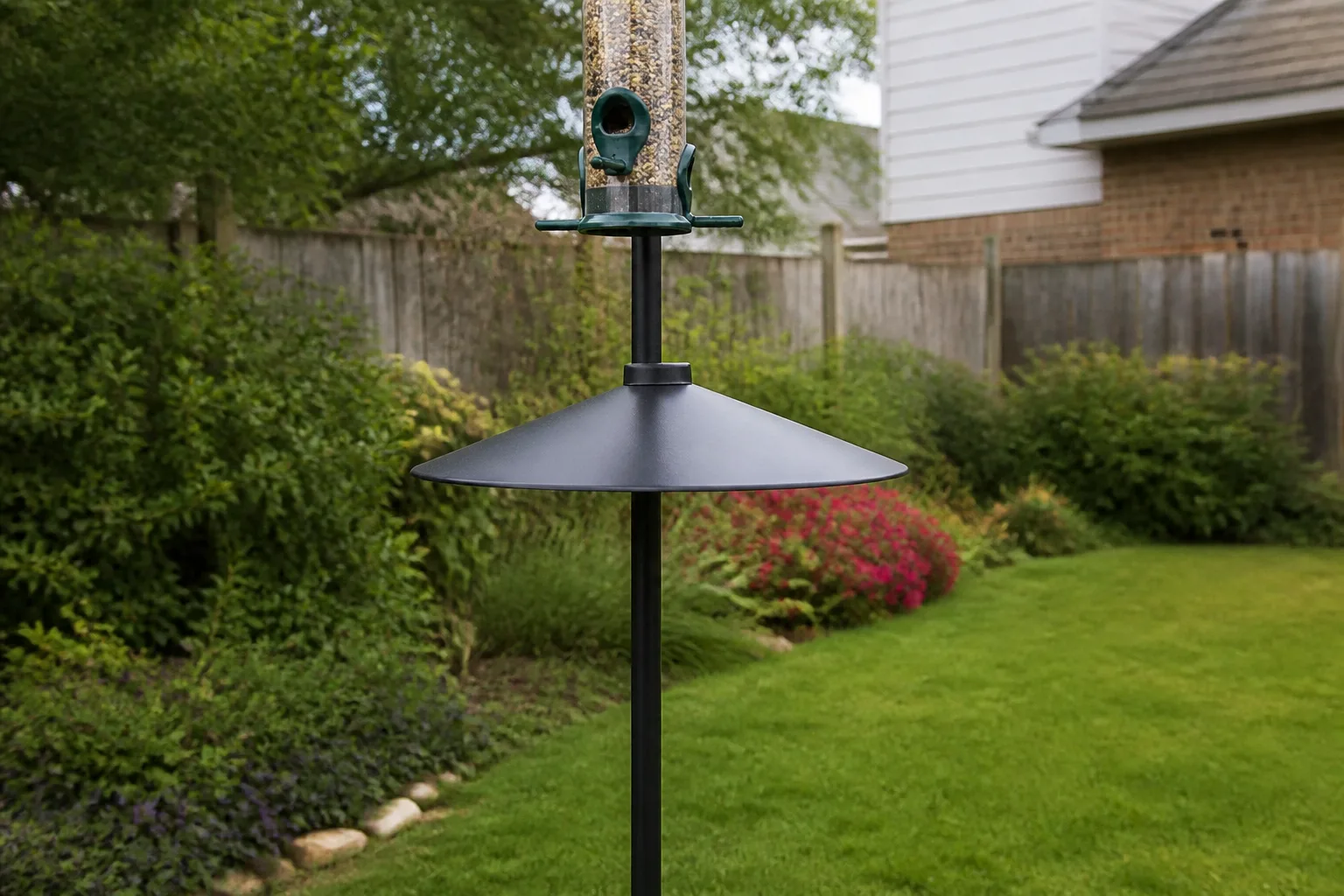
When the trespasser wears a collar, talk to the owner before escalating gadgets. Many owners do not realize their cat hunts at your feeder or uses your mulch at dawn. Suggest breakaway bell collars so birds hear approach, keep cats indoors at dawn and dusk when songbirds feed heavily, and ask them to manage an outdoor litter area on their side of the fence.
Repellent granules will not save chickadees. Move feeders onto smooth poles with baffles, keep feeders 10–12 feet from shrubs cats use as ambush cover, and read our guide to keeping bees away from hummingbird feeders for placement principles that also reduce cat stalking lanes. Consider dense, thorny hedging along privacy borders to block runway access without trapping songbirds inside cover. Baffles above and below feeders, slim poles cats cannot climb, and feeder placement in an open 10-foot radius away from shrub cover reduce ambush kills more than any scent product.
For ferals, support trap-neuter-return (TNR) programs that stabilize populations instead of relocating cats—which often shifts the problem and stresses animals. Check local ordinances before trapping; return collared pets to owners, not shelters, after identifying tags. Document damage with dated photos if you need to escalate a nuisance complaint—courtesy first, evidence second.
Safety for pets, plants, and wildlife
Humane cat control means your dog, visiting wildlife, and pollinators stay safe too.
- Read labels before spraying commercial repellents near vegetable beds
- Never use mothballs, antifreeze, or poison baits—illegal, lethal to cats and scavengers
- Avoid cayenne dust on windy days; capsaicin harms eyes and beneficial insects per NPIC summaries cited by Halton MG
- Inspect spike mats and netting so snakes and hedgehogs do not entangle
- Refresh coffee and citrus away from dog chew zones; moldy citrus attracts flies
- Store predator granules where indoor cats and toddlers cannot ingest them
If a neighbor’s cat appears sick or injured, contact the owner or local animal services—not social-media shaming.
Conclusion
The best cat repellents work as a system: clean old territorial marks, match scent/physical/water/sound tools to the behavior you see, remove food and shelter attractants, protect birds separately at feeders, and rotate tactics before cats habituate. Start with cleanup plus chicken wire or sharp mulch for litter-box behavior, add predator-scent or citrus on borders, and reserve motion sprinklers for repeat offenders on fixed paths. Skip mothballs, pennyroyal, and cayenne cruelty shortcuts. When products stall, stack categories—not more of the same granules—and address neighbor cats at the source.
Keep a simple season log: note which bed failed, what you tried, and when you refreshed. Cat pressure often spikes in spring when loose soil appears and again in late summer when dry mulch feels perfect under paws. Adjust before damage becomes a habit for both you and the cat. Your garden can stay cat-light without abandoning humane standards.



