11 Plants That Repel Bugs in Your Garden
Learn which 11 plants can help deter common garden bugs, where to place them, and why a living plant is not the same as a concentrated repellent.

A garden can look beautiful and still feel like a buffet for aphids, mosquitoes, beetles, and leaf-chewing caterpillars. The right herbs and flowers may lower that pressure around a patio, vegetable bed, or doorway, but they work best as part of the garden design—not as a scented force field.
The 11 plants below are worth growing because they combine aroma, flowers, edible harvests, structure, or support for beneficial insects. The useful question is not “Which plant kills every bug?” It is which plant fits the pest, the place, and the growing conditions you actually have.
What “Repel” Means—and What a Living Plant Cannot Do
“Bug-repelling plant” is a convenient label for several different effects. A strongly scented plant can make a small area less attractive to some insects, but companion plants may also mask a crop’s scent, interrupt a pest’s landing or egg-laying behavior, or attract predators that feed on pests. Those are helpful mechanisms, but they are not the same as a registered insecticide.
Penn State Extension’s research-based companion-planting guidance makes this distinction especially useful: herbs do not always repel pests outright. They can confuse insects by mixing visual and chemical cues, interfere with egg-laying, or support beneficial insects such as ladybugs, lacewings, parasitic wasps, and syrphid flies (Penn State Extension). That is a more realistic promise than expecting one pot of mint to protect an entire yard.
Live plants also release far less volatile oil than a concentrated extract or a formulated repellent. Gardening Know How recommends placing plants near seating areas and paths, and notes that a clump or large container generally has more practical impact than a lonely specimen (Gardening Know How). Wind, rain, plant size, temperature, and how often foliage is brushed all change the result.
Use these plants to reduce local pest pressure and make the garden more resilient. If insects are already damaging crops, identify the pest and add physical removal, sanitation, exclusion, biological control, or a carefully chosen labeled product as needed. Penn State Extension describes integrated pest management as a decision process that aims to manage damage—not promise total extermination (Penn State Extension).
Scent, disguise, and beneficial insects work in different ways
Strong aromas are the easiest effect to notice. Mint, rosemary, lavender, and garlic release fragrant compounds that can make a short trail or sitting area less appealing to some insects, especially when foliage is gently brushed. The effect is local and temporary; it is strongest where the plant is growing and weakest several feet away.
Disguise is more relevant in a vegetable bed. A row of basil among tomatoes, or thyme beneath taller plants, creates a mixed scent and visual pattern that can make a preferred host harder for some pests to locate. Flowers add a second layer by supplying nectar or pollen to beneficial insects, which can help the garden respond to pests rather than relying only on deterrence.
There is an important difference between a plant that discourages contact and a plant that attracts a predator. Both can be useful, and neither guarantees a clean garden. The goal is a lower-pressure, more diverse planting that gives you time to notice a problem before it becomes an outbreak.
Choose Plants by Pest, Place, and Climate
Start with the route the insects are using. A fragrant plant in a back border will do little for bugs gathering around the grill, and a basil pot by the kitchen door will not protect squash at the far end of the yard. Put the plant where you want its foliage, flowers, or scent to do work.
| Garden situation | Good starting choices | Why they fit | Main limitation |
|---|---|---|---|
| Sunny patio or doorway | Basil, lavender, marigolds, rosemary | Pots let you cluster scent where people sit | Coverage is close-range, not yard-wide |
| Vegetable bed | Basil, garlic, alliums, marigolds, thyme-like companions | Edible or ornamental plants can mix with crops | Companion effects depend on the crop and pest |
| Shady or part-shade edge | Mint in a pot, catnip where appropriate | Some aromatic herbs handle less sun than Mediterranean herbs | Shade can reduce aroma and flowering |
| Warm-season container | Lemongrass, basil, eucalyptus | Portable plants can move to a patio or shelter | Cold weather can kill or stress them |
| Sunny, dry border | Lavender and rosemary | They provide structure, fragrance, and flowers | Wet soil causes decline faster than insects do |
For a foundation bed, leave enough air and access to inspect the wall, mulch, and plants. Dense greenery against a building can create hiding places and moisture even if the foliage smells strong. For containers, use several compatible plants in a group rather than expecting one small pot to form a continuous barrier.
The U.S. Fish and Wildlife Service also highlights the value of flowering herbs such as lavender, thyme, and basil: their scents can deter some insects and rodents while their flowers support pollinators and their seeds can feed birds (U.S. Fish and Wildlife Service). That combination—beauty, habitat, and a modest deterrent effect—is a better design goal than a sterile, bug-free yard.
The best spots are the places bugs already use
Walk the garden at the time you notice the problem. Look for aphids on tender tips, mosquitoes near standing water and shaded seating, beetles on sun-warmed foliage, and caterpillars beneath leaves. Then place a plant or container beside that route, not somewhere merely convenient to water.
For a patio, cluster pots along the edge of the seating area and brush the foliage as you pass. For vegetables, mix aromatic plants through the bed without crowding the crop. For a doorway, use a contained plant on each side only if the light and drainage suit it. The more accurately you place the plants, the less you need to overplant.
Mint — Strong Scent, Stronger Need for Containment
Mint (Mentha spp.) is one of the easiest choices for a fragrant container garden. Its cool scent is noticeable as soon as you brush the leaves, and a healthy pot supplies plenty of foliage for a patio edge, back door, or outdoor seating area.
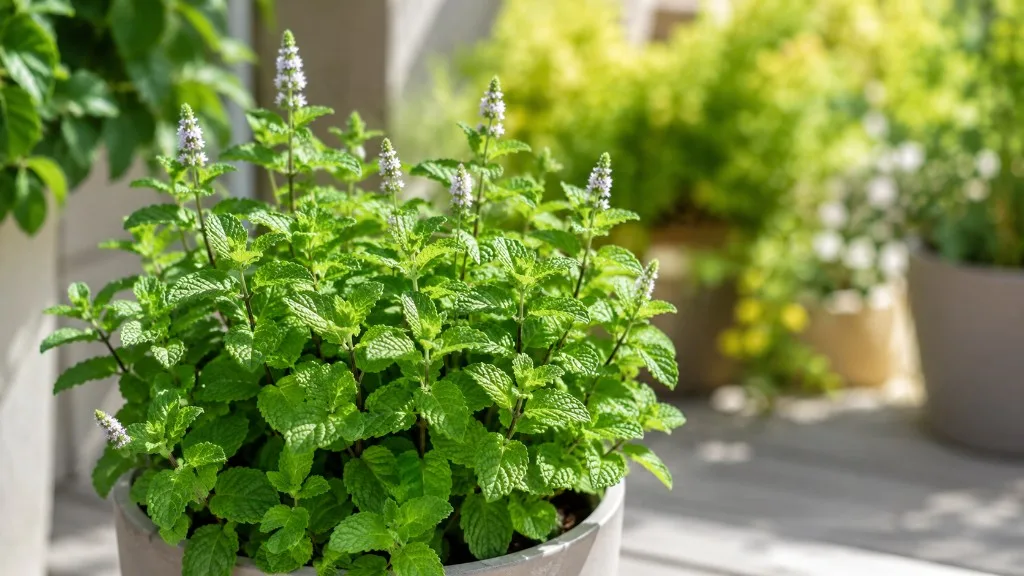
The catch is its spreading habit. In climates where mint is hardy, runners can move beyond the place you intended and compete with nearby plants. Keep it in a pot with drainage, or use a dedicated bed with a real root barrier; do not tuck it casually into a mixed border and assume regular trimming will stop it.
Mint is most useful as a portable, close-range scent plant. Move the pot beside the grill or a door when that is where insects are bothering you, and harvest it for the kitchen. It can help mask nearby odors, but it will not stop insects that are drawn to uncovered food, standing water, or a heavily infested plant.
Marigolds — Bright Annuals With More Than One Job
Marigolds (Tagetes spp.) earn their space through color, long flowering, and pungent foliage. They are easy to grow in containers or mixed beds, so they work well when you want a visible border near vegetables or a sunny patio.
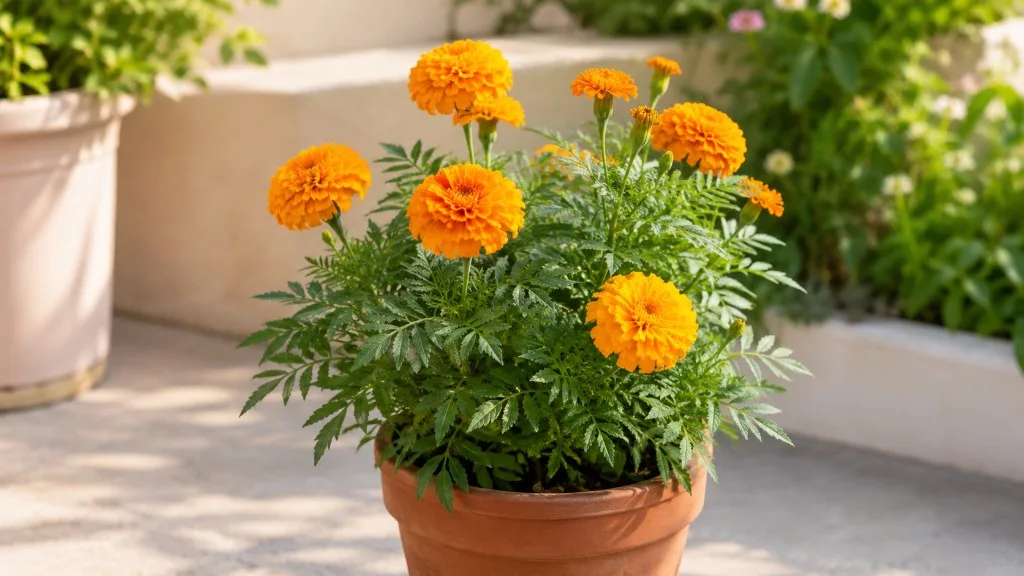
Treat marigolds as supporting players, not a guaranteed insect shield. Their scent may discourage some insects at close range, while the flowers can add habitat and nectar for beneficial visitors. In a vegetable bed, their main value may be the diversity and flowers they add rather than a simple “bugs hate this plant” effect.
Choose a compact French marigold for edging or a larger African type for a taller pot, then give each enough airflow. Inspect the marigolds themselves: a plant with aphids or spider mites is not helping the rest of the bed. Remove badly infested foliage and avoid crowding plants together.
Basil — A Useful Companion for Warm-Season Beds
Basil (Ocimum basilicum) is a practical choice near tomatoes, peppers, and outdoor dining because you can harvest it while it grows. Its aromatic leaves release a noticeable scent without needing to be crushed, and its flowers can support pollinators if you allow some stems to bloom.
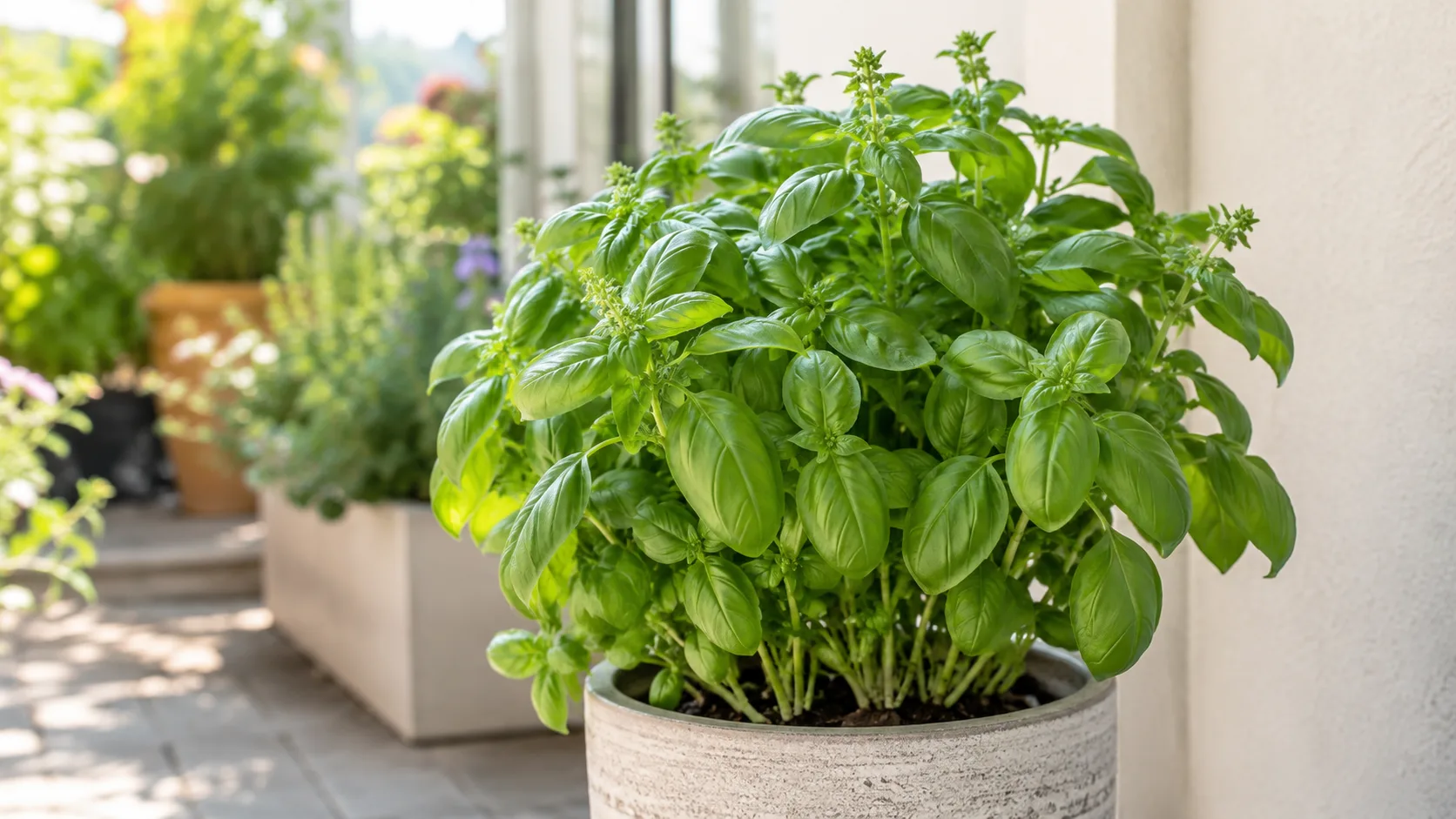
Penn State Extension cites basil as a research-backed companion for tomatoes: the herb can mask tomato cues from thrips and hornworm moths, and basil with thyme can deter egg-laying by some armyworm moths (Penn State Extension). That is more specific—and more useful—than calling basil a universal bug repellent.
Basil is warm-season and thirsty, so do not use it as a low-maintenance foundation plant in a dry border. Set several plants through a productive bed or in a large pot near the patio, pinch growing tips for bushiness, and remove diseased or heavily infested leaves. Its effect is most plausible when the basil is close enough to mix scents with the crop you want to protect.
Lemongrass — A Patio Plant for Warm Climates
Lemongrass (Cymbopogon citratus) brings a strong lemon scent and upright, grass-like form to a sunny container or warm-climate bed. It suits patios because a clump looks architectural without taking up the visual space of a flowering shrub.
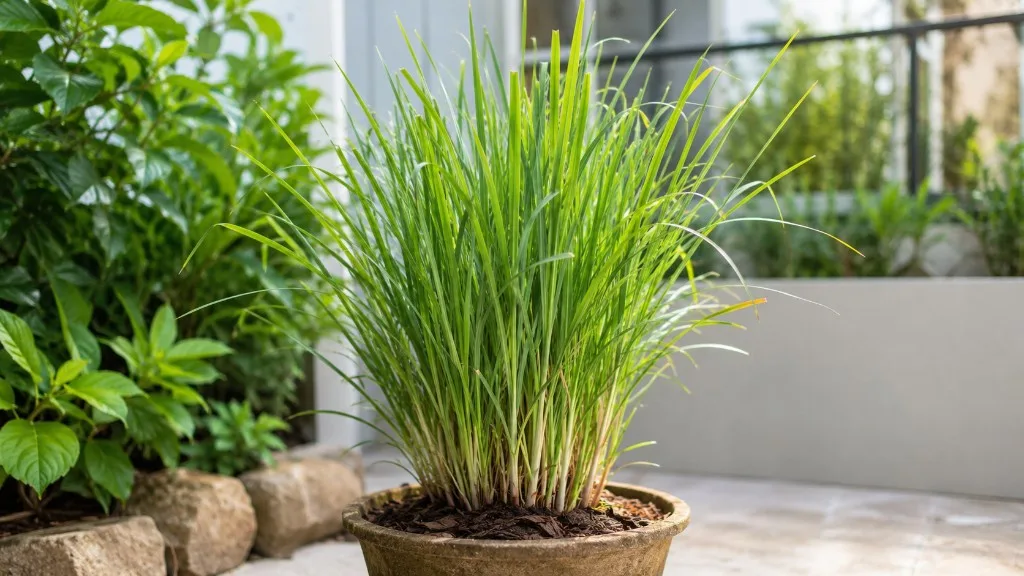
The name “citronella plant” causes a common mix-up. Citronella grass (Cymbopogon nardus or C. winterianus) is the grass associated with citronella oil, while citronella-scented geraniums are different plants with a milder fragrance. Neither should be treated as a passive substitute for a tested personal repellent, and a living plant will not perfume a whole yard.
Give lemongrass full sun, warmth, regular moisture, and room to form a clump. In a cold climate, grow it in a container that can be protected before frost. Place it near a seating area or path where people will brush past it, and remove dead foliage so the clump stays open and attractive. Do not rub plant leaves on your skin just because they smell lemony; fragrance is not proof of safe or lasting protection.
Garlic — An Edible Border That Releases More Aroma When Bruised
Garlic (Allium sativum) is a useful addition to an edible garden because its sulfur-rich aroma becomes more pronounced when the plant is cut or bruised. Plant cloves at the bed edge or between suitable crops for a harvestable border with a different scent profile from mint and basil.
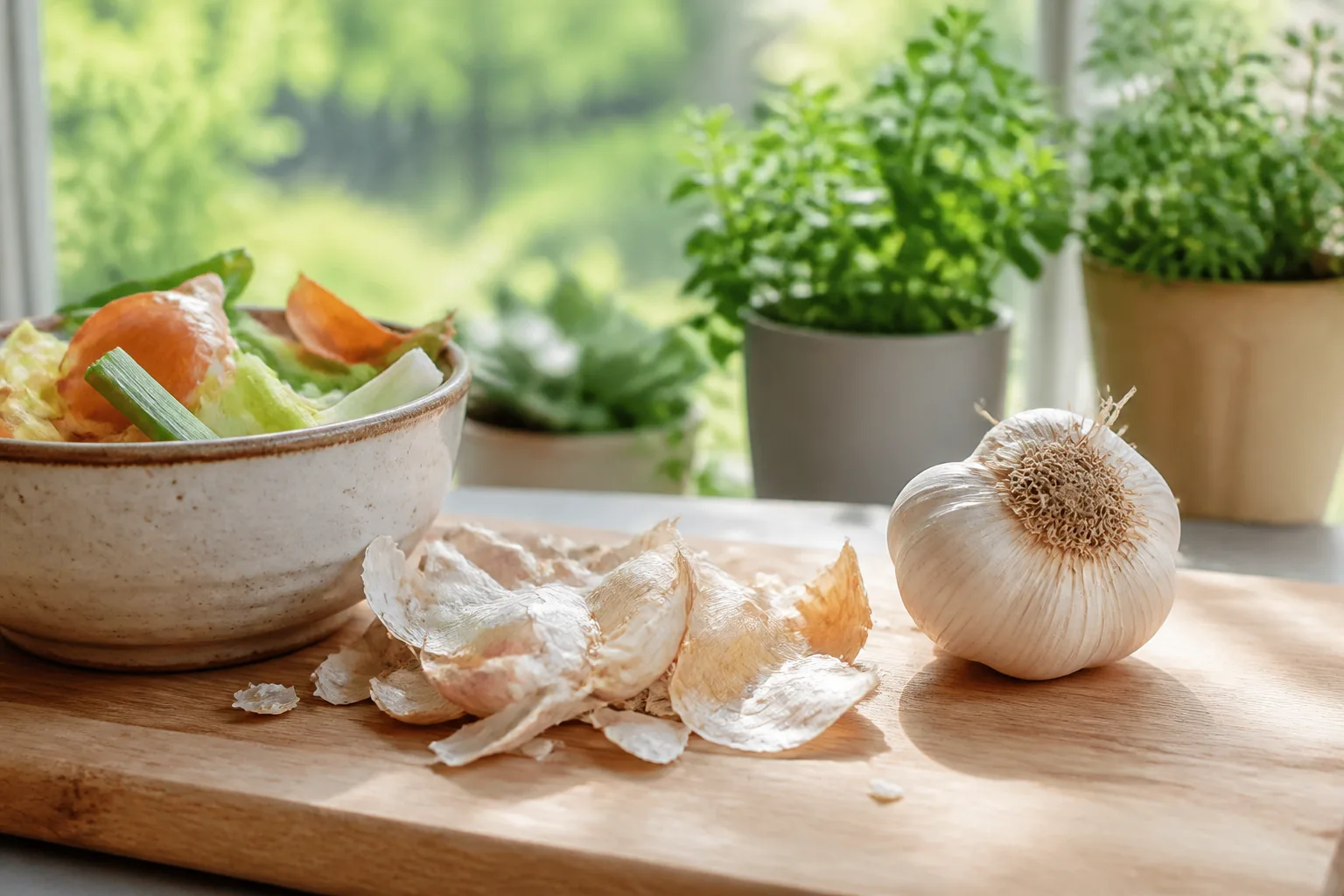
Garlic is not a guaranteed barrier against every beetle, aphid, or mosquito. Its strongest practical role is as one part of a diverse bed, where it contributes an unfamiliar scent and makes room for more crop variety. Keep expectations modest: a few cloves will not protect a whole row if the target pest is already established.
Avoid turning kitchen garlic into an improvised spray without checking the crop, dilution, and safety of the method. The RHS warns that homemade mixtures containing essential oils or washing-up liquid can scorch plants and affect non-target organisms when they have not been properly tested (RHS). A healthy planting is a safer starting point than an unmeasured concentrate.
Lavender — Fragrant Color for Sunny, Dry Edges
Lavender (Lavandula spp.) makes a strong visual case for a pest-conscious garden: silvery foliage, purple flowers, and a fragrance that is pleasant to people but intense to many small insects. It is a good fit for a sunny border, path edge, or container beside an outdoor sitting area.
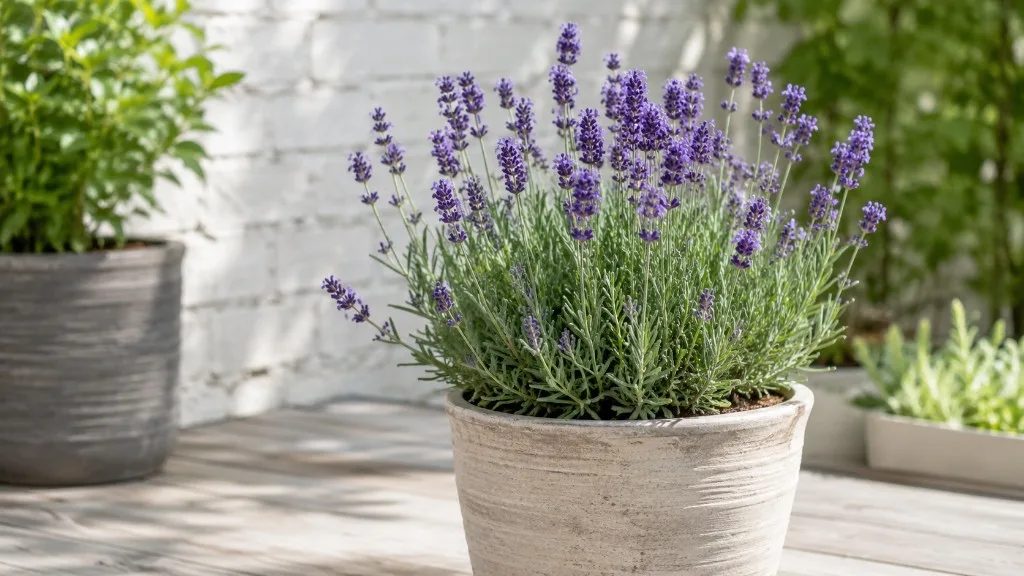
The plant needs sharp drainage and airflow. Do not place it in a soggy corner simply because that is where bugs gather; a declining lavender plant cannot provide much scent or habitat. A gravelly edge or raised container is often more successful than heavy, wet soil.
Use lavender for localized deterrence plus pollinator value. It can make a path or patio feel less inviting to some insects when planted in a group, but it will not stop mosquitoes from flying in from a neighboring yard. If bites are the problem, also remove standing water and use a proven personal repellent when appropriate.
Catnip — Aromatic Foliage With a Cat-Related Catch
Catnip (Nepeta cataria) offers soft, gray-green foliage and small flowers, along with a strong aroma that many gardeners include in natural insect-deterrent plantings. It can fit an informal herb bed or a container where you want a textured plant rather than a formal flower border.
The practical catch is in the common name: cats may roll on it, chew it, or flatten it. That can be entertaining in a dedicated cat garden and frustrating beside seedlings. Give catnip its own pot or a protected corner if neighborhood cats visit, and cut it back after flowering to keep it from becoming untidy or self-seeding.
Catnip is best viewed as an aromatic companion plant, not a measured mosquito treatment. If you need reliable protection during an outdoor meal, combine planting with a fan, screened seating, clothing, or a labeled repellent rather than relying on a few leaves.
Rosemary — Evergreen Structure for Pots and Paths
Rosemary (Salvia rosmarinus) brings woody stems and needle-like foliage to the same sunny, well-drained conditions that suit lavender. It is especially useful in a pot by the kitchen door or as a low, fragrant structural plant along a path.
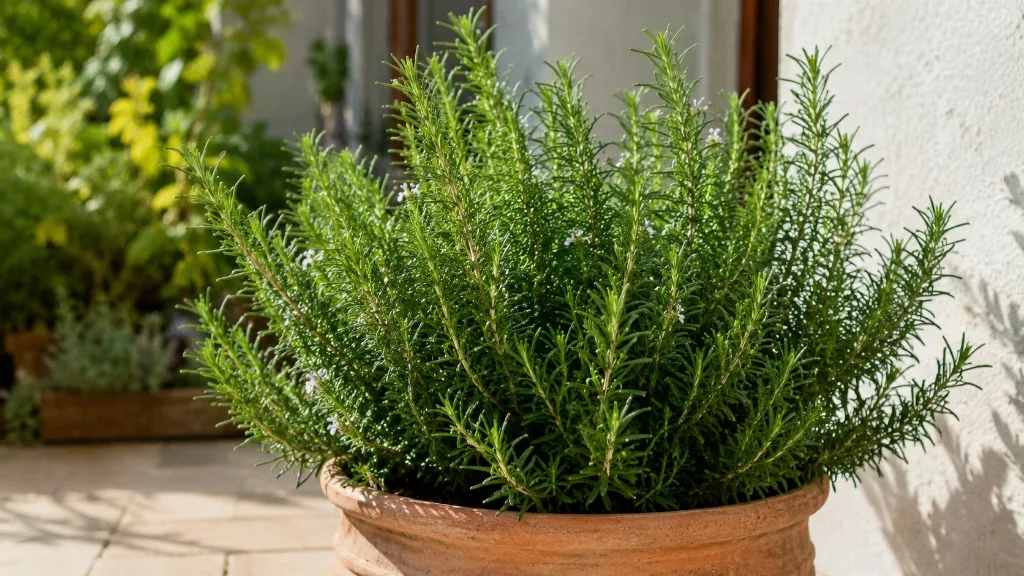
Because rosemary stays present longer than a tender basil plant in many climates, it can anchor a fragrant planting while annual herbs come and go. Let some flowers open for pollinators, and trim lightly after flowering to keep the plant compact. Avoid frequent shallow watering; rosemary performs better when the root zone drains thoroughly between waterings.
The scent may discourage some insects at close range, but a single pot cannot defend a large yard. Use two or three containers around a small sitting area if the light is right, and do not sacrifice rosemary’s health by overwatering it in the name of keeping foliage lush.
Chrysanthemums — Flowers With Natural Pyrethrins
Chrysanthemums contain pyrethrins, natural compounds that affect insects and are used in some formulated insecticides. That fact makes mums interesting in a pest-conscious garden, but it is also where overselling starts: a living chrysanthemum is not the same thing as a measured, labeled pyrethrin product.
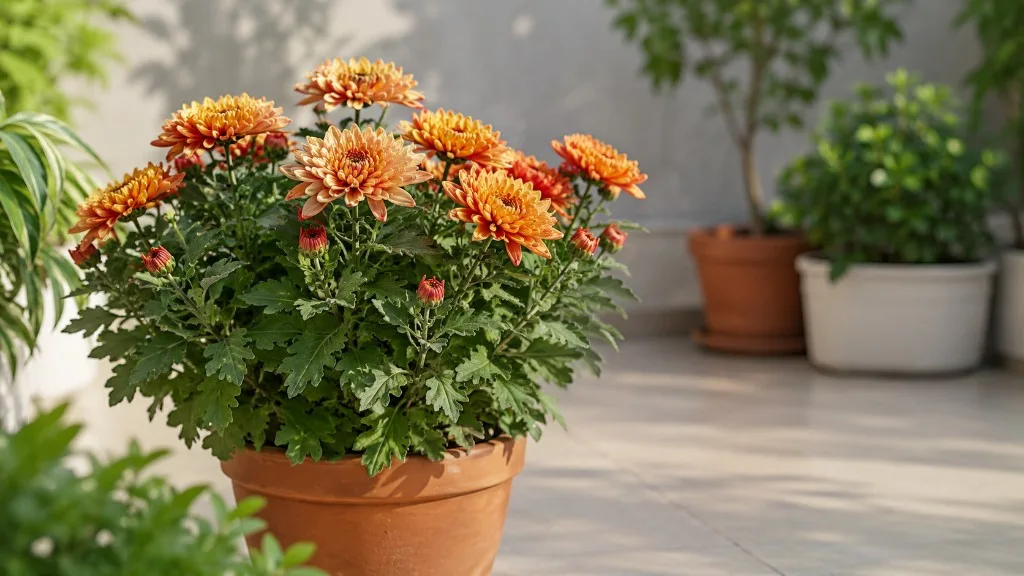
Use chrysanthemums for late-season color, a strong-scented planting, and a more diverse habitat. They may help make a small area less attractive to some insects, but they do not release a predictable dose that will kill pests across the garden. Do not make a homemade chrysanthemum extract and spray it around pollinators, pets, or edible crops without appropriate product and safety guidance.
Choose healthy plants with good airflow, remove spent blooms, and inspect the undersides of leaves for aphids or spider mites. If you buy florist mums, treat them as seasonal containers unless the cultivar is known to be hardy in your climate.
Eucalyptus — A Large, Warm-Climate Option Best Used Carefully
Eucalyptus (Eucalyptus spp.) has strongly aromatic foliage and can grow into a substantial shrub or tree in climates where it is hardy. That makes it a better choice for a spacious warm-climate landscape than a small foundation bed or a crowded patio.
Check the mature size and local growing conditions before planting. In a cold climate, a container-grown eucalyptus may be easier to manage, though it still needs bright light and careful winter protection. Cut branches can add fragrance to a covered outdoor area, but the scent fades and the foliage is not a replacement for active pest management.
Do not place eucalyptus where its eventual canopy will block windows, crowd paths, or create a dry, difficult-to-inspect corner. A plant that looks attractive and remains accessible is more useful than a fast-growing screen that hides the pests you need to monitor.
Alliums — Ornamental Globes With an Onion-Like Defense
Ornamental alliums (Allium spp.) add tall stems and spherical flower heads to a sunny border. Their onion-like scent is more noticeable when foliage is bruised, and the flowers give a pest-conscious yard a strong architectural accent rather than a row of identical herbs.
Use alliums among perennials, near a vegetable bed, or along a path where their seed heads can provide structure after flowering. They are seasonal, so plan for the period after the leaves fade rather than assuming they will create a year-round barrier. Combine them with evergreen rosemary or lavender if you want continuous structure.
Alliums are valuable for diversity and design, but they should not be marketed as a cure for a specific infestation. If caterpillars are chewing leaves or beetles are covering flowers, identify the pest and inspect the crop rather than planting more bulbs and waiting for the problem to disappear.
Arrange Plants for Coverage, Not Decoration Alone
A good pest-conscious planting has layers. Put fragrant pots at the patio edge, flowering herbs where beneficial insects can reach them, and edible alliums or garlic through the vegetable bed. Use a continuous enough grouping to influence the small area you care about, but leave gaps so you can see stems, soil, and the foundation.
Think of each plant as doing one of three jobs:
- Aromatic barrier: Mint, basil, lemongrass, lavender, rosemary, catnip, eucalyptus, and garlic can contribute scent near a route or sitting area.
- Mixed-signal companion: Basil, garlic, alliums, marigolds, and aromatic herbs can add diversity that makes a crop less visually or chemically obvious to some pests.
- Beneficial-insect support: Flowering basil, lavender, marigolds, chrysanthemums, rosemary, and alliums can add nectar, pollen, or shelter when grown without broad-spectrum sprays.
The same plant can fill more than one role, but the role changes how you place it. A marigold chosen for flowers belongs where pollinators can reach it. Mint chosen for scent belongs near the patio but contained. Lemongrass chosen for a warm-season sitting area belongs in a large pot that can move before frost.
Do not let scent replace observation and basic garden hygiene
Aromatic planting works best when the garden is easy to inspect. Space plants so you can check leaf undersides, keep fallen fruit and food scraps away from seating areas, empty standing water after rain, and remove badly infested leaves before a pest population spreads.
RHS guidance puts plant health, cultivation, sanitation, monitoring, and biological control ahead of routine pesticide use. That approach also protects the beneficial insects you want your flowers to attract. A fragrant border with no scouting routine is decoration; a fragrant border that helps you notice and respond early is part of a functioning garden system.
What to Do When Bugs Keep Coming
First, identify the pest and the damage. A few holes in a leaf, a cloud of whiteflies, aphids on new growth, and mosquitoes around a damp corner call for different actions. Penn State Extension recommends starting with observation, diagnosis, choosing the appropriate control, and then observing the result—an efficient sequence that prevents random treatment (Penn State Extension).
Next, remove what is feeding or sheltering the pest. Pick off visible beetles, prune a heavily infested tip, wash aphids from sturdy foliage, clear standing water, and keep food waste sealed. If ants are protecting aphids or scale insects, deal with the honeydew-producing pest as well as the ant trail; UC Integrated Pest Management explains that ants may protect these insects from their natural enemies (UC Integrated Pest Management).
For insects entering the house, wipe trails with soapy water and seal the entry point instead of spraying every visible worker. UC IPM notes that bait works differently from a contact spray: workers must carry a slow-acting bait back to the colony, while sprays often provide only temporary relief. Keep any bait or pesticide away from children, pets, water, and pollinators, and follow the product label exactly.
If the planting helps but does not solve the problem, keep the plants and add the missing layer. That may be a row cover, a fan over the patio, a screened seating area, hand removal, a targeted biological control, or professional IPM advice. The right response is the smallest effective step that protects the plants and the people using the space.
Conclusion
Mint, marigolds, basil, lemongrass, garlic, lavender, catnip, rosemary, chrysanthemums, eucalyptus, and alliums can make a yard more fragrant, colorful, and less welcoming to some garden bugs. Their strongest value comes from smart placement, plant diversity, and realistic expectations: contain mint, match warm-climate plants to the season, give dry herbs excellent drainage, and use flowers to support beneficial insects.
When pests persist, do not keep adding plants blindly. Identify the insect, remove food and water sources, inspect the crop, and add the least disruptive control that fits the problem. A garden that looks good and is easy to monitor will outperform a decorative list of “repellent” plants every time.



