How to Keep Bees Away From Your Home
Move flowers from doors, seal pencil-size gaps, use scent barriers wisely, and zone your yard so pollinators thrive away from patios. Six humane fixes.
A honeybee on your zucchini blossom is a gift. A dozen bees circling your lemonade on the patio table is a problem. The goal is not to evict pollinators from your property—it is to stop them from treating your doorway, windows, and entertaining areas as part of their commute. Bees pollinate roughly 75% of fruit and seed crops that benefit from animal pollination (Environment America), and your vegetable patch and flower beds depend on them. You just need a clear boundary between where bees should forage and where humans eat, enter, and relax.
Most homeowners who search for bee control are dealing with foraging visitors, not a colony inside the wall. That distinction changes everything. The six methods below assume you want pollinators in the garden and fewer accidental indoor trespasses and patio crashes. They follow exclusion and redirection principles used by bee researchers—not blanket spraying that wipes out the insects your tomatoes need.
Why Bees Visit Your Patio and Living Spaces (Not Just Your Garden)
Bees do not plot to invade your living room. They follow scent, color, sugar, water, and shelter. An open door during a warm afternoon, a window box full of blooming lavender, or sticky soda residue on a deck rail all read as legitimate food stops on a foraging route. Scout bees recruit others once they find concentrated sugar—so one bee at your drink can become a crowd by the next afternoon if the reward stays available.
Foraging Bees vs Nesting Bees — Different Problems
Foraging bees travel from nest to flower and back. You might see one or a few near a window, especially if a flowering shrub sits right outside. They are not trying to live with you; they are working. Nesting bees are a separate, higher-priority issue: steady streams of bees passing into and out of a single hole in siding, eaves, a water-meter box, or attic vent. You may hear humming inside a wall void or see bees hovering in front of an opening without landing on flowers (USDA ARS Carl Hayden Bee Research Center).
Removing backyard flowers does not reliably stop foragers, according to USDA ARS guidance—the insects will search wider for nectar and pollen. What works is eliminating nest sites near the house and reducing accidental attractants at human zones. If you have a true nest in structure, call a professional or beekeeper; the six ways below are prevention and gentle redirection, not DIY wall-tear-out.
Honey Bees, Wasps, and Carpenter Bees — Quick ID
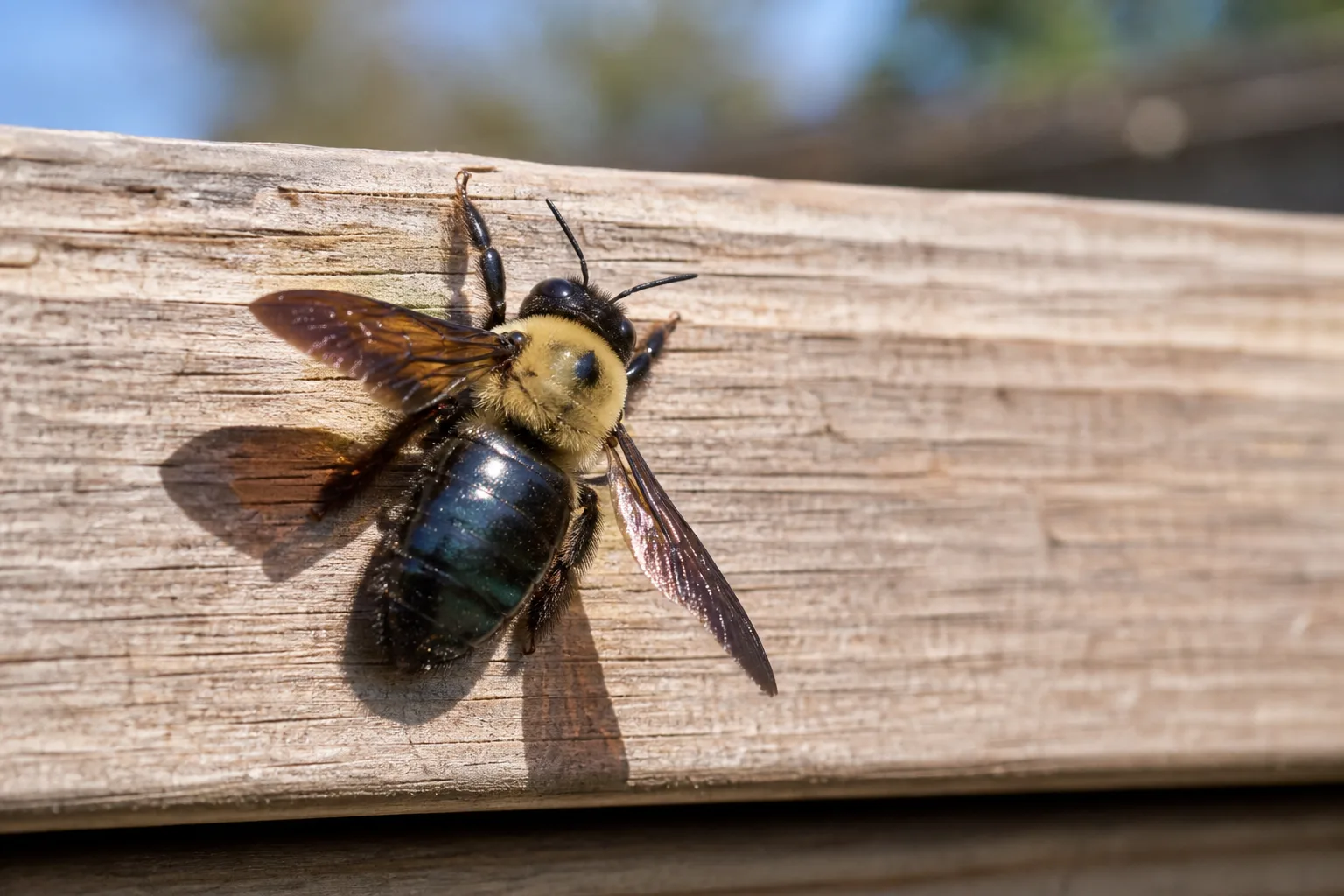
Misidentification sends you down the wrong fix path. Honey bees are fuzzy, rounded, and usually golden-brown with banding; they nest in colonies and rarely sting while foraging on flowers. Yellow jackets and paper wasps have narrow waists, smoother bodies, and are far more aggressive at food and drink—especially yellow jackets at late-summer picnics. Carpenter bees look like oversized bumblebees but have a shiny, hairless abdomen; females drill round holes in bare wood on eaves, deck rails, and fascia (Penn State Extension).
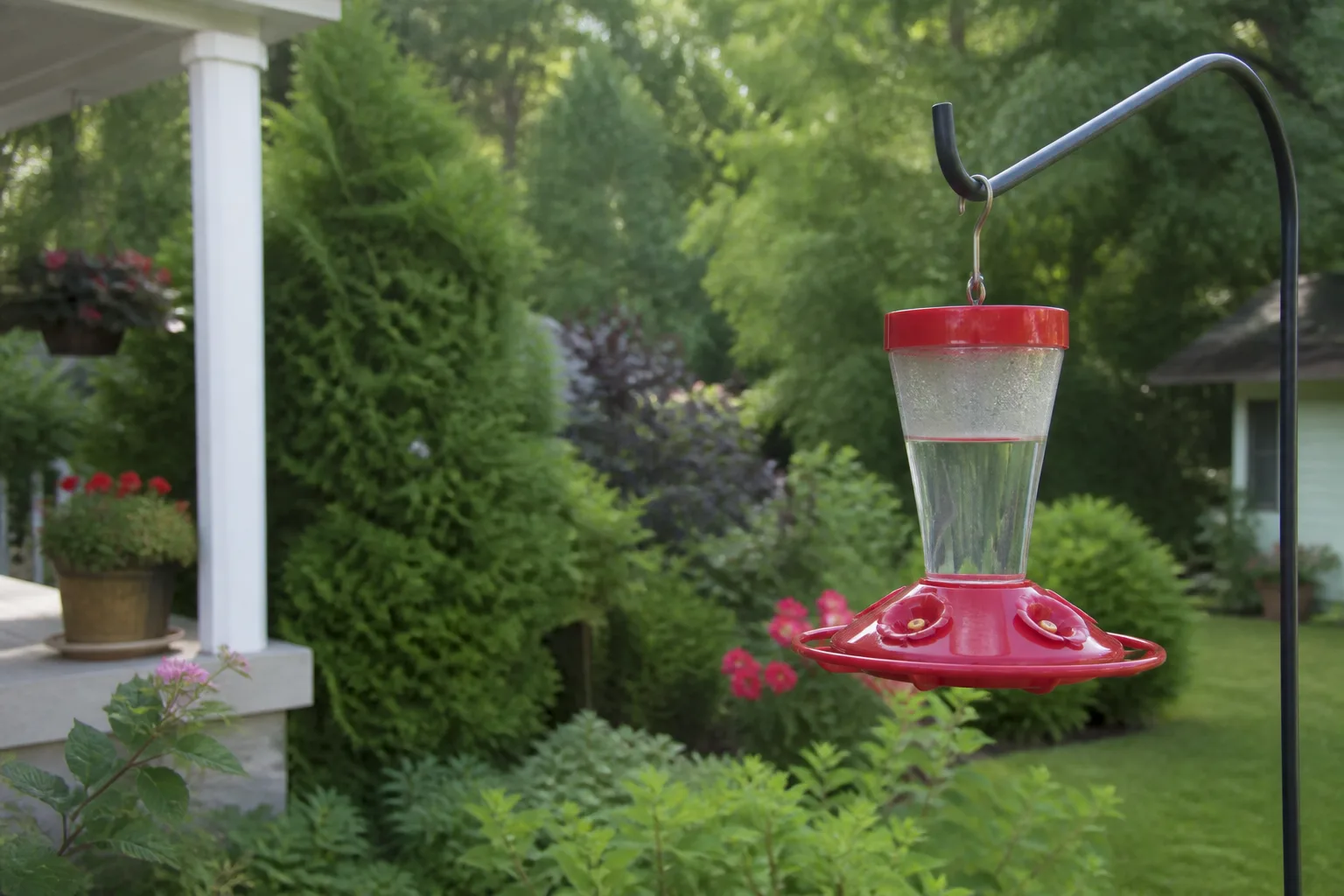
If the insect is chewing wood, see our carpenter bee control guide—that is structural damage, not a pollinator passing through. If bees swarm a hummingbird feeder, our bees in hummingbird feeder guide covers port guards and placement without harming hummers.
The Two-Zone Yard: Protect Pollinators and Your Doorway
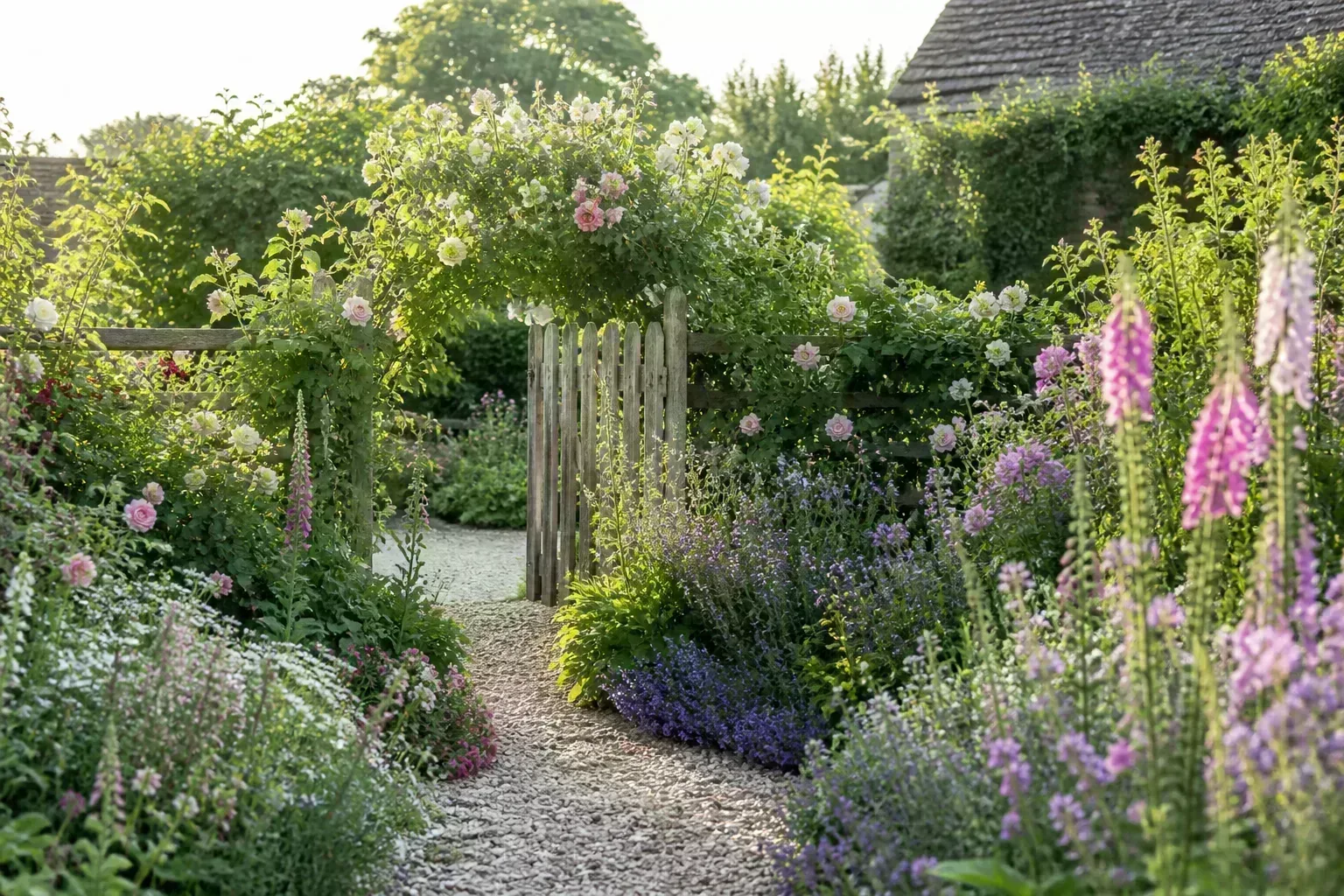
Picture your lot in two rings. Zone A is the human band: doors, windows, patio, pool deck, grill, and trash storage. Zone B is the pollinator band: vegetable garden, meadow patch, fruit trees, and bee-friendly perennials set at least 15–25 feet from Zone A when space allows—farther if you host frequent outdoor meals. You are not banning bees; you are shortening the flight path between their nest (often off-property) and their food so it does not cut through your kitchen door.
Water belongs in Zone B too. A shallow birdbath with stones breaking the surface gives bees a drinking spot away from your hose bib and kiddie pool. Trash with tight lids stays in Zone A but away from the table—sweet recycling and open compost pull foragers the same way flowers do.
Way 1: Move Flowering Plants Away From Windows and Doors
The simplest landscape fix is distance. Bees are attracted to ready nectar and pollen sources (USDA ARS). When butterfly bush, honeysuckle, or chives bloom inches from a frequently opened window, accidental indoor visits spike. Move pots and swap window-box plantings to low-nectar foliage (ornamental grasses, ferns, coleus) on the façade itself.
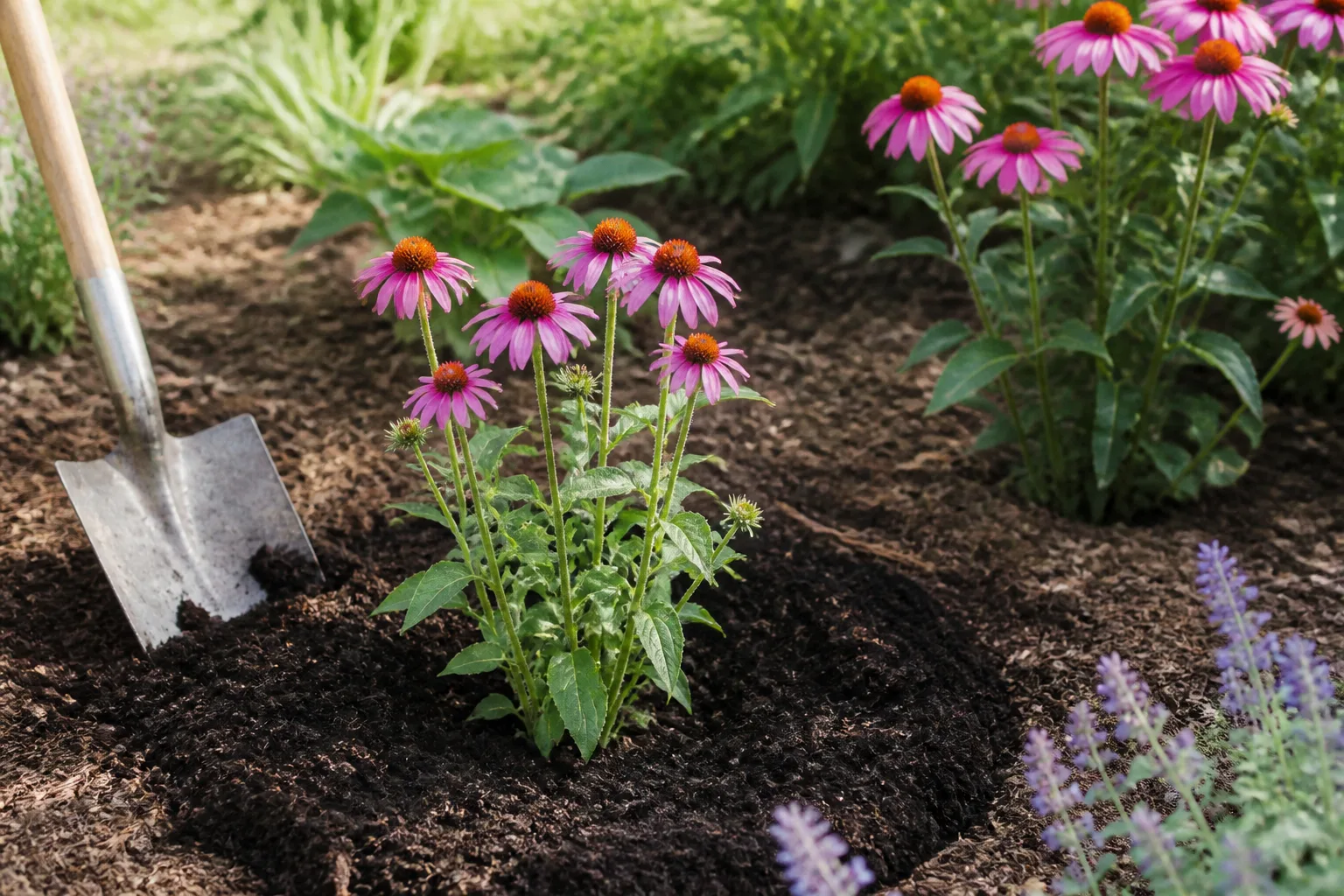
Relocate heavy bloomers to the back fence, side yard, or dedicated pollinator strip. If you cannot move established shrubs, prune bloom-heavy branches away from doorways during peak flowering, or add a temporary screen during parties. Container gardeners: roll potted bee magnets to the far end of the patio when you are entertaining, then return them after guests leave.
Which Plants Pull Bees Close to the House
High-nectar and fragrant bloomers are the usual culprits near entries: butterfly bush, honeysuckle, echinacea (purple coneflower), bee balm, chives and other alliums, lavender, sunflowers, and fruit trees in full bloom. You do not need to eliminate them—relocate or buffer. Our echinacea growing guide and pollinator lists are for Zone B, not the doorstep planter.
Way 2: Seal Every Gap Larger Than a Pencil Eraser
Prevention beats repellent. Honey bees can enter openings as small as 3/16 inch—about the size of a pencil eraser—if a cavity large enough for a nest sits behind the hole (USDA ARS). Carpenter bees need larger round entrances but still exploit gaps in trim. Walk the exterior monthly and treat every gap as future bee real estate.
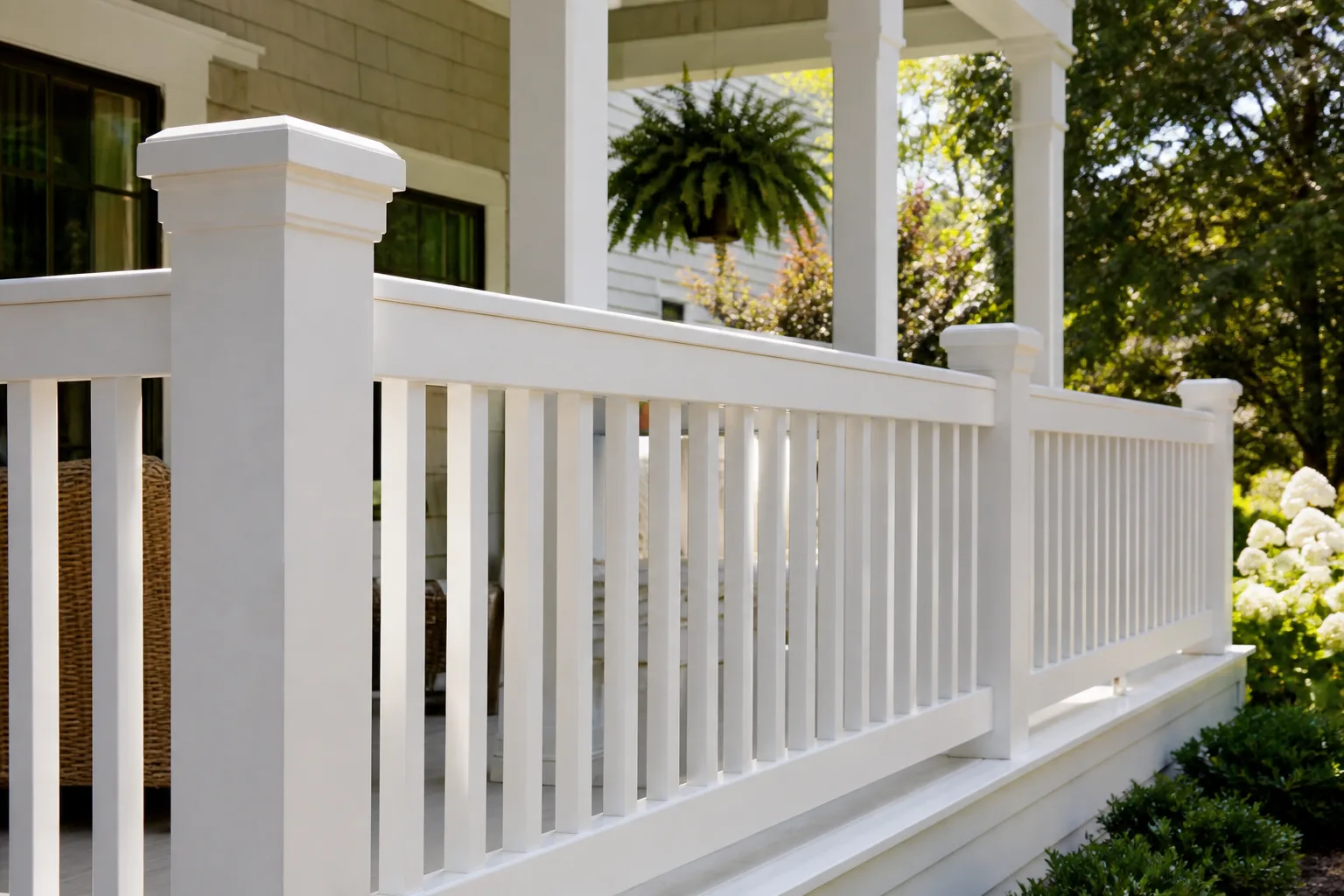
Caulk cracks in foundation, siding, and roof lines. Fill or cover holes 1/8 inch and larger in trees, block walls, and fascia—use dowels, exterior filler, or metal flashing as appropriate. Cover chimney flues with code-compliant caps. Replace torn door and window screens. Shed and garage doors should close tightly; bees often nest in unused outbuildings before you notice activity at the house.
Monthly Exterior Walk Checklist
Start at one corner and circle the house slowly. Check hose bibs, dryer vents, attic louvers, irrigation valve boxes, and water-meter pits—classic honey bee cavities. Look for sawdust piles and perfectly round holes in wood (carpenter bees). Listen for buzzing in walls on warm afternoons. Note sticky drips under eaves from bee feces—that often precedes visible holes. Repair leaky faucets; dripping water plus shelter attracts multiple insects.
Screen Vents and Utility Openings
Attic vents, soffit gaps, and utility-box keyholes need fine mesh screen (window-grade) secured on the outside so bees cannot slip behind louvers. Do not block combustion air intakes or dryer exhaust—use approved vent covers designed to exclude wildlife. If bees are already inside a vent line, do not seal until the colony is removed; trapping bees in a wall void creates a worse problem.
Way 3: Use Scent Barriers (Peppermint and Vinegar) With Limits
Peppermint essential oil mixed with water (roughly 10–15 drops per cup of water) can discourage bees from lingering on surfaces—window frames, door thresholds, deck rails—when applied lightly. Many insects avoid strong mint-family aromas. It is a short-term boundary, not a nest treatment. Reapply after rain and sun exposure; scent fades fast.
Vinegar (equal parts white vinegar and water) works similarly as a surface wipe to remove sweet residues and leave a sharp smell bees may avoid. Spray patios and table edges between gatherings, not on blooming plants or directly on insects. Household vinegar does not kill bees at typical dilutions, but spraying bees directly stresses them and is unnecessary. Never mix vinegar with dish soap intending to kill foragers—that harms pollinators your garden needs.
Citronella and peppermint candles can help evening patio time when bees swap shifts with mosquitoes—but plan for smoke and scent at the table, and keep flames away from fabric awnings. Essential oils are repellents, not proof. They complement sealing and plant placement; they do not replace them.
Way 4: Control Indoor and Patio Attractants
Bees find human food faster than you expect. Cover sweet drinks, sauces, and dessert trays outdoors. Offer guests cup covers or mason jars with sipping holes if yellow jackets and honeybees are common in your area. Clean as you go once the main meal ends—scraps and sticky plates recruit scouts.
Move trash and recycling away from the dining zone; use tight-fitting lids. Rinse beer and soda bottles before they sit in open bins. Pick up fallen fruit under trees; rotting peaches and apples release fermenting sugars that pull bees and wasps from across the yard.
Indoors, close doors and windows when possible during peak bloom outside your entry. Floral perfumes, lotions, and hair products can confuse foragers already near the doorway. Wear light, solid colors rather than dark or bright floral prints when you step outside during heavy bee activity. Move calmly—swatting increases defensive behavior in wasps and can crush bees against skin.
Way 5: Separate Your Pollinator Garden From Entertaining Zones
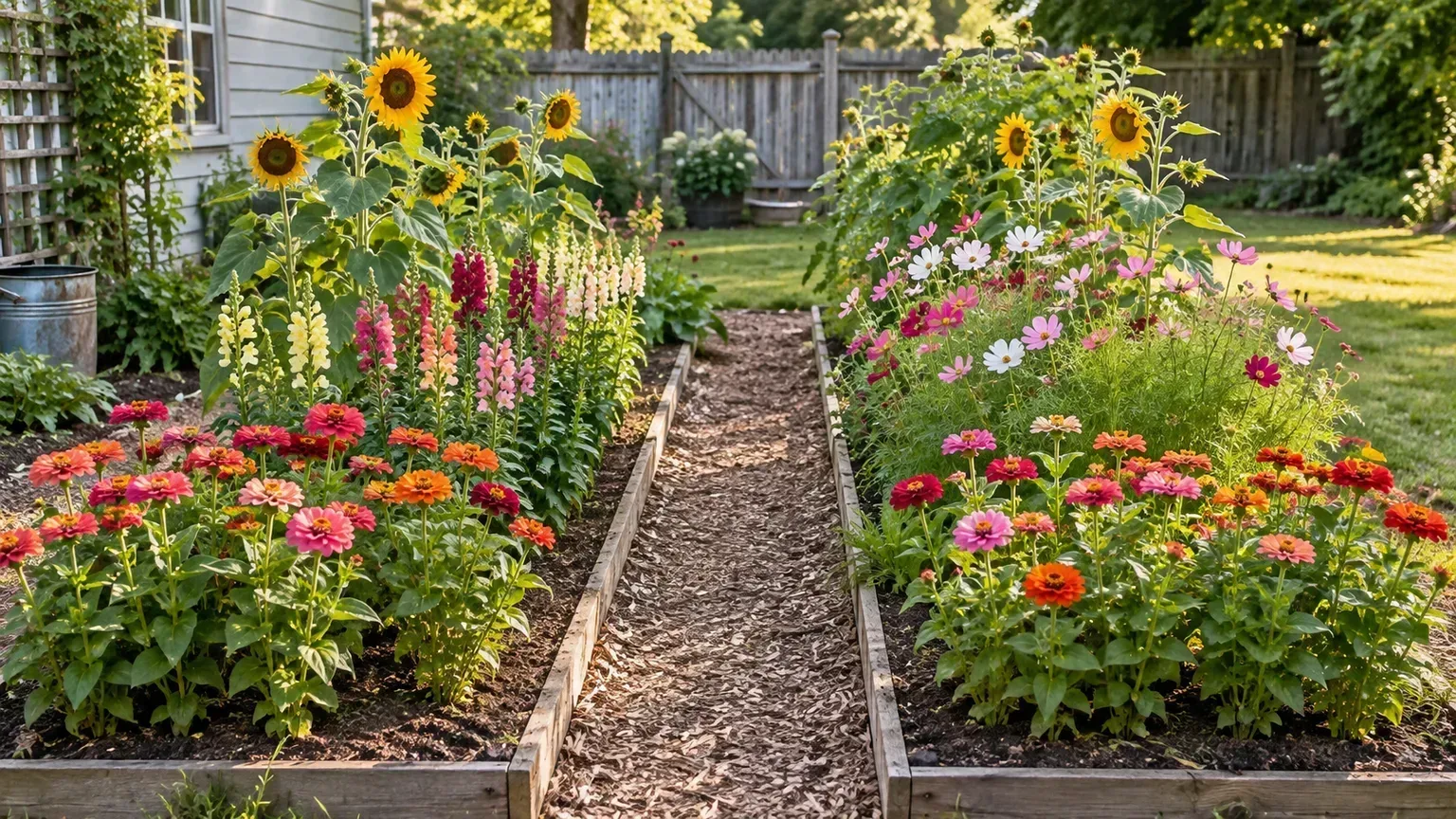
Build the pollinator buffet where you want bees to spend time. A 4×8 pollinator bed at the property line, a meadow strip along the back fence, or a vegetable garden block 20 feet from the patio gives bees efficient routes that skip your grill. Combine nectar plants with bare soil patches and hollow stems for native bees that nest in-ground or in stems—not in your siding.
Add a bee watering station in Zone B: shallow dish, pebbles, water level below stone tops so bees can drink without drowning. That single feature often reduces bees at hose bibs and pool edges. If you host often, consider a dedicated bee feeder (sugar water station) far from human food—the same redirect logic we use for hummingbird feeder bee problems, applied to backyard parties.
Pollinator-Friendly Plants Far From the House
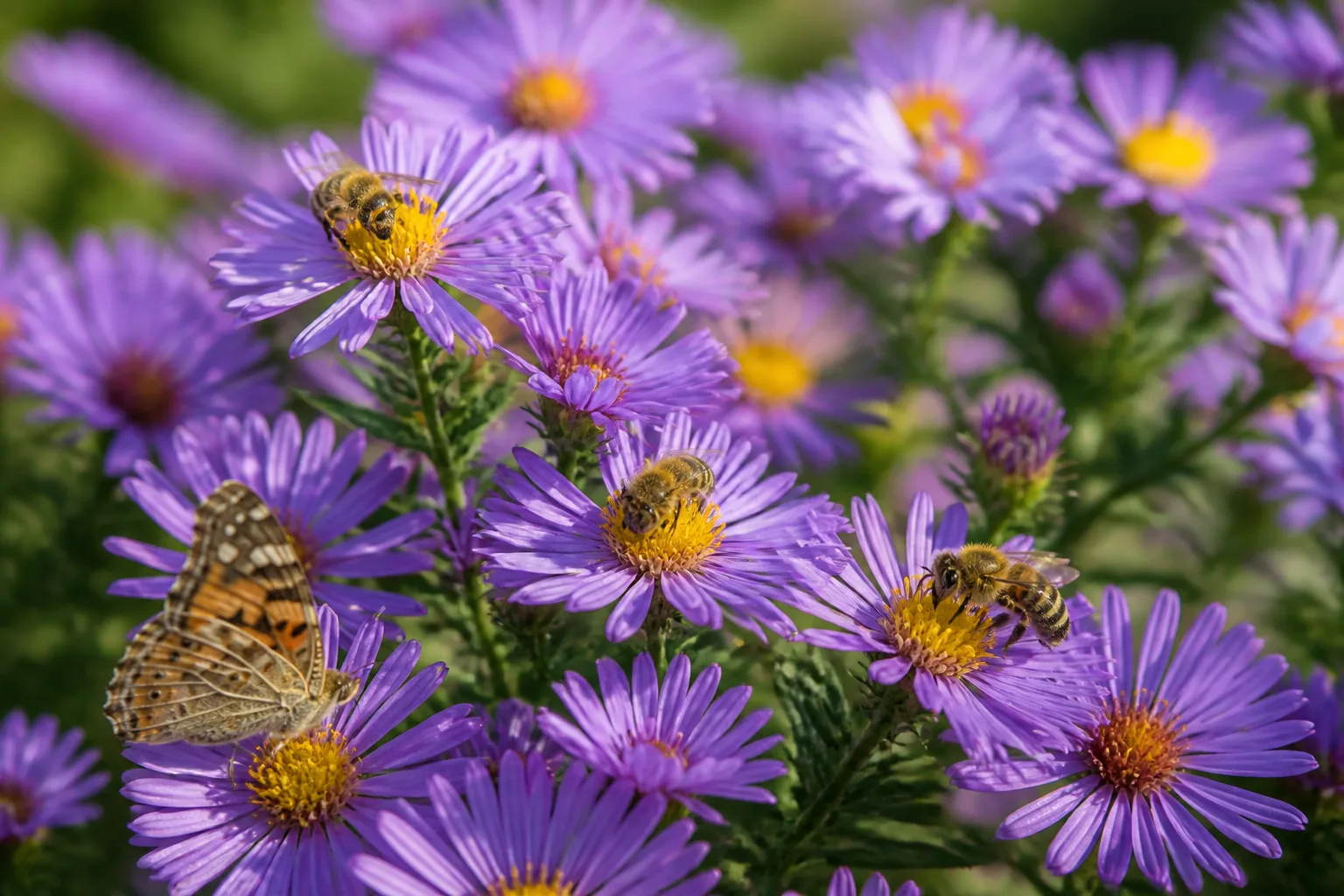
Zone B plantings can be generous: echinacea, bee balm, milkweed, asters, sunflowers, borage, and herbs left to flower. Native mixes support wild bees honey bees do not replace. You gain garden productivity and keep high-traffic human zones visually and aromatically quieter. Low-nectar options near the house include marigolds, geraniums (red cultivars bees see poorly), mint planted as a border scent barrier, and wormwood in dry corners—useful as edge plantings, not as substitutes for a real pollinator patch elsewhere.
Way 6: Know When to Call a Beekeeper or Pro
Call an expert when you see continuous traffic in and out of one opening, hear buzzing in a wall, or find a hanging swarm under an eave or tree branch. Live removal by a beekeeper preserves honey bee colonies when possible. Oregon and many states track apiary health because pollinators underpin agriculture (Oregon Department of Agriculture); responsible removal matters beyond your convenience.
Do not spray a structural colony with retail wasp killer and walk away. Dead bees and brood rot in the void, attract pests, and leave comb that melts and stains walls. Do not plug an active entrance—trapped bees chew new exits through drywall or siding. Stay clear of the area; keep pets away until removal is complete.
Carpenter Bee Damage vs Harmless Foragers
A carpenter bee hovering at your head is alarming but males cannot sting. The real issue is galleries in wood. If you see round holes and coarse sawdust on deck posts or fascia, follow carpenter bee IPM—treat galleries, plug after activity stops, and paint exposed wood (Penn State Extension). That is different from honey bees foraging on your roses. Our signs you have carpenter bees and things that attract carpenter bees guides cover wood-specific prevention.
Ground-nesting bees making small mounds in the lawn are usually solitary and docile—see how to get rid of ground bees if turf nests conflict with foot traffic, not because every yard bee is a threat.
What Not to Do (Mistakes That Hurt Bees and Fail Anyway)
Broad-spectrum insecticide sprays on flowers, patios, or blooming borders kill pollinators and can contaminate nectar your garden depends on. EPA and state programs emphasize protecting pollinators from pesticide exposure; indiscriminate spraying trades a one-day patio fix for a season of poor fruit set.
Mothballs and harsh chemical “bee bombs” in yards release toxic fumes in spaces people and pets occupy. They are not labeled for open-air bee control and do not solve nest cavities.
Plugging holes before confirming bees are dead or removed traps insects inside and forces new holes. Always verify activity has stopped—or hire removal—before final sealing.
Sugary traps and open soda baits attract more bees and wasps than they catch, increasing sting risk when someone grabs the wrong cup.
Removing all flowers starves your garden and rarely clears foragers, which range widely (USDA ARS). Zone your yard instead.
Seasonal Timing: When Bee Pressure Peaks
Spring brings nest establishment and occasional swarms as colonies divide—inspect sealing early March through May depending on your zone. Late summer and early fall stress foragers when natural nectar dips; bees and yellow jackets mob patios, hummingbird feeders, and trash bins. Fall is when you confirm no active nests before winter sealing projects.
Morning and warm midday hours see the most foraging at flowers near doors. If you must paint or caulk high eaves, late evening reduces direct bee contact—but wear a veil if working near an unknown cavity.
Quick Start Checklist Before Summer Gatherings
Run this list the day before a barbecue or pool party: relocate or cover potted bloomers by entries; caulk any new gaps you spotted on the monthly walk; wash sticky patio surfaces and apply a light peppermint or vinegar wipe to rails if you use scent barriers; set trash away from tables with locked lids; cover drinks and desserts; confirm no active nest holes in eaves and deck wood; add water and nectar in Zone B so foragers have a reason to stay away from Zone A.
If bees showed up at last year’s party at the same spot, assume they will return—change the reward (remove the attractant or move the feeder) rather than hoping they forget.
Conclusion
Keeping bees out of your home while supporting them in the garden is a spacing and exclusion job, not a war on pollinators. Move heavy bloomers away from doors, seal pencil-size openings before they become wall voids, use peppermint and vinegar as temporary surface tools, control sweet trash and drinks, and build a rich pollinator zone where bees belong. Call a beekeeper when traffic points to a nest—not when a single forager checks your window box.
Your garden can stay productive and your doorway calm. The bees still get dinner; you just stop serving it on the welcome mat.