What Attracts Carpenter Bees? 4 Conditions to Check
What attracts carpenter bees? Learn how bare wood, existing holes, sunny shelter, and flowering plants bring them close—and how to protect your home.
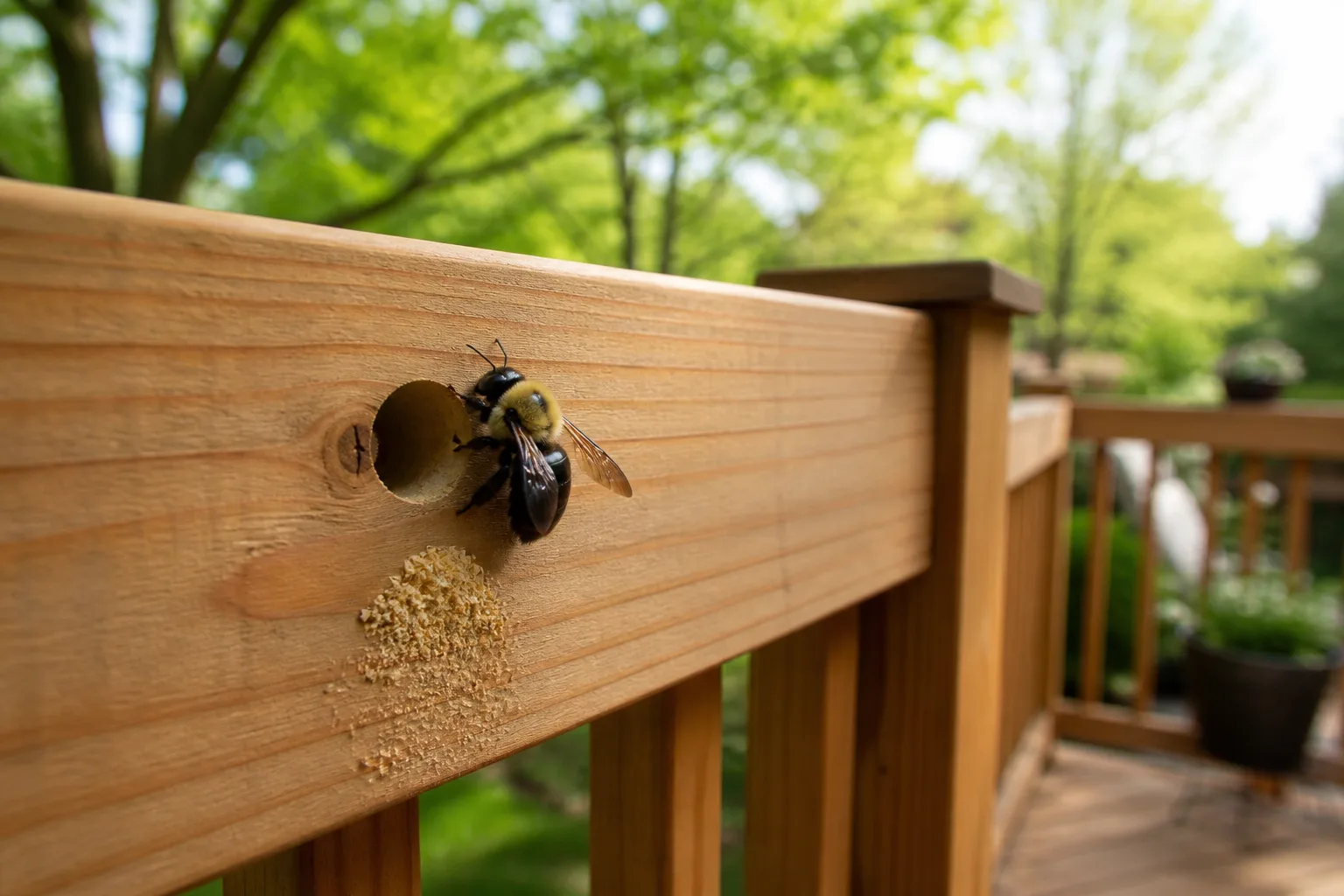
Carpenter bees are not drawn to a house for just one reason. They need food, a place to nest, and a microclimate that keeps the nest relatively protected. In a residential yard, that usually means four conditions overlap: flowering plants provide pollen and nectar, exposed wood offers something to excavate, old holes reduce the work of nesting, and warm, sheltered surfaces make the location more comfortable.
That distinction matters because a bee flying around your salvia is not the same problem as a bee disappearing into a deck rail. The first is usually a foraging visit. The second deserves an inspection of the wood, especially if you see a round entrance hole, fresh sawdust, or staining below it. Carpenter bees are valuable native pollinators, but repeated nesting in structural wood can become a repair issue over time (Penn State Extension; UC Statewide IPM Program).
The Short Answer: Four Conditions Can Bring Carpenter Bees Close
The four most common carpenter bee attractants around a home are bare or weathered wood, existing holes and cracks, warm sunny shelter, and abundant flowers. The first three influence where a female may build or reuse a nest. Flowers influence where adults forage, so they may increase bee traffic without causing damage to a deck, fence, or porch.
Large carpenter bees are solitary, and the species vary by region. In much of the eastern United States, the familiar large black bee is the eastern carpenter bee, Xylocopa virginica. Other Xylocopa species can look different, so treat the visual clues below as a practical identification guide rather than a substitute for a local expert.
You May Be Seeing Foragers, Not Nesters
Carpenter bees need nectar for energy and collect pollen to provision their young. A bee moving from flower to flower, carrying pollen, or briefly resting on a bloom is doing normal foraging work. It may never approach your house’s wood as a nesting site.
Nesting behavior looks different. A female may hover close to a board, land on bare wood, disappear into a circular opening, or produce coarse shavings as she excavates. If the bees are only on flowers and you cannot find holes in wood, there is no reason to remove healthy plants or treat the yard as though it has a structural infestation.
The Fast Test: Flowers Mean Food; Holes Mean a Nesting Decision
Use this quick comparison before choosing a response:
| What you observe | What it most likely means | Sensible next step |
|---|---|---|
| Bees visiting blooms with no wood damage | Foraging activity | Leave the flowers; watch for wood nesting separately. |
| Bees hovering near a rail, eave, or fence with no hole yet | Site scouting or territorial behavior | Inspect bare wood and plan to coat vulnerable surfaces. |
| A smooth round hole, sawdust, or staining below the opening | An active or reused gallery is possible | Keep people away from the opening, document the location, and plan treatment or professional inspection before sealing. |
Carpenter bees resemble bumble bees, but a carpenter bee usually has a smooth, shiny abdomen, while a bumble bee’s abdomen is fuzzy. The bee’s size and loud buzz can be alarming, but identification prevents you from applying the wrong control method to a harmless flower visitor.
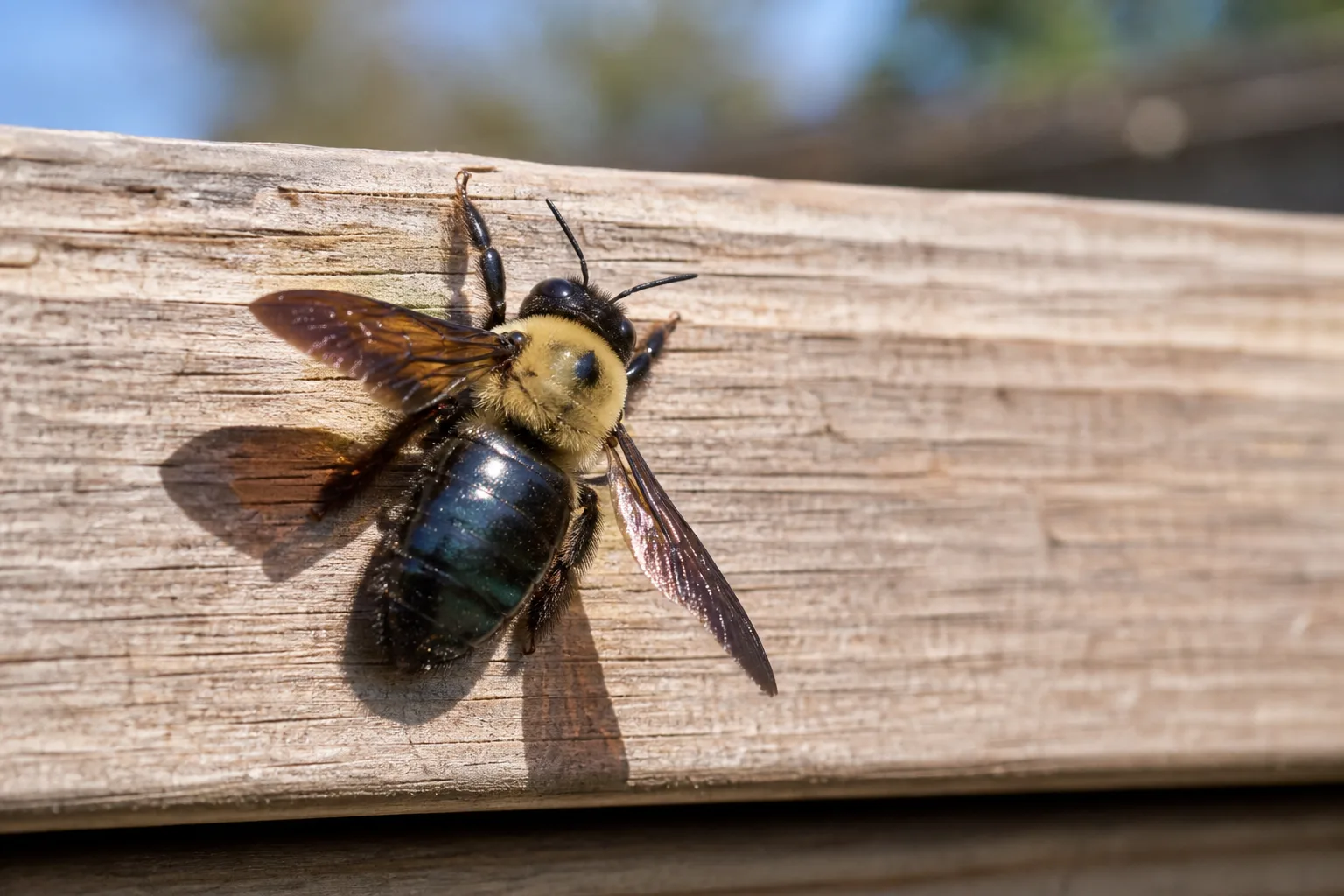
1. Bare, Soft, or Weathered Wood
The strongest nesting attractant is often the simplest one: accessible wood without a durable surface coating. Carpenter bees chew into wood to create a nursery gallery; they do not eat the lumber as termites do. Bare, weathered softwoods such as pine, cedar, redwood, cypress, and fir are commonly reported nesting choices, but the finish, condition, thickness, and location of the board all matter (Cornell Integrated Pest Management; UC Statewide IPM Program).
The useful rule is not “replace every softwood board.” It is protect exposed wood before it becomes rough, cracked, or open at the ends. A sound exterior coating makes a surface less appealing, though it is not a guarantee that a determined bee will never drill through. A thin, failing finish can be nearly as vulnerable as bare wood once weather exposes the grain.
Why the Wood’s Finish Matters More Than Its Name
Gardeners sometimes hear that carpenter bees target only rotten wood, or that one particular lumber species is immune. Neither is a safe assumption. Carpenter bees can use sound wood, and they may also use decaying wood; what makes a board attractive is the combination of chewable material, exposed grain, weathering, and a protected position.
Paint and varnish are generally more dependable deterrents than leaving wood bare. Extension guidance differs on how much protection stain provides, but it consistently treats a complete surface coating as more useful than an unfinished surface. Cornell IPM recommends coating exposed wood, while the University of Kentucky’s carpenter bee guidance notes that paint is the more permanent option when carpenter bees repeatedly attack the same area. Whatever finish you choose, maintain it rather than assuming one application lasts for the life of the structure.
Where to Inspect First
Start with places that have both exposed grain and a reason for bees to linger:
- the cut ends of deck boards, fence posts, and pergola beams
- the underside of porch ceilings and roof eaves
- fascia, soffits, siding, and window trim
- unpainted rail caps and the backs of wooden furniture
- old stumps, dead limbs, firewood, and unfinished lumber stored near the house
Look at the underside and end grain, not just the most visible face of a board. Carpenter bees can choose a sheltered edge that is easy to miss during a casual walk-around, and the first visible sign may be sawdust on the surface below rather than the bee itself.
2. Old Holes, Cracks, and Sheltered Openings
An existing opening can turn a difficult excavation into a much easier nest site. A female may enlarge an old carpenter bee entrance, use a crack or exposed knot as a starting point, or return to a gallery that has already been used by earlier adults. This is why a single hole that looks cosmetic in spring can become a recurring maintenance problem if the surrounding wood stays unprotected.
Penn State Extension describes carpenter bee galleries as tunnels that begin at a round entrance, turn with the grain, and contain separate chambers for developing young. Adults can overwinter in old tunnels, and later bees may clean out or enlarge those spaces. Reuse does not mean every old hole is occupied today, but it does make the location worth marking and inspecting rather than painting over blindly.
Why One Small Entrance Can Become a Repeat Problem
The visible opening is only the doorway. The tunnel behind it may extend along the grain, branch, or connect with other galleries. Repeated nesting can weaken a rail, fascia board, or beam end; it can also leave stains and attract woodpeckers looking for larvae. The damage is usually cumulative, so the right response depends on the wood’s job, not merely on the number of bees in the air.
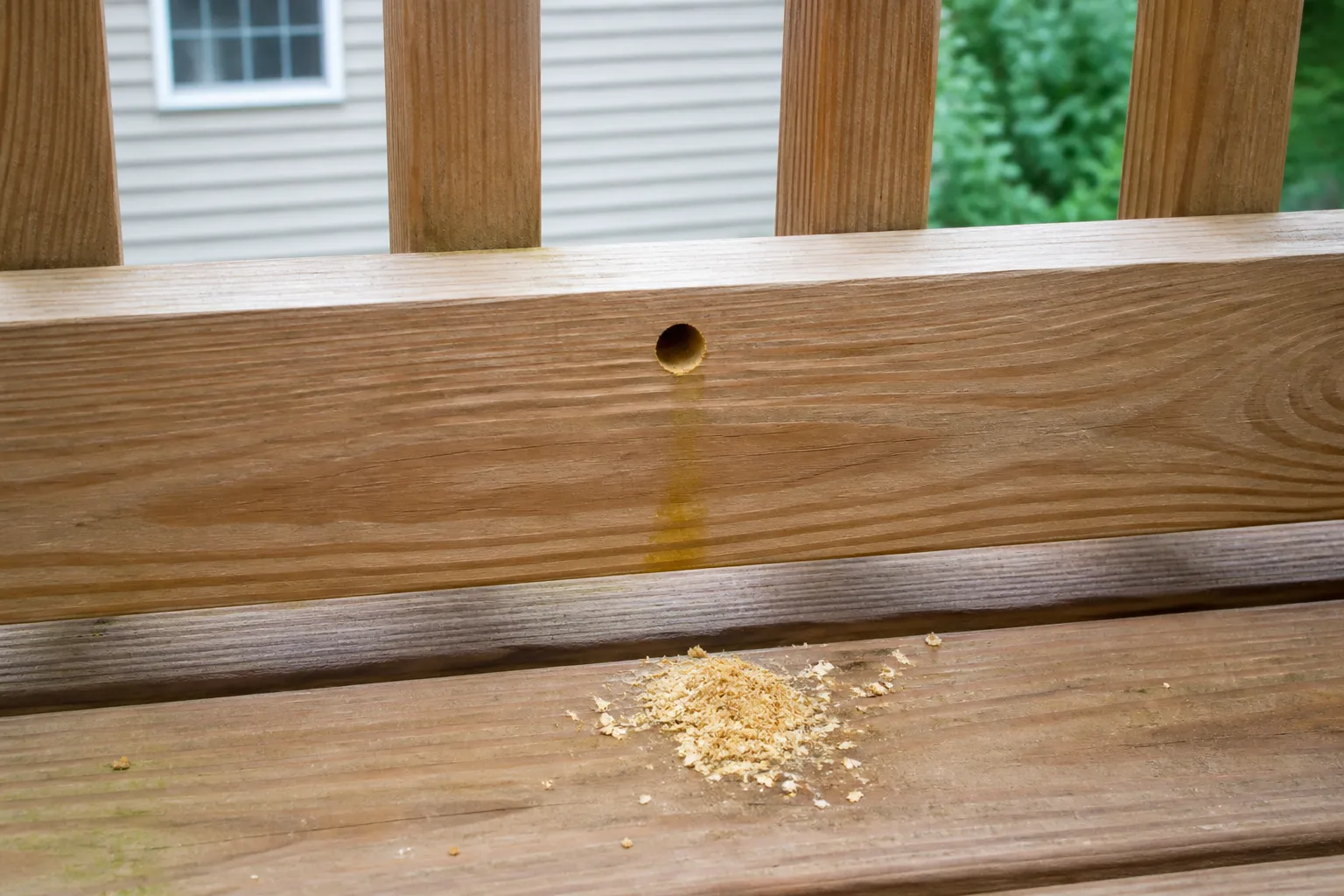
An active-looking entrance is usually round, smooth-edged, and roughly half an inch across, although size varies among species. Coarse sawdust directly below the opening, yellow-brown staining, or a bee repeatedly entering and leaving strengthens the case that the gallery is in use. A clean hole with no recent debris may be historic, but do not probe it with a finger or tool to find out.
If the hole is in a nonstructural stump or a back-fence board, monitoring may be reasonable. If it is in a load-bearing post, header, rafter, or second-story fascia, the question is no longer “How do I repel a bee?” It is “Has the wood lost enough integrity to require an inspection?”
3. Warm, Sunny, Dry Shelter
Carpenter bees often choose wood that warms in the sun but remains protected from heavy rain. A south- or east-facing rail, porch ceiling, roof eave, fascia board, or sheltered fence can offer that combination. University extension guidance describes carpenter bee entrances in well-lighted, protected locations, including areas with overhead cover or a side sheltered from prevailing wind (Texas A&M AgriLife Extension).
Sunlight is a clue, not a standalone cause. Shading a porch may make it less attractive, but it is rarely practical to redesign a house around a bee. Shade also does not repair a cracked board or fill an old gallery. Think of warmth and shelter as the condition that helps an already suitable piece of wood win the competition for a nest site.
The best-facing surface varies with climate and season. In a cool spring, a morning-sun rail may warm quickly and become active before a shaded board; in a hot, dry climate, a sheltered wall may be more attractive than an exposed one that overheats or gets battered by wind. That is why “move the bees into the shade” is a weak plan. Correct the wood’s condition first, then use the site’s exposure to decide where to inspect most often.
Why Eaves, Porch Ceilings, and Railings Are Prime Spots
These surfaces combine several attractants: they are often made from softwood, they may have exposed end grain or peeling finish, and they are protected from direct rainfall. They also tend to receive morning or afternoon sun and sit close to flowers, water, and human activity.
The practical fix is targeted maintenance. Paint or varnish the vulnerable surface, seal cut ends, repair cracks, and keep firewood or dead branches from leaning against the structure. If a porch has a history of carpenter bee activity, inspect it at the start of the local spring flight period and again after the finish has weathered.
4. Flowering Plants and Easy Food
Flowering plants can attract carpenter bees because adult bees need nectar and pollen. Large carpenter bees commonly visit garden flowers, fruit trees, and wildflowers; Utah State University Extension explains that nectar powers bee flight while pollen supplies nutrients for developing young. Mississippi State Extension lists carpenter bees among pollinators that visit plants such as salvia, lavender, daylilies, and poppies (Utah State University Extension; Mississippi State University Extension).
That does not make a flowering garden a mistake. Removing blooms may reduce the number of bees you notice, but it does not remove the bare wood, old galleries, or sunny shelter that makes a home suitable for nesting. In many yards, the healthiest solution is to keep the garden and protect the structure.
A Flower Garden Can Feed Bees Without Feeding a Wood Problem
Treat flower traffic as a food clue. If carpenter bees are spending time around flowers but ignoring the house, give them space and avoid spraying insecticides on open blooms. If they are moving from flowers to holes in an untreated deck, the wood is the part that needs attention.
There is also a pollination nuance: carpenter bees are not equally effective pollinators for every flower. Their short mouthparts can lead them to pierce the side of some deep tubular flowers to reach nectar, while they pollinate other open flowers more directly. You do not need to evaluate every visit; simply avoid assuming that “bee near a flower” means “bee damaging the home.”
If you are trying to reduce encounters around a patio or doorway, adjust the human-use area rather than erasing the food source. Move a dining table a little farther from an active flight path, keep children from chasing hovering males, and inspect the nearest wood at the same time. This reduces conflict while preserving the flowers that support carpenter bees and other native pollinators.
How to Tell Which Attraction Needs Action
The most useful question is not “How do I keep every carpenter bee away?” It is “What is the bee using here, and what damage threshold matters to me?” A few bees in a flower border, dead tree, or remote fence post may be compatible with a healthy yard. A growing line of holes in a deck beam or house trim deserves a more deliberate response.
Count the locations and signs, not just the bees. A dozen bees crossing a garden over an afternoon may represent one healthy foraging route. One fresh hole in a porch beam can matter more because the gallery is hidden and may be reused. Photographing the opening from the same angle every few days is more useful than trying to estimate the population in flight; changes in sawdust, staining, and traffic tell you whether the wood problem is progressing.
A Three-Level Response for Your Yard
Level 1: Foraging only. Keep the flowers, skip broad insecticide sprays, and observe from a distance. If the bees are not nesting in a structure, there is no wood problem to solve.
Level 2: Scouting or one isolated hole. Mark the location from a safe distance, photograph it, and inspect nearby bare wood when bees are not active. Coat unpainted surfaces and repair weathering. Do not fill a hole immediately if you suspect a live bee is inside.
Level 3: Active or repeated nesting in important wood. If you see fresh sawdust, repeated entries, several holes, staining, or woodpecker damage, prioritize the structure. A reachable, nonstructural hole may be addressed with label-directed treatment and later repair; overhead, inaccessible, or load-bearing locations are better handled by a licensed pest professional and, when necessary, a carpenter.
This approach also keeps sting risk in proportion. Males are the bees most often seen hovering and cannot sting. Females can sting, but extension sources describe them as unlikely to do so unless handled or directly provoked. Keep children and pets from poking holes, and do not put your hands into a gallery (Ohio State University Extension).
How to Make Your Home Less Attractive Without Spraying the Whole Yard
The long-term solution is exclusion and maintenance, not trying to eliminate every bee that crosses the property. Remove or protect the nesting advantage while preserving flowers and other habitat that supports pollinators.
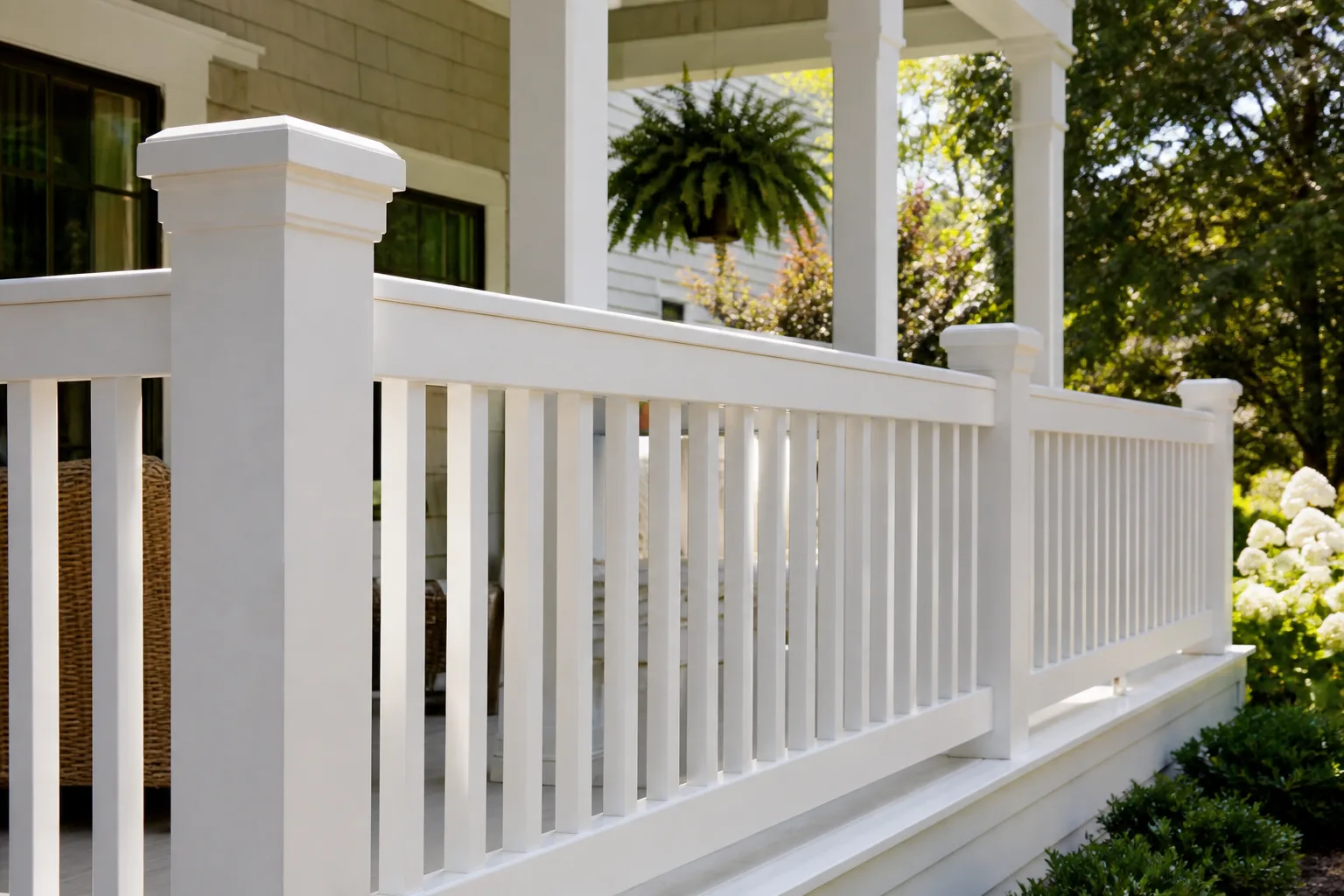
Repair in the Right Order
Do not simply caulk a hole while a bee is active inside. A trapped bee may chew a new exit, and a later adult may still emerge from the gallery. Penn State Extension and UC IPM both emphasize leaving active entrances open during treatment or until the bees have vacated, then filling unoccupied holes and coating the wood.
For a small, reachable problem, the general sequence is:
- Inspect without touching. Confirm that the opening is in wood and look for current sawdust, staining, and traffic.
- Choose the least disruptive response. A remote, nonstructural nest may be monitored; a structural or inaccessible nest may need professional treatment.
- Follow the product label or professional timing. If a pesticide is used, use only a product labeled for the site and pest, and keep people, pets, and blooming plants protected from exposure.
- Wait until activity has stopped or the nest is confirmed unoccupied. Then fill the entrance with an exterior-grade filler or suitable wood plug according to the repair conditions.
- Coat the whole vulnerable surface. Painting only the patch leaves the surrounding weathered wood attractive to the next female.
The exact timing varies by region and species, so do not treat a calendar date as a universal rule. If you cannot safely reach the opening or determine whether young bees remain inside, stop at inspection and call a professional.
Protect End Grain and Replace Vulnerable Materials
End grain is an easy place for moisture to enter and finish to fail. Seal the cut ends of deck boards, fence posts, pergola beams, and replacement lumber. Recoat chipped or peeling surfaces before spring nesting begins. A complete exterior paint or varnish film makes wood less appealing than bare grain, but it must be maintained; no finish is bee-proof.
Where a board has extensive galleries or sits in a high-risk location, replacing it with a well-finished board or a non-wood option such as composite, vinyl, or aluminum may be more durable. The decision should consider load, water exposure, appearance, and repair cost—not just bee activity. Keep untreated firewood, dead limbs, and scrap lumber away from the house so they do not become easy nesting material beside the structure.
What to Avoid—and When to Call a Professional
Avoid broad insecticide applications over flowering plants, improvised oils or fuels poured into holes, and repeated surface sprays that never address the gallery or the wood. A bee flying around a flower is not a reason to treat the flower, and a coating applied over an active entrance may trap insects without fixing the tunnel.
Call a licensed pest professional when holes are overhead, numerous, close to doors or play areas, inside structural members, or associated with extensive woodpecker damage. A professional is also the safer choice if someone in the household has a serious sting allergy or if you are uncomfortable working around an active nest. The goal is not to win a battle against every carpenter bee; it is to protect important wood while using the narrowest effective intervention.
Conclusion
What attracts carpenter bees to a home is usually a combination of food nearby and suitable wood available. Flowers explain where they feed, but bare or weathered wood, old openings, and warm sheltered surfaces explain where they may nest. Start by separating those two behaviors, then inspect the structure instead of removing the garden.
If the wood matters, maintain a complete exterior coating, seal exposed end grain, repair cracks, and do not plug an active hole blindly. Leave harmless foraging alone, monitor remote nonstructural nests when appropriate, and call a professional for high, structural, or heavily damaged wood. That balance protects your porch without turning a useful pollinator into a reason to spray the whole yard.



