Why You Shouldn't Skip Herbicide for Your Lawn This Spring
Thinking about skipping spring lawn herbicide? Learn when pre-emergent is worth it, when to skip it, how to time crabgrass control, and what seeding changes.
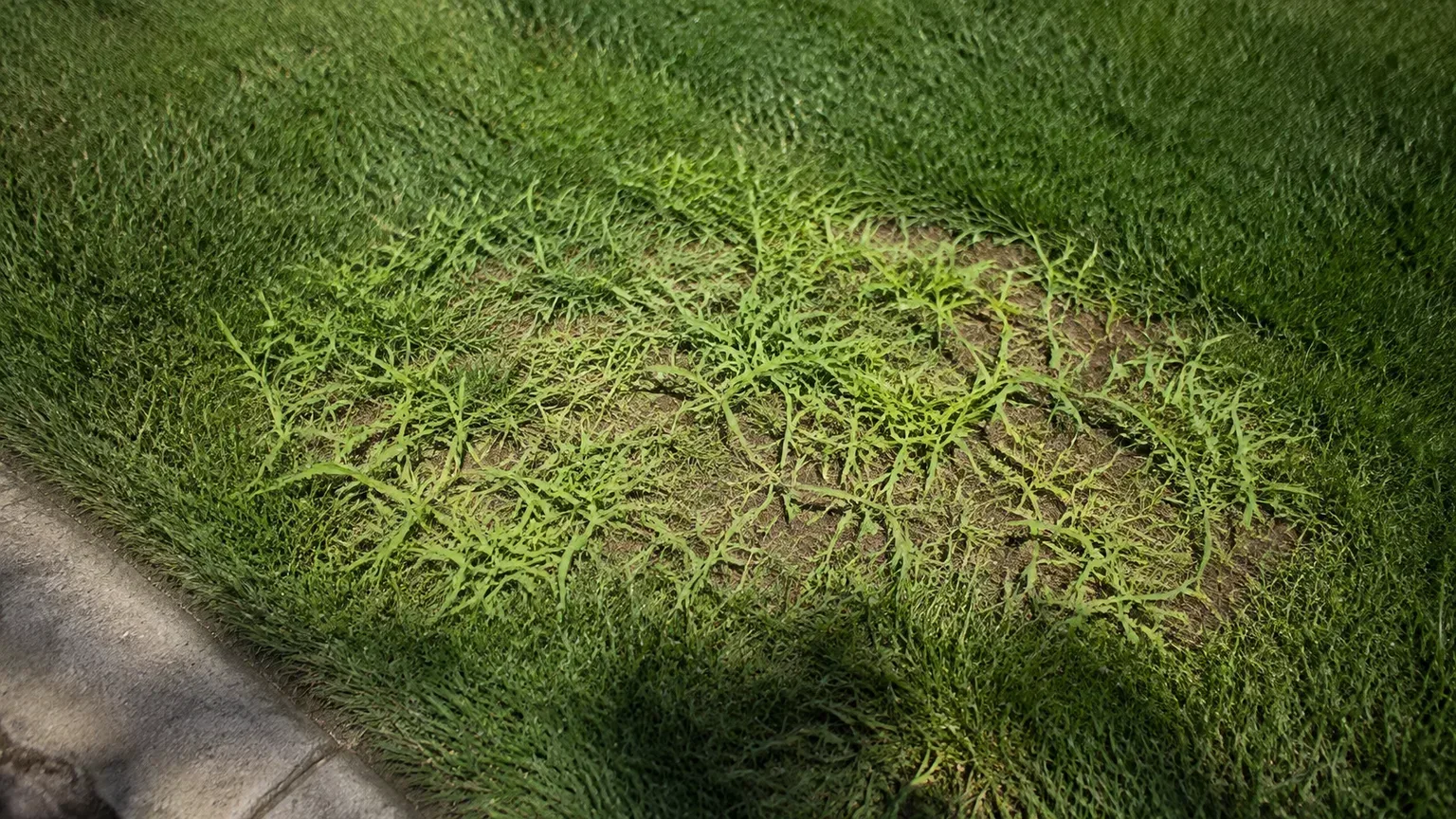
If crabgrass has repeatedly taken over sunny, thin patches of your lawn, skipping a correctly timed spring pre-emergent can mean another season of the same weed. But that does not mean every lawn needs herbicide every spring. The useful rule is simpler: do not skip the decision. Identify the weed, consider whether it was a real problem last year, check whether you plan to seed, and then decide if a labeled product fits your lawn and local timing.
Spring pre-emergent is mainly a preventive tool for certain annual weeds, especially crabgrass. It is not a cure for dandelions already flowering, a treatment for every weed, or a substitute for repairing thin turf. If you have no recurring target weed—or need to overseed—the best spring plan may be to skip a broadcast application and address the actual lawn problem another way.
The short answer: don’t skip the decision
Consider a spring pre-emergent when crabgrass or another listed annual weed was a persistent problem, your lawn is established, you are not about to sow grass seed, and local conditions say the target weed is nearing germination. A product only makes sense if its label lists the weed you want to prevent and the grass species you want to protect. Apply too early, too late, or to the wrong turf and you may spend money without getting the result you expect.
Skipping a broadcast application is reasonable when last year’s lawn had little of the target weed, the visible weeds are already growing, your priority is spring overseeding, or the product cannot be matched confidently to your turf. In those cases, identify and remove a small number of weeds, plan a labeled post-emergent treatment for a suitable stage, or improve the thin area that allowed weeds in. “No herbicide this week” is not the same as “do nothing about the lawn.”
When prevention is worth considering
Pre-emergent is most useful when you can name the recurring weed and the time it emerges. Crabgrass is a warm-season annual: plants that appeared last year typically die after frost, but the seed they produced can remain in the soil and germinate in a later warm season. A preventive treatment can reduce new seedlings before they establish, which matters most where there is a history of substantial crabgrass pressure and open soil.
Penn State Extension describes crabgrass as especially prevalent in sunny, thinning turf and recommends combining cultural practices with correctly timed selective herbicides. That combination is important: an herbicide can address a susceptible seedling window, while mowing and turf density reduce the open conditions that let weeds exploit the lawn (Penn State Extension). If crabgrass has appeared in the same sunny strip for several summers, prevention plus repair may be more effective than waiting to spray visible plants in July.
When skipping a broadcast treatment makes sense
If the lawn is mostly dense and last season produced only a few weeds, take a moment to ask whether a whole-lawn application solves a meaningful problem. Spot removal may be enough. A low-weed lawn that is about to be overseeded is a particularly strong reason to pause: many standard pre-emergents interfere with desirable grass seed as well as crabgrass seed. A treatment that prevents the lawn you want from germinating is a poor trade even if the timing would otherwise be right.
Maryland Extension urges homeowners not to treat spring crabgrass preventer as an automatic lawn-care ritual. Its regional guidance describes dense, appropriately mowed tall fescue plots with very little crabgrass even without a pre-emergent, while noting that spring seed and crabgrass control can conflict (Maryland Grows). That is a useful reminder, not a guarantee that every lawn can skip treatment: results depend on grass type, weed history, site conditions, and local climate.
Pre-emergent prevents seedlings, not established weeds
“Pre-emergent” describes when the product is intended to work: before a susceptible weed emerges. It does not mean that it kills every seed in the soil, nor that it will remove an established crabgrass plant. Many lawn pre-emergents create a treated zone near the soil surface that disrupts early development of listed seedlings. The exact target, activation requirements, and persistence depend on the product and its label.
| Treatment | Best-fit stage | Main limitation |
|---|---|---|
| Pre-emergent | Before a listed annual weed germinates | Usually will not control a mature, visible weed; can also restrict desired seed |
| Selective post-emergent | After a listed weed is growing in compatible turf | Only works on labeled targets and may injure grass outside the listed conditions |
| Hand removal or cultural control | Small patches, isolated plants, or lawns where chemical treatment is not a good fit | Takes follow-up; does not prevent every seed from arriving or germinating |
Prevention and post-emergent treatment do different jobs
If the weed is already visible, first identify it. A crabgrass preventer is not automatically a broadleaf weed killer, and a dandelion product may not affect crabgrass. The word “weed killer” on a bag is not enough to determine what it controls. Look for the target weed by name, the grass species approved for use, and whether the instructions describe pre-emergence, post-emergence, or both.
Do not apply extra pre-emergent because you spotted a few weeds after treatment; that does not turn it into a rescue spray. Penn State notes that pre-emergent control can be poor once crabgrass seedlings have emerged, while post-emergent products depend on the plant’s growth stage, adequate coverage, weather, and label instructions (Penn State Extension). The practical pivot is to stop treating the calendar as the target: deal with the weed that is actually present, and reserve prevention for the next appropriate germination window.
Read last year’s lawn before choosing this year’s treatment
Before buying a product, make a quick map of where and when weeds appeared last year. Was the problem crabgrass, which sprawls in summer and often favors sunny openings? Were the weeds dandelions or clover already present in spring? Did they show up only around a driveway edge, a compacted path, or a bare patch? Different weeds have different life cycles, and an application aimed at crabgrass may not address a spring broadleaf weed that germinated the previous fall.
Look at the grass around each patch too. If the turf is thin because of shade, foot traffic, poor drainage, drought, or scalping, the underlying opening will remain after treatment. Penn State recommends improving density with turf suited to the site, appropriate irrigation during dry conditions, and mowing at a suitable height; Purdue Extension likewise notes that a dense lawn helps suppress crabgrass pressure (Penn State Extension; Purdue Extension). Fixing the reason a patch stays open can be more durable than applying a product to that patch every spring.
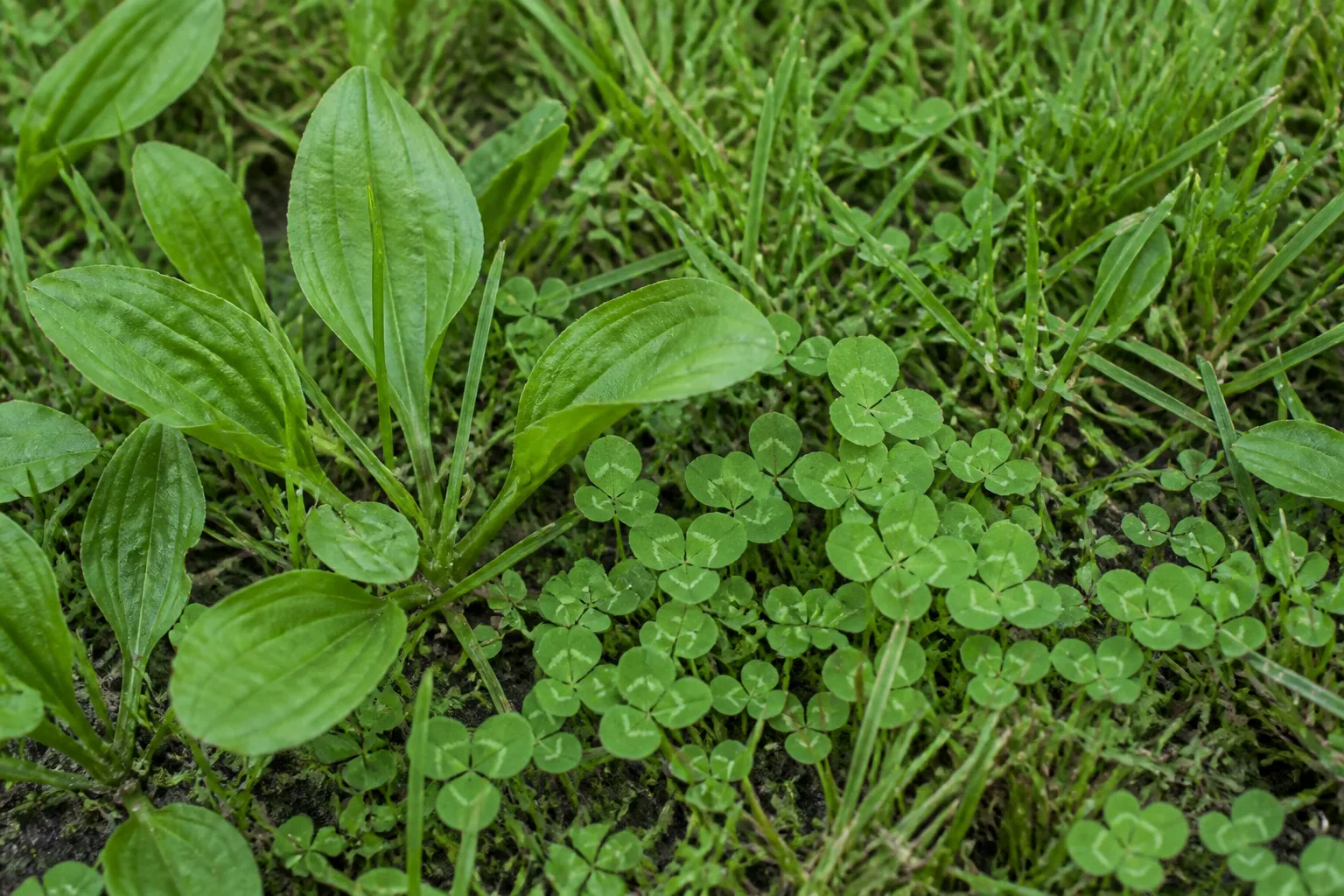
If you cannot confidently distinguish a weed from desirable turf or a wanted clover lawn, do not guess with a broadcast product. Photograph the plant and ask a local cooperative extension office or qualified lawn-care professional to identify it. This small pause helps prevent a common mismatch: choosing a product for a different weed because the package says “lawn weeds” in large type.
Time crabgrass prevention by soil conditions, not a date
Crabgrass germination tracks sustained warmth in shallow soil, not the first sunny afternoon or the calendar date printed in a national article. Regional thresholds differ. North Dakota State Extension describes crabgrass beginning to germinate when average soil temperature at 2 inches reaches about 55°F for several days; Penn State gives a slightly different measurement and temperature range for its region, around 55–58°F near the surface at daybreak over multiple days, and recommends applying before expected germination (NDSU Extension; Penn State Extension). Purdue’s Indiana guidance uses roughly 60°F as a germination cue (Purdue Extension). These are local examples, not competing universal commands.
The practical takeaway is to use a local extension soil-temperature tool or nearby turf station if available, and follow the specific product label. Treat temperature as a trend: the same lawn can warm differently in a sunny slope, a shaded side yard, and a damp low spot. If you use a soil thermometer, take readings in the shallow root-zone soil where crabgrass seeds sit rather than relying on daytime air temperature. A plant-based sign such as forsythia bloom can be a rough reminder in some areas, but unusual weather can move the soil and bloom cycles out of sync.
A simple local monitoring routine
Start checking before the expected crabgrass window in your region. Use the local extension resource first; if you take readings yourself, use the same shallow depth and comparable time of day so you are comparing like with like. Check a sunny area where crabgrass has been a problem and, if helpful, a second representative part of the lawn. A single warm reading is less useful than several consecutive days of warming. Keep notes rather than guessing from the afternoon forecast.
Then work backward from the product’s instructions. Penn State recommends a lead time ahead of expected germination for its region, while other extension programs and products may define the timing differently. The point is not to copy a particular state’s dates or a neighbor’s schedule; it is to place a suitable product before the target weed begins emerging, without acting so early that you waste the useful control period. If the window has already passed, switch strategies rather than layering on extra product.
Check spring seeding plans before applying anything
Pre-emergent creates a direct conflict with spring overseeding: a treatment that interrupts a crabgrass seedling may also interfere with the grass seed you deliberately spread. Standard crabgrass preventers therefore commonly carry a restriction or waiting interval for seeding. Penn State notes that restrictions vary with product and application, and may extend for months; Purdue advises against using pre-emergent on a recently seeded lawn (Penn State Extension; Purdue Extension). Read the exact label before applying, including the interval before seeding and after seeding.
If repairing thin or bare turf is your priority, plan that first. For many cool-season lawns, fall is the stronger establishment window, but spring seeding may still be the practical choice when damage cannot wait. Maryland Extension notes that spring overseeding is possible, while warning that crabgrass pre-emergent will also prevent tall fescue seed from germinating (Maryland Grows). Do not seed immediately after a standard preventer and hope watering will cancel the barrier; it will not reliably do that.
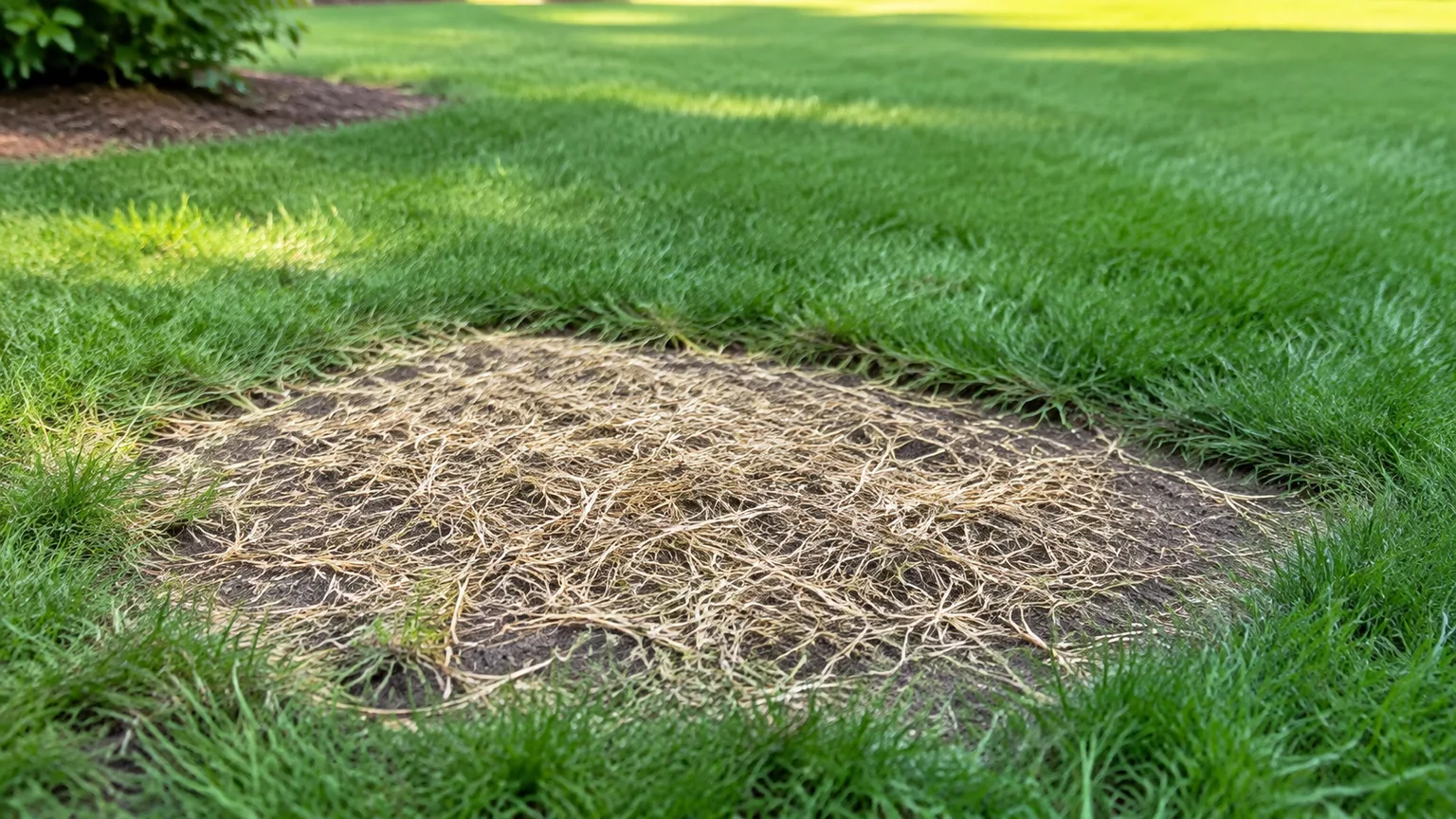
There are product-specific exceptions, but “safe for new grass” is not a generic category. Certain herbicides are labeled for particular turf species and seeding stages, and they may control crabgrass less completely than a standard product. Do not choose one based on an online comment or a different brand’s instructions. Confirm that the current label explicitly matches your grass, seed timing, weed target, and use site. If no labeled option fits, choose which job matters most this spring and schedule the other for a compatible season.
Match the product to the weed and the grass
Lawns are mixtures of species with different tolerances, and weed-control products are not interchangeable. A selective herbicide is designed to control listed plants while allowing specified turf species to tolerate the application when used as directed; “selective” does not mean harmless to every grass, flower, shrub, or tree nearby. A nonselective product can injure or kill desirable vegetation it contacts, so it is not a broadcast lawn solution. Even pre-emergents vary by target weed, turf tolerance, timing, and seeding restrictions.
Before choosing, identify the grass as well as the weed. If you inherited the lawn and are unsure whether it is tall fescue, Kentucky bluegrass, ryegrass, bermudagrass, or another turf, look at purchase records or ask a local extension service. Do not infer safety from a neighbor’s successful application: their lawn may be a different species, cultivar, climate, or growth stage. Purdue Extension advises checking the label for the target, turf use, directions, and safety precautions; using a product outside its label directions can violate the law (Purdue Extension).
Be cautious with “weed and feed” combinations. They combine herbicide with fertilizer, but the weed and grass may not be at the right stage for both components at once. If you need a pre-emergent but not nitrogen, a combined product can add an unnecessary input. If the product’s fertilizer timing does not fit your grass and region, look for an appropriate labeled alternative or skip it. Fertilizer is not a required companion to every herbicide treatment.
Apply only after checking the label and site
Read the whole label before opening the package. Confirm that the lawn and target weed are listed; the application rate and maximum seasonal amount; any required protective equipment; the weather and wind limits; watering or rain instructions; and any restrictions for children, pets, pollinators, nearby gardens, drains, ponds, or wells. Those directions are product-specific, so a generic online rule like “water in every pre-emergent” or “keep pets off for one day” is not a substitute.
Measure the treated area rather than estimating from the size of the bag. Use the spreader or sprayer setting specified for that formulation, calibrate it if the label instructs you to, and avoid overlap or missed strips. Keep granules and spray away from sidewalks and driveways, where rain can carry them toward drains. Do not apply in gusty conditions that can move droplets or granules beyond the intended area. If the label calls for watering in, use only the stated method and amount; if it calls for a rain-free period, check that forecast instead.
Granular and liquid products have different instructions
Granular products are often applied with a spreader and may need watering to move the active ingredient into the soil layer. Liquid formulations may need a different setup, coverage pattern, drying period, or irrigation schedule. Neither form is inherently the right choice for every lawn. What matters is whether the label fits the target, turf, application method, and site conditions—and whether you can apply it evenly without drift or runoff.
Some products combine pre-emergent and fertilizer, while others are herbicide-only. Avoid double-treating an area just because you are unsure whether the first pass covered it; check the label’s interval and maximum rate. Put the package back in its original container and store it as directed, away from children, pets, feed, and seed. The label is part of the treatment plan, not small print to consult after something goes wrong.
If crabgrass is already up, change the plan
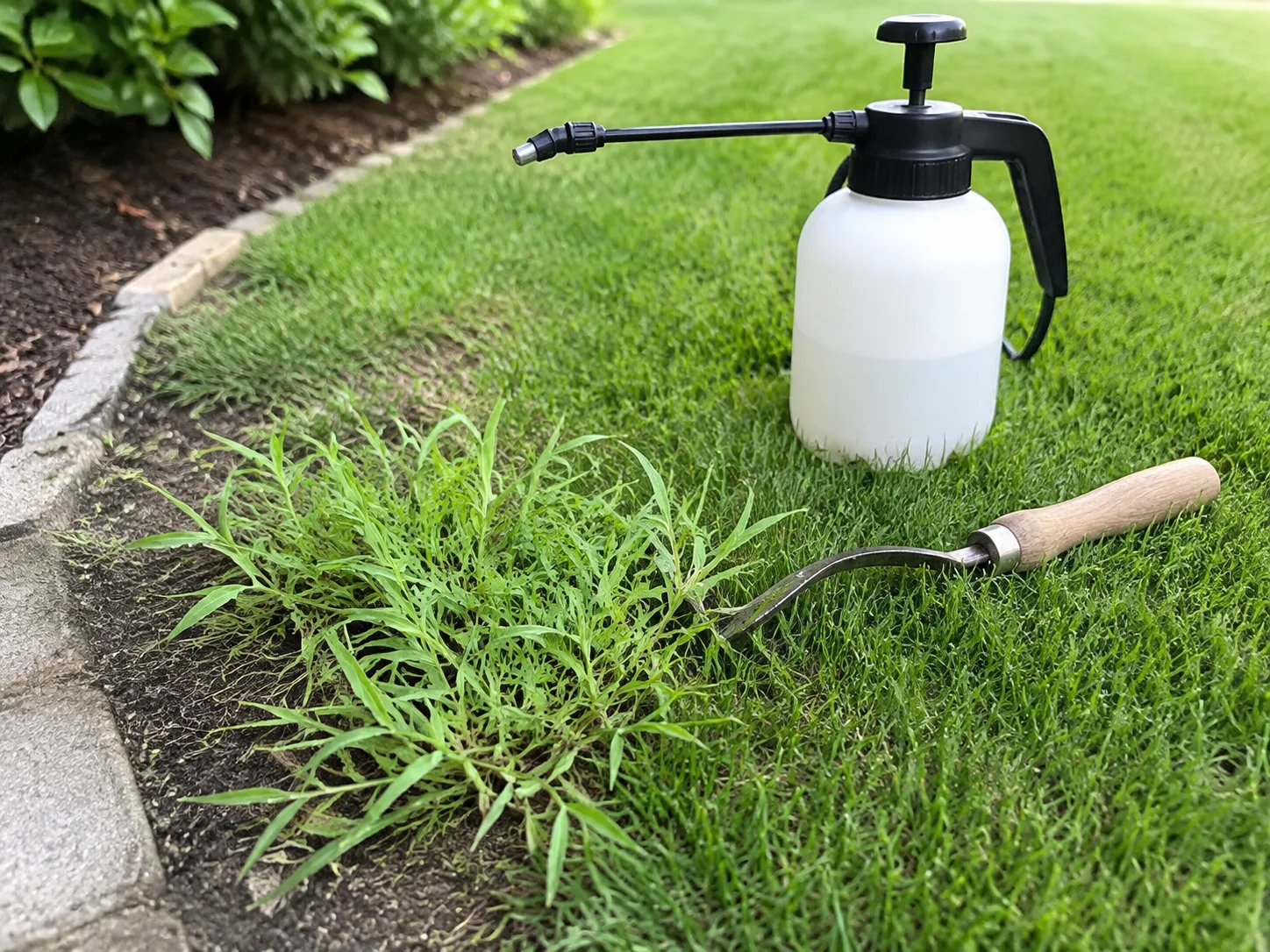
Once seedlings have emerged, a typical pre-emergent application is no longer the right rescue tool. Look closely at the plants before choosing a next step. A few small weeds may be pulled or dug out, especially when the soil is moist enough to remove roots without tearing a large section of turf. For a larger patch, a post-emergent product may be appropriate only if its label names the weed and your exact turf and the plants are at the allowed growth stage.
Do not assume that every visible crabgrass patch should be sprayed immediately. Mature plants, heat-stressed grass, drought, or a missed application window can reduce success or raise the risk of turf injury. Penn State notes that post-emergent control depends on weed stage, coverage, and environmental conditions; some treatments are less reliable as plants grow larger (Penn State Extension). If the product label does not clearly cover your situation, remove isolated plants, prevent seed production where practical, and plan for next season rather than experimenting with a stronger mixture.
The Old World Garden Farms guide also stresses that preventing a new crop does not erase seeds already in the lawn; its useful lesson is to expect follow-up over multiple seasons, not a one-and-done fix (Old World Garden Farms). Keep expectations measured. A few surviving weeds do not automatically justify a second application, and adding more product can violate seasonal limits while damaging desirable plants.
Reduce weeds without a blanket herbicide application
An established, dense lawn is one of the best long-term defenses against crabgrass because it leaves fewer open, sunlit gaps. Mow at a height appropriate for your turf instead of scalping it; keep the blade sharp enough for a clean cut; water deeply enough to support roots during dry spells, while avoiding constantly wet soil; and repair compaction, drainage, or traffic patterns that leave bare ground. Purdue and Penn State Extension both emphasize turf density and appropriate mowing as part of crabgrass management (Purdue Extension; Penn State Extension).
For isolated plants, hand removal or careful spot treatment reduces the amount of lawn exposed to herbicide. In areas where a more varied lawn is acceptable, you may decide that low-growing clover or a few broadleaf plants are not worth eliminating; that is a design choice, not a lawn failure. If the whole area is thin, overseed in a season and with a method compatible with the grass species, and avoid a pre-emergent that conflicts with that seed. Gardening Know How likewise emphasizes timing, clearing debris, and maintaining vigorous turf in its practical crabgrass guidance (Gardening Know How).
Do not replace a labeled product with a homemade salt or vinegar spray across turf. These materials are not selective lawn treatments and can injure grass and soil where applied. Likewise, a “natural” label does not guarantee that an input is harmless or effective. If you want lower-input management, start with accurate identification, removal of small patches, suitable mowing, and repairing the conditions that favor weeds. For guidance tied to your county and grass type, local extension is more useful than a universal recipe.
Spring herbicide mistakes that waste the window
Treating every lawn because it is spring. A product has the clearest purpose when it is matched to a recurring target weed and a real history of pressure. If that history is absent, monitor first.
Using an air-temperature forecast as the whole timing plan. Crabgrass prevention depends on shallow soil conditions over time. A warm afternoon does not tell you that germination has begun across your lawn.
Applying pre-emergent to visible weeds. Prevention and post-emergent control are different jobs. Identify the plant and choose only a treatment labeled for its current stage.
Seeding through a standard pre-emergent barrier. The product may inhibit desirable grass seed too. Check the seeding interval before applying, not after your seed fails to emerge.
Assuming one label fits every turf. Grass species and cultivars vary in tolerance. Confirm the label lists your exact use, and avoid treating an unidentified lawn on a guess.
Overlapping passes or applying before rain without checking directions. Excess application can injure turf or move product off site; insufficient coverage can leave gaps. Calibrate equipment and follow the label’s weather and watering instructions.
Expecting a single season to erase crabgrass. Seeds can remain and new ones can arrive. Combine correctly timed prevention, seed-head management, and turf repair; judge progress over successive seasons.
A practical apply-or-skip checklist
Before you buy or spread anything, answer these questions in order:
- What is the weed? Name the target. If it is uncertain, identify it before treatment.
- When did it appear? A recurring summer crabgrass problem points to a different window than spring dandelions already growing.
- How much was there? A few plants may need hand removal or a targeted response, not a blanket application.
- Will you seed this spring? If yes, check the label’s waiting periods first; if no labeled product fits the seed plan, prioritize the repair.
- What grass do you have? Verify that the label allows the product on that turf.
- Are local conditions right? Use regional soil-temperature or extension guidance for the target weed and the product’s own timing instructions.
- Can you apply exactly as directed? Confirm the area, equipment, weather, watering, protective measures, and off-target restrictions.
If any answer is unknown, hold off until you can verify it. That is especially true when the uncertainty involves grass compatibility, seeding intervals, or the exact weed. The cheapest treatment is often the one you do not apply to the wrong plant, at the wrong time, or over the wrong lawn.
Conclusion: don’t skip diagnosis
You should not skip spring weed control if recurring crabgrass has been thinning your lawn and a correctly timed, turf-compatible pre-emergent fits your plans. But you also should not apply herbicide just because spring arrived. The right choice depends on the weed’s life cycle, last year’s pressure, shallow-soil conditions, your grass species, and whether you need to seed.
Use a preventive product only for a listed target before its germination window, follow its current label, and pair treatment with mowing and lawn repair that close the openings weeds exploit. If the lawn is healthy, the target weed is absent, or overseeding is the priority, skipping a broadcast treatment can be the smarter spring decision. Diagnose first; then treat—or skip—with a reason.