23 Best Tiny Flowers for Your Garden
Compare 23 tiny-flowered garden plants by light, moisture, bloom season, and garden job so you can choose small flowers that will actually fit your space.
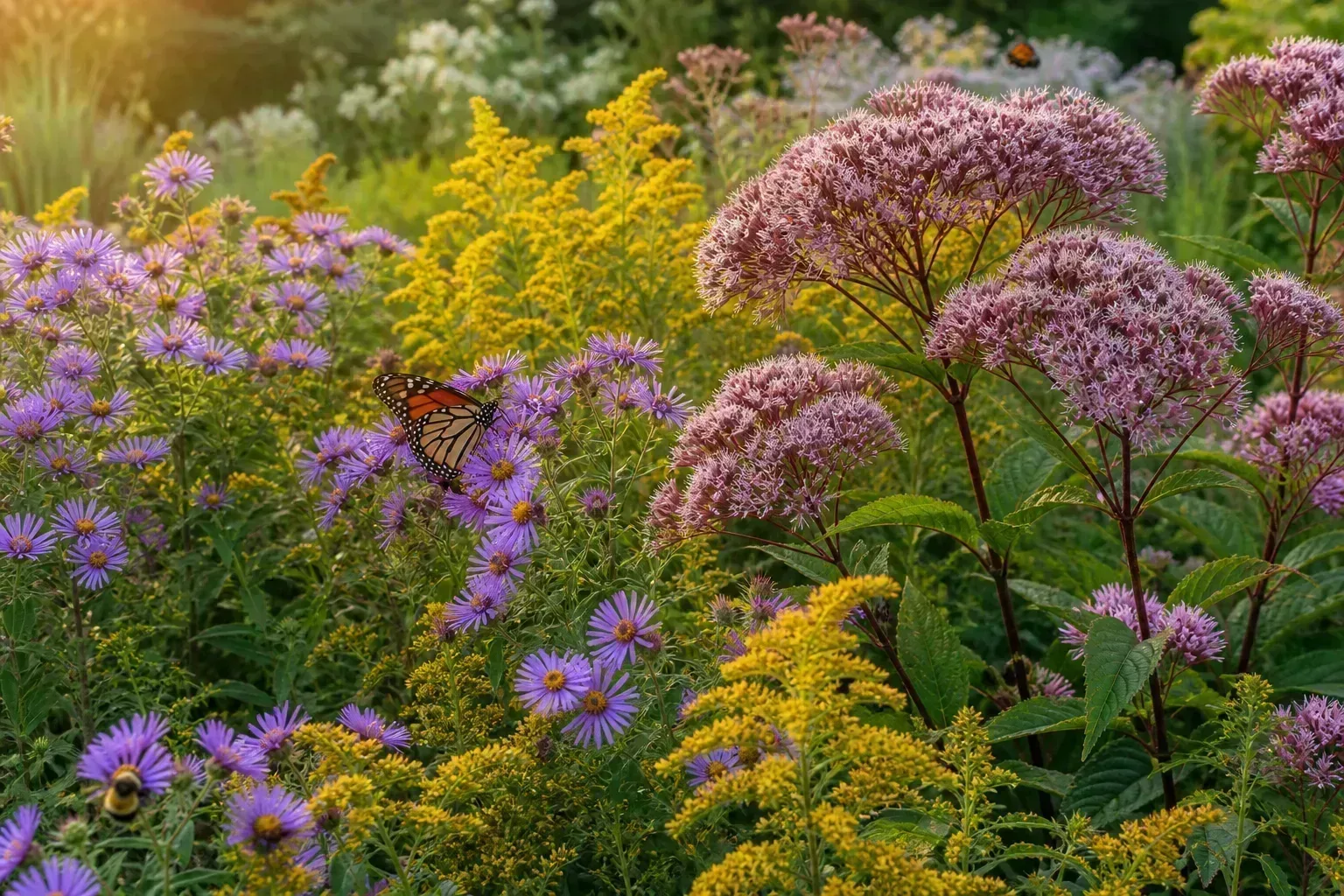
Tiny flowers reward close attention. A single bloom may be easy to miss, but a drift of small flowers can soften a path, fill a pot, feed pollinators, or make a rock garden look planted rather than merely arranged.
The best choice depends less on the flower’s color than on the plant’s mature spread, moisture needs, and season of interest. Use the guide below to match the right small-flowered plant to the job; several are excellent, while a few belong only in gardens where their spreading, reseeding, toxicity, or climate behavior is acceptable.
What “tiny flower” means—and why plant size matters more
“Tiny flower” describes the bloom, not necessarily the plant. Sweet alyssum is a low filler, but Queen Anne’s lace can send up tall stems; Blue Chip butterfly bush is compact compared with a full-size butterfly bush, but it is still a small shrub rather than a carpet plant.
That distinction prevents the most common buying mistake. Check the plant tag for mature height and width, then decide whether you want an edge plant, a ground cover, a container spiller, a low mound, or a taller background plant with small blooms. A useful plant-finder approach is to filter by height, light, soil, and moisture together; the RHS plant finder is a good example of that logic.
Hardiness zones are a starting point, not a promise. A plant can survive winter in your zone and still fail in summer heat, wet clay, reflected heat, or a container that dries quickly. If you are unsure, buy one plant first, observe it through a full season, and then repeat it.
Use a four-question shortlist before you fall for a photo: How much direct light reaches the planting spot? Does water drain away or linger? How wide can the plant spread? What should happen after flowering? That last question matters because some gardeners want a clipped, permanent edge, while others welcome self-sown seedlings and winter seed heads.
This approach also exposes misleading bargains. A flat of cool-season pansies may be the right answer for instant autumn color but the wrong answer for a hot midsummer border. A tray of cheap lantana may look compact at the nursery and become a large shrub in a warm climate. A tiny-flowered plant is a good choice only when its whole life cycle fits the space.
Start with your site, not the flower color
Full sun and fast drainage
Start with the brightest, driest spaces: gravel gardens, raised beds, stone walls, paver edges, and containers that drain freely. In the Northern Hemisphere, six or more hours of direct sun is a useful working definition of full sun; the UW–Madison Arboretum uses that threshold when discussing short-stature plantings and also stresses that soil type and drainage change which plants belong there. See its short-garden guidance for the same site-first approach.
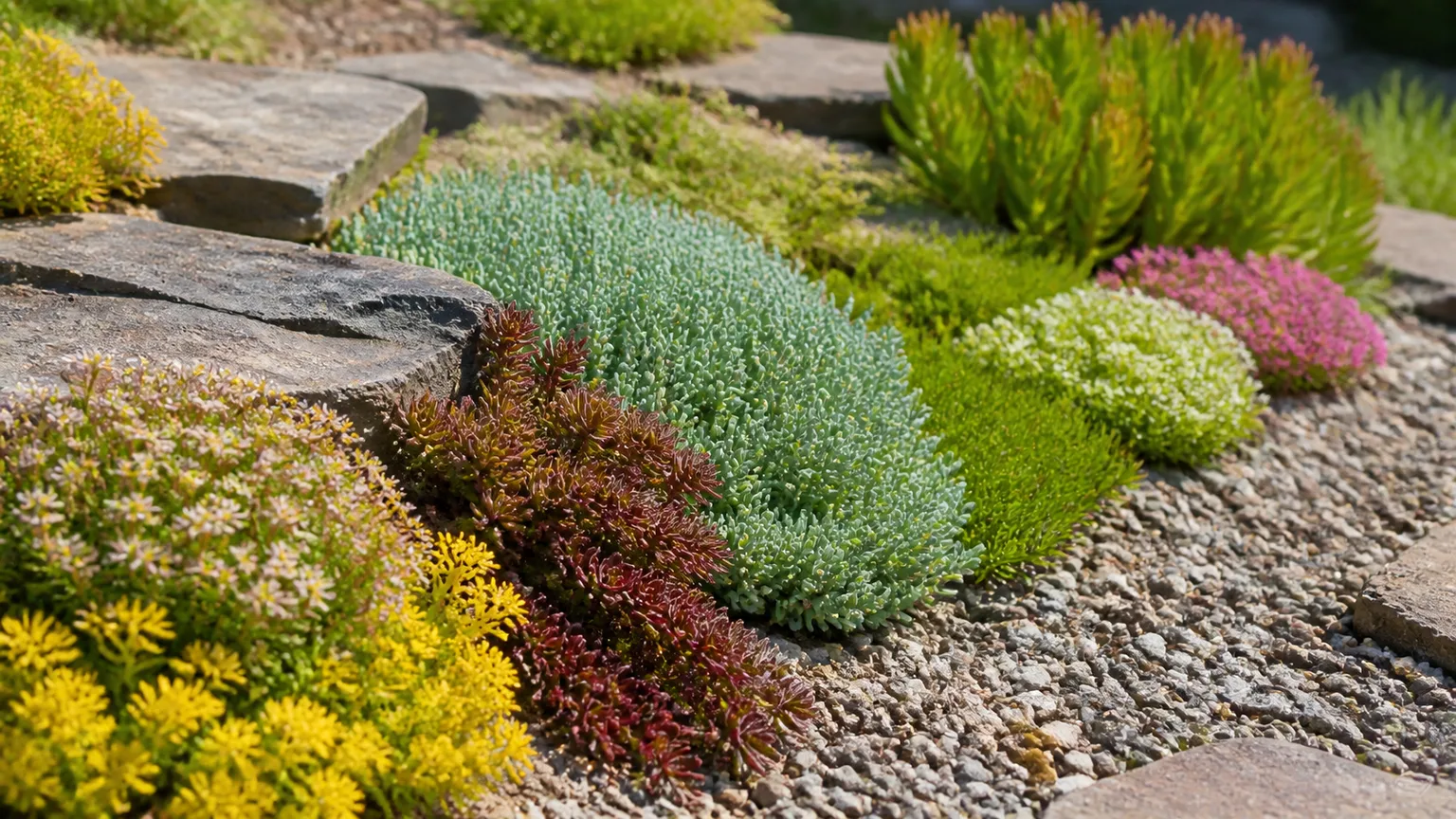
For these locations, choose plants that prefer lean soil or tolerate drying between waterings. Thyme, rock cress, snow-in-summer, lavender, and stonecrop are better bets than primrose or forget-me-not. Improving drainage is usually more useful than adding fertilizer; a tiny-flowered plant in wet soil will not be rescued by more sun.
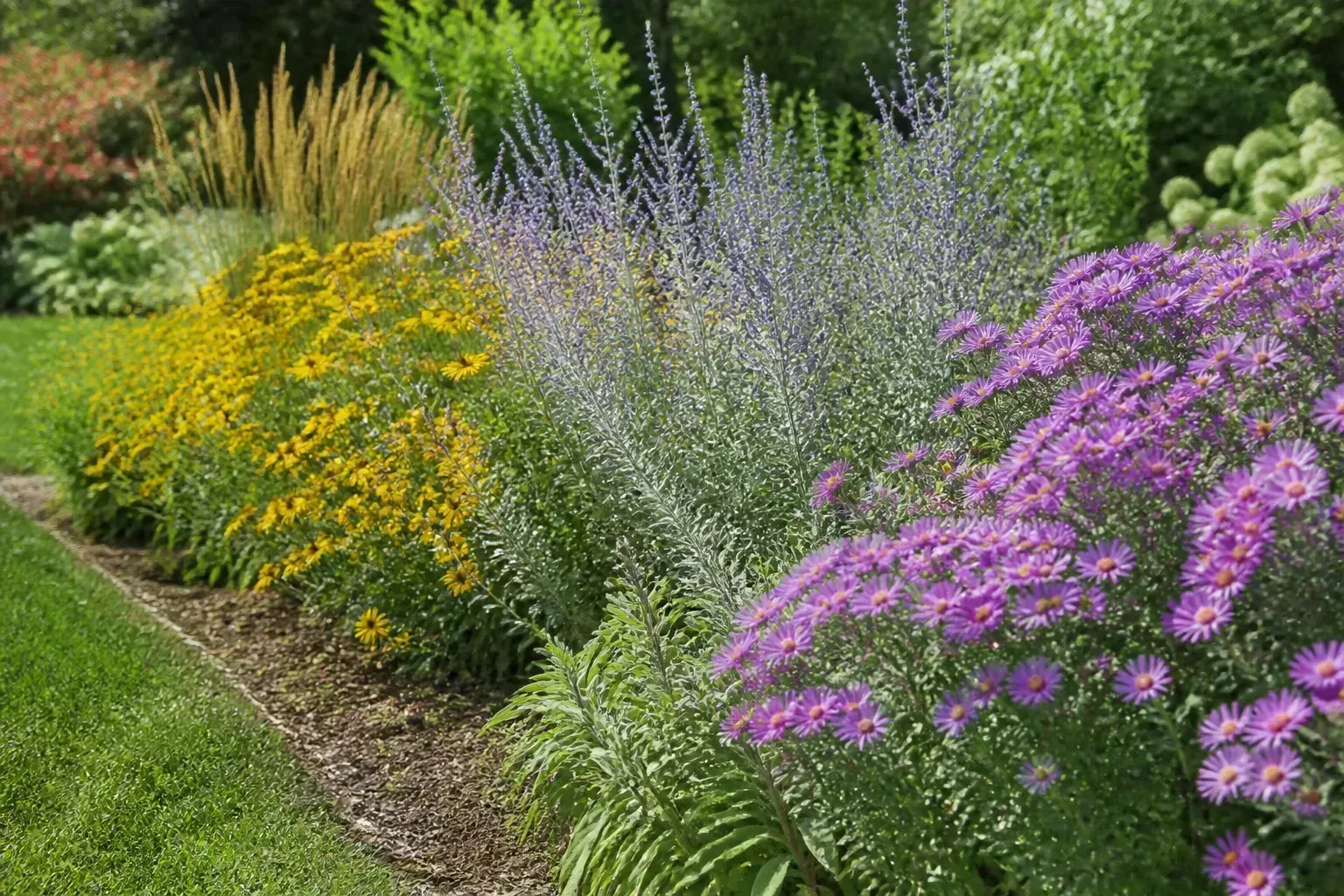
Part shade, moisture, and cool-season conditions
A bright woodland edge, north-facing border, or container protected from afternoon heat calls for a different group. Forget-me-not, primrose, lily of the valley, and Kenilworth ivy appreciate cooler or moister conditions, while pansies and lobelia often look their best in the cool part of spring or fall.
Measure the site at the time you expect the plant to bloom. Spring sun can disappear under a tree’s summer leaves, and a container that is pleasantly damp in April may bake dry in July. The UF/IFAS low-care landscape guide makes the broader point well: match plants to the soil and climate you already have, and group plants with similar water needs.
23 tiny flowers, grouped by the job they do
The list below keeps the original 23 choices but makes their trade-offs easier to see. Treat the zone ranges as approximate because cultivars and local conditions vary.
Rock gardens and path edges
These are the plants to consider when you want flowers close to stones, a low front edge, or a living seam between paving and soil.
| Plant | Why it earns a place | Give it | Watch for |
|---|---|---|---|
| Rock cress (Arabis spp.) | A spring-blooming mound covered in pink, purple, or white flowers. | Full sun and sharply drained soil. | Trim after bloom to keep the cushion compact. |
| Snow-in-summer (Cerastium tomentosum) | Silver foliage and white flowers brighten a hot, dry edge. | Full sun, lean soil, and excellent drainage. | It can spread beyond the small patch you pictured. |
| Fairy foxglove (Erinus alpinus) | A true alpine-style plant for crevices and small rock gardens. | Sun or light shade and gritty, well-drained soil. | Despite its common name, it is not a true Digitalis foxglove. |
| Creeping phlox (Phlox stolonifera) | A dependable spring carpet that spills over stones. | Sun to part shade and soil that drains but does not stay bone-dry. | Choose the creeping species for a low mat; other phlox are much taller. |
| Kenilworth ivy (Cymbalaria muralis) | Trailing stems and lavender flowers soften walls and paver gaps. | Part shade, moisture, and a crevice with some organic matter. | It self-seeds and can wander in mild climates. |
The visual effect is strongest when one plant repeats rather than when five tiny species are mixed in equal amounts. Use a few rocks as structure, let one low plant do most of the covering, and reserve the other flowers for a nearby pot or border where their bloom timing can be seen.
Fragrant, edible, and low-growing fillers
This group works in borders, herb gardens, window boxes, and containers where scent or a soft transition matters as much as flower size.
| Plant | Why it earns a place | Give it | Watch for |
|---|---|---|---|
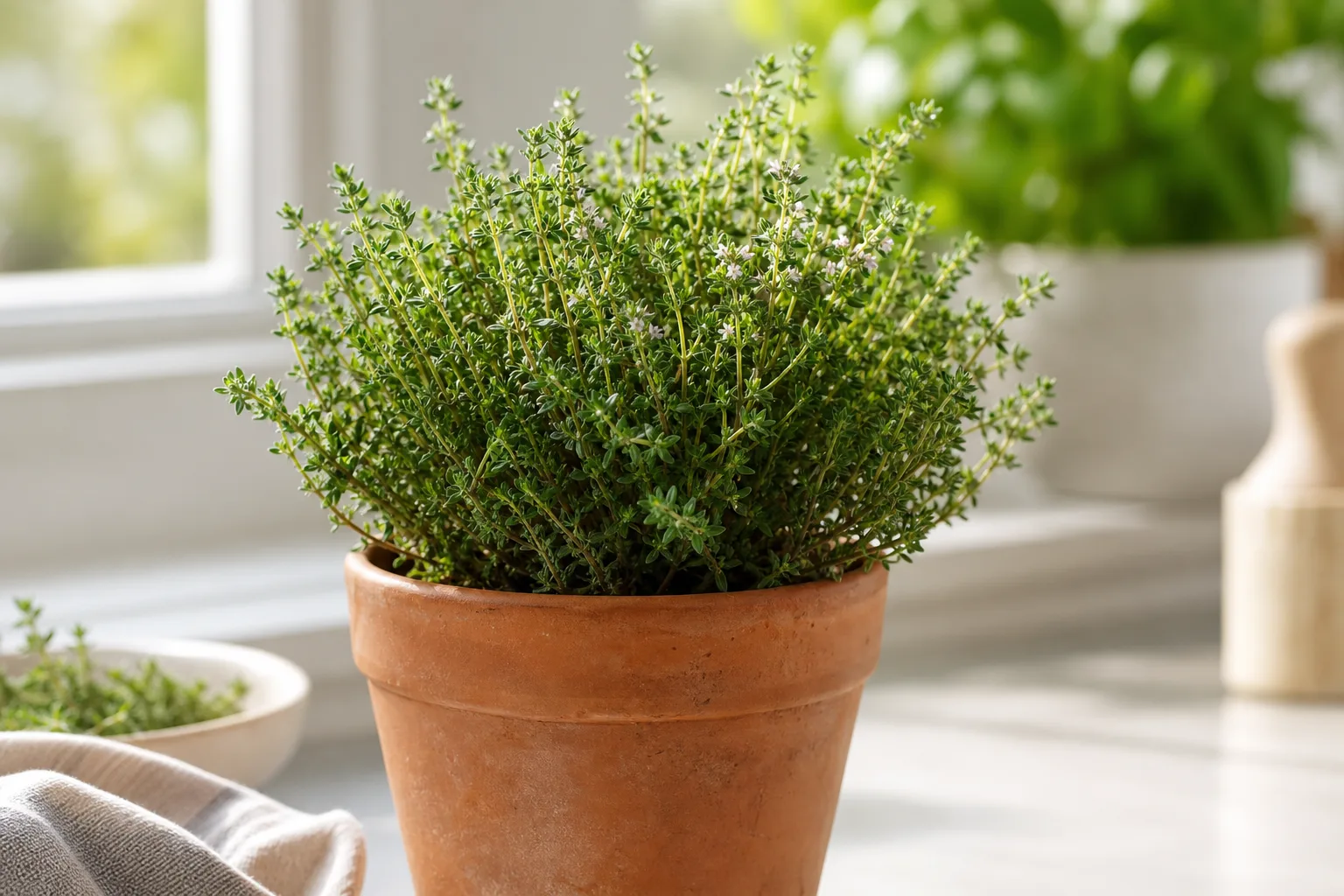
| Thyme (Thymus vulgaris) | Culinary leaves and tiny purple flowers make it useful twice. | Full sun, lean soil, and fast drainage. | Wet winter soil causes more trouble than missed fertilizer. |
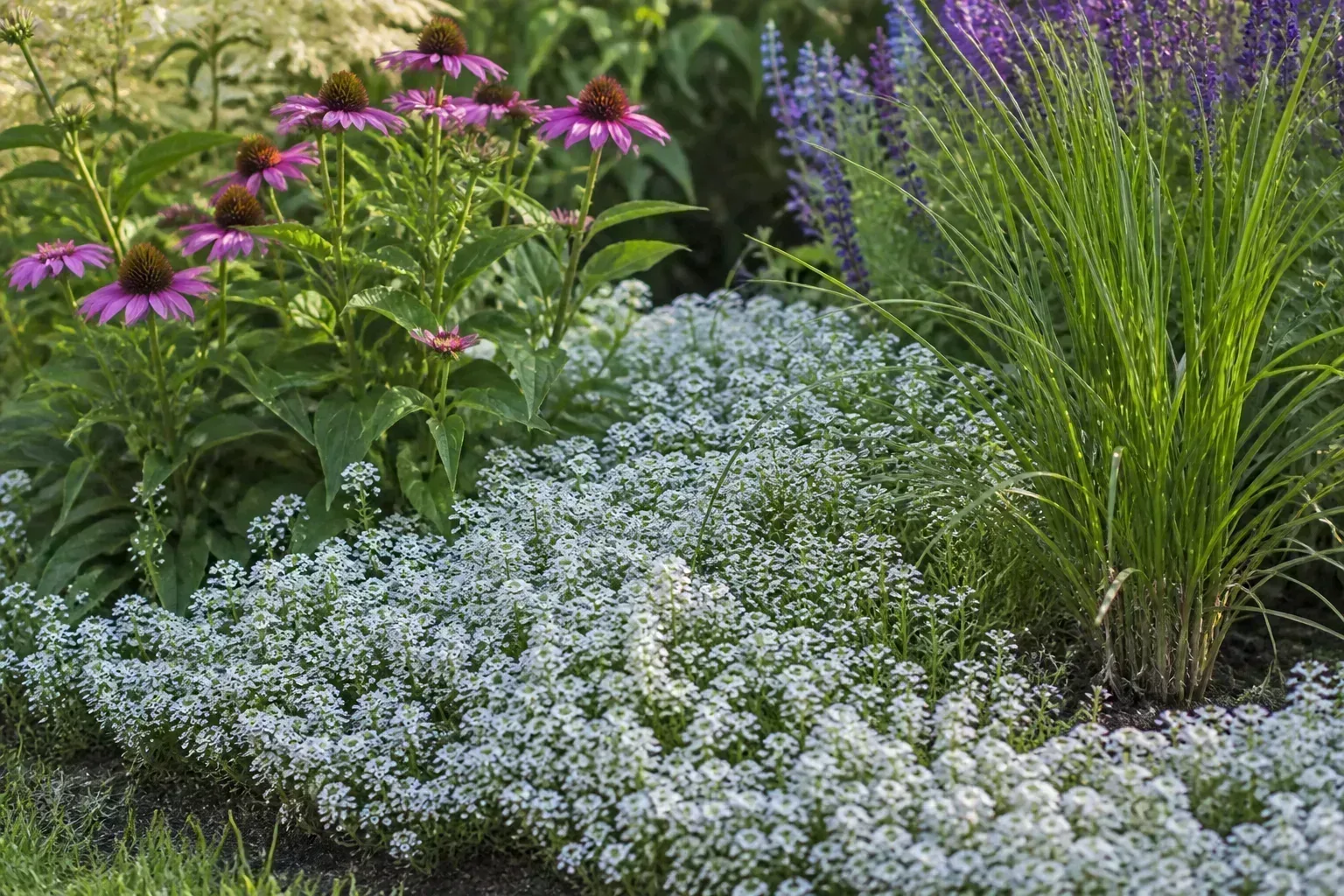
| Sweet alyssum (Lobularia maritima) | A honey-scented, quick-growing edge and container filler. | Sun to part shade and average moisture. | It is often an annual outside warm climates; shear it when flowering thins. |
| Baby’s breath (Gypsophila spp.) | Airy stems are excellent between sturdier flowers and for cutting. | Full sun and well-drained soil; some types prefer alkaline conditions. | Mature plants can be much wider and taller than the blooms suggest. |
| Dianthus (Dianthus spp.) | Fringed petals and clove-like fragrance bring a long-blooming front edge. | Sun, drainage, and shelter from the hottest afternoon in hot climates. | “Pinks” includes annuals, biennials, and perennials, so read the cultivar tag. |
| Lavender (Lavandula spp.) | Fragrant purple flower spikes and silver foliage suit dry, sunny beds. | Full sun and soil that dries readily. | Do not place it in a wet, heavily amended bed just because it is called low-maintenance. |
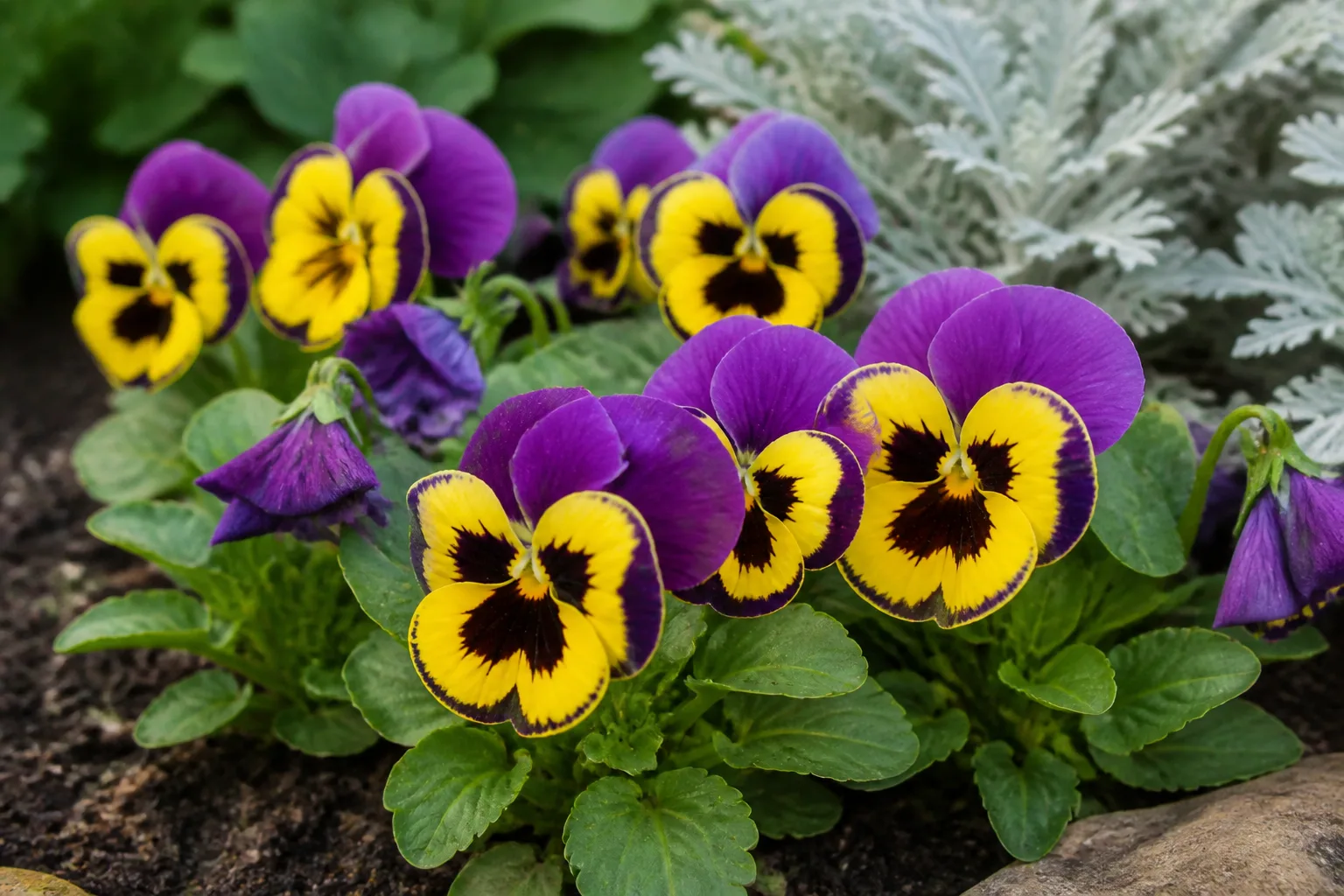
| Pansy (Viola × wittrockiana) | Face-like flowers give instant color to pots and borders. | Cool weather, regular moisture, and some afternoon shade in heat. | Summer heat can end the display even when the plant is otherwise healthy. |
The Epic Gardening guide to plants with small flowers is useful for seeing how these plants can serve as fillers, ground covers, or container subjects rather than as isolated specimens. The practical rule is simple: put fragrant plants where you pass them, not at the back of a large bed.
Shade and cool-season color
Small flowers are especially valuable in places where large, sun-loving blooms struggle. These choices are best when you can provide the moisture and temperature they expect.
| Plant | Why it earns a place | Give it | Watch for |
|---|---|---|---|
| Forget-me-not (Myosotis sylvatica) | Bright blue flowers light up a spring woodland edge. | Moist, well-drained soil and sun to part shade. | It readily self-sows; remove excess seedlings if you want a tidy scheme. |
| Primrose (Primula spp.) | Cheerful spring clusters bring color to cool, partially shaded spaces. | Cool conditions, consistent moisture, and drainage. | In hot climates it may be a seasonal plant rather than a lasting perennial. |
| Lily of the valley (Convallaria majalis) | Fragrant white bells are excellent for a contained woodland planting. | Shade to part shade and moist, rich soil. | It spreads by rhizomes and is poisonous; see the safety section before planting. |
| Lobelia (Lobelia erinus) | Intense blue flowers trail from baskets and small containers. | Cool weather, even moisture, and sun with protection from extreme heat. | It often fades in hot nights unless cut back and kept hydrated. |
Do not try to make this group behave like a dry rock garden. If a shade bed is dry because tree roots take most of the water, either irrigate deeply during establishment or choose a drought-tolerant plant adapted to that exact site.
Containers and pollinator planting
These plants earn space when you want flowers at eye level, a long season of nectar, or a compact accent that can be moved. “Container-friendly” does not mean “drought-proof”: pots have less soil volume and usually need more frequent watering than beds.
| Plant | Why it earns a place | Give it | Watch for |
|---|---|---|---|
| Egyptian star clusters or pentas (Pentas lanceolata) | Star-shaped clusters are bright, long-blooming, and popular with butterflies. | Warm weather, sun to part shade, and a rich but well-drained mix. | It is perennial only in warm climates and usually an annual elsewhere. |
| Blue Chip butterfly bush (Buddleia davidii ‘Blue Chip’) | A smaller butterfly-bush cultivar with dense flower panicles for a sunny bed or large pot. | Full sun, drainage, and room for a shrub-like spread. | “Dwarf” does not mean tiny; verify the cultivar and local status. |
| Butterfly weed (Asclepias tuberosa) | Orange flower clusters support a pollinator planting and tolerate dry soil once established. | Full sun and well-drained soil. | Aphids are common; avoid reflexive spraying, especially in a pollinator bed. |
| Lantana (Lantana camara) | Multicolored clusters handle heat and draw butterflies. | Sun, warmth, and drainage. | The species can become invasive in some regions and much larger than a small-flower label implies. |
| Yarrow (Achillea millefolium) | Flat flower heads provide a durable summer-to-fall texture. | Full sun and ordinary, well-drained soil. | It can spread or reseed; deadhead if you want to keep it in bounds. |
For a small container, choose one focal plant and one filler rather than cramming in five species with different water needs. Penta plus sweet alyssum can work in a sunny warm-season pot; pansy plus lobelia is better for a cool-season display.
Late-season color and texture
These plants keep the list from becoming spring-only. They also add foliage, seed heads, or evergreen structure after the smallest flowers have passed.
| Plant | Why it earns a place | Give it | Watch for |
|---|---|---|---|
| Heather (Calluna vulgaris) | Evergreen, scale-like foliage and tiny late-season flowers create a neat mound. | Sun, acidic soil, and moisture without waterlogging. | It dislikes alkaline soil and may be invasive in a few localized wet habitats. |
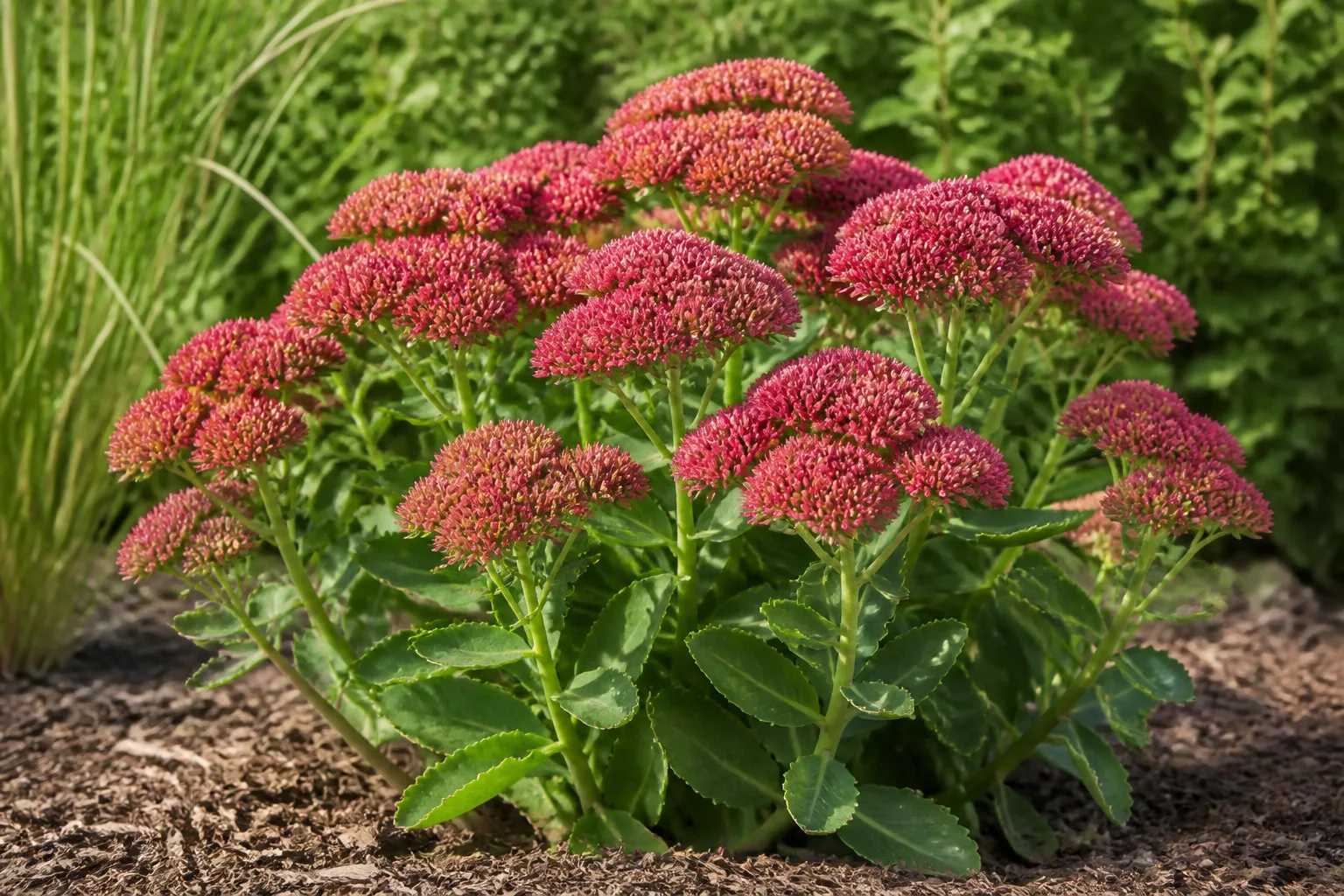
| Stonecrop (Sedum and Hylotelephium spp.) | Succulent foliage and starry clusters bridge summer into fall. | Sun and lean, well-drained soil. | The name covers both low mats and taller clumping types, so check the species. |
| Queen Anne’s lace (Daucus carota) | Flat white umbels add airy, wildflower texture. | Sun and well-drained soil. | It self-seeds readily and is treated as a weed in some places; deadhead before seed if needed. |
Small flowers do not have to mean a small visual footprint. A few umbels of yarrow or Queen Anne’s lace can sit behind a low edge and make the whole bed feel deeper without adding a second block of heavy color.
Three planting combinations that look intentional
A sunny rock-edge mix
Use creeping thyme as the scented, edible edge; add rock cress for spring color and stonecrop for later texture. Set each plant where it can spread into open gravel rather than into the crowns of its neighbors. This combination works because all three prefer drainage, but it fails if the bed is watered like a lawn.
A fragrant container mix
Start with sweet alyssum as the spiller, add a compact dianthus or pansy for visible color, and keep the container where you will walk past it. Use a pot with a drainage hole, water when the upper layer is dry rather than on a fixed calendar, and trim alyssum when it becomes sparse.
A moist shade mix
Pair forget-me-not with primrose in a cool bed or wide container, then use a small patch of Kenilworth ivy to trail over the edge. Keep lily of the valley separate unless you have deliberately chosen a contained planting and can manage its toxicity and rhizomes.
Whichever mix you choose, leave some quiet space around the flowers. Tiny blooms read as detail when they are repeated in a drift or framed by foliage, but they disappear when every inch of soil is filled with unrelated colors. Repeat one plant three or five times, vary the foliage shape, and let stones, mulch, or bare gravel act as the pause between flowers.
Care after planting: water, deadhead, and edit
For the first growing season, water slowly enough to wet the root zone, then let the plant’s preferred moisture pattern guide the next irrigation. Shallow daily sprinkling encourages a weak surface-rooted plant; a newly planted drought-tolerant perennial still needs regular deep watering until roots reach surrounding soil.
Containers need closer attention. The Colorado State University Extension container-garden guide notes that outdoor containers are difficult to overwinter without protection because roots can dry out or freeze, while the UF/IFAS guidance emphasizes that containers require more frequent watering. Treat a pot as a small, fast-changing ecosystem, not as a miniature garden bed.
Fertilizer should be just as targeted. Rich, frequent feeding can produce floppy foliage at the expense of flowers, while plants adapted to lean, dry soil often need very little fertilizer once established. Improve a planting bed because its structure or drainage needs work, not because every small flower benefits from richer soil; then follow the label for any fertilizer you do use.
Deadheading is a choice, not a rule. Remove spent flowers from pansies, dianthus, lobelia, and pentas when you want more bloom; leave some yarrow, alyssum, forget-me-not, or Queen Anne’s lace to set seed if you want natural spread. Cut back plants only after checking whether birds, seed collection, or winter structure is part of your plan.
The best maintenance move for a tiny-flower bed is often editing. Pull seedlings that have crossed a path, divide a plant before it smothers its neighbors, and replace one unhappy species with a better match for the site instead of continually compensating with water, fertilizer, or pesticides.
Safety and spread checks before you buy
Do not assume that a small flower is harmless because it looks delicate. NC State Extension describes lily of the valley as poisonous, notes that its rhizomes can choke out other plants in ideal conditions, and recommends considering native alternatives in regions where it behaves aggressively. Keep it away from children and pets who may chew leaves or berries, and do not place trimmings in reach.
For any plant in a pet-accessible garden, check the exact species and cultivar in the ASPCA plant list for dogs and the corresponding cat resources, then ask a veterinarian or poison-control service about a suspected ingestion. Plant names are messy: a common name can cover several species, and a cultivar can behave differently from the species description.
Lantana deserves a second check. The Invasive Plant Atlas profile for Lantana camara documents a shrub that can become far larger than a small-flower list suggests and tracks its non-native status; whether it is a responsible choice depends on your region and the plant sold to you. Also check local rules for Queen Anne’s lace, baby’s breath, yarrow, Kenilworth ivy, and other strong reseeders before planting them near natural areas.
If you want a lower-risk pollinator bed, look for regionally native short plants through your county extension office, native-plant society, or local nursery. Native status is not a guarantee of perfect behavior, but matching a plant to local soil, moisture, and wildlife is usually a better starting point than choosing a flower only because its bloom is small.
Conclusion
The best tiny flowers are the ones that fit the space after you account for the whole plant. Choose thyme, rock cress, lavender, or stonecrop for sunny drainage; forget-me-not, primrose, or lobelia for cooler moisture; and sweet alyssum, dianthus, pansy, or pentas when you need a flexible filler or container plant.
Before buying, write down four facts: hours of sun, soil moisture, mature spread, and whether pets or children can reach the bed. That short check will do more for a successful display than choosing the most colorful flower on the rack.
Tiny flowers are most successful when they are treated as a planting design problem, not a collection problem.



