How to Get Rid of Ticks in Your Yard Safely
Learn how to reduce ticks in your yard with edge cleanup, leaf management, host control, targeted treatment, and safer personal-protection habits.
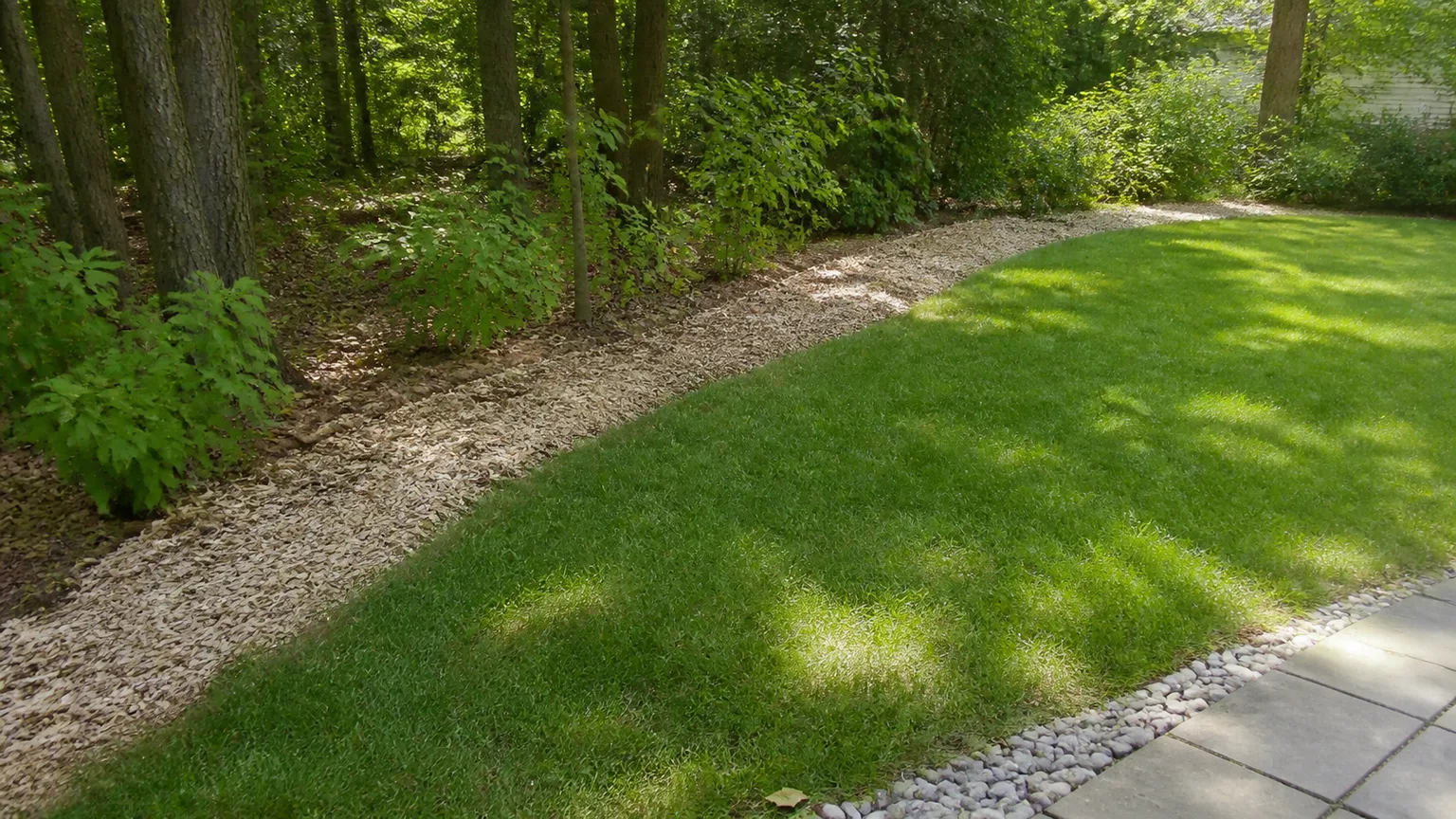
The most reliable way to reduce ticks in a yard is to make the places people and pets use less connected to shady, brushy habitat. Start at the woodland or overgrown edge: remove leaf piles and brush, reduce routes used by deer and rodents, keep play and seating areas open, and maintain a three-foot transition strip. If ticks remain a repeated problem, consider a focused, label-directed treatment rather than spraying the whole property.
No yard treatment makes a property permanently tick-free. Ticks can arrive on wildlife, pets, clothing, or equipment, and landscape changes do not replace checking your body or pets after time outside. The CDC’s tick-prevention guidance describes yard management as one part of a larger exposure-reduction plan.
The fastest way to lower risk: work from the edge inward
The highest-value first step is usually not buying a spray. It is finding the places where a person, dog, or child can move from maintained lawn into leaf litter, tall vegetation, stone walls, brush, or low branches. These transition points combine habitat with traffic, so improving them can reduce contact while also making future inspection easier.
The species in your area also matters. “Ticks” may mean blacklegged ticks, lone star ticks, American dog ticks, or another local species, and their preferred hosts and habitats are not identical. A regional extension office, health department, or licensed professional can help if the pattern is persistent or the tick’s identity is uncertain. Do not use one region’s treatment calendar as though it applies everywhere.
Think in terms of a risk map, not a property-wide verdict. A sunny, open lawn used for games may be lower-contact than a narrow shady path along the woods, even if both are green. The National Pesticide Information Center’s tick guidance notes that ticks do not fly or jump; they climb vegetation and wait for a host to brush past. That makes edges, overgrown routes, and places that touch clothing especially important.
Map the places people and pets actually touch
Walk the yard at the same time of day your household normally uses it. Mark the back door, playset, patio, dog run, hammock, favorite garden path, firewood stack, stone wall, compost area, and any place a pet squeezes beneath shrubs. Then look outward from each spot: is it beside a wooded margin, damp ground, dense ground cover, tall grass, or a pile of leaves?
The goal is not to remove every shrub. Instead, identify the few areas where a small change can interrupt contact. Pruning vegetation away from a sitting area, moving a dog’s route into a mowed corridor, or clearing the base of a stone wall may be more useful than treating a large open lawn that nobody crosses at the edge.
Use a tick drag as a rough presence check
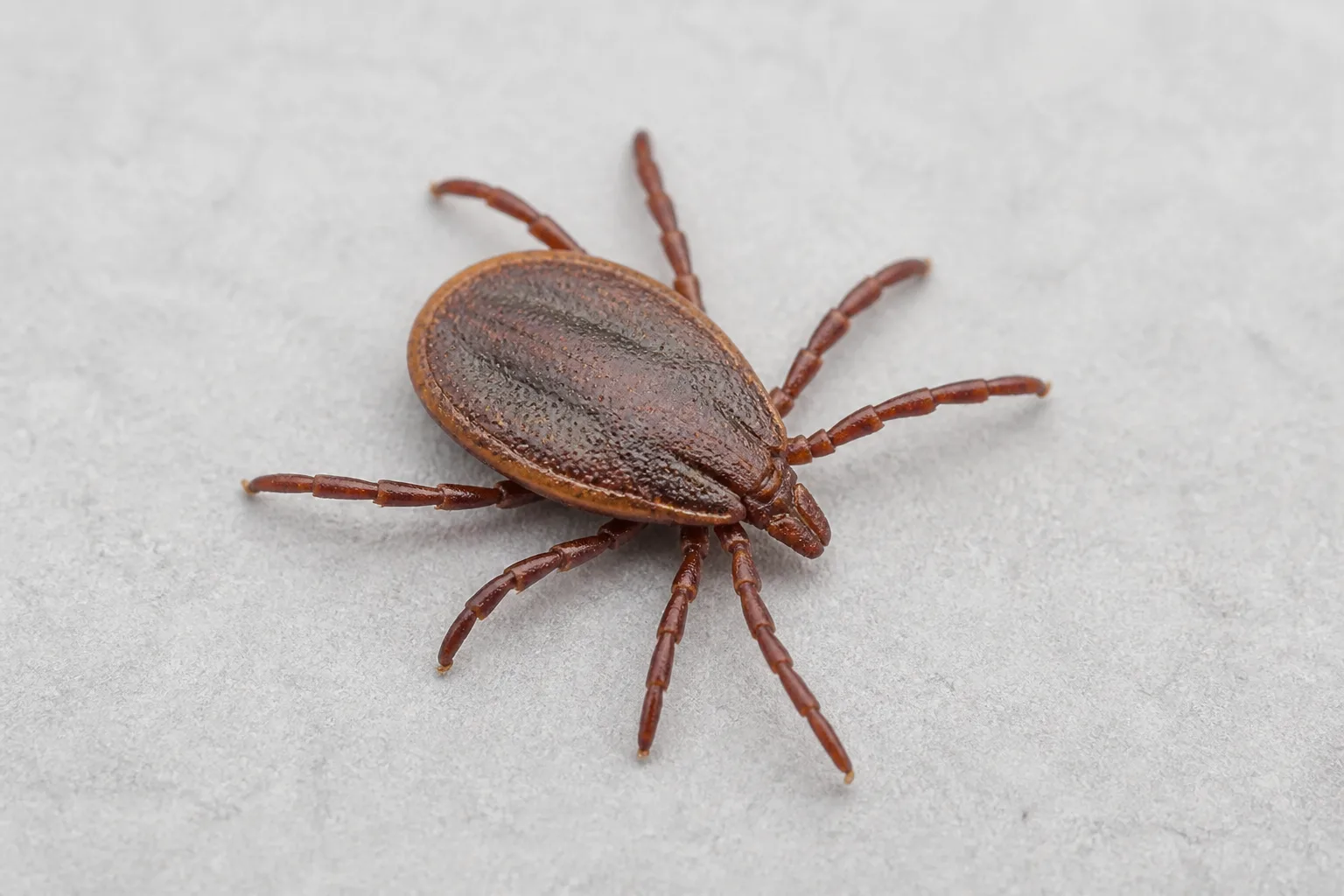
If you want evidence before changing your routine, use a simple tick drag as a rough presence check. Attach a light-colored square of fabric to a pole or string, then slowly pull it through likely habitat—especially the first few feet of a shady edge, brushy border, or path. Stop periodically and inspect the fabric with good light and fine tweezers.
This is a sampling exercise, not a safety clearance test. A negative drag does not prove that the yard is free of ticks, and a positive drag does not tell you which species or pathogen is present. Keep children and pets away while you sample, wear protective clothing, and dispose of any tick safely. For a recurring or extensive problem, a licensed pest professional can help identify the species and the most appropriate control area.
Clear leaves, brush, and host shelter
Remove the conditions that let ticks and their hosts stay close to high-use areas. Rake or blow leaves away from play spaces, patios, paths, and the house foundation; cut back ground cover that stays damp; and clear brush, discarded lumber, and unused materials from the places where people or pets pass. Penn State Extension recommends removing leaf litter, brush, tall grass, and small-animal shelter as part of yard management.
Do the work in sections instead of creating a new pile at the edge of the woods. A brush heap or thick leaf windrow can become a sheltered wildlife corridor right beside the lawn. Keep firewood neatly stacked away from the house, raise it off the ground when practical, and avoid storing old furniture, mattresses, or trash outdoors. The CDC specifically includes removing debris and discouraging wildlife access among yard actions that can reduce exposure.
Handle fallen leaves without building a tick bank
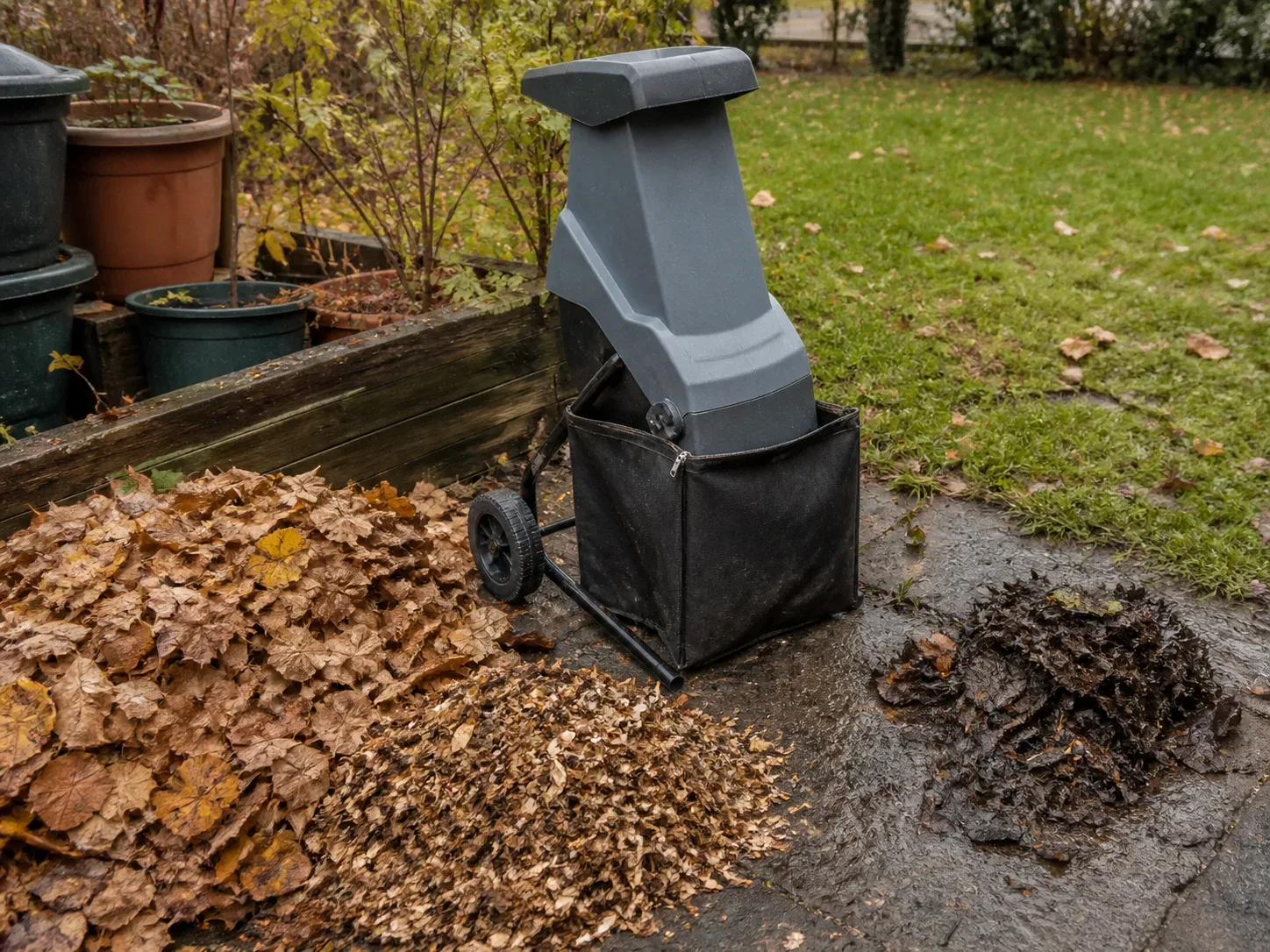
Leaf management needs a little nuance. Leaves are valuable garden material, but a dense accumulation at a forest margin can create sheltered habitat. Cornell’s New York State Integrated Pest Management program summarizes research in which raking or blowing leaves along forest edges was associated with about three times as many blacklegged tick nymphs as the comparison condition; the study did not find the same effect for lone star ticks.
That finding is a reason to avoid pushing every leaf into a thick ridge at the woods line, not a reason to remove all leaves from a property. Mulch-mow leaves into an open lawn when the equipment and turf can handle it, use a contained composting system away from regular traffic, or use a local collection program. The Cornell guidance notes that its cited study did not test every possible mulching or composting method, so treat those options as practical management rather than a guarantee.
Maintain lawn visibility without chasing a magic mowing height
Mow often enough to keep paths and activity areas visible, passable, and easy to inspect. Trim tall grass and weeds along routes to the shed, mailbox, play area, and seating. Remove clippings that accumulate in damp strips or against dense plantings when they create a persistent sheltered edge.
Do not assume that a specific mowing height will eliminate ticks. Shorter grass can improve visibility and reduce the amount of vegetation brushing against legs, but evidence is not strong enough to call mowing a universal blacklegged-tick control. A recent research-informed review that consulted extension and pest experts reported that short mowing did not significantly reduce blacklegged tick density, though it may help with other species or with access and awareness.
The useful rule is simple: mow for access and visibility, not as your only control. Keep the open lawn usable, then spend your most careful cleanup time at the shady edge and around the places where people and pets actually sit or walk.
Build a three-foot transition zone
A maintained strip of roughly three feet can create a clear break between lawn and dense woodland or brush. Use wood chips, bark mulch, gravel, or another surface that can be kept relatively free of leaf buildup. The CDC recommends a three-foot wood-chip or gravel barrier between lawns and wooded areas, and extension and horticulture guidance commonly pairs that strip with pruning and debris removal.
Build the transition where it will actually be maintained. Remove weeds and leaf pockets, keep branches from arching across it, and make sure the strip does not become a damp storage area for toys, logs, or yard waste. A border that looks clear in spring but fills with leaves by fall is no longer serving the same purpose.

What the barrier can and cannot do
Treat the strip as a transition and inspection zone, not a force field. It can make the edge easier to see, reduce direct contact with leaf litter, and remind people to stay on the maintained side. It may be more useful for some tick species and properties than others; blacklegged ticks can climb vegetation, and a barrier will not stop a tick carried in by a deer, mouse, dog, or person.
Do not advertise the border as proof that ticks cannot cross. Keep high-use areas, play equipment, and decks away from the immediate woodland edge when possible, as the CDC recommends. If a path must cross the strip, widen and maintain the crossing rather than letting vegetation turn it into a hidden bridge.
Put play, seating, and pet routes in the open
Move the places where people linger toward the middle of the maintained yard. Put playsets, picnic tables, chairs, and frequently used pet beds away from dense shrubs, rock walls, brush piles, and the first few feet of the woods. The point is not that an open lawn is risk-free; it is that a sunny, visible area is easier to monitor and less likely to force repeated contact with questing vegetation.
Create a clear route between the house and each high-use feature. Prune back branches that touch shoulders, keep ground cover from spilling onto paths, and avoid placing toys or cushions overnight beside the edge. When you finish yard work, store gloves, shoes, and tools where they can be inspected rather than carrying them through the house unchecked.

For dogs, the best route is the one that does not funnel them under shrubs or along a stone wall. A maintained corridor can make daily checks easier, but use a veterinarian-recommended tick preventive as directed because a dog can pick up ticks on walks, in neighboring yards, or from wildlife even when your own lawn is tidy.
Reduce deer, rodents, and other host traffic
Ticks are passengers as much as they are a landscape problem. Deer, rodents, stray animals, and other hosts can bring them into a yard, so habitat work is stronger when it also reduces reasons for those animals to visit. Repair gaps in fencing, secure garbage and compost, keep pet food indoors, and remove brush or stacked materials that provide cover.
A deer fence may be worthwhile when deer repeatedly browse at the edge, but it needs to be designed for the property and maintained. Avoid creating a dense planted corridor directly against the fence. Also remember that keeping deer out does not remove mice or other small hosts, and tick species vary by region; host management is a pressure-reduction measure, not a guarantee.
Fix bird-feeder, woodpile, and pet-food attractants
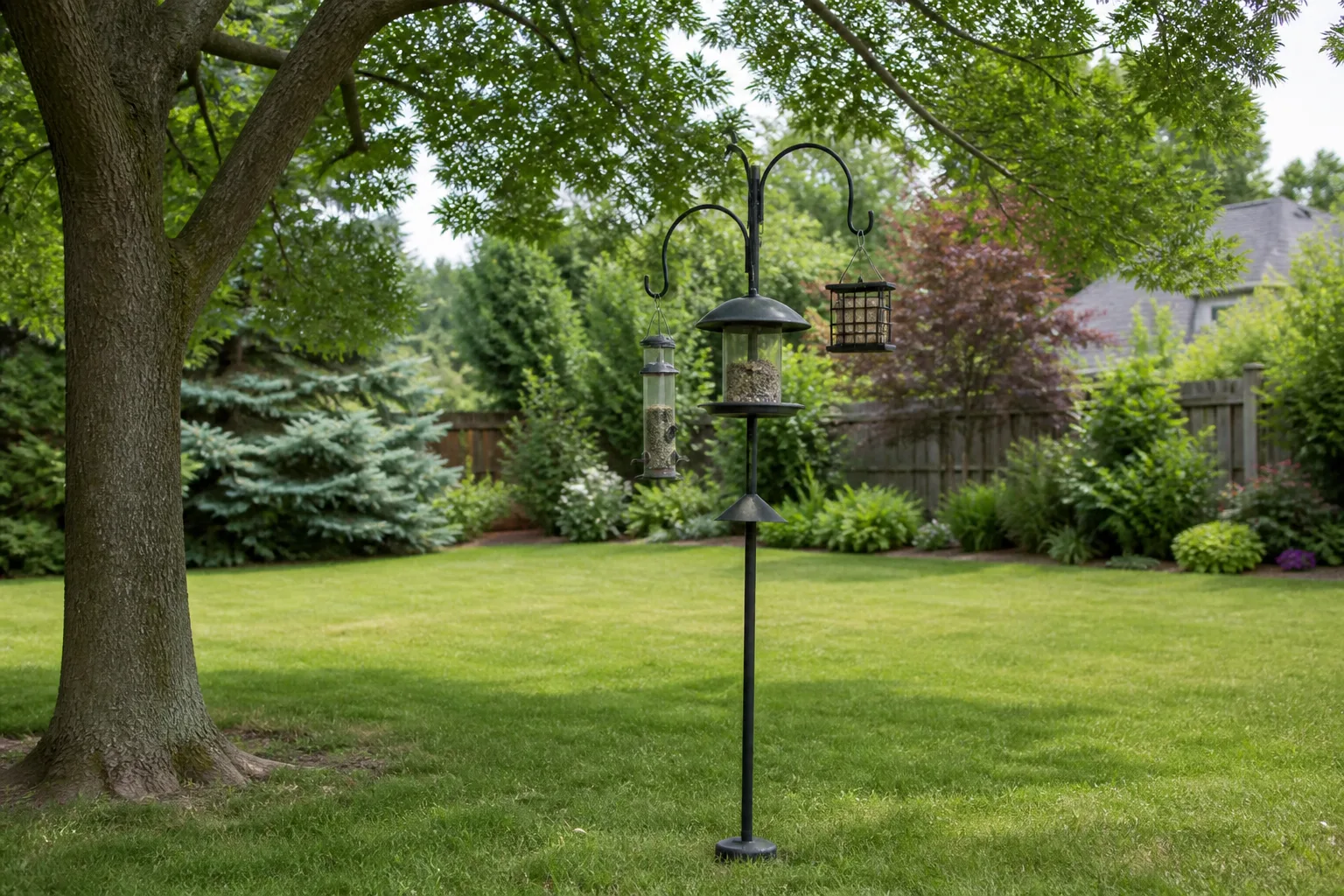
Bird feeders deserve a systems view. Birds themselves are not a reason to remove every feeder, but spilled seed can attract mice and other small mammals, which may then use nearby shrubs, stone walls, or woodpiles as cover. Keep feeders away from patios and children’s play areas, use a catch tray or low-spill seed, clean the ground regularly, and move the station away from dense edge habitat.
Store firewood neatly and away from the house, clean up fallen fruit, and do not leave bowls of pet food outside. These steps help reduce host traffic and make the edge easier to inspect. The visual improvement also matters: a clean border reveals leaf pockets and animal runways that are easy to miss behind clutter.
Decide whether targeted pesticide treatment is justified
Consider a pesticide only after you have identified a meaningful exposure zone and addressed the habitat around it. A focused treatment may make sense when ticks are repeatedly found in the same shady perimeter, when wildlife pressure cannot be reduced enough, or when a household has a documented exposure concern and other measures are not sufficient. It is less defensible to spray an entire sunny lawn simply because a tick was found on a pet.
Perimeter-treatment guidance from the University of Rhode Island’s TickEncounter program focuses on the first few yards of wooded edges, shady perennial beds, ground cover, stone walls, and woodland paths rather than open, sunny turf. It describes liquid or granular products containing active ingredients such as bifenthrin or permethrin, but the correct product, application method, timing, and legality depend on the label, local rules, the tick species, and the region. Seasonal timing suggested for the Northeast and Upper Midwest should not be copied to another climate without local advice.
The evidence is promising but not a reason to overpromise. A 2025 systematic review found high average suppression of questing nymphs in a limited multi-study synthesis of chemical controls, while emphasizing substantial variation among studies and the need to weigh environmental, social, cost, resistance, and feasibility concerns. In plain language, a treatment can reduce ticks in a defined area without making the property permanently safe.
Use a treatment result as a reason to keep monitoring, not as permission to stop checking. If a focused application is being considered, photograph the problem area, note where and when ticks were found, and ask what species and application zone the recommendation addresses. A good plan should explain how people and pets will stay out during treatment, what happens near pollinator habitat or water, whether follow-up sampling is needed, and what nonchemical steps will keep the problem from returning. If the proposal is simply “spray everything,” ask for a more specific risk map.

Follow the label and protect water, pollinators, pets, and people
Use only a product registered and labeled for tick control in the specific site you intend to treat. The label controls the application rate, protective equipment, re-entry interval, weather conditions, storage, and disposal. Never mix household chemicals, increase a rate because ticks seem persistent, or use a product on a pet unless it is specifically labeled for that animal and applied exactly as directed.
Keep children and pets out until the label says re-entry is allowed. Do not treat flowering plants or spray when drift could reach pollinators. Keep products away from ponds, streams, drains, wells, and fish habitat; URI TickEncounter specifically cautions about pyrethroid treatments near water containing fish. If you are unsure, ask a licensed professional or your local extension office before buying a product.
Use tick tubes only as a targeted host strategy
Tick tubes are small devices that offer treated nesting material to mice and other small hosts. The idea is to put acaricide-treated cotton into the host’s nesting cycle so ticks feeding on that host may be exposed. This is a targeted strategy for a particular host pathway, not a substitute for clearing brush, protecting people, or managing pet exposure.
Use only a commercially prepared product that is legal for your location and follow its placement, handling, and disposal directions. Do not stuff household cotton with pesticide, leave loose treated material where children or pets can reach it, or assume tubes will address ticks carried by deer, birds, dogs, or people. URI TickEncounter’s tick-tube guidance is useful for understanding the concept, but the product label and local advice should control the decision.
Treat diatomaceous earth, essential oils, chickens, and plants realistically
Diatomaceous earth can kill arthropods by abrasion and drying when the product is registered for the pest and remains dry and undisturbed. That does not make a blanket dusting of a yard a dependable or low-risk tick plan. The NPIC diatomaceous-earth fact sheet explains that “food grade” is not the same as a pesticide label and warns that dust can irritate the eyes, skin, and lungs.
If a labeled product is appropriate for a narrow, dry contact area, use it exactly as directed and avoid breathing the dust. Rain, irrigation, traffic, and leaf movement can reduce its usefulness. Never dust children, pets, bedding, or an animal directly unless a veterinarian and the product label specifically allow it.
Essential-oil sprays and “tick-repelling” recipes are similarly easy to oversell. Penn State Extension notes that commercial essential-oil products have not shown reliable long-term effectiveness for this purpose, and some formulations may harm pollinators or soil organisms. Do not improvise a yard spray from concentrated oils; “natural” does not mean harmless.
Beneficial nematodes have shown promise in laboratory work, but the available evidence is not strong enough to treat them as a dependable residential yard solution. Chickens may eat ticks opportunistically, yet the University of Rhode Island’s TickEncounter note on chickens points out that little science supports backyard chickens as meaningful tick control and notes that chickens can host some ticks. Finally, plants marketed as tick-repelling can be attractive additions to a garden, but no plant creates a reliable perimeter against ticks.
Protect people and pets after yard work
Personal protection is the part of tick control you can use immediately, even before a landscape project is finished. Wear light-colored clothing so crawling ticks are easier to see, use closed shoes, and tuck pants into socks when working at a brushy edge. Apply an EPA-registered repellent recommended by CDC according to its label; for clothing and gear, CDC describes 0.5% permethrin-treated items as an option, not a product to apply directly to skin.
After coming indoors, check clothing, gear, and the entire body, including the scalp, waist, groin, behind the knees, and around the ears. Showering within two hours can help wash off unattached ticks and is a useful prompt for a full check. If dry clothing may contain ticks, CDC recommends putting it in a dryer on high heat for 10 minutes; damp clothing needs additional drying time.
Check dogs and cats carefully, especially around the ears, collar, toes, and between the legs. Use only a tick preventive selected with your veterinarian, because species, age, weight, health, and other medications affect what is safe. Yard work is not a reason to apply human repellent to a pet or to use a landscape pesticide on an animal.
If you find an attached tick, remove it promptly with fine-tipped tweezers. Grasp it close to the skin and pull upward with steady, even pressure; then clean the bite area and your hands. Do not burn it, smother it with petroleum jelly, or apply essential oils or chemicals. Keep a note of the date and location, and contact a clinician if you later develop symptoms or have questions about a possible tick-borne infection.
Conclusion
To reduce ticks in your yard, begin with the edge you actually use: clear leaf litter and brush, maintain visible routes, create a manageable three-foot transition strip, and move seating and play areas into the open. Then reduce wildlife attractants, use tick tubes only when a targeted host strategy fits, and reserve pesticide treatment for a defined problem area where the label and local guidance support it.
The finish line is not a tick-free yard. It is a yard where high-contact zones are less inviting, inspection is easier, treatment decisions are more precise, and every person and pet gets a tick check after time outside.