Cinnamon for Plants: 9 Uses—and the Limits
Is cinnamon good for plants? See what plain powder may help, what it cannot cure, how to avoid phytotoxicity, and when to use a real treatment.
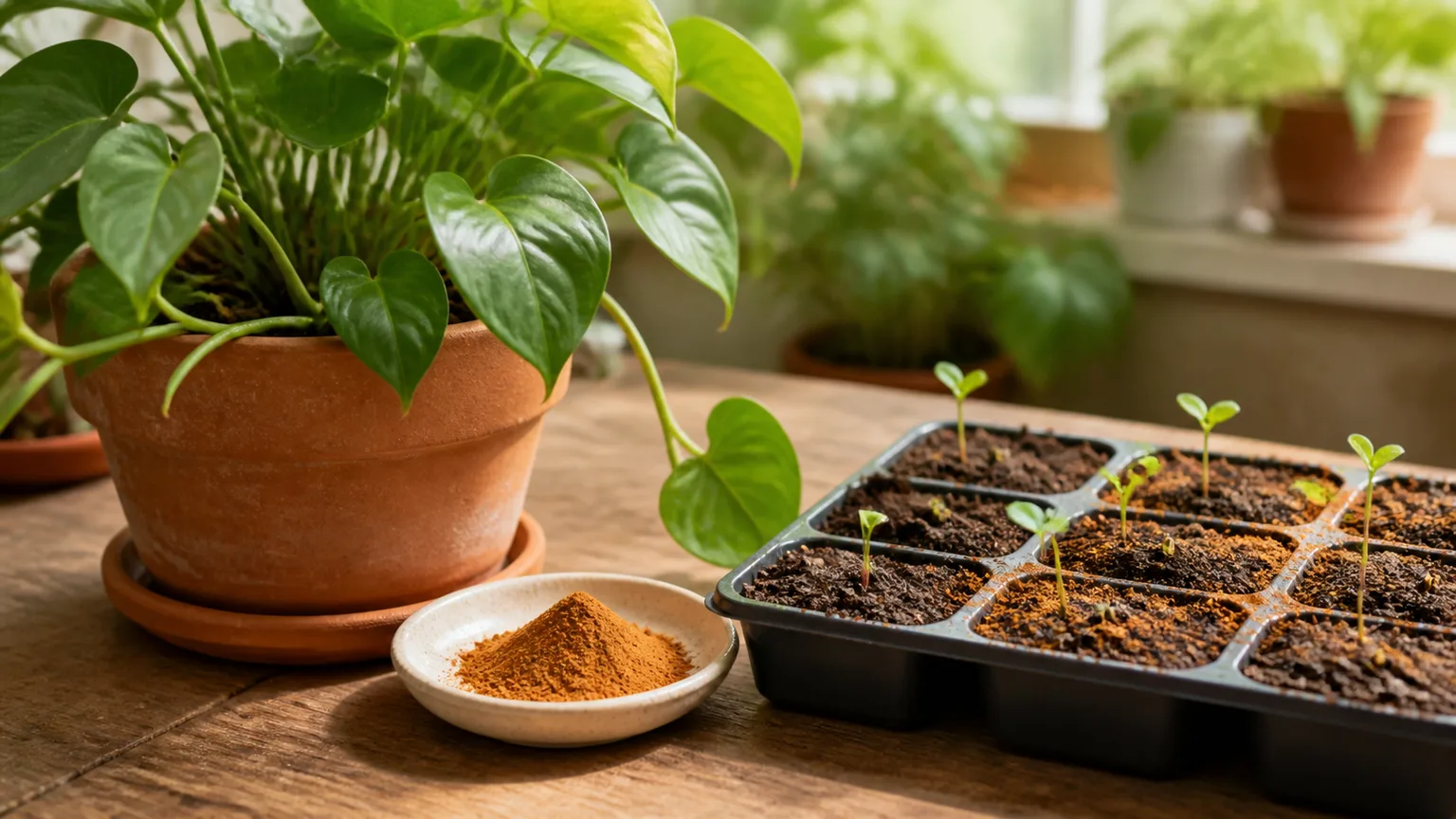
Plain ground cinnamon is useful in a garden only when you keep the claim small. It may suppress some fungal growth on a dry surface or make an ant trail less attractive for a while, but it does not feed a plant, replace a rooting hormone, cure every disease, or reliably eliminate a pest population.
That distinction matters because “natural” does not mean harmless or proven. Cinnamon contains biologically active compounds, and research on extracts or essential oils is not the same as testing a spoonful of kitchen powder in a pot. Use it as a limited, low-cost experiment after you identify the actual problem—not as a substitute for drainage, sanitation, good light, or a labelled treatment.
First, decide whether cinnamon is the right tool
Use cinnamon only when the problem is minor, surface-level, and easy to monitor. A thin patch of harmless mold on the top of an otherwise healthy pot, a fresh cutting that needs a dry wound, or a short-lived ant trail are reasonable places to test it. A collapsing seedling, soft stem, spreading leaf spots, root rot, or a heavy pest infestation needs diagnosis and a stronger plan.
Before reaching for the spice, ask three questions:
- Is the problem caused by excess moisture or poor airflow? If yes, fix those conditions first.
- Is the cinnamon touching a wound or the soil surface, rather than wet foliage? Keep powder away from leaves whenever possible.
- Can I test one small area and stop if the plant reacts? If not, do not use an unlabelled home remedy on the whole plant.
What cinnamon can and cannot do
Cinnamon is not a fertilizer. It supplies no dependable feeding program, and adding it to potting mix does not provide the nitrogen, phosphorus, potassium, or micronutrients that support sustained growth. If a plant is pale or growing slowly, check light, root health, watering, temperature, and nutrition before blaming or crediting a spice.
It also is not a dependable rooting hormone. Roots form through plant hormones, stored energy, moisture, oxygen, temperature, and the biology of the species. Cinnamon might reduce some surface fungal growth around a fresh cutting, but a clean cut in a suitable medium is doing the real propagation work.
The most defensible growth benefit is indirect: if a small amount of cinnamon helps keep a vulnerable surface drier or slows a minor fungal film, the plant may face less stress. That is a narrow possibility, not evidence that cinnamon makes healthy plants grow faster.
Why cinnamon sometimes works
The useful chemistry is concentrated in cinnamon’s volatile and phenolic compounds, especially cinnamaldehyde. A review in Molecules describes cinnamon research across crop protection and storage, including antibacterial and antifungal activity, pest repellency, and phytotoxic effects. The same review makes an important point for gardeners: “cinnamon” can mean a living plant, ground bark, an extract, or a concentrated compound, and those forms should not be treated as interchangeable. Read the review in Europe PMC.
There is promising laboratory evidence, but it is not a home-garden rate. A 2024 study found that an aqueous cinnamon-bark extract inhibited Fusarium sporotrichioides on laboratory growth medium at 3% and 5% concentrations. That tells us cinnamon compounds can affect a fungus under controlled conditions; it does not prove that dusting pantry powder on a houseplant will cure Fusarium, root rot, rust, or powdery mildew. See the study abstract in Europe PMC.
Powder, extract, and essential oil are not interchangeable
For a home experiment, use plain, dry, ground cinnamon only. Do not substitute cinnamon essential oil, a concentrated extract, cinnamon fragrance, or a sweetened baking blend. Concentrated materials deliver far more active compound to a small area and can burn plant tissue, especially in sunlight or on a stressed plant.
The general risk is phytotoxicity: a chemical contact can cause spotting, scorched edges, discoloration, stunting, or death. Gardening Know How explains that stressed plants are more sensitive and that chemical injury can follow an incorrect rate, heat, or a bad mixture; its practical treatment is to rinse affected foliage, reduce stress, and avoid repeating the exposure. Review its phytotoxicity guidance.
9 practical ways to use cinnamon around plants
The nine uses below are not nine guaranteed treatments. They are nine common situations where gardeners reach for cinnamon, ranked by how reasonable the experiment is and paired with the step that matters more than the spice.
1. Use a light dusting as a seed-starting experiment
Damping off is a fast-moving seedling disease, not simply “a little mold.” The RHS identifies several soil-borne fungi and fungus-like organisms, including Pythium, Phytophthora, Rhizoctonia, and Fusarium, and connects outbreaks with crowded seedlings, poor airflow, and excessive moisture. The Pacific Northwest Pest Management Handbooks likewise emphasize wet soil, high humidity, cloudy conditions, clean containers, and avoiding reused contaminated media. Read the RHS damping-off guidance and the Pacific Northwest seedling disease notes.
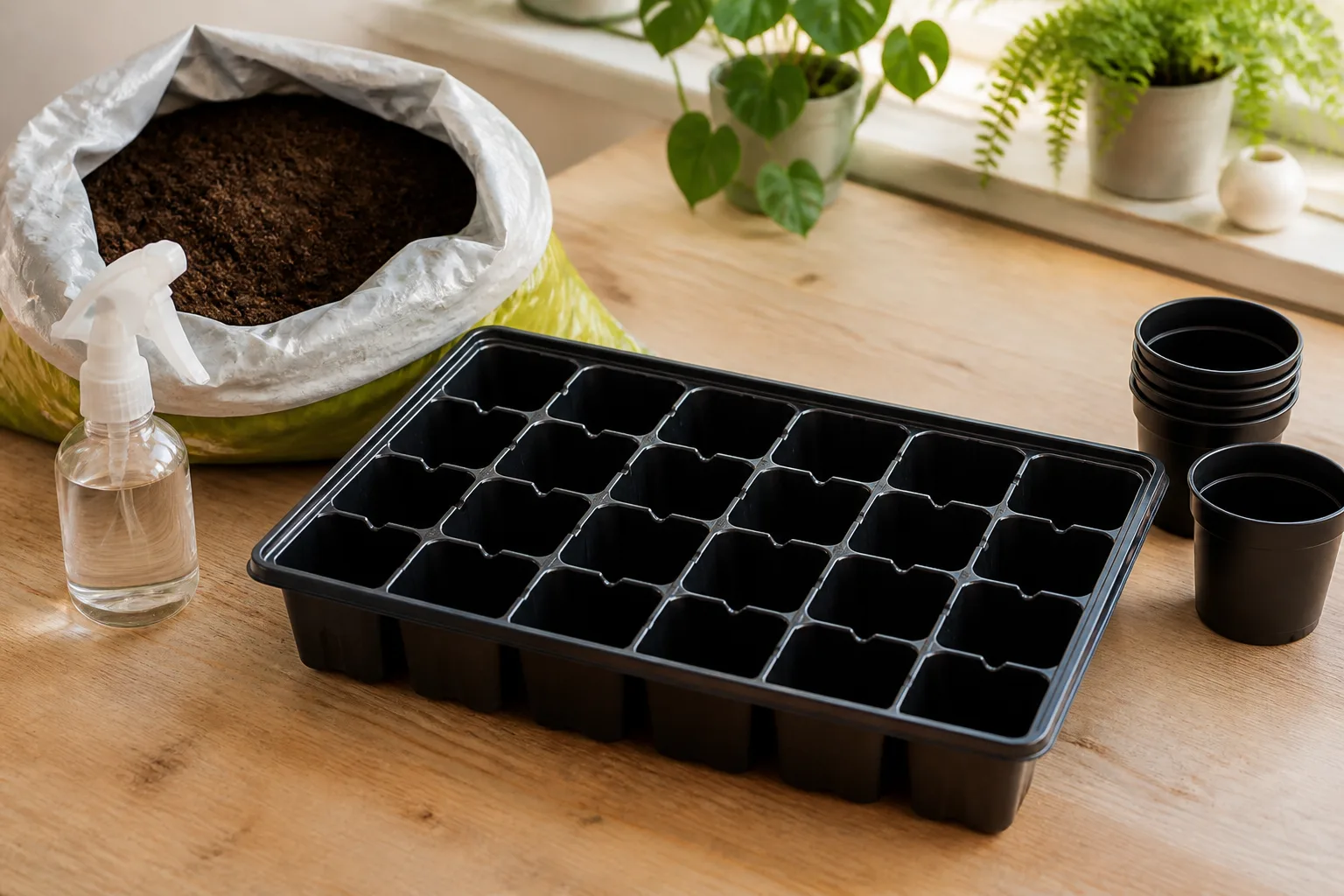
If you still want to try cinnamon, use a barely visible dusting on the surface of a small tray after sowing. Do not make a thick brown blanket, bury seeds in it, or add it to every watering. Keep the mix evenly moist rather than saturated, provide gentle airflow and adequate light, and remove a collapsed seedling promptly so the problem is not spread through the tray.
Think of cinnamon as an optional surface trial. Clean cells, fresh seed-starting mix, good drainage, and restraint with water are the actual damping-off controls. Once seedlings are collapsing at the soil line, sprinkling more powder is not a rescue plan.
2. Try it on a cutting wound, not as a rooting hormone
The popular cutting method is simple: make a clean cut, let the wound dry briefly, touch or dust only the cut end with a small amount of powder, and place the cutting in an airy rooting medium. The purpose is to keep a fresh wound from staying wet and contaminated; it is not to trigger roots.
The RHS’s cutting guidance supports the broader propagation logic: use healthy material, make clean cuts near the appropriate node, keep the medium moist but not waterlogged, and provide warmth and ventilation while roots form. It does not require cinnamon, and the exact timing varies by plant. See the RHS softwood-cutting method.
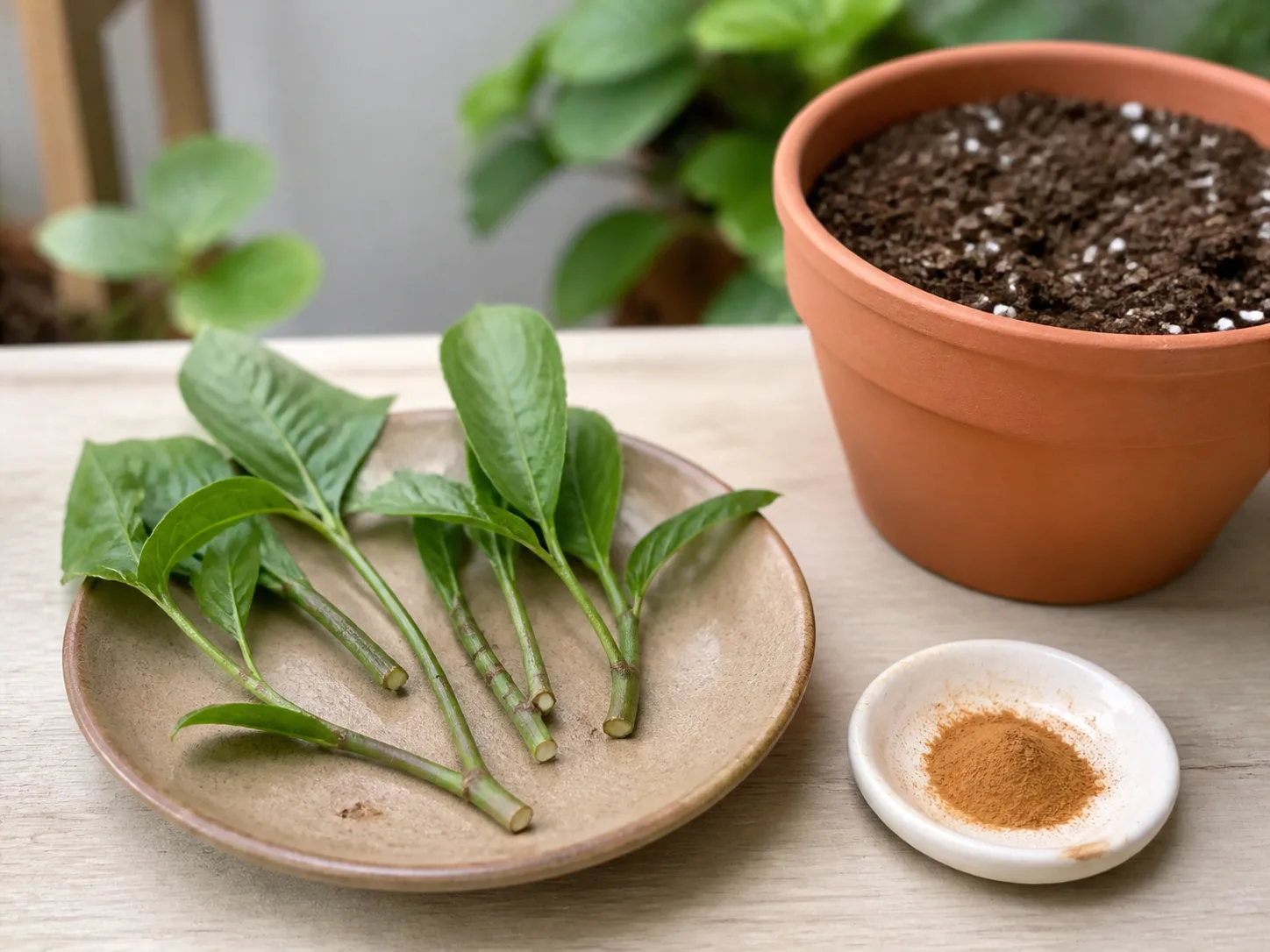
For a houseplant cutting, plain cinnamon is most reasonable when the cut surface is small and dry. Skip it if the plant is sensitive, the tissue is already soft, or you are tempted to coat the whole stem. If a cutting repeatedly rots, improve the medium, pot size, airflow, and watering rather than applying more cinnamon.
3. Reduce a thin patch of mold on potting mix
A white or tan film on the top of potting mix is often a sign that the surface is staying damp and rich in decomposing material. It may be unsightly without attacking the plant, but it tells you to examine watering, airflow, light, and the container’s drainage.
Scrape away the affected surface, allow the top layer to dry appropriately for the plant, and increase air movement. A light cinnamon dusting may help keep the newly exposed surface less hospitable for a short time, but it will not correct a pot that drains poorly or a watering schedule that keeps the root zone wet.
Do not mix cinnamon into a large volume of soil as a routine amendment. A thick layer can cake when wet, interfere with water movement, and create a false sense that the underlying moisture problem is solved. If the plant smells sour, the roots are brown and soft, or the mold returns quickly, inspect the roots and consider repotting into fresh, airy mix.
4. Treat fungus gnats as a moisture problem first
Fungus gnats are small flies whose larvae live in damp organic media. Cinnamon may reduce some of the fungi the larvae feed on, but it does not reliably kill eggs and larvae or stop adults from arriving from another pot.
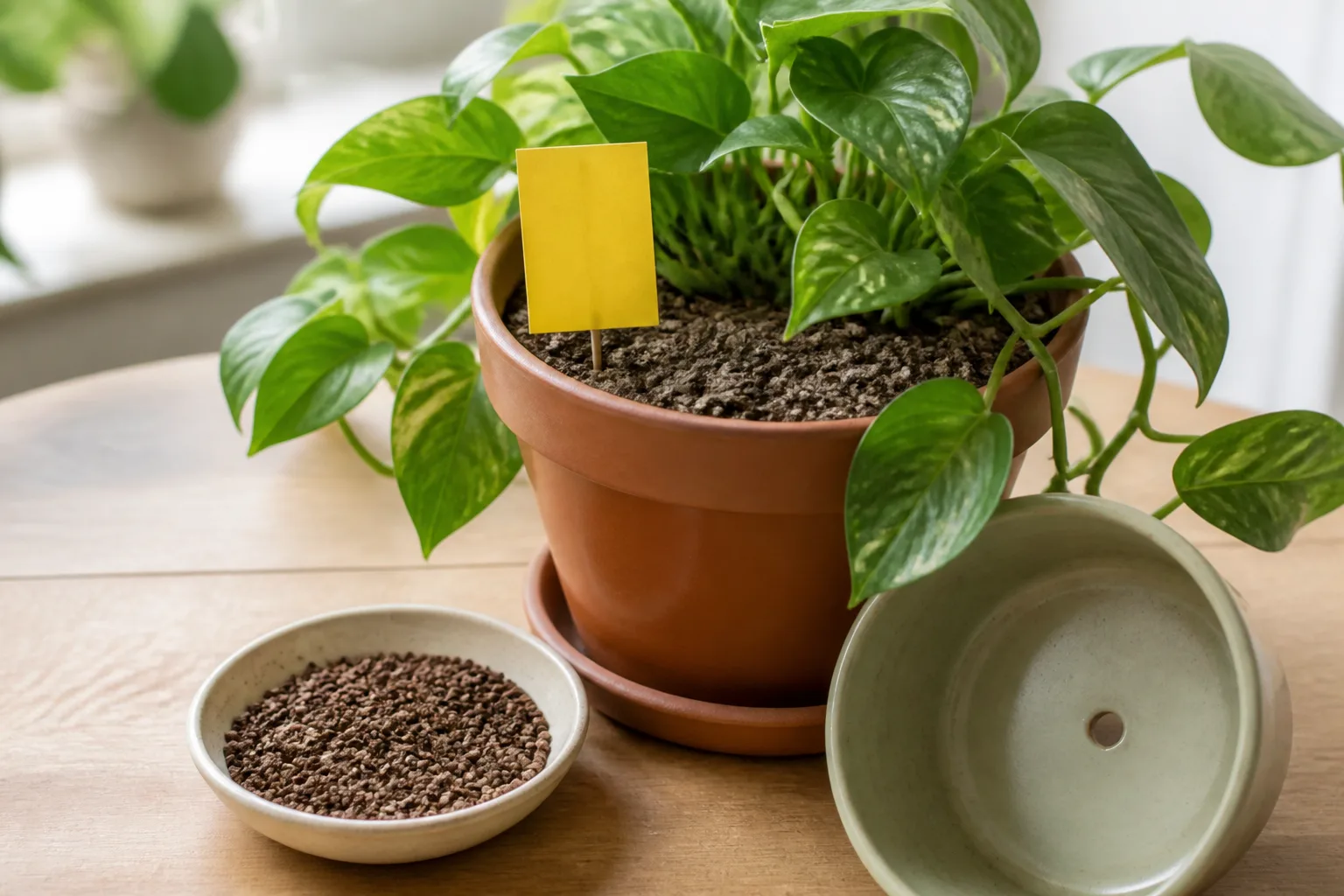
Start by letting the appropriate amount of the pot surface dry between waterings, removing fallen leaves, and checking nearby plants. Use yellow sticky cards to confirm that the adult flies are declining. For persistent infestations, use a control labeled for fungus-gnat larvae, such as a biological product containing Bacillus thuringiensis subsp. israelensis where available and appropriate, and follow its label.
That layered approach is more realistic than a cinnamon-only promise. In a practical trial published by Learning with Experts, a cinnamon-and-chamomile approach reduced fungus gnat numbers but did not eliminate the remaining population over several weeks. Read the fungus-gnat trial and its limitations.
5. Use the scent as a temporary ant deterrent
Ground cinnamon can make a surface less attractive to ants because its strong scent is unpleasant to many crawling insects. Treat that as a temporary scent barrier, not a colony treatment. Rain, watering, wind, and time quickly reduce the effect.
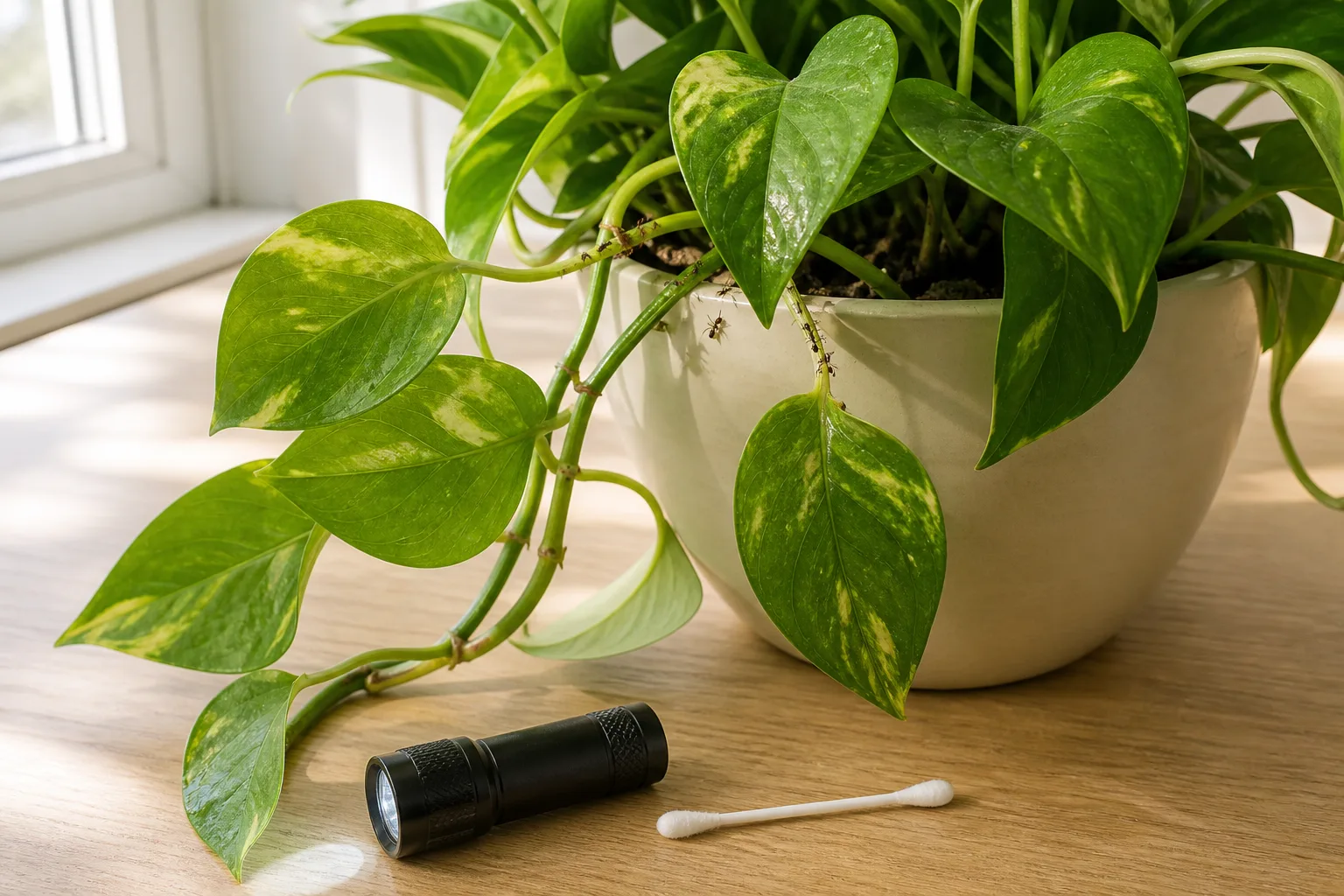
If ants are repeatedly visiting an indoor plant, inspect the leaves and stems for aphids, scale, or mealybugs. Ants may be harvesting honeydew from those insects, so removing the visible ant trail without addressing the sap-feeding pest leaves the attraction in place. Wash or wipe the plant as appropriate, isolate it if needed, and choose a treatment that matches the pest.
Outside, find the entry point or food source instead of drawing a cinnamon line around every plant. Keep powder away from wet flowers and avoid scattering it where it could be blown into eyes or inhaled by people or pets.
6. Do not use cinnamon as a mushroom cure
Cinnamon may slow fungal growth on a small, dry surface, but lawn or pot mushrooms are fruiting bodies connected to a larger fungal network in organic material. Sprinkling spice on top rarely changes the moisture, shade, mulch, or decaying material that allowed them to appear.
If mushrooms appear in a container, improve drainage and let the surface dry at a plant-appropriate pace. If they appear in a lawn or mulch bed, remove the visible fruiting bodies if children or pets might eat them, but do not assume cinnamon makes unidentified mushrooms safe. The deeper fix is managing irrigation, compacted soil, shade, and excess organic matter.
Never eat an unknown mushroom and never use cinnamon as a substitute for professional identification or poison-control advice after an ingestion. The spice is not a mushroom identification tool.
7. Do not expect it to cure established fungal disease
The word “antifungal” can make cinnamon sound like a treatment for every spot, blight, rust, mildew, or rot. That leap is too large. A leaf disease has a host, pathogen, environment, and timing; powder on the soil may not touch the infected tissue, and a foliar spray made from cinnamon water has no universal concentration or label-supported crop rate.
For spotted or mildewed leaves, first determine whether the issue is fungal, bacterial, pest-related, or environmental. Remove badly affected tissue with clean tools, increase spacing and airflow, keep leaves dry when the plant allows it, and avoid moving infected material between plants. If a product is needed, choose one labeled for the plant and disease in your location and follow the label exactly.
Do not spray cinnamon essential oil on leaves. Even ordinary plant-safe products can cause injury when concentrated, mixed incorrectly, or applied in heat; unlabelled cinnamon oil is an especially poor substitute for diagnosis.
8. Keep accidental plant wounds clean and dry
When a stem snaps or a pruning cut tears, the first priority is a clean, smooth wound. Remove ragged tissue with sterilized pruners, keep the plant in a suitable growing environment, and prevent water from sitting on the wound.
A tiny amount of dry cinnamon on a small cut can be a reasonable one-time experiment if the plant tolerates it. Do not pack powder into a large wound, make a wet paste, or wrap the wound in a damp paper towel. Those actions hold moisture against tissue that needs to dry and may increase rot risk.
If the cut edge turns dark, soft, translucent, or foul-smelling, cinnamon is not fixing it. Cut back to firm healthy tissue if the plant can tolerate that, then reassess light, temperature, airflow, and watering.
9. Treat outdoor crawling pests with a wider plan
Garden advice often credits cinnamon with repelling mice, rats, squirrels, rabbits, slugs, wasps, flies, and other pests. Scent may discourage an animal from a small area briefly, but these claims vary by species, weather, food pressure, and how much cinnamon reaches the animal’s sensory system.
Use cinnamon outdoors only as a short-lived, low-stakes deterrent around a small area—not as a fence, pesticide, or wildlife-control program. Protect seedlings with physical barriers, manage weeds and hiding places, remove fallen fruit, and use a pest-specific method when damage continues.
The 2021 cinnamon review describes repellency and, at higher doses, biocidal or egg-laying effects in some research contexts. That is not permission to scatter a high dose in a garden; it is a reason to respect the difference between controlled research and an unlabelled home application. Review the evidence and its different cinnamon forms.
How to apply cinnamon without hurting plants
The safest technique is deliberately boring. Use plain ground cinnamon, apply the smallest amount that covers the intended dry surface, and keep it away from wet leaves, flowers, open water, and the air you are breathing.
Follow a low-risk test sequence
- Name the problem first. Do not use cinnamon just because a plant looks generally unhappy.
- Correct the growing condition. Drainage, moisture, airflow, light, sanitation, and pest isolation usually matter more.
- Choose a small test area. One seed-cell section, one cutting, or a small patch of soil is enough.
- Use dry powder only. Avoid essential oils, concentrated extracts, fragrance blends, and homemade sprays.
- Keep the application off foliage. If powder lands on leaves, gently rinse it away when the plant allows.
- Observe for several days. Stop if you see spotting, scorched tissue, wilt, unusual leaf drop, or a worsening wound.
- Escalate when the problem persists. A recurring disease or pest needs identification and a treatment with directions, not repeated spice applications.
There is no universal “one teaspoon per pot” rate that is safe for every plant, container, climate, or cinnamon product. A thin dusting is safer than a layer you can see clearly, and a one-time test is safer than a weekly routine.
What to use instead when the stakes are higher
For seedlings, prioritize clean cells, fresh seed-starting mix, adequate light, airflow, and careful watering. Both RHS and the Pacific Northwest Pest Management Handbooks emphasize sanitation and moisture management because damping-off pathogens are already common in soil and can spread rapidly under wet, crowded conditions.
For cuttings, use healthy material, clean tools, an airy medium, correct orientation, and a warm but ventilated location. If a plant is difficult to root, use a commercial rooting hormone only when the product is appropriate for that plant and follow its label; cinnamon is not an equivalent substitute.
For pests, identify the pest and interrupt its life cycle. Fungus gnats need moisture management and larval control; ants may point to aphids or scale; chewing pests usually require barriers, hand removal, or a crop-appropriate control. For disease, remove infected material, reduce the conditions that favor it, and use an extension diagnosis or labelled product when necessary.
For a plant that is simply growing slowly, return to the basics: sufficient light, a functioning root system, a container with drainage, watering that matches the plant, a suitable temperature, and nutrition when the plant is actively growing. Cinnamon cannot compensate for any of those.
Conclusion
Cinnamon for plants is best treated as a modest household experiment, not a miracle growth hack. A small amount of plain powder may be worth trying on a dry cutting wound, a minor soil-surface film, or a seed tray after you have handled moisture and sanitation; its scent may briefly discourage ants or other crawlers.
Do not use it as fertilizer, a guaranteed rooting hormone, a cure for established disease, or a replacement for fungus-gnat control. If the plant is collapsing, rotting, spotted, or heavily infested, spend your effort on diagnosis and the condition that caused the problem. That is what protects growth in the long run.



