Calathea Orbifolia Care: Light, Water & Humidity
Grow Calathea orbifolia indoors with the right light, moisture, water quality, humidity, and drainage—plus clear fixes for brown tips and yellow leaves.
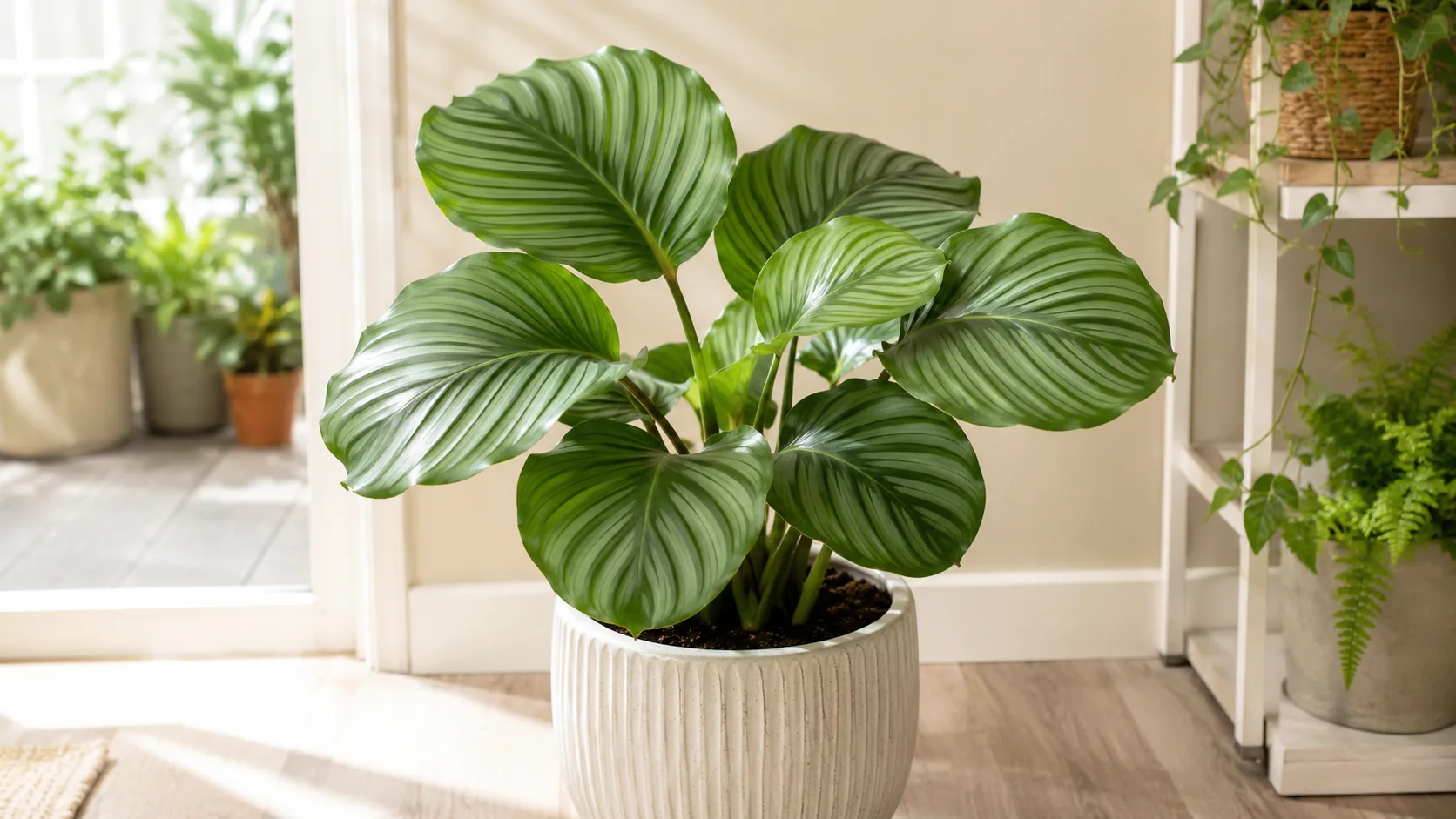
Calathea orbifolia is a foliage plant with unusually broad, round leaves marked by silver-green stripes. Its accepted botanical name is Goeppertia orbifolia, but nurseries and houseplant growers still commonly call it Calathea orbifolia. North Carolina State Extension describes it as a clumping evergreen from tropical rainforest habitat, with a mature indoor-style form that can reach about 2 to 3 feet tall and 1 to 2 feet wide. (NC State Extension)
The plant is not difficult because it needs a mysterious trick. It is difficult because several ordinary variables have to stay stable at the same time: filtered light, warm temperatures, evenly moist but oxygenated roots, and humid air. Set those conditions up as a system and care becomes predictable; change light, watering, and pot size all at once and the leaves become hard to read.
What makes Calathea orbifolia different
The large leaves are the reason to grow this plant, not its flowers. Each leaf can be broad and nearly circular, with silver-green striping over a dark green background, and the foliage may shift position between day and night as part of the prayer-plant family’s normal movement. RHS lists the plant as an evergreen, clump-forming houseplant with a mature height and spread of roughly 0.5 to 1 metre. (Royal Horticultural Society)
That broad foliage also explains the plant’s weak points. Large, thin leaves lose moisture quickly in dry moving air, while fine roots can suffocate in a pot that stays wet. Calathea orbifolia prefers a stable environment, so aim for repeatable conditions rather than a dramatic rescue routine.
Use this quick reference before changing anything:
| Care factor | Reliable indoor target | What tells you to adjust |
|---|---|---|
| Light | Bright, filtered or indirect light | Faded pattern means too dim; bleached or scorched patches mean too much sun |
| Water | Evenly moist mix with a short, breathable dry-down | Wet, sour mix points to root trouble; crisp soil and curl point to thirst |
| Soil | Fine, moisture-retentive but well-drained mix | Water pooling or staying wet for many days means the mix or pot is wrong |
| Humidity | Measure at leaf height; aim for about 50–60% or higher if tips crisp | Brown margins despite good moisture suggest dry air, salts, heat, or pests |
| Temperature | Warm and steady, around 65–75°F (18–24°C) | Drafts, vents, and cold glass can trigger curl and leaf drop |
| Feeding | Diluted balanced fertilizer during active growth | Brown margins or white crust after feeding suggest excess salts |
Light and placement
Use brightness without direct sun
Place Calathea orbifolia near an east-facing window, or several feet back from a brighter south- or west-facing window behind a sheer curtain. The goal is a well-lit room where you can read comfortably without the leaves receiving hot, unfiltered midday rays. NC State Extension recommends bright, indirect light or partial shade; RHS lists partial shade and sheltered indoor positions. (NC State Extension)
Direct sun can bleach the silver pattern and leave crisp tan patches that do not recover. Very dim light is safer than harsh sun in the short term, but it slows growth, weakens the pattern, and makes the mix stay wet longer. If the plant is leaning, rotate it a quarter turn every few weeks rather than moving it repeatedly to a new window.
The best placement is usually bright room light with the plant out of the window’s direct beam. Gardeningetc makes the same practical point for calatheas generally: a bright, humid room is useful, but the plant should sit away from the window, radiators, and drafts. (Gardeningetc)
Control temperature and drafts
Keep the plant warm and steady. NC State Extension gives 65–75°F (18–24°C) as a consistent temperature range and warns against cold drafts and room fluctuations. A location beside a frequently opened exterior door, directly under an air-conditioning vent, or pressed against cold winter glass can be damaging even when the thermostat reading looks comfortable.
If your home is cooler in winter, do not compensate with heavier watering. Growth slows, evaporation slows, and wet roots become more likely to rot. Move the plant into a warmer bright room, then wait for the potting mix to dry slightly farther between waterings.
Soil, pot, and drainage
Calathea orbifolia needs a mix that holds a little water around fine roots while still releasing excess water quickly. A good starting point is a quality indoor potting mix or peat-free houseplant compost amended with perlite and a small amount of fine compost or coco coir. The exact recipe matters less than the finished texture: it should feel springy and moist after watering, never dense, muddy, or slow to drain.
Choose a pot with an open drainage hole and a diameter only modestly larger than the root ball. An oversized container is not a kindness; it stores a larger mass of wet mix around a small root system and can turn an ordinary watering into a week of low-oxygen soil. Set the growing pot inside a decorative cachepot if you like, but lift it out to water and empty the outer pot afterward.
The University of Florida IFAS gives the same broad principle for calatheas: use porous, organic-rich media but avoid constantly wet soil because root rots are damaging. (UF/IFAS) Do not put a layer of gravel inside the bottom of the pot as a substitute for drainage; the hole, appropriate mix, and a pot that is not too large do the useful work.
Watering routine
Test the mix before watering
Water when the upper inch or two of mix feels dry while the lower root zone remains lightly moist. A finger is useful in a small pot; a wooden skewer or moisture meter is better for a deep container. Do not water because a certain number of days has passed. Light, pot size, season, root mass, room temperature, and airflow all change the drying rate.
When it is time, water slowly over the surface until some drains from the hole. This rehydrates the full root ball and helps carry accumulated salts downward. Let the pot drain completely, then empty the saucer or cachepot. Calathea orbifolia likes moisture but not a permanent water reservoir around its roots.
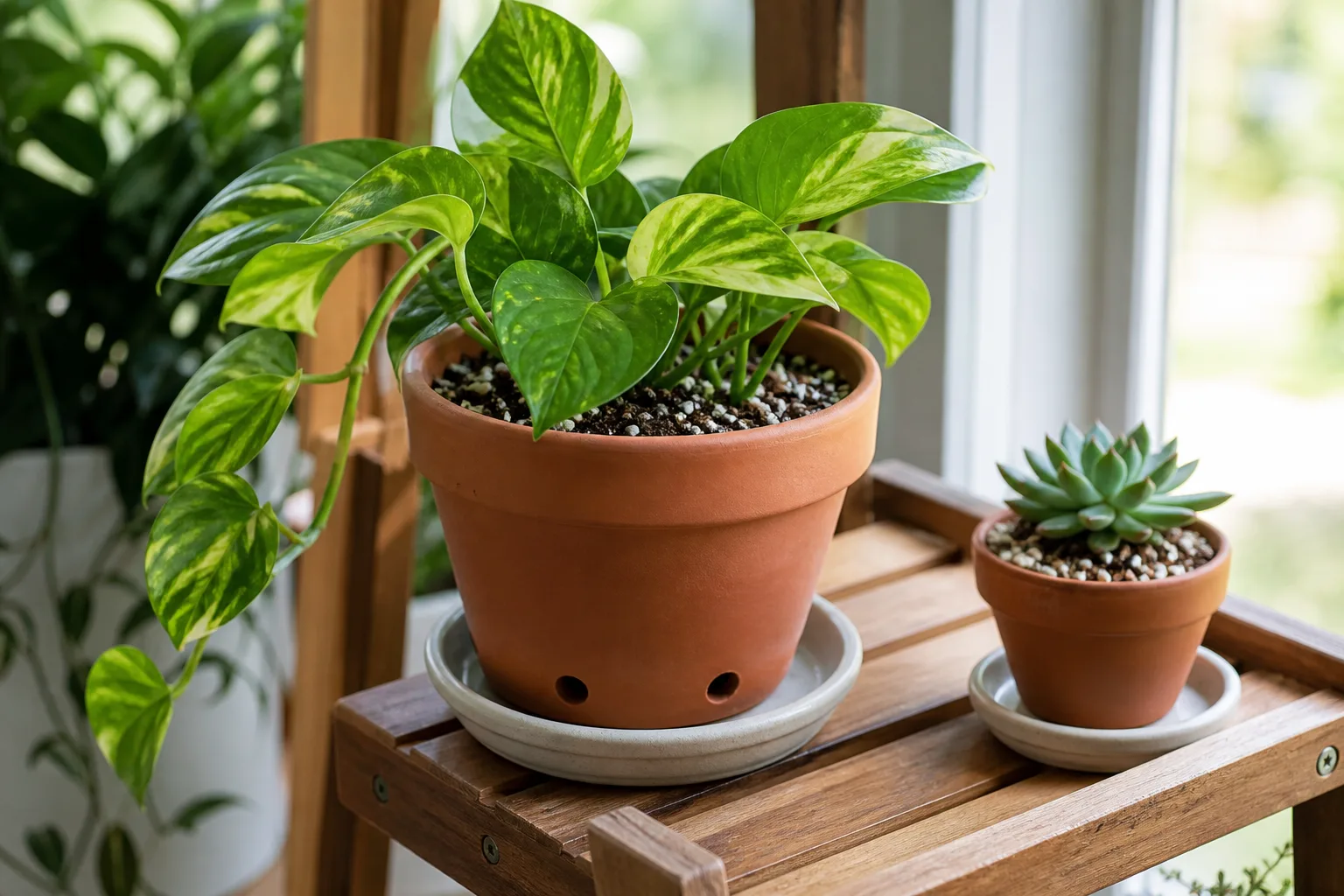
If water runs straight down the sides and out without moistening the centre, the mix may have pulled away from the pot or become hydrophobic. Water in two slow passes a few minutes apart, or repot if the mix has collapsed. If the pot stays heavy and wet for a week or more, do not add more water to fix drooping; inspect the roots and drainage instead.
Solve water-quality problems separately
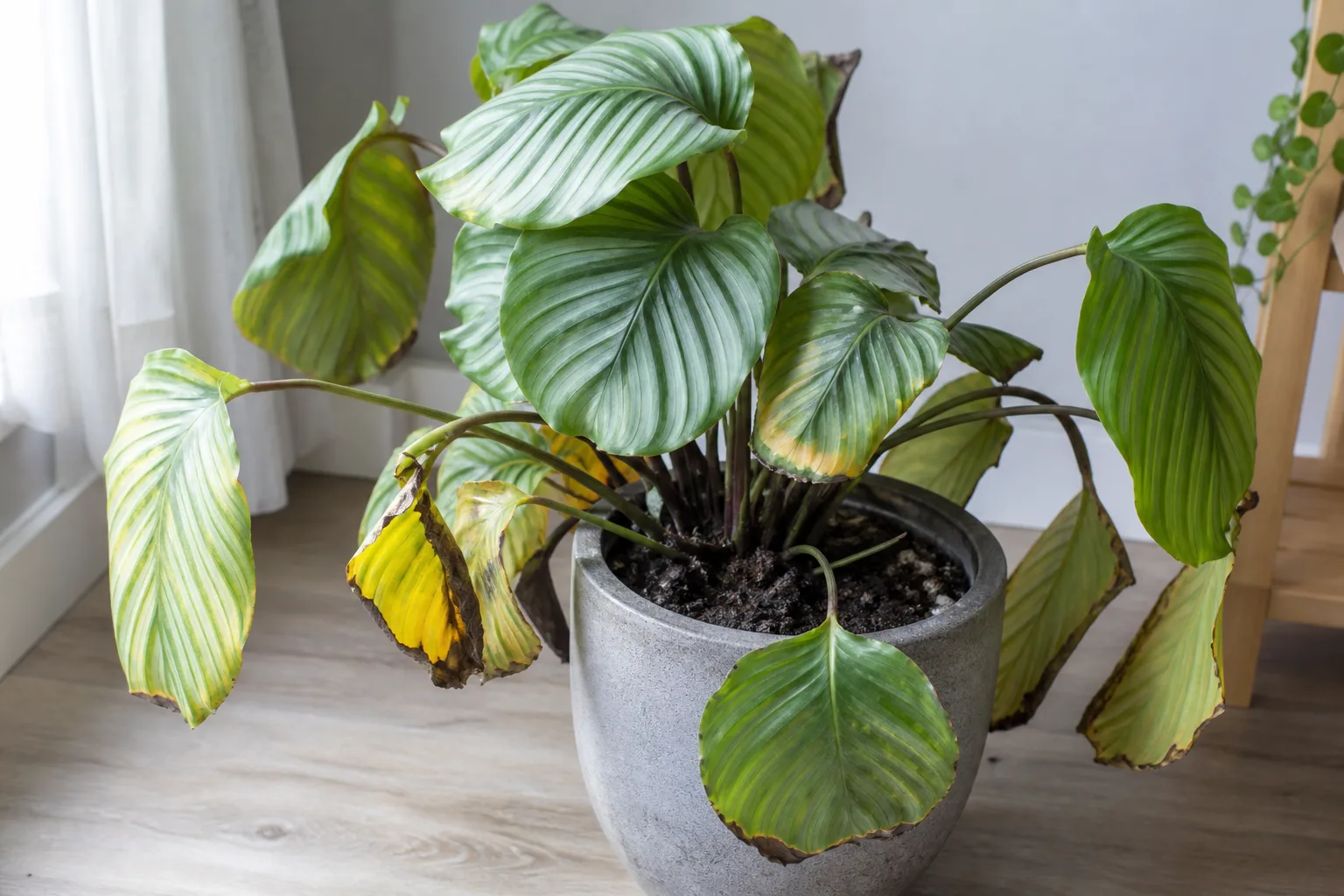
Brown tips are not proof that the plant is thirsty. NC State Extension specifically notes that fluoride in tap water can brown leaf tips and recommends distilled or rain water for this species. (NC State Extension) If your tap water is hard or leaves develop a pale mineral film, use rainwater, distilled water, or a reliable filter for several weeks and watch the new leaves. Existing brown tissue will not turn green again.
Room-temperature water is kinder than a cold shock. Letting water sit overnight may reduce some chlorine in some water systems, but it is not a reliable way to remove fluoride or dissolved minerals. If the problem is recurring tip burn, change the water source rather than relying on a jug left on the counter.
Do not keep switching between tiny sips and full soaks. A small splash wets the surface while leaving the centre dry; repeated heavy watering before the mix has dried enough leaves the roots airless. The reliable sequence is: test, soak thoroughly, drain completely, then test again before the next watering.
Humidity that helps without creating stale air
North Carolina State Extension recommends high humidity of at least 60% for Calathea orbifolia, while RHS simply specifies high humidity and a sheltered growing position. Start by placing a small hygrometer at leaf height rather than guessing from how the room feels. If readings stay below about 50% and the leaf edges crisp, move toward a measured 55–60% range.
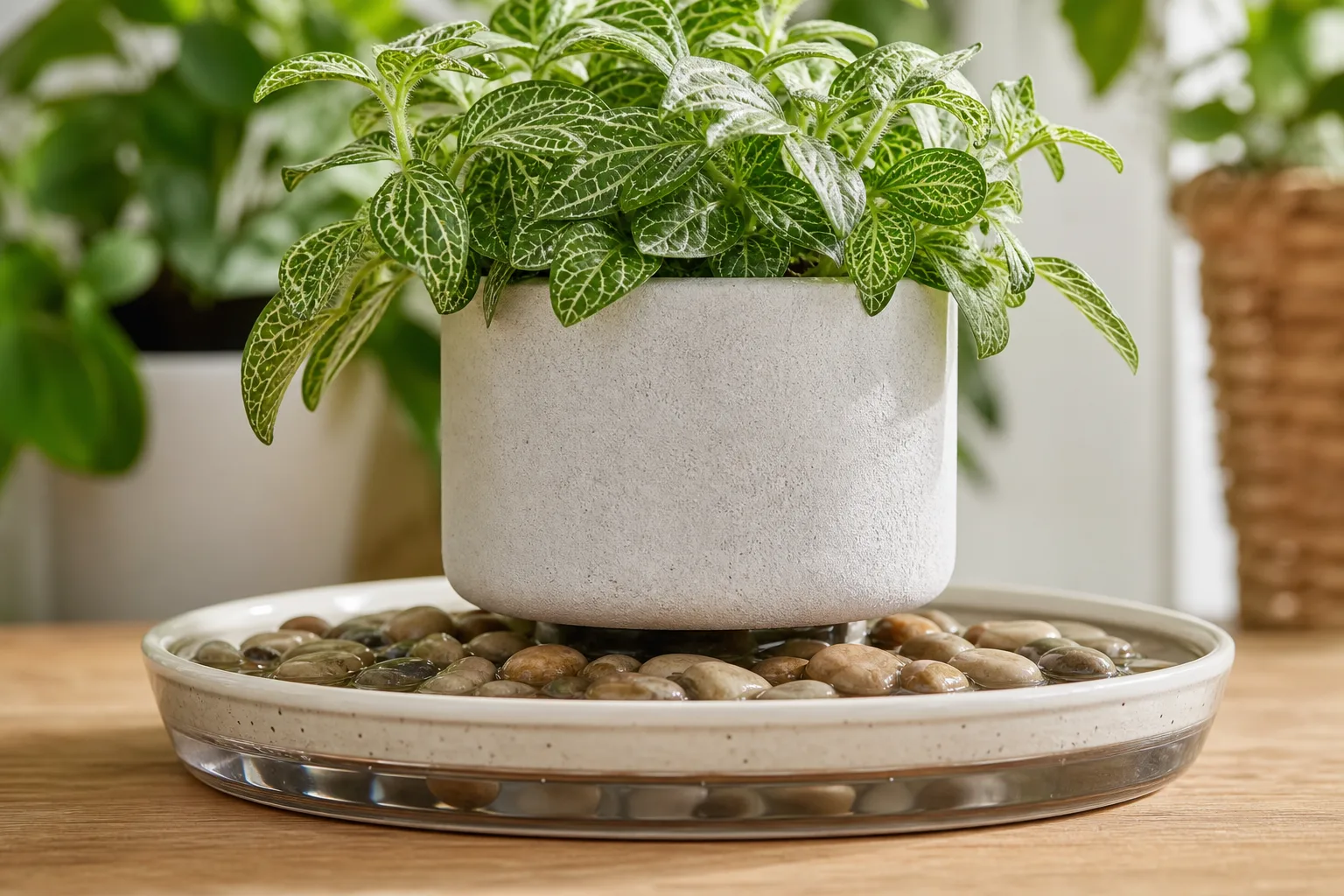
A humidifier is the most consistent way to raise humidity around several plants, but it should not blow a wet plume directly at the leaves. A wide pebble tray can add a small local boost when the pot sits on the stones and the water stays below their tops. The pot must never sit in standing water, and the tray is not a replacement for a drainage hole.
Grouping plants, using a naturally humid bathroom with bright filtered light, and keeping the plant away from heating or cooling vents can also help. Misting may wet the leaf surface briefly, but it does not reliably hold room humidity; frequent wet foliage in stagnant air can also encourage spotting. Measure the result and keep gentle airflow around the plant.
Feeding for steady foliage growth
Feed during active growth, usually spring through early fall in a warm indoor home, with a balanced liquid houseplant fertilizer diluted below the label’s full outdoor strength. RHS recommends a balanced liquid fertilizer monthly for Calathea orbifolia; Gardeningetc describes half-strength feeding every two weeks for calatheas generally. (RHS) (Gardeningetc)
Choose the gentler schedule if light is modest, the plant was recently repotted, or the mix already contains fertilizer. Never fertilize a bone-dry, heat-stressed, or waterlogged plant. Pause in winter when growth slows, and flush the pot with plain water if a white crust accumulates or leaf margins burn after feeding.
More fertilizer cannot compensate for low light or dry air. It can only add salt to a root zone that is already struggling, so correct placement and moisture first.
Pruning and leaf cleaning
Pruning is mostly sanitation. Remove a fully dead or badly damaged leaf by cutting its stem close to the soil with clean scissors; a brown tip alone does not require removing an otherwise healthy leaf. If you dislike the appearance, trim the brown tissue along the leaf’s natural outline, leaving a narrow margin of dry tissue rather than cutting into green tissue.
Large leaves collect dust, which can reduce the light reaching the surface. Wipe them gently with a soft, damp cloth and support the leaf from underneath. Skip leaf-shine products and avoid rubbing hard across the silver striping. NC State Extension also recommends regular gentle cleaning for dust on this species.
Propagation by division
The dependable method is division, not a single-leaf cutting. Calathea orbifolia grows as a clump from rhizomes, so propagation works when a mature plant has more than one rooted growing point. RHS recommends rhizome division in summer, and Gardeningetc describes dividing the root ball into sections with healthy roots. (RHS)
Propagate when the plant is warm and actively growing, ideally at repotting time:
- Water lightly a day before dividing so the root ball is cohesive but not saturated.
- Slide the plant from its pot and loosen only enough mix to see the rhizomes and roots.
- Separate natural clumps by hand or use a sterilized knife when roots are tightly joined. Each division needs roots and a viable crown or growing point; do not make tiny leafless fragments.
- Pot each division in a small container of fresh, airy mix at the same depth as before.
- Water enough to settle the mix, drain fully, and place the divisions in warm, bright filtered light with higher humidity.
- Keep the mix evenly moist while new roots establish, but do not seal the plant in stagnant plastic. A loose humidity cover can help temporarily if it is ventilated and checked daily.
Expect a pause after division. New growth is a better sign of success than a plant that looks instantly full, and repeated unpotting is more stressful than waiting.
Repotting without shock
Repot only when roots are circling densely, emerging from the drainage hole, or the mix has broken down and will no longer drain evenly. A plant that is merely growing slowly does not automatically need a larger pot. Choose the next pot size up, preserve as much healthy root ball as practical, and replace the old mix around it without aggressively washing every root clean.
After repotting, return the plant to its familiar light and warmth. Avoid a large fertilizer dose, direct sun, or a sudden humidity experiment while it settles. Check the mix more often at first because fresh mix and a larger container can dry differently from the old setup.
Pests and prevention
Inspect the undersides of leaves, leaf joints, and new growth every week. NC State Extension lists spider mites, aphids, mealybugs, and scale among the pests to monitor, while RHS flags glasshouse whitefly and red spider mite. Dry air and stressed foliage can make spider-mite damage more likely, but high humidity is not a pesticide and does not rule pests out.
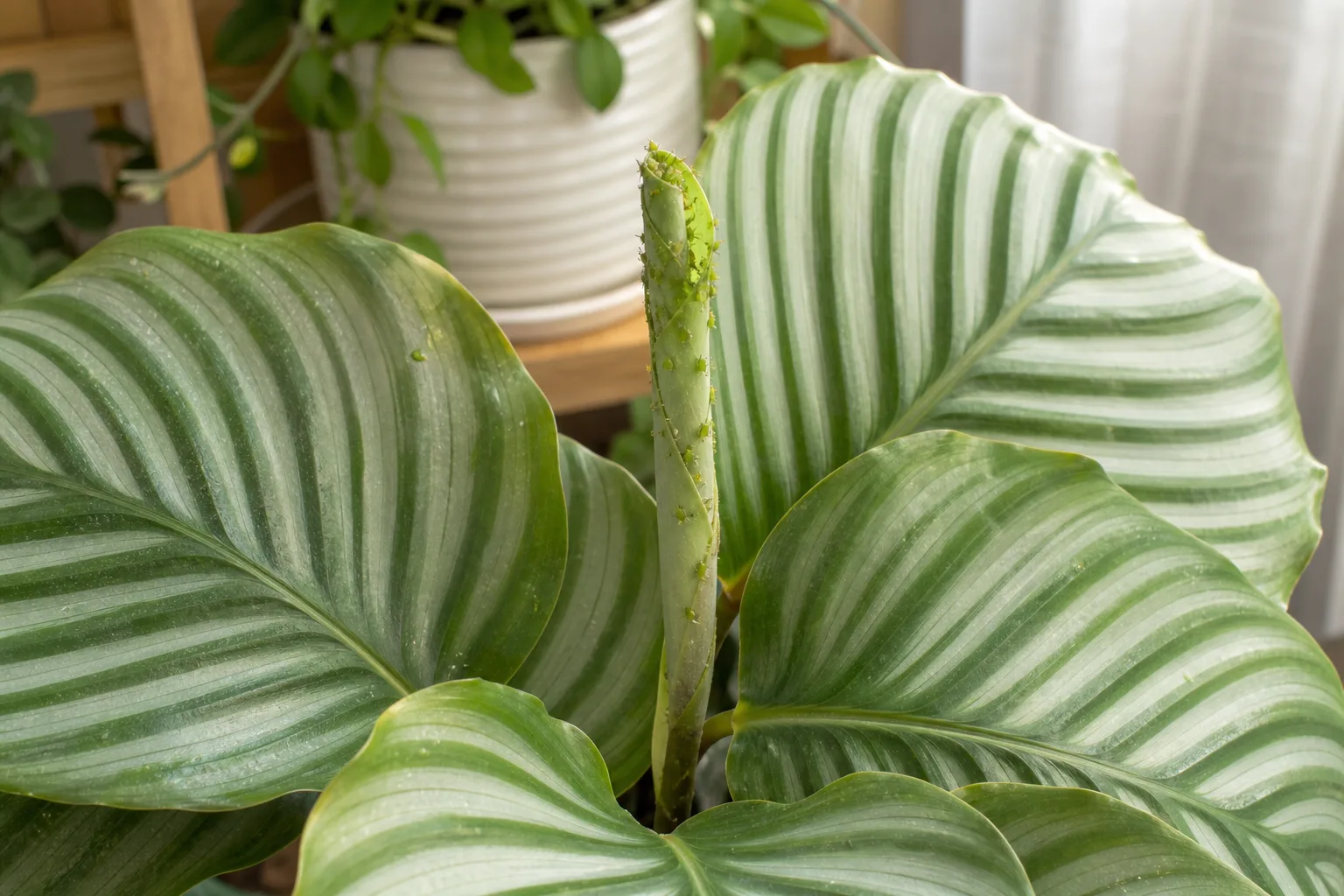
Look for fine stippling, silvery scarring, sticky residue, cottony clusters, shed skins, or fine webbing. Isolate a suspect plant, rinse or wipe accessible pests away, and repeat inspections over the next few weeks because eggs and hidden colonies can outlast one cleaning. If you use a treatment, follow the product label for the plant and indoor setting, test a small area first, and never combine products casually.
Quarantine new plants before placing them beside established calatheas. Clean leaves also make early pest detection easier, which is another reason to make gentle leaf wiping part of the weekly routine.
Brown tips and curled leaves
Brown, crispy margins usually point to a water-balance problem, but several causes can look alike. Check them in this order:
- Soil moisture: If the mix is dry well below the surface, water thoroughly and correct the dry-down routine.
- Humidity: Measure near the foliage. If the reading is consistently low, raise it gradually and improve the plant’s placement.
- Water quality: If the plant is moist and humidity is reasonable, switch to low-mineral water and watch new growth.
- Light and heat: Bleached patches on the window-facing side suggest scorch; move the plant farther from direct sun or a hot vent.
- Pests: Stippling, webbing, sticky residue, or distorted new leaves require a close inspection rather than more water.
One old leaf with a brown point is not an emergency. Focus on whether new leaves emerge cleanly and whether browning is spreading. If leaves curl inward during the day and the mix is dry, dehydration is more likely; if they curl while the mix stays wet, look at roots, temperature, and air movement instead.
Yellow leaves and root problems
One lower, older leaf can yellow naturally, but widespread yellowing, a sour smell, persistently wet mix, or black and mushy roots points to overwatering or poor drainage. In that case, stop watering, move the plant into bright filtered light, and check the root ball once the pot has drained.
Healthy roots are firm and pale to tan. Trim only tissue that is clearly mushy or collapsing with sterilized scissors, then repot into fresh airy mix in a clean pot with a drainage hole. Do not jump to a much larger container, bury the crown, or keep the recovering plant standing in a humidity tray’s water.
If the mix is dry but leaves are yellow and growth is weak, check the roots anyway. Severe drying can damage fine roots so the plant may look thirsty even after watering. Rehydrate gradually, confirm the pot drains, and wait for new growth before feeding.
Drooping, folding, and leaf drop
Leaves that lift or fold at dusk and relax during the day are displaying normal prayer-plant movement. That daily rhythm is not the same as daytime collapse. Gardeningetc notes that calathea leaves move between night and day and that persistent daytime curl can signal dehydration or sap-sucking pests. (Gardeningetc)
Persistent drooping deserves a root-zone check. Dry mix, hot direct light, a cold draft, recent division, or low humidity can all reduce leaf firmness. Wet mix with a limp plant is more concerning: wait for drainage, inspect roots, and correct the pot or mix before watering again. Sudden leaf drop after moving the plant may be environmental shock, but continued loss usually means the new location is colder, brighter, drier, or wetter than the old one.
Outdoor growing and pet safety
Treat Calathea orbifolia as an indoor plant unless you live in a frost-free tropical or subtropical climate. NC State Extension places it in USDA hardiness zones 11–12, and RHS recommends greenhouse, conservatory, or houseplant cultivation with shelter, warmth, and high humidity. Outdoors, give it bright shade or filtered light, rich moist soil with drainage, and protection from wind and sudden temperature drops.
Bring a container indoors before cool nights rather than waiting for leaf damage. Outdoor rain can help with water quality, but exposed pots dry and heat more quickly, so test the mix just as carefully. Do not move an indoor plant straight from a dim room into outdoor sun; acclimate it gradually under shade.
ASPCA lists Calathea spp. as non-toxic to dogs, cats, and horses. (ASPCA) That is a useful safety classification, not permission to let a pet eat the plant freely: any plant material can cause stomach upset, and a pet that has eaten a large amount or is showing symptoms should be discussed with a veterinarian.
Conclusion
The easiest way to grow Calathea orbifolia is to make its environment boringly consistent. Give it bright filtered light, warm air without drafts, a fine but well-drained mix, and water only after checking the root zone. Use low-mineral water when tip burn persists, measure humidity instead of guessing, and keep the pot above any pebble-tray waterline.
When a leaf problem appears, resist the urge to change everything at once. Check moisture, light, humidity, water quality, roots, and pests in that order. With that small diagnostic habit, this dramatic plant becomes much more readable—and its broad silver-striped leaves can stay the focus instead of the troubleshooting.



