Deer-Resistant Ground Covers for Sun, Shade, and Slopes
Find deer-resistant perennial ground covers for dry sun, woodland shade, slopes, and paths, plus planting, safety, invasive-plant, and fencing advice.
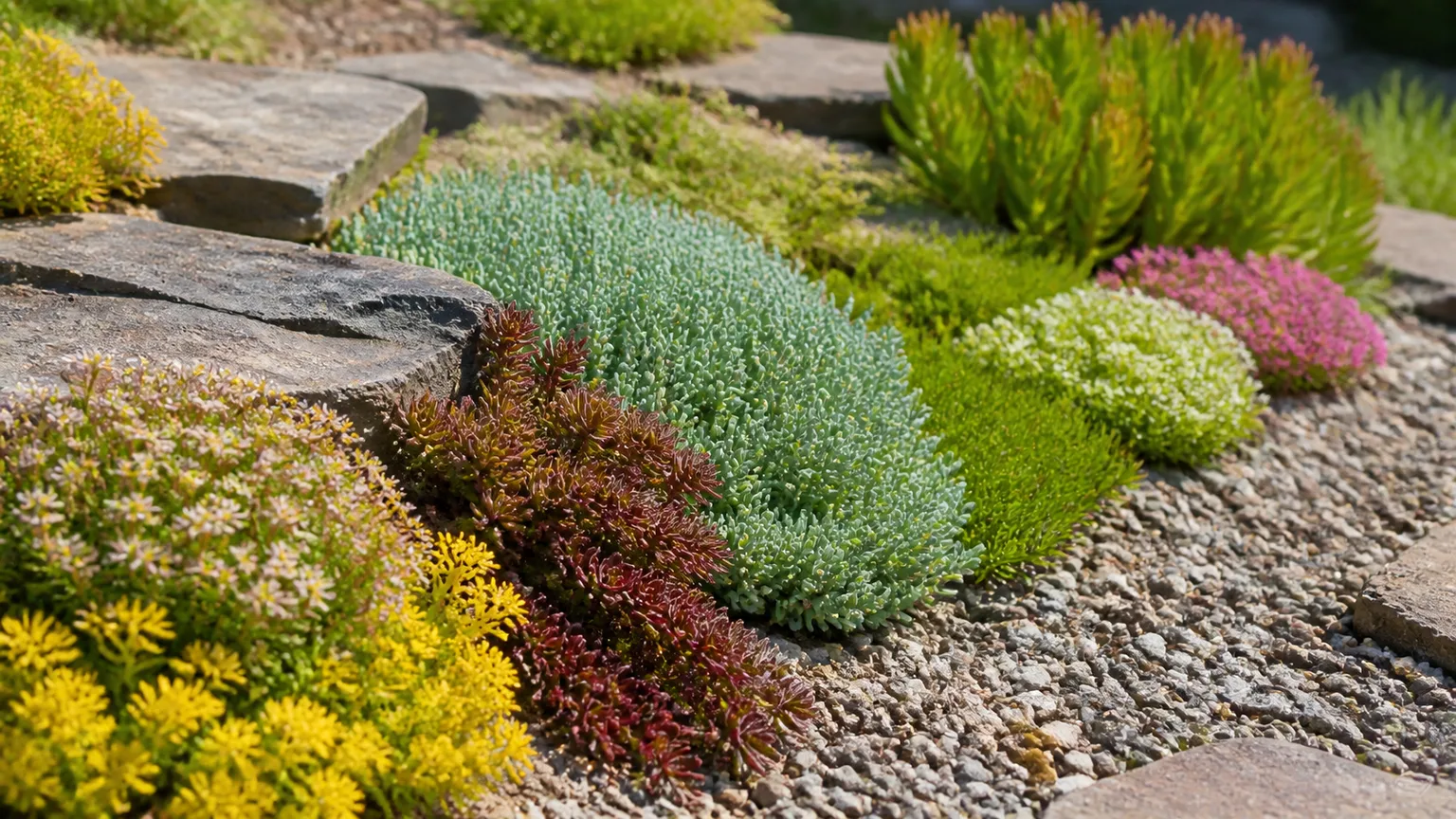
The best deer-resistant perennial ground cover is the one that matches your light, drainage, climate, and tolerance for spreading. A low mat of creeping thyme belongs in a hot, lean bed; Pennsylvania sedge belongs under trees; sweet woodruff may fill damp shade quickly but can become a management problem.
That is the useful way to read a deer-resistant plant list. No plant is a guarantee, and the first year is the most vulnerable. Use the list below to build a short list for your site, then give new plants temporary protection while they root.
Deer resistance is a browsing strategy, not a guarantee
Deer often pass over plants with strong aromatic oils, fuzzy or prickly leaves, leathery texture, bitter taste, milky sap, or natural toxins. Colorado State University Extension groups those traits among the common reasons animals avoid a plant, but it also makes the important point that no list is foolproof: a hungry animal may eat almost anything, and a newly transplanted plant is especially vulnerable. Colorado State University Extension also recommends an eight-foot fence when deer must be prevented rather than merely discouraged.
Use “deer-resistant” as a probability, not a promise. A quiet suburban yard with plenty of browse may get excellent results from aromatic herbs and coarse grasses; a small woodland lot with a large herd may see damage even on plants that usually go untouched. Winter, drought, fawning season, and fresh nursery growth can all change the result.
The practical rule is simple: if deer are sampling plants every night, stop buying increasingly “resistant” plants and add exclusion. A temporary mesh enclosure is sensible for a new bed. A properly planned fence is the dependable answer for high pressure, especially around a vegetable garden or a collection of expensive shrubs.
Choose for the site before choosing the plant
Ground covers fail more often from a site mismatch than from deer. Before you compare flower color, spend five minutes describing the bed: how many hours of direct sun it receives in summer, whether water sits after rain, how dry it becomes under tree roots, how much foot traffic it gets, and where a spreading plant is allowed to go.
Sun, drainage, and heat
Full sun does not automatically mean dry soil. A sunny low spot may stay wet, while a sunny slope beside a foundation may bake and shed water. Sedum, creeping thyme, creeping juniper, bearberry, blue fescue, and buffalo grass want the second situation: bright light and drainage. Creeping phlox, hardy geranium, and plumbago tolerate a broader range but still need a site that does not stay waterlogged.
For a hot bed, avoid crowding plants simply because the label calls them drought tolerant. Drought tolerance usually describes an established root system. Every plant in the first season needs enough water to root, and a stressed plant may be more likely to be browsed than a vigorous one.
Shade, moisture, and tree-root competition
Shade has its own subcategories. Filtered light beneath deciduous trees is different from dense evergreen shade, and dry shade beneath mature roots is different from cool, moist woodland soil. Wild ginger, epimedium, Pennsylvania sedge, and Allegheny spurge are useful starting points for shade, but they still need the soil conditions their roots can use.
Do not pile soil against tree trunks or dig aggressively through large roots to make a ground-cover bed. Use shallow planting pockets, preserve leaf litter where appropriate, and choose a plant that can coexist with the tree rather than trying to turn a root-filled site into a deep, amended flower bed.
30 picks organized by job
The 30 choices below include strict low mats, low clumps, spreading woodland plants, and a few grasslike plants that function as ground cover on slopes or beneath shrubs. “Ground cover” does not always mean a plant stays three inches tall; it means the plant can occupy and visually cover the soil with less mowing or replanting than turf. For plant-level comparisons, Garden Design and Better Homes & Gardens are useful starting references, but local extension guidance should settle invasive status and regional fit.
The height and spread of a species can change sharply by cultivar and climate. Read the nursery tag for the selection you are actually buying, and treat the suggested site as a starting point rather than a substitute for local growing information.
Sun, dry soil, and rocky ground
These are the first plants to consider for a sunny slope, gravel bed, dry retaining wall, or path edge. The shared requirement is drainage, not neglect.
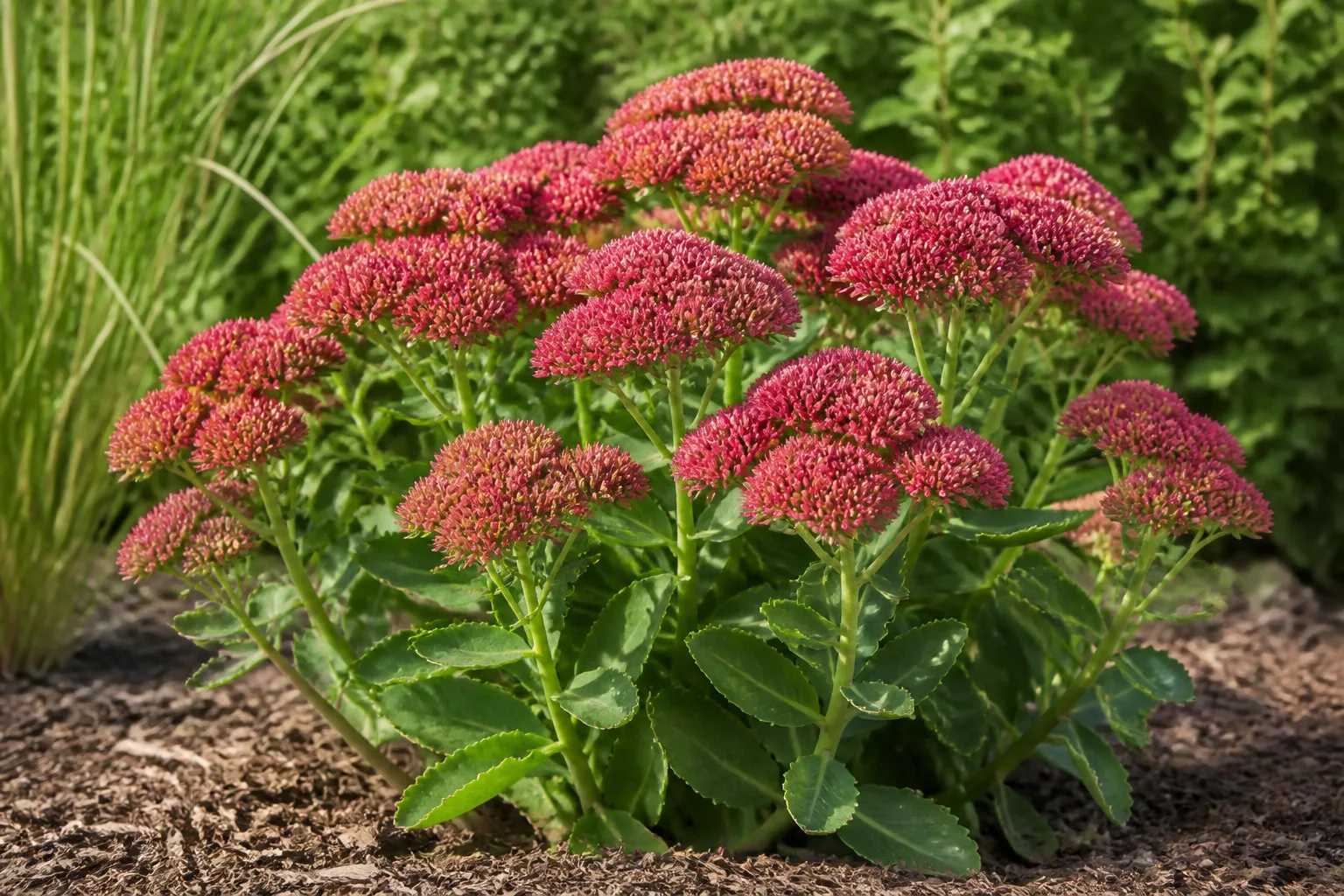
1. Creeping sedum or stonecrop (Sedum and low Hylotelephium selections). Choose mat-forming types rather than tall border sedums when you need a true carpet. Fleshy leaves hold water and are usually unappealing to deer; soggy soil is the faster way to lose them.
2. Creeping thyme (Thymus spp.). This tiny, fragrant mat works between stepping stones, along a sunny path, or in a lean rock garden. It needs sharp drainage and may thin in rich, wet soil, so do not treat it like a thirsty lawn substitute.
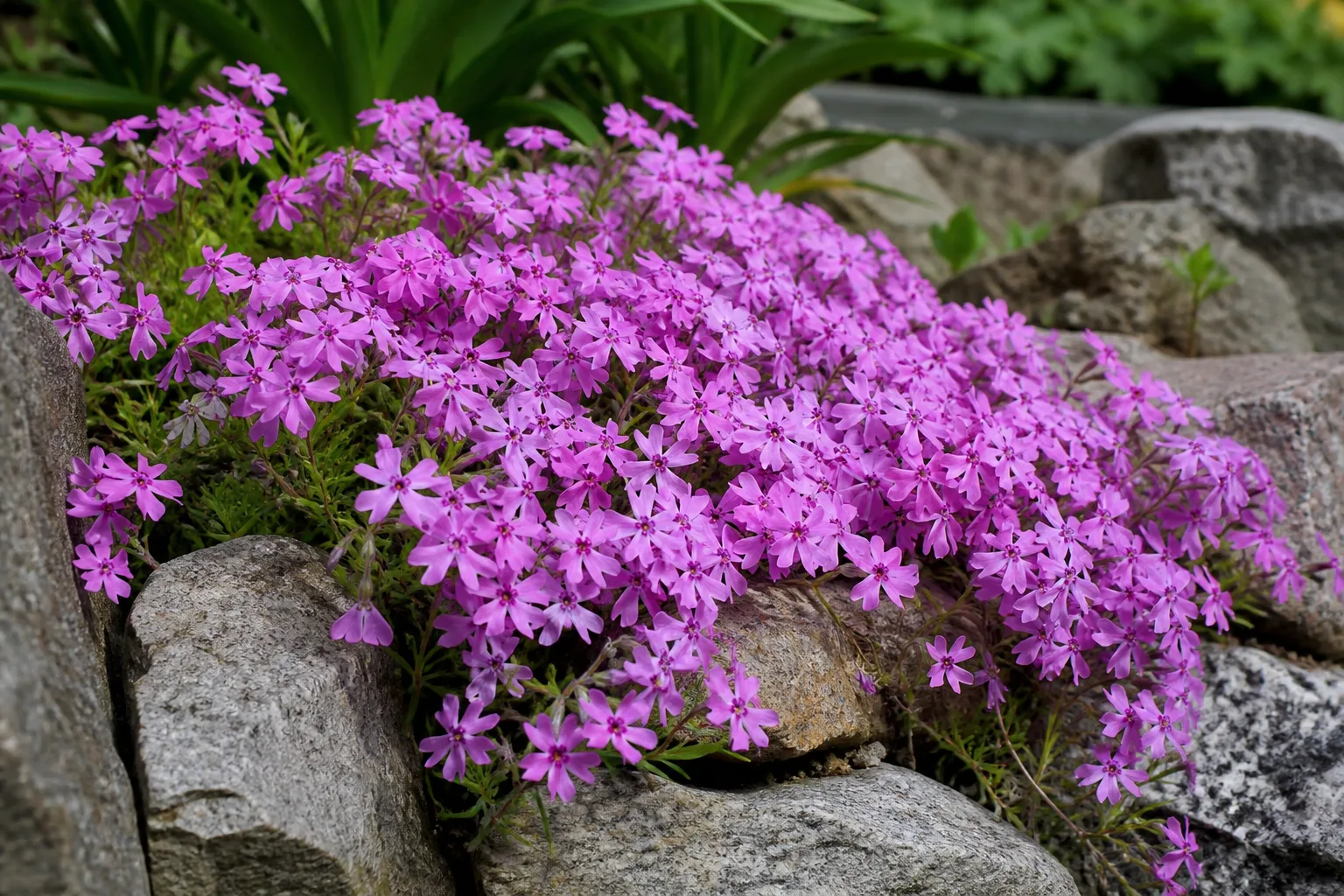
3. Creeping phlox (Phlox subulata and related low phlox). Spring flowers turn a low evergreen or semi-evergreen mat into a bright edge for rocks and walls. Give it sun, air movement, and well-drained soil; crowded, wet foliage is a poor match.
4. Creeping juniper (Juniperus horizontalis). This evergreen, woody ground cover is a strong choice for a sunny slope where a soft herbaceous mat would dry out. Its prickly, aromatic foliage discourages browsing, but it can spread far beyond the original planting pocket, so measure the mature width before planting near paths.
5. Lamb’s ear (Stachys byzantina). Silvery, woolly leaves add a texture deer generally dislike, and the plant makes a useful edging or low drift in sun to light shade. Humid, poorly drained sites can cause the fuzzy crown to rot; cut back tired foliage without keeping the center constantly wet.
6. Catmint (Nepeta spp.). Catmint forms broad mounds rather than a tight runner mat, which makes it valuable where you want a low planting that will not invade every crack. Its aromatic foliage and long bloom season suit sunny borders, but give it room and shear it after the first flush if the mound flops.
7. Lavender (Lavandula spp.). Lavender is best used as a repeating low hedge, edging, or open drift rather than a solid carpet. It earns its place through scent, drought tolerance, and pollinator value, but it dislikes wet winter soil and heavy clay; amend drainage through site design, not by burying the crown deeper.
8. Bearberry or kinnikinnick (Arctostaphylos uva-ursi). This native evergreen mat suits sunny, sandy, acidic, well-drained sites and provides small flowers and red fruit. It is a specialized choice, not a universal lawn replacement: rich, irrigated soil can be a worse fit than poor soil.
Sunny flowering mats and edging
These picks cover more ground through low clumps, colonies, or repeated drifts. They are useful when you want flowers and foliage to interrupt bare soil, but several are taller than a strict walkable carpet.
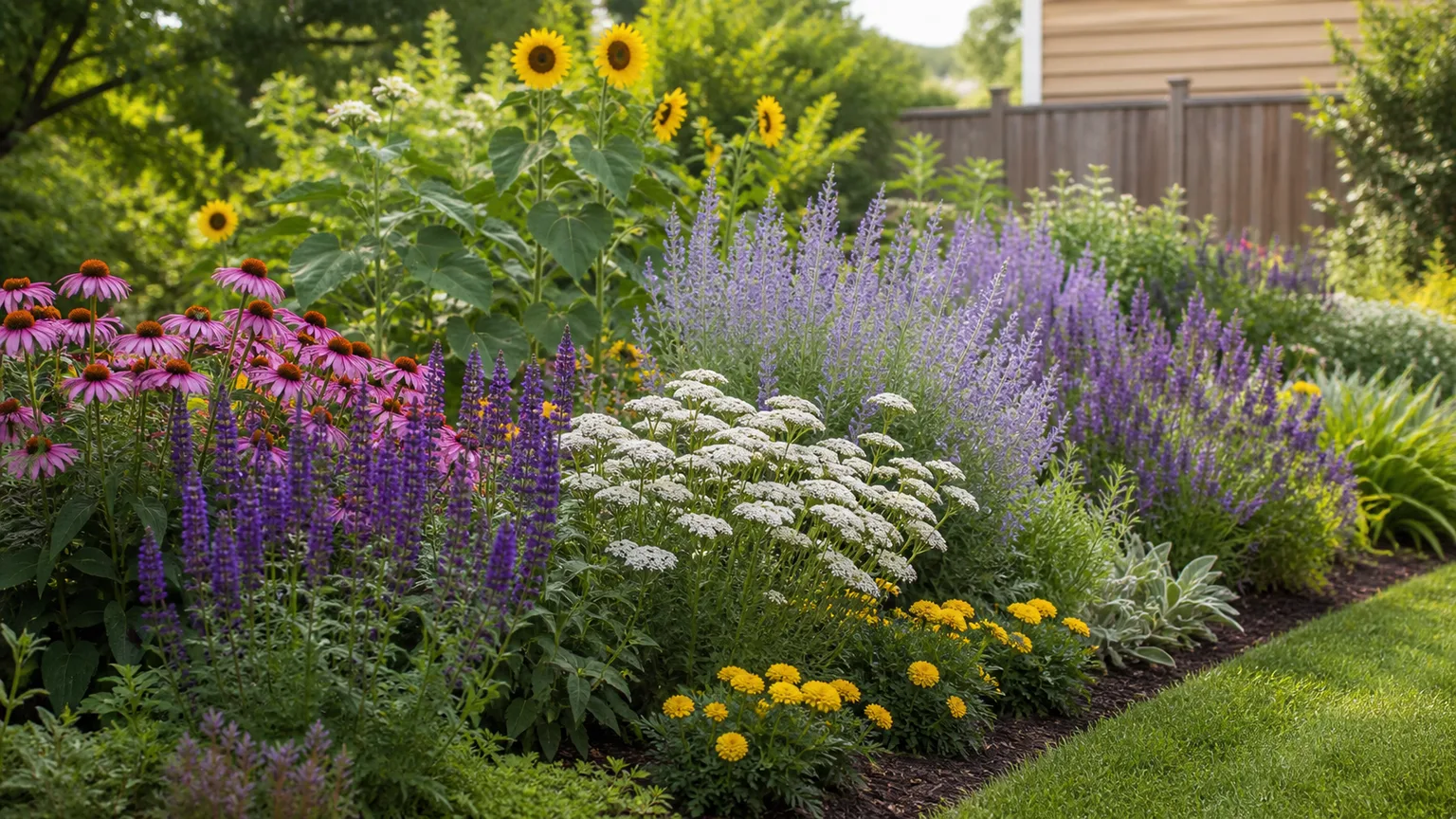
9. Hardy geranium or cranesbill (Geranium spp.). Hardy geraniums form spreading mounds or low colonies, depending on the species, with flowers that can continue from spring into summer. They tolerate sun to part shade and are a better choice than annual bedding when you want a soft, flowering mass with less replanting.
10. Snow-in-summer (Cerastium tomentosum). The silver, hairy foliage and white flowers are effective in a dry rock garden or wall edge. It can run enthusiastically in favorable conditions and is reported as invasive in parts of the Northwest, so check local status before using it as a large-scale ground cover.
11. Blue fescue (Festuca glauca). Blue fescue forms tidy, fine-textured clumps that repeat well along a border or gravel path. It is more of a living punctuation mark than a fast carpet, and wet winter soil can shorten its life.
12. Blue oat grass (Helictotrichon sempervirens). The blue mound and tall flower stems create structure in a dry sunny bed. It is not a low mat, but it covers soil effectively when planted in drifts and pairs well with creeping sedum or thyme at the front of a slope.
13. Buffalo grass (Bouteloua dactyloides). This warm-season native grass can replace turf in a sunny, low-water area where foot traffic is modest. It goes dormant with cold or drought and forms a different-looking landscape from a manicured cool-season lawn, which is a design trade-off rather than a flaw.
14. Plumbago or leadwort (Ceratostigma plumbaginoides). Plumbago spreads by rhizomes into a low colony, flowers blue in late summer, and develops strong red or bronze fall color. It prefers well-drained soil and can fill a front-of-border space, but give its underground spread an edge to meet.
15. Lyreleaf sage (Salvia lyrata). This North American native forms a low rosette and sends up spring flower stalks, making it useful in a naturalized edge or part-sun transition. It can reseed or spread where conditions suit it, so let it naturalize only where a loose colony is welcome.
Shade and woodland carpets
Shade plants are often the better answer for the bare soil under shrubs and trees, but “shade tolerant” does not mean “happy in any dark corner.” Start with the moisture pattern, then decide whether you want a native plant, an evergreen texture, or a fast-spreading carpet.
16. Wild ginger (Asarum spp.). Heart-shaped leaves create a calm, low woodland carpet, and native species provide a strong habitat-minded option. It spreads by rhizomes at a measured pace and prefers moist, humus-rich shade; do not expect it to thrive in hot reflected sun.
17. Pennsylvania sedge (Carex pensylvanica). This native, fine-textured sedge forms loose colonies under trees and is one of the best candidates for a low-mow or no-mow shade planting. It is not a sports lawn and will not tolerate repeated foot traffic, but it handles dry shade better than many flowering ground covers.
18. Allegheny spurge (Pachysandra procumbens). The native pachysandra relative makes a spreading shade cover with mottled foliage and spring flowers. It is slower and less aggressive than Japanese pachysandra, which is useful when you want a woodland carpet without immediately committing to a vigorous non-native spreader.
19. Lungwort (Pulmonaria spp.). Lungwort combines silver-spotted leaves with early flowers and works beneath shrubs or at the edge of a woodland bed. It prefers cool, moist, well-drained soil; thin it if clumps become crowded so the foliage dries after rain.
20. Epimedium or barrenwort (Epimedium spp.). Epimedium is a workhorse for dry shade, with wiry stems, heart-shaped leaves, and small spring flowers. It spreads gradually compared with aggressive runners, making it a good long-term choice when patience is more valuable than instant coverage.
21. Sweet woodruff (Galium odoratum). The starry white flowers and sweet scent make this a classic shade carpet, especially beneath deciduous trees. Moist, rich soil can make it spread quickly; plant it where edging or seasonal thinning is acceptable, not beside a natural area you cannot monitor.
22. Wintergreen or eastern teaberry (Gaultheria procumbens). This native evergreen ground cover offers glossy leaves, white flowers, and red berries in acidic, well-drained shade. It is a specialist for woodland soil rather than a universal shade fix, and it may struggle in alkaline or compacted beds.
23. Golden groundsel (Packera aurea). Golden groundsel brings yellow spring flowers and can spread into a useful colony in moist part shade. Penn State Extension lists it among native groundcovers suited to challenging landscapes and notes its deer and rabbit resistance; give it room if you want a naturalized effect.
24. Mayapple (Podophyllum peltatum). Mayapple is a native woodland colony plant for part to full shade, with umbrella-like foliage that hides the soil after spring emergence. It is a better fit for a naturalistic bed than a tidy front border, and its spreading habit means careful placement matters.
Grasslike texture, slopes, and conditional choices
The last six are especially useful when you want grasslike foliage, erosion control, or a fast cover and are willing to manage the plant’s regional limitations. Native options should get priority where they fit.
25. Common blue violet (Viola sororia). This adaptable native forms clumps and small colonies in part sun to part shade and gives early flowers to a lawn alternative or woodland edge. It is best for a relaxed, natural look; it will not behave like a crisp geometric carpet.
26. Northern sea oats or river oats (Chasmanthium latifolium). This native grass is taller than a conventional ground cover, but its clumping roots can help hold a slope and its seed heads provide winter interest. Penn State Extension specifically highlights river oats for firm root mass on slopes; give it room to self-sow.
27. Lilyturf (Liriope spp.). Liriope offers grasslike evergreen or semi-evergreen foliage for edging and part shade, and deer usually leave it alone. Species and cultivars differ in vigor, and some regional sources flag spreading forms as invasive or overly aggressive, so identify the exact plant before buying a flat of it.
28. Bugleweed or ajuga (Ajuga reptans). Ajuga makes a dense mat in part shade and moist, well-drained soil with attractive foliage and blue flower spikes. Its speed is the catch: it can escape into lawns and beds, and Better Homes & Gardens notes invasive concerns across much of the eastern United States, so use it only where local guidance allows.
29. Spotted deadnettle (Lamium maculatum). Silver leaves and spring-to-summer flowers brighten a shady border, and trailing stems cover soil quickly. That same vigor can be a liability; it has escaped cultivation in parts of the Northeast, so a native sedge, wild ginger, or epimedium is often the safer first choice.
30. Lily-of-the-valley (Convallaria majalis). This fragrant, rhizomatous plant forms a dense shade carpet and is often avoided by deer. It belongs in the conditional category because it can spread into natural areas and is toxic to dogs, cats, and horses; the Invasive Plant Atlas of the United States documents its rhizomatous spread and regional invasive status, while the ASPCA’s plant database lists its pet toxicity.
Match the shortlist to your real goal
If your goal is a dry, sunny bed, start with creeping sedum, creeping thyme, creeping juniper, bearberry, or blue fescue. The deciding factor is drainage: a “drought-tolerant” label does not rescue a plant whose crown sits in winter water.
For shade beneath trees, start with Pennsylvania sedge, wild ginger, epimedium, Allegheny spurge, or lungwort. Choose sweet woodruff, ajuga, spotted deadnettle, or lily-of-the-valley only when you are prepared to monitor spread and have checked local restrictions.
For a slope, combine a rooted ground cover with a plant that has a stronger structural root mass. Creeping juniper suits a dry rocky slope, creeping phlox works for a sunny flowering face, and northern sea oats or golden groundsel can help create a deeper-rooted native planting. On a steep or eroding bank, use temporary natural-fiber netting while plants establish rather than expecting a new mat to hold bare soil immediately.
For a path or stepping stones, choose plants that stay low and tolerate occasional contact: creeping thyme, low sedum, or selected creeping phlox. Avoid advertising a soft sedge or a delicate woodland plant as walkable just because it covers the ground.
For a native-first planting, begin with Pennsylvania sedge, wild ginger, golden groundsel, mayapple, common blue violet, northern sea oats, bearberry, or buffalo grass, then confirm that the species is native to your region rather than merely native somewhere in North America. Rutgers Cooperative Extension explains that native plants support local food webs and encourages gardeners to check adult size, sun, growing conditions, and deer resistance together. Rutgers Cooperative Extension is a useful model for making that choice.
Spreading and invasive-plant cautions
Local status matters more than a national label
Fast coverage is not the same as low maintenance. A runner or rhizome can be exactly what knits a slope together, then become the plant that crosses a path, enters a lawn, or moves toward a natural area. The right question is not “Is this plant invasive?” in the abstract; it is “Is this plant restricted, invasive, or difficult to contain where I live, and can I monitor its spread?”
Before ordering a large quantity, check your state’s invasive-plant list, your county extension office, and the exact species or cultivar name. Japanese pachysandra, ajuga, spotted deadnettle, lily-of-the-valley, and other common ground covers have regional cautions that should not be flattened into one nationwide verdict. If a local source warns against a plant, choose a native sedge, wild ginger, epimedium, or another site-matched alternative.
Avoid planting a single species across an entire slope simply because it is fast. Penn State Extension recommends a patchwork of groups rather than a monoculture, partly because one pest or disease can move through a single-species planting and remove the entire cover. A mixed design also gives you a better chance of keeping soil covered when one plant is dormant.
Pet and child safety is a separate decision
Deer avoidance is not evidence of household safety. A plant may be ignored by deer because it contains irritating, bitter, or toxic compounds, and that is a reason to check a reliable toxicity database rather than a reason to recommend it more strongly.
Lily-of-the-valley is the clearest example in this list: ASPCA identifies it as toxic to dogs, cats, and horses and names cardenolides as the toxic principles. Keep it out of areas where pets roam or children pick flowers, and seek veterinary or poison-control help promptly if ingestion is suspected. For any other plant you are considering, use the scientific name in a pet-poison database and do not rely on a common-name match.
Planting method for a durable ground-cover bed
Prepare the soil and control weeds
Start by removing perennial weeds and their roots. If you only scalp the foliage, bindweed, quackgrass, goutweed, and other persistent weeds can reappear through the new planting and make the ground cover look like the problem.
Test the soil when the bed is large, difficult, or visibly poor, then follow the lab’s recommendations instead of adding fertilizer by habit. Penn State Extension advises preparing the site carefully, allowing perennial weeds to regrow for a short period when practical, and avoiding plastic or synthetic landscape fabric on slopes because it can worsen runoff, erosion, and future weed problems. Penn State Extension also recommends at least two inches of organic mulch after planting to conserve moisture and suppress weeds.
On a slope, plant through biodegradable coir or other natural-fiber netting if the soil needs immediate support. The netting should disappear as the plants root; it is a temporary stabilizer, not a substitute for roots.
Space, water, and protect new plants
Use the mature spread on the plant tag to set spacing. Plants placed too far apart leave open soil for weeds and deer; plants crowded too tightly stay wet, compete immediately, and can develop thin or diseased foliage. A useful target is to place canopies so they knit in a couple of growing seasons, not so tightly that every plant touches its neighbor on planting day.
Water the root zone deeply after planting and keep it consistently, not constantly, moist while roots move into surrounding soil. Once established, many native and drought-tolerant choices need water only during extended dry periods, but “established” means the plant has rooted into the site—not that the calendar has reached a certain number of weeks.
Protect fresh plants with temporary mesh, low fencing, or individual guards until they have put on new growth. This matters most in late fall, winter, drought, and any yard where deer are already browsing nearby shrubs. A few weeks of exclusion can make the difference between a plant that settles in and a plant that is repeatedly cut back to the crown.
What to do when deer still browse
First identify whether the damage is browsing, trampling, or rabbits. Deer often leave ragged torn edges, stripped stems, and hoof prints; rabbits clip small stems close to the ground. The fix is different, and a plant list cannot solve a misidentified animal.
If a new bed is being sampled, protect it immediately rather than waiting to see whether the plants recover. Move the most vulnerable plants inward, place a barrier around the perimeter, and keep the bed watered during establishment. If mature, supposedly resistant plants are being eaten repeatedly, treat that as evidence of high pressure and invest in a physical barrier.
Repellents can be inconsistent from one yard to another and are not a substitute for exclusion. Read the product label before use, especially around edible crops, pets, children, and pollinators; do not improvise sprays from kitchen ingredients and assume that “natural” means harmless. A mixed planting reduces the visual loss of one browsed species, but only a barrier changes access.
Conclusion
For most sunny, dry sites, start with creeping sedum, thyme, creeping juniper, creeping phlox, or bearberry. For shade, look first at Pennsylvania sedge, wild ginger, epimedium, Allegheny spurge, and lungwort. Then check spread, local invasive status, safety, and mature size before buying enough plants to cover the bed.
The strongest deer-resistant ground-cover plan is layered: choose plants deer usually pass over, match them to the soil and light, establish them with water and mulch, and protect them while young. When deer pressure is high, let the plants decorate the barrier instead of asking the plants to be the barrier.



