26 Best Deer-Resistant Shrubs for Gardens
Choose 26 deer-resistant shrubs by sun, shade, size, flowers, evergreen structure, pet concerns, and climate—plus practical ways to protect new plants.
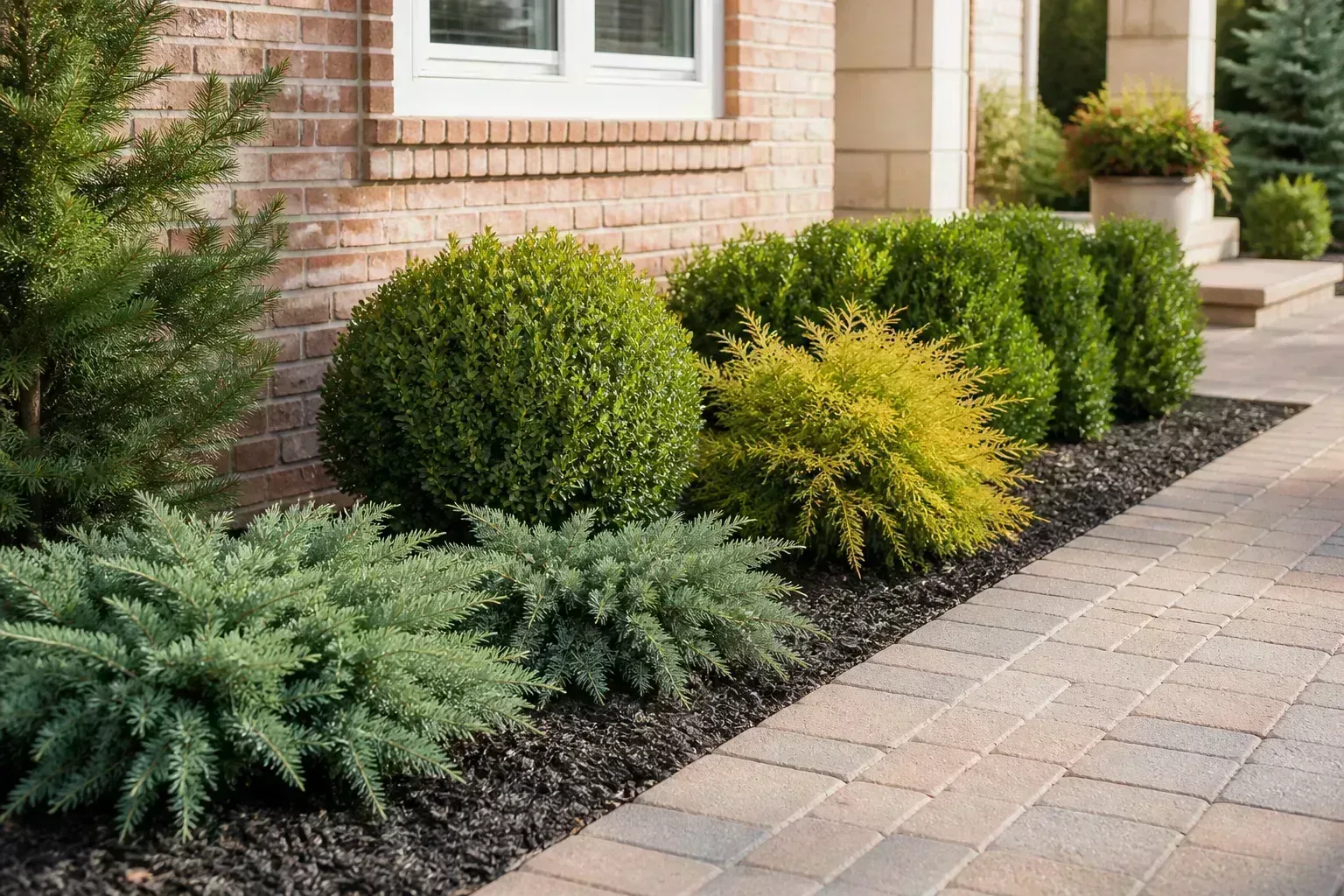
If deer treat your foundation bed like a salad bar, changing the plant palette is a sensible first move. The best deer-resistant shrubs combine a trait deer often avoid—strong fragrance, coarse or leathery foliage, spines, or an unpleasant taste—with a site where the shrub can grow vigorously.
The important word is resistant, not proof. Deer preferences shift with herd size, season, weather, and what else is available. The Royal Horticultural Society recommends choosing less-susceptible plants but still identifies deer fencing as the most effective protection, while King County’s native-plant guide notes that deer favor tender new growth and that even “resistant” plants can be browsed. RHS deer-resistant plant guidance and the King County Native Plant Guide support the same practical conclusion: use plant selection to reduce damage, then add a barrier when the stakes are high.
Deer-resistant is a useful filter, not a guarantee
Deer commonly pass over shrubs with aromatic foliage, rough or fuzzy textures, thorns, resinous leaves, or foliage that is difficult to digest. That is why a fragrant juniper or bluebeard often performs better than a soft-leaved shrub in the same bed. The pattern is useful for choosing candidates, but it is not a promise about your particular herd.
Treat these ratings as a probability scale. A shrub that is ignored in a lightly browsed suburban garden may be nipped in late winter, during drought, after a heavy snowfall, or when a young plant produces a flush of soft growth. Male deer can also damage a shrub by rubbing antlers against stems, which plant resistance cannot prevent.
Fine Gardening’s expert plant round-up makes the same regional point from a gardener’s perspective: plants that stand up well in one garden may not be equally reliable in another. Keep a small notebook or phone photo log for one season. Record which plants are browsed, when the damage occurs, whether only the new tips were eaten, and whether the injury is feeding or antler rubbing.
Choose the shrub by site before choosing it by reputation
Read light, soil, mature size, and climate as one decision
A “deer-resistant” shrub that slowly declines from wet soil or winter wind becomes a more attractive target because it produces weak, tender growth. Start with the bed rather than the label: count direct-sun hours, check whether water stands after rain, note the soil’s acidity, and measure the space to the shrub’s mature width.
The hardiness ranges below are broad starting points, not guarantees for every cultivar. A plant tag, local extension profile, and your regional invasive-plant list should take precedence over a generic range, especially for named cultivars and warmer or colder microclimates.
Treat pet safety and invasive behavior as hard filters
Deer avoidance is not the same as household safety. Japanese pieris, for example, is listed by ASPCA Animal Poison Control as toxic to dogs and cats; the ASPCA Pieris entry says that ingesting even a few leaves can cause serious problems. Daphne also has poisonous berries, according to NC State Extension’s Daphne profile. Keep these shrubs away from a play area or a pet that chews plants, and ask a veterinarian about any suspected ingestion.
The same hard-filter rule applies to invasive behavior. Japanese barberry is often praised for its thorns and deer resistance, but NC State Extension identifies the species as invasive in North Carolina and describes its dense thickets, root suckers, and bird-spread seeds. It is not included in the 26 recommendations below; check your own state or province before buying any plant marketed mainly for deer resistance.
26 deer-resistant shrubs organized by garden job
The list is organized by landscape use rather than alphabetically. Ranges are approximate USDA zones, and “best for” describes the job the shrub can do when its light, moisture, and mature size fit the site.
Evergreen structure, hedges, and shade
These are the plants to consider when you need year-round structure, a low hedge, a foundation planting, or foliage for a partly shaded bed.
Boxwood, junipers, false cypress, and arborvitae
-
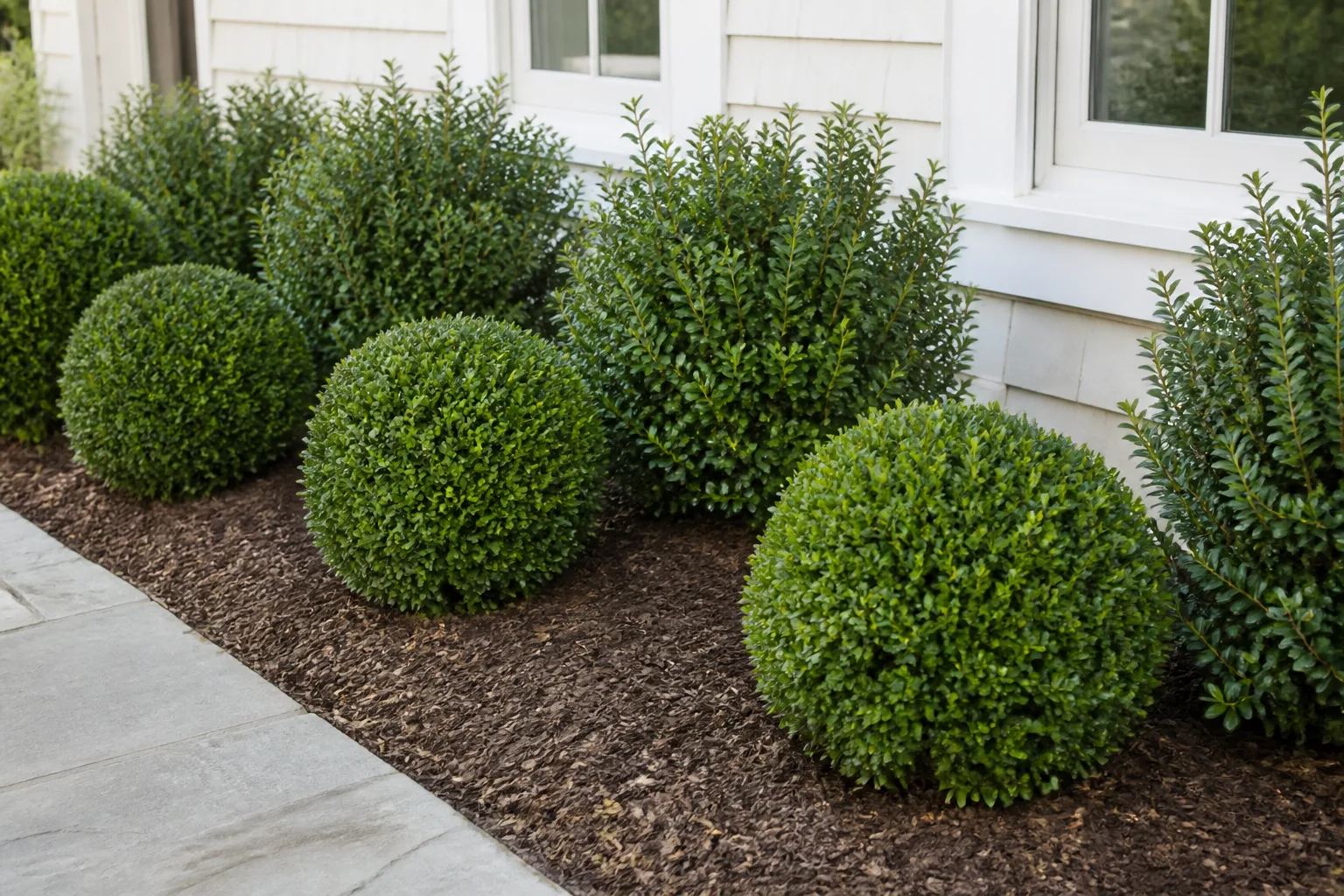
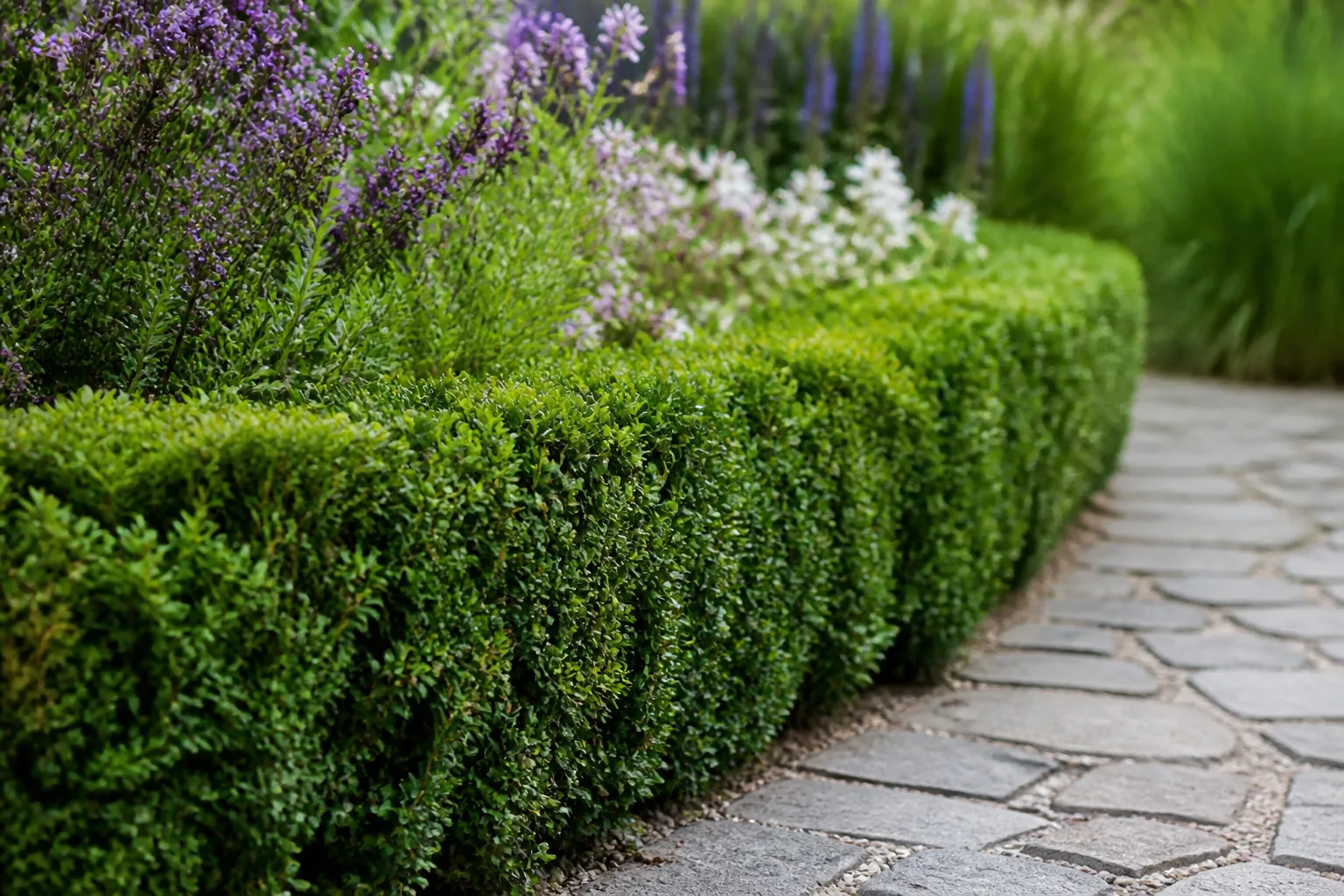
Boxwood (Buxus spp.; about Zones 5–9). Dense evergreen foliage, tolerance of shaping, and a bitter taste make boxwood a strong choice for low hedges, edging, and formal foundation beds. Give it drainage and air movement; shear lightly instead of repeatedly cutting into old, leafless wood, and protect it if your herd browses the newest tips.
-
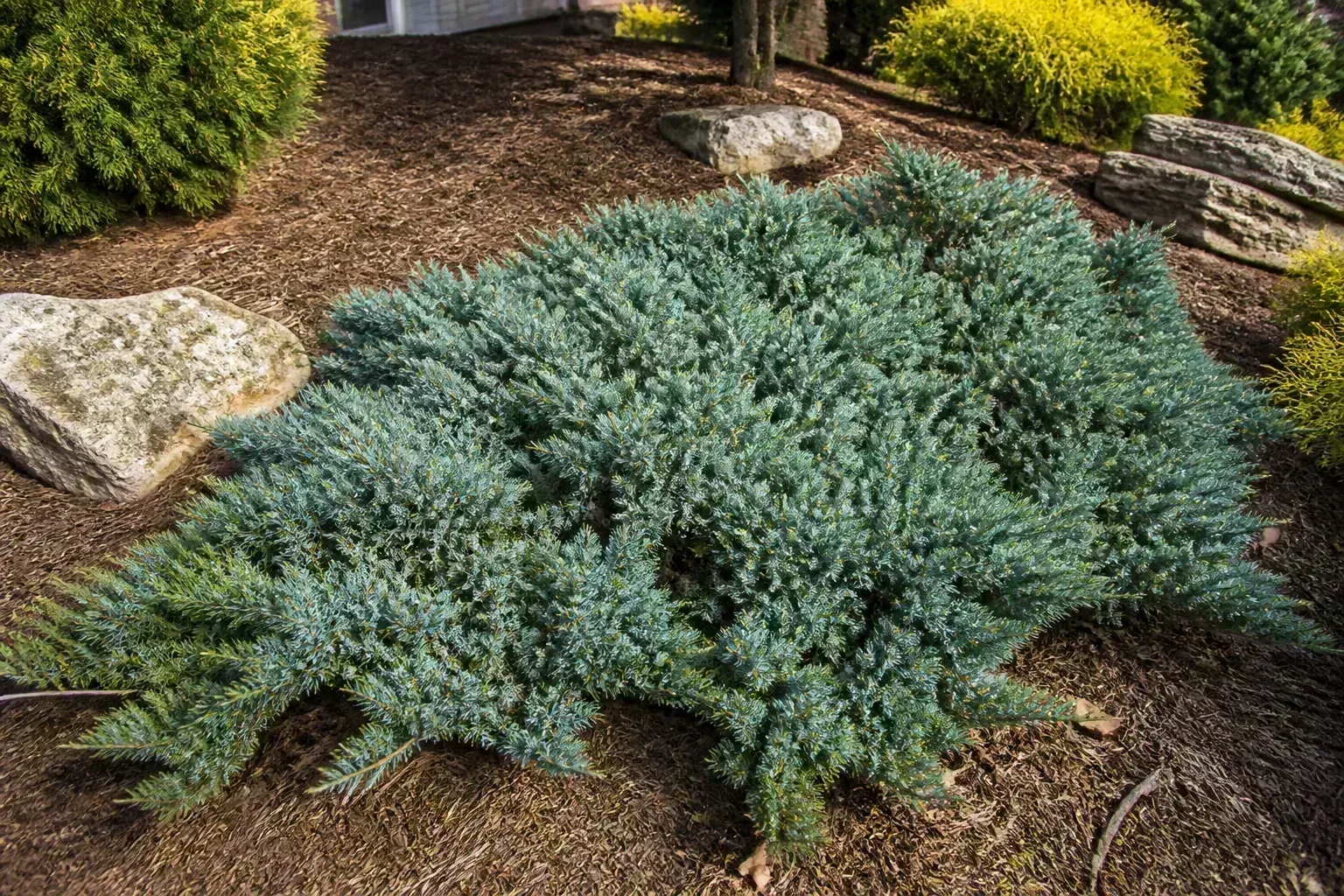
Juniper (Juniperus spp.; about Zones 2–9). Junipers bring resinous fragrance, needle-like foliage, and a wide range of upright, mounding, and groundcover forms. Use creeping types on a sunny slope and upright types for structure, but do not plant them in a damp bed or crowd them where poor airflow can encourage disease.
-
False cypress (Chamaecyparis spp.; about Zones 4–8). Fine-textured evergreen sprays create a soft screen or specimen without the broad leaves deer often sample. Hinoki and threadleaf cultivars vary dramatically in size, so compare the mature width before using one near a walkway or window.
-
Emerald Green arborvitae (Thuja occidentalis ‘Smaragd’; about Zones 3–7). This narrow evergreen is useful for a privacy row where the soil is evenly moist but not waterlogged. It is not a free pass in heavy deer country—arborvitae can be browsed when pressure rises—so cage young plants or fence the row until it is established.
Pieris, mountain laurel, Russian cypress, and alpine currant
-
Japanese pieris or andromeda (Pieris japonica; about Zones 5–8). Glossy evergreen leaves, colorful new growth, and dangling spring flowers suit an acidic, partly shaded foundation or woodland edge. It needs moist, well-drained acidic soil and shelter from drying winter wind, and its toxicity makes it a poor choice for a pet-chewed border.
-
Mountain laurel (Kalmia latifolia; about Zones 4–9). This broadleaf evergreen is a natural fit for acidic woodland soil, filtered light, and spring flowers. It dislikes heavy clay and exposed, hot sites; use it where roots can stay cool and drainage is reliable rather than trying to force it into a sunny, alkaline bed.
-
Russian cypress (Microbiota decussata; about Zones 3–8). A low, spreading evergreen with bronzy winter color, it can cover a slope or soften the edge of a conifer planting. It is a better choice for a cool, well-drained site than for a hot, reflected-heat foundation bed, and it may need wind protection while young.
-
Alpine currant (Ribes alpinum; about Zones 2–7). This compact deciduous shrub tolerates shade and responds well to pruning, which makes it useful for a low border or informal hedge. It is less showy than a flowering shrub, but its dense branching gives you reliable structure where many sun-loving deer-resistant plants will not perform.
Fragrance, texture, and dry-sun performance
Aromatic leaves and dry-site tolerance make the next group useful around sunny paths, hot foundations, and pollinator borders. They still need regular watering while establishing; drought tolerance is a mature-plant trait, not a reason to neglect a new transplant.
-
Bayberry (Morella pensylvanica, formerly Myrica pensylvanica; about Zones 3–7). Native bayberry handles wind, salt, sandy soil, and dry-to-medium moisture once established. It spreads by suckers in favorable conditions, so give it room or remove shoots where you need a tidy hedge.
-
Bluebeard or blue mist shrub (Caryopteris spp.; about Zones 5–9). Late-summer blue flowers, aromatic leaves, and a manageable size make bluebeard one of the best choices for a sunny pollinator border. Cut it back in early spring because it flowers on new growth, and avoid wet winter soil.
-
Russian sage (Salvia yangii, formerly Perovskia atriplicifolia; about Zones 4–9). Silvery, pungently aromatic foliage and airy lavender flowers give it a strong deer-resistant profile for hot, dry beds. NC State Extension’s Russian sage profile recommends full sun and well-drained, occasionally dry soil; shade or soggy ground makes the stems weak and floppy.
-
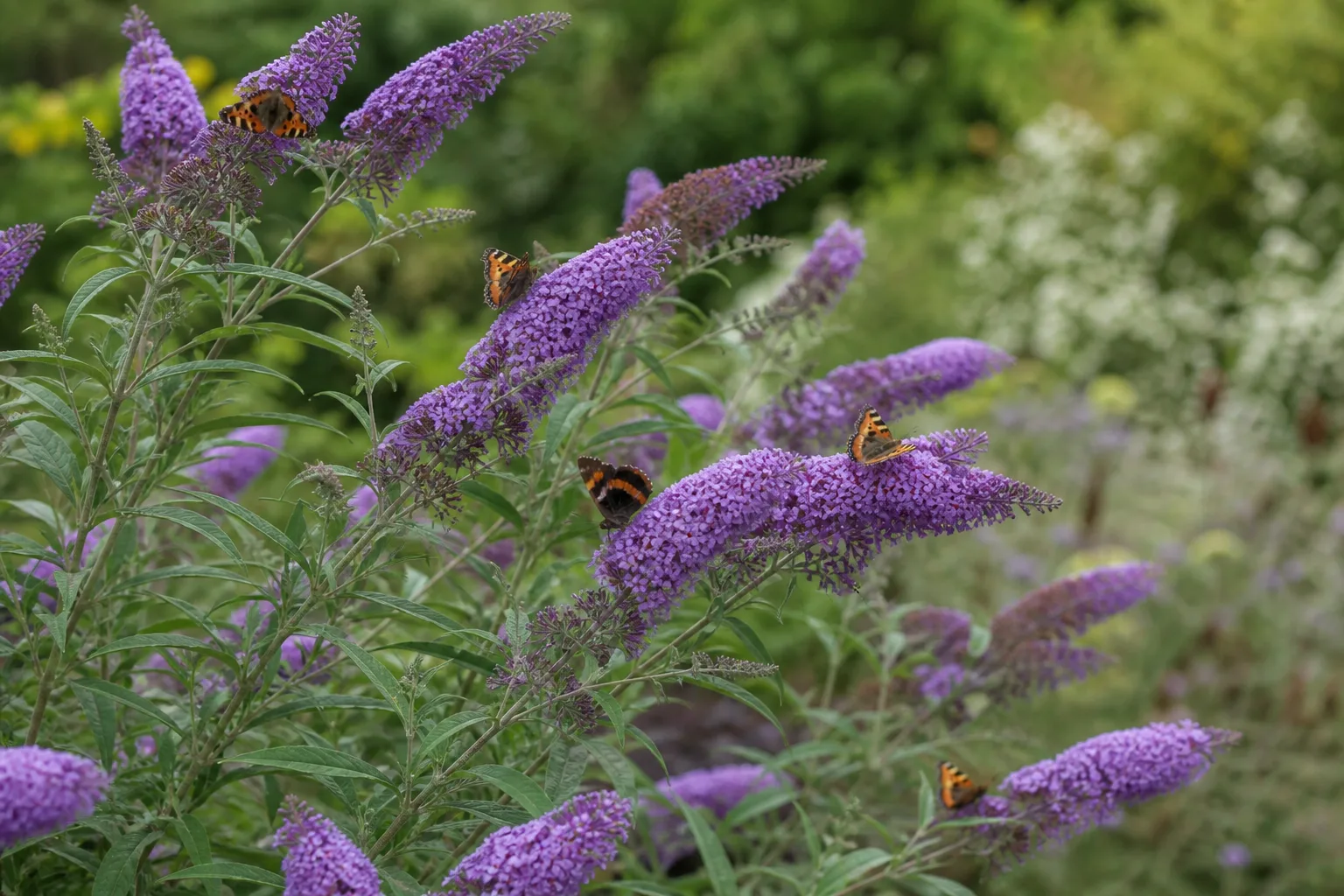
Butterfly bush (Buddleja spp.; about Zones 5–9). Fragrant flower panicles draw butterflies while the shrub’s foliage is commonly left alone by deer. Choose a sterile or non-invasive cultivar where appropriate and check local regulations, because the species and cultivars do not behave identically in every region.
-
Smoke bush (Cotinus spp.; about Zones 4–9). Smoke bush offers purple or green foliage, fall color, and airy flower clusters on a large, drought-tolerant shrub. It needs room and sun; a cramped plant near a foundation will require constant pruning and lose the loose shape that makes it attractive.
-
Shrub rose (Rosa spp.; about Zones 4–9, cultivar-dependent). Thorny canes discourage casual browsing, while flowers support a long season of color and pollinator activity. Deer can learn to eat around thorns when hungry, so use shrub roses as part of a mixed planting rather than as the sole defense for a treasured bed.
Flowering shrubs for color and pollinators
Flowering shrubs can make a deer-resistant border feel like a real garden rather than a collection of defensive plants. The trade-off is that some produce tender spring growth or flower buds that become more vulnerable during a shortage of natural browse.
-
Forsythia (Forsythia spp.; about Zones 5–8). Its early yellow flowers arrive before most shrubs leaf out, and the arching stems tolerate a hard rejuvenation prune when needed. Plant it where fast growth and a loose habit are welcome; it is not a good choice for a narrow formal hedge.
-
Weigela (Weigela florida and hybrids; about Zones 4–8). Tubular flowers and arching growth make weigela useful for a spring-to-early-summer flowering shrub border. Choose a cultivar for its mature size, and prune just after flowering because next year’s buds form on older wood.
-
Spirea (Spiraea spp.; about Zones 4–8). Spirea offers many sizes, from compact mounds to larger arching shrubs, with spring or summer flowers depending on the species. Match the pruning time to the type: spring-flowering forms are treated differently from summer-flowering forms, so do not cut every spirea on the same schedule.
-
Deutzia (Deutzia spp.; about Zones 5–8). White or pink spring flowers cover the arching branches, and dwarf cultivars fit smaller beds. It prefers sun to light shade and well-drained soil; use renewal pruning after flowering rather than repeatedly topping the whole shrub.
-
Rose of Sharon (Hibiscus syriacus; about Zones 5–8). Late-summer flowers fill a seasonal gap when many spring shrubs are finished, and upright cultivars can form a loose screen. It can self-seed in some regions, so choose a low-seed cultivar or remove seedlings before they become a maintenance problem.
-
Crape myrtle (Lagerstroemia spp.; about Zones 7–9, with cultivar variation). In warm climates, crape myrtle brings summer flowers, exfoliating bark, and strong heat tolerance. It is a regional pick rather than a universal one: cold winters can kill the top growth, and inadequate sun reduces flowering.
-
Ninebark (Physocarpus opulifolius; about Zones 2–8). Peeling bark, spring flower clusters, and cultivars with gold or burgundy foliage give ninebark interest beyond its deer resistance. It tolerates a broad range of soils, but leave enough room for its mature width and thin older stems rather than shearing it into a dense ball.
-
Silky dogwood (Cornus amomum; about Zones 4–8). This arching native shrub suits a moist edge, rain garden, or erosion-prone bank and offers flowers, berries, and winter stem color. Its loose habit is part of the appeal; it is a poor fit for a clipped foundation hedge but valuable where habitat and soil stabilization matter.
Wildlife-friendly and moisture-tolerant choices
These shrubs can support birds and pollinators, but wildlife value does not mean every part is safe to eat. If children or pets explore the bed, verify the exact species and cultivar before planting fruiting or poisonous shrubs.
-
Arrowwood viburnum (Viburnum dentatum; about Zones 2–8). White spring flower clusters, blue-black fruit, and good tolerance of moist soil make arrowwood a strong native-landscape candidate. Deer resistance is regional rather than absolute—NC State notes that its twigs and leaves can be browsed—so use it where occasional damage is acceptable or combine it with a cage during establishment.
-
Elderberry (Sambucus spp.; about Zones 3–9). Elderberry is a large, fast-growing shrub with flowers for pollinators and fruit for wildlife. It needs space and consistent moisture, and raw or unripe berries are not a reason to let children or pets sample the plant; use only correctly identified, properly prepared fruit for human food.
-
Dwarf mugo pine (Pinus mugo cultivars; about Zones 2–7). Compact mugo pine offers evergreen texture without becoming a full-size forest tree and handles cold, wind, and lean soil better than many broadleaf shrubs. Cultivars differ greatly in eventual spread, so buy by the cultivar name and do not assume “dwarf” means it will stay under two feet.
-
Daphne (Daphne × burkwoodii cultivars; about Zones 4–8). Daphne earns a place only for a gardener who wants exceptional fragrance and accepts its fussiness. NC State describes the shrub as slow to establish, demanding well-drained but moist soil, and producing poisonous berries; plant it where it can remain undisturbed and where children and pets cannot reach it.
Plant and protect new shrubs in the right order
Planting a resistant shrub is not the first season’s finish line. Water the root ball deeply when the top layer begins to dry, keep competing weeds away, and apply a modest mulch ring without piling mulch against the stems. A well-rooted plant can replace browse damage more readily than a drought-stressed transplant.
Space by mature width, not the size of the nursery pot. Overcrowding creates weak interior growth, makes inspection harder, and can turn a hedge into a damp shelter for pests and disease. If you need instant privacy, use temporary screening or a fence rather than planting three times as many shrubs and planning to remove them later.
When deer pressure is high, protect the new plant before the first night. A rigid wire or mesh cage anchored to the ground should stand far enough away that deer cannot reach through and should be tall enough to keep the top shoots outside the browsing zone. Check after wind, snow, and growth flushes; a loose cage that leans into the plant can cause as much damage as browsing.
For a small bed, a physical barrier is usually the most predictable layer. The RHS identifies deer-proof fencing as the most effective protection, and King County recommends fencing newly planted areas until shrubs are established and able to tolerate some browsing. A tall, well-built perimeter fence makes sense for a high-value garden; individual cages are more practical for a few shrubs.
Repellents are a backup layer, not a substitute for choosing the site and blocking access. If you use a commercial product, follow its label for the plant, weather, reapplication interval, and any harvest or pet precautions. Practical gardeners, including Savvy Gardening’s four-part deer-management guide, consistently emphasize coverage and repeat applications; one spray followed by weeks of rain and new growth is not a fair test.
Motion-activated water can help protect a small approach or bed, especially when a fence is not possible. It will not cover every entry point, can annoy people and pets, and may lose its effect if deer learn the pattern, so treat it as a targeted supplement rather than a permanent guarantee.
Common mistakes that make resistant shrubs fail
Mistake 1: Planting a monoculture. A single row of one evergreen gives deer one concentrated food source and creates one concentrated failure if the herd learns to browse it. Mix evergreen structure with fragrant, thorny, flowering, and native shrubs, then protect the most valuable plants.
Mistake 2: Ignoring the first flush of growth. Deer often prefer young tips, and newly planted shrubs have the least root capacity to replace what is lost. Inspect after pruning, spring growth, drought, and snowmelt; those are the moments when a cage or short-term repellent matters most.
Mistake 3: Choosing a shrub for resistance while ignoring the soil. Pieris and mountain laurel need acidic, well-drained conditions; Russian sage and bluebeard dislike wet feet; silky dogwood welcomes more moisture. A site mismatch creates a weak plant that can become more tempting and more difficult to protect.
Mistake 4: Assuming “evergreen” means safe from deer. Boxwood, juniper, pieris, cypress, and arborvitae are useful candidates, but winter hunger can change behavior. Protect arborvitae and other narrow evergreens where the deer already have a history of stripping foliage.
Mistake 5: Using invasive or risky plants as a shortcut. A thorny shrub that spreads into natural areas is not a responsible default recommendation, and a toxic shrub in a dog’s favorite route is not a safe one. Check local invasive lists, read the exact cultivar label, and place poisonous shrubs only where exposure can be controlled.
Mistake 6: Confusing browse damage with antler damage. Ragged leaf edges and missing tips point to feeding; shredded bark or rubbed stems point to a buck. A spray may change feeding behavior but will not stop antler rubbing—use a sturdy physical guard around the trunk and stems.
Conclusion: build a layered defense, not a fragile plant list
Start with a shrub that fits your sun, soil, climate, and mature space, then favor fragrance, texture, spines, or leathery foliage where deer pressure is real. Boxwood, juniper, false cypress, bluebeard, Russian sage, roses, ninebark, and well-chosen native shrubs cover many landscape jobs, but none deserves the label deer-proof.
The most reliable plan is layered: observe your herd, diversify the planting, water new shrubs until established, cage the plants you cannot afford to lose, and use fencing when browsing is severe. That approach gives you a garden that can absorb an occasional nibble without turning every deer visit into a landscape emergency.