How to Get Rid of Dollarweed From Your Lawn
Dollarweed returns when wet soil and spreading runners go unchecked. Identify it, fix the cause, and choose a lawn-safe control for your grass type safely.
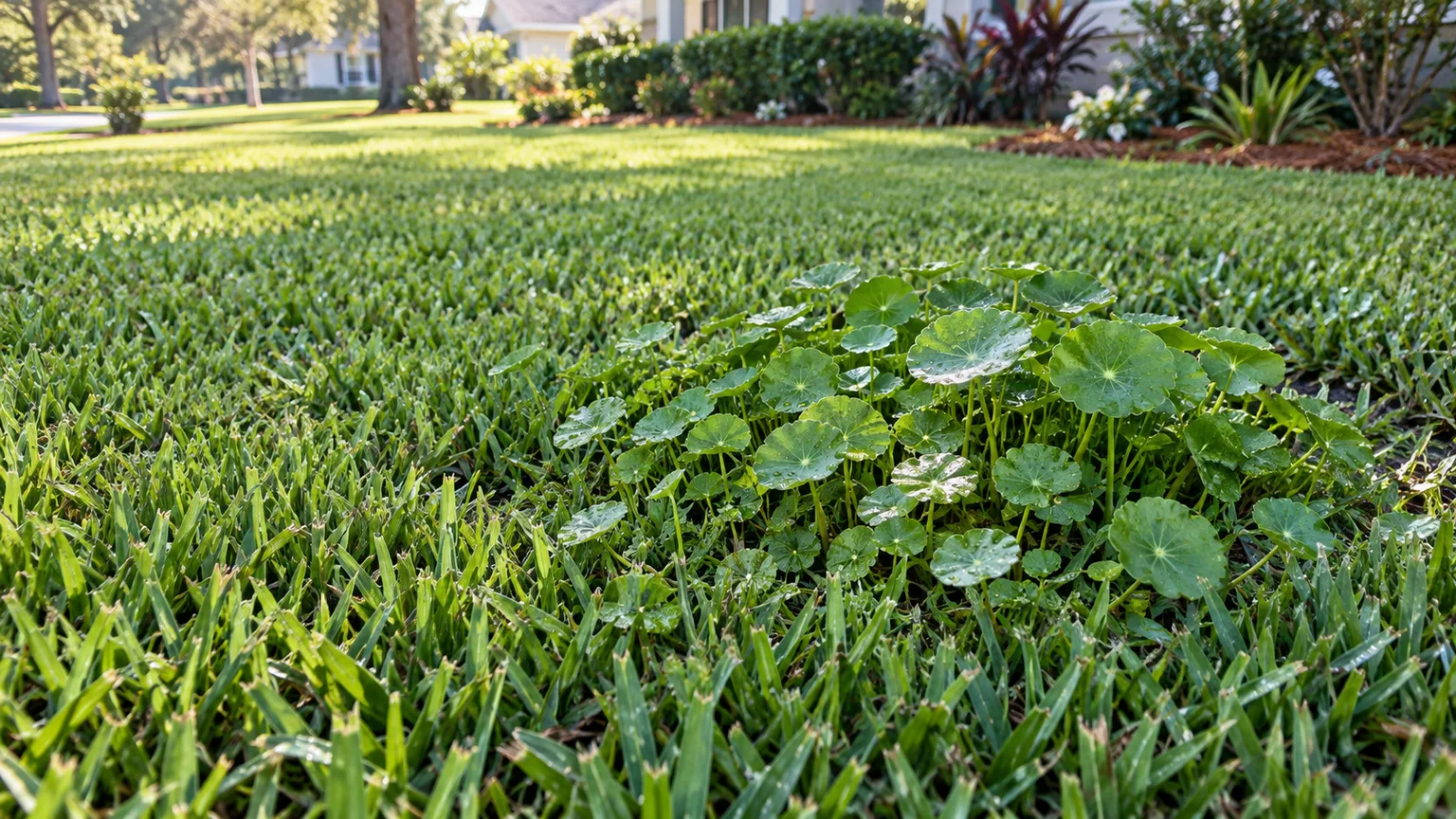
Dollarweed is easiest to control when you treat the conditions that let it spread, not just the round leaves you can see. Start by confirming the weed, checking why that part of the lawn stays damp, and deciding whether the patch is small enough to dig out or widespread enough to justify a labeled lawn herbicide.
The right plan is usually a combination: reduce unnecessary water, remove or suppress the existing patch, and help the turf fill gaps. A spray alone may brown the visible growth while leaving the reasons for its return untouched.
Start With This Decision Rule
If you have a few isolated plants, dig them out while the soil is lightly moist and trace the runners as far as practical. If dollarweed forms a broad mat, first map the wet area and correct irrigation or drainage; then consider a selective product only if its current label names both dollarweed and your exact grass type.
That order matters because dollarweed often appears where turf is already stressed by persistently wet soil or poor drainage. Treating the foliage without changing that setting can leave the lawn ready for another flush, while spraying the wrong product can injure the grass you are trying to save.
Think in terms of control rather than a one-time eradication promise. Clemson Cooperative Extension notes that complete eradication of dollarweed or any landscape weed is not practical; a more useful goal is to shrink the infestation until it no longer interferes with the lawn you want.
Confirm the Plant Before Treating
Dollarweed, also called pennywort, is a low-growing perennial in the genus Hydrocotyle. Its round, bright-green leaves often look like miniature lily pads, with scalloped edges and long stalks; the plant can spread through underground growth and seed, so a patch may extend beyond the leaves visible at the surface. (NC State Extension, Clemson Cooperative Extension)
In North American turf references, dollarweed is commonly identified as Hydrocotyle umbellata or Hydrocotyle species. Common names can cover more than one species, so do not base a chemical choice on a plant name alone if the leaves do not match or the lawn contains mixed turf.
Dollarweed vs. Dichondra
Dichondra can also make a low mat of roundish leaves, so it is worth checking the underside before pulling or spraying. Dollarweed’s leaf stalk attaches near the center of the blade, like an umbrella; dichondra’s stalk attaches at the edge of the leaf, which is usually kidney-shaped with a notch. Clemson Extension uses this stem-placement clue to distinguish the two.
The shape is a better clue than color or size, which can vary with shade, mowing, and moisture. If the attachment point is unclear, lift a leaf gently, take a close photo, and compare it with an extension identification page or ask your county office before applying a product; treating a look-alike does not solve the right problem.
Why the Patch Keeps Returning
Dollarweed is adapted to damp ground and can spread by more than one route. NC State describes it as a perennial commonly found in very wet areas, able to float in water and reproduce from rhizomes; Clemson and LSU AgCenter also describe seed and underground growth, with Clemson noting tubers among the ways it can persist. (NC State Extension, LSU AgCenter)
That biology explains three common disappointments. Mowing removes or shortens leaves but leaves the underground network; pulling only the top growth leaves rooted nodes or pieces behind; and a treatment that reduces the current flush may not prevent new seedlings or regrowth from surviving underground parts.
Moisture is the other half of the problem. A patch that keeps returning in the same low spot may be marking a sprinkler overlap, compacted soil, runoff, a leaking line, or a grade that holds water—not simply a failure to pull hard enough.
The practical signal is a pattern: scattered plants after rain may be manageable by hand, while a dense mat that follows a wet strip calls for site correction before repeated treatment. Gardening Know How and Epic Gardening both point to excess moisture and underground spread as reasons dollarweed becomes difficult to manage once established; extension guidance supports treating turf health and water conditions as part of the control plan. (Gardening Know How, Epic Gardening)
Fix the Water Problem First
Check irrigation before investing in drainage work. Run each sprinkler zone briefly and look for heads that leak, overlap heavily, spray pavement, or leave one area shimmering while the rest of the lawn is merely damp; also note whether dollarweed lines up with a downspout, hose bib, air-conditioner discharge, or the lowest part of the yard.
If the lawn is receiving frequent shallow watering, adjust the schedule to the needs of your grass and local weather rather than watering by habit. Clemson Extension cites about an inch of water per week for established landscape plants and lawns as a general benchmark, but rainfall, soil texture, turf species, heat, and local restrictions change what a particular yard needs; use a rain gauge and local extension guidance instead of treating that number as a rigid weekly quota.
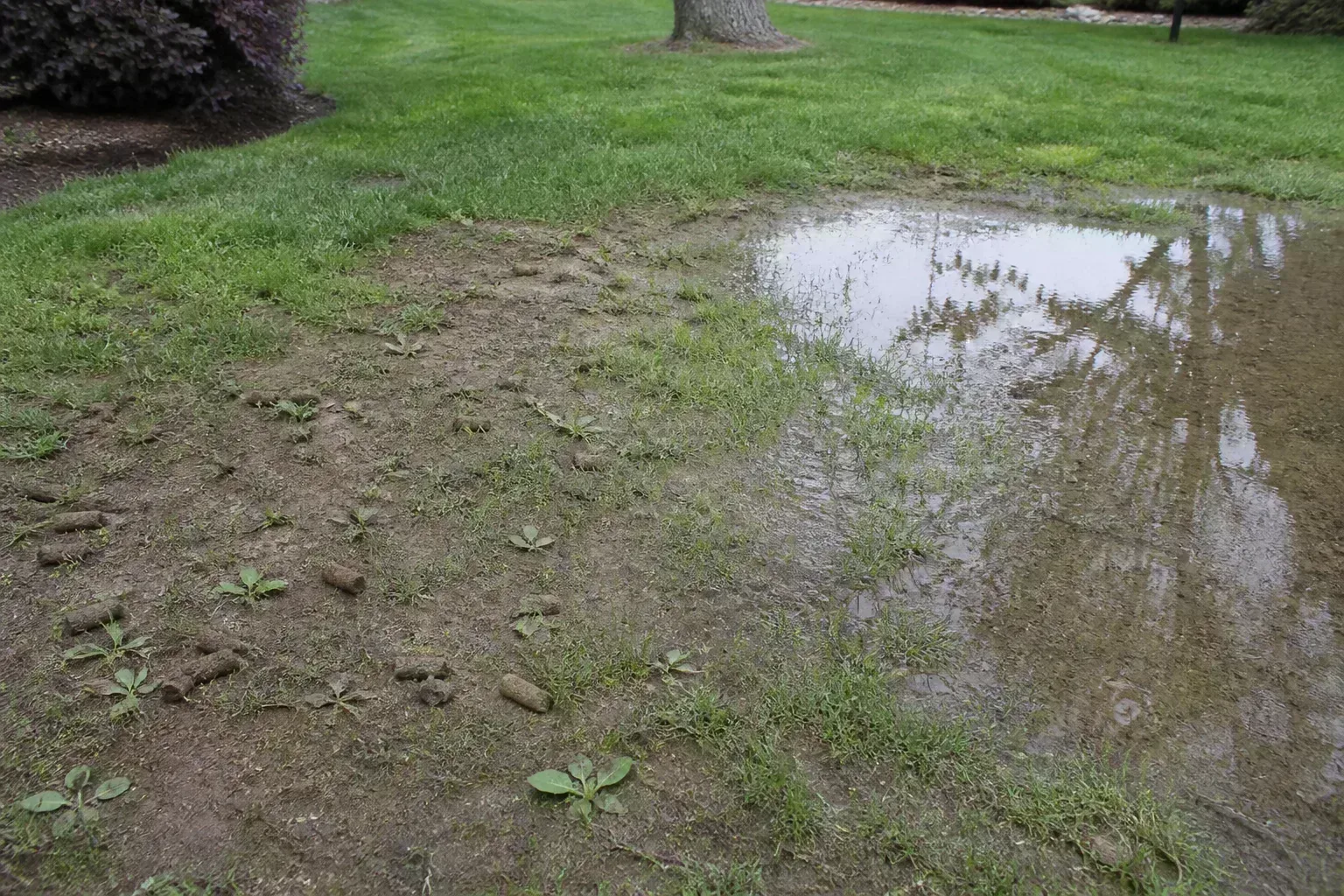
Do not respond to dollarweed by withholding water from the whole lawn until it wilts. Turf under drought stress thins and leaves open soil for weeds, so the goal is to stop unnecessary saturation while still watering deeply enough for healthy roots when weather calls for it.
Trace Where the Moisture Comes From
After rain or irrigation, take a few observations rather than guessing. Mark where puddles remain, how long they last, whether water runs toward the house or a neighboring lot, and whether the soil is wet only at the surface or stays saturated several inches down; repeat after a dry spell to separate a one-off storm from a persistent drainage fault.
Compaction can slow infiltration, but aeration is not a cure for every wet lawn. It can help where compacted soil is the cause, but a low grade, blocked outlet, high water table, leaking pipe, or downspout dumping onto the lawn needs a different fix; aerating a site with no place for water to go may create temporary holes without correcting the source.
For a small sprinkler issue, repair the head or adjust the controller. For recurring standing water, erosion, or water near a foundation, get the site evaluated before installing a French drain or changing the grade, since a drain needs a suitable outlet and can move the problem rather than solve it if designed poorly.
Pull a Small Patch Without Replanting It
Hand removal works best when the infestation is small and the soil is not baked hard or waterlogged. Use a narrow weeding fork or trowel to lift a shallow section of turf, follow the runners through the damp soil, and remove as much connected growth as you can without tearing out a much larger area of healthy grass.
Avoid yanking only the leaf stalks. A quick tug can snap the top off while leaving rooted nodes and rhizomes below; loosen the soil first, lift the runners gradually, and inspect the hole before pressing the turf back into place.
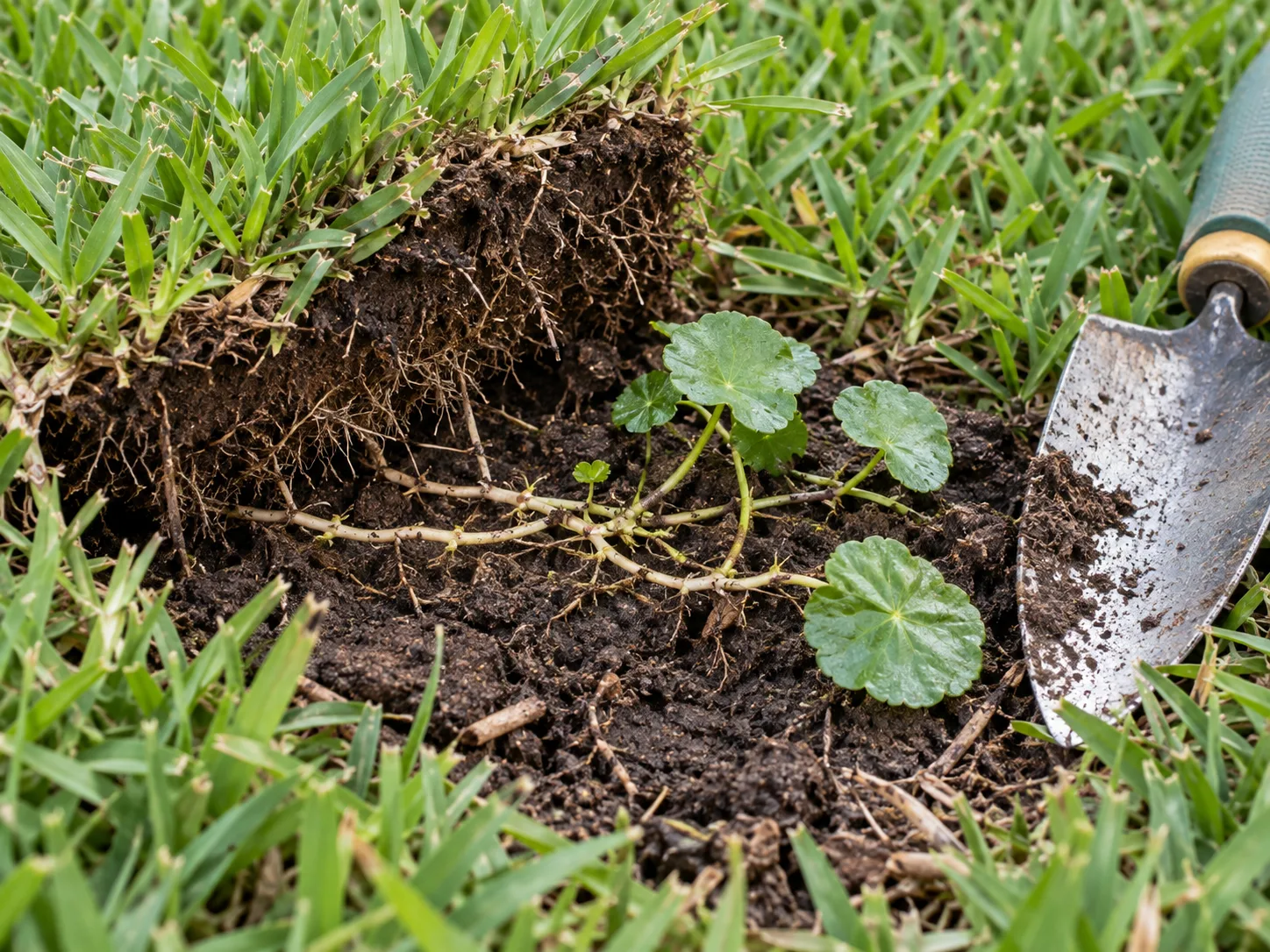
Work outward from the edge of the patch, where the runners are easier to see, and move into the center only as needed. If the weed is woven through desirable grass, do not strip out a large swath just to chase every pale root; remove what can be separated cleanly, then use turf repair or a labeled selective treatment for the remaining area.
Dispose of Runners and Protect the Turf
Put removed material in a bag or green-waste stream rather than leaving it on wet soil where a rooted piece may contact the ground again. If local composting accepts invasive or persistent weeds, follow that program’s rules; ordinary home compost piles do not always reach temperatures that reliably destroy all viable weed material.
Refill the shallow depression with soil that matches the lawn, firm it gently, and replace lifted sod if it is still intact. A large bare patch gives dollarweed and other weeds room to colonize, so plan to re-establish compatible turf as soon as the grass species and season allow.
Rebuild a Dense Lawn Around the Weeds
Dollarweed is harder to suppress where turf is thin. NC State Extension emphasizes selecting turf adapted to the area and maintaining it with proper mowing, fertilizing, and watering so the grass forms dense growth that competes with weeds; that does not make dollarweed disappear overnight, but it reduces the empty space and stress that favor its spread. (NC State Extension)
First identify the grass already in the lawn. A warm-season lawn may be St. Augustine, centipede, Bermuda, or zoysia, while a cool-season lawn may be fescue; their mowing heights, growth patterns, herbicide tolerance, and repair windows differ, and a lawn can contain more than one type after patching or renovation.
Mow and Fertilize for Your Grass Type
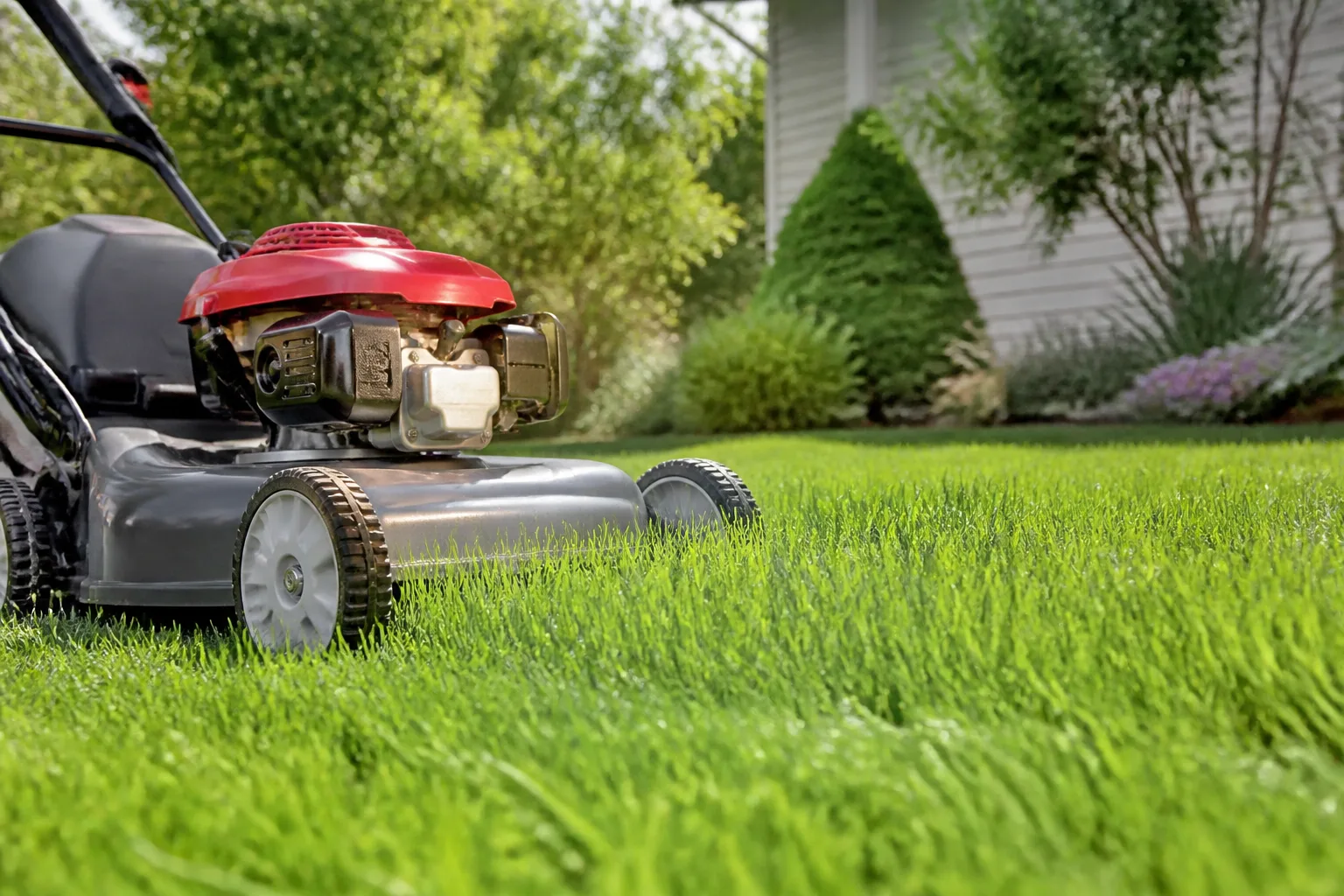
Avoid scalping the lawn to expose dollarweed. Cutting too low weakens turf, reduces shade at the soil surface, and leaves the weed’s low-growing leaves and underground parts in place; mow at the recommended height for your turf and keep the mower blade sharp enough to avoid ragged cuts.
LSU AgCenter’s Louisiana guidance lists mowing ranges of about 2.5–3 inches for St. Augustinegrass, 1–2.5 inches for centipedegrass, 1–2 inches for bermudagrass, and 1–2.5 inches for zoysiagrass. Treat these as regional reference ranges rather than a universal schedule: cultivar, season, mowing frequency, and local extension recommendations matter, and a different grass needs a different height. (LSU AgCenter)
Do not add extra nitrogen as a quick weed treatment. Too much fertilizer can create soft, excessive growth or runoff without fixing waterlogged soil; base feeding on the grass species, season, and a soil test when available. If a treated or dug area is bare, use plugs, sprigs, sod, or seed appropriate to the existing turf and local planting season rather than leaving exposed soil for another weed flush.
Should You Use a Lawn Herbicide?
A herbicide can be reasonable when dollarweed covers too much lawn to dig out, when hand removal keeps missing the underground growth, or when the patch is interfering with the turf you want. It should follow—not replace—correction of avoidable wetness and basic lawn care, because chemical control is more durable when the grass is vigorous and the site is no longer favoring the weed.
Use a product formulated for lawns and designed for post-emergent broadleaf weeds; do not substitute a nonselective weed-and-grass killer. The label needs to name the target weed or an applicable weed group and explicitly allow application to your turfgrass, at your site and season; a “lawn weed killer” label by itself is not proof that it is safe for every grass.
Match the Product to the Turf Species
Read the entire label before buying or mixing anything. LSU AgCenter lists several active-ingredient options for common Louisiana turf species, while Clemson Extension shows that turf tolerance can vary even among products used on southern grasses and warns that some formulations or rates can injure sensitive turf; those regional tables are useful starting points, not a substitute for the current label where you live. (LSU AgCenter, Clemson Cooperative Extension)
Before applying, verify all of these on the product label: the exact grass species, dollarweed or pennywort as a target, the permitted application site, rate and repeat interval, temperature limits, rain-free period, protective equipment, and restrictions near drains or water. If the label omits your turf, says not to use it on new sod or seed, or conflicts with local extension guidance, choose a different control or ask a local extension office rather than improvising a lower dose.
For a mixed or unidentified lawn, a spot treatment is not automatically safe. Confirm the grass at the treatment site first, avoid broadcast “weed and feed” products when only a few patches need control, and do not mix active ingredients or add surfactant unless the product label calls for it.
Time Treatment for Active Growth
Extension guidance commonly places treatment in late spring after warm-season turf has fully greened up, when dollarweed is small and actively growing. Clemson Extension cautions against applying many post-emergent products during spring green-up and notes temperature restrictions for some herbicides; the current product label controls because timing and heat limits differ among formulations.
Treat on a calm day when the lawn is not under drought stress and the foliage is dry enough for the product to stay where directed. Avoid spraying before rain, during wind, or when people, pets, desirable plants, or runoff-sensitive areas could contact wet product; follow the label’s reentry and watering instructions rather than relying on a generic waiting time.
One application may not fully control a perennial patch. Inspect after the interval specified on the label, then spot-treat only if needed and permitted; repeated blanket applications can injure turf and increase exposure without fixing the underlying moisture problem.
Why Household Weed Killers Usually Backfire
Boiling water, vinegar, baking soda, sugar, and salt are often suggested as homemade dollarweed treatments, but none is a dependable way to selectively remove a spreading weed from living turf. Boiling water and vinegar can damage any leaves they contact, including grass; salt and baking soda can affect the soil around the target; and a contact burn does not reliably remove the underground runners that make dollarweed persistent.
Gardening Know How lists several of these home methods as options, but it also notes that dollarweed thrives in moist sites and recommends attention to irrigation, drainage, mowing, and hand removal. For a lawn, the distinction is important: a treatment that scorches the visible leaf is not automatically a grass-safe or root-killing treatment, and nonselective household mixtures can leave a damaged spot ready for weeds to return. (Gardening Know How)
Do not use concentrated horticultural vinegar as if it were kitchen vinegar or a lawn-safe herbicide. Penn State Extension notes that cleaning and horticultural vinegars can be far more acidic than food vinegar, and CDC/NIOSH records eye and skin effects from acetic acid exposure; these products still do not solve dollarweed’s underground spread. If a product is labeled for weed control, handle and apply it exactly as that label directs, and keep it away from turf or desirable plants unless the label allows that use. (Penn State Extension, CDC/NIOSH)
Treat Dollarweed in Landscape Beds Differently
In a flower or shrub bed, the goal is to remove dollarweed without harming nearby roots, so selective lawn herbicides may not be appropriate. For a small patch, loosen the soil and follow the runners carefully; hand-digging is often the simplest way to protect neighboring plants when the weed is not woven tightly through their root zones.
After removal, cover open soil with an appropriate mulch layer and keep the bed planted densely enough to reduce bare ground. Mulch can block light and make new seedlings easier to spot, but it will not stop every perennial runner coming from a damp lawn edge, so inspect the boundary and remove new growth before it takes hold.
If chemical control is being considered in a bed, use only a product whose label permits that exact site and target, and protect ornamental foliage and roots. A nonselective product can kill any green plant it contacts; drift or a runoff path toward the lawn, a pond, or a storm drain changes the risk even if the weed itself is small.
Monitor the Lawn and Replace Bare Turf
Check treated areas every week or two while the lawn is actively growing, rather than judging success the morning after pulling or spraying. Look for new leaves at the edge of the old patch, fresh wet spots after irrigation, thinning turf, and bare soil; take a phone photo from the same angle so you can distinguish gradual improvement from a new flush.
If new growth appears, identify whether it is coming from the old patch or from a nearby wet area. Pull isolated plants while the soil is workable, correct a missed irrigation or runoff issue, and follow product-label intervals before considering another herbicide application; do not reapply simply because a few leaves remain visible before the product has had time to act.
Patch bare soil with the existing grass type when it is in an appropriate establishment window. For many warm-season lawns, plugs or sprigs fit better than scattering an unrelated seed mix; in cool-season regions, use a compatible seed at the locally recommended time. The aim is a closed turf surface, not a chemically bare patch.
Set Expectations for Long-Term Control
Dollarweed control is a repeatable maintenance task, not always a single treatment event. Rain can move seed, underground parts may survive removal, and a neighboring wet edge can keep supplying new growth; a clean-looking area this month does not prove that the cause has been removed.
Set a threshold that matches how you use the lawn. One or two leaves near a damp boundary may not justify blanket spraying, while a spreading patch in a play area or a lawn that is losing turf may need a more active plan; Clemson Extension recommends aiming to limit an infestation to a tolerable level instead of promising total eradication.
Epic Gardening points out that dollarweed can also function as a low groundcover in places where a lawn is not the priority. If a corner remains wet and repeatedly fails as turf, consider whether a suitable rain-garden planting or another intentional groundcover is a better long-term use than draining or treating the same difficult strip every season. (Epic Gardening)
When to Call Extension or a Lawn Professional
Ask your county extension office to identify the weed when the leaf attachment is hard to see, several weeds are mixed together, or a product label leaves you unsure about the turf. A clear photo of the leaf underside, the whole patch, your grass type, and the site after rain gives the adviser more useful information than a vague description of “round weeds.”
Bring in a qualified lawn or drainage professional when standing water persists, the wet area is large, runoff is moving toward a building or neighboring property, or repeated repairs have not improved infiltration. Ask what they think is causing the water to collect and where it will go after a proposed fix; a drain, grading change, or irrigation redesign should address the source rather than simply move water out of sight.
For pesticide application, get help if the lawn contains multiple turf species, the infestation is near a pond or drainage channel, or you cannot find a currently labeled product for your grass. The right diagnosis and a small targeted treatment are generally better than guessing at a rate or combining products.
Conclusion
To get rid of dollarweed from a lawn, confirm it first, then match the response to the patch. Dig out small plants with their connected runners, reduce unnecessary irrigation, correct persistent drainage problems, and help the right grass fill the area; use a selective herbicide only when its current label names both the weed and your exact turfgrass.
The most important clue is the setting: dollarweed favors wet ground, and repeated treatment without fixing the cause often leads to another round of leaves. Keep checking the patch, repair bare turf promptly, and aim for a lawn where dollarweed stays limited rather than expecting a permanent, weed-free result from one application.



