Agave Plant Care & Growing Guide
Learn agave light, soil, watering, and zone needs for containers and gardens—plus pup propagation, bloom timing, weevil warnings, and toxicity.
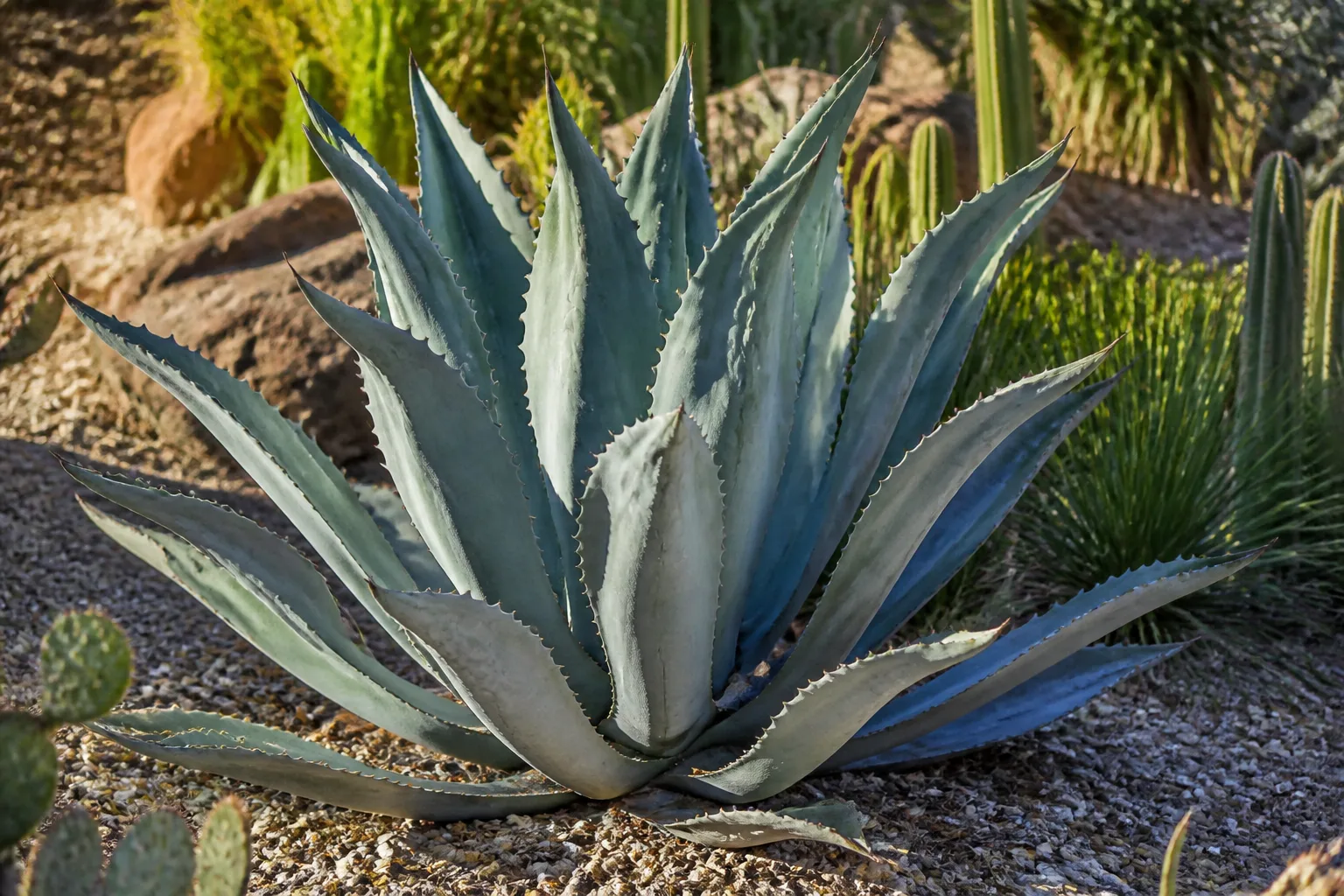
Agave plants look indestructible—and in the right spot, they nearly are. Rosettes of thick, often blue-green leaves store water for months, shrug off heat, and anchor dry gardens with a sculptural silhouette that few other perennials can match. The catch is that agave is not a generic houseplant, not a cactus, and not forgiving when drainage, light, or species choice are wrong. Match the plant to your climate and space first; the watering schedule becomes simple once those decisions are settled.
What Agave Actually Is (and What It Is Not)
Agave belongs to the asparagus family (Asparagaceae), the same broad plant family as asparagus and hostas. It is a succulent, meaning leaves and stems store water, but it is not a cactus. Cacti belong to the family Cactaceae and usually lack the broad, fibrous leaves agaves are known for. Agave is often confused with aloe because both form rosettes and tolerate drought, yet they are unrelated: aloes are native to Africa and have softer, often serrated leaf margins, while agaves come from the Americas and typically carry sharper terminal spines and stiffer foliage.
More than 250 species exist, ranging from six-inch miniatures to giants topping 10 feet tall and 10 to 15 feet wide before they bloom. Most are grown for foliage, not flowers—because flowering ends the story for the main rosette.
Century plant myth vs real bloom timelines
The nickname century plant suggests a hundred-year wait. In reality, most agaves bloom after roughly 10 to 30 years, though some small species flower in as few as six to eight years and a few giants have been documented flowering closer to 60 to 80 years in ideal conditions. When bloom time arrives, the plant sends up a dramatic central stalk—sometimes 15 to 35 feet tall—bearing greenish, yellow, or white tubular flowers that attract moths and bats at night. After seed set, the parent rosette dies. That lifecycle is called monocarpic: one flowering event, then death. Offsets (pups) or bulbils on the stalk often carry the genetics forward.
Quick Care Snapshot Before You Buy
Before you bring home a spiky rosette, run through this checklist. It saves years of fighting the wrong plant in the wrong place.
Light: Full sun outdoors—at least six hours of direct sun daily on most days. Indoors, only the brightest south- or west-facing windows qualify; weaker light produces stretched, pale growth.
Soil: Fast-draining and lean. Sandy, rocky, or dedicated cactus/succulent mix. Heavy clay or moisture-retentive potting soil is the fastest route to rot.
Water: Deep and infrequent. Let soil dry several inches down between soakings. New plantings need more frequent water for the first month; established plants may need nothing except rainfall in dry climates.
Fertilizer: Usually skip it. Feeding can push a plant toward premature bloom, which triggers its death.
Hardiness: Species-dependent. Many agaves are frost-tender above zone 8 or 9; Agave parryi and a few others tolerate zone 5 with sharp drainage.
Safety: Sharp spines, heavy mature size, and toxic sap mean thoughtful placement away from paths, pets, and curious children.
Best Agave Varieties for Gardens and Containers
Choosing by mature size prevents the classic mistake: installing a patio-sized pup where a truck-sized adult will eventually dominate.
Large landscape agaves
Agave americana (American century plant) forms a massive blue-gray rosette and is salt-tolerant, heat-tolerant, and dramatic as a specimen. NC State Extension notes it can reach 10 feet tall and wide, with flower stalks of 15 to 30 feet or more. It is considered invasive in parts of Europe, Australia, New Zealand, and elsewhere because pups and rhizomes spread aggressively—remove offsets early if you need to limit spread.
Agave ovatifolia (whale’s tongue agave) offers a similarly bold look with excellent cold tolerance for a large agave in many zone 7 gardens when drainage is excellent.
Agave tequilana (Weber’s blue agave) grows to about 6 feet and is both ornamental and commercially important for tequila production.
Smaller and spineless choices for pots
Agave parviflora stays around 6 inches tall with white leaf markings and hair-like filaments—excellent for collectors and rock gardens in warm, dry zones.
Agave victoriae-reginae (Queen Victoria agave) matures near 12 inches, with tight domed rosettes and cream flowers after 20 to 30 years in many gardens.
Agave attenuata (foxtail or dragon-tree agave) is spineless, reaching 4 to 5 feet tall and wider, and is one of the most forgiving large agaves for frost-free coastal gardens and bright indoor rooms.
Match variety to hardiness, not just aesthetics. A beautiful blue agave in a zone 6 wet clay border is a short experiment.
Light: Full Sun Without Burning New Plants
Outdoors, agaves want full sun—the kind of exposure where shadows are short at midday. In desert and Mediterranean climates they tolerate light afternoon shade, especially during extreme heat waves. In humid subtropical regions, all-day sun paired with excellent airflow matters more than partial shade.
Indoors, place agave within a foot or two of a south- or west-facing window. North exposures rarely provide enough photons to keep rosettes compact. If you move a greenhouse-grown or shaded nursery plant into blazing sun, acclimate over one to two weeks: increase direct exposure gradually to avoid bleached patches and crisp sunburn on leaf surfaces.
Winter light matters too. When the sun rides low, an outdoor container that was sunny in July may sit in shade by December. Slide pots or plan permanent beds where winter sun still reaches the crown for several hours.
Soil and Drainage — The Make-or-Break Factor
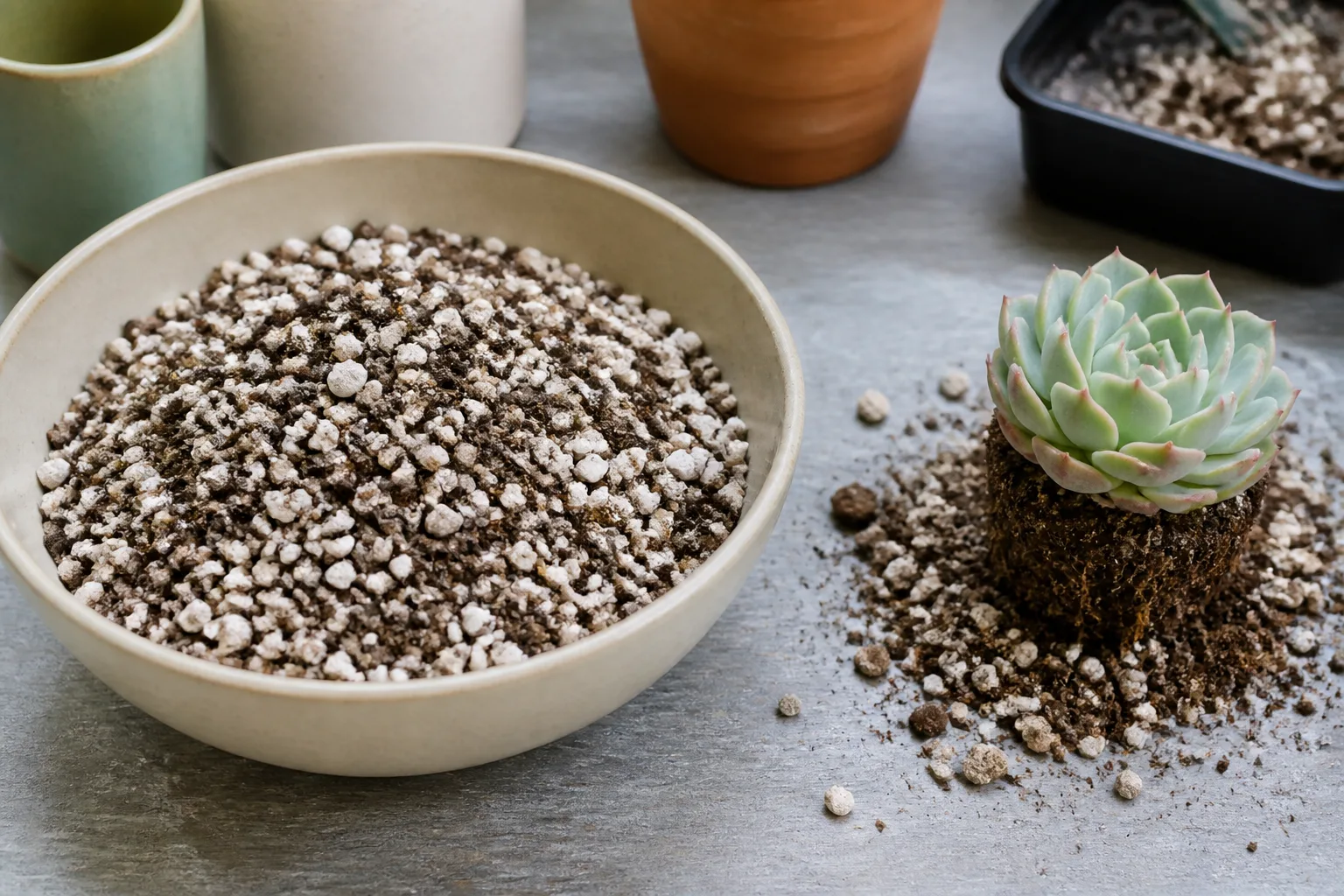
Agave evolved on sandy, rocky, fast-draining ground. NC State Extension lists preferences for well-drained sandy soils with good to very dry drainage and full sun. In heavy clay, raise beds, mix in coarse sand and gravel, or plant on a slope so water never pools at the crown.
For containers, use cactus and succulent mix or make your own with potting soil cut heavily with pumice, perlite, or coarse grit. Standard peat-heavy indoor mix holds moisture too long and encourages root rot and crown rot, especially in humid rooms.
Surface mulch of gravel is fine in dry climates; avoid deep organic mulch that stays wet against the basal leaves. In rainy regions, a gravel topdressing plus a slight crown elevation above soil grade keeps the meristem drier.
Watering Agave the Right Way
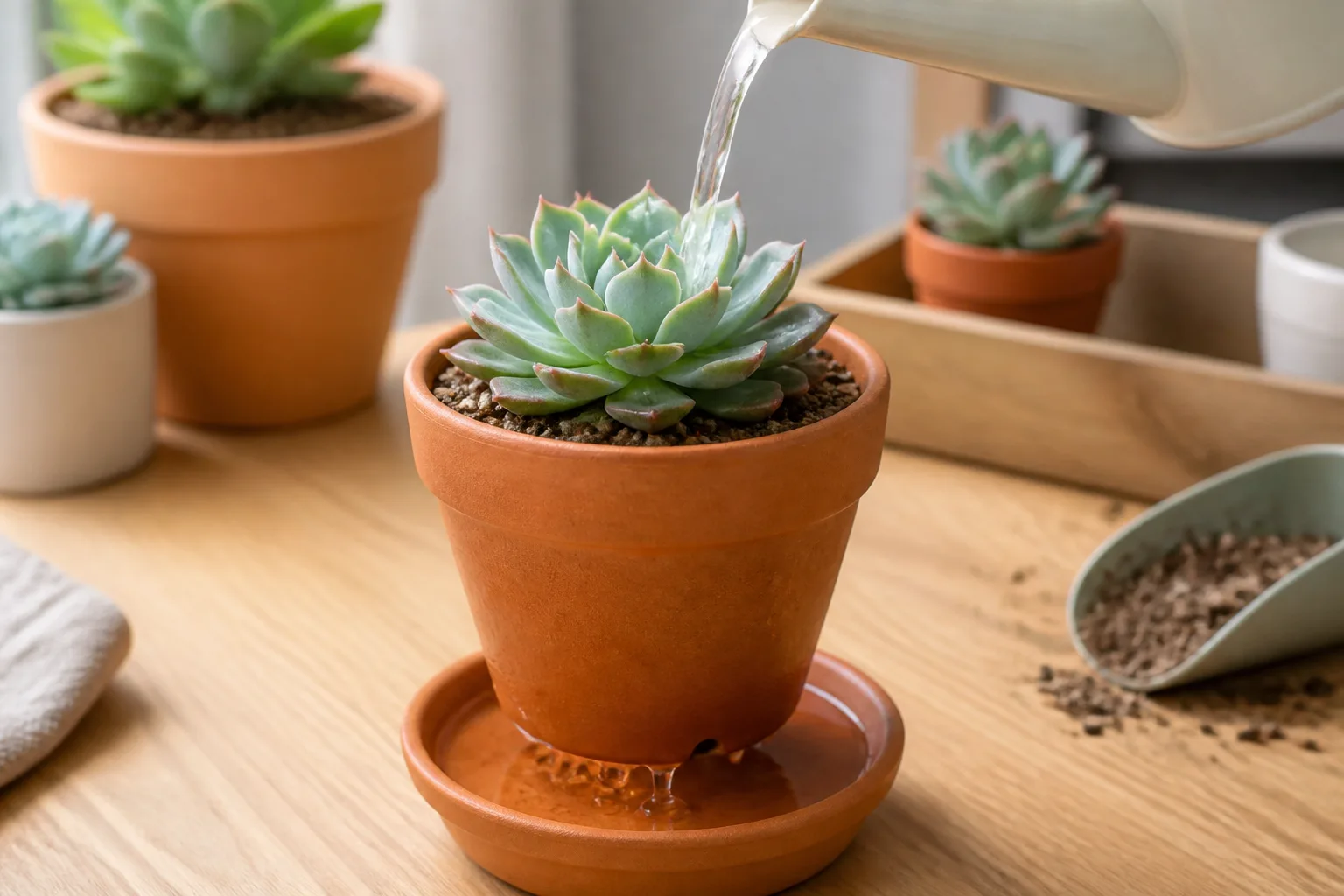
Mature agave is extremely drought tolerant because leaves store water and shallow rhizomes capture brief surface moisture. Overwatering kills far more plants than underwatering.
First month after planting: Water every four to five days if rain is absent, soaking the root zone, then let the top few inches dry before the next drink.
Months two through three: Stretch to weekly watering if soil dries between sessions.
Established outdoor plants: In many dry climates, rainfall alone suffices. Supplement only during prolonged drought—perhaps every two to three weeks in summer, as Epic Gardening recommends for active growth—and monthly or less in winter.
Container plants: Water when the mix is dry several inches down, typically weekly in summer and monthly in winter indoors. Always empty saucers so roots never sit in water.
Signs of underwatering include lower leaves wrinkling, then yellowing and shriveling from the base up. Signs of overwatering include yellowing with wet soil, soft basal tissue, leaf collapse, and blackened roots when you unpot.
When in doubt, wait. Agave recovers from thirst more often than from rot.
Temperature, Hardiness Zones, and Humidity
Most garden agaves are labeled for USDA zones 8 to 11, but the genus spans zones 5 through 11 depending on species. Agave parryi and several related species survive zone 5 winters when soil drains sharply and crowns stay dry during freeze-thaw cycles. Tropical-looking Agave attenuata is frost-tender and behaves as a container plant anywhere frost is common.
Agaves prefer low humidity. Persistent damp air around crowded crowns encourages fungal issues and slows transpiration recovery after watering. In Gulf Coast or Southeast gardens, give agaves maximum sun and spacing; indoors, avoid bathrooms and poorly ventilated corners.
Protect container agaves before the first frost by moving them to a bright, cool room—ideally 45 to 55°F (7 to 13°C) if possible—and water just enough to prevent severe leaf shrinkage. Hard freezes on wet soil are more lethal than dry cold.
Why Fertilizer Is Usually a Bad Idea
Agaves thrive on lean soil. Nitrogen-rich feeds promote soft growth and can hasten flowering, which ends the rosette’s life. If a soil test shows severe deficiency in a container that has not been refreshed in years, use a diluted, low-nitrogen cactus fertilizer at quarter strength once in spring—then stop. Landscape plants in mineral soil rarely need any feed.
If you want faster bulk for production agriculture, that is a different goal than long-lived ornamental rosettes. Home gardeners should treat fertilizer as optional and risky.
Planting Agave Outdoors
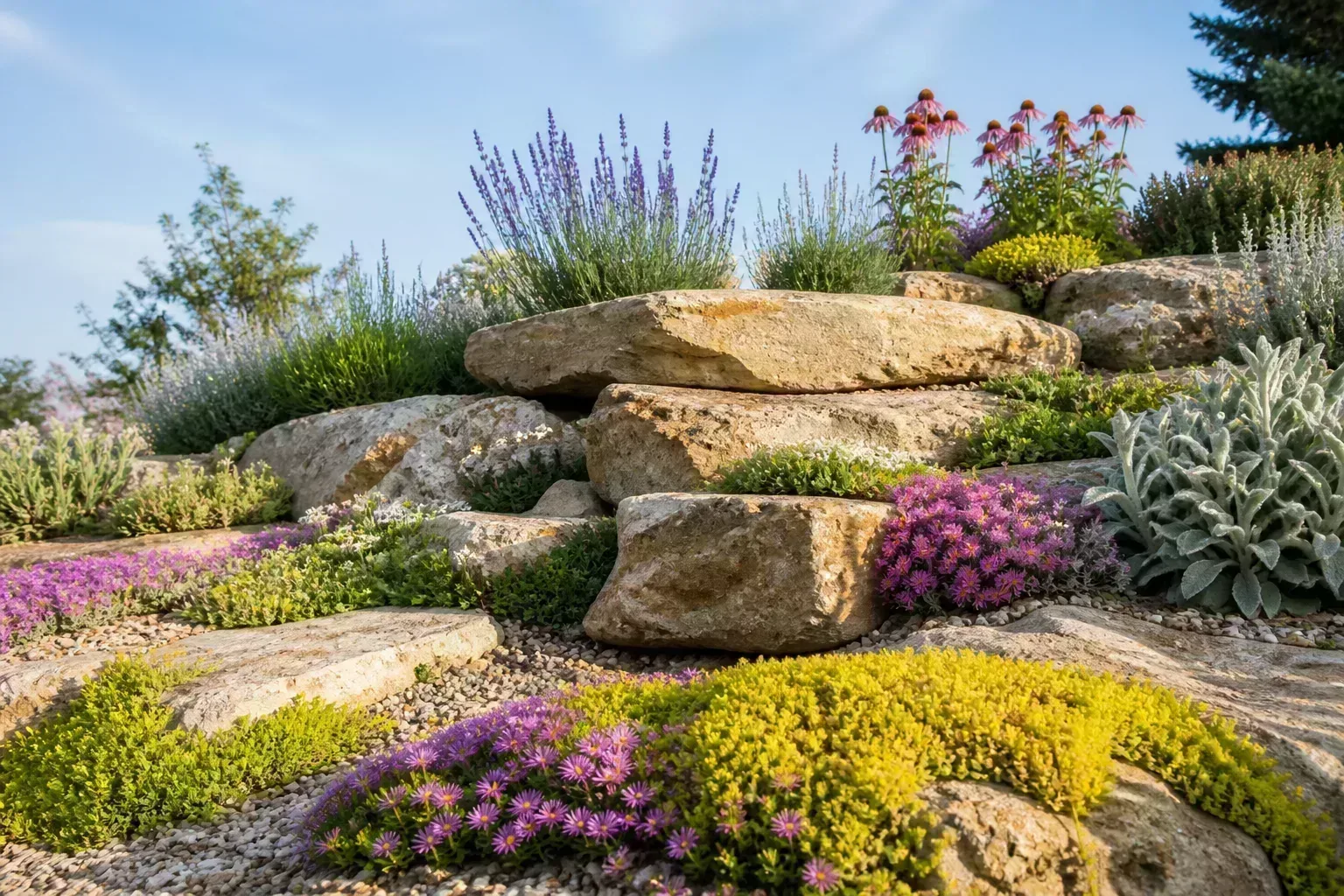
Plant in spring or early fall when temperatures are moderate. Dig a hole twice as wide as the root ball and only as deep as the plant sat in its pot. Set the rosette so the base is level with or slightly above surrounding grade to shed water.
Backfill with native soil amended for drainage, or use cactus mix in raised mounds. Water thoroughly once, then follow the establishment schedule. Space large species at least as far as their mature width—remember the flower stalk may tower over neighboring trees temporarily.
For slopes and rock gardens, agaves excel as anchor plants among gravel and drought-tolerant grasses. Pair stiff rosettes with soft textures, but keep spines outside walkway reach.
Growing Agave in Containers Indoors
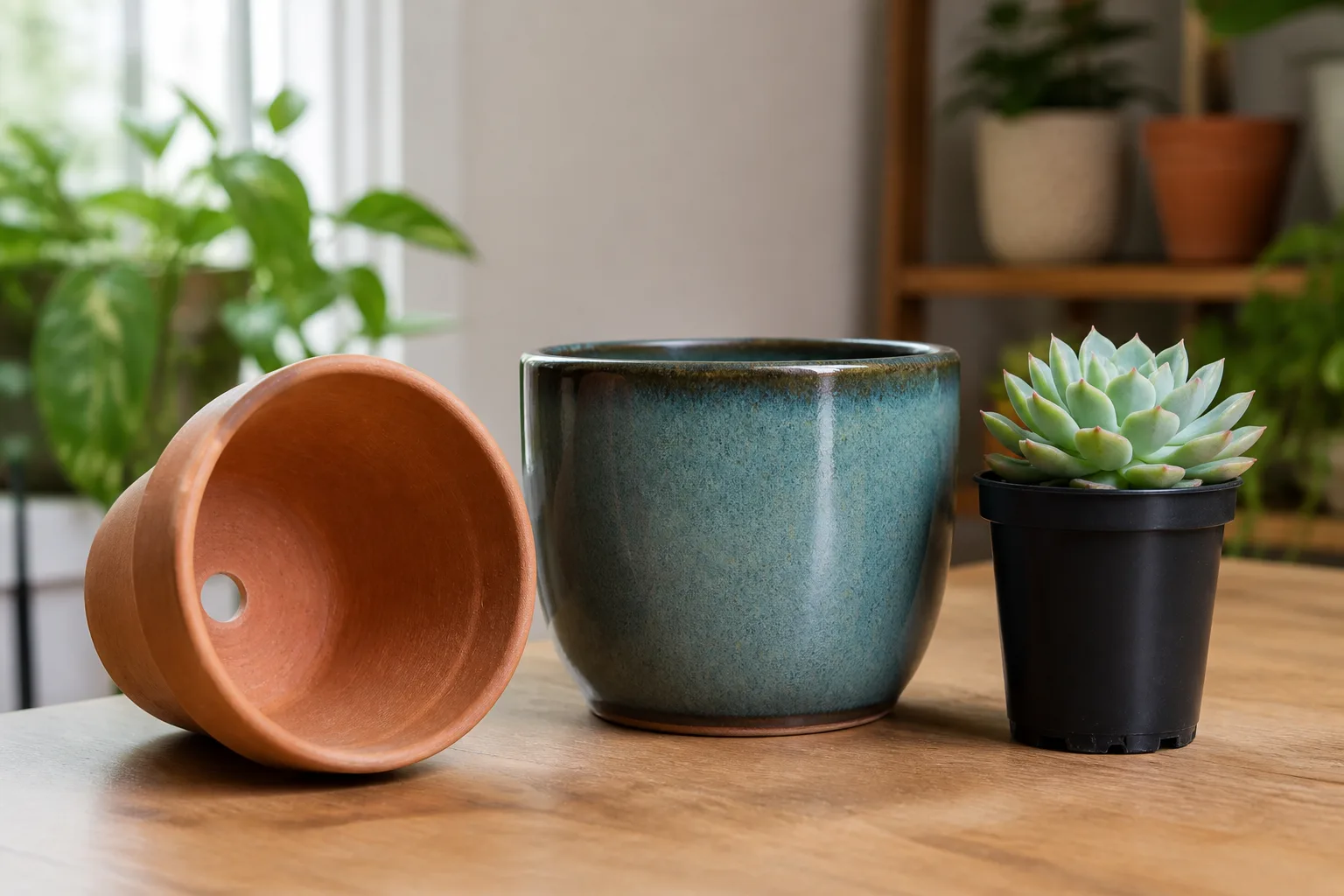
Many agaves tolerate pots for years because roots are relatively shallow and plants accept being somewhat root-bound. Choose a sturdy, wide pot with large drainage holes; unglazed clay helps moisture escape through walls. A shallow bowl can work for small species because depth matters less than stability against top-heavy leaves.
Use gritty mix, rotate the pot quarterly for even growth, and accept that large Agave americana will outgrow most indoor spaces—grow it outdoors or choose a dwarf species.
Repot every two to four years in spring, stepping up only one pot size. Refresh mix even if you keep the same container. Wear thick gloves and eye protection; terminal spines puncture skin easily.
Bright light and spare water matter more indoors than pot size. If leaves pale and stretch, the problem is almost always insufficient light, not hunger.
Propagating Agave from Pups and Seeds
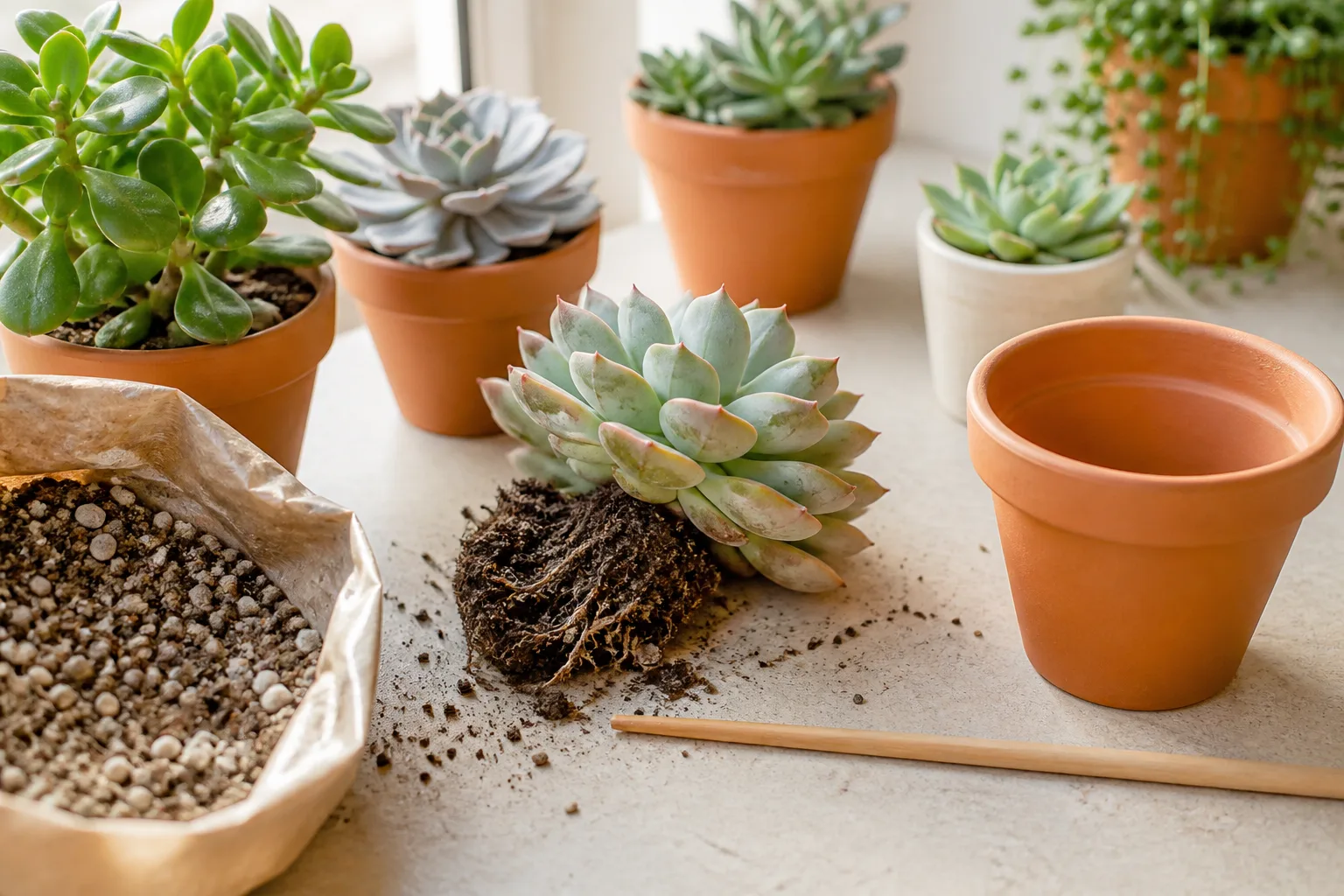
Pups (offsets) are the practical home method. Mature plants produce clones around the base—sometimes continuously, sometimes mainly as bloom approaches.
- Wait until pups are several inches wide with their own roots beginning.
- Brush soil away and sever the connecting stolon with a sharp, clean knife or trowel, preserving pup roots.
- Let the cut callus in dry shade for three to five days.
- Plant in small pots of succulent mix, water lightly, and keep in bright indirect light until new growth firms.
- Move to full sun outdoors after a week or two of hardening off.
Seeds work but demand patience. Scatter on moist seed-starting mix; some species need light to germinate (do not bury). Keep trays above 70°F (21°C) with bright indirect light and ventilate once seedlings appear. Grow slowly in pots for years before landscape planting.
Bulbils—mini plants on the flower stalk—can be twisted off and rooted like pups when an agave blooms.
The Monocarpic Bloom and What Happens After
When an agave flowers, treat it as a multi-month event, not a single afternoon. The stalk elongates over weeks, branches near the top, and opens bell-shaped blooms that may last about a month each. Nectar is sweet and fragrant at night.
After pollination and seed set, the parent rosette dies. Remove the collapsing stalk with a saw before it falls on other plants. Collect seed if you wish, harvest bulbils, and dig out the spent base once dry. Pups left at ground level often continue the clump.
You cannot prevent bloom forever, and you should not try with fertilizer tricks. Plan beds so a future 20-foot spike will not hit power lines or rooflines.
Pests, Diseases, and Common Failure Modes
Healthy agaves in dry, sunny sites have few issues. Most failures trace to water, soil, or a single devastating insect.
Agave snout weevil
The agave snout weevil (Scyphophorus acupunctatus) is the serious pest. Adults tunnel into the heart to lay eggs; larvae consume interior tissue until the rosette collapses—often before you notice damage. UC IPM and NC State Extension both list this weevil as a major threat, especially to large Agave americana near bloom.
There is no reliable rescue once collapse begins. Remove and destroy affected plants promptly to protect neighbors. Avoid planting new agaves in the same hole without clearing debris. Preventive systemic insecticides are used in commercial production but are not a casual home guarantee; focus on inspecting new plants, avoiding wounded crowns, and accepting that losses may occur in weevil-prone regions (much of the Southwest and parts of the Southeast).
Overwatering, root rot, and crown rot
Root rot from soggy soil shows as leaf yellowing, softness at the base, and black mushy roots. If white firm roots remain, unpot, trim rot, callus, and repot into dry mix—then water sparingly.
Crown rot from water sitting in the rosette center causes yellowing, collapse, and sometimes visible fungus at the soil line. Improve drainage, reduce irrigation, and remove affected leaves. Severe cases are fatal.
Mealybugs and scale appear on sheltered leaves; dab with alcohol or use horticultural oil on hardy outdoor plants when temperatures allow. Slugs may chew young pups in wet climates—use traps or barriers at night.
Safety, Toxicity, and Smart Placement in the Landscape
All parts of agave contain irritating sap; raw sap is toxic to people and pets if ingested, and spines cause painful wounds. NC State Extension rates poison severity as low for casual contact but still warns against ingestion. Keep plants off pet routes and away from play areas.
In the landscape, one well-placed agave can carry an entire bed. Allow walking clearance equal to mature leaf spread plus a buffer for spines. Combine with ornamental grasses or low groundcovers for contrast, but do not crowd crowns where air cannot move.
Agave is also culturally important beyond ornament: blue agave feeds tequila and syrup markets, and roasted hearts (piñas) have traditional food uses where species are native. For most North American gardeners, the practical payoff is a low-water focal point that looks intentional even when you forget to water.
Conclusion
Agave rewards gardeners who respect its desert logic: sun, drainage, and restraint with the hose. Pick species for your zone and footprint, acclimate light when moving plants, propagate pups instead of buying giants, and watch for weevil collapse in vulnerable regions. When the bloom stalk finally rises, treat it as the plant’s grand finale—not a surprise failure—and make room for the pups that follow. Get those decisions right and agave becomes one of the lowest-maintenance architectural plants you can grow.



