Lemongrass Care Guide: Light, Watering, Soil and Harvest
Grow culinary lemongrass in pots: full sun, even moisture without crown rot, soil mix, harvest at ½ inch, and grocery-stalk rooting tips.
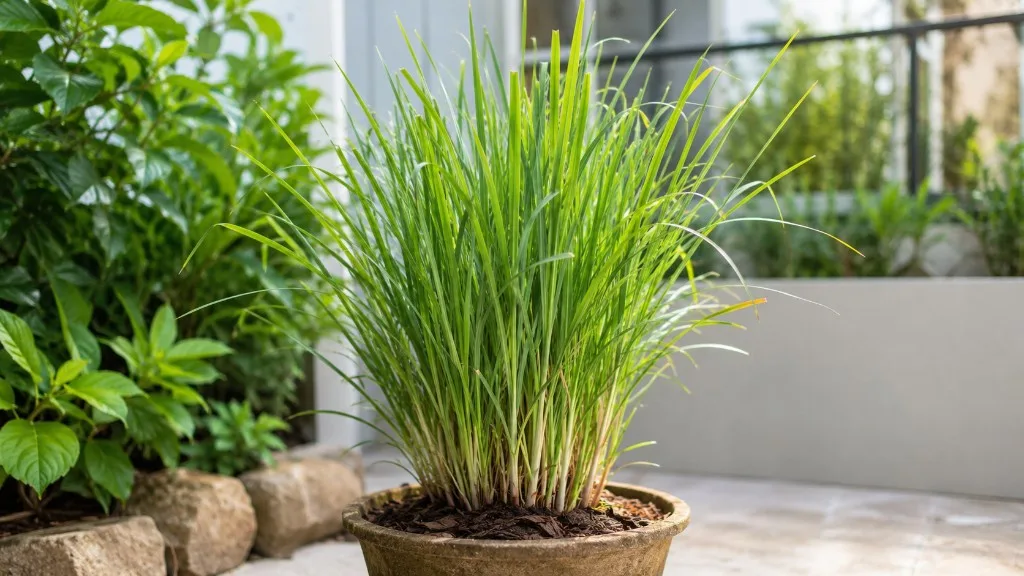
Thin, pale stalks that smell faintly of lemon peel—and soggy crowns that yellow from the base—are the usual reasons home cooks give up on lemongrass. The plant is not fussy once you treat Cymbopogon citratus as a sun-hungry tropical grass grown for harvest, not a low-light houseplant. It wants full sun, consistently moist but never waterlogged soil, and warmth. Get those three right and bases thicken for curry pastes and teas; get them wrong and you keep a green fountain that never cooks well.
Most failures stack the same way. A pot sits in afternoon shade, watering stays on a fixed calendar through a cool indoor winter, or a saucer holds monsoon runoff against the crown for days. Light, water, and soil are one system: brighter plants drink faster, dense mix holds water longer, and cold slows everything. This guide walks that system for pots and beds, with India-relevant balcony and monsoon notes where they match the plant’s tropical biology.
Written by Sai Ananth. Recommendations were checked against Missouri Botanical Garden, Utah State University Extension, UF/IFAS, NC State Extension, the Royal Horticultural Society, Wisconsin Horticulture, and ASPCA plant listings, plus LeafyPixels plant-care data. Reviewed by the LeafyPixels Review Board on 2026-08-02.
Know Your Plant: Culinary Lemongrass vs Lookalikes
Lemongrass is a frost-tender clumping grass grown for lemon-scented stalk bases used in Thai, Vietnamese, and Indian cooking, plus fragrant blades for teas and broths. Missouri Botanical Garden describes Cymbopogon citratus as a dense rounded clump of light green, strap-shaped leaves that typically reaches about 2 to 4 feet tall and 2 to 3 feet wide in a season, with roots hardy mainly in warm zones and foliage evergreen only where winters stay mild. (Missouri Botanical Garden) Under strong heat, moisture, and fertility, Utah State University Extension and UF/IFAS note plants can push toward 3 to 6 feet tall and about 3 feet wide—which is why spacing and pot size matter early. (USU Extension) (UF/IFAS)
Think of it as a cut-and-come-again culinary herb, not a static ornamental grass. You want firm new shoots at the center, thickening outer stalks, and fast regrowth after harvest. A plant that merely stays green in shade is surviving, not producing kitchen-quality bases.
West Indian, East Indian, and Citronella Grass
West Indian lemongrass (Cymbopogon citratus) is what most kitchen gardeners and grocery bunches mean by “lemongrass.” It belongs to Poaceae, with Missouri Botanical Garden and NC State Extension citing origins in southern India and Sri Lanka; RHS and UF/IFAS Gardening Solutions likewise place the plant in India and nearby tropical regions. (Missouri Botanical Garden) (NC State Extension) (RHS) (UF/IFAS Gardening Solutions)
You may also see East Indian lemongrass (Cymbopogon flexuosus), sometimes called Cochin or Malabar grass. USU Extension notes only two of many Cymbopogon species are commonly used as lemongrass for cooking; Wisconsin Horticulture treats C. citratus and C. flexuosus as nearly interchangeable in the kitchen, while RHS lists C. flexuosus as a slightly more compact option with purple-tinted stems. (USU Extension) (Wisconsin Horticulture) Care principles overlap—sun, warmth, moisture, drainage—but confirm labels if you are growing for a specific use.
Do not confuse culinary lemongrass with citronella grass (Cymbopogon nardus), grown mainly for insect-repellent oil rather than soup stock. Wisconsin Horticulture is clear that citronella oil comes from C. nardus, not from the culinary species you want for curry. (Wisconsin Horticulture)
Seed is hard to source and slow for many home growers. Most people start from nursery divisions, saved clump sections, or rooted supermarket stalks. RHS flags biosecurity risk with produce-aisle stems and prefers nursery plants or seed; many home growers still root grocery stalks when they look fresh and firm. Use your judgment and local sourcing rules. (RHS)
Quick Lemongrass Care Snapshot
For healthy culinary lemongrass, place the plant in full sun (about 6 or more hours of direct light daily), keep the mix evenly moist during active growth without standing water, use a rich, well-draining pot with a drainage hole, and feed lightly through the warm season. NC State Extension lists full sun and moist soil with good drainage; USU and UF/IFAS pair full sunlight with warm, humid conditions and plenty of moisture. (NC State Extension) (USU Extension)
| Care factor | Baseline target | Climate × watering cue |
|---|---|---|
| Light | Full sun, 6+ hours direct | Flavor and thickness scale with sun hours |
| Water | Top 3–4 cm dry, then soak and drain | Hot bright pots: often 1–3 days; cool/dim: 5–7+ days |
| Soil | Rich, moist, free-draining mix | Avoid sealed basins in monsoon |
| Feed | Half-strength soluble in warm growth | Pause or cut back when cool and dim |
| Temp | Warm active growth; protect from frost | Bring pots in before ~7°C / 45°F nights (RHS) |
Attributed growing notes (LeafyPixels editorial): On a Bengaluru east-facing balcony in May 2025, a 14-inch (35 cm) terracotta of C. citratus in a 60/20/20 potting-mix / perlite / compost blend needed a full soak about every 1–2 days when midday highs sat near 34–36°C—the top 3–4 cm dried by late afternoon after morning water. The same clump in a cooler, shadier December week stretched to every 5–6 days. Your pot, wind, and root mass will differ; treat these as measured examples, not a calendar.
A Mumbai monsoon terrace, a London patio in August, and a Toronto windowsill in January will not dry at the same speed. Check the soil, then water.
Light for Culinary Quality
Lemongrass is a full-sun plant. Missouri Botanical Garden lists full sun with only light-shade tolerance, and NC State Extension defines the light need as 6 or more hours of direct sunlight a day. (Missouri Botanical Garden) (NC State Extension) Wisconsin Horticulture likewise calls for warm, humid conditions in full sun. (Wisconsin Horticulture) That matters for flavor as much as survival. Thin, pale stalks from chronic shade can look alive and still disappoint in a curry because the plant never built dense, citrus-rich base tissue.
Outdoors, choose the openest warm exposure you have—south or west in temperate gardens, or an unshaded terrace in tropical and subtropical cities. UF/IFAS Gardening Solutions notes lemongrass can take full or part sun in Florida landscapes and may reach about six feet tall and four feet wide, but part sun is a compromise for survival and landscape use, not the best setup for thick kitchen stalks. (UF/IFAS Gardening Solutions) In extreme dry heat, a little afternoon shade can reduce blade scorch while still delivering a strong morning-to-midday total. In humid Indian summers, open sun with wind and water usually beats “protecting” the plant into thin shade growth.
Full Sun Outdoors vs Bright Windows Indoors
Container culture is the practical default wherever frost occurs. RHS recommends growing lemon grass in a pot so you can park it in a warm sunny spot for summer and move it indoors before cold, wet winters. (RHS) In frost-free Indian plains and coastal zones, the same plant can stay outdoors year-round if drainage is good and the crown never sits in stagnant water through monsoon downpours.
Indoors, treat lemongrass as a high-light plant. A bright south- or west-facing window helps, but glass and winter sun angles rarely match outdoor tropics. USU Extension is blunt: plants grown indoors produce fewer stalks because of low light. (USU Extension) If you overwinter indoors mainly to save the clump, accept slower growth. If you want winter harvest, add a full-spectrum grow light for roughly 12 to 16 hours daily (practice tip for high-light herbs under glass) and keep the canopy close enough that blades stay firm and green rather than pale and floppy. Placement diagrams live in the lemongrass light guide.
Shade Survival vs Full-Sun Harvest Flavor
Use sensory cues, not leaf color alone:
| Cue | Shade / low-light survival | Full-sun culinary growth |
|---|---|---|
| Aroma when crushed | Mild, grassy, fleeting citrus | Sharp lemon-oil scent from base and blades |
| Base thickness | Often stays under ~¼ inch for months | Outer stalks reach ~½ inch or thicker |
| Texture | Soft, fibrous, hard to pound into paste | Firm pale core after peeling woody sheaths |
| Habit | Floppy blades, long gaps between usable tillers | Dense fountain with rapid center regrowth |
Decision rule: more direct sun → faster dry-down → shorter water interval → thicker harvestable bases. Moving a shade survivor into full sun without increasing water is how tips brown.
Watering Without Crown Rot
During active growth, lemongrass wants consistent moisture with air at the roots. USU Extension and UF/IFAS describe a tropical plant that prefers regular rainfall and humidity; container plants should be watered so pots do not dry out, while waterlogged soils must be avoided. (USU Extension) (UF/IFAS) RHS makes the same distinction for pots: keep compost evenly moist in warm weather, then water sparingly indoors in winter when growth slows. (RHS) Wisconsin Horticulture adds that the plant needs a great deal of water when rainfall is sparse. (Wisconsin Horticulture)
A workable check: press a finger about 3 to 4 cm (roughly 1 to 1.5 inches) into the mix. If that layer feels dry and the pot feels light, water thoroughly until a little runs from the drainage hole, then empty the saucer. If the deeper mix is still damp and the pot feels heavy, wait. In hot, bright Indian summers or desert patios, that may mean watering every 1 to 3 days for containers. In cooler cloudy stretches, stretch to every 5 to 7 days or longer. Fixed Tuesday watering is how soft yellow bases start.
Summer Moisture, Winter Dry-Down, and Monsoon Drainage
Summer and winter are different plants from a watering perspective. In heat and full sun, large leaf surface area and fast grass growth pull water quickly. In winter—or any cool, dim indoor stretch—growth stalls, evaporation drops, and the same wet mix that felt “safe” in June becomes a root-rot risk. When you move pots indoors for frost protection, cut frequency the same week, not after yellow bases appear.
Monsoon checklist for pots (practice):
- Confirm the pot has an open drainage hole—no sealed cachepot as the only vessel.
- Empty the saucer within an hour after every heavy rain or soak.
- Lift the pot onto feet so the base is not sitting in terrace puddles.
- If the mix stays sour and wet for more than two days after rain, tip the pot sideways to drain, then refresh with freer-draining mix at the next repot.
- Prefer morning sun and wind over a sheltered wet corner that never dries.
Drought stress has its own look: browning tips, thinner stalks, and slowed regrowth after harvest. Do not bounce from bone-dry to swampy. Deep, even soaks with full drainage beat daily sips that wet only the surface. Seasonal schedules and container vs bed nuance are in the lemongrass watering guide.
Soil, Pots, and Mix Recipes
Lemongrass wants soil that is rich and moist, yet free-draining. USU Extension recommends well-drained, moist, rich loam with high organic content and warns against waterlogged ground; Missouri Botanical Garden echoes organically rich loams with good drainage. (USU Extension) (Missouri Botanical Garden) Think “wrung-out sponge with air,” not bog mix and not cactus grit.
In beds, work compost into the top several inches before planting and space clumps generously—USU and UF/IFAS suggest about 3 feet between divisions when plants can reach several feet tall and wide. In heavy clay, raised beds or large containers are safer than fighting a sealed basin that holds monsoon water against the crown.
Pot Size, Drainage, and Mix Ratios
Always use a pot with a real drainage hole. Start one size larger than the nursery pot, then step up as the clump fills the container—lemongrass is vigorous and often needs repotting every 1 to 2 years. Wrong-mix symptoms and refresh timing are covered in the lemongrass soil guide.
House mix recipes (labeled as home practice, not extension mandates):
- Everyday pots: roughly quality potting mix with about 15% perlite and 10% compost or worm castings
- Faster drainage: about 60% potting mix / 20% perlite / 20% compost
- Target a slightly acidic to neutral feel around pH 6.0 to 7.5
Avoid sealed decorative cachepots without drainage unless you treat them as outer sleeves and never leave the inner pot sitting in runoff. Terracotta dries faster in hot wind; plastic holds moisture longer in air-conditioned rooms. Match watering to the pot material instead of blaming the plant.
Climate, Frost, and India Growing Notes
Lemongrass is a tender tropical perennial. RHS says plants need roughly 13°C (55°F) or warmer to grow well and should come indoors before overnight lows fall below about 7°C (45°F). (RHS) Missouri Botanical Garden treats foliage as evergreen mainly in USDA Zones 10 to 11, with roots sometimes surviving colder microclimates around Zone 8b, while NC State lists hardiness from about 8b through 11b depending on local winter severity. (Missouri Botanical Garden) (NC State Extension) Frost browns or kills tops quickly—treat cold damage as a hard stop, not a cosmetic issue. Wisconsin Horticulture notes frost will kill or severely damage plants, so harvest or dig before overnight freezes. (Wisconsin Horticulture)
In much of India, the plant’s native-range logic is useful. Warm plains and coastal cities can keep lemongrass outdoors nearly year-round if sun and drainage are right. Peak heat (often roughly 20–38°C / 68–100°F active growth) is when the plant explodes if water and nitrogen keep up. Monsoon months help with humidity, but pots still need free drainage. Dry inland winters and heated indoor air favor spider mites more than outdoor humidity does—USU and Missouri Botanical Garden both flag mites as a serious indoor pest. (USU Extension) (Missouri Botanical Garden)
Overwinter Indoors or Grow Year-Round
Decision tree:
- Will nights stay above ~7°C / 45°F with no frost? → Keep outdoors; manage monsoon drainage.
- Frost or cold nights approaching? → Harvest usable stalks, then either bring the whole pot into a bright warm room or save 6-inch sections of bulbous shoot base with roots for spring starts, as USU and Missouri Botanical Garden recommend. (USU Extension) (Missouri Botanical Garden)
- Indoor overwinter goal is survival, not peak harvest → Brightest window, water sparingly, pause strong feeding.
- Want winter kitchen stalks? → Add grow light; expect slower thickening than summer outdoors.
Feeding, Harvesting, and Kitchen Use
Like other grasses, lemongrass is hungry in summer. USU Extension and UF/IFAS recommend a half-strength balanced soluble fertilizer every week to 10 days for outdoor pots from June through September, with monthly feeding for in-ground plants; indoor pots get a lighter monthly rhythm. (USU Extension) (UF/IFAS) RHS offers a milder container schedule: slow-release in spring or a general liquid feed every two or three weeks from spring until late summer. (RHS) Use the stronger cadence only while growth is fast and light is strong; pause or cut back when the plant is cool and dim, and stop heavy nitrogen before indoor overwintering so soft growth does not pile into a low-light room.
Harvest Readiness and Sharp-Leaf Safety
Harvest when outer stalks are about ½ inch (roughly 1.25 cm) thick or thicker. Cut or twist stems at ground level from the outside of the clump, discard tough outer layers, and use the pale lower core. Leaves can flavor teas and broths even when too fibrous to chew. USU, Wisconsin Horticulture, and similar extension guidance target that ½-inch base; RHS harvests through the warm season in UK climates, while tropical growers can harvest whenever stalks size up. (USU Extension) (Wisconsin Horticulture) Wear gloves—Wisconsin notes the finely serrated leaf edges are rough enough to cut skin. (Wisconsin Horticulture)
Attributed harvest note: From a spring division potted into that same 14-inch Bengaluru container, the first outer bases reached a solid ½-inch thickness at about 8 weeks of full morning-to-midday sun with weekly half-strength feed. A grocery-rooted stalk in a 1-liter starter pot took closer to 10–12 weeks to match that thickness. Shade-grown companions stayed aromatic but rarely crossed the harvest threshold in the same window.
Discard woody, exhausted centers when the clump produces only skinny tillers—divide and restart rather than nursing flavorless cores forever. USU notes frozen stalks keep for months.
Propagation: Division and Grocery Stalks
Propagate by division in spring or by rooting fresh firm stalks. Division is the cleanest refresh for woody, exhausted centers: tip the plant out, cut the rootball so each piece has roots and several strong stems, and pot into moist free-draining mix. (RHS) Step-by-step division and rooting live on the lemongrass propagation guide.
Grocery-Stalk Rooting Timeline and Failure Signs
USU Extension notes fresh grocery stalks (leaves and roots absent) from Asian markets can root in a glass of water in about two weeks. (USU Extension) Missouri Botanical Garden likewise describes rooting grocery stalks in water. (Missouri Botanical Garden) Wisconsin Horticulture says roots should form within two or three weeks if they are going to, in water or potting medium, provided enough of the basal plate remains. (Wisconsin Horticulture)
Practice steps:
- Choose firm, heavy bases—not slimy, moldy, or hollow centers.
- Trim dried leaf tops; leave the bulbous base intact.
- Stand in a few centimeters of clean water, change water every 2–3 days, or pot into moist mix with the base barely buried.
- Move to bright warmth; pot up when roots reach about 2–5 cm (1–2 inches).
- Acclimate gradually into full outdoor sun over 7–14 days.
Failure signs: mushy foul base within days (discard), no roots after three weeks in warm conditions (usually a dead or too-dry produce stalk), or green top growth with zero roots because the basal plate was cut away. RHS prefers nursery plants partly for biosecurity—if you root produce, keep it separate from outdoor beds until it is clearly healthy. (RHS)
Attributed rooting note: Three grocery stalks started in a warm kitchen in March 2025 rooted in water in 11, 14, and 16 days; one soft stalk from the same bunch never rooted and was composted at day 10. Success tracked firmness at purchase more than brand or store.
Common Problems: Yellow Leaves, Thin Stalks, and Mites
When grown warm, bright, and evenly moist with drainage, lemongrass is relatively tough. USU and UF/IFAS call it generally free of pests and diseases outdoors when culture is right; RHS says the same for warm bright conditions, while noting rust and greenhouse whitefly as occasional issues. (USU Extension) (RHS) Indoors, spider mites are the recurring villain—tiny yellow or white stippling on blades, worse in dry heated rooms. Blast with water, improve humidity modestly, and treat with insecticidal soap if needed.
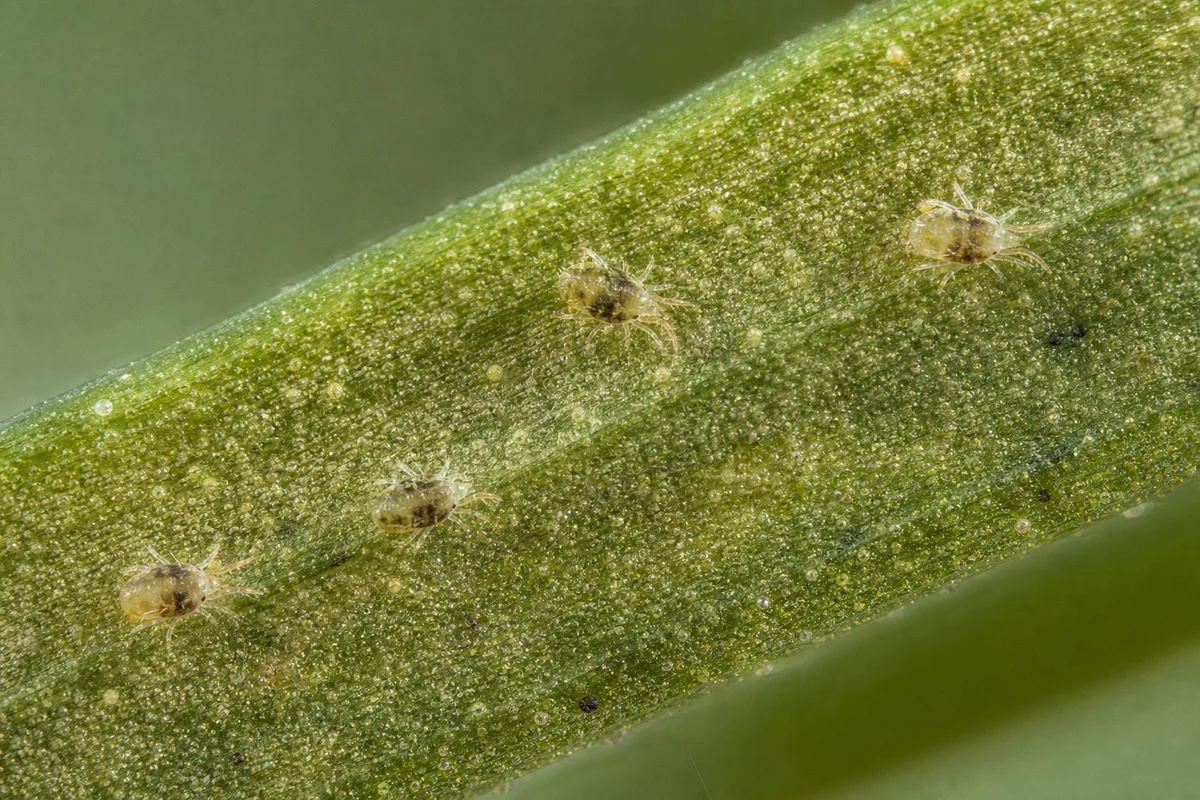
Culture problems outnumber exotic diseases. Soft yellowing at the base with wet soil points to overwatering or root rot. Crispy tips with a light, dry pot point to underwatering or salt buildup. Sudden collapse after a cold night is cold damage, not a mystery fungus. Fix the environment before stacking pesticides and fertilizer.
Yellow leaves: wet mix plus soft yellow bases usually means too much water or failing roots; dry mix plus crisp yellow outer blades often means underwatering, heat stress, or natural aging of outer shoots that should be harvested. See yellow leaves for a full diagnostic path. Nitrogen shortage during heavy harvest can also pale a hungry clump—feed only after drainage and light are corrected; deeper cadence lives in the fertilizer guide.
Thin, weak stalks almost always mean not enough light or chronic underwatering after harvest, not a missing miracle fertilizer—see also thin stems. Move into fuller sun, keep summer moisture steady, and harvest older outer stalks so new shoots can thicken.
Wilting with wet soil is a root-zone emergency; wilting that firms after a thorough soak was thirst.
Pet Safety and Toxicity
Lemongrass is not pet-safe. The ASPCA lists lemon grass (Cymbopogon citratus) as toxic to dogs, cats, and horses, with toxic principles listed as essential oils and cyanogenic glycosides. Clinical signs for dogs and cats include stomach upset; horses may show more severe effects, including difficulty breathing and weakness, with death listed as rare. (ASPCA) Keep plants and concentrated lemongrass essential oils away from chewing pets. If ingestion is suspected, contact a veterinarian or ASPCA Animal Poison Control at (888) 426-4435 (a consultation fee may apply). NC State Extension also tags the species as a problem for cats, dogs, and horses. (NC State Extension)
Culinary use by people is a different context from pets chewing foliage or licking oil. Do not assume “kitchen herb” means automatically safe for animals.
Related guides
Use this page for the whole-plant culinary framework. Jump to topic depth or sibling guides when you already know the bottleneck:
- Lemongrass care hub — overview and problem index
- Light, watering, soil, propagation, repotting — dedicated topic guides
- How to water indoor plants the right way — soil-check watering skill that transfers to containers
- Mint care guide — related culinary herb setup (containment differs; moisture logic overlaps)
Conclusion
Good lemongrass care is a short loop: full sun for culinary quality, moist free-draining soil, warm temperatures, and seasonal watering that backs off when growth slows. Harvest when outer bases hit about ½ inch, wear gloves around sharp blades, and restart tired centers by division. In frost climates, bring pots in before cold nights or save rooted bases; in tropical monsoon cities, win the drainage battle before you add fertilizer.
Overwinter vs year-round decision: if nights stay mild and frost-free with open drainage, grow outdoors year-round; if frost or sub-7°C nights arrive, harvest, move the pot to bright warmth, and water sparingly until spring heat returns.
Once light, water, and soil agree, lemongrass becomes one of the most productive culinary grasses you can grow in a pot. Use the Related guides section above when you need topic depth or a symptom-first path.