32 Low-Maintenance Plants for an Easy Garden
Thirty-two low-maintenance outdoor plants grouped by sun, soil, and job—with establishment rules, spread warnings, and zone notes so you plant once and stop replacing dead picks.
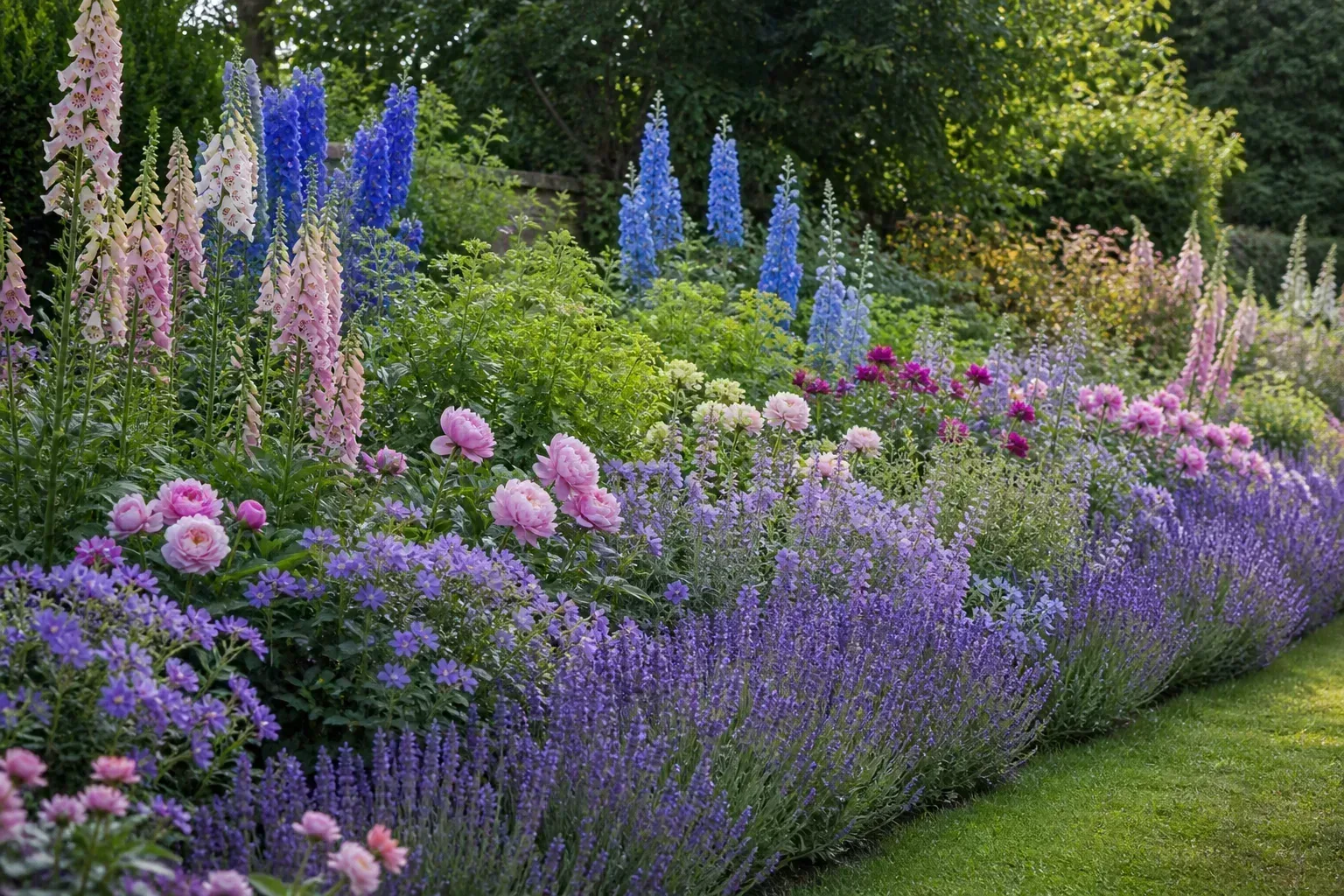
A low-effort garden is not a garden you never touch. It is a garden where the plants match your sun, soil, and climate closely enough that you are not replacing dead shrubs every spring or dragging a hose across the yard every evening. The thirty-two picks below earn the label low maintenance because they tolerate heat, drought, shade, or poor soil once established—and because their recurring chores stay modest: occasional cutback, light mulch, maybe one annual prune.
What separates a useful list from a catalog rerun is site matching and an honest establishment year. Plant drought-tolerant sedum in soggy clay and it rots. Plant hosta in afternoon blast sun and it fries. The goal here is not to memorize thirty-two names. It is to pick the right handful for your job—then stop fighting the yard.
What Low Maintenance Actually Means in a Real Garden
The RHS low-maintenance gardening guide states plainly that no garden is zero maintenance, but many tasks have lower-input alternatives. Low maintenance in practice means fewer recurring inputs after roots are deep: less deadheading, less division, less feeding, less pest rescue, and less replacement of plants that were never suited to the spot.
It does not mean ignoring the garden for twelve months. You will still pull weeds while plants are small, refresh mulch, and cut back spent stems. Shrubs listed as easy care still need room for mature spread—otherwise you inherit annual hacking. Perennials marketed as tough still need water while their root balls expand. Confusing mature drought tolerance with day-one neglect is the top reason “easy” plant lists fail in real yards.
The Establishment Year Nobody Mentions
Drought tolerant and low maintenance describe mature plants with developed root systems—not six-inch nursery pots dropped into July heat. Through the first full growing season, aim for about one inch of water per week from rain plus deep irrigation combined. Morning watering and two to three inches of mulch (kept off crowns) help roots reach depth. NC State Extension notes purple coneflower, for example, is drought tolerant once established; that establishment phase is the part most listicles skip.
Fall planting in warm soil can shorten the timeline if you still have six to eight weeks before hard frost. Spring planting before heat arrives is safer in hot climates. Underwater new transplants through their first dry summer and you will conclude the plant “does not like your yard” when the real issue was root depth. For more picks using the same logic, see our guide to easy-care drought-tolerant perennials.
Read Your Site Before You Buy Anything
Walk the yard at mid-morning and late afternoon. Note where sun lasts six hours or more, where soil stays wet two days after rain, and whether you are filling a border, slope, privacy screen, or container row. New construction sites often have stripped topsoil and compacted fill; match plants to drainage first, then prettiness.
Sun, Soil, Drainage, and Hardiness Zones
Full sun means six or more hours of direct light during the growing season. Partial shade is roughly three to six hours, or dappled light. Shade is less than three hours of direct sun. Heat reflected off walls and pavement raises stress beyond what a zone map suggests—south-facing foundation beds dry faster than open lawn.
Check your USDA hardiness zone before buying woody plants and marginally hardy herbs. Rosemary survives outdoors year-round in zones 8–10; agave hardiness varies sharply by species. Canna lilies are root-hardy in warmer zones but need rhizome lift or pot storage where winters are cold. Peonies need winter chill; they struggle where winters are too mild.
Match soil moisture to the plant, not the other way around. Bee balm and canna tolerate wet feet; sedum, agave, and ice plant need fast drainage. False indigo and juniper handle lean, rocky soil. Hosta and lady’s mantle prefer consistent moisture in shade. If puddles remain hours after rain, fix drainage or raise beds before shopping.
Full-Sun Perennials and Grasses That Handle Neglect
These eight picks anchor sunny borders, hell strips, and new-build rubble where heat and drought would cook fussier flowers. All need the establishment-year watering rule above; after that, chores stay light.
Russian Sage, Sedum, Coneflower, and Daylily
Russian sage (Salvia yangii, formerly Perovskia) builds airy silver stems topped with purple blooms from midsummer into fall. It wants full sun and sharp drainage, tolerates poor soil, and resists deer. Space for three to five feet of height and width in zones 3–9. Cut back near ground level in late winter; that is the main annual task.
Sedum (stonecrop) is the honest answer for “what survives if I forget to water.” Succulent leaves store moisture; tall types like ‘Autumn Joy’ and creeping ground-cover species both work. Full sun to light shade, zones 3–10, well-drained soil. No deadheading required for many cultivars—spent heads can even feed birds. See also our easy-care drought-tolerant perennials guide for stonecrop in dry borders.
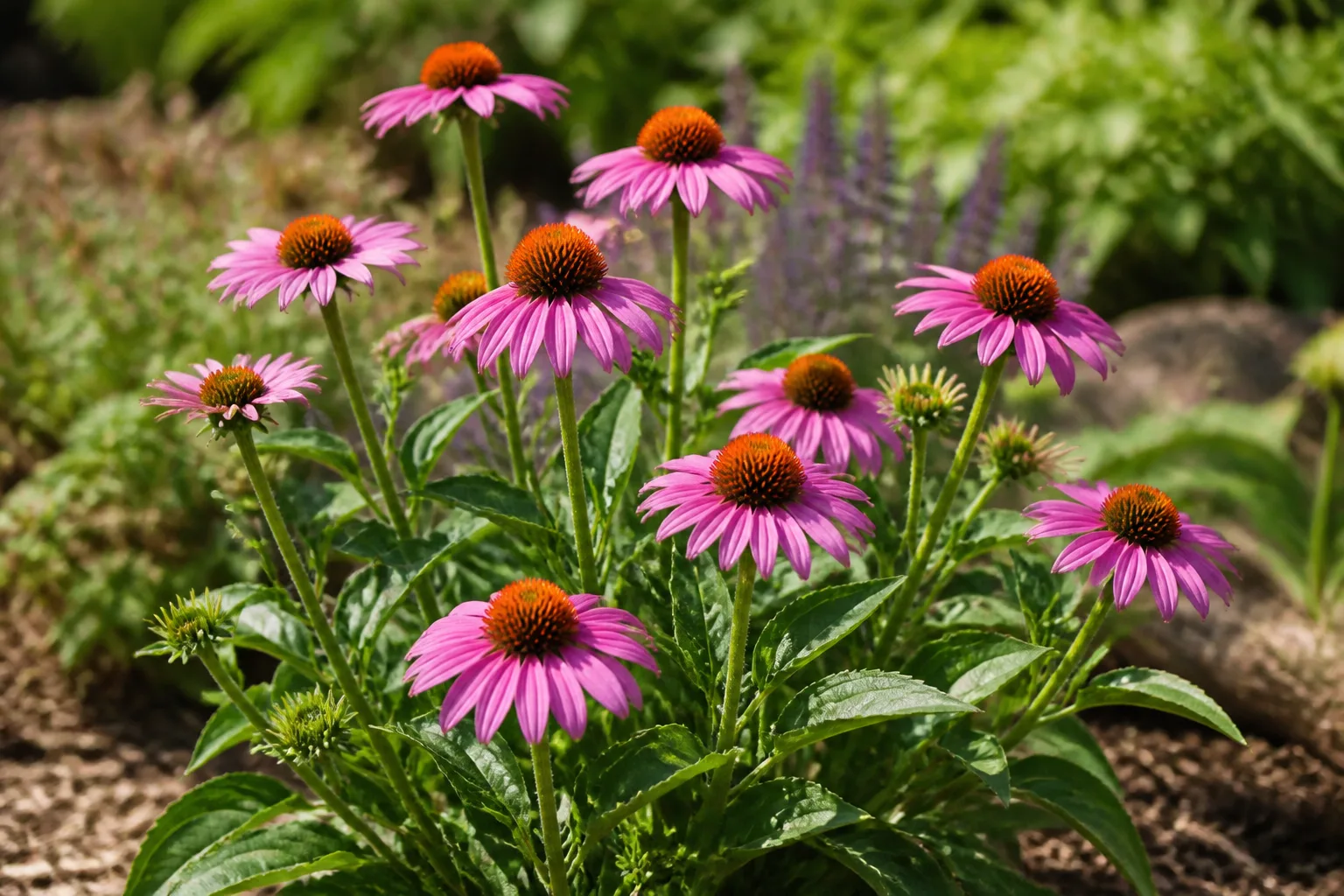
Purple coneflower (Echinacea purpurea) is a native pollinator backbone in zones 3–8. Pink-purple rays around a spiny orange cone bloom from early summer into fall. NC State Extension lists it as drought tolerant once established, with few serious pest problems. Leave some seedheads for goldfinches or deadhead for tidier borders—your choice, not a requirement. Deeper detail lives in our echinacea and purple coneflowers guide.
Daylilies (Hemerocallis) are nearly bulletproof once roots settle: full sun, adaptable soil, zones 3–10. Each flower lasts a day, but scapes keep coming. ‘Stella d’Oro’ is the familiar everbloomer; hundreds of cultivars add form and color. Dark cultivars may appreciate afternoon shade in the hottest zones. Divide crowded clumps every few years if bloom declines—optional maintenance, not weekly care.
Catmint, False Indigo, Feather Reed Grass, and Lamb’s Ear
Catmint (Nepeta spp., especially Nepeta × faassenii ‘Walker’s Low’) delivers gray-green mounds and violet-blue spikes bees love. Full sun to partial shade, zones 4–8, well-drained soil including clay if not waterlogged. Shear after first bloom flush for a second round—one cut, not constant deadheading.
False indigo (Baptisia australis) is a shrubby perennial with blue lupine-like spires in spring. NC State Extension notes deep taproots that make it drought tolerant and difficult to move once settled—plant it where it can stay. Full sun to part shade, zones 3–9. Deer tend to leave it alone.
Feather reed grass (Calamagrostis × acutiflora) adds vertical structure without staking. Six-foot bloom stalks rise over neat clumps; full sun, zones 4–11, tolerates wet or dry soils once established. Cut clumps to a few inches in late winter. Pair with our low-maintenance full sun plants list for more hot-border ideas.
Lamb’s ear (Stachys byzantina) offers silvery fuzzy leaves kids actually touch on purpose. Full sun to partial shade, zones 4–9, dry lean soil. Lavender flower spikes are secondary; bees visit them. Clumps spread modestly—divide to share or contain. Avoid overhead irrigation that soaks the woolly leaves.
Shade and Partial-Shade Plants That Do the Heavy Lifting
When the yard is dominated by trees, north-facing walls, or building shade, these four perennials do the work sun lovers cannot.
Hosta, Coral Bells, Dead Nettle, and Lady’s Mantle
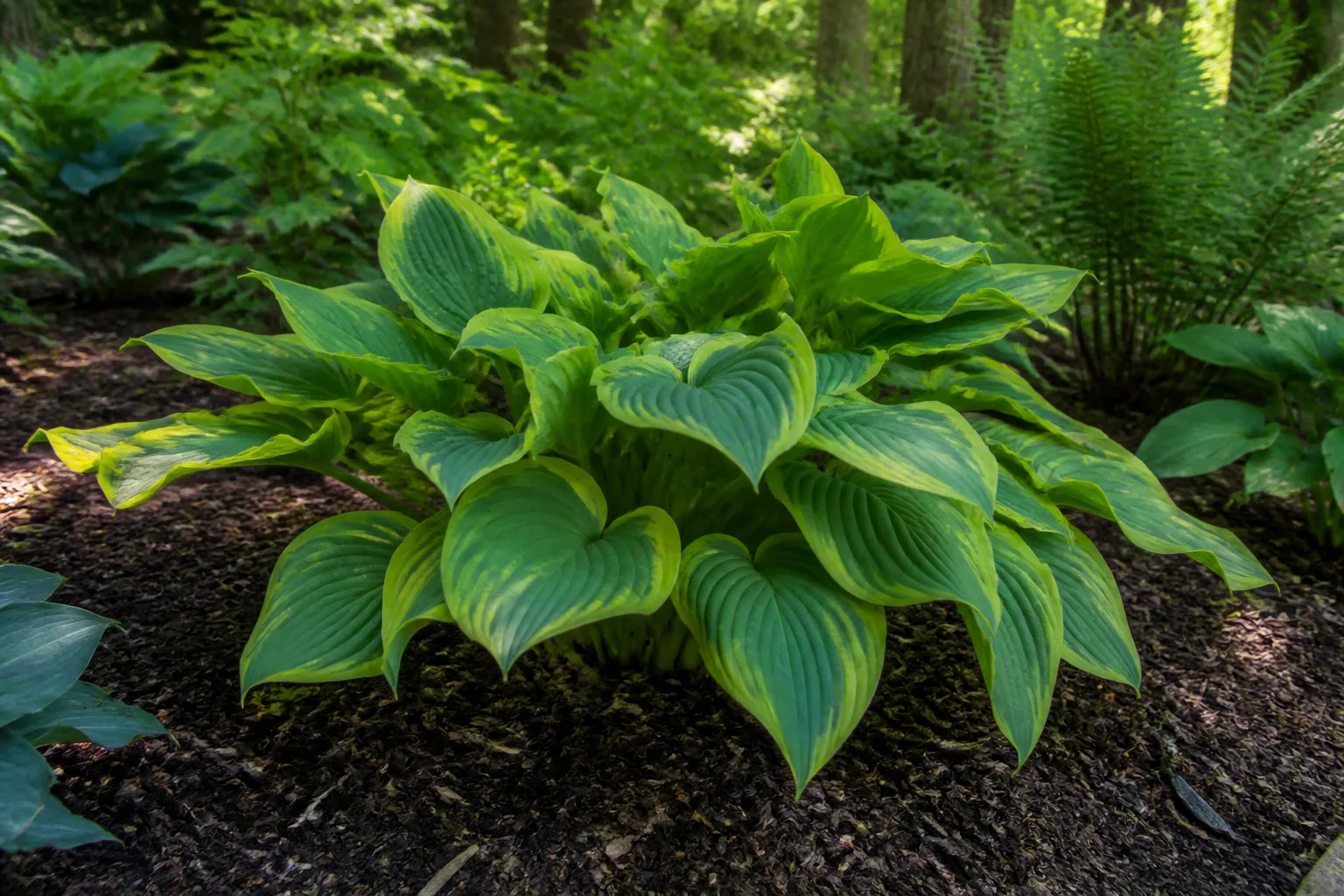
Hostas are the default answer for shade: bold leaves from mini to giant, occasional summer flowers, zones 3–9. They want consistent moisture and rich, well-drained soil. Slugs are the main headache in wet climates—choose thick-leaved cultivars and avoid mulch volcanoes. Gardening Know How recommends planting bare-root or container hostas so crowns sit at soil level, not buried. They multiply slowly into colonies without much intervention.
Coral bells (Heuchera) lead with foliage—lime, plum, silver, caramel—plus wiry flower stems in spring. Partial shade and well-drained soil suit most hybrids; full sun only where summers are cool. Zones 4–9. Plants are somewhat short-lived; divide every three to four years to renew vigor. Still far less work than annual shade baskets.
Dead nettle (Lamium maculatum) is a tough ground cover for dry shade once established. NC State Extension documents silver-variegated foliage and pink or white flowers in spring. Zones 4–8. It spreads by shallow runners—excellent under trees, aggressive in rich moist beds. Pull extras for containers if it crosses lines.
Lady’s mantle (Alchemilla mollis) handles tree-root competition and dry shade better than most perennials. Chartreuse foamy flowers in early summer self-seed freely; deadhead if you do not want volunteers. NC State Extension rates it hardy in zones 3–8. Cut back tired foliage after bloom for a fresh flush.
Spring Bulbs and Long-Lived Peonies
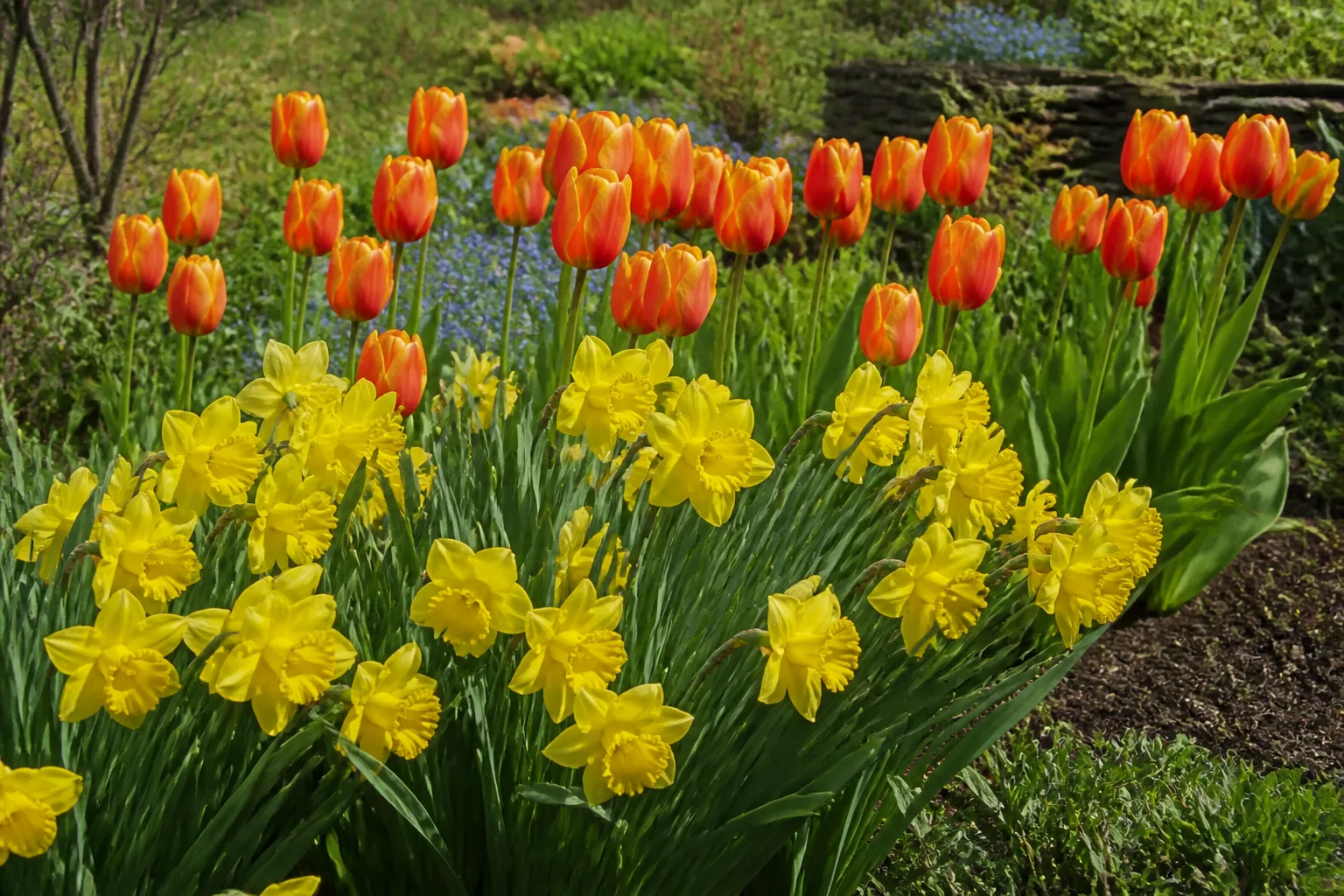
Daffodils (Narcissus spp.) are plant-and-forget bulbs if you respect depth and drainage. Plant in fall six to eight inches deep in zones 4–8 (some cultivars broader). University of Maryland Extension highlights their reliability returning each spring with minimal care. Foliage must yellow naturally before removal—that is the main chore. Squirrels and deer usually ignore them.
Peonies (Paeonia lactiflora and hybrids) reward patience with decades of bloom—some plants outlive the gardener. Full sun, zones 3–8, winter chill required. Plant eyes no deeper than two inches or flowering suffers. Stake only if heavy double blooms flop in rain. Cut foliage after frost. Low maintenance does not mean instant: peonies may take two to three years to settle after transplant.
Shrubs for Structure Without Weekly Pruning
Woody plants carry the garden between seasons. These six stay handsome with yearly—or less frequent—pruning if you give them mature space.
Oakleaf Hydrangea, Rose of Sharon, and Viburnum
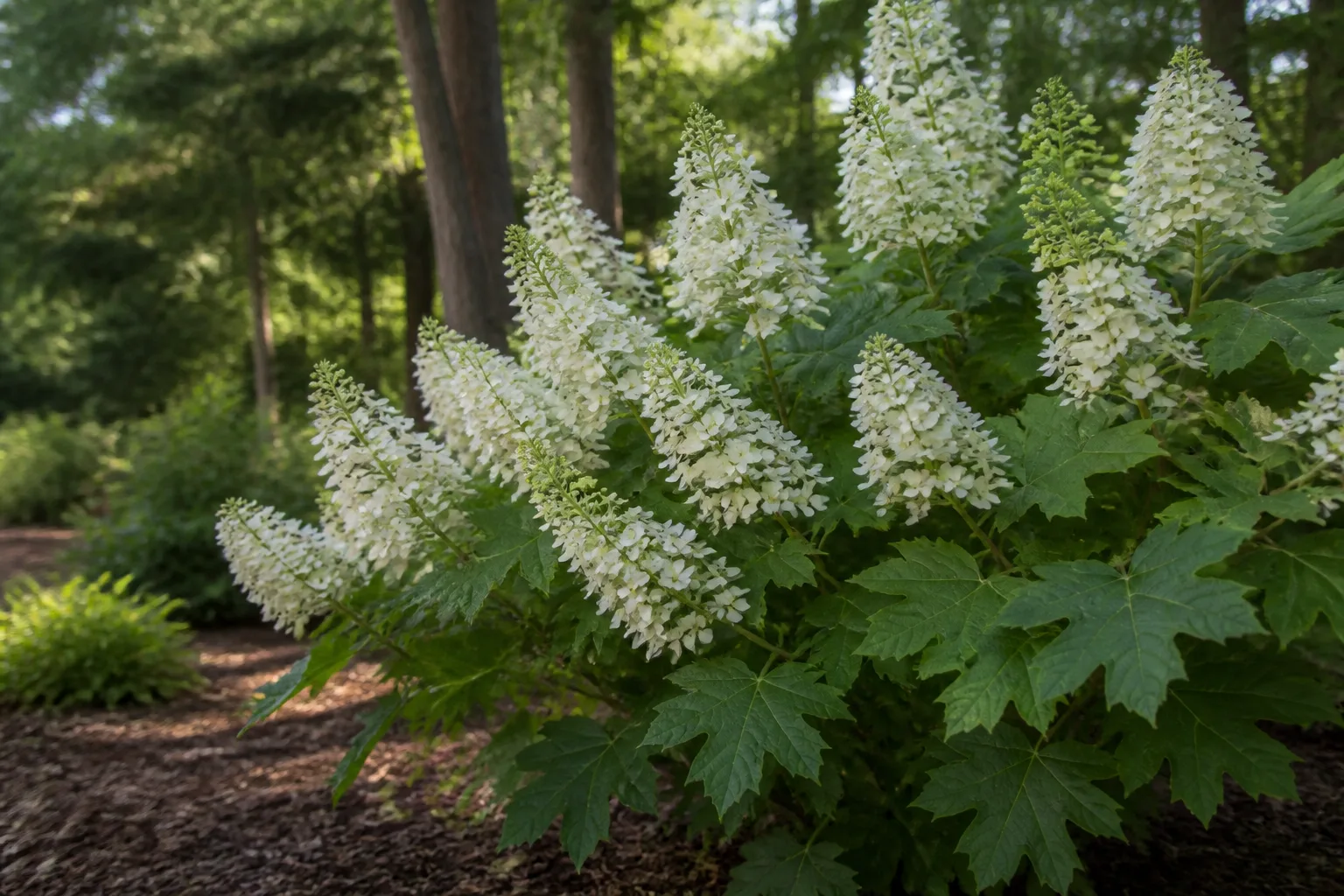
Oakleaf hydrangea (Hydrangea quercifolia) delivers four-season value: white spring panicles aging pink, oak-shaped leaves with red fall color, exfoliating winter bark. Partial shade to sun, moist well-drained soil, zones 5–9. The Missouri Botanical Garden highlights oakleaf types as low-fuss structure plants. Prune immediately after bloom only if size control is needed. More detail in our summer-blooming oakleaf hydrangeas guide.
Rose of Sharon (Hibiscus syriacus) is a heat-tolerant summer bloomer in zones 5–8. Lavender, pink, or white flowers from midsummer to frost on eight- to twelve-foot shrubs. Tolerates poor soil and drought once established. Self-seeds in warm climates—deadhead if volunteers are unwelcome.
Viburnum shrubs range from compact to tree-sized, zones 2–9 depending on species. White spring flower clusters, often followed by berries birds eat, plus fall color on many types. Moist, reasonably rich soil and sun to partial shade suit most. They are not glamorous every week of the year—they are reliable bones that need little beyond removing damaged wood.
Knock Out Roses, Arborvitae, and Eastern Redbud
Knock Out roses (Rosa hybrids) brought shrub roses back to busy yards: self-cleaning blooms, black-spot resistance, zones 5–11. One hard prune in late winter or early spring shapes the plant; skip constant deadheading. See our guide on when to cut back Knock Out roses in fall for timing nuance—light tidy versus hard rejuvenation.
Arborvitae (Thuja spp.) supplies evergreen screening in zones 3–8. Pyramidal cultivars like ‘Emerald Green’ fit narrow hedges; larger types need width you actually have. Tolerates clay and urban air when drainage is decent. Our Green Giant arborvitae guide covers spacing and hedge logic for bigger screens.
Eastern redbud (Cercis canadensis) is a small native tree with pink spring flowers on bare branches—one of the first blooms of the year. Zones 4–8, sun to partial shade, adaptable soil. Minimal pruning beyond removing crossing branches. Heat and drought tolerance improve with age.
Ground Covers, Herbs, and Creeping Spreaders
Low horizontal mass cuts weeding once filled in. These four cover ground or edges with modest input.
Juniper, Creeping Thyme, Rosemary, and Culinary Sage
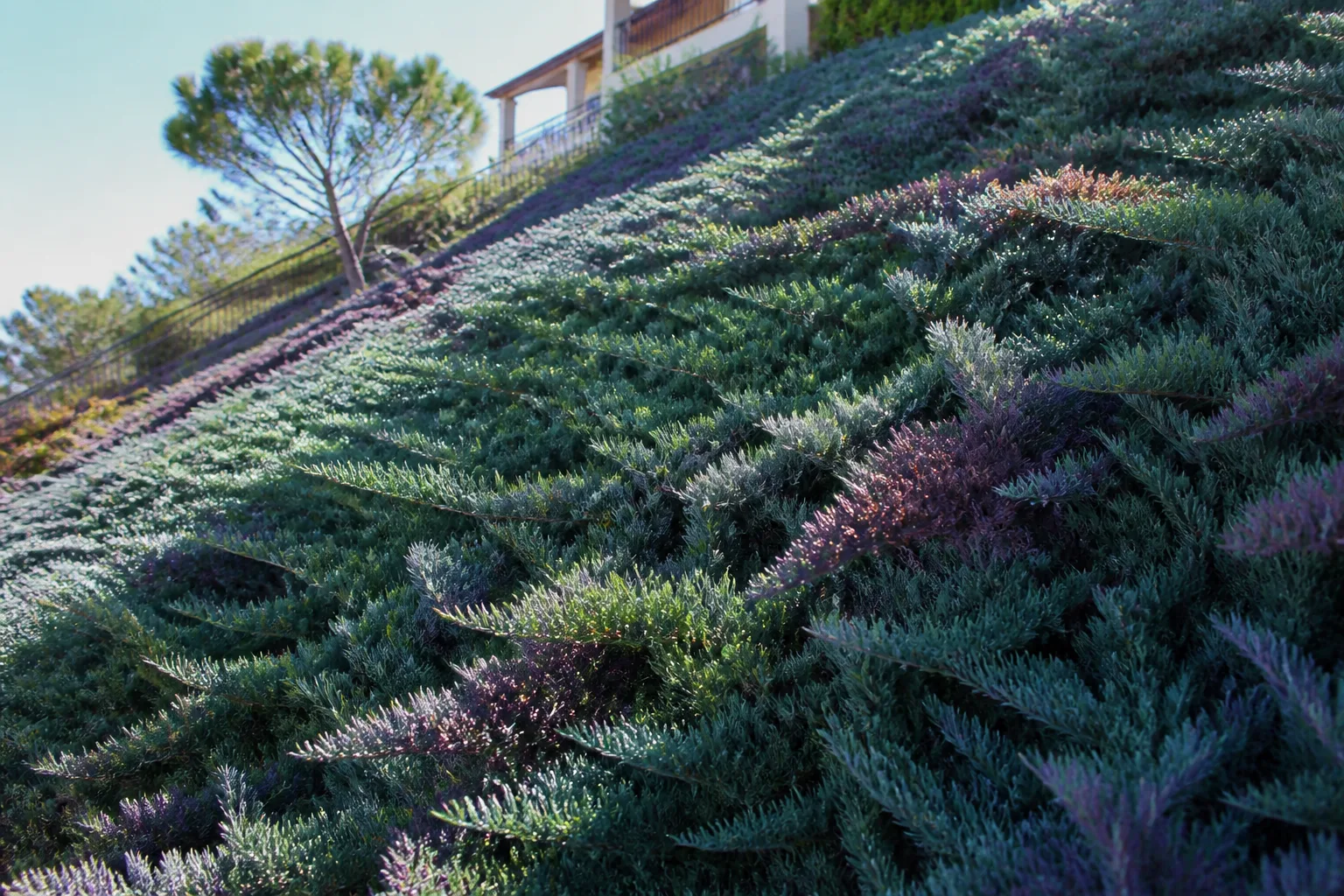
Creeping juniper (Juniperus horizontalis) is a sun-loving evergreen ground cover for slopes and hot strips, zones 3–9. See our creeping juniper plant profile for cultivar spread and placement. No mowing, little feeding, excellent on poor rocky soil. Not for shade or wet clay.
Creeping thyme (Thymus spp.) forms fragrant mats between pavers or over sunny banks. Zones 2–9, sharp drainage essential. Light shearing after bloom keeps mats dense. Drought tolerant when established; charming rather than showy.
Rosemary (Salvia rosmarinus) is evergreen in zones 8–10 with full sun and dry lean soil. Aromatic needles, light blue flowers, culinary use. In colder zones grow in pots and overwinter indoors. Do not overwater—root rot is the main killer. Our perennial herbs guide covers more edible low-care options.
Common sage (Salvia officinalis) matches rosemary’s preferences: sun, drainage, zones 4–10. Woody stems become leggy after a few years—a spring trim restores shape. Purple-blue flower spikes attract pollinators if you let them bloom.
Bold Foliage, Annuals, and Container-Friendly Picks
These seven add drama, annual color, or specialty niches. Several are tender perennials treated as annuals in cold zones.
Canna Lily, Geraniums, Clematis, Agave, Bee Balm, Dusty Miller, and Ice Plant
Canna lilies deliver tropical leaves and hot-colored flowers with bog-tolerant roots—unusual among low-care picks. Full sun, moist soil, zones 7–10 as perennials; dig rhizomes or pot up elsewhere. Deadhead spent stalks during summer if you want neater beds; not strictly required.
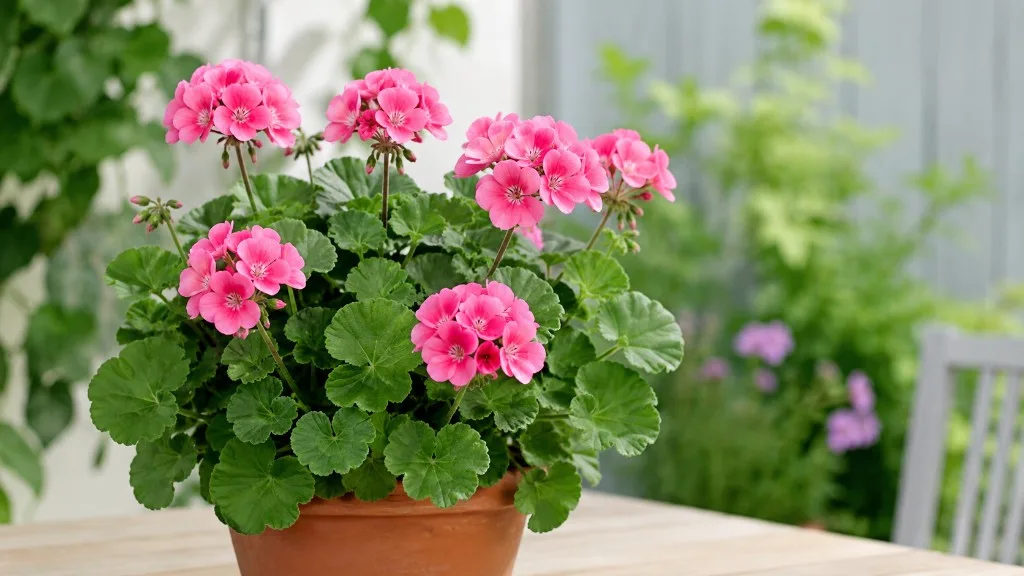
Geraniums (Pelargonium, the bedding “geranium” of garden centers) are the easiest annual for pots and front steps. Full sun to light shade, well-drained soil, continuous bloom if you snap off spent flower heads—optional on busy weeks. Slightly root-bound plants bloom harder; perfect for containers you water on a schedule.
Clematis vines need full sun on stems and cool roots—mulch or low companions help. Well-drained soil, zones 4–9. Prune group depends on cultivar; many popular types get a hard cut to twelve inches in late winter. Once trained on a trellis, they are showy with modest summer watering.
Agave species range from tabletop succulents to monster century plants. Full sun, sandy soil, zones 5–11 depending on species. Overwatering and heavy fertilizer trigger bloom—and many agaves die after flowering. Neglect is a feature, not a bug.
Bee balm (Monarda spp.) solves wet gardens, not dry ones: three-foot clumps with red, pink, or purple summer flowers for hummingbirds. Rich moist soil, sun to partial shade, zones 3–9. Mint-family spread means pull stray shoots or plant where it can roam. Choose mildew-resistant cultivars like ‘Marshall’s Delight’ in humid climates.
Dusty miller (Jacobaea maritima) is a silvery annual or short-lived perennial for contrast in zones 8–11. Full sun, drought tolerant, little pruning beyond removing yellow leaves. Pairs beautifully with geraniums in containers.
Ice plant (Delosperma spp.) is a succulent ground cover for blazing dry sites, zones 4–11 cultivar-dependent. See our purple ice plant profile for spread and winter hardiness notes. Fast drainage is non-negotiable; winter wet kills more plants than summer drought.
Butterfly Bush: Low Care, High Spread Risk
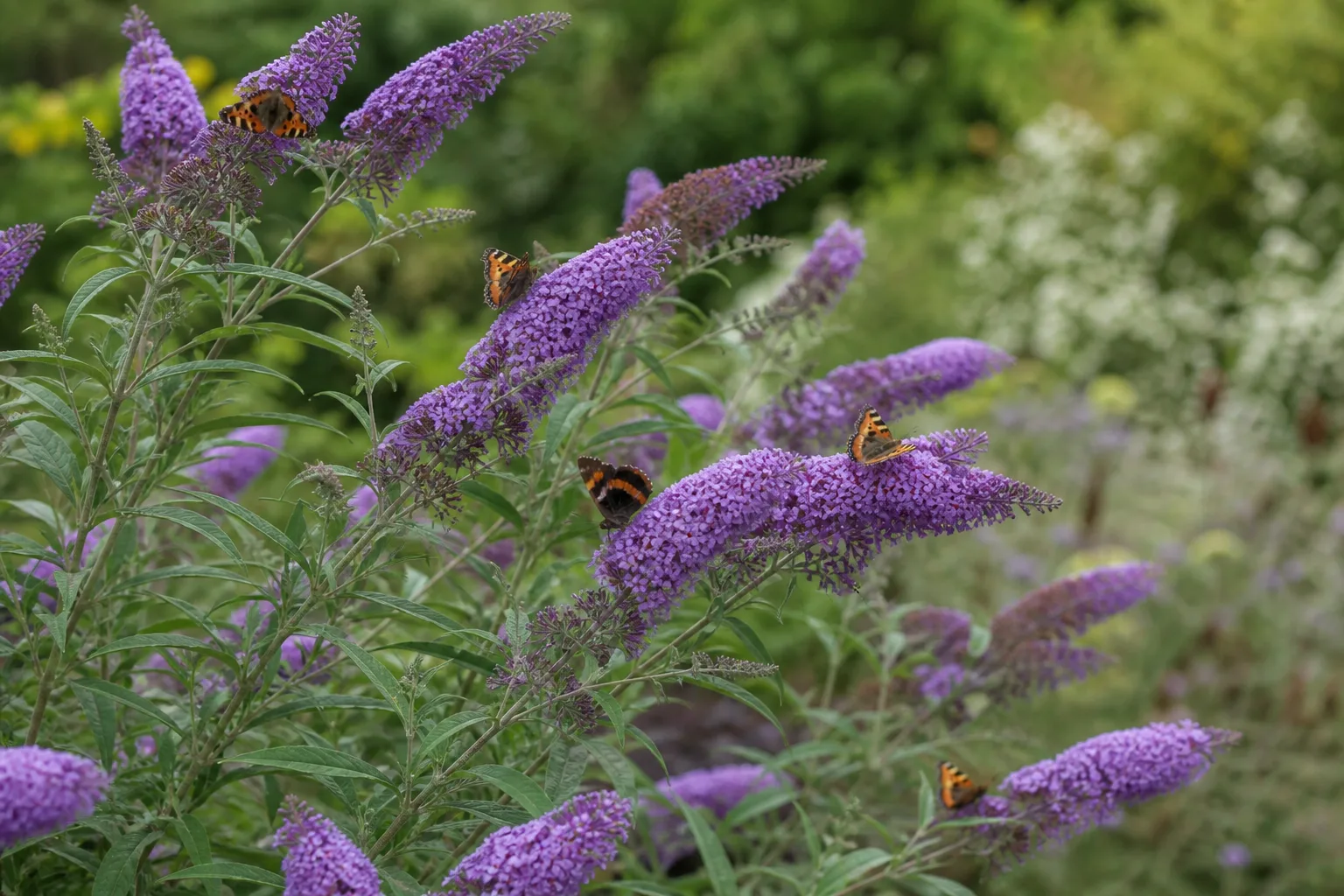
Butterfly bush (Buddleja davidii) is genuinely easy: full sun, average soil, hard prune in spring, summer flowers on new wood. It is also genuinely risky. NC State Extension and Penn State Extension document seed spread into roadsides and natural areas across much of the U.S. Adult butterflies visit nectar, but native caterpillars generally cannot feed on the foliage—so it is a snack bar, not a habitat plant.
If you still want the look, choose verified sterile or near-sterile cultivars from the Lo & Behold® or Flutterby Grande® series and check your state invasive list first. In many regions, native substitutes—coneflower, catmint, viburnum, redbud—deliver pollinator value with lower escape risk. Our fast-growing plants guide covers butterfly bush trade-offs in more depth.
Quick-Pick Chart by Garden Job
Use this table to shortlist before you fall in love with a catalog photo. All thirty-two plants from this list appear below by primary job.
| Garden job | Strong picks from this list | Main caveat |
|---|---|---|
| Hot dry sun, poor soil | Russian sage, sedum, lamb’s ear, agave, ice plant, dusty miller | Drainage must be sharp |
| Wet or boggy soil | Bee balm, canna lily | Not interchangeable with sedum/agave |
| Dry shade under trees | Hosta, dead nettle, lady’s mantle | Hosta needs slug vigilance in wet climates |
| Spring bulb color | Daffodils | Leave foliage until yellow |
| Long-lived perennial flowers | Peony, daylily, coneflower | Peony needs winter chill; daylily benefits from occasional divide |
| Privacy / evergreen screen | Arborvitae, juniper (ground or upright types) | Match mature width to space |
| Summer shrub color | Rose of Sharon, oakleaf hydrangea, Knock Out roses | Rose of Sharon self-seeds |
| Native-season structure | Eastern redbud, coneflower, false indigo | Still need establishment water |
| Pollinator buffet | Coneflower, catmint, bee balm, sedum | Skip invasive butterfly bush in sensitive areas |
| Containers / porch color | Geranium, rosemary (large pot), canna | Pots dry faster—check moisture |
| Vertical accent | Clematis, feather reed grass | Clematis wants cool roots |
| Silver foliage contrast | Lamb’s ear, dusty miller, Russian sage | Lamb’s ear hates wet crowns |
| Ground cover mass | Creeping thyme, dead nettle, ice plant, juniper | Dead nettle and ice plant need opposite moisture |
| Herb garden edges | Rosemary, sage, creeping thyme | Rosemary needs winter protection below zone 8 |
| Four-season shrub interest | Oakleaf hydrangea, viburnum, redbud | Give them room to mature |
For ground-cover-focused planning, pair this chart with our best low-maintenance ground covers roundup and low-maintenance landscaping for small front yards layout ideas.
Conclusion
The thirty-two plants here—Russian sage, sedum, daffodils, hosta, coneflower, peony, oakleaf hydrangea, arborvitae, coral bells, canna lily, juniper, geraniums, rose of Sharon, Knock Out roses, dead nettle, catmint, daylily, feather reed grass, butterfly bush, false indigo, lady’s mantle, lamb’s ear, bee balm, agave, eastern redbud, rosemary, dusty miller, creeping thyme, sage, clematis, ice plant, and viburnum—share one trait: they reward correct placement more than constant pampering. None of them rescue the wrong sun or soggy soil.
Start with site honesty: measure light, test drainage, know your zone. Water through the first growing season even when labels say drought tolerant. Then plant fewer species in larger drifts rather than thirty-two one-offs that read like a plant zoo. A low-effort garden is mostly design discipline—with a short list of tough plants doing the work while you enjoy the results.