How to Grow and Care for Ice Plants
Ice plants need full sun, gritty soil, and dry winters. Learn Delosperma vs invasive highway ice plant, watering rules, zones, and propagation.
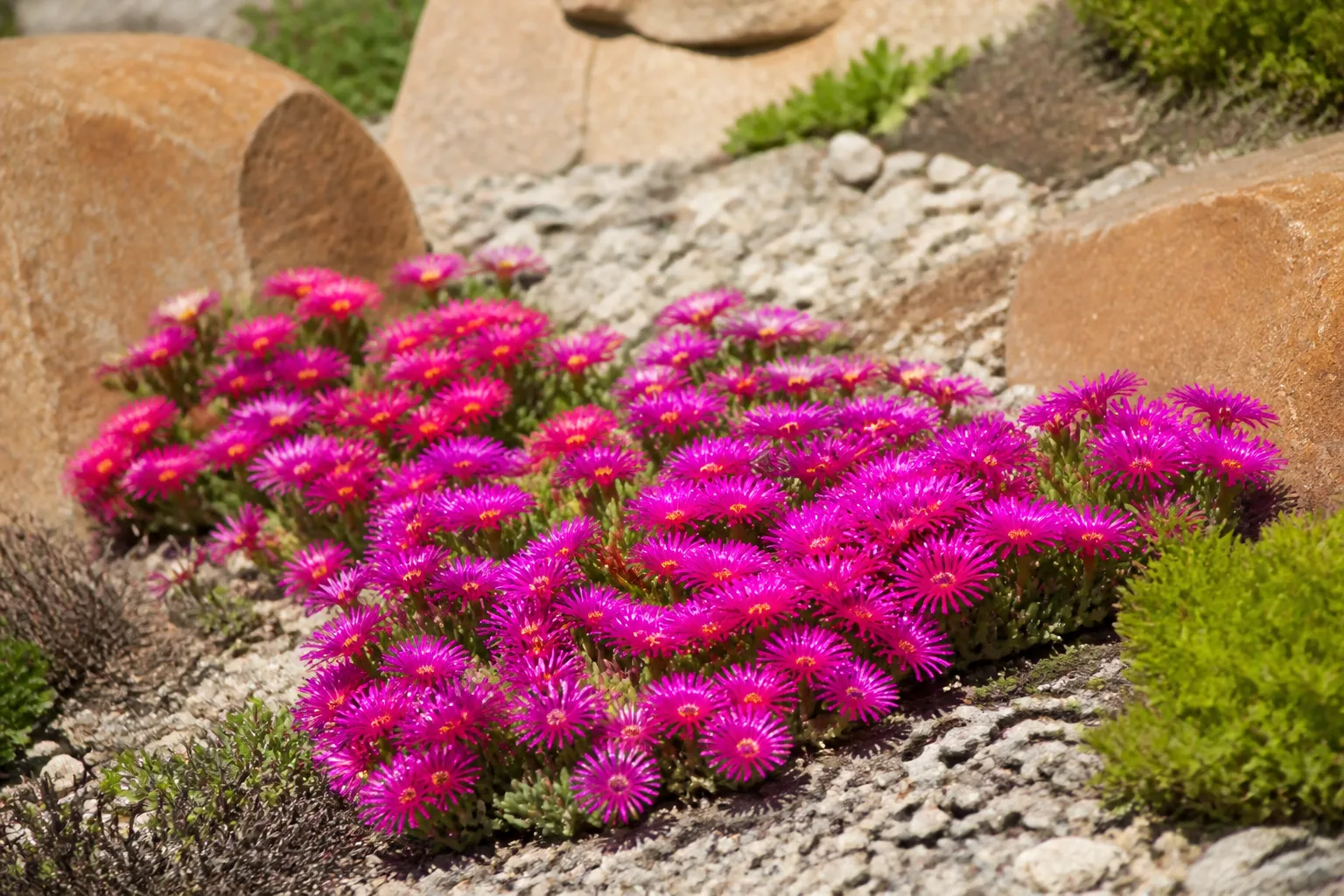
Ice plant is a common name stretched across several unrelated succulents — and picking the wrong one can mean a dead mat in a wet winter, or an invasive carpet on a California bluff. Most garden-center labels point to Delosperma or Lampranthus, South African groundcovers with glistening leaves and neon daisy flowers. Those are the plants this guide covers. Highway ice plant (Carpobrotus edulis) is a different species with a very different reputation: useful in its native range as a tough coastal sprawler, but listed as a high-impact invasive in California where it smothers native coastal scrub.
If you want a drought-tolerant mat for a sunny rock wall, gravel path edge, or container that spills over the rim, Delosperma cooperi — purple ice plant — is the classic starting point. If you want a plant that behaves in humid, snowy Midwest winters without lifting pots every fall, read the climate section before you buy.
Ice Plant at a Glance
| Feature | Details |
|---|---|
| Common names | Ice plant, purple ice plant, hardy ice plant, Cooper’s ice plant |
| Botanical names | Delosperma spp., Lampranthus spp. (garden types); Carpobrotus edulis (highway ice plant — separate plant) |
| Family | Aizoaceae (stonecrop family) |
| Plant type | Succulent herbaceous perennial groundcover |
| Height | 3–6 in. tall; spreads 12–24 in. wide per plant |
| Sun | Full sun (6+ hours direct daily) |
| Soil | Sandy, gravelly, sharply drained; lean |
| Soil pH | Neutral to slightly alkaline |
| Bloom | Late spring through fall; peak in summer |
| Flower colors | Magenta, pink, purple, orange, yellow, white (species/cultivar dependent) |
| Hardiness | USDA zones 6a–10b for many Delosperma; Lampranthus often zones 9–11 |
| Native range | Southern Africa |
| Deer | Occasionally damaged (NC State Extension) |
| Salt tolerance | Moderate (NC State Extension) |
| Pet toxicity | ASPCA lists Lampranthus piquet ice plant as non-toxic to dogs, cats, and horses (ASPCA) |
The shimmering “ice” look comes from bladder-like hairs on leaves and stems that reflect light — not frost. Leaves are fleshy, cylindrical or flattened depending on species, and often deepen to plum tones in cold weather on evergreen types.
Three Plants Called Ice Plant: Choose the Right One
Garden writers lump “ice plant” together because the leaves look succulent and the flowers look daisy-like. Taxonomically they split into three buckets with different garden jobs.
Delosperma and Lampranthus (Garden Ice Plants)
Delosperma cooperi — purple ice plant or hardy ice plant — is the cold-hardy groundcover that revolutionized Western rock gardens after introductions from South Africa’s Drakensberg Mountains in the 1990s. It forms a spreading mat 3–6 inches tall with magenta-pink flowers and glistening green leaves. NC State Extension rates it for USDA zones 6a through 10b in North Carolina’s three regions (Coastal, Piedmont, Mountains) when soil drains sharply.
Lampranthus species — including L. aurantiacus (orange flowers, more upright) and L. haworthii (blue-green foliage, pink-purple blooms) — prefer warmer zones 9–11 and behave more like soft shrubs than flat mats. They excel in frost-free coastal California and the Desert Southwest, not in zone 5 snow belts.
Both genera share care rules: full sun, fast drainage, summer water in heat, dry winters.
Highway Ice Plant (Carpobrotus edulis) — Invasive Warning
Do not confuse garden Delosperma with highway ice plant (Carpobrotus edulis), the sprawling coastal succulent planted decades ago along California roadsides. Cal-IPC rates it High invasiveness: it forms dense mats along coastal scrub, grasslands, dunes, and bluffs, increases soil organic matter over time, and opens habitat for additional weeds. It propagates from seed and from stem fragments — even small pieces regenerate.
If you live in coastal California or similar mild maritime climates, choose named Delosperma cultivars from reputable nurseries and avoid generic “ice plant” grabs from old highway plantings. Restoration groups actively remove Carpobrotus; you do not want to reintroduce it from a backyard slope.
Where Ice Plants Thrive (and Where They Fail)
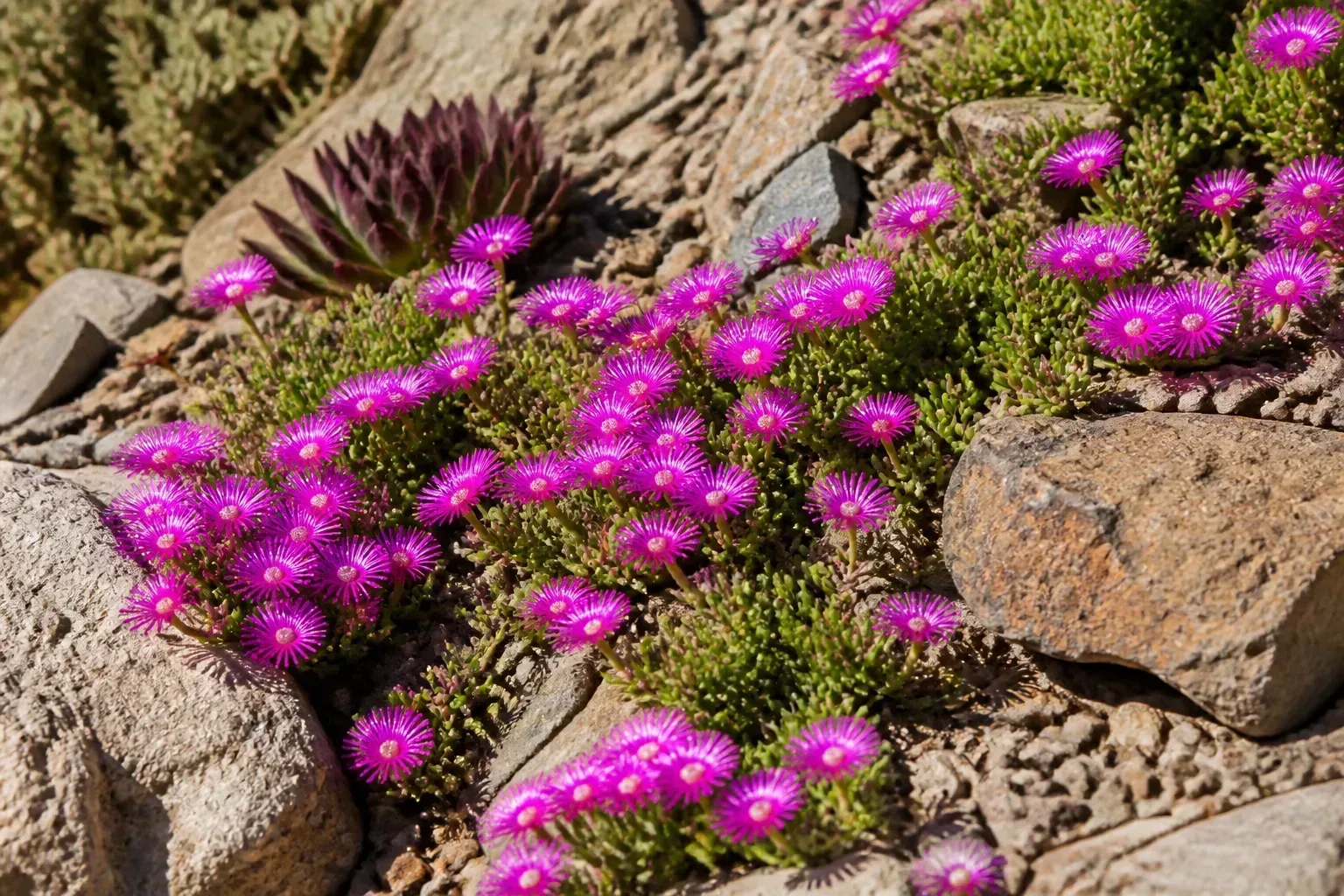
Ice plants are reliably perennial in dry, low-humidity climates — the inland West, high desert, and sunny Rocky Mountain foothills. High Country Gardens notes that Delosperma tends to behave as an annual in cold, wet zone 4 and 5 climates like Chicago and Cincinnati, while persisting longer in zone 6–8 Appalachian and Eastern Seaboard sites with better summer drainage.
The pattern is simple: drought-tolerant plants often lose one to two hardiness zones in wet winter soil. Saturated crowns in December kill roots faster than January air temperature alone.
| Your climate | Realistic expectation |
|---|---|
| Dry West, zones 6–9 | Long-lived perennial groundcover |
| Humid Midwest, zones 5–6 | Often annual in ground; better in pots with winter shelter |
| Coastal CA (Delosperma) | Excellent — match cultivar to heat vs cool coast |
| Coastal CA (Carpobrotus) | Do not plant — invasive |
| Hot Southwest | Strong; fall planting preferred over mid-summer |
| Snow that stays on foliage | Cover with frost blanket; keep crowns dry |
Pair ice plant with other low-care sprawlers from our best low-maintenance ground covers guide when you are building a full dry border — creeping thyme, sedums, and juniper plugs fill different height layers.
Light Requirements for Dense Blooms
Ice plants need full sun — at least six hours of direct light daily. NC State Extension lists full sun as six or more hours of direct sunlight. Shade-starved mats stretch, thin out, and flower weakly on leggy stems reaching toward light.
South-facing rock walls, gravel berms, and curbside strips that bake in afternoon heat are ideal. Reflected heat from stone or concrete is an asset, not a problem, once roots establish. The only exception: a few pastel cultivars (such as Alan’s Apricot types) show best color with brief afternoon shade in zone 8+ heat — but they still need bright morning sun.
If your only bed is under a north-facing foundation, skip ice plant and choose a shade groundcover instead. No amount of fertilizer compensates for insufficient light.
Soil, Drainage, and Planting Prep
Dry soil with excellent drainage is non-negotiable. Ice plant rots in heavy clay, compacted builder’s fill, and beds that stay moist for days after rain. Garden Design describes Delosperma as thriving in heat with virtually no maintenance when drainage and sun align — and failing quickly when those two basics are wrong.
Ideal soil textures: sand, sandy loam, gravel, crushed rock mixes, crevice-garden pockets between stones.
Poor fits: clay, rich loam that holds water, low spots where water pools, rain-garden basins.
Prep checklist before planting:
- Remove weeds and loosen only the planting pocket — no need to till an entire lawn area.
- Mix native soil with coarse sand, fine gravel, or crushed granite if drainage is doubtful.
- Aim for a lean mix; ice plant does not need compost-heavy beds.
- Test drainage: dig a hole, fill with water — it should drain within an hour. If not, build a raised mound or rock berm instead of planting flat.
For rock garden placement ideas, ice plant partners beautifully with sea holly, California poppies, and structural grasses in a perennial flower garden layout that sequences low mats in front and taller perennials behind.
When and How to Plant Ice Plants
Timing depends on your summer heat and winter wetness.
Cold northern climates: Plant by mid-summer so roots anchor before first hard frost. Fall planting in zone 5 often leaves wet soil and immature roots through winter — a common failure mode.
Hot Southwest: Fall planting is preferred so plants establish during mild winters and explode in spring without mid-summer transplant stress.
Spacing: Set plants 15–18 inches apart for standard mats; NC State Extension recommends 16–24 inches. Smaller rock-garden species can go closer. They fill gaps within one season in good conditions.
Planting depth: Set at the same depth as the nursery pot. Do not bury succulent stems — buried leaves rot. Firm soil, water once deeply, then let the surface dry before the next soak.
Mulch choice matters: High Country Gardens recommends gravel mulch so stems grow over stone, roots stay cool and moist below, and leaves stay dry above wet soil in winter. Pine needles or medium bark chips that dry quickly also work. Avoid moisture-retaining shredded bark piles against stems.
Watering Through the Seasons
Established ice plant is drought tolerant, not drought-proof forever. These plants evolved on South African plateaus that receive summer rainfall — they expect moisture in heat, then a dry rest.
First year after planting: Water weekly during summer heat if rain is absent. Roots are shallow; new mats wilt faster than established ones.
Established in-ground plants: One deep soak every two weeks during dry summer stretches is usually enough. In extreme heat waves, weekly watering may be necessary. Always let soil dry between sessions.
Fall hardening (critical): Stop or sharply reduce irrigation in late fall so leaves shrink and tissues harden before frost. Lush, water-filled foliage in November often dies on the first hard freeze — High Country Gardens emphasizes this as a top winter-kill trigger.
Winter: Keep crowns dry. In snowy regions where snow sits on foliage for weeks, cover plants with lightweight frost blanket (row cover) to shed moisture from leaves and crowns. Pull mulch away from stems if it stayed wet through autumn rains.
Containers: Pots dry faster — check weekly in summer. Move pots to a frost-free, dry shelter for winter in zones where in-ground plants struggle.
Yellow, mushy leaves almost always trace back to watering too often, not too little. If stems feel soft and soil smells sour, you are past the “dry between waterings” stage and into rot territory.
Temperature, Humidity, and Winter Survival
All ice plant types are sensitive to cold combined with moisture. Air temperature alone misleads gardeners: a zone 7 plant can die in a zone 7 garden if December soil stays soggy.
Hardy Delosperma cooperi and selections like ‘Table Mountain’ and ‘Jewel of the Desert’ series push into zone 6 when dry. NC State Extension lists zones 6a–10b for cooperi in North Carolina.
Lampranthus types need milder winters — think zones 9–11 or protected coastal microclimates.
Heat: Delosperma loves heat once established. It is a natural fit for July scorch alongside other picks from our drought-tolerant plants for July heat list.
Humidity: High summer humidity without night cooling increases fungal risk on crowded mats. Space plants for airflow and avoid overhead sprinklers that leave leaves wet overnight.
Pruning after winter: In mid-spring, clip out winter-killed stems back to live tissue. Do not shear the entire mat in fall — that exposes tender growth to cold.
Fertilizer: Feed Once, Not All Summer
Ice plant grows lean. Rich soil and frequent feeding produce soft, fast growth that winter kills easily. High Country Gardens recommends one organic or slow-release application in fall only — not monthly summer feeding.
At planting, a handful of compost or slow-release flower fertilizer in the planting hole is enough. Container plants exhaust nutrients faster; a diluted liquid feed once in late spring may help if growth looks pale and watering rhythm is already correct.
Signs you overfed: floppy stems in fall, late-season growth that freezes green, fewer flowers because nitrogen pushed foliage over blooms.
Types and Cultivars Worth Growing
Beyond plain Delosperma cooperi, these named selections solve specific color and zone jobs:
| Cultivar / species | Flower / foliage | Zone notes | Best for |
|---|---|---|---|
| D. cooperi | Magenta-pink daisies | 6a–10b | Default purple mat |
| ’Table Mountain’ | Hot pink, dense mat | Cold-hardy selection | Rocky slopes, zone 6 trials |
| ’Jewel of the Desert Garnet’ | Red with yellow centers | Check label | Red-accent rock gardens |
| ’Jewel of the Desert Moon Stone’ | White flowers | Check label | Pale gravel beds |
| D. floribundum ‘Starburst’ | Pink with white centers | 6–8 | Soft pastel carpets |
| D. brunnthaleri | Yellow, very low | 4–9 (dry sites) | Cool-climate yellow mat |
| D. dyeri Red Mountain® Flame | Scarlet-orange | ~6+ | Intense color in dry heat |
| D. ashtonii ‘Blut’ | Dark magenta, evergreen foliage | Xeric | Long bloom, plum winter foliage |
| L. aurantiacus | Orange, upright 15–18 in. | 9–11 | Warm-climate shrublet |
| L. haworthii | Pink-purple, blue-green leaves | 9–11 | Frost-free coastal beds |
Fire Spinner® and similar bi-color types need adequate winter chill to flower; they underperform in warm coastal winters where they never harden properly (High Country Gardens).
Lesotho Pink and high-elevation species prefer cooler summers — excellent in mountain towns, poor in Phoenix low desert.
Leaves and flowers of many ice plants are edible in small amounts — lemony or salty tang in salads. Harvest from your own known Delosperma plants, not from wild or roadside Carpobrotus patches.
Propagating Ice Plants
Ice plant spreads naturally by rooting stems and self-sowing in gravel. Controlled propagation saves money and revives tired mats.
Stem cuttings: In spring or early summer, cut a 2–3 inch tip stem with healthy leaves. Stick into sandy soil or cactus mix in a small pot. Place in bright light; keep barely moist until roots form in 2–4 weeks. Transplant when roots resist a gentle tug.
Division: In spring, dig a mature clump after moistening soil so roots slide out. Split with a sharp spade or knife through the root mass. Replant divisions at original depth; firm soil and water once.
Self-layered stems: Stems that touch gravel often root in place. Lift rooted runners with a trowel and replant where you want coverage.
Division every three to four years refreshes bloom density on old mats that flowered heavily in the center but hollowed out at the crown.
Growing Ice Plant in Containers
Ice plant excels in pots with drainage holes — essential because root rot develops within days in waterlogged mix. Use cactus and succulent mix blended with extra perlite or fine gravel. A thin gravel top dressing keeps leaves off wet surface mix.
Choose wide bowls or troughs so the mat can cascade. Ice plant is not a long-term indoor houseplant: it needs sun and seasonal temperature shifts. Treat containers as seasonal patio plants in the North — outdoors May through October, dry shelter November through March.
Repot or divide each spring before growth kicks in if the mat overran the pot rim. Root-bound containers dry out unevenly and flower poorly on the outer ring only.
Blooms, Deadheading, and Encouraging More Flowers
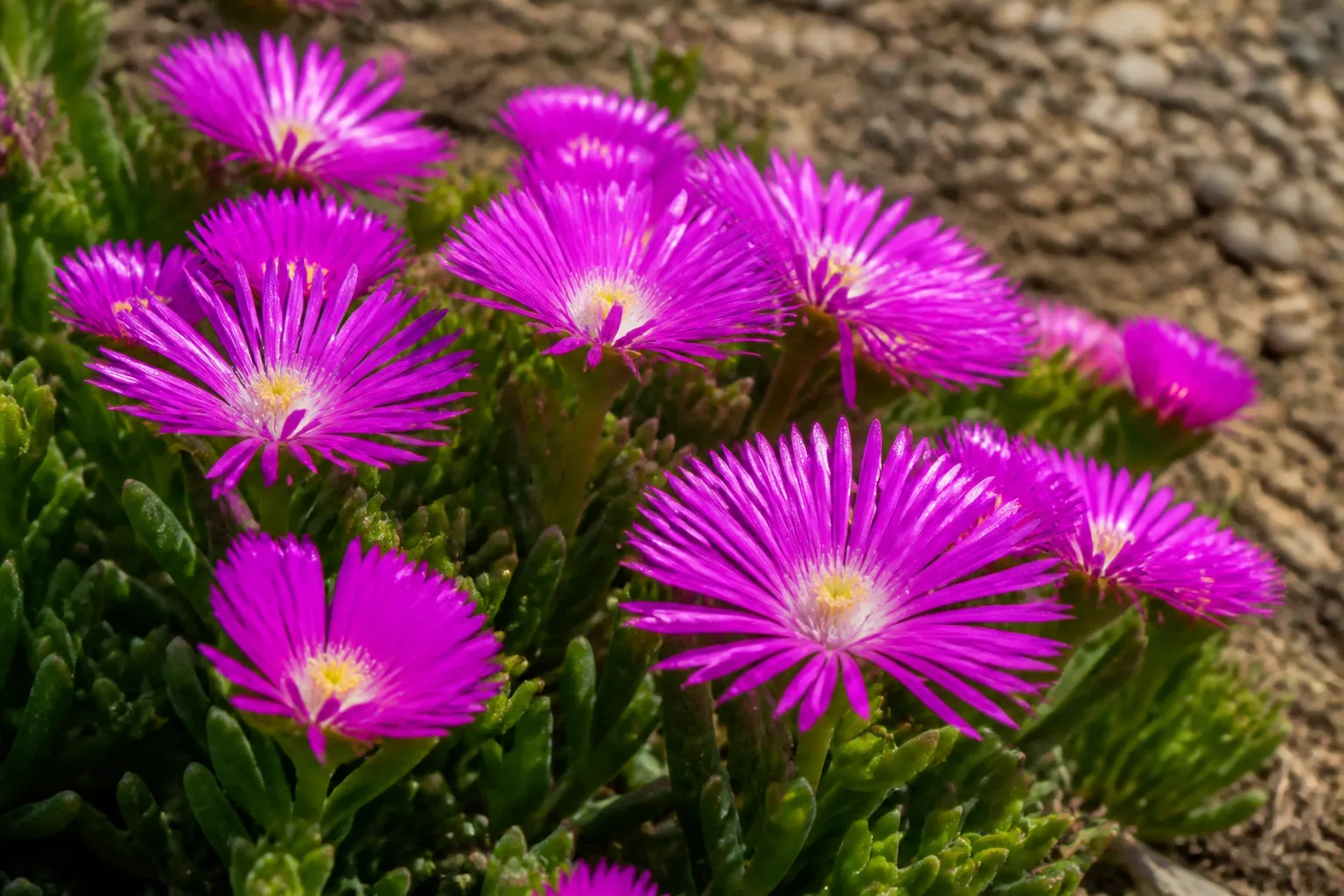
Ice plant flowers are showy, daisy-like with dozens of narrow petals in vivid magenta, pink, orange, or yellow depending on species. Blooms open widest in bright midday sun and often close partially on cloudy days.
Bloom window: Starts late spring (June in many zones), peaks through summer, and many cultivars rebloom lightly into fall.
Encouraging more flowers:
- Maximize sun — the single biggest lever.
- Ensure sharp drainage — stressed wet roots do not bloom.
- Avoid heavy nitrogen feeds.
- Trim winter damage in spring so new flower buds form on fresh stems.
Deadheading removes spent flowers for tidiness but rarely forces a second heavy flush the way it does on roses. Energy goes to spread and crown growth instead. Clip spent blooms if you dislike the brown centers, not because the plant requires it.
For more summer color companions, see our drought-resistant flowers guide — ice plant pairs well with yarrows, penstemons, and low sages in xeric borders.
Pests and Diseases
Healthy, dry mats rarely suffer serious disease. Problems cluster on overwatered, shaded, or crowded plants.
Aphids and mealybugs occasionally attack tender new growth. Look for curled leaves, white cottony clusters, or sticky honeydew. Blast small outbreaks with a water spray; dab persistent clusters with rubbing alcohol on a cotton swab. Avoid oil sprays on hot sunny days — succulent leaves scorch.
Root rot and crown rot from fungal pathogens thrive in wet soil. No chemical cure rescues a mushy crown — improve drainage or relocate survivors to a raised dry berm.
Deer may browse ice plant occasionally despite its toughness (NC State Extension). Repellents or physical barriers matter on deer-heavy edges.
Common Problems and Quick Fixes
| Symptom | Likely cause | First action |
|---|---|---|
| Yellow, mushy leaves | Overwatering / poor drainage | Stop watering; check drainage; lift and replant on a mound if soil stays wet |
| Withered stems, black base | Root rot | Cut out dead tissue; replant healthy tips in dry mix; discard if crown is soft |
| Leggy, few flowers | Too little sun | Move or replace — do not fertilize in shade |
| Winter blackened mat | Wet crown + freeze | Prune dead stems in spring; cover with frost blanket next winter |
| Spread slowed, center bare | Old mat needs division | Divide in spring; replant outer vigorous rings |
| No flowers on Fire Spinner type | Insufficient winter chill | Replace with cooperi or Blut in warm-winter zones |
| Whole patch died after wet fall | Late-season water + lush growth | Harden off in fall; reduce fall irrigation |
Ice plant problems are almost always environmental, not mysterious disease. Fix sun and water before reaching for sprays.
Pet Safety and Edible Leaves
The ASPCA lists ice plant (Lampranthus piquet) as non-toxic to dogs, cats, and horses. Delosperma is widely treated as pet-safe in horticulture circles, though the ASPCA page names Lampranthus specifically — confirm your genus if pets graze the garden.
Non-toxic does not mean pets should eat groundcover mats. Discourage digging in newly planted areas until roots anchor.
Humans can nibble young leaves and flowers for a sour, salty note in salads — harvest only from identified garden Delosperma, never from invasive Carpobrotus or unknown roadside plantings.
Conclusion
Ice plant rewards gardeners who respect its desert logic: blast sun, gravelly drainage, summer water when hot, and a dry, hardened mat through winter. Choose Delosperma or Lampranthus for intentional groundcover — not opportunistic highway ice plant along sensitive coastlines. Match cultivar to your winter (wet vs dry, warm vs cold) before you blame the plant for “not coming back.”
Plant in the right season for your climate, space mats 15–18 inches apart on fast-draining soil, top with gravel mulch, feed once in fall if at all, and prune winter damage in spring. Propagate from cuttings or division when mats peak so you always have backup on a dry slope. Get those basics right and a single pot or patch becomes a neon carpet that hummingbirds and bees visit all summer — without the watering guilt of a traditional lawn.



