33 Low-Maintenance Ground Cover Plants for Sun and Shade
Compare 33 low-maintenance ground covers for sun and shade—zones, spread habits, invasive warnings, and a site-first picker so you plant once and weed less.
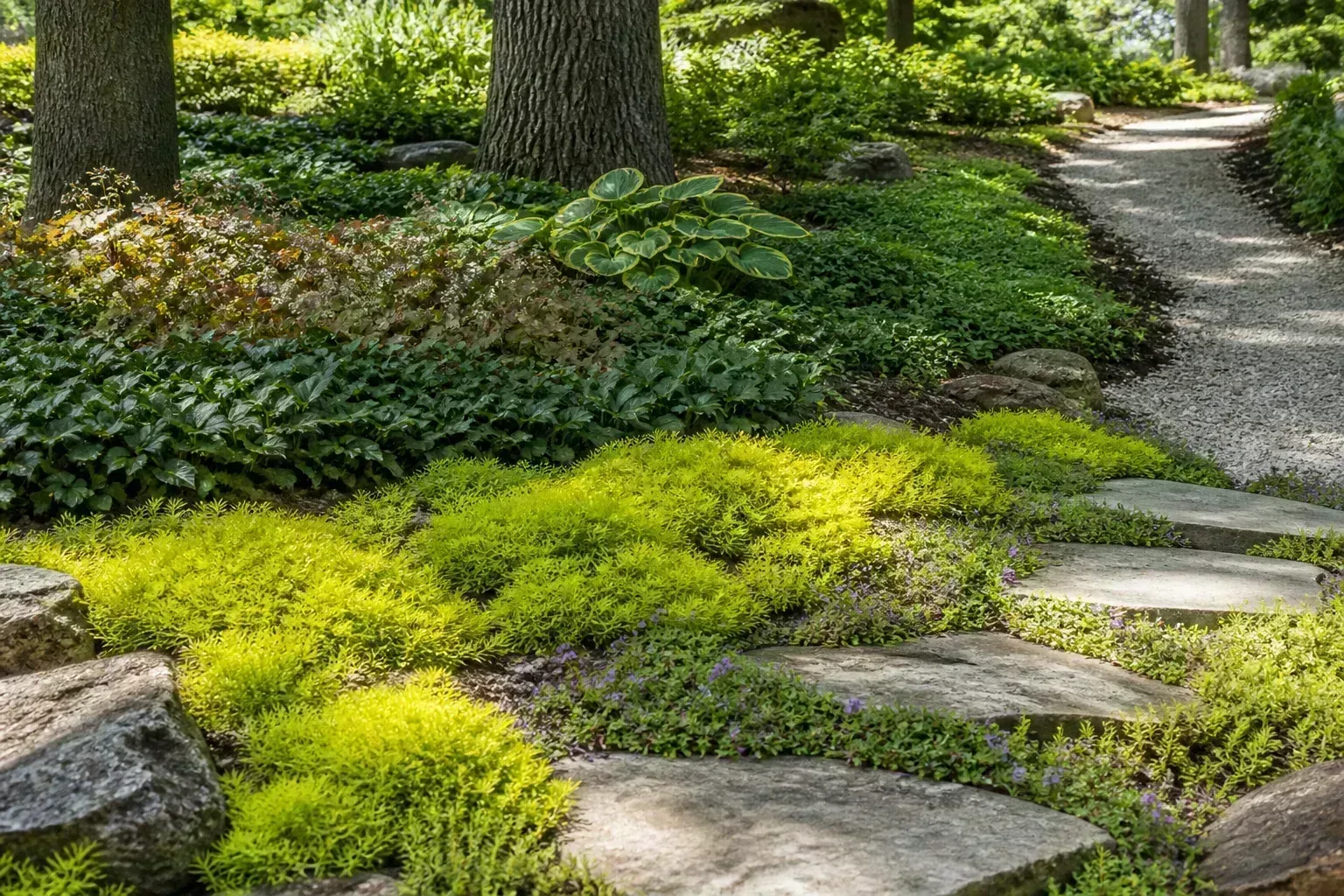
Low-maintenance ground cover plants earn that label only after they knit together. The first year still means weeding, watering, and watching spread. Once a mat closes gaps, the right plant shrinks your chore list by shading soil, outcompeting annual weeds, and replacing turf in spots where grass refuses to grow. The trick is matching spread speed, light, and moisture to your bed—not copying whatever looked pretty in a catalog photo.
What “low maintenance” actually means for groundcovers
A ground cover is low maintenance when it fits the site, spreads at a pace you can steer, and needs only occasional trimming—not weekly mowing, not constant rescue watering, not yearly replanting. Colorado State University Extension groups xeriscape groundcovers as plants that hug soil, reduce evaporation, and need less irrigation than lawn once established. That definition assumes you cleared perennial weeds first and gave roots one full season to anchor.
Maintenance also depends on how a plant travels. Stolon-forming bugleweed and creeping jenny sprint outward; clumping epimedium and European ginger creep slowly. A fast filler can be low care on a blank slope and high care along a lawn edge. Know the spread mechanism before you buy.
Flowering, evergreen, and shade-tolerant categories
Most perennial groundcovers fall into three overlapping buckets. Flowering covers—creeping phlox, basket-of-gold, nepeta—deliver seasonal color then rely on foliage for the rest of the year. Evergreen covers—pachysandra, creeping juniper, lamb’s ear in warm zones—keep texture through winter where hardy. Shade-tolerant covers—sweet woodruff, hosta, interrupted fern—handle low light under trees but still differ in moisture needs. Many plants check two boxes: lenten rose flowers and keeps leaves; spotted deadnettle blooms and stays semi-evergreen in mild climates.
Annual flowers can carpet a bed for one season, but replanting large areas every year is the opposite of low maintenance. Perennial mats, chosen correctly, are the durable default.
Choose your groundcover by site before you shop
Walk the planting area for a full day if you can. Afternoon sun on a south slope is a different plant than morning shade under a maple canopy. Dig one test hole: sandy and dry, heavy clay, or rich loam? Tree roots stealing moisture? Answers matter more than bloom color.
| Site profile | Priority traits | Strong directions |
|---|---|---|
| Hot sun, sharp drainage | Drought tolerance, low height | Creeping thyme, Angelina sedum, ice plant, creeping juniper |
| Sun with decent soil | Spring color, moderate spread | Creeping phlox, basket-of-gold, candytuft, nepeta |
| Part shade, moist | Fast fill, foliage interest | Bugleweed, lamium, hosta drifts |
| Dry shade under trees | Rhizomatous, deer resistant | Epimedium, European ginger, pachysandra |
| Deep moist shade | Native woodland habit | Sweet woodruff (with caution), bunchberry, interrupted fern |
| Slopes and erosion | Rooting stems, woody structure | Creeping juniper, rock cotoneaster, creeping raspberry |
For weed suppression specifically, see our guide to the best groundcover to prevent weeds. For faster fill when patience is thin, compare fast-growing groundcovers.
Full-sun and hot dry sites
Full sun on lean soil favors succulent and aromatic mats. Creeping thyme ( Thymus serpyllum , zones 4–8) stays just a few inches tall, smells sharp when stepped on, and crowds weeds between pavers—though it is not a lawn substitute for heavy foot traffic. Angelina sedum ( Sedum rupestre ‘Angelina’, zones 5–8) turns copper-gold in stress and roots easily from stem pieces; trim runners that escape planned borders. Ice plant ( Delosperma species, zones vary 4–11 by selection) needs sandy drainage and winter dryness; pick cold-hardy cultivars such as D. cooperi or D. brunnthaleri for your zone, not tender coastal types.
Basket-of-gold ( Aurinia saxatilis , zones 4–7) blankets rock edges with yellow spring clusters, then asks for a post-bloom haircut. Do not confuse it with sweet alyssum—different species, different longevity. Wall germander ( Teucrium chamaedrys , zones 5–9) is a woody evergreen subshrub for knot gardens and wall caps; pinch tips to keep it dense.
Part shade and woodland edges
Part shade opens the largest plant list. Amethyst in Snow ( Centaurea montana ‘Amethyst in Snow’, zones 3–7) spreads by runners in sunny edges; pull stray shoots or switch to the less pushy ‘Amethyst Dream’. Nepeta ( Nepeta × faassenii , zones 3–8)—Faassen’s catmint—makes a sterile, weed-smothering mound; ‘Six Hills Giant’ covers big patches with purple spikes all summer. Candytuft ( Iberis sempervirens , zones 3–9) is slow but long-lived; shear after bloom to avoid legginess.
Deep shade under trees
Deep shade under thirsty tree roots is the hardest niche. Epimedium (zones 5–8) and European ginger ( Asarum europaeum , zones 4–8) move slowly but tolerate dry shade once rooted—see our deer-resistant perennial ground cover roundup for more shade-safe options. Pachysandra ( Pachysandra terminalis , zones 4–8) is evergreen and widely planted under shrubs; it spreads by rhizomes and ignores drought after year two but looks best with occasional supplemental water under maples.
Avoid assuming “shade tolerant” means “plant anywhere dark.” Chinese lantern ( Physalis alkekengi , zones 3–9) tolerates shade in warm climates but spreads aggressively and is toxic—better for isolated acreage than foundation beds.
Master quick-pick comparison table
Use this table to shortlist, then read spread notes in the sections below.
| Plant | Flowering | Evergreen | Shade OK | Zones | Spread risk |
|---|---|---|---|---|---|
| Basket-of-gold | Yes | Semi | No | 4–7 | Low |
| Amethyst in Snow | Yes | No | Part | 3–7 | Medium |
| Creeping phlox | Yes | No | No | 3–9 | Low |
| Angelina sedum | Yes | No | Part | 5–8 | Low–medium |
| Nepeta | Yes | No | Part | 3–8 | Medium (mound) |
| Creeping thyme | Yes | No | No | 4–8 | Medium |
| Wall germander | Yes | Yes | No | 5–9 | Low |
| Creeping juniper | No | Yes | No | 3–9 | Medium (wide) |
| Rock cotoneaster | Berries | No | Part | 3–9 | Medium (layering) |
| Bunchberry | Yes | No | Yes | 2–6 | Low |
| Spotted deadnettle | Yes | Yes | Yes | 4–8 | High in moist soil |
| Sweet woodruff | Yes | Yes | Yes | 4–8 | High if wet |
| Liverleaf | Yes | Yes | Yes | 3–8 | Low (reseeds lightly) |
| Interrupted fern | No | No | Yes | 3–8 | Low–medium |
| Lenten rose | Yes | Yes | Yes | 4–8 | Low |
| Ice plant | Yes | Yes | No | 4–11* | Medium |
| Candytuft | Yes | Semi | Part | 3–9 | Low |
| Common periwinkle | Yes | Yes | Yes | 4–9 | High |
| Bugleweed | Yes | Yes | Part | 4–9 | High |
| Chinese lantern | Insignificant | No | Warm | 3–9 | Very high |
| Hosta | Yes | No | Yes | 3–9 | Medium |
| Creeping liriope | Yes | Yes | Part | 4–10 | High in Southeast |
| Pachysandra | Minor | Yes | Yes | 4–8 | Medium |
| English ivy | Insignificant | Yes | Yes | 4–13 | Very high |
| Lamb’s ear | Minor | Yes† | No | 4–9 | Medium |
| Brass buttons | Yes | No | Part | 4–10 | High in CA |
| Creeping jenny | Yes | Semi | Part | 4–9 | High |
| Epimedium | Yes | Yes† | Yes | 5–8 | Low |
| European ginger | Yes | Yes | Yes | 4–8 | Low |
| Creeping raspberry | Yes | Yes | Part | 6–10 | Medium |
| Lilyturf | Yes | Yes | Yes | 5–10 | Low–medium |
| Honeysuckle (ground) | Yes | Yes | Part | 4–9 | Varies by species |
| Snow-in-summer | Yes | Semi | No | 3–8 | Medium |
*Ice plant zone depends on species/cultivar. †Evergreen in mild climates.
Sun-loving flowering groundcovers
Basket-of-gold through ice plant and candytuft
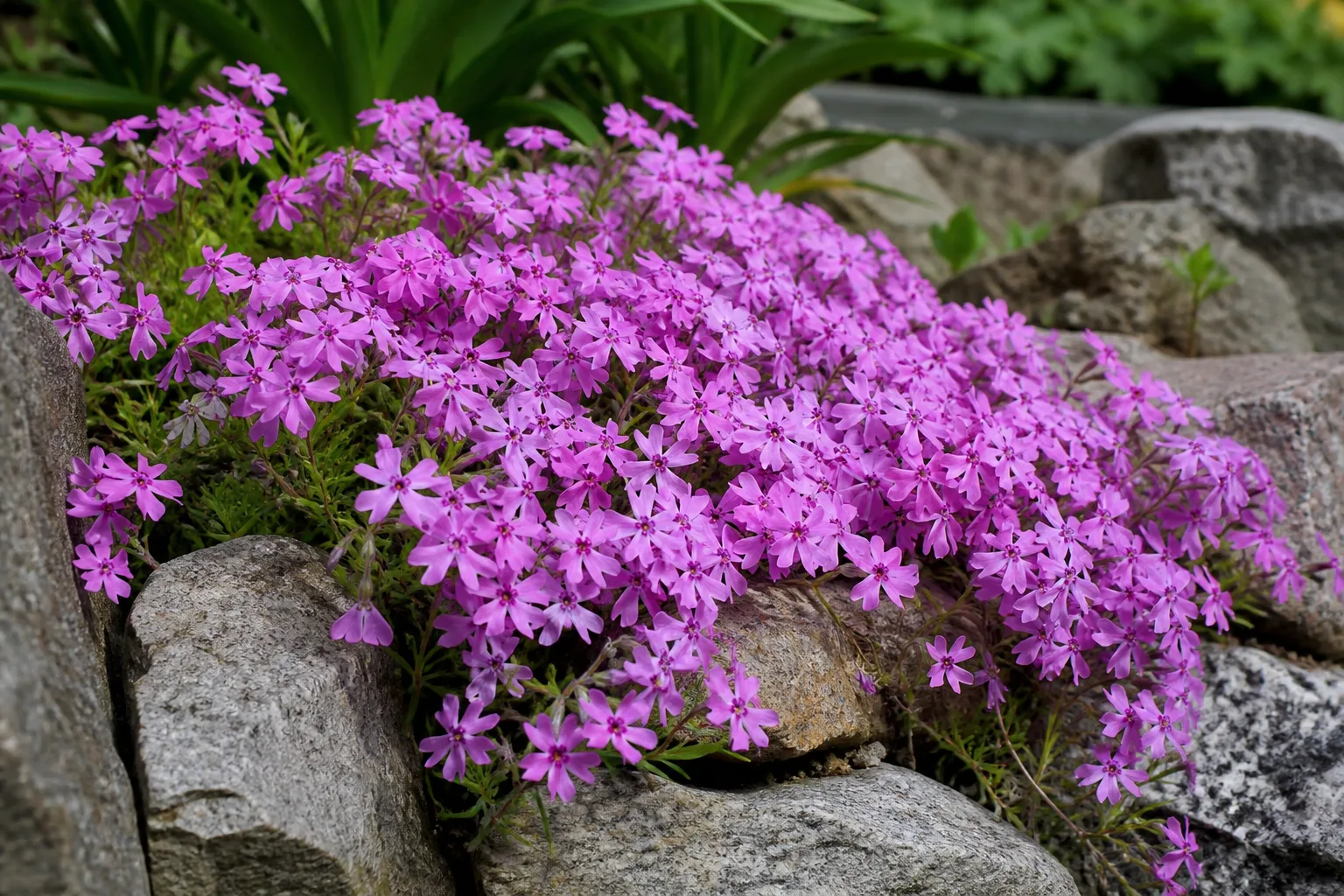
Creeping phlox ( Phlox subulata , zones 3–9) is the spring hillside star—magenta, pink, or white mats on retaining walls. It is quiet the rest of the year, which is fine when you wanted a seasonal punch, not year-round gloss. Trim after bloom; it tolerates clay if drainage is decent.
Ice plant needs sun and grit. Wet winter soil kills more plants than cold. Pair with gravel mulch, not heavy bark.
Candytuft shines in moon-garden white but smells faintly unpleasant up close—plan placement accordingly.
Creeping thyme, nepeta, and wall germander
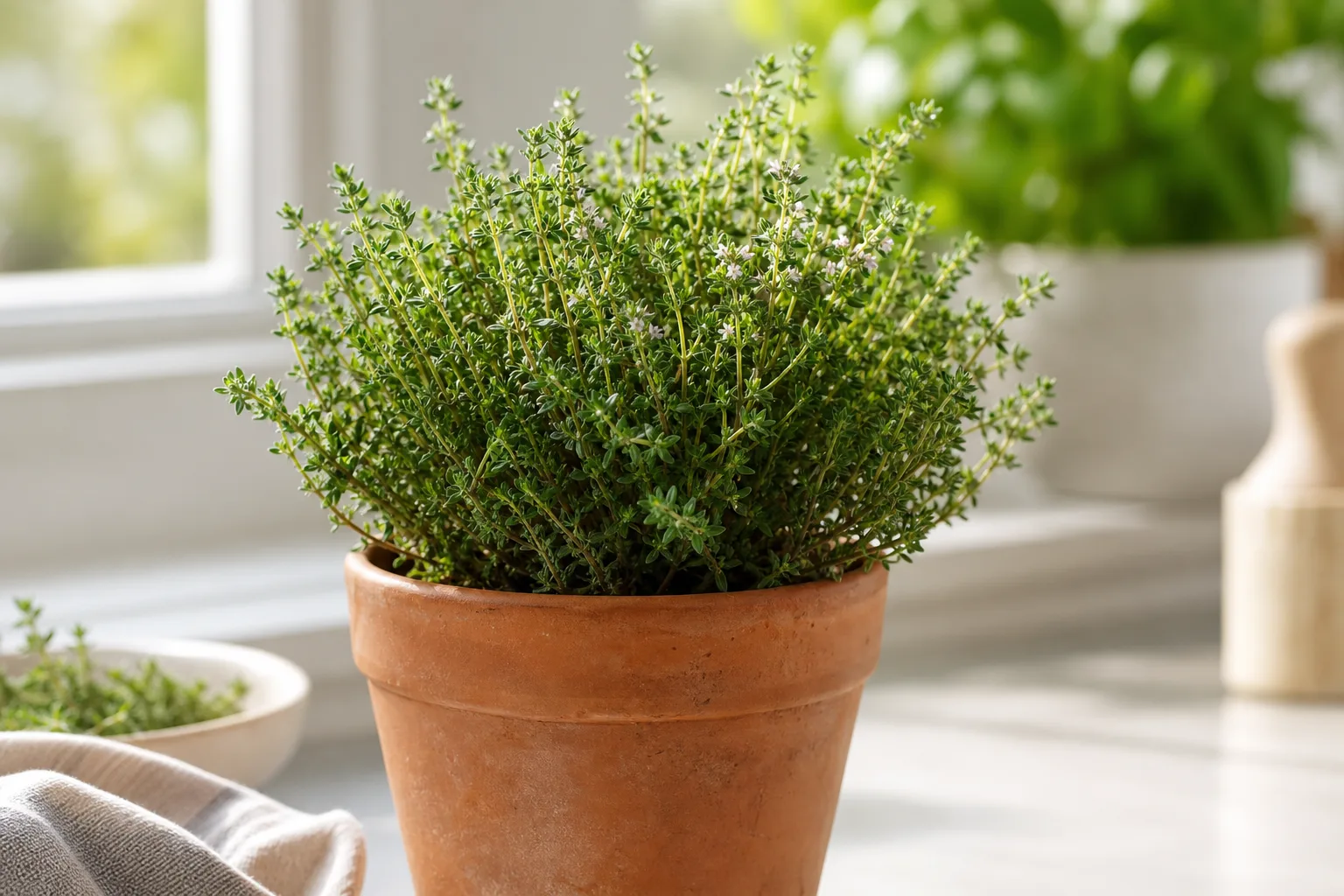
Creeping thyme accepts poor alkaline soil and blooms pink June–July, attracting pollinators. It is the classic stepping-stone filler; Colorado State University Extension lists thyme-class aromatics among drought groundcovers for open sites. Shear lightly if centers thin.
Nepeta is not a flat creeper—it mounds to 24–36 inches with cultivars like ‘Six Hills Giant’. Use it where height is acceptable and you want summer-long color with minimal feeding.
Wall germander behaves like a miniature hedge; excellent where you need crisp edges without boxwood disease pressure.
Sun-loving evergreen and slope covers
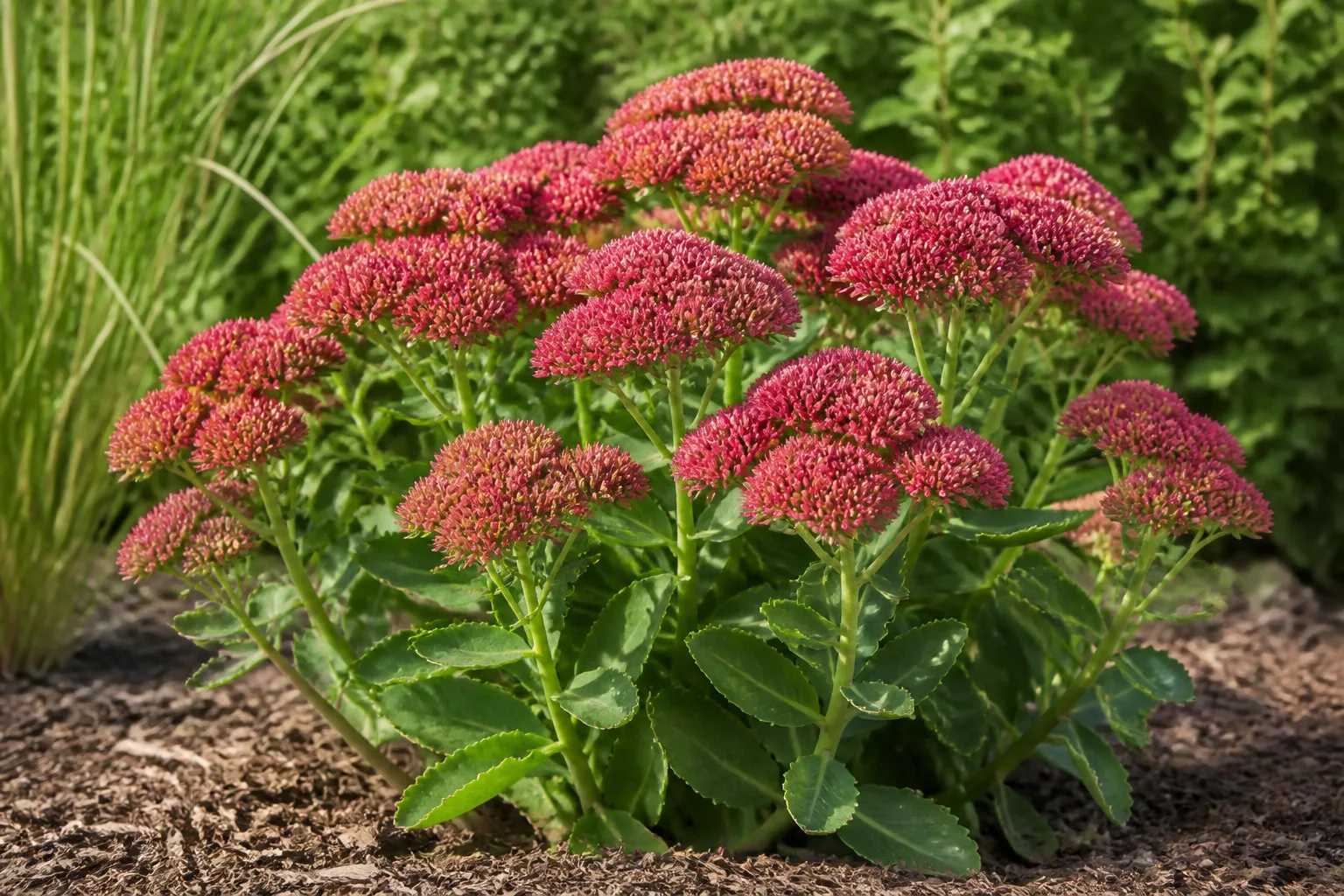
Angelina sedum (shown above in sunny sections) roots at stem nodes; great for scree and green roofs, contained by gravel paths.
Creeping juniper ( Juniperus horizontalis , zones 3–9) sprawls up to 8 feet wide on slopes. Remove turf, lay landscape fabric only if you accept long-term fabric management, plant ‘Blue Rug’ or ‘Wiltonii’ plugs, mulch between, and water through year one. CSU notes junipers among structural groundcovers for erosion—ideal where mowing is dangerous.
Rock cotoneaster ( Cotoneaster horizontalis , zones 3–9) layers branches that root where they touch soil; red berries and fall color reward patience. Give afternoon shade in hot climates and extra water until roots run deep.
Lamb’s ear ( Stachys byzantina , zones 4–9) forms silvery felt mats in sun; ‘Silver Carpet’ stays short and rarely flowers. Remove rotted centers in humid summers; shear before winter in cold zones.
Snow-in-summer ( Cerastium tomentosum , zones 3–8) blankets with white June flowers on gray foliage; keep dry to avoid fungal collapse.
Shade groundcovers that stay manageable
Sweet woodruff, epimedium, and European ginger
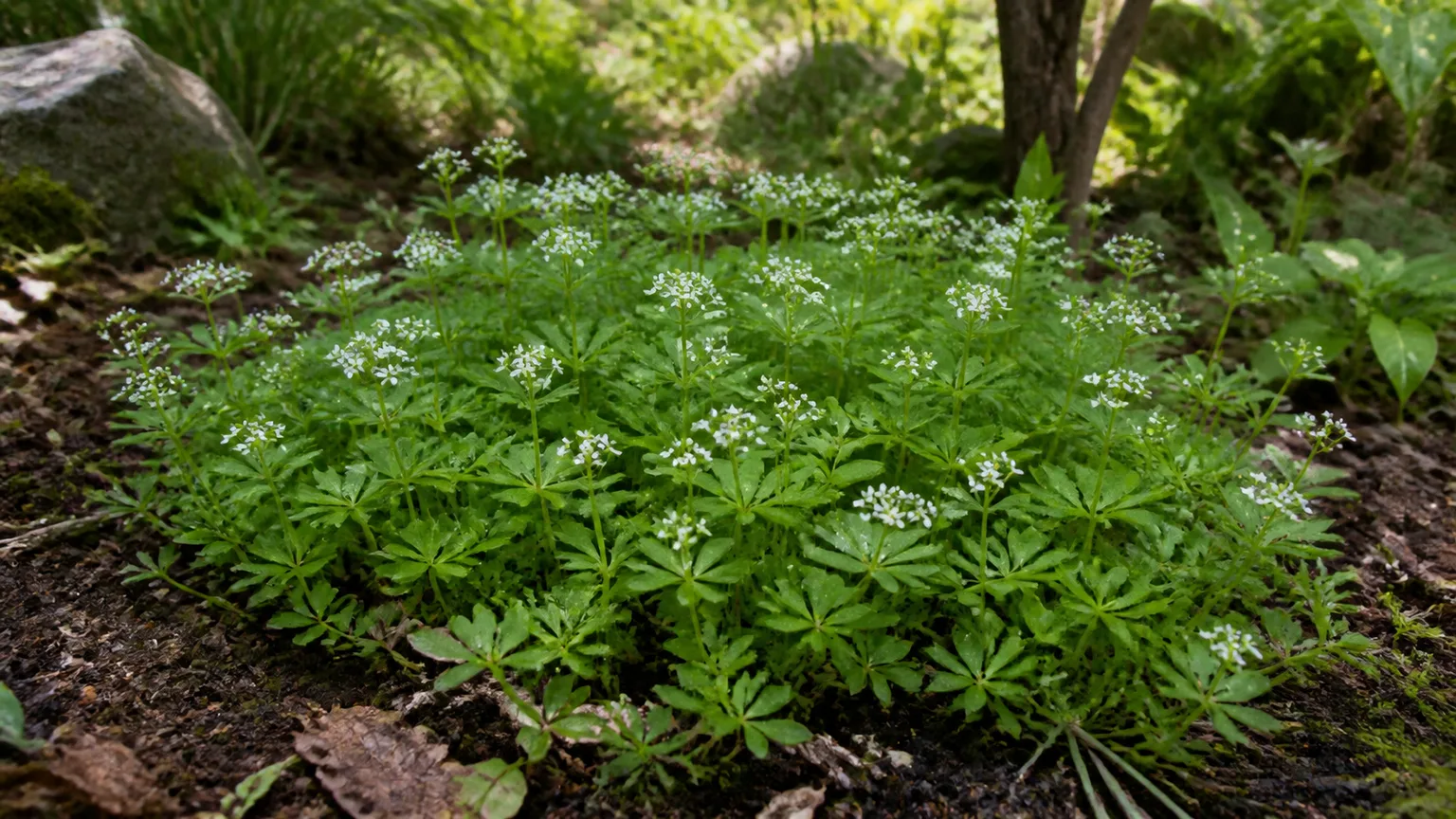
Sweet woodruff ( Galium odoratum , zones 4–8) smells like vanilla hay when dried—lovely for crafts—but it runs in moist soil. In dry shade under pines, it behaves; in irrigated beds, it can become the weed. Match water to restraint.
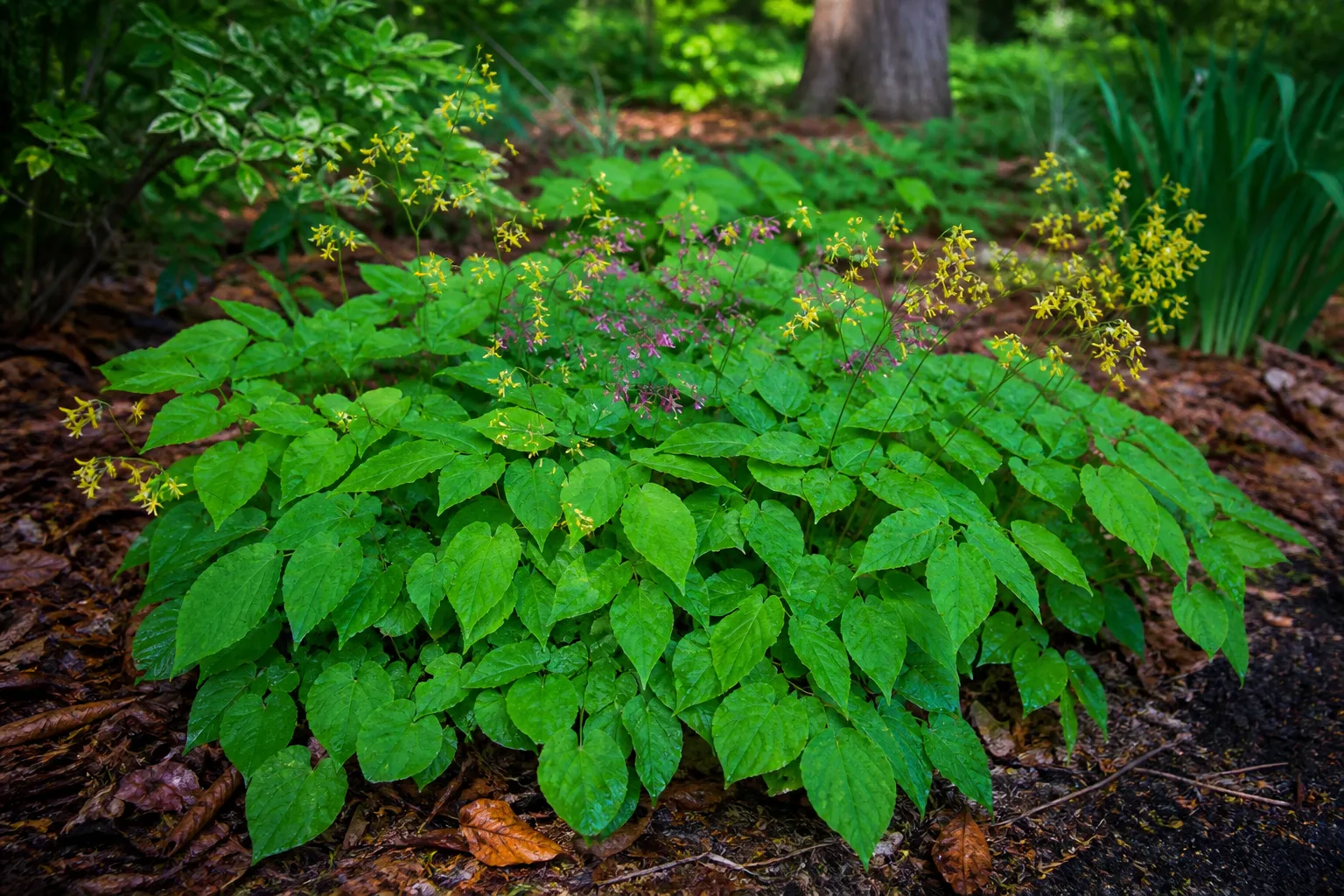
Epimedium handles tree-root competition and deer browsing; NC State Extension recommends barrenwort for dry shade groundcover. Expect three to five years to a solid mat from typical spacing—low maintenance later, not instantly.
European ginger is slow, glossy, and nearly pest-free; perfect for small north-facing pockets where you do not want runners jumping lawn.
Hosta, pachysandra, and spotted deadnettle
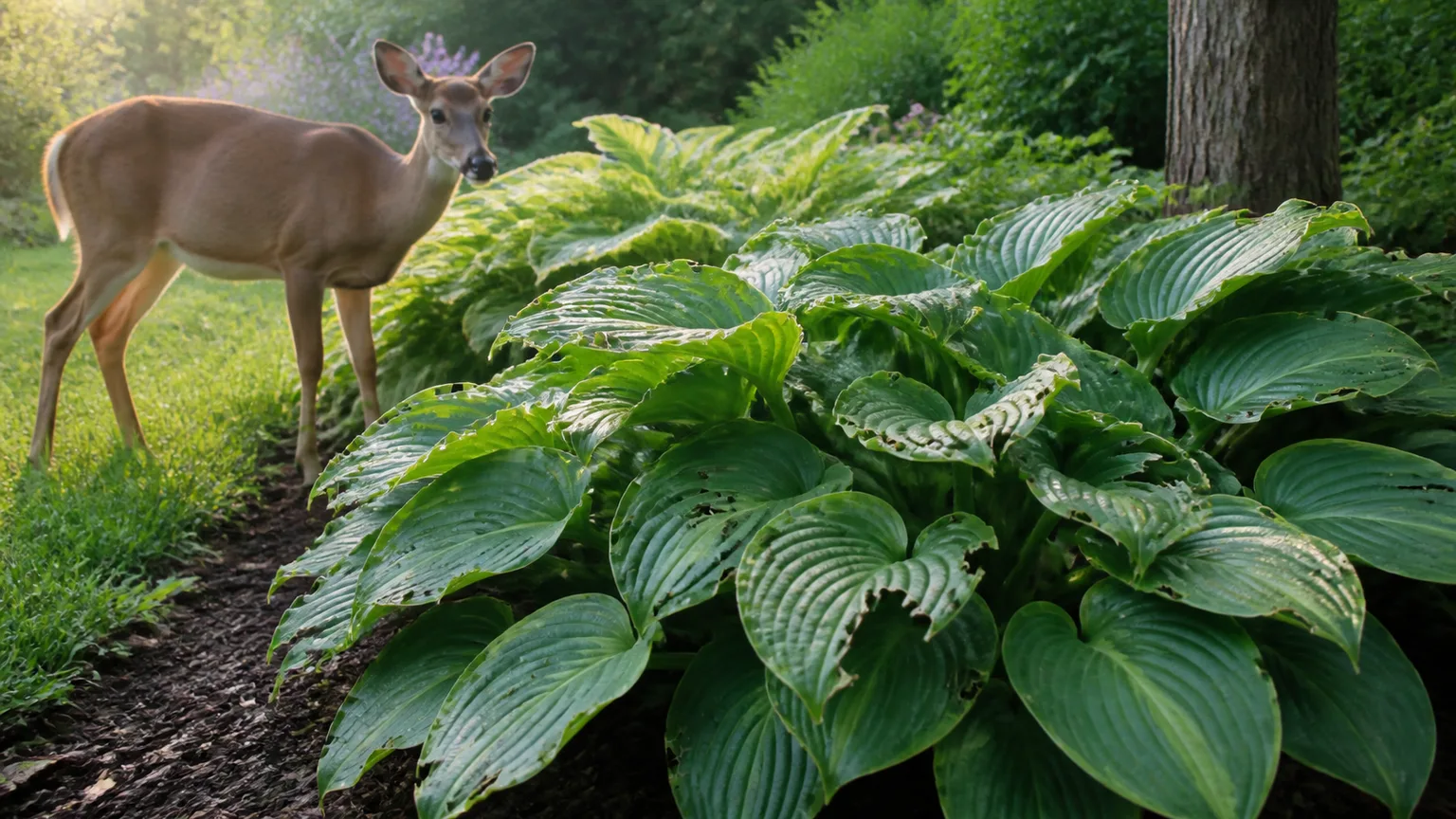
Hosta (zones 3–9) is unbeatable for bold leaves in shade; miniatures like ‘Blue Mouse Ears’ stay under a foot while giants need space. Deer treat hostas like buffet food—fine in fenced yards, frustrating in woodland edges. ASPCA lists hosta as toxic to pets.
Pachysandra is the commercial shade workhorse: evergreen, inexpensive plugs, tolerant of root competition. Flowers are tiny; the leaf carpet is the point.
Spotted deadnettle ( Lamium maculatum , zones 4–8) brings silver-striped leaves and long bloom in moist shade. It is invasive in parts of the Northeast and Pacific Northwest—verify with your extension office before planting. Where legal, it outcompetes weeds fast; edging is mandatory.
Native woodland specialists for cool shade
Bunchberry ( Cornus canadensis , zones 2–6) is a native dogwood relative for acidic, moist woodland—white spring flowers, red fruit, deer and rabbit resistant. It struggles south of zone 6 heat.
Liverleaf ( Anemone americana , zones 3–8) offers early spring blooms and maroon winter foliage on a tiny scale; reseeds politely.
Interrupted fern ( Osmunda claytoniana , zones 3–8) spreads by rhizomes in rich wet shade; native where you find it, well-behaved compared to ostrich fern.
Lenten rose ( Helleborus × hybridus , zones 4–8) blooms in late winter shade, toxic to pets per ASPCA; remove tattered leaves in spring, divide clumps every few years for free fill.
Fast fillers and dual-purpose covers
Bugleweed ( Ajuga reptans , zones 4–9) is the shade-to-sun workhorse with blue spikes; NC State Extension notes its stoloniferous habit and crown-rot risk in wet soil. Keep it off lawn edges—runners invade turf. Mow on a high setting after bloom if you need to reset a mat.
Creeping jenny ( Lysimachia nummularia , zones 4–9) glows chartreuse in sun, lime in shade; invasive in moist climates. Superb in hanging baskets, risky in open beds without barriers.
Creeping liriope ( Liriope spicata , zones 4–10) and lilyturf ( Liriope muscari , zones 5–10) are not true grasses—they are asparagus relatives. Spicata runs aggressively in the Southeast; muscari clumps politely and suits path edging. Both handle erosion; choose muscari when you fear spread.
Creeping raspberry ( Rubus calycinoides , zones 6–10) anchors slopes with white summer flowers and sparse edible fruit; thornless stems, heat tolerant.
Brass buttons ( Cotula coronopifolia , zones 4–10) is a tiny New Zealand mat for cool moist sites; invasive in California per Cal-IPC—skip it in the West unless you confirm local status.
Honeysuckle groundcover types vary: native Lonicera sempervirens is a well-behaved vine, while bush honeysuckles can be invasive. Pick named natives; berries are toxic. Prune once yearly.
Amethyst in Snow, Chinese lantern, and rock cotoneaster fit here when you need quick cover on the right site—always with containment.
Plants that need a boundary plan
Some popular “easy” plants become long-term headaches without hard edges, root barriers, or simply choosing a different species.
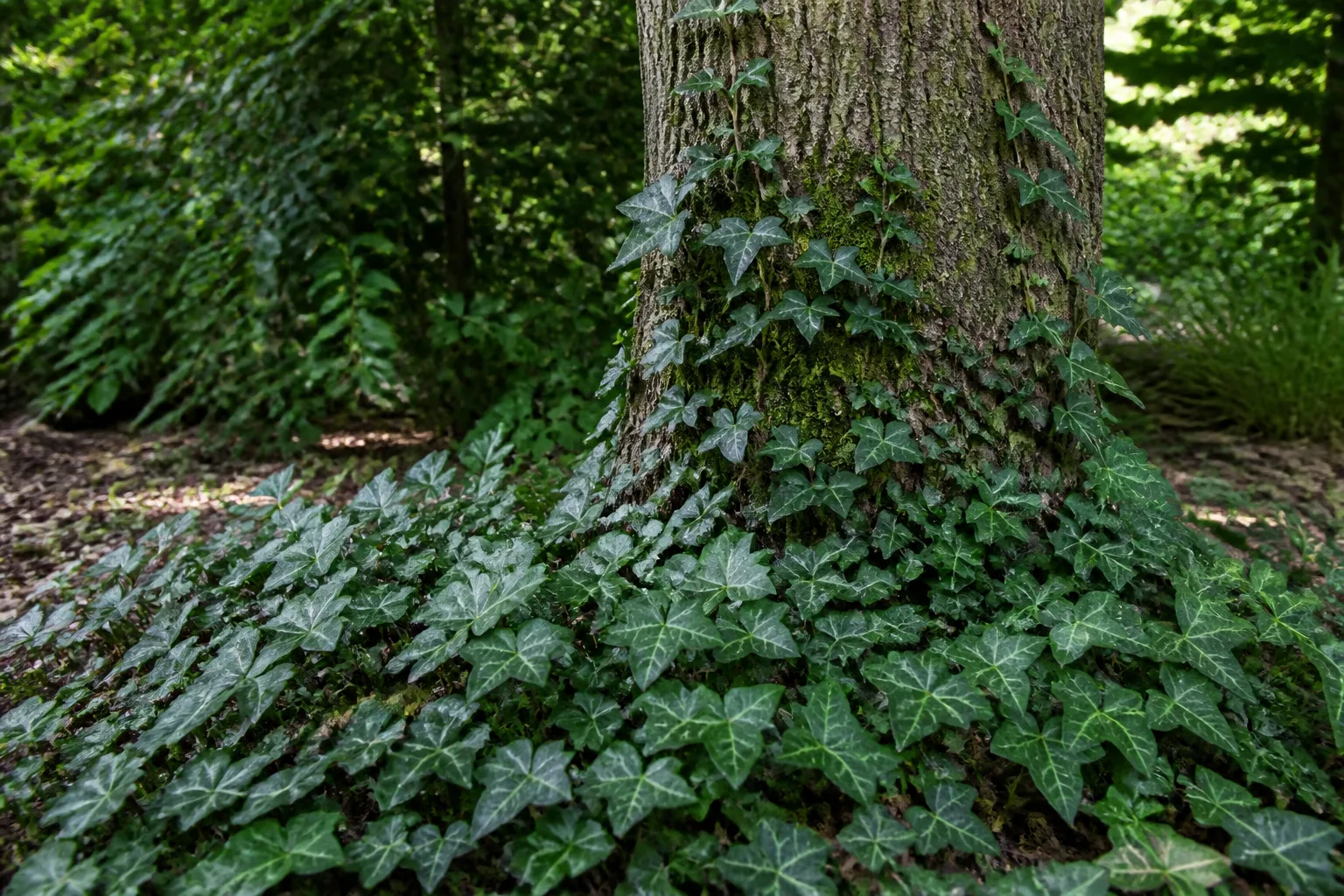
English ivy ( Hedera helix , zones 4–13) climbs trees and buildings, seeds into wild areas, and is toxic. NC State Extension notes poison characteristics and aggressive spread. As groundcover only, it still escapes vertically—trim monthly where stems meet trunks or siding. Many regions now discourage new plantings; check local guidance.
Common periwinkle ( Vinca minor , zones 4–9) holds slopes and excludes weeds but ranks on invasive lists in parts of the Midwest and Northeast. ASPCA lists periwinkle as toxic to dogs, cats, and horses.
Sweet woodruff, bugleweed, creeping liriope, and creeping jenny belong in this tier when soil is moist and summers are mild.
If you need evergreen shade without ivy risk, pachysandra or epimedium is slower but safer near structures and pets.
How to plant groundcover so it stays low maintenance
Start by killing existing weeds—glyphosate or repeated smothering for tough patches, hand-digging for quackgrass and bindweed. Loosen the top 6 inches where tree roots allow; mix compost for woodland plants, not for thyme on gravel.
Spacing: closer plugs knit faster; typical 6–12 inches for runners, 12–18 for clumpers. Stagger rows like brickwork.
Water: first-year deep watering beats daily sprinkles. Mulch 2 inches between plants, not on crowns.
Edges: install metal or plastic edging flush with soil, or maintain a 12-inch gravel trench between bed and lawn. Our landscapers’ favorite groundcovers guide covers design-scale choices when you want a finished look faster.
Maintenance calendar: spring = divide overcrowded mats, refresh mulch; post-bloom = shear phlox, thyme, candytuft; fall = pull tree seedlings from shade mats; anytime = lift escaped runners before they root in turf.
Low maintenance is the reward for correct match and a clean start—not a promise on the plant tag alone.
Conclusion
The best low-maintenance ground cover for your yard is the one that matches light, moisture, and spread temperament—not the one that looked easiest online. Sun-baked strips want thyme, sedum, or juniper; dry shade under oaks wants epimedium or pachysandra; moist shade can handle hosta or lamium if you commit to edging. Treat ivy, vinca, and wet-soil runners as containment projects, not set-and-forget choices.
Shortlist two or three plants from the comparison table, verify invasive status with your local extension office, prep the bed once, and give the mat a full season to settle. Do that and you trade weekly weeding for an occasional trim—a fair swap most gardeners are happy to make.



