Best Groundcover to Prevent Weeds in Your Garden
The best groundcover to prevent weeds depends on sun, soil, and slope—not one plant for every bed. Compare epimedium, sun picks, prep, and a 3–5 year timeline.
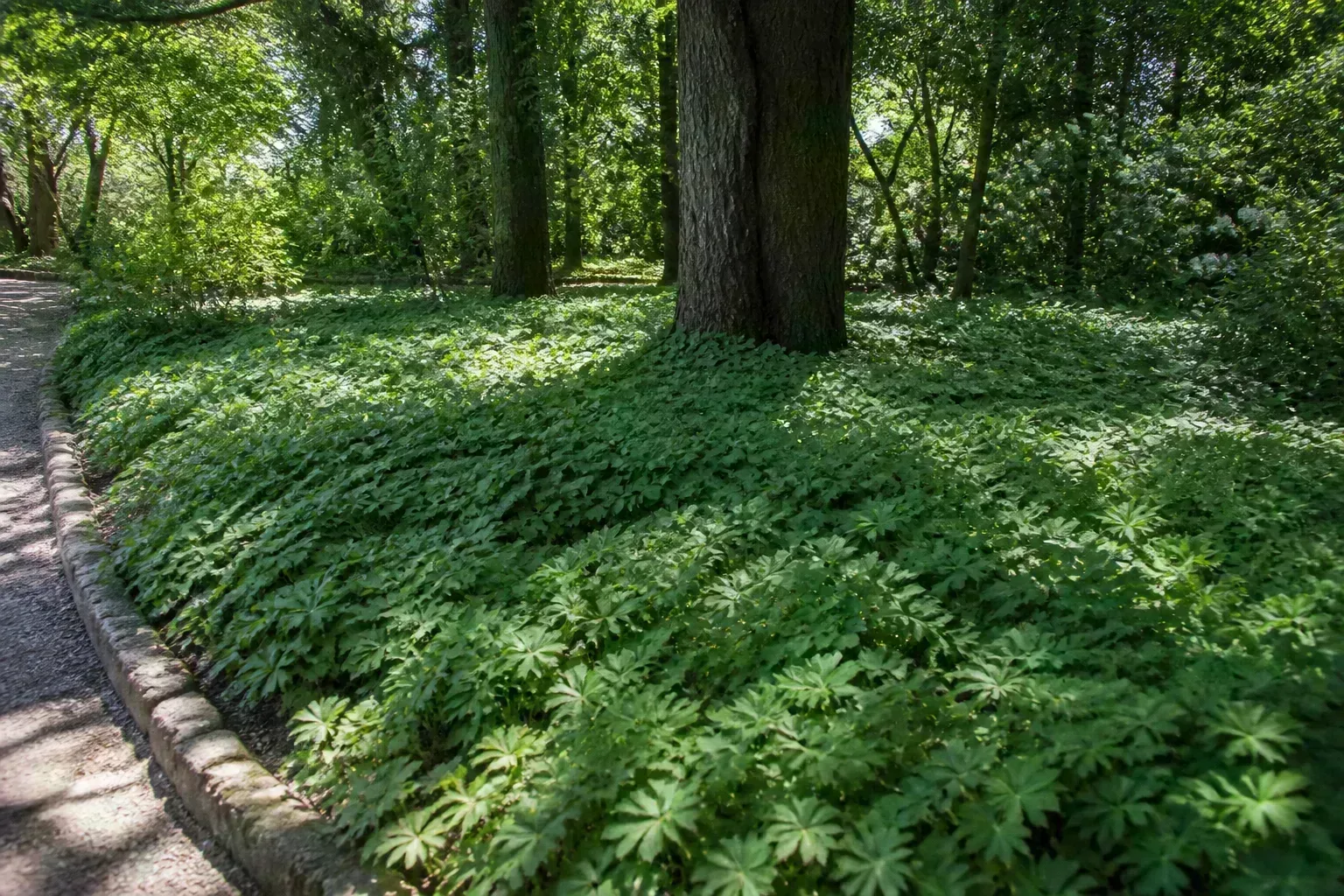
If you are tired of kneeling in the same shady bed every weekend, the right living groundcover can shrink your weeding list dramatically—but only when the plant matches the site. The best groundcover to prevent weeds is not one universal answer. It is the dense, well-chosen perennial that fits your light, soil moisture, and root competition, then gets time to knit into a mat that blocks light from reaching weed seeds below.
How living groundcover actually blocks weeds
Groundcover works by exclusion. When foliage stays thick from early spring through late fall, it shades the soil surface and steals the open gaps weed seedlings need. Most annual weeds are light-dependent germinators: without a few hours of direct sun on bare soil, their seeds sit dormant or sprout weakly and die under the leaf layer. Rhizomatous spreaders such as epimedium send woody roots outward underground, which helps them hold territory against encroaching weeds and neighboring plants once established.
Extension guidance on groundcovers describes them as plants that grow thickly enough to cover soil and reduce maintenance compared with bare mulch or turf gaps. Living cover also moderates soil temperature swings, which slows the flush of weed seedlings that appear after every rain on open ground. Over time, a healthy mat changes the microclimate at soil level: less evaporation in dry shade, less crusting on clay, and fewer disturbed spots where weed seeds find purchase.
That does not mean zero weeds forever. Seeds blow in from lawn edges, birds drop berries, and aggressive weeds like nutsedge or bindweed can punch through almost anything. Tree seedlings—maple, elm, hackberry—are common in shady mats and should be pulled while stems are still soft. What changes is frequency and scale: instead of clearing whole patches, you snip the occasional intruder. The labor shifts from reactive rescue to light patrol, which is the realistic promise good groundcover delivers.
What groundcover cannot promise on its own
No groundcover replaces site prep or patience during establishment. A single flat of plugs spaced too far apart leaves sunny gaps for crabgrass and chickweed for two or three seasons. Planting sun lovers in dry root zones under mature maples sets up failure that looks like “the groundcover did not stop weeds” when the real issue was mismatch. Treat groundcover as a long-term living mulch layer, not an instant weed membrane.
Choose groundcover by site before you shop
Start with a simple audit before you fall in love with a plant photo online. Walk the bed at mid-morning and mid-afternoon, note whether roots from trees or shrubs already steal moisture, and dig one test hole to see if soil is sandy, heavy clay, or rich loam. Match the plant to that reality first; weed suppression follows density, and density follows fit.
| Site condition | Priority traits | Top weed-suppressing direction |
|---|---|---|
| Dry shade under trees | Rhizomatous, drought tolerant, deer resistant | Epimedium and cultivars |
| Full sun, well drained | Low, spreading, heat tolerant | Creeping thyme, sedums, low ajuga |
| Part shade, moist | Fast fill, tolerant of competition | Lamium, ajuga, low ferns paired with epimedium |
| Slopes and hell strips | Erosion control + tight mat | Sedum mixes, creeping juniper at scale |
This table is a decision shortcut, not a shopping list. Your USDA zone still matters: epimedium performs as a hardy perennial in zones 5a through 8b, according to NC State Extension, which makes it a reliable shade-groundcover candidate across much of the eastern and midwestern United States.
Shade and dry shade under trees
Dry shade under trees is where most homeowners lose the weed battle. Lawn grass thins, moss appears, and every disturbance opens soil for garlic mustard, maple seedlings, and violets. You need a groundcover that tolerates root competition, irregular moisture, and dappled light. Epimedium is the standout here because it is rhizomatous, deer resistant, and adapted to woodland conditions NC State describes as partial to full shade, including dry shade once established.
The Missouri Botanical Garden highlights Epimedium × versicolor ‘Sulphureum’ and Epimedium × warleyense specifically as groundcovers for dry shade—useful cultivar anchors when you want yellow or orange spring color with the same weed-blocking habit. For more shade-groundcover ideas beyond epimedium, see our guide to deer-resistant perennial ground cover plants.
Full sun, slopes, and hot dry beds
Epimedium is not the hero in baking afternoon sun on a south-facing slope. There, look to xeriscape groundcovers that Colorado State University Extension groups for dry sites: low sedums, creeping thyme, and other drought-tolerant mats that hug soil and reduce evaporation. These plants prevent weeds the same way—by covering ground—but they survive heat and sharp drainage that would cook barrenwort.
On open sunny beds with good soil, ajuga and creeping thyme can form tight carpets if you control watering during year one. Our roundup of landscapers’ favorite groundcovers includes additional sun-tolerant options when you want a finished look faster than epimedium allows.
Part shade with steady moisture
In beds that stay evenly moist along north foundations or under limbed-up trees, you have more choices. Lamium and ajuga fill quickly and suppress annual weeds when planted at proper density. Pair them with epimedium at the drier tree-root edge and lamium where downspouts keep soil cooler. The goal is one continuous leaf layer with no bare donuts—not a single species everywhere.
Why epimedium leads for shaded weed suppression
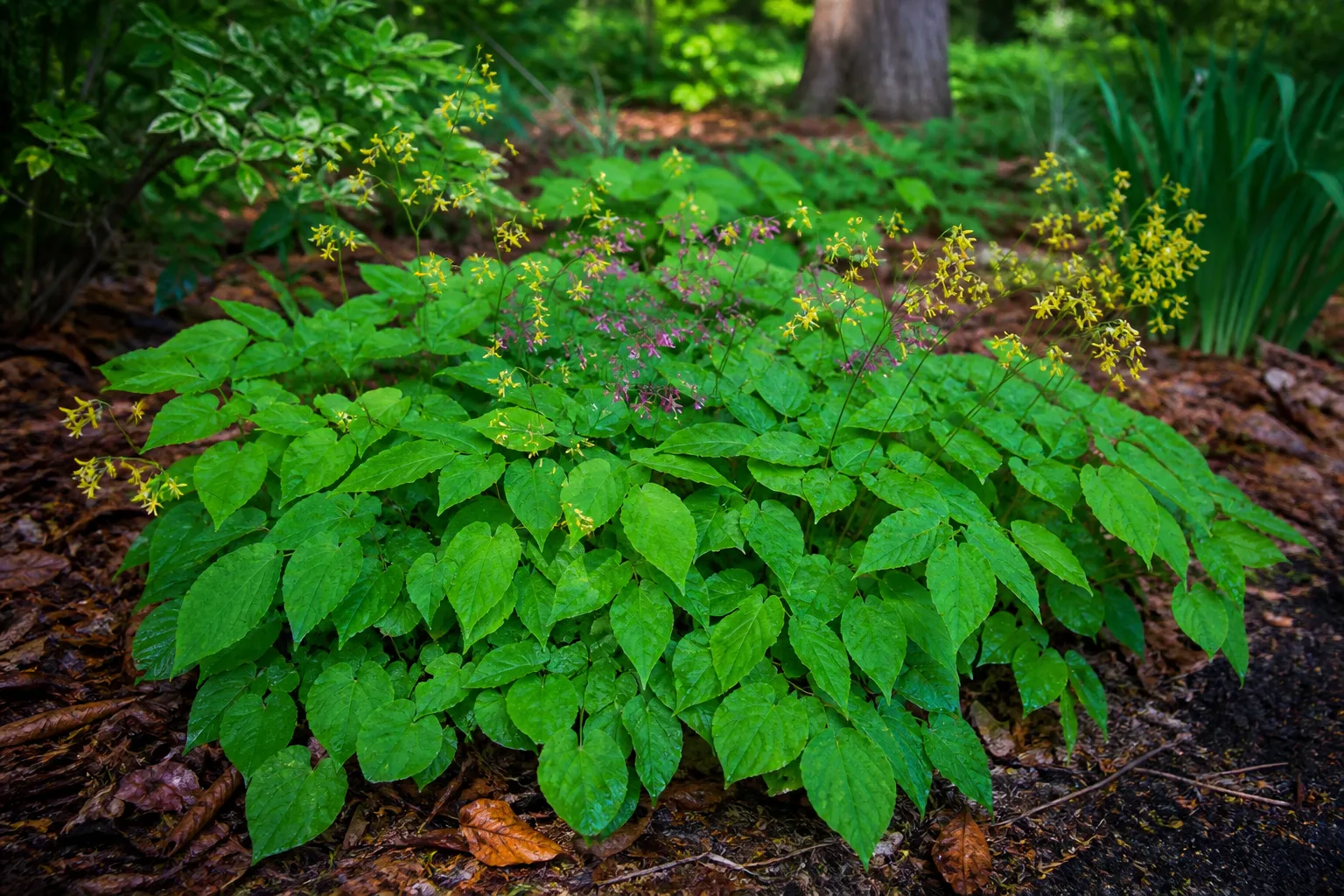
Among shade groundcovers, epimedium (barrenwort, bishop’s hat) earns top billing for weed suppression because it combines ornamental value with a tough rhizome system. NC State notes its clumping, rhizomatous habit: roots spread steadily without the reckless invasiveness of some vines. Heart-shaped leaves emerge with spring flowers on wiry stems, then expand into a layered canopy that blocks light at the soil line from April into late fall in most climates.
The spring flower display is not just cosmetic. Blooms on short stems rise above fresh foliage in April and May, then the leaf canopy expands to do the weed-blocking work through summer and fall. Many cultivars show red-tinged new growth or speckled mature leaves, which helps the bed look intentional even before full knit occurs. In dry shade, that extended season of leaf cover matters more than bloom size: the longer soil stays shaded, the fewer weed flushes you fight.
Groundcover specialists often recommend epimedium where homeowners want a low-maintenance carpet that outcompetes less desirable plants over time. Its woody root mass can hold ground against aggressive neighbors once the mat matures—exactly the trait you want when replacing weedy ivy patches or filling under shrubs where hand-weeding is miserable. Unlike English ivy, epimedium does not climb structures or trees, which makes it a safer long-term choice along foundations and fence lines.
Culture aligns with real-world shady yards: partial to full shade, tolerance of dry shade after establishment, and deer resistance, which matters when rabbits and deer treat ajuga like salad. Soil preference is neutral to slightly acidic, well drained, and enriched with organic matter—standard woodland bed conditions. Epimedium tolerates drought once roots are anchored, but young plantings under thirsty tree canopies still need attention the first two summers; mistaking “drought tolerant” for “never water” is a common reason new mats stall.
Honest limits you should plan around
Epimedium is slow to heroic. Expect three to five years before a planted area reads as a solid weed-blocking mat from a typical division spacing. During that establishment window you will still weed; the payoff is lower frequency afterward, not a magic switch flipped at planting.
It struggles in full afternoon sun and in constantly soggy clay where crown rot risk rises. Tree roots are a double-edged sword: epimedium can compete with them, but young plants need supplemental water the first two summers or they stall and leave gaps weeds exploit. NC State recommends dividing clumps every three to four years, with late summer as the preferred window—plan that rhythm if you want to speed coverage by transplanting your own divisions rather than buying more pots.
Finally, epimedium suppresses most weeds, not all. Taprooted perennial weeds established before planting may need digging out first. Annual weeds in year one are normal; they are a spacing and patience problem, not a reason to abandon ship.
Epimedium cultivars for dry shade
When you want cultivar specificity beyond generic barrenwort, start with proven dry-shade performers:
- Epimedium × versicolor ‘Sulphureum’ — soft yellow flowers, vigorous spread for shade; MOBOT lists it for dry shade groundcover use.
- Epimedium × warleyense — copper-orange blooms, similar mat-forming habit for challenging tree zones.
- Epimedium grandiflorum cultivars — larger flowers; slightly slower spread but excellent where you want spring show and still build a weed shade layer.
Choose based on flower color and mature leaf size, not hype. A smaller-leafed species hybrid often weaves tighter than oversized cultivars that leave glimpses of soil between clumps early on.
Strong alternatives when epimedium is not the right fit
When sun, moisture, or desired speed rules out epimedium, switch species rather than forcing one plant to do every job. The weed-suppression goal stays the same—continuous leaf cover—but the winning plant changes with exposure.
Ajuga reptans forms a dense rosette mat in part shade to sun, fills faster than epimedium, and handles light foot traffic at path edges. Blue flower spikes in spring add color before the leaves take over weed duty for the rest of the season. Watch for crown rot in heavy wet soil and contain runners if they jump into lawn. Ajuga is a smart choice when you need visible progress in year one and your bed gets a few hours of morning sun.
Lamium maculatum brightens dry shade with silvered foliage and fills gaps quickly where moisture is more even. It can be overly enthusiastic in rich soil; site it where you want coverage, not a timid accent. Deadnettle pairs well with epimedium on the transition zone between dry tree roots and a moister foundation planting.
Low sedums and creeping thyme excel on sunny, lean soil—think rock gardens, curb strips, and slopes. Colorado State Extension’s xeriscape groundcover resource groups drought-tolerant mats that reduce evaporation and cover soil where turf struggles. On slopes, roots lock soil in place while leaves exclude weeds—a dual win for hell strips and south-facing banks.
Phlox subulata and other moss phlox cultivars weave tight on sunny edges with spring bloom, then hold a low needle-like canopy. They need sharp drainage and suffer in wet clay, but where they thrive they beat weeds better than tall perennials that leave open soil at their feet.
Hosta blocks weeds by leaf size in moist shade but disappears in winter, leaving a temporary gap for early annual weeds; pair with spring epimedium foliage or a mulch top-up for December through March if that off-season matters in your region. Use hosta as an accent clump inside a groundcover matrix, not as the sole weed strategy.
For a broader palette of short plants that knit together, browse low-growing perennials and mix heights only where the taller plant does not leave bare soil at its feet. The rule is simple: if you can see soil from standing height, weeds can too.
Prep the bed so weeds do not win the race
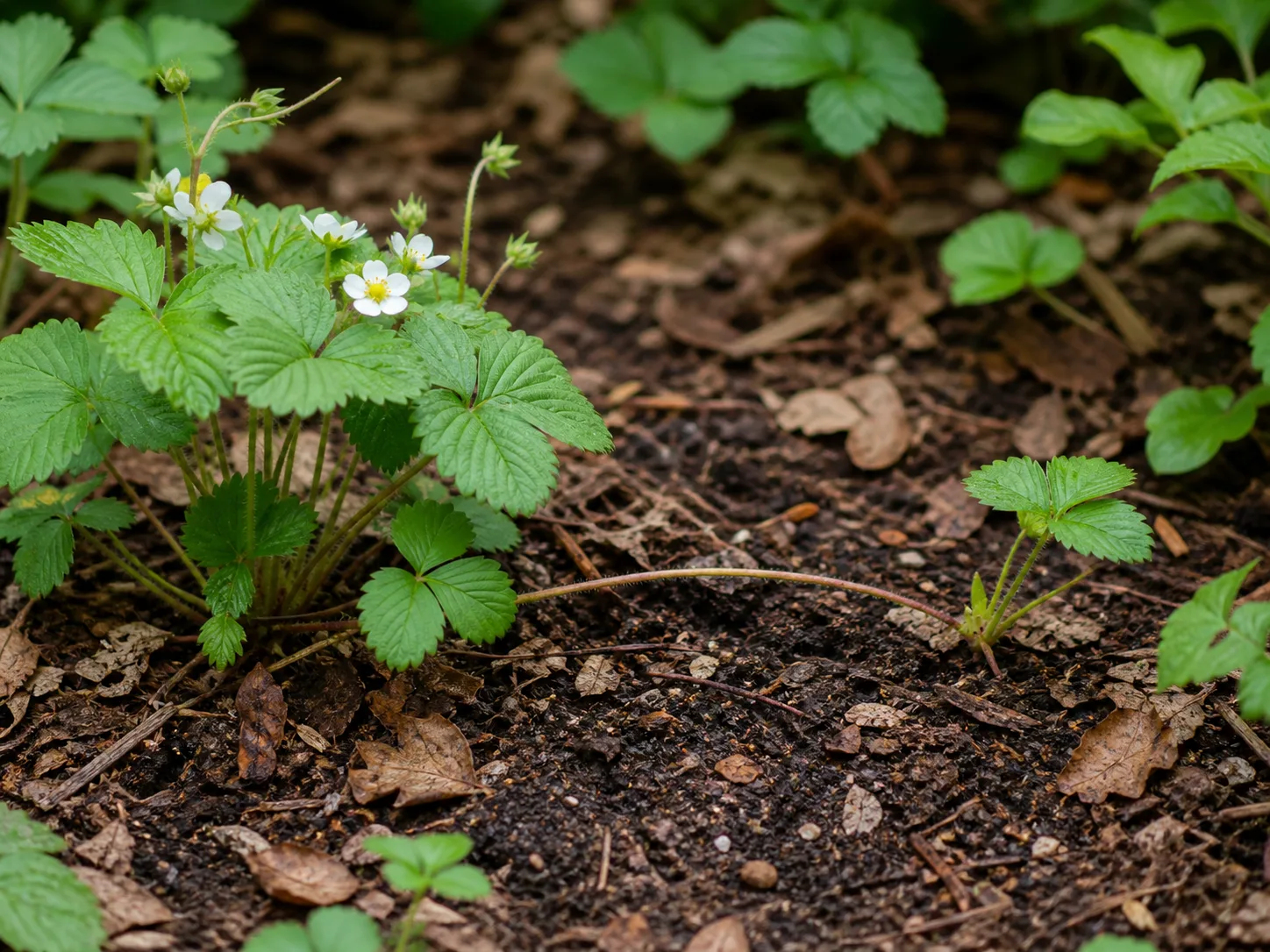
Weed suppression starts before the first epimedium division touches soil. Skipping prep is the fastest way to recreate the same weed patch with more expensive plants in it.
Clear existing weeds thoroughly. Pulling tops is not enough for perennial weeds; dig dandelion, thistle, and bindweed roots where feasible. If the bed is overrun, a season of smothering with cardboard and mulch—or repeated shallow cultivation—beats planting into a live seed bank.
Improve drainage and organic matter. Loosen compacted edges under trees without destroying major roots. Work compost into the top few inches where epimedium will spread; NC State notes preference for rich, well-drained woodland soil.
Space for density, not instant budget. Plant divisions 6 to 12 inches apart in a staggered pattern for faster knitting. Closer spacing costs more upfront and saves hours of hand-weeding in years two and three.
Water through establishment. Dry shade beds under mature trees are deceptive; surface looks moist while root zone is parched. Deep soak weekly the first growing season when rain is scarce.
Mulch between plants with shredded bark or leaf mold two to three inches deep, keeping mulch off crowns. Colorado State Extension’s mulching guidance emphasizes consistent depth and avoiding piles against stems—the same rules apply to groundcover plugs.
Edge the bed so lawn grass does not creep in sideways; grass is the weed most groundcovers lose to when borders are vague.
Mulch alone versus living groundcover
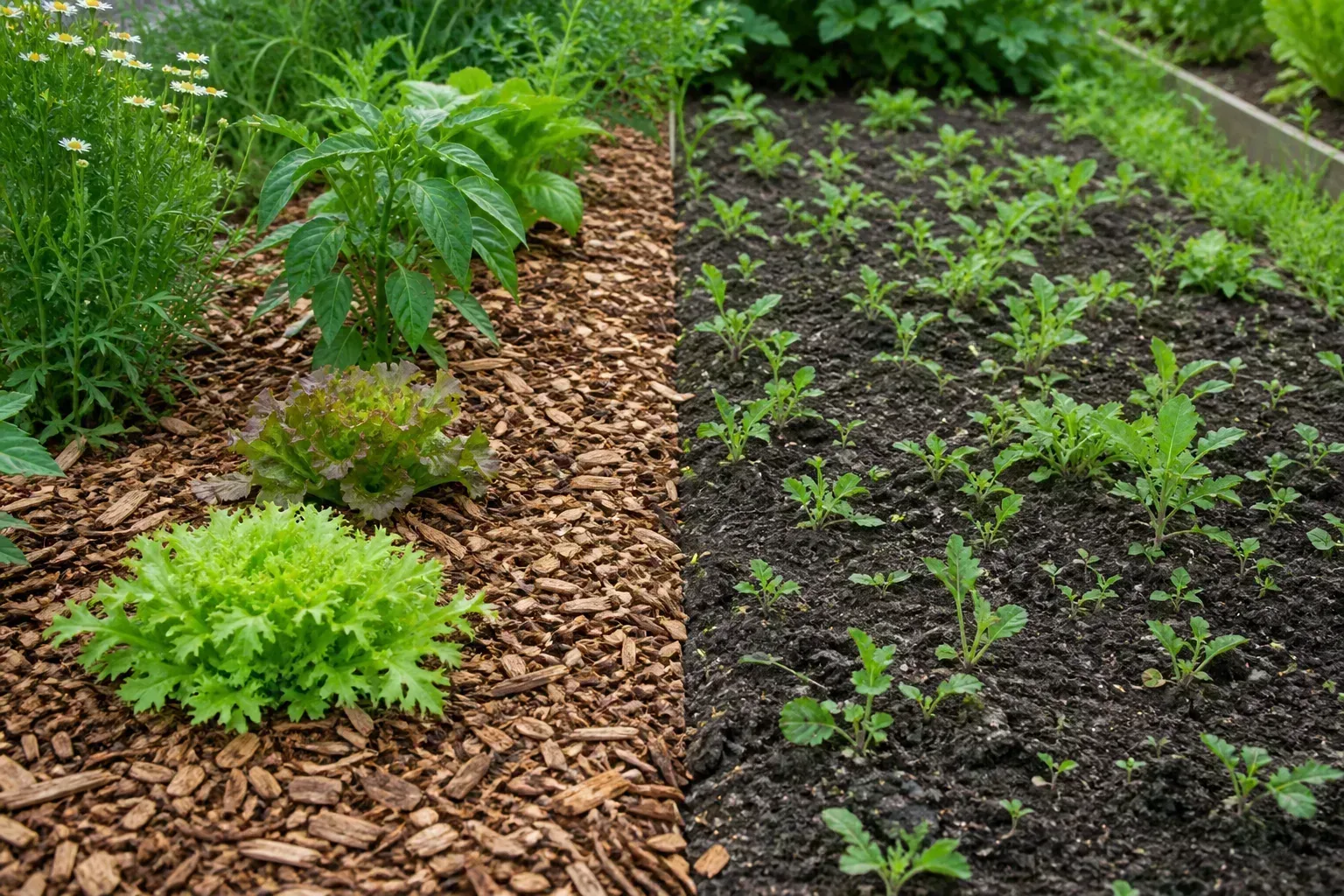
Mulch and living groundcover solve different phases of the same problem. Organic mulch suppresses many annual weeds by blocking light and moderating soil temperature, which is why it works beautifully the first year while plugs spread. Our guide does mulch prevent weeds walks through depth, refresh timing, and where mulch fails against perennial invaders.
Living groundcover becomes the long-term layer. Once epimedium or ajuga knits together, the plant canopy replaces part of your mulch budget and self-renews each spring. The smartest installs use both: mulch during establishment, then let the mat reduce how often you top-dress.
| Approach | Best for | Weakness |
|---|---|---|
| Mulch only | New beds, vegetable gaps, temporary paths | Degrades yearly; weeds colonize thin spots |
| Groundcover only | Mature shade mats, slopes with sedum | Years of weeding while filling in |
| Mulch + groundcover | Tree beds, new shade gardens | Higher initial labor and cost |
Do not expect plastic sheeting under groundcover to help; roots need soil contact, and fabric often creates a weed hammock on top as mulch breaks down. Invest in plants and proper clearing instead.
What to expect over three to five years
Groundcover timelines are where realistic gardeners separate themselves from disappointed shoppers. Epimedium is not fast; it is durable. Use this year-by-year map so you do not rip out a winning plant in year two because chickweed still appears.
Year one is establishment. Leaves look sparse, spring weeds exploit gaps, and you hand-pull regularly. Water during drought, especially under mature trees where rainfall never reaches soil. Refresh mulch where you still see soil between plugs. Do not fertilize heavily; tender growth invites slug damage more than weed victory. Take photos in June and September so you can see progress later—human memory exaggerates how “nothing changed” when spread is actually happening underground.
Year two brings visible rhizome spread. Clumps merge in the interior of the planting; edges still need weeding. You should notice fewer weeds in the center of the patch even if borders look rough. Late summer is your first chance to divide and transplant outward to accelerate cover per NC State’s three-to-four-year division rhythm. Target the strongest clumps, not weak outer pieces that may struggle.
Year three shifts maintenance tone. The interior mat shades out most annual weeds. Work moves to borders, tree seedlings, and the occasional tough perennial that slipped through prep. Mulch refresh can taper in the covered center but stay consistent on edges where lawn and bed meet. This is the year to fix edging if grass has crept in—delaying makes recovery harder.
Years four and five are payoff seasons for epimedium in shade. Foliage layers overlap, spring flowers show above the carpet, and weeding becomes spot work—snipping a stray vine rather than clearing patches. Divide again if bare centers appear or you want to colonize a new bed without buying plants. By year five, a well-sited epimedium planting should read as a unified ground plane with only seasonal touch-ups.
Sun groundcovers such as thyme or sedum often reach tight cover one to two years sooner on lean soil; budget your patience to the slowest plant in the mix. If you combine epimedium under trees with thyme on a sunny foreground, judge each zone on its own timeline instead of expecting uniform fill dates.
Maintain weed-suppressing groundcover without extra work
Mature groundcover maintenance is mostly editing, not feeding. Trim winter-damaged epimedium foliage in late winter before new growth emerges so light reaches fresh leaves evenly. Some gardeners shear epimedium lightly with hedge shears on large sweeps; others pull brown leaves by hand on small beds. Either approach clears debris that can harbor slug eggs and exposes soil only briefly before new leaves expand.
Clip stray runners that cross paths or climb into lawn. Epimedium is not invasive in the classical sense, but rhizomes do wander beyond bed lines if you let them. A once-a-year border check in March prevents surprise colonization of adjacent mulch paths.
Division every three to four years rejuvenates vigor and supplies free plants for new areas. Lift clumps with a fork, tease rhizomes apart, and replant at the same depth; late summer timing aligns with NC State recommendations and gives roots weeks before ground freeze. Replant divisions immediately rather than letting roots dry on a tarp—epimedium is tough, but desiccation slows the very spread you divided to encourage.
Fertilizer is optional. A light compost top-dress in spring replaces the heavy synthetic feeds that push soft growth weeds love. If irrigation systems soak only the first inch of soil, adjust so deep-rooted tree zones get occasional slow water—dry stress does not kill established epimedium quickly, but it pauses spread and invites weeds into stalled gaps. In drought summers, one deep soak monthly under tree canopies often matters more than any product in a bag.
When weeds do appear in a mature mat, Gardening Know How notes that hand-pulling while small prevents seed set; avoid broad-spectrum herbicides that damage desirable groundcover leaves on contact. For woody seedlings, cut at soil line and monitor for resprout rather than yanking and disturbing the epimedium mat. Consistent light patrol twice a season beats a single exhausting purge.
Common mistakes that let weeds sneak back in
Even the right plant fails when install details go wrong. These are the patterns that undo weed-suppressing groundcover most often.
Planting too far apart to save money guarantees two seasons of open soil. Spend on spacing or buy smaller divisions and plant denser; your knees pay the difference either way.
Skipping weed removal before planting locks perennial roots under your new carpet. Epimedium will not magically digest a buried bindweed crown.
Choosing for flower photos, not shade level puts sun cultivars in dark tree wells where they never thicken enough to block light.
Letting mulch bury crowns causes rot and bare patches that weeds colonize first.
Ignoring edges invites grass and lawn weeds—the most common invaders in otherwise successful mats.
Giving up in year two when epimedium still looks polite. Slow spread is normal; division and patience beat replacement with aggressive vines you will fight forever.
Overwatering shaded clay kills ajuga and lamium crowns while moss and annual weeds stay happy. Match water to soil porosity, not guilt.
Recovering is straightforward: fill gaps with divisions, hand-pull invaders before they seed, refresh mulch on any bare soil until leaves close ranks, and edge sharply each spring.
Conclusion
The best groundcover to prevent weeds is the one that matches your site’s light and moisture, planted dense enough to form a living shade layer over soil. For dry shade under trees, epimedium and cultivars such as ‘Sulphureum’ and × warleyense are the strongest weed-suppressing choice in zones 5a–8b—slow to fill but exceptional once mature. Sun, slope, and moist shade beds need different species, and every install still demands weed-free prep, establishment weeding, and a realistic three-to-five-year timeline before you judge success.
Layer mulch while plants spread, divide epimedium on a three-to-four-year rhythm, and treat occasional weeds as maintenance rather than failure. Get the site decision right first, and groundcover stops being a decorative afterthought and becomes the lowest-effort weed strategy your shady beds have been missing.



