8 Best Leaf Mulchers for Dry and Wet Leaves
Compare the best leaf mulchers for small yards, wet leaves, large properties, and garden beds, with practical picks for power, mobility, and mulch quality.
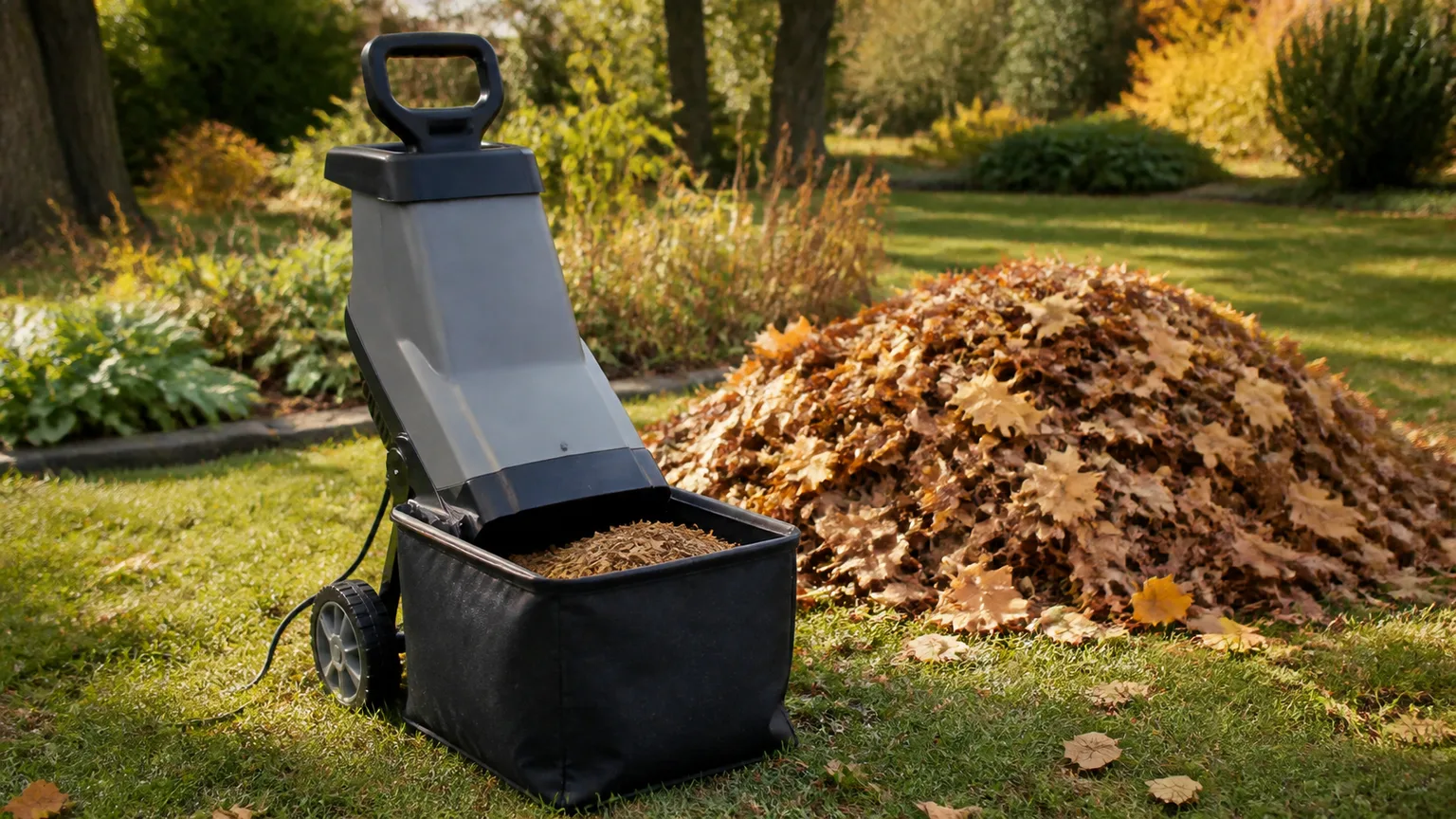
The best leaf mulcher is the one that matches your leaf volume, moisture, debris, and destination. A lightweight handheld can be perfect for a small patio and shrub border, while a stationary machine can process a mountain of dry leaves quickly but still leave you doing the raking. For wet leaves, sticks, and a large tree-covered property, power and intake design matter more than a headline reduction ratio.
This guide compares eight useful formats rather than declaring one machine ideal for everyone. The model specifications below are checked against manufacturer information where available, while the performance notes reflect published hands-on observations; because products, accessories, and availability change, check the current manual before buying or operating any model.
Quick Picks by Yard and Cleanup Job
If you want the short answer, start here:
| Cleanup job | Best fit | Why it makes sense | Main compromise |
|---|---|---|---|
| Fast reduction of a large pile of dry leaves | WORX WG430 | Stationary hopper, 13-amp motor, 11:1 advertised ratio, and fast bag filling | You must rake or blow leaves to the machine; the collection bag is separate |
| Lowest-cost all-rounder | BLACK+DECKER BV3600 | Corded 3-in-1 blower, vacuum, and mulcher with an anti-clog impeller | Tethered operation and a carry weight that feels greater as the bag fills |
| Cordless cleanup around shrubs | Ryobi 40V Vac Attack | Battery freedom, intake wheels, and strong suction for edges and beds | Heavier than a simple blower and not a blower/mulcher combo |
| Fine mulch from a corded handheld | WORX WG509 TRIVAC | 18:1 advertised ratio, variable speed, and quick blower-to-vacuum switching | Wet leaves can clog; extension-cord range limits you |
| Wet leaves and small sticks | ECHO ES-250 | Gas power, a four-blade shredder, and a wide intake tube | Noise, fuel, exhaust, and more maintenance |
| Large, uneven, or heavily wooded property | Troy-Bilt CSV070 | Self-propelled drive, 24-inch vacuum, hose extension, and dedicated chipper | Heavy, expensive, loud, and awkward to empty |
| Light cleanup on a small yard, patio, or walk | BLACK+DECKER LSWV36 | Light cordless format with variable power | Small bag, modest 6:1 ratio, and short high-power runtime |
| Flexible cordless controls | Greenworks 24322 | Variable speed, turbo mode, blower/vacuum conversion, and a shoulder strap | The long bag can drag for shorter users and handheld vacuum mode feels awkward |
The table also exposes the decision most shopping pages bury: a stationary machine optimizes throughput, a handheld optimizes reach, and a walk-behind optimizes coverage. If your leaves are wet and matted, move toward the higher-powered options even if the yard itself is small.
How to Match a Leaf Mulcher to Your Yard
Start with the job you will repeat every fall, not the most impressive specification on the box. Ask four questions: How far must you carry the machine? Are leaves mostly dry or wet when you work? Will you process twigs or only leaves? And will the output stay on the lawn, go into garden beds, enter a compost pile, or leave the property?
Handheld, Stationary, Walk-Behind, or Tow-Behind
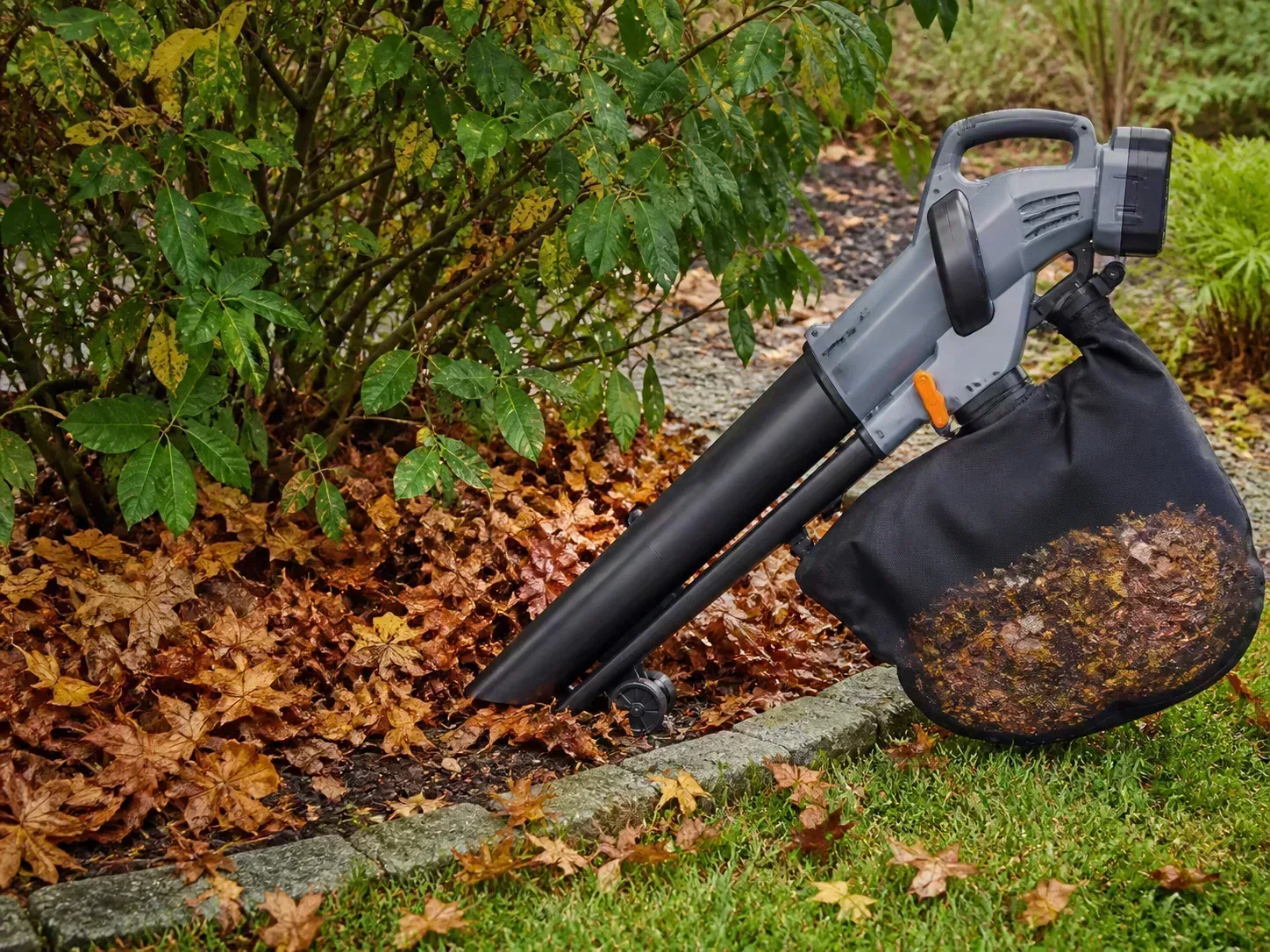
Handheld leaf mulchers look and feel like leaf blowers. They are the most useful choice when leaves collect along fences, patios, steps, shrub borders, and other places a larger machine cannot reach. The trade-off is fatigue: you carry the motor, intake tube, and increasingly heavy collection bag, so a handheld that feels fine for 20 minutes can become unpleasant across a large yard.
Stationary mulchers sit on legs or a stand. You feed leaves through a hopper and let the machine drop the reduced material into a bag below. They are efficient when leaves are already gathered and mostly dry, but they do not replace a rake, blower, or lawn vacuum for collecting the pile. The WORX WG430 is the clearest example of this format.
Walk-behind leaf vacuums and mulchers are closer to self-propelled lawn equipment. Their wider intake and wheels make them a better match for long passes across a large lawn, especially when a handheld would force you to carry too much weight. A tow-behind vacuum is a separate category for acreage and tractor owners; it is excessive for most residential yards.
Corded Electric, Battery, or Gas Power
Corded electric models offer continuous runtime and usually lower weight and maintenance. They are a strong choice when an outdoor-rated extension cord can reach the work area, but the cord becomes a trip and snag hazard if you drag it through shrubs or cross a driveway repeatedly.
Battery models remove that tether and start quickly, but the most powerful vacuum settings consume battery charge fast. Treat the battery, charger, and a second pack as part of the cost if you need to clear a large property in one session. Battery voltage is not a direct comparison of suction or shredding performance; intake shape, impeller design, and airflow matter too.
Gas models remain useful when wet leaves, small sticks, and long sessions overwhelm an electric handheld. They are heavier and louder, need fuel and seasonal maintenance, and produce exhaust. Choose gas because the job requires its extra capacity—not because “gas” automatically makes every model better.
Best Leaf Mulchers at a Glance
The eight picks below are organized around the way a homeowner uses a machine. Manufacturer ratios are useful for comparing models within a category, but they are not a universal measure of finished mulch. Wet leaves, long needles, leaves mixed with grass, and a partially blocked intake can all reduce the actual reduction you see.
Best Overall: WORX WG430 13 Amp Electric Leaf Mulcher
The WORX WG430 is the best overall pick when your main goal is to turn a large volume of gathered, mostly dry leaves into a compact bag of fine material. It is a stationary 13-amp unit with a bladeless Flex-A-Line cutting system, an advertised 11:1 ratio, and a claimed throughput of up to 53 gallons per minute. WORX lists the machine at 20 pounds and says the stand folds for storage. (WORX WG430)
The design makes sense for a homeowner who rakes leaves from a lawn or driveway into one central work area. Feed a manageable amount into the hopper, let the machine process it, and replace or empty the bag before it becomes difficult to handle. A plastic bag can stay attached more securely than a loose paper yard-waste bag, so test your preferred bag before a full afternoon of work.
This is a leaf processor, not a chipper. Keep sticks, stones, thick stems, and other hard debris out of the hopper; a cutting-line system is not a substitute for a branch chipper. The WG430 also makes less sense if your property has scattered leaves under shrubs, because the time saved at the machine can be lost gathering material to it.
Best for: large piles of dry deciduous leaves, garden-bed mulch, and homeowners who already own a rake or blower.
Watch out for: separate bags, cord management, wind that can shift the lightweight stand, and wet or stringy material that reduces throughput.
Best Budget 3-in-1: BLACK+DECKER BV3600
The BLACK+DECKER BV3600 is the value choice when you want one corded machine to blow leaves into a pile, vacuum them, and mulch them without adding a separate stationary unit. BLACK+DECKER lists a 12-amp motor, two speeds, up to 230 mph blowing power, an anti-clog vortex impeller, and a claimed 10:1 reduction. The product page lists a 12.7-pound weight and a two-year limited warranty. (BLACK+DECKER BV3600)
Its strongest use case is a small-to-medium yard with a nearby outdoor outlet. The shoulder strap and two-handle design help distribute the load, but the bag still gets heavier as you vacuum. Work in short passes and empty it before the machine becomes nose-heavy; that is more comfortable than trying to extract every last leaf in one continuous run.
The BV3600 handles dry and damp leaves better than a basic blower attachment, but no handheld electric unit likes a dense mat of saturated leaves. Use the blower function to loosen and spread a wet pile, wait for a drier window when practical, and vacuum in a thin layer. The built-in cord retainer helps prevent unplugging, but it does not remove the need for an outdoor-rated extension cord and a clear path.
Best for: homeowners who want the most functions per dollar and do not mind a cord.
Watch out for: dusty dry debris, bag weight, awkward storage, and the temptation to vacuum sticks or gravel along with the leaves.
Best Cordless Mobility: Ryobi 40V Vac Attack
The Ryobi 40V Vac Attack is the most practical cordless choice when the work is spread through a yard and around plantings. Its intake wheels let you roll much of the tool’s weight instead of carrying it, and the unit is designed to vacuum and mulch without a blower function. Published specifications list a 40-volt battery, a 16:1 reduction ratio, and a weight of about 12.7 pounds with the battery. (Ryobi 40V Vac Attack at Home Depot)
The wheels matter most at shrub borders, beneath low branches, and along garden edges where a rake can damage tender plants or leave a layer of leaves behind. Keep the intake just above the soil and move slowly enough that the tool takes leaves rather than gravel. The double-zipper collection bag is convenient to empty, but a full bag still adds drag and can make tight turns less graceful.
This is not the right cordless purchase if you expect one tool to blow leaves into piles first. Pair it with a separate battery blower or rake, and budget for runtime: high suction and damp material will use charge faster than light blowing. It is also a poor fit for a huge uninterrupted lawn, where a walk-behind machine will cover more ground with less carrying.
Best for: cordless cleanup under shrubs, around beds, and on properties smaller than an acre.
Watch out for: battery cost and runtime, the machine’s weight, lack of blower mode, and occasional wheel or bag damage during shipping or storage.
Best Corded Combo: WORX WG509 TRIVAC
The WORX WG509 TRIVAC is the corded handheld to choose when fine, compact output and quick mode changes matter. WORX lists a 12-amp motor, 350 CFM airflow, up to 210 mph air speed, a 1.2-bushel bag, variable speed, and a two-stage metal impeller with an advertised 18:1 ratio. It switches from blower to vacuum mode with a lever rather than requiring a full tube change. (WORX WG509 TRIVAC)
That high ratio is useful when the final destination is a compost bin or a small garden bed where you want fewer bags to carry. The manufacturer still warns that wet leaves can clog, and its electric design is not intended for use around standing water. Keep airflow open, do not pack the intake into a dense mat, and use the lower speed when working near gravel or delicate plants.
At 9.3 pounds before the bag fills, it is easier to manage than a wheeled battery vacuum for shorter sessions. The cost is range: the cord must reach every pile, and the best performance depends on using the correct outdoor extension-cord gauge and length.
Best for: corded 3-in-1 cleanup, fine dry-leaf mulch, and yards where an outlet is conveniently located.
Watch out for: wet-leaf clogs, cord routing, dust, and the fact that an 18:1 claim does not mean every mixed pile becomes 18 times smaller.
Best Gas Option for Wet Leaves: ECHO ES-250 Shred N Vac
The ECHO ES-250 Shred N Vac is the handheld pick for homeowners who regularly deal with wet leaves, small sticks, and heavier piles but do not want a walk-behind machine. ECHO lists a 25.4 cc two-stroke engine, a four-blade shredding mechanism, a 12:1 reduction ratio, a two-bushel bag, a 35-inch intake tube, and a dry weight of 12.6 pounds. Its blower configuration is rated at 392 CFM and 165 mph. (ECHO ES-250)
The long intake tube reduces bending, and the wide opening is better suited to a mixed pile than the narrow intake on many light electric blowers. A trigger lock helps during longer passes, but gas power brings real obligations: mix and store fuel correctly, clean or replace filters as the manual directs, and expect more noise, vibration, and exhaust than with corded or battery equipment.
“Best for wet leaves” does not mean “vacuum a saturated carpet without pauses.” Break up thick mats with the blower or rake, remove stones and large branches first, and let the machine’s airflow stay clear. Wear hearing protection even when the rated sound level looks manageable; outdoor surfaces and long run times change how loud the tool feels.
Best for: wet leaves, small sticks, and heavier handheld cleanup.
Watch out for: fuel handling, engine maintenance, noise, exhaust, shoulder-strap comfort, and the physical load of a full bag.
Best for Large Properties: Troy-Bilt CSV070
The Troy-Bilt CSV070 is the choice for a large, uneven, or heavily wooded property where carrying a handheld machine would turn cleanup into an all-day task. It combines a self-propelled drive system with a 24-inch vacuum, a hose that can extend to 10 feet, a two-bushel bag, an 8:1 reduction ratio, and a dedicated chipper chute rated for branches up to 1.5 inches in diameter. Troy-Bilt lists a 163 cc engine and a two-year limited residential warranty. (Troy-Bilt CSV070)
The wider deck and self-propulsion change the economics of a big job: you spend less effort carrying and more time walking controlled passes. The hose is valuable beneath shrubs and in tight corners, while the chipper chute separates branch processing from the leaf-vacuum path. This is the only pick here that is genuinely intended to bridge leaf collection and small-branch chipping.
The machine weighs far more than a handheld, takes longer to assemble and store, and has a bag that can be awkward to open and empty. Do not buy it for a small suburban lawn just because it has the highest capacity; transport, fuel, storage, noise, and maintenance can outweigh the saved cleanup time.
Best for: mature trees, long passes, wet material, and large properties with some small branches.
Watch out for: 135-pound-class bulk, loud operation, a small-feeling bag for the machine’s appetite, and a higher purchase and maintenance burden.
Best for Small Yards: BLACK+DECKER LSWV36
The BLACK+DECKER LSWV36 is a sensible small-yard option when the cleanup area is a driveway, patio, deck, walkway, or compact lawn rather than a tree-covered lot. It is a lightweight 40-volt cordless blower/vacuum/mulcher with adjustable power, a nozzle scraper for stuck leaves, a 6:1 reduction ratio, and a small collection bag. A current retailer listing is the safest place to check kit contents because this older platform is sold in different configurations. (BLACK+DECKER LSWV36 at Home Depot)
Its modest ratio is not a defect if you only produce a few bags of leaves. The lower speed settings are useful for light debris, but serious vacuuming takes more power; expect roughly a short focused session at the highest setting rather than a full afternoon across a large yard. Empty the small bag often, and keep the intake away from bare soil if dust is a concern.
Best for: light seasonal cleanup and users who prioritize low carry weight over throughput.
Watch out for: frequent bag emptying, limited battery runtime, no shoulder strap on some kits, and reduced performance in large piles.
Best Feature Set: Greenworks 24322
The Greenworks 24322 earns its place for homeowners who value control more than maximum raw capacity. This 40-volt cordless blower/vacuum uses variable speed and a turbo setting, offers a 10:1 advertised reduction ratio, and converts between modes without a complicated setup. In hands-on use, the lower settings are useful around delicate plants while turbo helps break loose damp material.
The design is most useful when one yard contains several micro-jobs: blow leaves off a hard surface, reduce the pile, then lower the power near flower beds. A shoulder strap helps, but the long collection bag can drag for shorter users, and holding the tool upside down in vacuum mode can put the controls in an awkward place.
Choose it over a lighter small-yard model if variable speed will genuinely change how you work. If you only need to clear a patio twice a year, the extra control may not justify a larger battery system.
Best for: mixed surfaces, delicate beds, and users who want blower and vacuum control from one cordless platform.
Watch out for: bag length, vacuum-mode ergonomics, and a cordless platform that may cost more than the tool alone suggests.
How to Choose by Debris and Mulch Destination
The right machine depends on what enters the intake and where the output goes. Dry maple or oak leaves are easy for almost any purpose-built mulcher; saturated mats, pine needles, long grass, acorns, and woody stems are a different engineering problem. Before buying, read the manual’s exclusions rather than assuming the word “mulcher” means “all yard waste.”
What a Mulching Ratio Actually Tells You
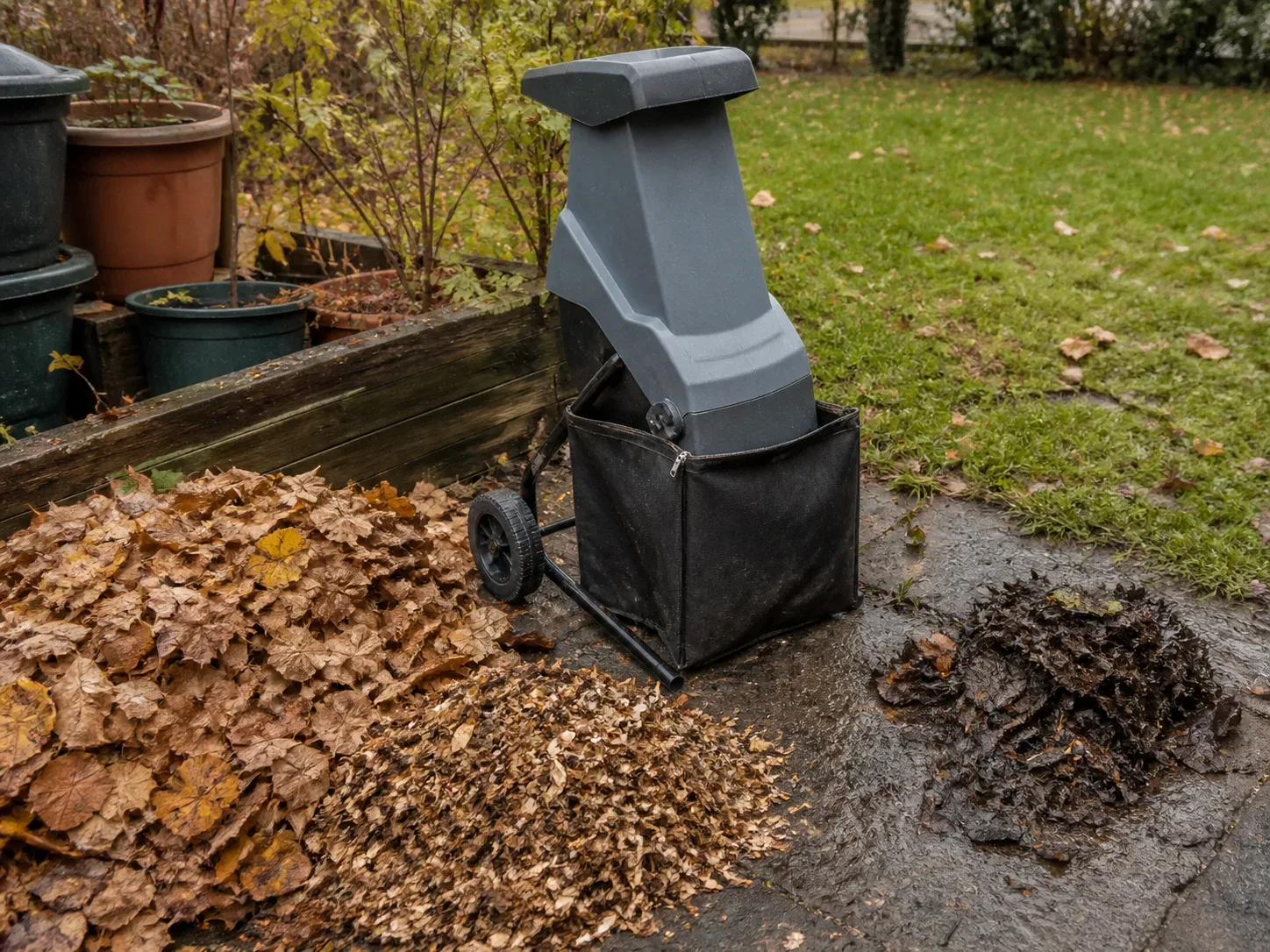
An advertised 11:1 ratio means the manufacturer says eleven units of loose input can be reduced to about one unit of collected output under its test conditions. It does not mean the mulch is always eleven times smaller by weight, that the machine can process eleven bags without stopping, or that wet leaves will behave like dry leaves.
Use the ratio as a comparison within a similar format. The WORX WG509’s 18:1 claim suggests finer or more compact output than a 6:1 small-yard model, but the difference matters less if the 18:1 machine clogs in your wet pile and the 6:1 machine completes the job without a pause. A clean, stable airflow and a bag you can empty comfortably often beat a higher number on the box.
For garden use, particle size matters as much as volume. Very fine material breaks down quickly and can settle between grass blades, while coarser leaf pieces are easier to keep aerated in a compost pile. If the finished material is dusty powder, mix it into compost or spread it thinly rather than laying a thick, compacted blanket on soil.
Match Output to the Lawn, Beds, or Compost
For a lawn, shred leaves until grass remains visible after the pass. Penn State Extension recommends mowing relatively dry leaves in manageable layers and notes that a thin layer—about one-half inch—can benefit turf; Virginia Tech similarly cautions that thick leaves block light and hold moisture, increasing disease risk. (Penn State Extension on leaf recycling) (Virginia Tech lawn leaf management)
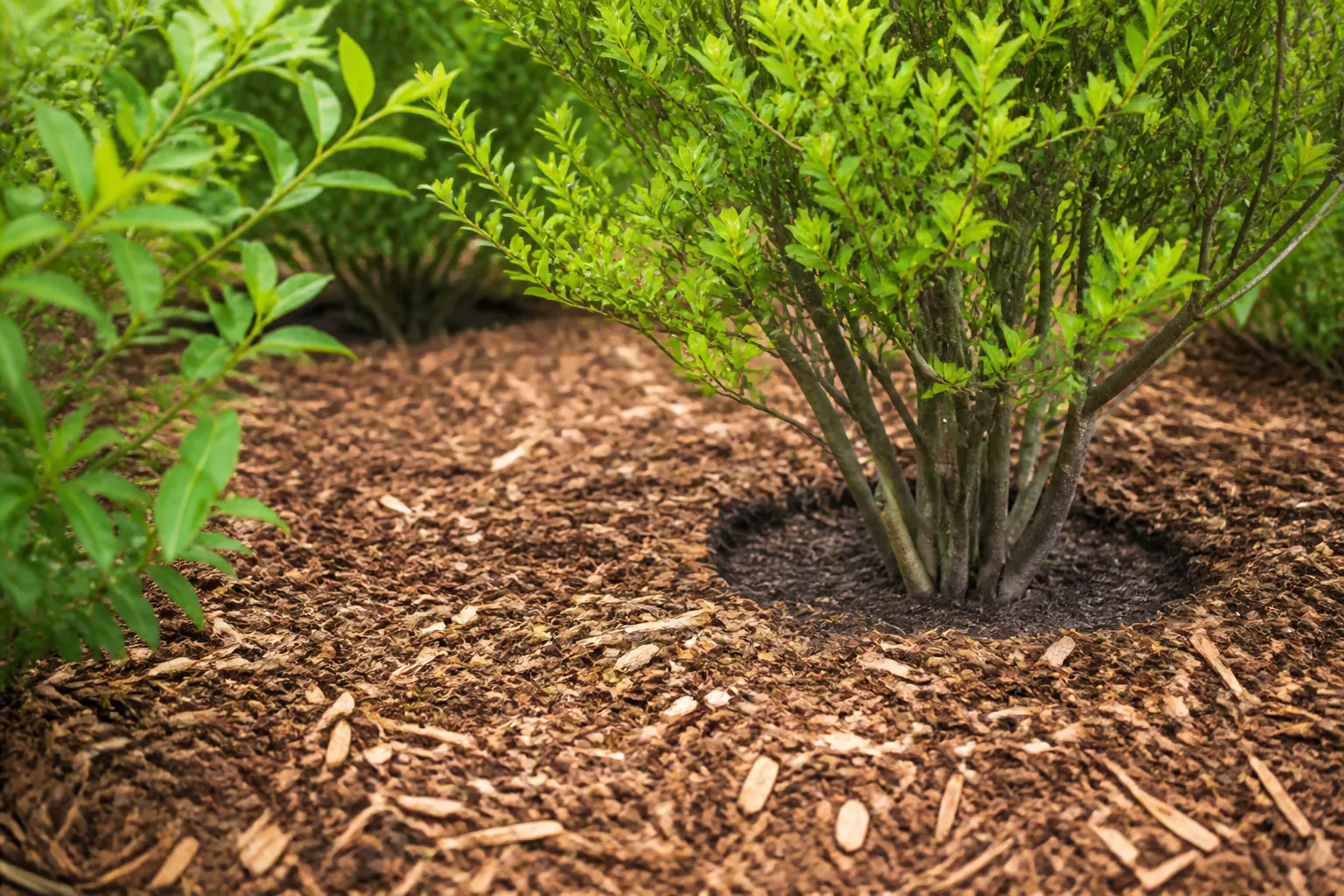
For trees, shrubs, and perennial beds, shredded leaves can be used as an organic surface mulch. Penn State Extension describes a 2- to 4-inch layer around plants, while Colorado State University Extension emphasizes that leaves should be applied dry or gradually in thin layers because they compact more readily than wood chips. Keep mulch away from trunks and crowns, and do not allow it to spill onto a sidewalk or lawn where it creates a slipping or mowing hazard. (Colorado State University Extension mulching guidance)
For compost, leaves are carbon-rich “brown” material. Colorado State University Extension recommends balancing them with nitrogen-rich green materials such as grass clippings or kitchen scraps, while warning that finely shredded leaves can compress and reduce oxygen if added as a dense mass. Mix them through the pile rather than dumping one heavy layer, and keep the pile as damp as a wrung-out sponge.
For leaf mold, whole leaves can be preferable because the process is simple: contain, moisten, and wait. Fine Gardening describes leaf mold as a slow, low-input amendment that improves the soil’s ability to hold moisture and air; shredding, shade, moisture, and a nitrogen source can speed decomposition, but a leaf mulcher is not mandatory. (Fine Gardening leaf-mold guide)
Some material should go elsewhere. Pine needles resist microbial breakdown and are better used as a deliberate surface mulch than forced through a leaf mulcher. Avoid feeding rocks, wire, large branches, or thick stems into a leaf-only machine. If leaves came from a plant with a serious disease, bag them according to local guidance rather than spreading the shredded material through healthy beds or compost.
Leaf-Mulcher Safety and Setup Checklist
The impeller, cutting line, flails, and chipper blades can throw debris or injure you even when the machine looks small. Set up on stable ground, clear sticks and stones from the work area, and keep children and pets away from both the intake and the discharge side.
Before starting, read the model’s manual and wear eye protection, closed shoes, snug clothing, and gloves appropriate for handling leaves. A dust mask is sensible for dry piles, and hearing protection is especially important with gas models or long sessions. Virginia Tech recommends goggles and an air mask for leaf mulching; the manufacturer safety guidance for the WORX WG430 also calls for eye protection and clothing that cannot catch in the tool.
Use this sequence:
- Inspect and clear the work area; pull out branches, stones, wire, and toys.
- Set up the machine on level, stable ground with the collection bag secured.
- For corded tools, use an outdoor-rated extension cord of the gauge and length specified in the manual, and route it behind you.
- Start with dry, loose leaves and feed a thin, steady stream rather than packing the hopper or intake.
- Stop if the motor labors, airflow drops, the bag is full, or the machine begins vibrating.
- Turn the machine off, unplug it or remove the battery, and wait for every moving part to stop before opening a guard or clearing a clog.
- Empty the bag away from the intake and inspect the outlet before restarting.
Do not use a rotary lawn mower as a branch chipper or stump grinder. If the pile is too wet to move through the intake, switch jobs: spread it to dry, rake it into a thinner layer, or use a machine designed for heavier debris.
Maintenance and Common Failure Fixes
Most leaf-mulcher problems are workflow problems before they are product failures. Clogging usually means wet leaves were fed too quickly, the bag is full, airflow is restricted, or the intake is pressed into a solid mat. Stop safely, clear the bag and intake, and resume with smaller amounts; do not poke into a moving impeller with a stick or gloved hand.
Poor reduction can come from damp leaves, long needles, mixed grass, worn cutting line, a dirty screen, or a bag that cannot vent. Let leaves dry when possible, clean the screen and housing as the manual permits, and replace consumable line or filters on schedule. A high ratio printed on the carton cannot compensate for restricted airflow.
Excessive dust is normal with dry leaves but can be reduced by working upwind, wearing eye and respiratory protection, and avoiding dusty bare soil. If dust comes with unusual vibration, scraping, or a metallic smell, stop and inspect the impeller, line, flails, and housing rather than continuing.
Fatigue is a selection signal. Use a shoulder strap correctly, empty smaller bags earlier, switch hands only when the manual and controls allow it, and take breaks. If your yard requires more than one long handheld session, a stationary or self-propelled machine may be safer and faster even if its purchase price is higher.
At the end of the season, clean leaves from vents and housings, dry fabric bags completely before storage, inspect cords for cuts, remove batteries from tools, and follow the engine maker’s fuel-storage instructions for gas equipment. Store every machine indoors or under cover; moisture and rodents are poor companions for electrical cords, fabric bags, and air filters.
Conclusion
Choose the WORX WG430 if you gather large, mostly dry piles and want fast stationary reduction. Choose the BLACK+DECKER BV3600 or WORX WG509 when one corded handheld needs to blow, vacuum, and mulch. The Ryobi 40V Vac Attack and Greenworks 24322 make sense when cordless reach matters, while the ECHO ES-250 is the better handheld answer for wet leaves and small sticks. For a large property, the Troy-Bilt CSV070 earns its bulk through self-propelled coverage.
The most reliable purchase rule is simple: buy for your worst regular cleanup condition, not your driest, easiest afternoon. A machine that handles the material you actually have—and that you can safely carry, empty, clean, and store—will outperform a lighter or more powerful model that spends every fall clogged, overloaded, or left in the shed.



