Non-Invasive Fast-Spreading Plants for Gardens
Need ground cover that cooperates? Six non-invasive spreaders for sun and shade—creeping phlox, bee balm, catmint, star jasmine, coral honeysuckle, and Angelina stonecrop—with spacing and care.
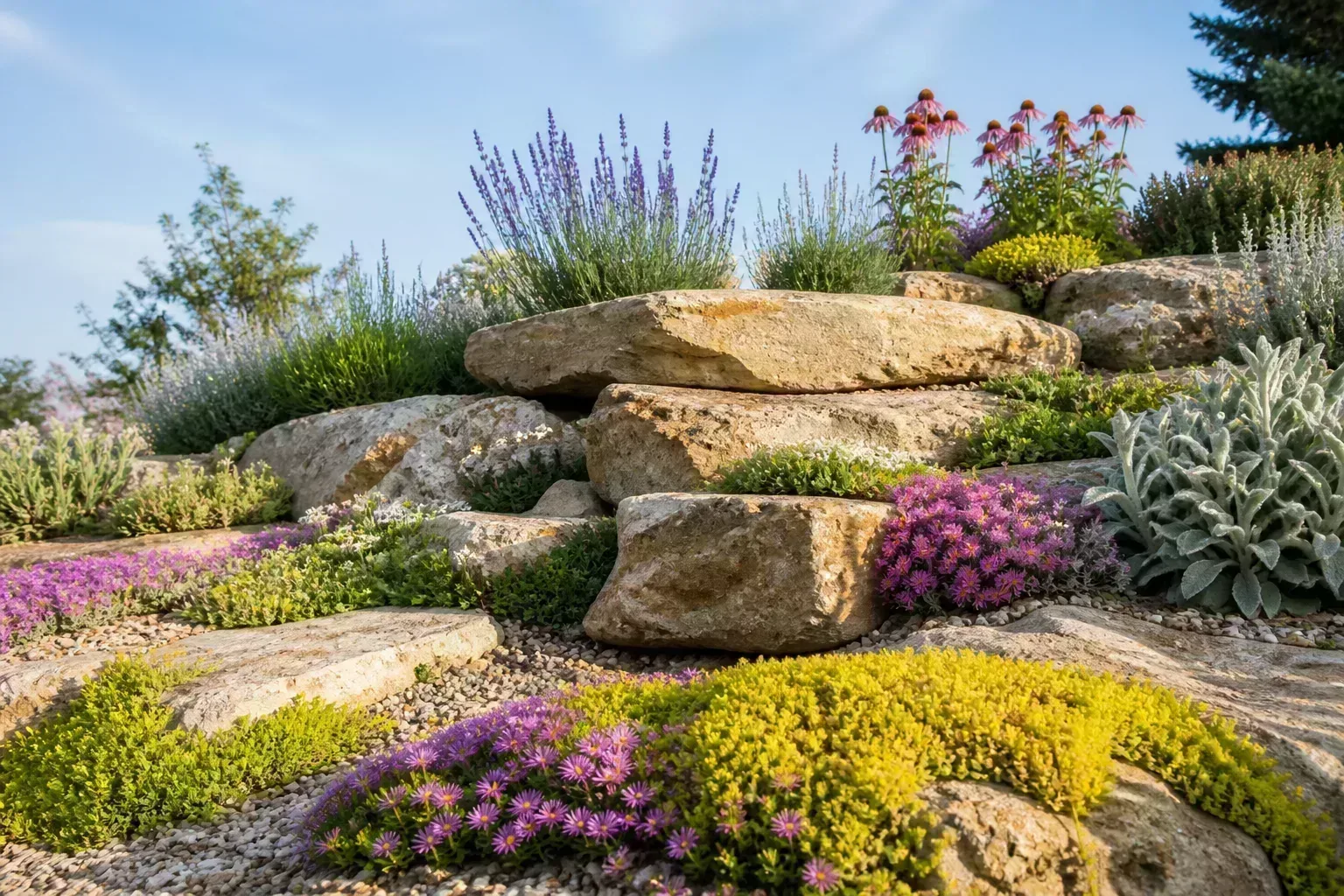
Bare soil is not neutral—it heats up, erodes on slopes, and invites weeds that root deeper than whatever you meant to plant. Fast-spreading perennials and vines solve that problem in one season: they knit a living carpet, climb a blank fence, or fill a pollinator border while you are still figuring out the rest of the design. The catch is that fast and cooperative are not the same word. Plenty of vigorous plants are listed as invasive in multiple states, and several honeysuckles sold as “quick coverage” have become regional nightmares.
The six plants below spread quickly enough to make a garden feel full without the ecological regret. They cover ground or climb structures, attract bees and hummingbirds, and stay manageable with spacing, occasional division, and light pruning. None are substitutes for research in your county—always check local invasive-plant lists before you dig—but each has a track record of behaving in residential beds when you match species to site.
Why Fast Spreaders Beat Bare Soil (and When They Backfire)
A mat-forming perennial or twining vine does more than look pretty. Ground cover reduces evaporation from exposed soil, moderates temperature swings at the root zone, and outcompetes many annual weeds once the canopy closes. On a slope, rooted stems and stolons physically hold soil that would otherwise wash away in the first hard rain. Vertically, a flowering vine turns a fence line into a pollinator highway without widening the bed.
The backfire happens when you choose spread speed over spread control. Rhizomatous mint relatives can colonize a vegetable patch. A twining vine left unpruned will wrap neighboring shrubs and lift paint off fascia boards. A ground cover planted in heavy clay without drainage will rot instead of spread. Fast spreaders reward gardeners who read the botanical name on the tag, plan spacing on day one, and accept that “low maintenance” means scheduled maintenance every few years—not zero maintenance forever.
Fast-Spreading vs Invasive: The Distinction That Saves Your Yard
Invasive describes a plant that escapes cultivation, establishes in natural areas, and causes ecological or economic harm—often listed by state agriculture departments or university extension invasive-plant programs. Aggressive or vigorous describes garden behavior: a plant that expands faster than you expected in your bed but may never leave the property. Cooperative fast spreaders expand predictably by stolons, rhizomes, or twining growth yet respond to edging, mowing, division, or pruning without seeding into wild margins.
Cooperative Spreaders vs Ecological Threats
Japanese honeysuckle (Lonicera japonica) is the classic cautionary tale: sold for decades as quick coverage, it now ranks among the most damaging invasive vines in the eastern United States, climbing and shading native trees while suppressing understory growth. Coral honeysuckle (Lonicera sempervirens) offers similar flower form and hummingbird appeal without that escape history when planted responsibly. Star jasmine (Trachelospermum jasminoides) is not classified as invasive in most U.S. regions, yet it can engulf a mailbox in three seasons if you never prune—vigorous, not ecological threat, but still a planning mistake on a small lot.
Before you shop, ask three questions: Does this species appear on my state’s invasive list? What is the spread mechanism—stolons above ground, rhizomes below, or twining stems? And can I mow, edge, or prune that mechanism where it crosses a line I care about?
How to Choose a Fast Spreader Before You Dig
Walk the site at midmorning and midafternoon. Note where sun lasts six hours or more, where shade persists, and where soil stays wet after rain. Match plant to microclimate before you match plant to Pinterest.
Match Spread Mechanism to Your Tolerance
| Spread type | How it moves | Best for | Containment tool |
|---|---|---|---|
| Stolons (creeping phlox, stonecrop) | Above-ground stems root at nodes | Slopes, rock pockets, bed fronts | Edging, hand-pull of wandering stems |
| Rhizomes (bee balm, catmint) | Underground stems push new shoots sideways | Pollinator borders, cottage beds | Division every 2–4 years, root barrier at bed edge |
| Twining vines (star jasmine, coral honeysuckle) | Stems wrap supports and creep horizontally | Fences, trellises, archways | Annual prune after bloom, keep off siding |
If you need coverage beside a shared fence, favor stolon or rhizome spreaders with a mowable border—or a vine on a freestanding trellis set 2–3 feet inside the line. If you need a rock-garden mat on a sunny slope, stonecrop and moss phlox (Phlox sublata) outperform shade-loving creeping phlox. Wrong mechanism on the wrong site is how “easy ground cover” becomes a replacement project in year two.
Creeping Phlox: Spring Mat for Partial Shade
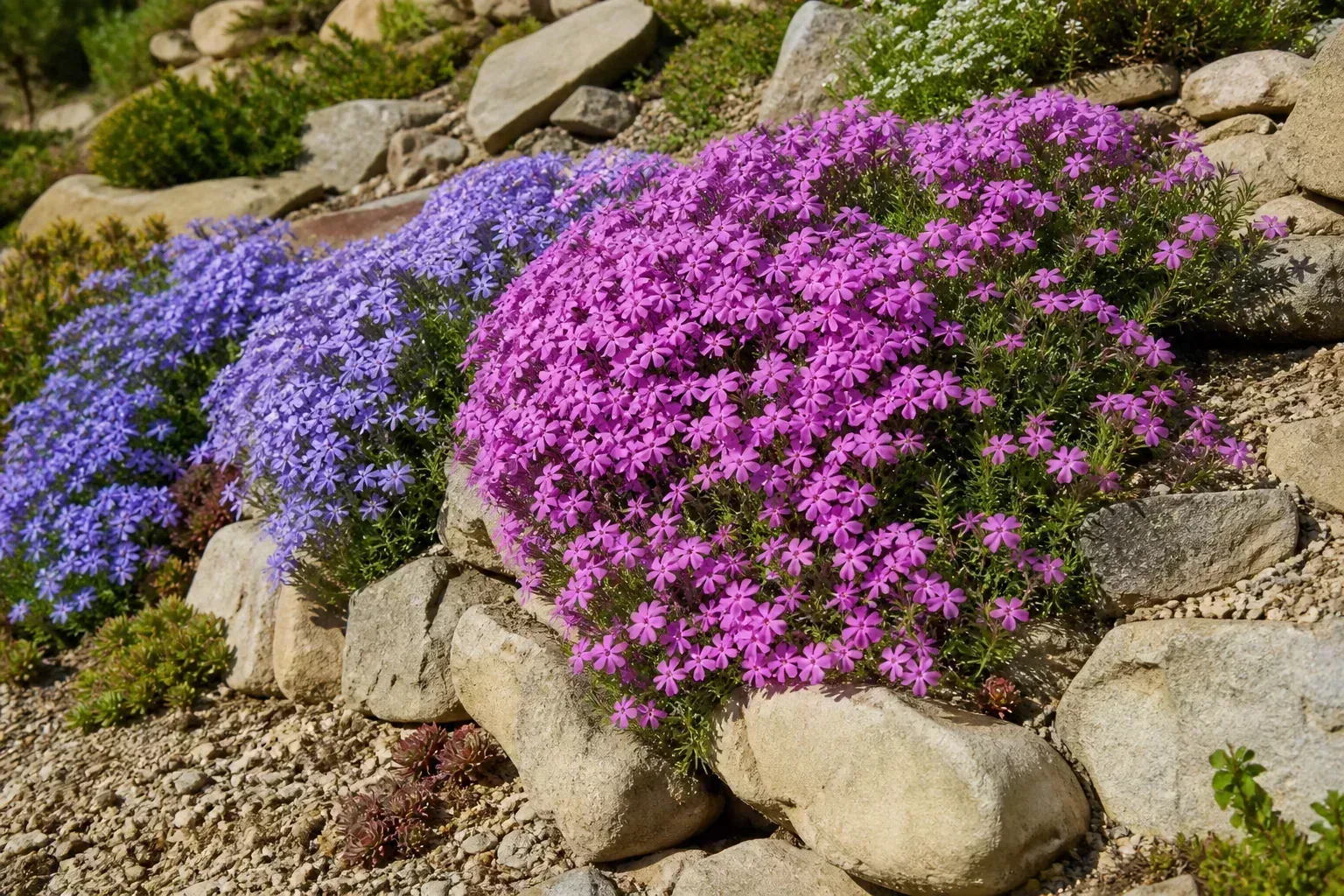
Creeping phlox (Phlox stolonifera) is a native North American ground cover that spreads by stolons—leafy stems that run along the soil surface and root at nodes. NC State Extension describes it forming a dense mat in moist, well-drained, slightly acidic soil with full sun to partial shade. Mature height stays under 12 inches; width expands steadily as stolons colonize open ground.
Do not confuse it with moss phlox (Phlox sublata), the sun-hungry, drought-tolerant mat for rock gardens and slopes. Both are sold as “creeping phlox,” but stolonifera wants more moisture and tolerates shade; sublata wants sharp drainage and baking sun. Check the botanical name before planting—our phlox care guide walks through the full species fork.
Spring bloom brings pink, lavender, purple, or white flowers in a carpet that can replace patchy lawn in cool, partly shaded sites where turf struggles. First-year plants need consistent moisture—especially during heat waves—while stolons root. Once established, creeping phlox tolerates drought better than many shade ground covers, though it will not thrive in deep, dry shade or waterlogged clay.
Quick specs: USDA zones 5–9; spread roughly 12–24 inches per year once established; water weekly the first summer if rain is absent; deer resistant per NC State tags. Trim wandering stems beyond bed edges in spring or after bloom if the mat crosses a path.
Bee Balm: Pollinator Power That Expands by Rhizomes
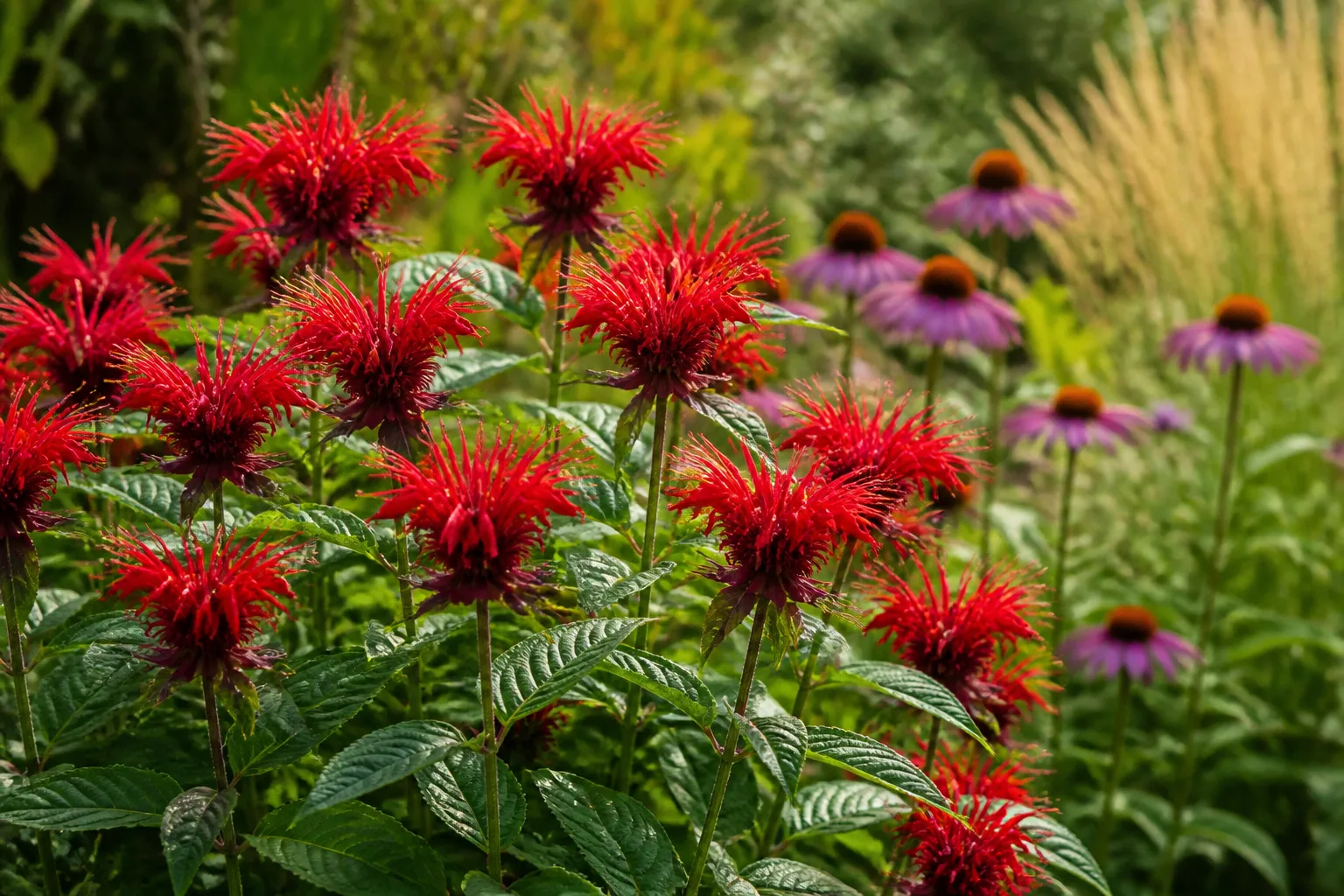
Bee balm (Monarda didyma and hybrids) is a mint-family perennial that hummingbirds, bees, and butterflies work all summer. Scarlet, pink, purple, and white tubular flowers rise 2–4 feet above fragrant foliage on square stems—the mint family’s calling card. Unlike stolon spreaders, bee balm expands by rhizomes and stolons underground, pushing new shoots outward each season.
That spread is a feature in a dedicated pollinator patch and a headache wedged between slow perennials in a 2-foot-wide border. Plan on division every two to three years to prevent hollow centers and the powdery mildew that thrives in crowded, humid clumps. Space plants 18–24 inches apart at planting; they will fill the gap within two seasons.
Bee balm wants full sun for strongest bloom and moist, rich, well-drained soil. Overhead watering at dusk in humid climates invites powdery mildew on leaves—water at soil level in the morning. Choose mildew-resistant cultivars such as ‘Jacob Cline’ or ‘Purple Rooster’ if your summers are steamy. Our bee balm growing guide covers cultivar picks, division timing, and mildew prevention in depth.
Quick specs: USDA zones 3–9; spread 2–4 feet in width within 1–2 years; consistent soil moisture during active growth; best bloom in full sun. Deer and rabbits generally leave it alone.
Catmint: Deer-Resistant Lavender Look-Alike
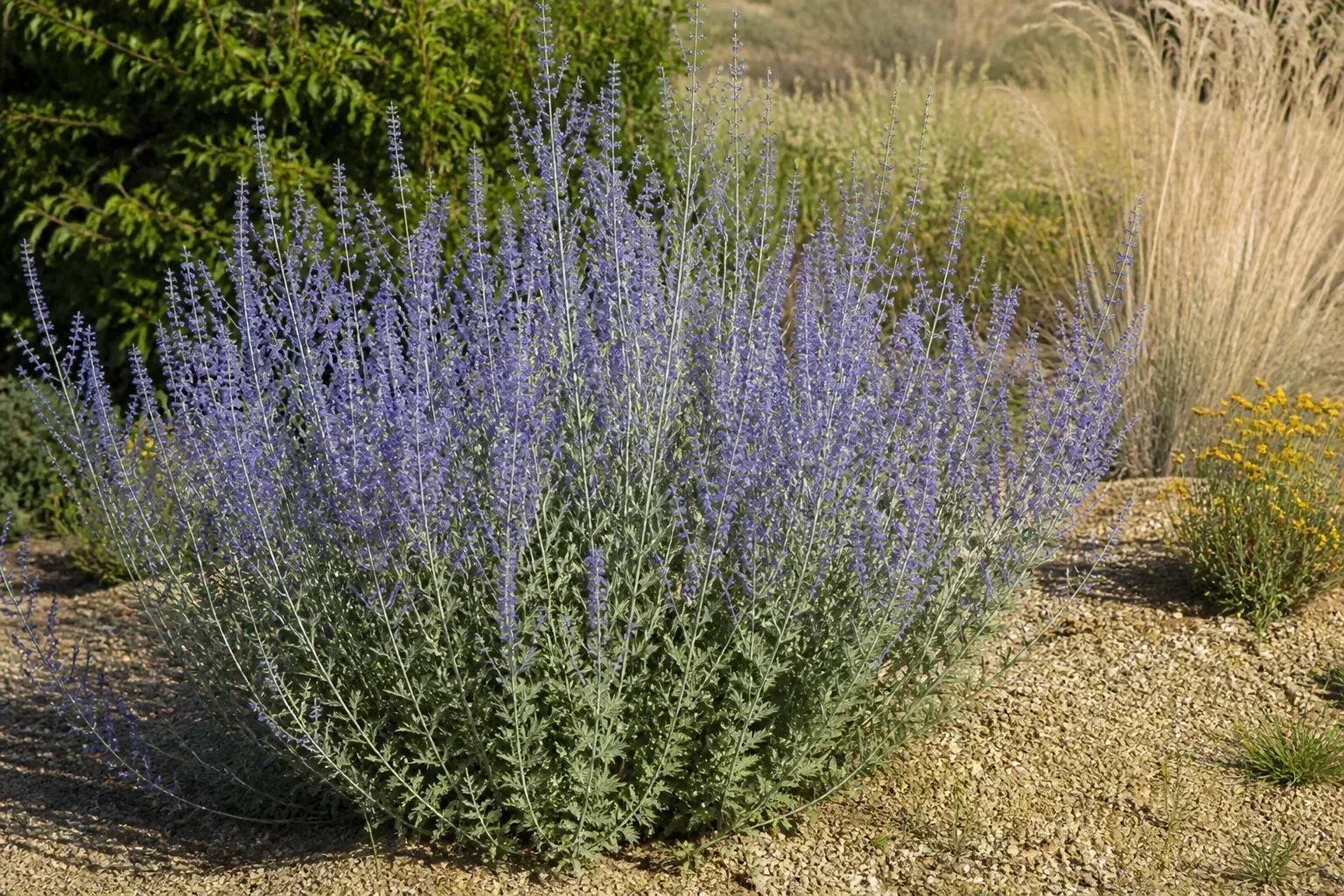
Catmint (Nepeta spp.) delivers lavender-blue flower spikes, gray-green aromatic foliage, and a reputation for thriving where fussy perennials fail. Most garden catmints—Nepeta faassenii, Nepeta racemosa, and hybrids like ‘Walker’s Low’—form expanding clumps that reach 18–30 inches tall and spread 2–3 feet wide over several seasons. They tolerate full sun to partial shade, lean soil, drought once rooted, and air pollution—useful along driveways and sidewalk strips.
Garden Catmint vs Catnip Catmint
The nursery tag matters. Ornamamental catmint (Nepeta faassenii, N. racemosa) is the purple-flowered workhorse for borders and edging. Catnip (Nepeta cataria)—the species NC State profiles as fast-growing and potentially weedy—has white flowers, a stronger mint-catnip odor, and unpredictable effects on cats (sedation or stimulation; vomiting if cats eat large quantities). Catnip can become weedy; extension sources suggest containers if you grow it deliberately.
For filling beds fast with deer-resistant color, shop for ‘Walker’s Low’, ‘Six Hills Giant’, or ‘Blue Wonder’—not generic “catmint” seedlings that might be catnip. Divide overcrowded clumps in spring every three to four years to renew vigor and limit sideways expansion.
Quick specs: USDA zones 4–8 for most ornamentals; spread 1–2 feet per year; water deeply weekly the first summer; little supplemental water after establishment except in extreme drought. Shear after the first heavy bloom flush for a second wave of flowers and tighter form.
Star Jasmine: Fragrant Vertical and Horizontal Cover
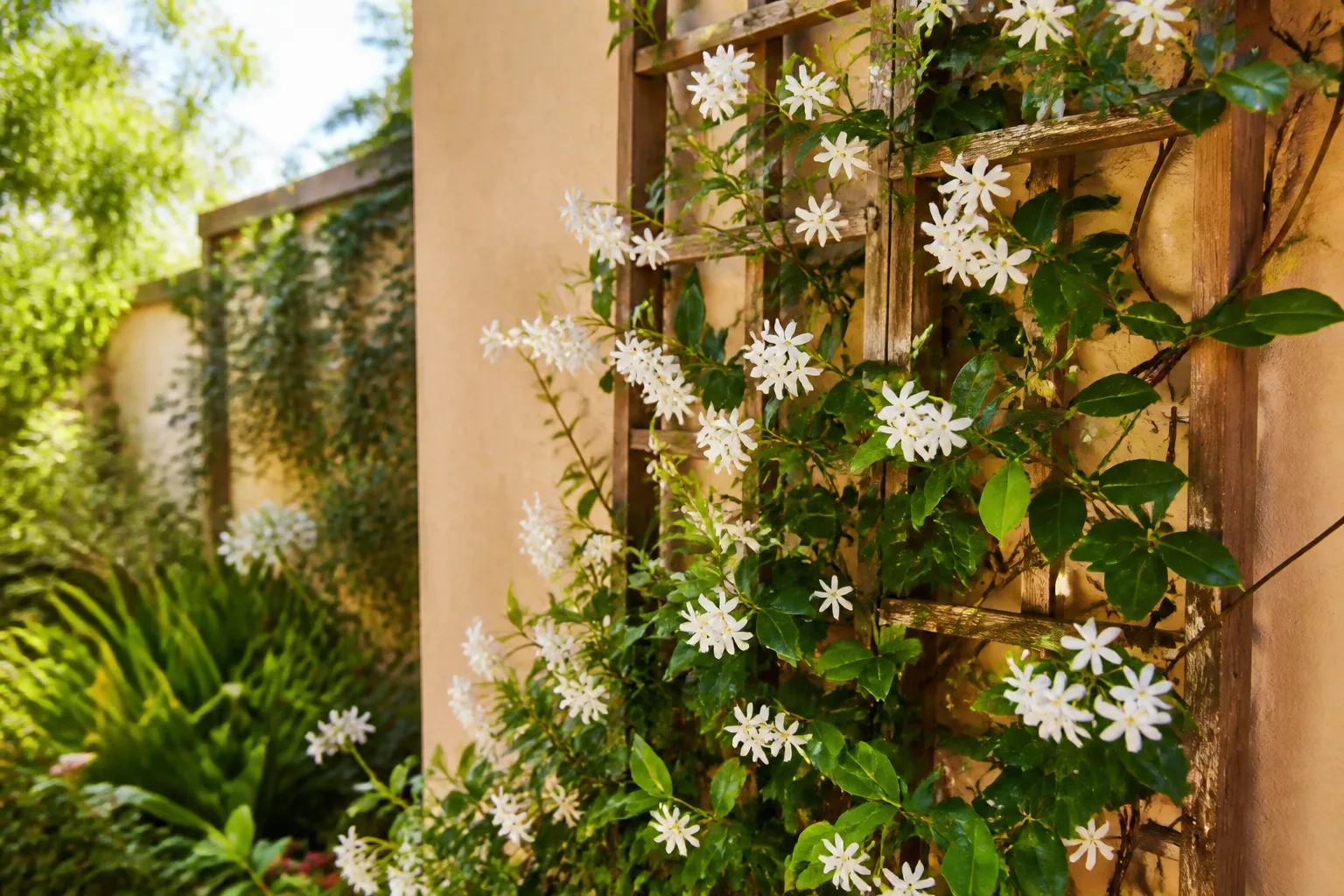
Star jasmine (Trachelospermum jasminoides) is not a true jasmine—it belongs to the dogbane family—but the pinwheel white flowers smell like the real thing in late spring. NC State Extension notes it can climb 20 feet on a support, spread as a ground cover, or drape from a container, with glossy evergreen foliage bronzing in cold winters in its hardiest zones.
Growth is fast once roots establish—often several feet per year on a trellis in warm climates. It is not widely listed as invasive, but vigor demands respect: stems twine around neighboring plants, and sap makes pruning tools sticky (wipe blades after cutting). Prune after the main spring bloom flush to keep the vine off rooflines, utility lines, and valued trees. The RHS has awarded it the Award of Garden Merit as a reliable ornamental.
Plant in fertile, well-drained soil in a sheltered sunny spot for maximum flowers; it tolerates partial shade but blooms less. In zones 7 and colder, grow against a south wall or treat as a container plant overwintered indoors. Drought tolerance improves after the first year. For species ID and contrast with true jasmines, see our jasmine growing guide.
Quick specs: USDA zones 7–10 (cultivar ‘Madison’ extends cold hardiness); spread 3–6+ feet per year on support; water when the top inch of soil dries; partial sun to full sun. Non-toxic to dogs, cats, and horses per NC State tags.
Coral Honeysuckle: Native Trumpet Vine Without the Baggage
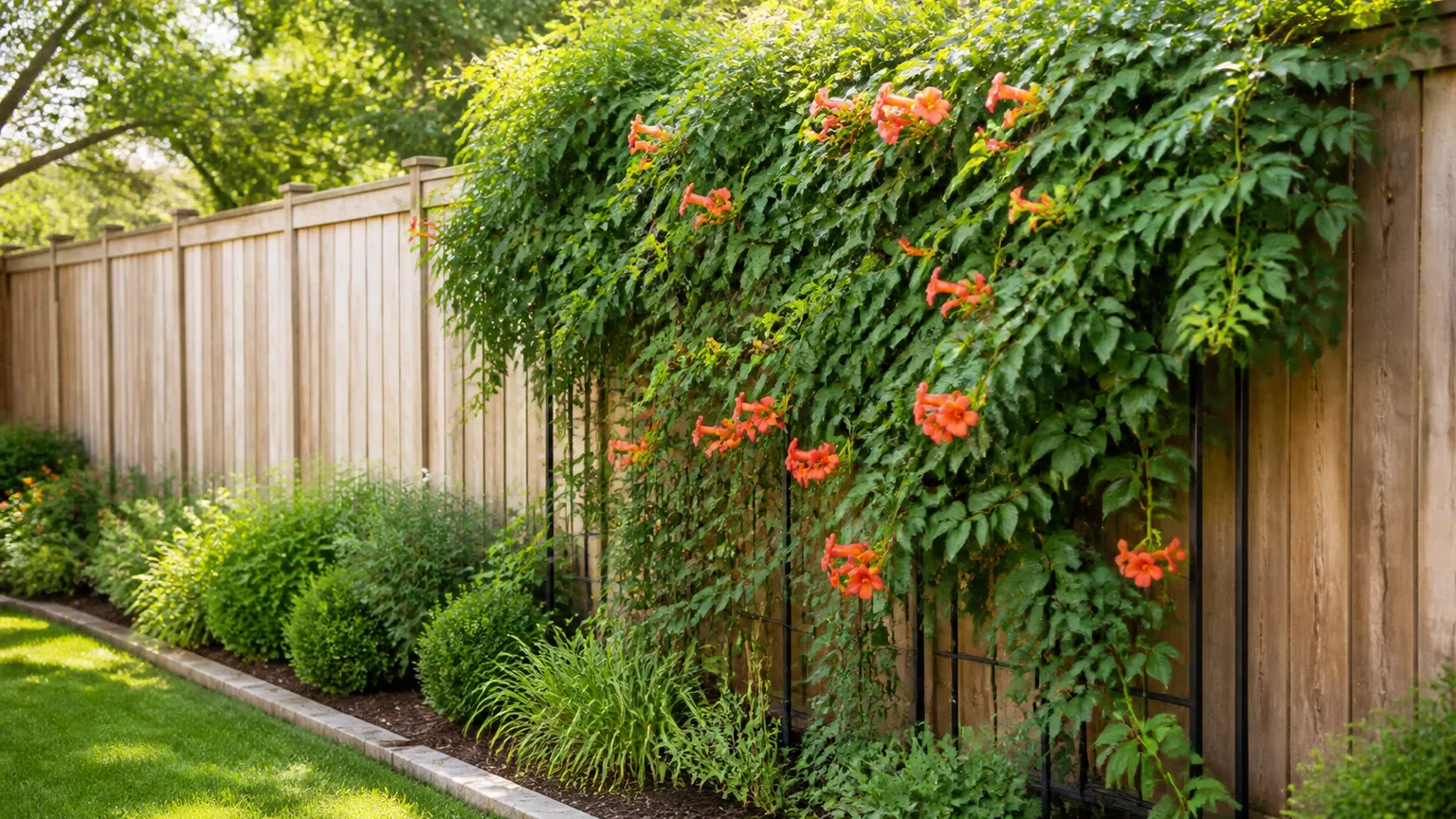
Coral honeysuckle (Lonicera sempervirens) is the native trumpet honeysuckle of the eastern and southern United States. NC State describes a twining vine 10–20 feet tall, evergreen in warm winters, deciduous in colder zones, with coral-red tubular flowers that hummingbirds, butterflies, and bees visit heavily. It flowers on new growth—prune after the spring bloom wave, not before bud break, if you want maximum flowers next season.
Unlike its invasive cousins, coral honeysuckle does not root from every stem fragment or seed into wild woodlands when maintained in a garden setting. Train it on a trellis, fence, or arbor; it can also sprawl as a ground cover on a bank. Salt tolerance makes it valuable in coastal gardens. Avoid high-nitrogen fertilizer that pushes foliage over flowers.
Pair it with bee balm and catmint in a pollinator border for overlapping bloom windows—coral honeysuckle peaks in spring with sporadic summer flowers; bee balm carries midsummer; catmint bridges late spring through summer with shearing. For other heat-tolerant vertical options, compare our heat-tolerant climbing plants for fences roundup.
Quick specs: USDA zones 4–9; spread 1–3 feet outward per year along the ground, faster vertically on support; medium moisture, well-drained neutral to acidic soil; full sun for best bloom. Deer resistant.
‘Angelina’ Stonecrop: Sun-Loving Succulent Mat
‘Angelina’ stonecrop (Petrosedum rupestre ‘Angelina’, often sold as Sedum rupestre ‘Angelina’) is a mat-forming succulent with needle-like chartreuse foliage that turns orange-red in fall cold. NC State Extension highlights rapid spread, deer and rabbit resistance, drought tolerance, and performance in rock gardens, retaining walls, and green-roof plantings.
Stems root easily where they touch soil, and fallen leaves can sprout—handy for propagation, easy to pull if a stem crosses a path. Shallow roots mean removal from unwanted spots is simpler than digging out a rhizomatous mint relative. Plant in full sun with excellent drainage; light shade is tolerated but color and density suffer. Avoid wet clay and low spots where winter moisture sits on the crown.
‘Angelina’ shines in the front of sunny borders, cascading over stone, and filling gaps between boulders in a rock garden. It pairs visually with creeping phlox on a slope: phlox blooms in spring shade pockets while stonecrop carries color through summer and fall on the sun-facing face. Our rock garden plants guide covers drainage prep that makes both thrive.
Quick specs: USDA zones 5–9; spread 18–24 inches per year; water every 2–3 weeks during establishment, then only when top 2 inches dry; full sun ideal. Sap may irritate skin; eating large quantities of leaves can upset stomachs.
Honeysuckle Species You Should Never Plant
Several honeysuckles share the genus name and nothing else worth copying. Do not plant these if you want cooperative coverage:
- Japanese honeysuckle (Lonicera japonica) — invasive across much of the U.S.; evergreen or semi-evergreen twiner that seeds and spreads into natural areas.
- Tatarian honeysuckle (Lonicera tatarica) — invasive shrub honeysuckle in many northern states.
- Amur honeysuckle (Lonicera maackii) — invasive shrub that shades out native understory plants.
- Morrow’s honeysuckle (Lonicera morrowii) — invasive shrub honeysuckle hybridizing with other exotic species.
Garden centers occasionally label plants vaguely as “honeysuckle.” Insist on the botanical name Lonicera sempervirens or a documented native cultivar such as ‘Major Wheeler’ for coral honeysuckle. If a vine is already out of control on your property, containment logic overlaps with aggressive native vines—see our trumpet vine containment guide for pruning, barrier, and removal sequences that apply to any twining escape artist.
Spacing and Layout Plan for a Full Bed Fast
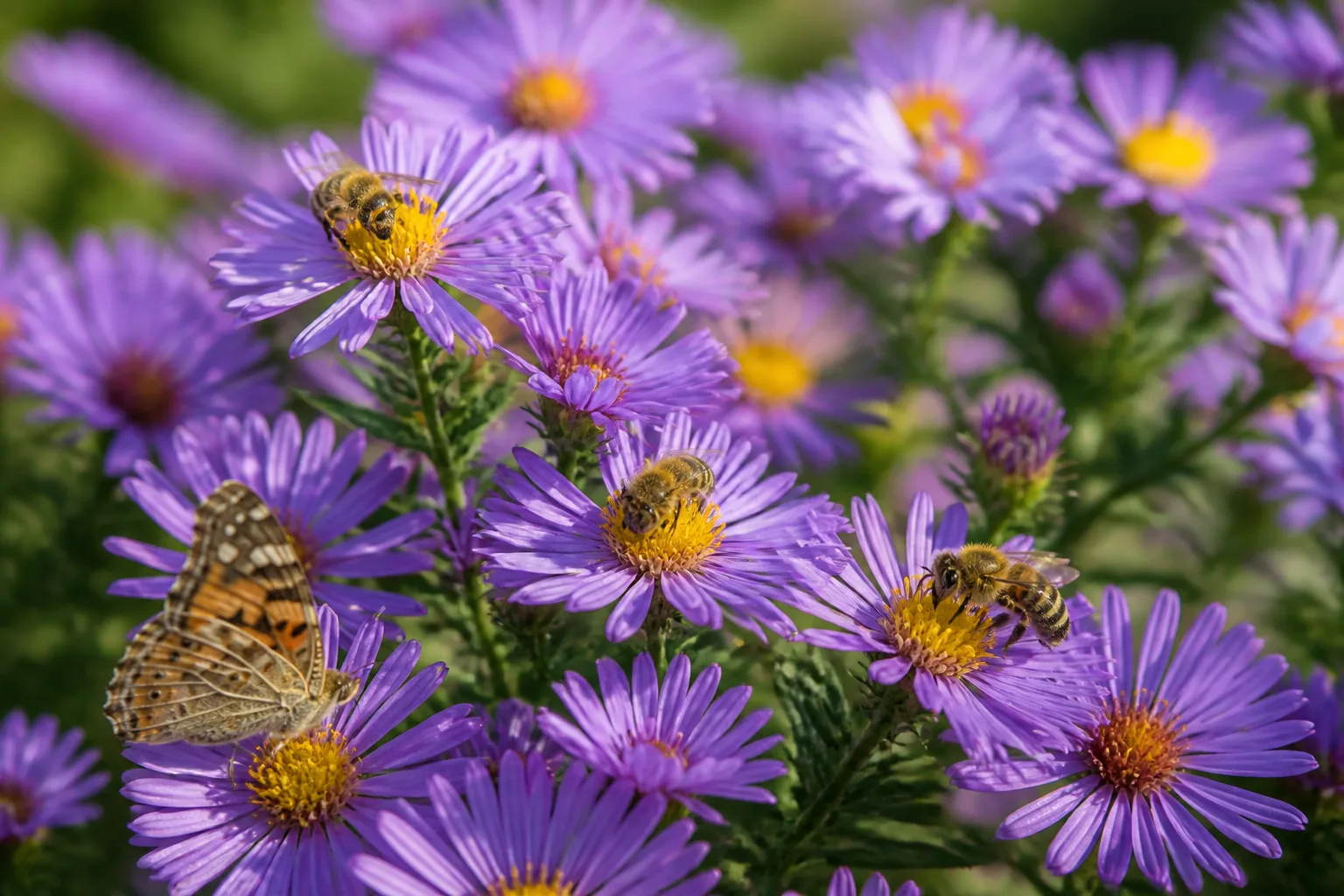
A 10×12-foot pollinator bed can feel full in two growing seasons with this layout—adjust for your dimensions:
- Back row (north or shaded side): coral honeysuckle on a trellis or fence—one plant, trained vertically.
- Middle row: bee balm spaced 24 inches apart—three to five plants for a continuous midsummer block.
- Front sun strip: ‘Angelina’ stonecrop spaced 12 inches apart along the front edge—fills fast and defines the bed line.
- Shade pocket: creeping phlox under a tree skirt or on the east side of the bee balm—one to three plants to stolon into gaps.
- Accent drift: catmint ‘Walker’s Low’ between bee balm and stonecrop—two or three plants, 18 inches apart.
- Fragrance anchor: star jasmine on a freestanding obelisk at the corner—not against siding—one plant, pruned yearly.
This mix covers spring (phlox, jasmine, honeysuckle), summer (bee balm, catmint, stonecrop foliage), and fall (stonecrop color) without relying on a single species to do every job. Leave 18-inch walking gaps until mats knit; you will close them by year two.
First-Year Watering and Establishment
Fast spreaders only spread after roots anchor. The first growing season is about establishment, not neglect.
Water new stolon and rhizome spreaders deeply once a week if weekly rainfall is under 1 inch—probe 2 inches down; if dry, soak until the root zone wets, not daily sprinkles. Twining vines need consistent moisture the first year but resent soggy soil; let the top inch dry between waterings once leaves are actively growing. Succulent stonecrop wants less: weekly for the first month, then taper to biweekly unless heat is extreme.
Mulch with 2 inches of shredded bark or compost between plants—not against crowns—to hold moisture and suppress weeds while mats close. Do not fertilize heavily at planting; rich nitrogen pushes leafy growth on vines and bee balm at the expense of flowers, exactly what NC State’s coral honeysuckle profile warns against.
Hold foot traffic off new stolons until they root—walking on creeping phlox or stonecrop stems snaps unrooted sections. By the second spring, established plants need intervention only during drought or before division.
Keeping Fast Spreaders in Their Lane
Edge annually. Run a flat spade or power edger along bed borders in spring to sever wandering stolons and rhizomes before they cross into lawn or paths.
Divide on schedule. Bee balm and catmint every 2–4 years; creeping phlox when the mat thins in the center or crosses a line; stonecrop when mats lift from overcrowding.
Prune vines after bloom. Star jasmine and coral honeysuckle both benefit from post-flower pruning to restrain height and remove tangled growth. Keep star jasmine off painted surfaces and tree canopies.
Pull, don’t compost problems. Powdery mildew-infected bee balm stems and weedy catnip shoots go in the trash bag, not the compost pile, if you want to limit reinfection or reseeding.
Check neighbors. Vigorous vines on a shared fence are a relationship problem before they are a horticulture problem. Trellis inside your line and prune the face that faces the neighbor.
For seed-started ground covers on large bare slopes, compare timing and species in our drought-tolerant groundcovers from seed guide when you need even faster first-year coverage than transplants provide.
Conclusion
A garden that feels full does not require invasive imports or weekly hedge trimming. Creeping phlox, bee balm, ornamental catmint, star jasmine, coral honeysuckle, and ‘Angelina’ stonecrop each cover ground or climb structures on a predictable timetable when you match species to sun, soil, and spread mechanism. The work you save on constant weeding of bare soil returns in milder annual tasks: an edging pass, a post-bloom prune, and a division afternoon every few years.
Start with one or two species for the exact gap you have—a shady skirt, a sunny rock face, a fence that needs hummingbirds—rather than planting all six in one weekend. Let the first mat or vine teach you how fast your soil and climate accelerate growth. Then expand. That sequence builds a full garden with less rework than grabbing the fastest flyer on a generic ground-cover list and hoping it cooperates.



