7 Drought-Tolerant Groundcovers to Start From Seed
Start creeping thyme, yarrow, ice plant, and four more drought-tolerant groundcovers from seed this spring. Zones, sowing windows, soil temps, and first-year watering.
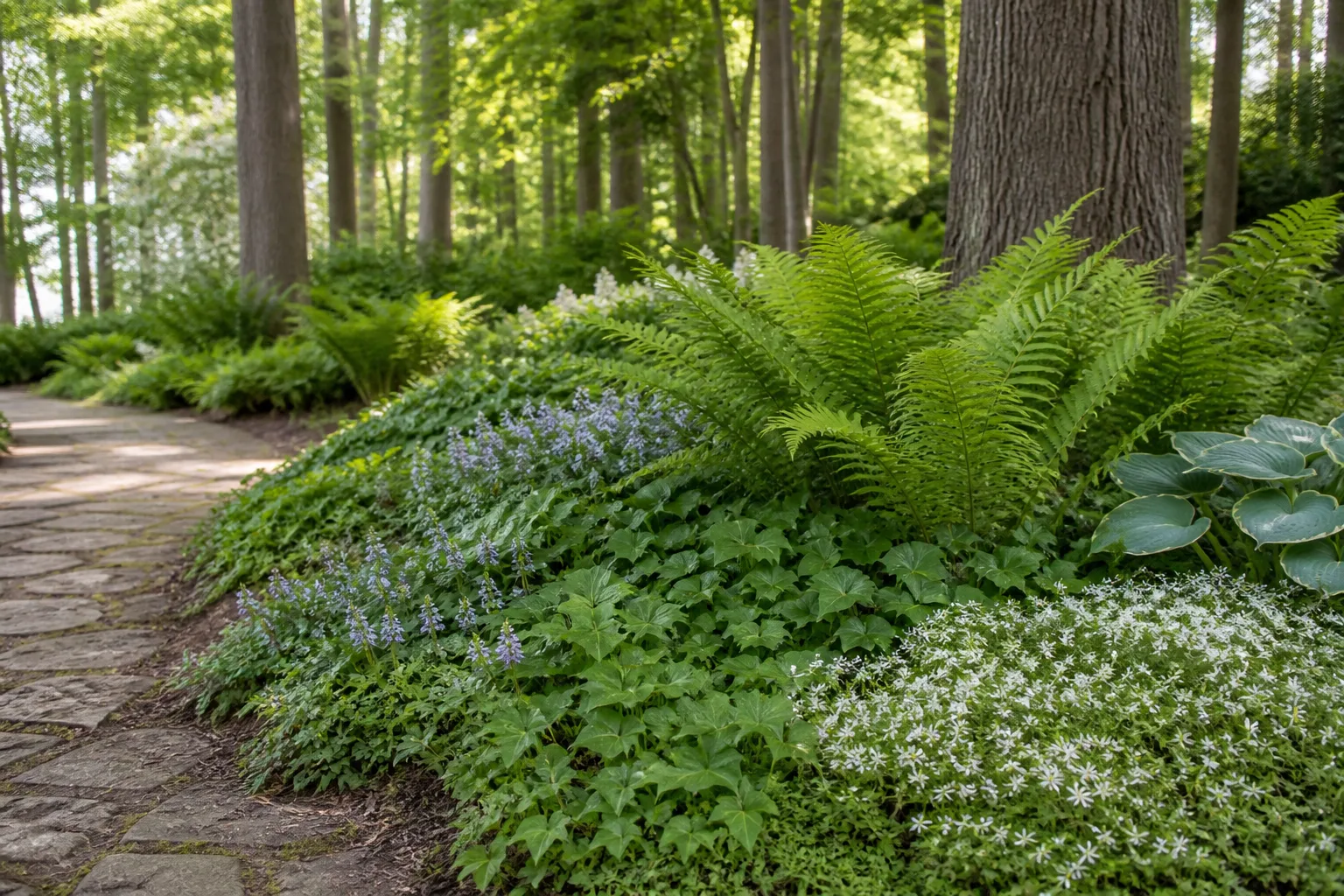
Bare slopes, baking parking strips, and the gaps between flagstones all ask for the same thing: a low mat that blocks weeds, holds soil, and stops needing a hose every July. Groundcover from seed is the cheapest way to cover large areas — one packet can plant dozens of square feet that plug trays would price out of reach. The catch is timing and expectations. Drought tolerance is a mature-plant superpower, not a seedling trait. Seeds still need steady moisture, correct soil warmth, and the right light exposure to germinate.
The seven species below are proven dry-site performers you can start in spring from seed — with honest notes on which need indoor head starts, which demand surface sowing, and which will disappoint in the wrong climate. For germination timelines and troubleshooting, pair this guide with how long seeds take to sprout and our easiest seeds to direct sow playbook for shared bed-prep rules.
Why Seed-Started Groundcovers Beat Plug Flats on a Budget
A single ounce of creeping thyme or yarrow seed can cover far more ground than a flat of 72-cell liners — often at one-tenth the cost once you account for shipping and local nursery markup. Seed also lets you match cultivar to microclimate: choose a pink yarrow strain for a hot south wall, or a finer-leaved thyme for stepping-stone gaps, instead of accepting whatever variety the garden center ordered in bulk.
The trade-off is patience. Seed-started mats rarely look finished in year one. You are trading instant gratification for density, root depth, and the option to overseed thin patches without buying more pots. For slopes larger than a few square yards, seed is usually the only realistic approach. For a 4-foot border you need filled before a June party, plugs or divisions may still be smarter — this list assumes you have time and want coverage at scale.
What “Drought-Tolerant” Actually Means for Brand-New Seedlings
Drought tolerance describes established plants with roots deep enough to survive dry spells between rains. It does not mean you can scatter seed on dust and walk away. Every species here needs regular moisture from sowing until seedlings have several sets of true leaves and roots anchor into native soil — typically one full growing season, sometimes longer for slow spreaders like thyme.
After establishment, these plants tolerate lean soil and intermittent drought. Before that, treat them like any other seed crop: keep the top inch evenly damp, protect from crusting rain, and weed aggressively so seedlings are not outcompeted. Sunset’s drought-groundcover guidance frames the same idea as “living mulch” — the mat saves water only once it closes over the soil. Until then, you are building the mat.
Spring Sowing Rules That Apply to Every Groundcover on This List
Spring works for this group because soil is warming, days are lengthening, and you have a full season for roots to develop before the first dry summer stress test. Not every packet sows the same way, though. Sort your seed into three germination types before you open a bag.
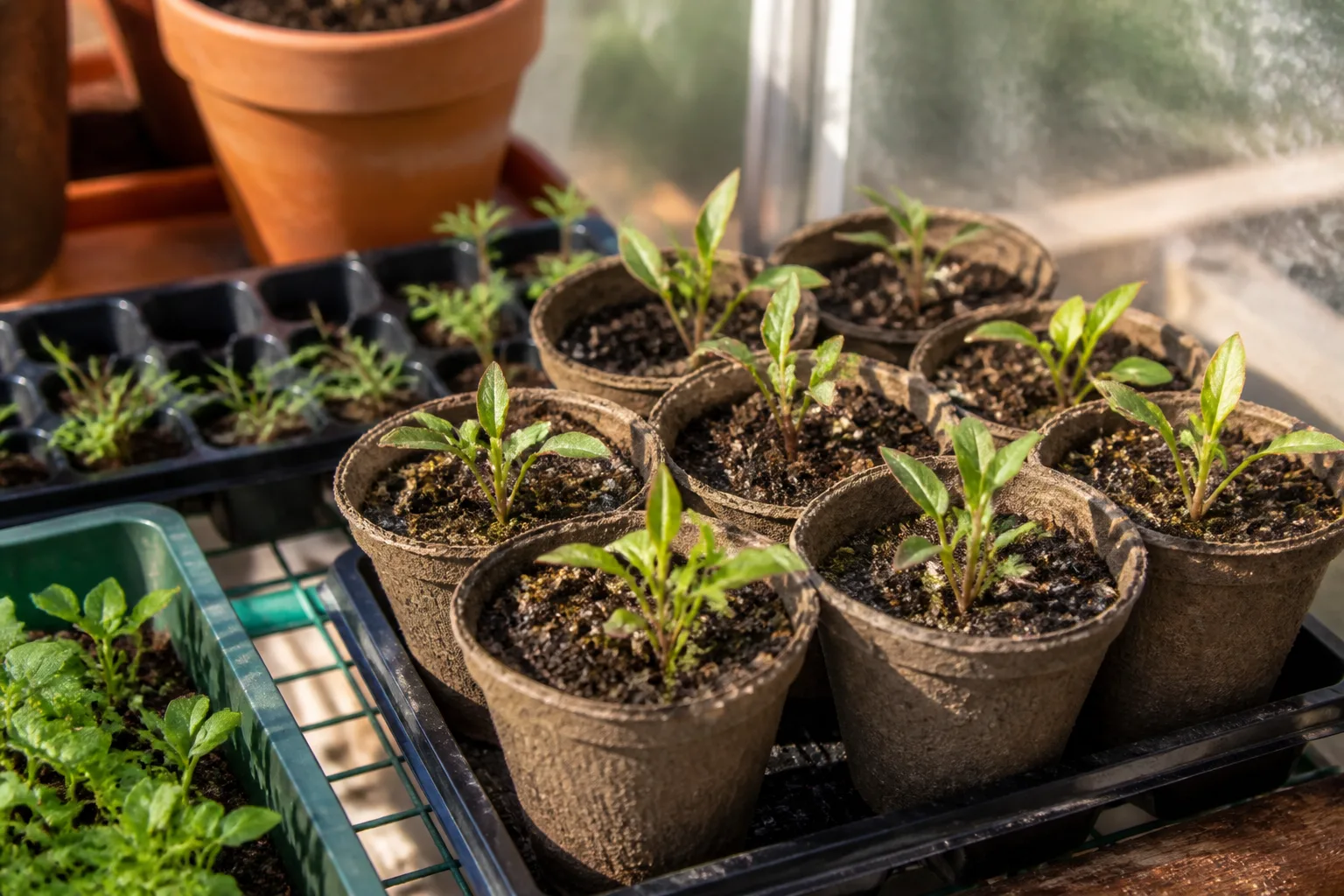
Soil Temperature, Light, and Germination Type
Soil temperature at seed depth — not the air reading on your phone — controls speed and success. Use a soil thermometer 1 inch deep. The University of New Hampshire Extension starting-plants-from-seed fact sheet emphasizes bottom warmth and consistent moisture for slow germinators; outdoor beds benefit from the same logic even without heat mats.
| Germination type | Species on this list | What to do |
|---|---|---|
| Surface / light required | Mountain rock cress, basket of gold, hardy ice plant | Press seed onto moist soil; do not bury |
| Shallow cover | Creeping thyme, yarrow, kidney weed | Barely cover; ⅛ inch or less |
| Warm-soil direct sow | Blue grama, kidney weed (outdoor) | Wait until soil holds 65°F+ for several days |
Cool springs stall warm-soil species. If seed sits wet and cold for three weeks without sprouting, it may rot — better to wait than to sow early and re-buy.
Indoor Starts vs Direct Sowing Outdoors
Indoor starts (8–10 weeks before last frost) suit thyme and yarrow when you want earlier coverage or need to protect tiny seed from washout on a slope. Use sterile mix, bright light, and harden off for a week before transplanting at the two- to four-true-leaf stage.
Direct sowing works for rock cress, basket of gold, blue grama, and ice plant once soil warms — and for kidney weed in climates with long warm seasons. Direct-sown patches need fine, crumbly seedbeds without mulch on top until seedlings emerge. Label rows with species and date; these seedlings look alike for weeks.
Creeping Thyme (Thymus serpyllum)
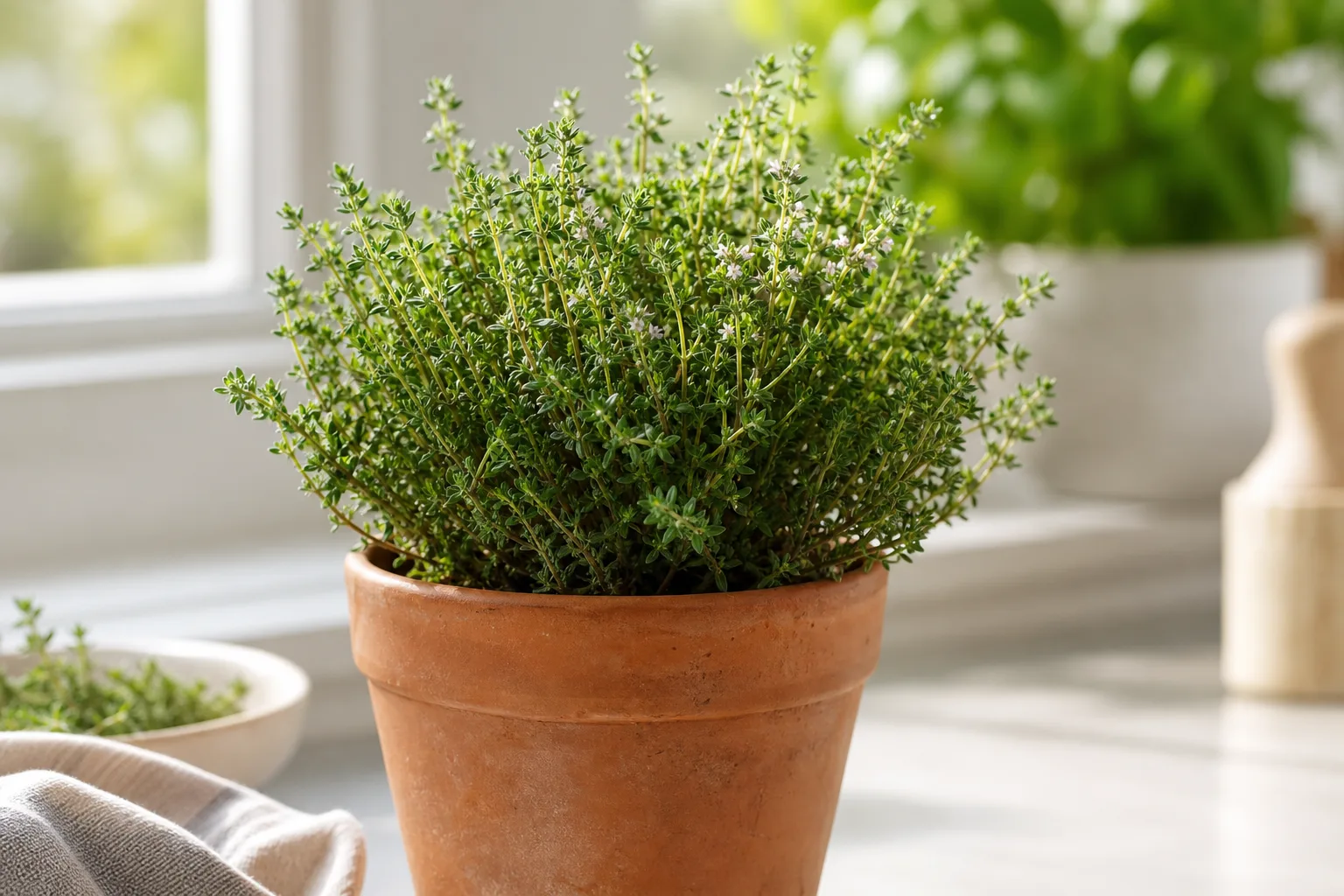
Also called Breckland thyme or mother of thyme, creeping thyme forms a fragrant, walkable mat 2–3 inches tall that spreads roughly 12 inches per year once established. NC State Extension notes full-sun preference, tolerance of poor rocky soil, and drought resistance after roots develop — with rot risk if drainage is poor or crowns stay wet in winter.
Tiny tubular pink-to-purple flowers appear on short stems from late spring into summer, pulling bees to path edges. It is one of the best seed options for between pavers and rock walls where you want scent underfoot.
Quick specs: USDA zones 4–9; sow indoors 8–10 weeks before last frost or direct sow after frost; full sun; sandy, gritty, well-drained soil; low water once established; space transplants or thin to 6–12 inches for faster fill.
Sowing notes: Seed is dust-fine. Mix with dry sand for even distribution, press into moist mix without burying deeply, and mist rather than flood. Germination can take 14–28 days. First-year plants look sparse — overseed thin areas the following spring rather than drowning them with nitrogen.
Kidney Weed (Dichondra repens)
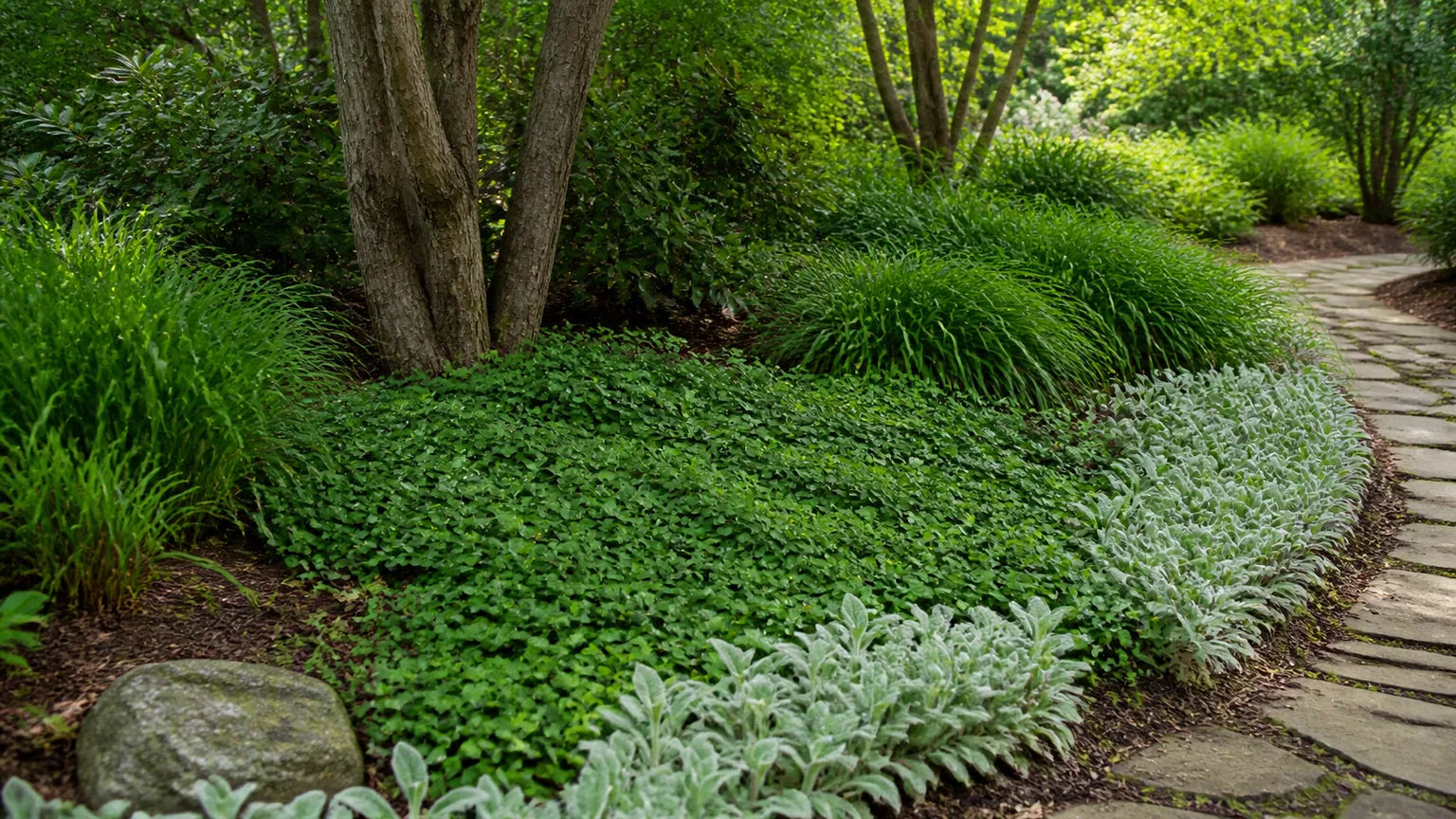
Kidney weed (sometimes sold as Asian ponysfoot) builds a bright green carpet of small kidney-shaped leaves that stays evergreen in USDA zone 8 and warmer winters. It is a common lawn alternative in mild climates where light foot traffic and partial shade meet — think courtyard strips and dappled patio edges, not a soccer field.
Plants establish quickly from seed in warm weather, often knitting visible coverage within two months when soil stays 70°F-ish and evenly moist. Deep, infrequent watering after establishment encourages roots to chase moisture downward.
Quick specs: USDA zones 7–11; sow spring through summer when daytime temperatures sit in the 70s; full sun to partial shade; well-drained soil; low water once rooted; sow thick, then thin to 4–6 inches.
Sowing notes: Cold, wet springs produce poor stands in zone 7 — wait for sustained warmth. In hot, dry interiors, afternoon shade reduces scorch while seedlings size up. Kidney weed struggles in heavy clay that holds winter wet; amend with compost and grit on dense soils.
Yarrow (Achillea millefolium)
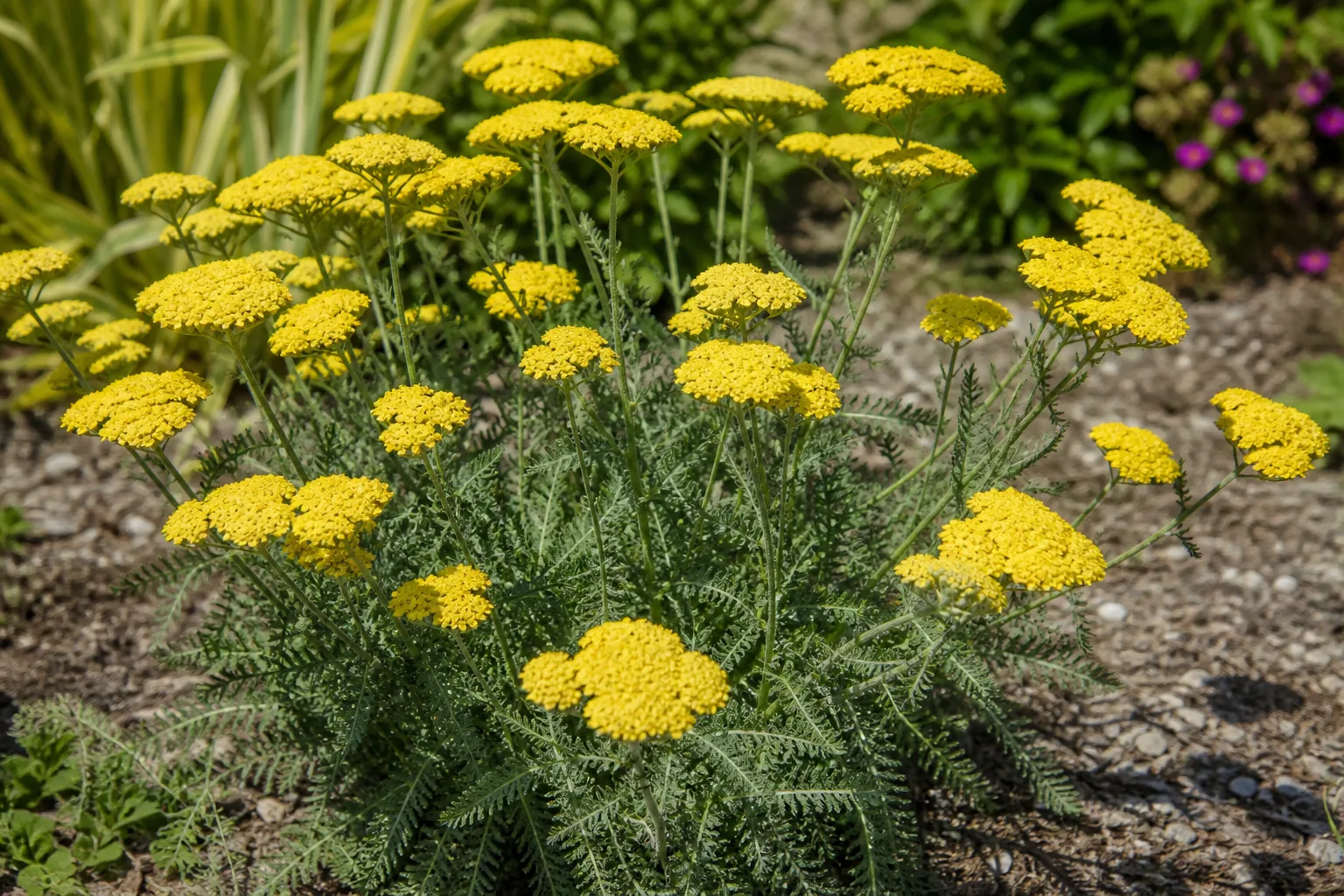
Yarrow is usually grown for flat umbels of white, yellow, pink, or red flowers, but the soft, ferny foliage alone makes a drought-tough groundcover on lean soil. It spreads by rhizomes and self-sowing once happy, so site it where a slowly expanding patch is welcome — not tucked against timid neighbors.
Xeriscape designers favor yarrow for hot, exposed banks where irrigation is limited. Flowers attract beneficial insects; foliage stays attractive even when blooms finish if you shear spent heads.
Quick specs: USDA zones 3–9; sow indoors 8–10 weeks before last frost; full sun; sandy or loamy well-drained soil; very low water once established; space 12–18 inches for groundcover use.
Sowing notes: Lightly cover seed and keep flats at 65–70°F. Yarrow seedlings are sturdy transplants — set out after frost when soil is workable. Avoid rich, heavily fertilized beds; too much nitrogen produces floppy growth and fewer flowers. For a deeper species profile, see our guide on how to grow thyme for related Mediterranean-herb soil thinking that applies here.
Mountain Rock Cress (Arabis alpina)
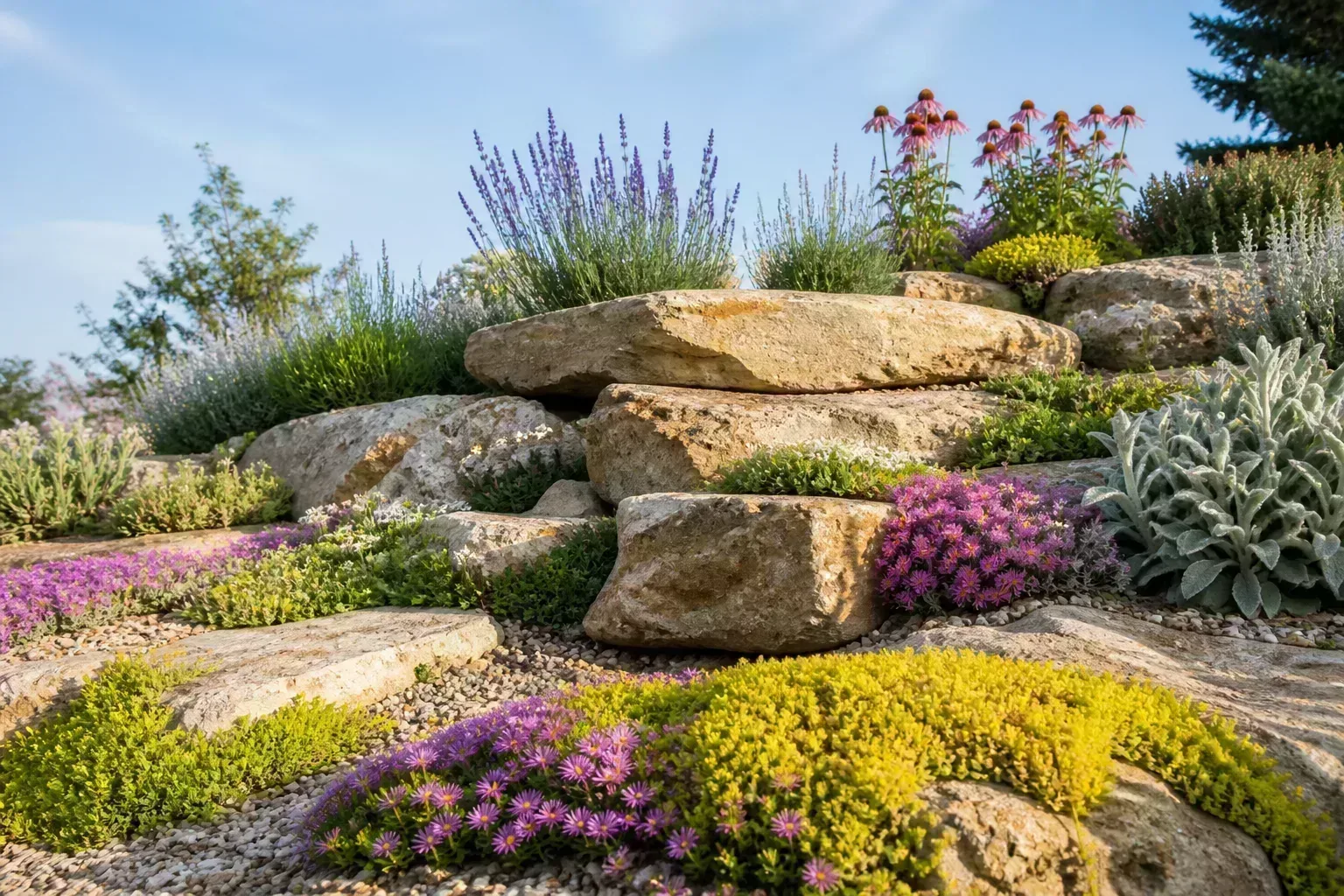
Mountain rock cress (sometimes confused with aubrieta in rock-garden catalogs) makes a 4–6 inch mat topped with four-petaled white or pink spring flowers. It wants the classic rock-garden combo: sharp drainage, full sun, and lean alkaline soil.
Seeds are light-dependent. Burying them is the most common failure. Press onto the surface of moist seed mix or fine garden soil, mist, and cover the tray with a clear dome or plastic until sprouts appear — then ventilate daily.
Quick specs: USDA zones 4–9; sow indoors 6–8 weeks before last frost or direct sow after frost; full sun; well-drained alkaline soil pH 6.5–7.5; low water once established; space 8–12 inches.
Sowing notes: Test acidic soil and lime accordingly the season before sowing if pH runs below 6.5. Excellent for retaining walls and gravel beds. Pair with other rock-garden seed candidates from our rock garden plants list when designing a mixed slope.
Basket of Gold (Aurinia saxatilis)
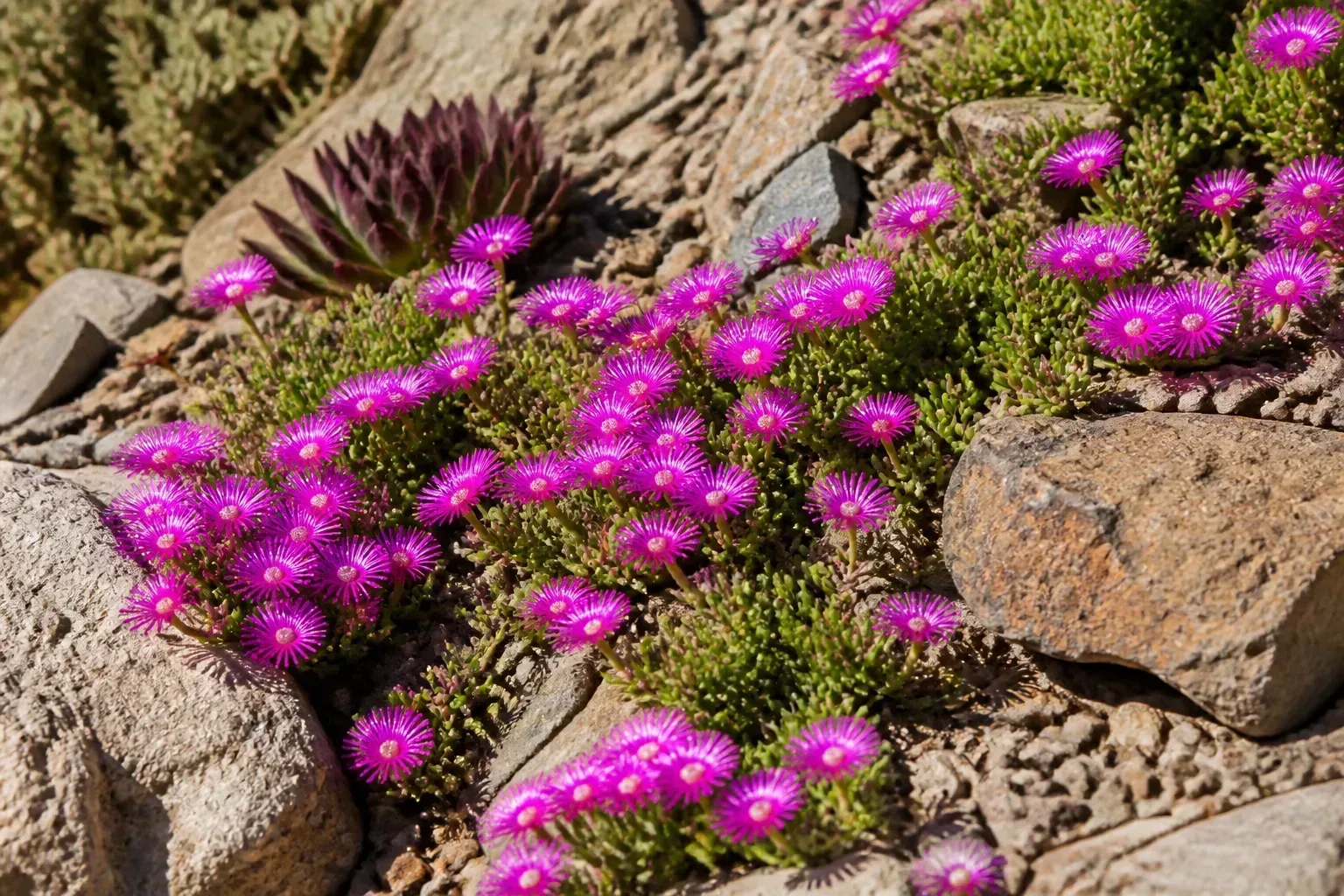
Basket of gold (syn. Alyssum saxatile) throws a shocking yellow spring blanket over rocky soil, then settles into silvery gray-green foliage for the rest of the season. Treat it as a short-lived perennial — plants often peak in years two and three, then thin out. Plan to re-sow every few years or allow self-seeding in gravel.
It tolerates shallow soil, drought, and deer pressure better than most spring annuals, but sulks in humid, wet summers.
Quick specs: USDA zones 3–7; sow in spring after soil holds above 65°F; full sun; sandy, well-drained soil; low water once established; mature height 6–12 inches, spread to 18 inches.
Sowing notes: Light-dependent germination — surface sow and press in. In zone 7, afternoon heat can end the show early; shear after bloom to keep foliage tidy. Not the best pick for Gulf Coast humidity; thyme or ice plant may perform better there.
Blue Grama (Bouteloua gracilis)
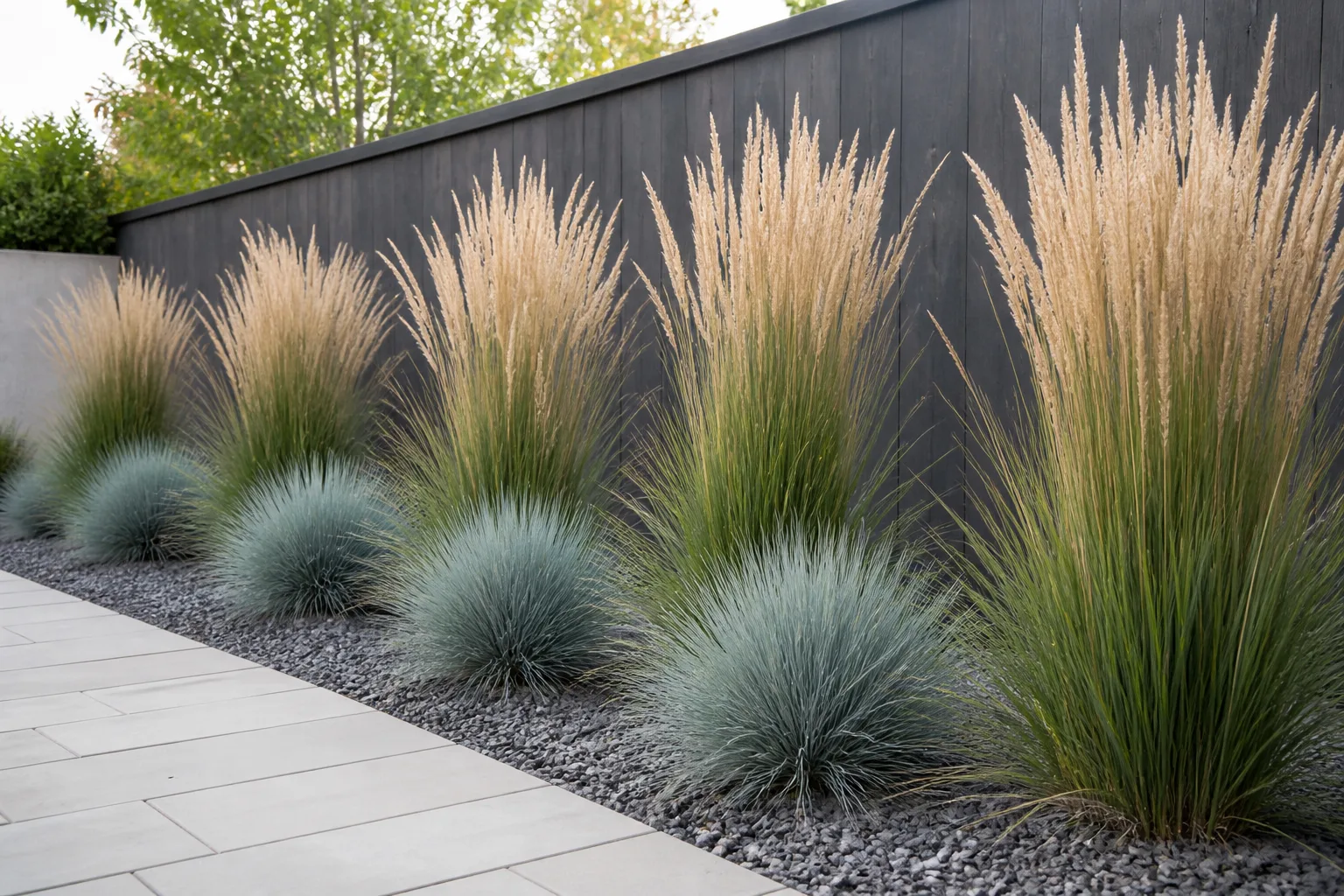
Blue grama is a native warm-season grass that forms fine-textured clumps 12–18 inches tall, with distinctive eyelash-like seed heads that catch morning light. Used as a groundcover, it reads as a soft meadow rather than a uniform lawn — excellent for sunny, low-input areas where you want wildlife value.
It hosts native skippers including Leonard’s skipper and the common branded skipper, adding pollinator function to bare slopes. Once roots dive deep, it survives on rainfall alone in many Great Plains and Intermountain climates.
Quick specs: USDA zones 3–10; direct sow in spring after soil reaches 65°F; full sun to light shade; adapts to many well-drained soils; very low water once established; sow ¼ inch deep; space or thin clumps 12–18 inches.
Sowing notes: Warm-season grass stays dormant until soil heats — sowing in cold April soil wastes seed. Weed control in year one is critical; grass seedlings cannot outcompete established crabgrass without help. Mow or trim once in late winter to refresh appearance. For more ornamental-grass placement ideas, browse fast-growing groundcovers for contrast plantings on the same site.
Hardy Ice Plant (Delosperma cooperi)
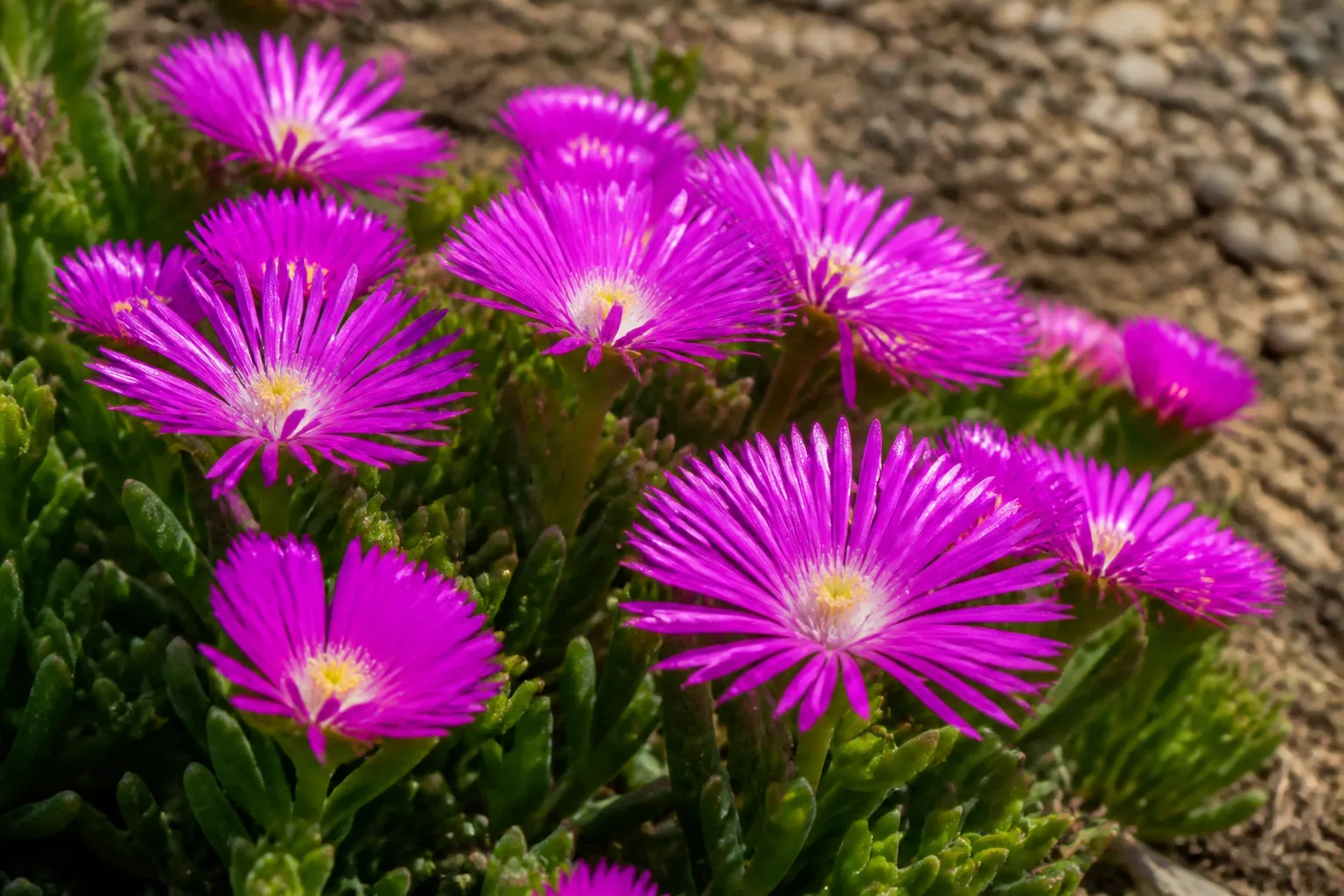
Hardy ice plant is a succulent groundcover with glistening leaves and neon magenta flowers — dramatic on hot, gravelly slopes where other seed refuses to sprout. The common name misleads: winter-hardiness depends on dry crowns, not just zone numbers. Wet, frozen soil kills more ice plant than cold air.
Seed is slow and light-dependent. Start indoors 8–10 weeks before last frost or surface-sow outdoors once nights stay above 50°F. Our full purple ice plant care guide covers Delosperma vs invasive highway ice plant — buy species carefully.
Quick specs: USDA zones 6–10 (best where winters are dry); spring sow after soil warms; full sun; poor, rocky, shallow well-drained soil; low water once established; 3-inch height, spreading mats to 18 inches.
Sowing notes: Do not cover seed. Overwatering seedlings triggers rot — use grit-heavy mix and water from below when possible. In zones 4–5 with wet winters, grow as an annual or in raised containers with cover. Established mats need almost no summer irrigation in arid climates.
Quick Comparison: Which Seed Matches Your Site?
| Species | Best site | Zones | Sow method | Light for germination | Time to useful mat |
|---|---|---|---|---|---|
| Creeping thyme | Pavers, rock walls, sun | 4–9 | Indoor or direct | Shallow cover | 2–3 years dense |
| Kidney weed | Mild-climate lawn strips | 7–11 | Warm direct sow | Shallow cover | 1–2 seasons |
| Yarrow | Hot banks, lean soil | 3–9 | Indoor start | Shallow cover | 1–2 seasons |
| Mountain rock cress | Alkaline rock gardens | 4–9 | Indoor or direct | Surface light | 2 seasons |
| Basket of gold | Spring rock slopes | 3–7 | Warm direct sow | Surface light | 1–2 seasons |
| Blue grama | Sunny native meadow | 3–10 | Warm direct sow | ¼ inch cover | 2–3 seasons |
| Hardy ice plant | Gravel, desert edges | 6–10 | Indoor or warm direct | Surface light | 2 seasons |
Use the table as a filter, not a menu. One well-chosen species beats a mishmash of seven fighting for the same square foot.
First-Year Care: From Seedling to Drought-Proof Mat
Watering Schedule Until Plants Are Established
Weeks 0–4 (germination): Mist or gently water daily when the surface looks dry. Never let seed beds bake to crust — a light compost sprinkle or row cover prevents rain impact.
Weeks 4–12 (seedling growth): Shift to deeper, less frequent soakings that wet the root zone 4–6 inches down two to three times per week in dry weather. Shallow sprinkles train roots to stay near the surface.
Months 3–12 (mat formation): Stretch intervals to weekly deep watering in absence of rain. Pull weeds by hand; mulch only after plants touch — thick mulch smothers slow spreaders.
When You Can Stop Babying the Patch
Most of these species qualify as established after they survive one full growing season and resume spring growth without dieback. Thyme and blue grama may need a second season before you trust them through a July drought. Ice plant needs dry winter crowns — reduce fall irrigation regardless of age.
A simple test: dig beside a plant in late summer. If roots extend 6+ inches and new shoots appear at the edges, back off supplemental water except in extreme heat waves. If plants wilt by noon every day, roots are not ready — keep watering through fall.
Common Seed-Starting Mistakes With Dry-Loving Groundcovers
Sowing too early in cold soil wastes warm-season seed like blue grama and kidney weed. Wait for sustained 65°F soil, not one warm weekend.
Burying light-dependent seed kills rock cress, basket of gold, and ice plant before they sprout. Press, mist, and wait.
Overwatering after germination rots thyme and ice plant faster than drought ever will. Let the surface dry slightly between waterings once seedlings have true leaves.
Planting in rich, wet clay contradicts every species on this list. Build raised mounds with sand and gravel on heavy soils.
Expecting instant coverage leads to over-seeding next year’s patch into a tangled mess. Mark thin areas and overseed selectively in year two.
Ignoring pH for rock cress produces yellow, stunted mats on acidic woodland soil. Test and lime in fall if needed.
Conclusion
Seed-started groundcover is the economical path to dry, weed-resistant mats — if you respect the gap between germination moisture and mature drought tolerance. Match species to sun, soil, and zone first; sort seed by light and temperature requirements second; then commit to one full season of thoughtful watering and weeding. Creeping thyme and yarrow reward patient northern gardeners; kidney weed and ice plant shine where winters are mild and drainage is sharp; rock cress and basket of gold paint spring slopes; blue grama turns open sun into low-input habitat. Pick one or two that fit your site, sow on time, and let the mat build. By next summer, the hose can stay coiled more days than not.