Celosia Care: Sun, Water, Soil, and Flower Forms
Celosia argentea (ornamental garden cultivars)
Grow celosia in warm weather, full sun, and well-drained soil. Learn how plume, cockscomb, and wheat forms differ, when to water, and how to keep flowers blooming.
Celosia Care Guide
Start with wateringThe most common care mistake for CelosiaCelosia watering guide →Celosia care essentials
Light
Water
Keep young plants evenly moist as they establish. Once growing strongly, water when the upper inch of soil begins to dry, checking more often during hot, dry weather and in containers. Celosia tolerates some dry soil, but prolonged drought can reduce flowering. Let excess water drain freely; roots and flower heads can suffer when the bed stays soggy, especially during rainy, humid spells.
Soil
Plant celosia in fertile soil that drains freely. It grows in a broad range of soil types and pH levels, but heavy, waterlogged ground is a poor fit. For containers, use a quality potting mix in a pot with open drainage holes.
Humidity
Temperature
Fertilizer
About Celosia
Celosia is native to Africa; grown widely as a warm-season ornamental, typically reaches Common garden cultivars are about 6–36 in (15–90 cm) tall and 12–24 in (30–60 cm) wide. Compact, plume, crested, and spiked selections vary, and some taller cultivars can exceed this range. indoors, with fast in warm weather; many common cultivars flower about three months after seed germination. growth. Celosia has a upright, branching, frost tender perennial usually grown as a warm season annual. garden forms include feathery plumes, broad crested cockscombs, and narrow wheat like spikes. growth habit and part of the Amaranthaceae family. It is also known as Cockscomb, Plumed cockscomb, Feather celosia, and Woolflower.
| Detail | Information |
|---|---|
| Also known as | Cockscomb, Plumed cockscomb, Feather celosia, Woolflower |
| Native region | Africa; grown widely as a warm-season ornamental |
| Mature size | Common garden cultivars are about 6–36 in (15–90 cm) tall and 12–24 in (30–60 cm) wide. Compact, plume, crested, and spiked selections vary, and some taller cultivars can exceed this range. |
| Growth rate | Fast in warm weather; many common cultivars flower about three months after seed germination. |
| Growth habit | Upright, Branching, Frost Tender Perennial Usually Grown As A Warm Season Annual. Garden Forms Include Feathery Plumes, Broad Crested Cockscombs, And Narrow Wheat Like Spikes. |
| Scientific name | Celosia argentea (ornamental garden cultivars) |
| Family | Amaranthaceae |
How to care for Celosia?
When should you water Celosia?
Keep young plants evenly moist as they establish. Once growing strongly, water when the upper inch of soil begins to dry, checking more often during hot, dry weather and in containers. Celosia tolerates some dry soil, but prolonged drought can reduce flowering. Let excess water drain freely; roots and flower heads can suffer when the bed stays soggy, especially during rainy, humid spells.
- Feel the upper inch of soil near the plant. If it is dry - Once growing strongly, water when the upper inch of soil begins to dry, checking more often during hot, dry weather and in containers.
- water the root zone until the mix is evenly moist and excess water runs from the container - Let excess water drain freely; roots and flower heads can suffer when the bed stays soggy, especially during rainy, humid spells.
- Drain excess water - Let excess water drain freely; roots and flower heads can suffer when the bed stays soggy, especially during rainy, humid spells.
What soil works best for Celosia?
Plant celosia in fertile soil that drains freely. It grows in a broad range of soil types and pH levels, but heavy, waterlogged ground is a poor fit. For containers, use a quality potting mix in a pot with open drainage holes.
- Use a free-draining container mix and a pot with unobstructed drainage holes. - For containers, use a quality potting mix in a pot with open drainage holes.
- Improve heavy garden soil with organic matter before planting - It grows in a broad range of soil types and pH levels, but heavy, waterlogged ground is a poor fit.
- do not leave the bed waterlogged - It grows in a broad range of soil types and pH levels, but heavy, waterlogged ground is a poor fit.
Grower notes for Celosia
Pick the flower form that fits your space
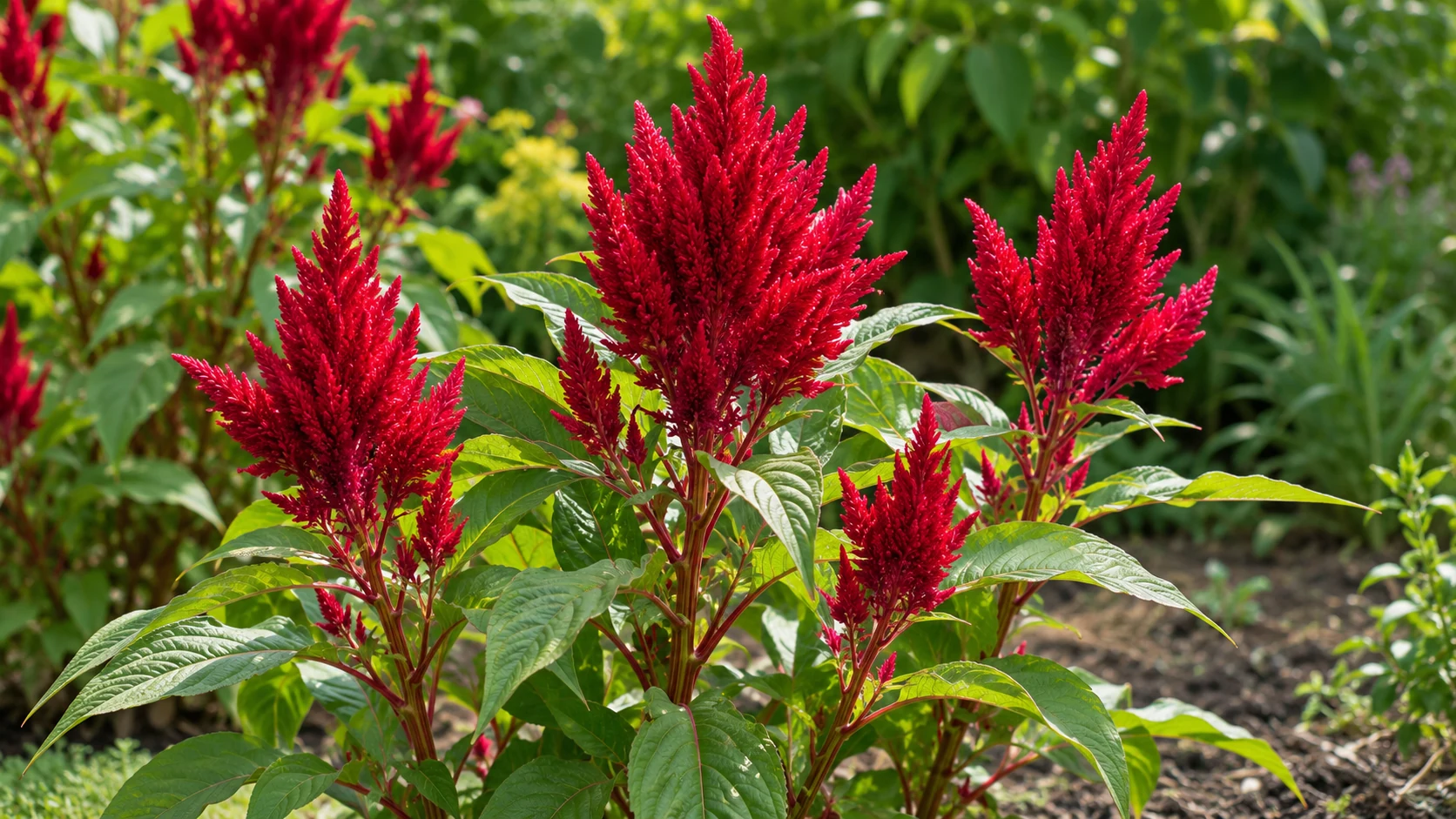
Celosia is sold in several distinctive forms. Cristata types make broad, ruffled crests; plumosa types produce upright, feathery plumes; and spicata types carry narrower, wheat-like flower heads. The labels and taxonomy can vary between seed lines, so use the cultivar name and the flower shape when choosing a plant.
Give it warmth before you plant
Celosia is tender to frost. Start seeds indoors in warm conditions or sow outside after frost danger has passed and the soil has warmed. Cold soil slows establishment, while a sudden chill can end the display for the season.
Use full sun for the strongest color
A sunny position supports sturdy growth and abundant blooms. Celosia can grow with some shade, but flowering may be lighter. Tall cultivars with heavy heads benefit from a sheltered spot or support before wind snaps their stems.
Keep moisture steady but let the mix drain
Water young plants regularly, then check the soil before each drink. In hot weather, containers dry faster than beds. Celosia tolerates some dry soil, but a permanently wet root zone can lead to rot, so empty standing water and improve drainage before increasing irrigation.
Deadhead if you want to limit volunteers
Celosia can reseed where the climate is warm enough for seed to mature. Remove faded flower heads to keep the display tidy or allow a few to dry if you want to collect seed. Check local guidance where reseeding could become unwanted.
Treat ornamental flowers as ornamental
NC State Extension notes that young leaves and flowers of Celosia argentea are edible. That does not make every nursery plant food-safe: ornamental stock may have been treated with products not labeled for edible crops. Eat it only when the exact species and pesticide history are known.
Is celosia safe for pets?
ASPCA lists Celosia plumosa as non-toxic to cats, dogs, and horses, and NC State Extension gives the same non-toxic tags for its Celosia argentea profile. These records apply to those named ornamental forms, not every species sold as celosia. Any plant material can still upset a pet's stomach if eaten.
ASPCA's Celosia plumosa listing and NC State Extension's Celosia argentea profile support non-toxic classifications for cats, dogs, and horses. Confirm the plant identity because Celosia is a genus with multiple species; these entries do not establish safety for rabbits, birds, turtles, or tortoises. ASPCA also cautions that eating any plant material may cause stomach upset.
Watering Celosia
For Celosia, feel the upper inch of soil near the plant. If it is dry, water the root zone until the mix is evenly moist and excess water runs from the container. and water check the soil rather than following a fixed calendar. Water thoroughly when the top inch feels dry, then let excess drain. Sunny containers may need more frequent checks than garden beds during heat. Water transplants consistently while roots establish and check pots often in hot, dry weather. After rain or during cool, cloudy periods, wait until the surface layer begins to dry before watering again.
| Detail | Information |
|---|---|
| How often | Check the soil rather than following a fixed calendar. Water thoroughly when the top inch feels dry, then let excess drain. Sunny containers may need more frequent checks than garden beds during heat. |
| How to check | Feel the upper inch of soil near the plant. If it is dry, water the root zone until the mix is evenly moist and excess water runs from the container. |
| Seasonal changes | Water transplants consistently while roots establish and check pots often in hot, dry weather. After rain or during cool, cloudy periods, wait until the surface layer begins to dry before watering again. |
Signs of overwatering
- Soil remains wet for days or water collects around the roots.
- Leaves droop even though the soil is saturated.
- Stems or roots soften after heavy rain or repeated watering.
Signs of underwatering
- The root zone is dry and the plant stays limp during warm weather.
- Container mix dries quickly in sun and heat.
- Flowering fades early during a prolonged dry spell.
Soil & potting for Celosia
Use a mix of Use a free-draining container mix and a pot with unobstructed drainage holes., Improve heavy garden soil with organic matter before planting; do not leave the bed waterlogged. for Celosia. Good drainage is essential. Celosia handles some porous or drier soil, while persistently wet roots and rain-soaked flower heads can rot. Target soil pH around Tolerates acidic, neutral, and alkaline soils. Repot celosia is usually grown for one warm season, so it does not need routine yearly repotting. Move seedlings once into their final bed or container and avoid repeatedly disturbing their roots., ideally in transplant after the danger of frost has passed and the soil has warmed.
| Detail | Information |
|---|---|
| Recommended mix | Use a free-draining container mix and a pot with unobstructed drainage holes., Improve heavy garden soil with organic matter before planting; do not leave the bed waterlogged. |
| Drainage | Good drainage is essential. Celosia handles some porous or drier soil, while persistently wet roots and rain-soaked flower heads can rot. |
| Soil pH | Tolerates acidic, neutral, and alkaline soils |
| Repotting frequency | Celosia is usually grown for one warm season, so it does not need routine yearly repotting. Move seedlings once into their final bed or container and avoid repeatedly disturbing their roots. |
| Best season to repot | Transplant after the danger of frost has passed and the soil has warmed. |
Signs it needs repotting
- Seedlings have outgrown their starter cells and are ready for the final pot or bed.
- The plant is being moved outdoors only after frost risk has passed.