12 Geranium Companion Plants for Low-Water Gardens
Twelve geranium companion plants for containers and beds—grouped by job, with spacing rules, watering logic, and four pairings to skip in dry gardens.
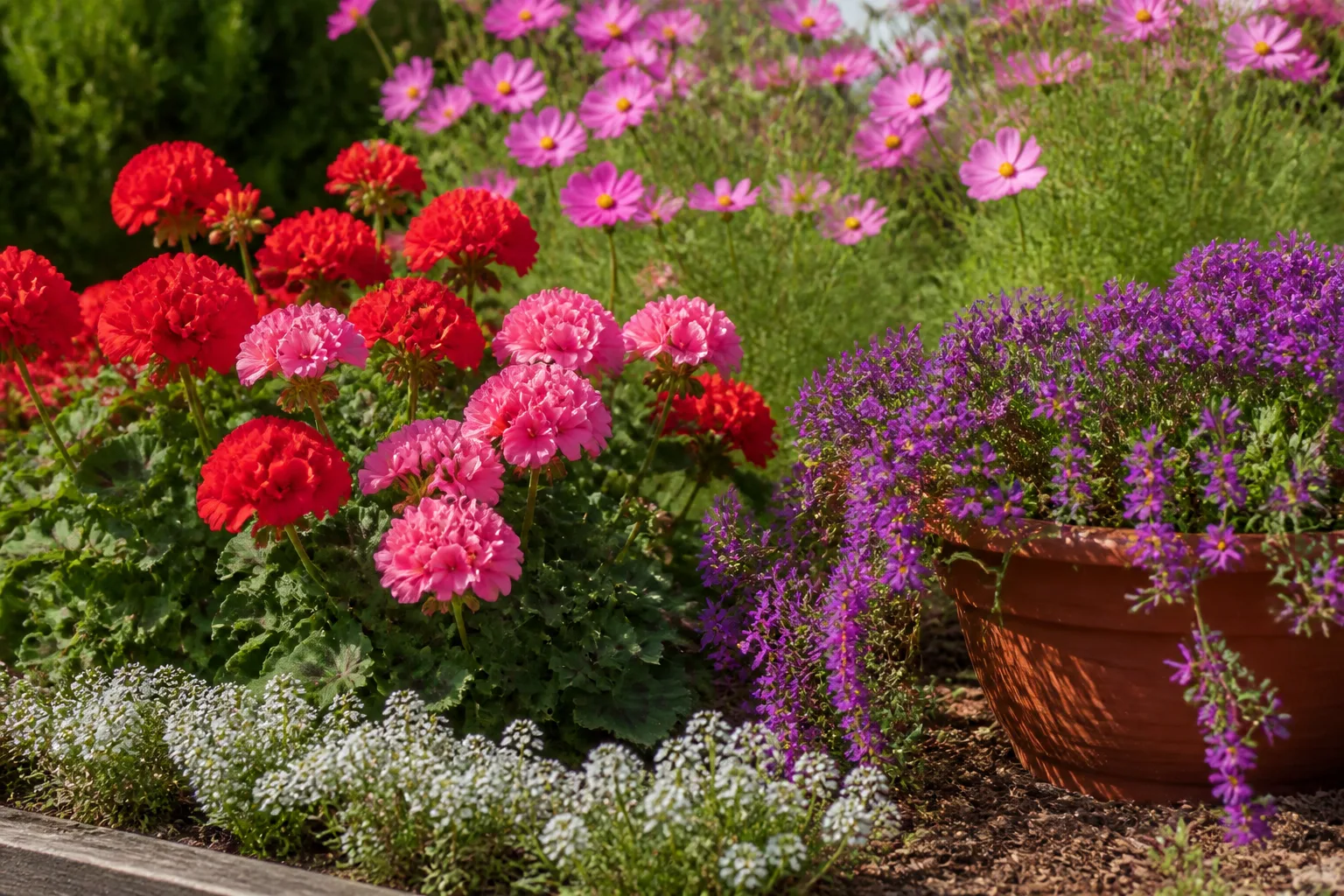
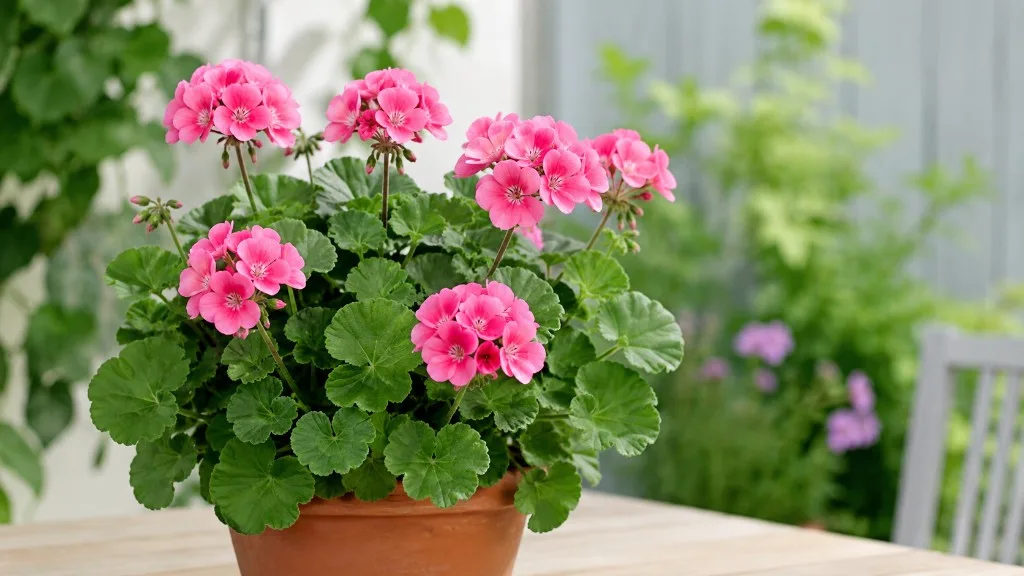
Annual geraniums—botanically pelargoniums (Pelargonium hybrids)—are the workhorse of sunny patios, foundation beds, and hanging baskets. Garden centers label them “geraniums,” but the plants you buy for summer color are almost always tender Pelargonium cultivars, not true hardy Geranium perennials. That naming twist matters when you search for companions: you need neighbors that love full sun, sharp drainage, and moderate—not constant—moisture.
This guide lists 12 companions worth planting with zonal, ivy, and scented pelargoniums in low-water gardens. You will get spacing numbers, a job-based picking table, four pairings to skip, and two layouts—a 14-inch container and a 4×8-foot border—you can copy before your next nursery run.
What companion planting can—and cannot—do for geraniums
Companion planting means growing two or more species close enough that they interact—through pollinator traffic, root-zone differences, scent masking, or physical support. Penn State Master Gardener material on good-neighbors companion planting describes it as polyculture that mimics natural diversity, not a guarantee that pests vanish.
For pelargoniums, companions help most when they (1) share sun and drainage needs, (2) fill a different height layer without crowding airflow at the crown, or (3) bloom across a long window so pollinators keep visiting the bed. Pelargonium foliage may deter some insects in vegetable rows, but no border replaces scouting, rotation, and proper spacing. RHS companion planting guidance is clear that claimed benefits do not apply to every crop in every instance—treat geranium companions as cultural partners first, pest shields second.
Honest expectations keep the bed useful. Overwatering to satisfy a thirsty neighbor is the fastest way to rot pelargonium roots. A dry-soil pairing that looks good in a catalog photo but needs different irrigation will fail before aphids ever show up.
Which geranium type you are pairing
Not every pelargonium plays the same companion role. Match neighbors to the habit you actually have:
| Type | Common name | Habit | Best companion jobs |
|---|---|---|---|
| Zonal | Bedding geranium (P. × hortorum / P. × hybridum) | Upright mound, 12–24 inches | Thriller in pots; front-of-border color |
| Ivy-leaved | Trailing geranium (P. peltatum) | Cascading stems | Spiller over pot rims and wall baskets |
| Scented-leaf | Rose, lemon, mint types | Upright, aromatic foliage | Sensory beds with alyssum or heliotrope |
| Regal / Angel | Showy ruffled blooms | Bushy, partial-shade tolerant | Part-shade porch pots—not the same as zonal sun rules |
The NC State profile for bedding pelargonium notes full sun, well-drained soil, and drought tolerance once established—with more flowers when moisture is moderate but never soggy. The RHS pelargonium growing guide adds that zonal types tolerate some shade while regal types prefer partial shade. Pick companions for the type and light you have, not the photo on the six-pack label.
What every geranium bedmate must share for low-water success
Any plant on this list needs:
- Six or more hours of direct sun daily for zonal and ivy types (regal/angel: bright light with afternoon shade in hot climates)
- Soil or potting mix that drains within hours after rain—pelargoniums survive dry spells but not wet crowns
- Similar watering philosophy: soak when the top inch is dry in containers; let in-ground plants tolerate brief drought between deep soakings
- Room to breathe—packed stems and wet foliage invite botrytis and botrytis invites weaker plants that aphids target
If a companion wants constantly moist soil (impatiens, lobelia in deep shade), shade all day (hostas), or heavy nitrogen (leafy lettuce), keep it in a different bed. Cultural match beats color contrast every time.
Set up the geranium bed before you pick companions
Spacing, drainage, and watering rules
Space zonal pelargoniums 10–14 inches apart in the row for a solid ribbon of color; ivy types in baskets need one strong plant per 10–12 inches of rim with spillers between. Leave 8–10 inches minimum between a pelargonium crown and the stem of a vertical neighbor like celosia or cosmos so drip irrigation for one does not soak the other’s crown nightly.
Drainage first: In clay soil, raise the planting zone 4–6 inches with compost and coarse grit. In pots, one drainage hole is not enough for a 14-inch mixed container—drill three. Pelargoniums in saturated mix yellow, stop blooming, and root rot follows.
Watering: The RHS pelargonium guide recommends moderate water from spring to summer and sparing winter water for overwintered plants. In mixed containers, water when the top inch of mix is dry, then soak until drainage runs clear. Do not mist pelargonium leaves on a schedule meant for ferns.
Feed: Balanced liquid feed every 10–14 days until buds form, then switch to a potassium-forward bloom feed fortnightly through summer—same rhythm for pelargoniums and most annual companions listed here. High nitrogen pushes leaves on cosmos and celosia at the expense of flowers.
Choose companions by job—not by color alone
Pick two or three roles per bed instead of planting all twelve at once:
| Job | What it does | Examples from this list |
|---|---|---|
| Low skirt / living mulch | Covers soil, cools roots, feeds beneficial insects | Alyssum, verbena (front edge) |
| Vertical backbone | Height behind mounding geraniums | Cosmos, celosia, purple fountain grass |
| Container architecture | Thriller-spiller structure | Zonal center + petunia/verbena spill + nemesia fill |
| Silver contrast | Makes hot-color blooms readable in midday sun | Dusty miller, sage |
| Vegetable-row ally | Scent and pollinators beside edibles | Garlic, heliotrope |
| Foliage anchor | Upright texture in dry shade pockets | Dracaena (containers / frost-free zones) |
For a deeper look at what science supports—and what is garden lore—see does companion planting actually work.
12 geranium companion plants worth planting
The plants below are the twelve worth serious consideration for low-water pelargonium beds, baskets, and dry borders. Each entry notes why it pairs well, spacing, and realistic limits.
Alyssum: low skirt and pollinator magnet
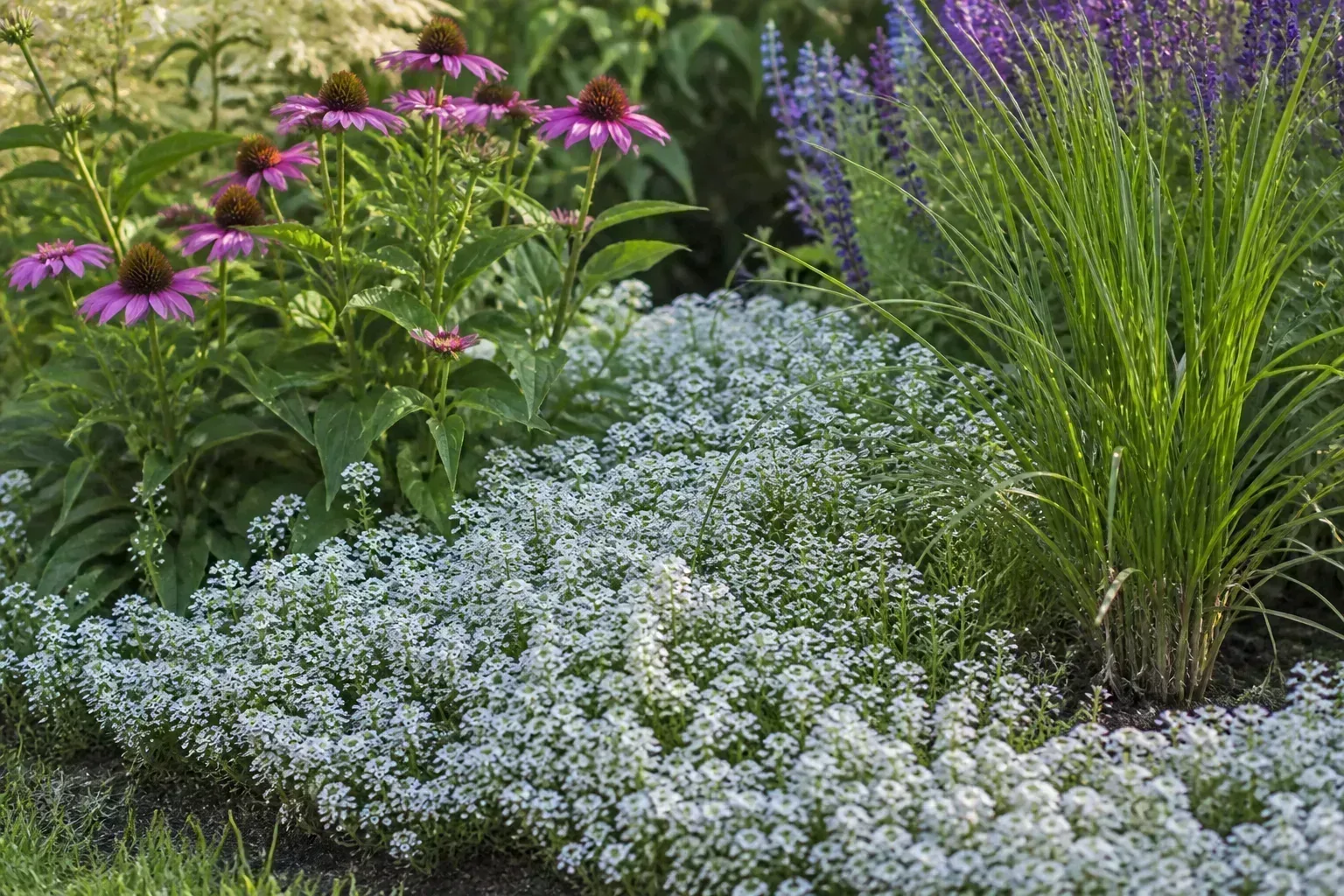
Sweet alyssum (Lobularia maritima) is the easiest geranium skirt for dry edges. It trails 3–10 inches tall, self-sows lightly in warm zones, and perfumes the bed with honey-scented blooms that pull hoverflies and tiny parasitic wasps. RHS companion planting research cites studies where alyssum with lettuce reduced aphid pressure by supporting natural enemies—expect similar pollinator traffic beside pelargoniums, not automatic pest elimination.
Plant alyssum 4–6 inches in front of zonal geraniums or tuck plugs between ivy geranium stems in a basket rim. ‘Snow Princess’ and ‘Dark Knight’ stay floriferous in heat; older cultivars can melt in humid August—choose heat-tolerant series for southern gardens. Alyssum wants the same sun and sharp drainage as pelargoniums and tolerates drying between soakings once rooted.
Scented-leaf pelargoniums—rose or lemon types—pair beautifully here: brush the leaves and the alyssum scent layers underneath.
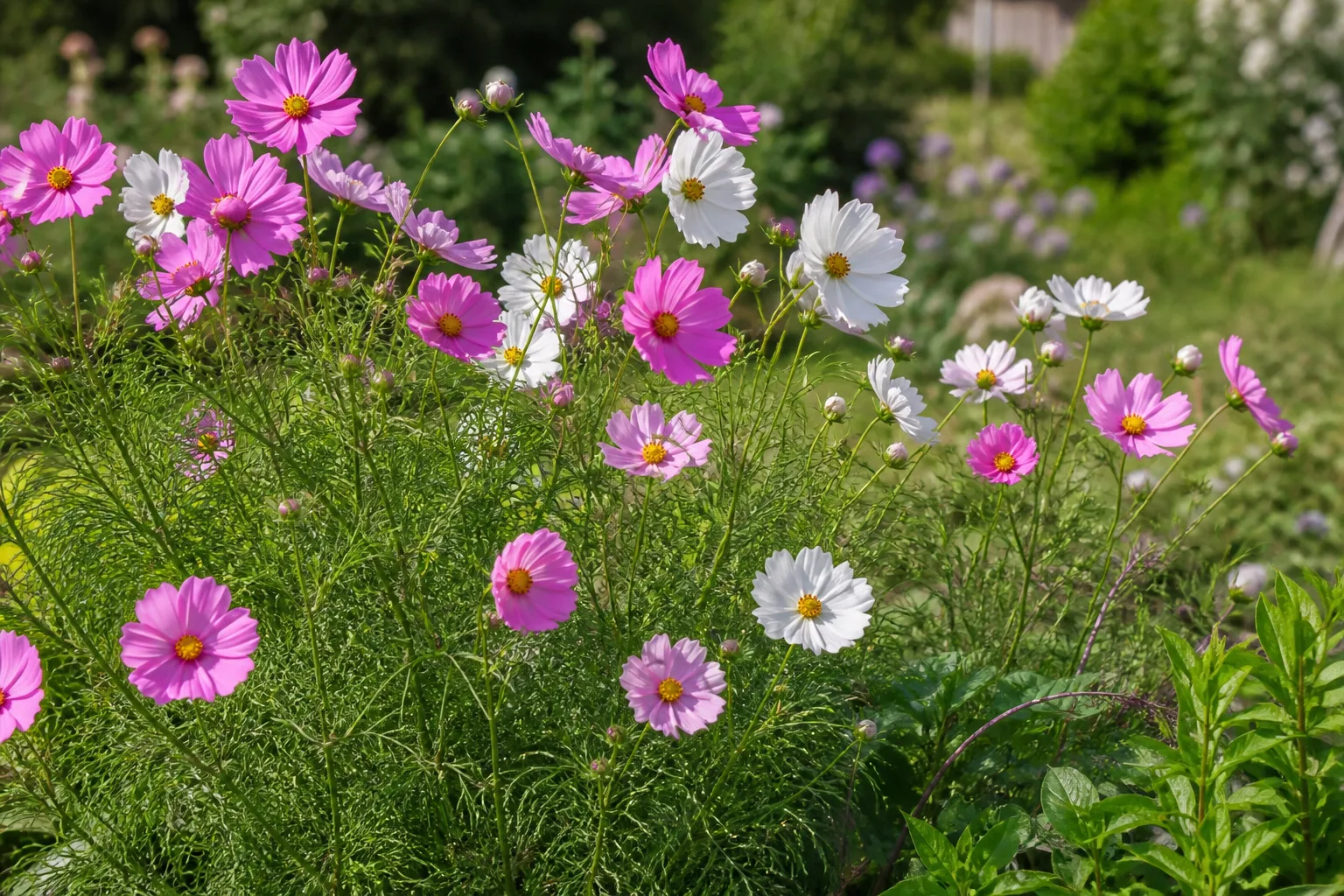
Celosia and cosmos: height without extra watering
Celosia (Celosia spp.) and cosmos (Cosmos bipinnatus, C. sulphureus) solve the “flat front bed” problem without adding a high-water neighbor behind your geraniums.
Celosia brings plumed or brain-shaped inflorescences in flame orange, magenta, and gold. Upright cockscomb types reach 12–36 inches; plant them 12–18 inches behind dwarf zonal geraniums so the mound stays in front and the celosia spikes read as a wall of texture. Celosia handles the same full sun and lean soil pelargoniums prefer—overfeeding celosia softens the plumes.
Cosmos adds airy movement. Sulfur cosmos (C. sulphureus) stays shorter and bushier; common cosmos (C. bipinnatus) can hit 4–6 feet. Use dwarf series like ‘Sonata’ or ‘Cosmic’ behind geraniums in small gardens; full-size cosmos belongs at the back of a 4-foot-deep border with geraniums on the front lip. Both cosmos species reseed in warm zones—deadhead if volunteers crowd the geranium row.
Layering rule: short geranium → mid celosia → tall cosmos creates depth in a narrow bed without blocking the view from a sidewalk.
Container classics: petunias, verbena, and nemesia
These three are the hanging-basket and patio-pot standards for a reason—they share pelargonium sun hunger and survive container dry-down between waterings.
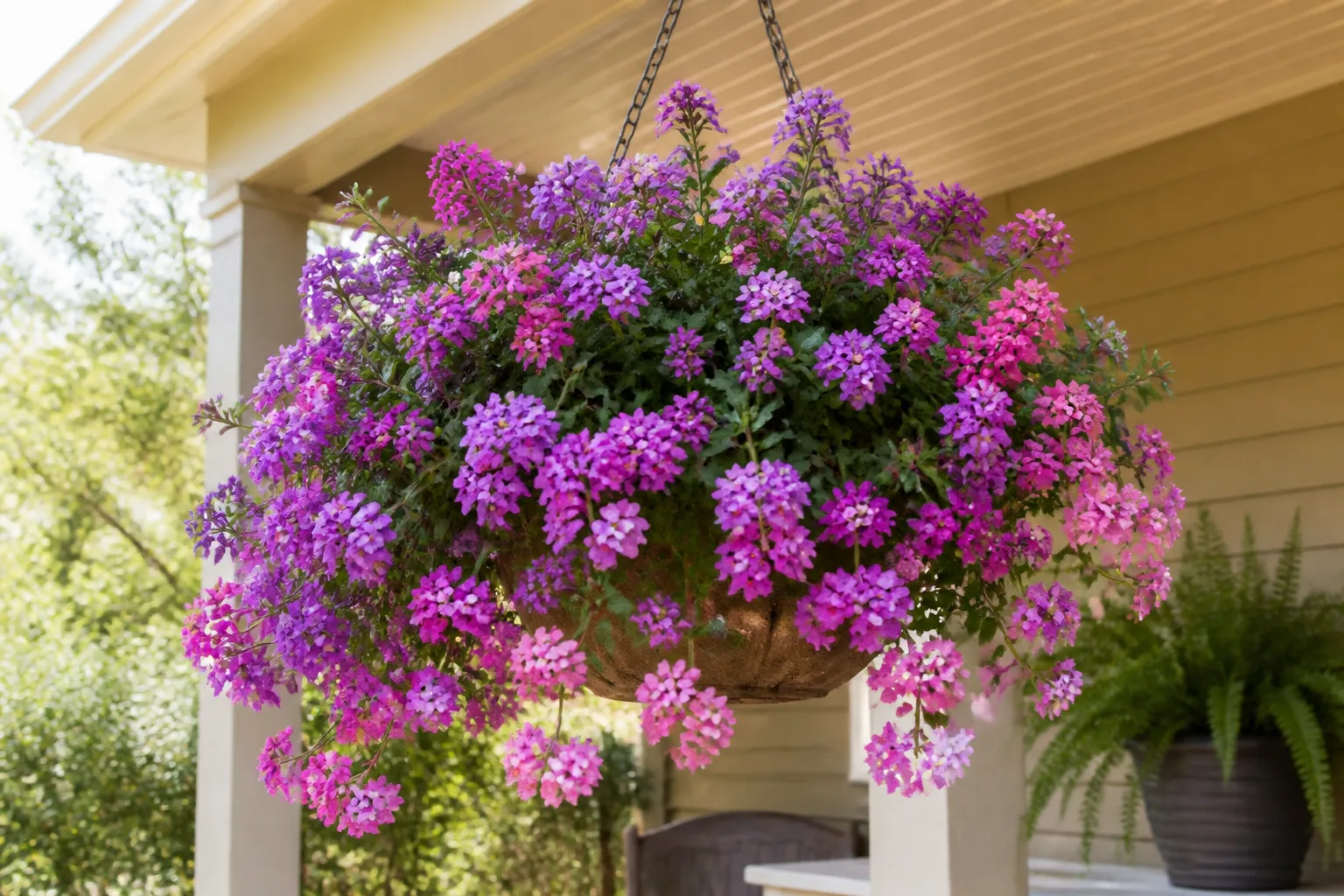
Petunias (Petunia spp.) are the classic spiller under a zonal thriller. Surfinia and Wave types trail 2–3 feet; milliflora petunias stay tighter for 12-inch pots. Plant one upright zonal geranium centered in a 14-inch pot, three petunias on the rim, and water when the top inch dries—never on a calendar. Petunias and pelargoniums both need deadheading on older varieties; self-cleaning series save time in mixed pots.
Verbena (Verbena × hybrida and trailing landscape types) adds finer texture than petunia and keeps blooming through light drought once established. Tuck verbena at the pot edge with ivy geranium—verbena’s lax stems hide the basket wire. Space verbena plugs 6–8 inches apart on the rim; they spread and knit together in three weeks.
Nemesia fills the filler role between thriller and spillers with snapdragon-like blooms on compact plants. Nemesia prefers cool spring and early summer; in hot humid zones it may pause in August while geraniums and verbena carry the pot. Choose heat-tolerant Sunsatia or Aromatica series for southern baskets. Center one nemesia between two ivy geranium slips in a 12-inch basket for a cottage look.
Silver foliage frames: dusty miller and sage
Hot pink, orange, and red pelargonium blooms can visually shout in midday sun. Silver neighbors calm the palette and read as “designed” instead of accidental.
Dusty miller (Jacobaea maritima, formerly Senecio cineraria) brings velvety gray leaves 8–18 inches tall. Plant dusty miller 6 inches offset from geranium crowns so silver foliage peeks between bloom clusters—not directly under them where trapped moisture causes leaf rot. Dusty miller is perennial in zones 8–11 and often grown as an annual elsewhere; it tolerates drought once rooted and reflects heat off the soil surface.
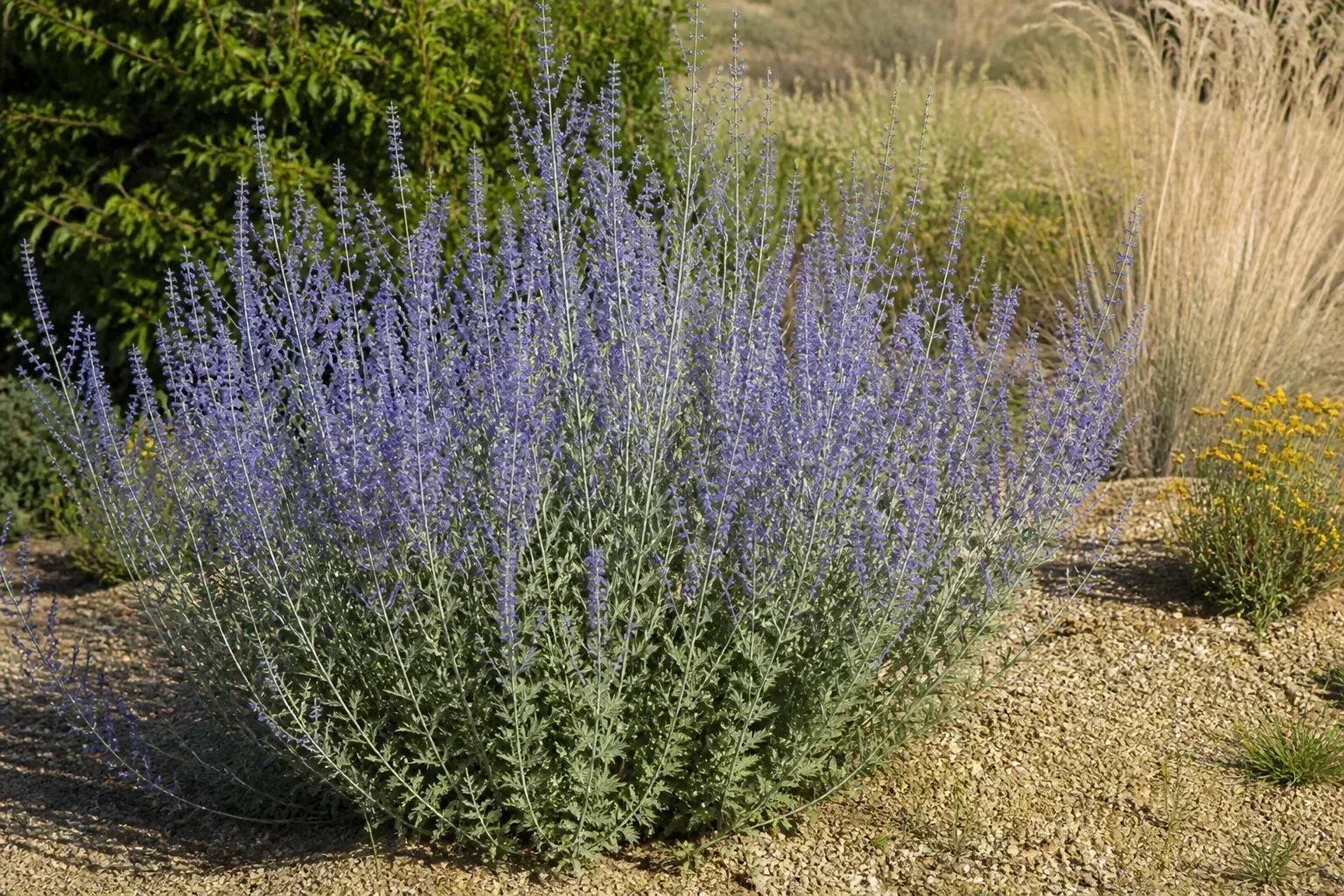
Common sage (Salvia officinalis) adds upright, aromatic structure in herb borders beside pelargoniums. Sage wants the same full sun and lean, well-drained soil—a natural low-water pairing. Space sage transplants 18 inches from geranium mounds; sage roots run deeper and wider than pelargonium roots, so they share a row without fighting for the same inch of topsoil. Harvest sage lightly through summer; hard pruning in fall keeps the plant compact. Pineapple sage and ornamental salvias work for color, but culinary sage is the most drought-forgiving for dry Mediterranean-style beds.
Ornamental grass and dracaena for vertical contrast
Purple fountain grass (Pennisetum setaceum ‘Rubrum’) adds 3–5-foot feathery plumes behind low geranium mounds. Use one grass clump per 4–6 linear feet of bed back edge—not one grass per geranium, which looks chaotic. Fountain grass is perennial in zones 9–10; treat as an annual elsewhere. In warm climates where P. setaceum self-sows aggressively, substitute sterile dwarf fountain grass (P. × advena ‘Rubrum’) or a non-invasive switchgrass cultivar as the vertical accent.
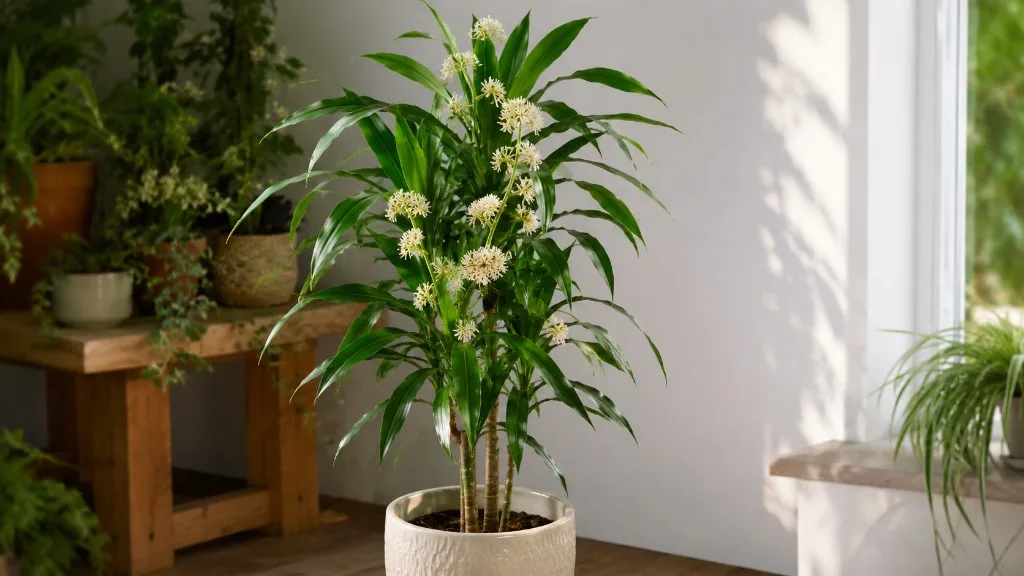
Dracaena (Dracaena spp.) appears on many companion lists, but context matters. Outdoor dracaena (marginata, reflexa) works in frost-free zones 10–12 as a vertical foliage partner in dry shade pockets of a patio planting—spikey leaves against mounding pelargoniums. In most US gardens, the dracaena on the bench is a houseplant moved outdoors for summer; pair it in a large frost-free container with pelargoniums for a tropical porch tableau, then bring dracaena indoors before nights drop below 50°F. Do not plant houseplant dracaena in an in-ground bed that freezes.
Vegetable-row allies: garlic and heliotrope
Pelargoniums show up in kitchen gardens because their scented foliage may confuse some pests—emphasis on may. Research on geranium–garlic intercropping exists for essential-oil crops (Pelargonium graveolens), not necessarily your red zonal in a tomato row, but the pairing still works operationally: different root depths, different harvest times, shared sun.
Garlic (Allium sativum): plant cloves in fall 12–18 inches from spring-planted pelargonium transplants along a bed edge. Garlic finishes in early summer when geraniums hit peak bloom—no root fight at harvest. Garlic scent may help mask host-plant cues for some insects per RHS companion planting notes on garlic with strawberries; treat it as a bonus, not a replacement for rotation.
Heliotrope (Heliotropium spp.) brings vanilla-scented purple clusters for sensory beds beside scented pelargoniums. Heliotrope wants full sun and consistent moisture—slightly thirstier than pelargoniums. In a low-water garden, plant heliotrope in its own sub-zone: a pocket of soil amended with extra compost at the back of a container where the geranium rim dries faster than the center. In open ground, heliotrope suits irrigated cottage borders, not gravel-only xeriscapes. Bees and butterflies visit both plants across a long summer window.
Four pairings to skip in a low-water geranium garden
1. Impatiens and shade annuals. Pelargoniums need sun; impatiens collapse in the same exposure. If the bed is shady, skip pelargoniums—not the shade lovers.
2. Heavy-feeding leafy vegetables through the same root zone. Lettuce, spinach, and cabbage-family crops want steady nitrogen and moisture pelargoniums do not. Edge the vegetable plot with geraniums; do not interplant through the row.
3. Mint and aggressive spreaders. Peppermint and lemon balm outcompete pelargonium roots in one season. Keep mint in a separate pot—even “contained” mint rarely stays contained.
4. Constantly wet mesic perennials. Astilbe, ligularia, and bog iris need soil pelargoniums rot in. Dry-garden design means separate hydrology zones, not one sprinkler zone for all.
Two sample layouts you can copy this season
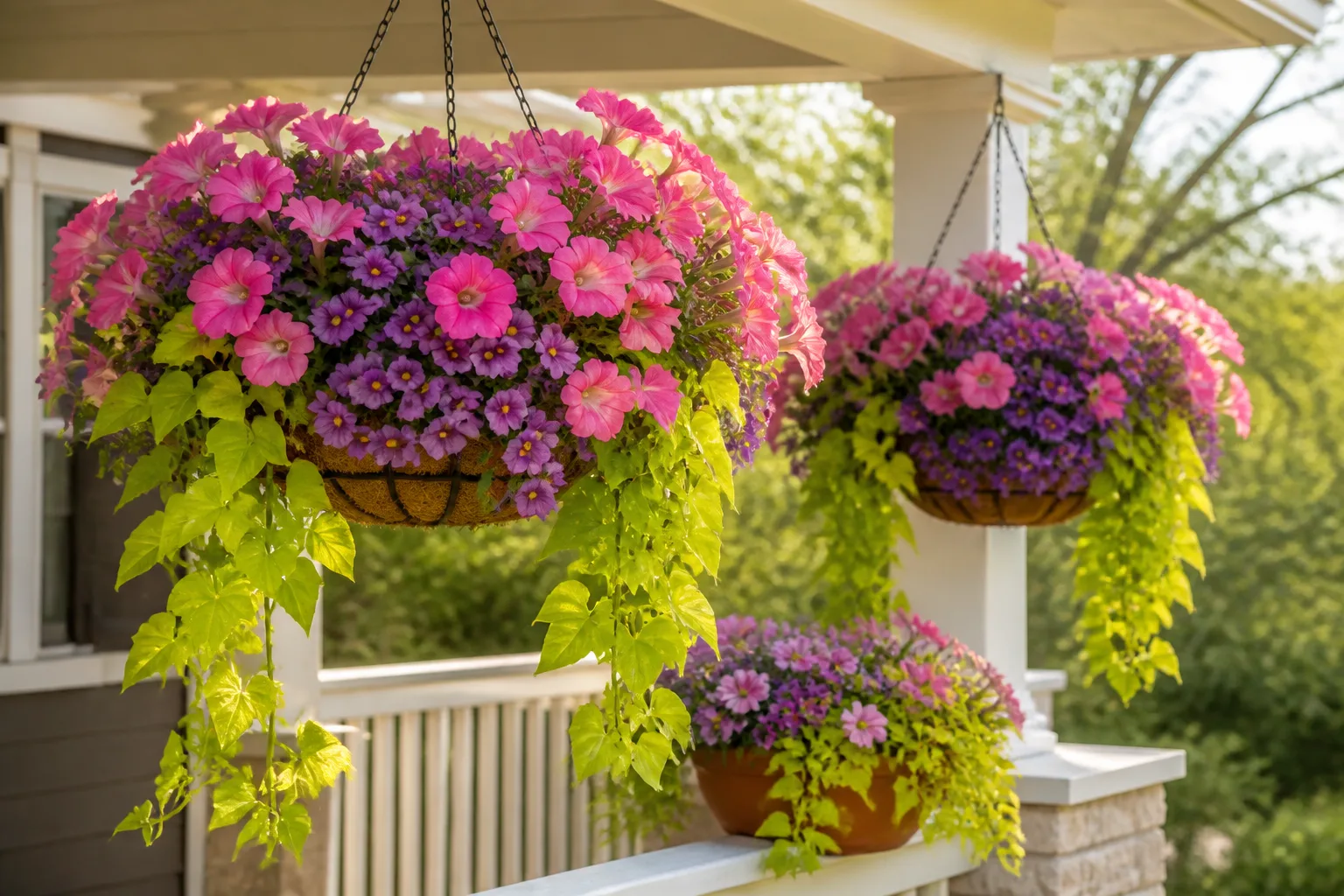
14-inch thriller-spiller container recipe
For a low-water patio pot in full sun:
- Center (thriller): one zonal pelargonium in hot coral or cherry red
- Fillers: two nemesia plugs opposite each other
- Spillers: three trailing verbena or Wave petunia slips on the rim
- Optional skirt: sweet alyssum plugs tucked between spillers once the thriller is established
Use cactus-blend or peat-free multipurpose with extra perlite. Water when the top inch is dry; expect to soak every 3–5 days in July, not daily. Feed with bloom fertilizer every two weeks after the first flower opens.
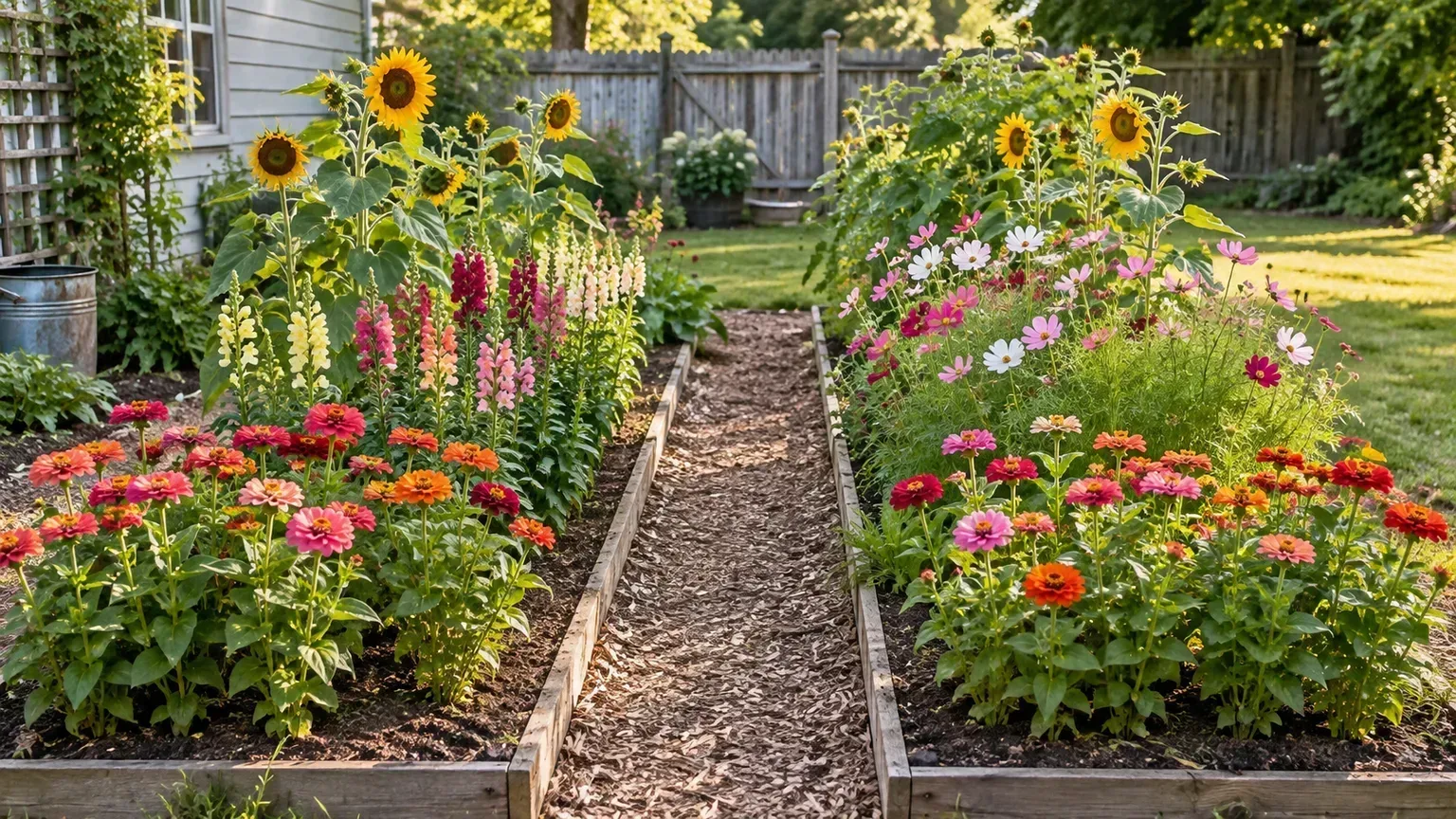
4×8-foot low-water border strip
Along a south-facing walk or driveway edge:
- Back row (north side in Northern Hemisphere): three dwarf cosmos ‘Sonata Mix’ spaced 18 inches apart
- Mid row: five celosia ‘Fresh Look’ or similar compact plume type, offset between cosmos stems
- Front row: ten zonal pelargoniums spaced 12 inches on center
- Front lip: sweet alyssum seedlings drilled between geraniums after last frost
- One back corner accent: single purple fountain grass clump (annual in zones below 9)
Mulch with 2 inches of fine bark to slow evaporation—pull mulch 2 inches back from pelargonium crowns. Drip irrigation on a 45-minute deep soak twice weekly beats daily misting for this layout.
Conclusion
The best geranium companion plants for a low-water garden are neighbors that share sun, drainage, and moderate watering—not just pretty petals. Alyssum, verbena, and petunias handle containers; cosmos, celosia, and fountain grass add height behind zonal mounds; dusty miller and sage frame hot colors with silver; garlic and heliotrope extend the pairing into sensory and edible edges. Start by naming your pelargonium type, pick two or three jobs for the bed, and skip companions that need shade, wet soil, or aggressive root space. Copy the 14-inch pot or 4×8-foot strip above, adjust spacing for your cultivars, and you will have a combination that stays readable in August—not just photogenic in May.