Can You Overseed After Pre-Emergent? Timing Guide
Find out how long to wait after pre-emergent before overseeding, when 12 weeks is not enough, and how to protect new grass through fall.
The short answer: yes, after the label interval
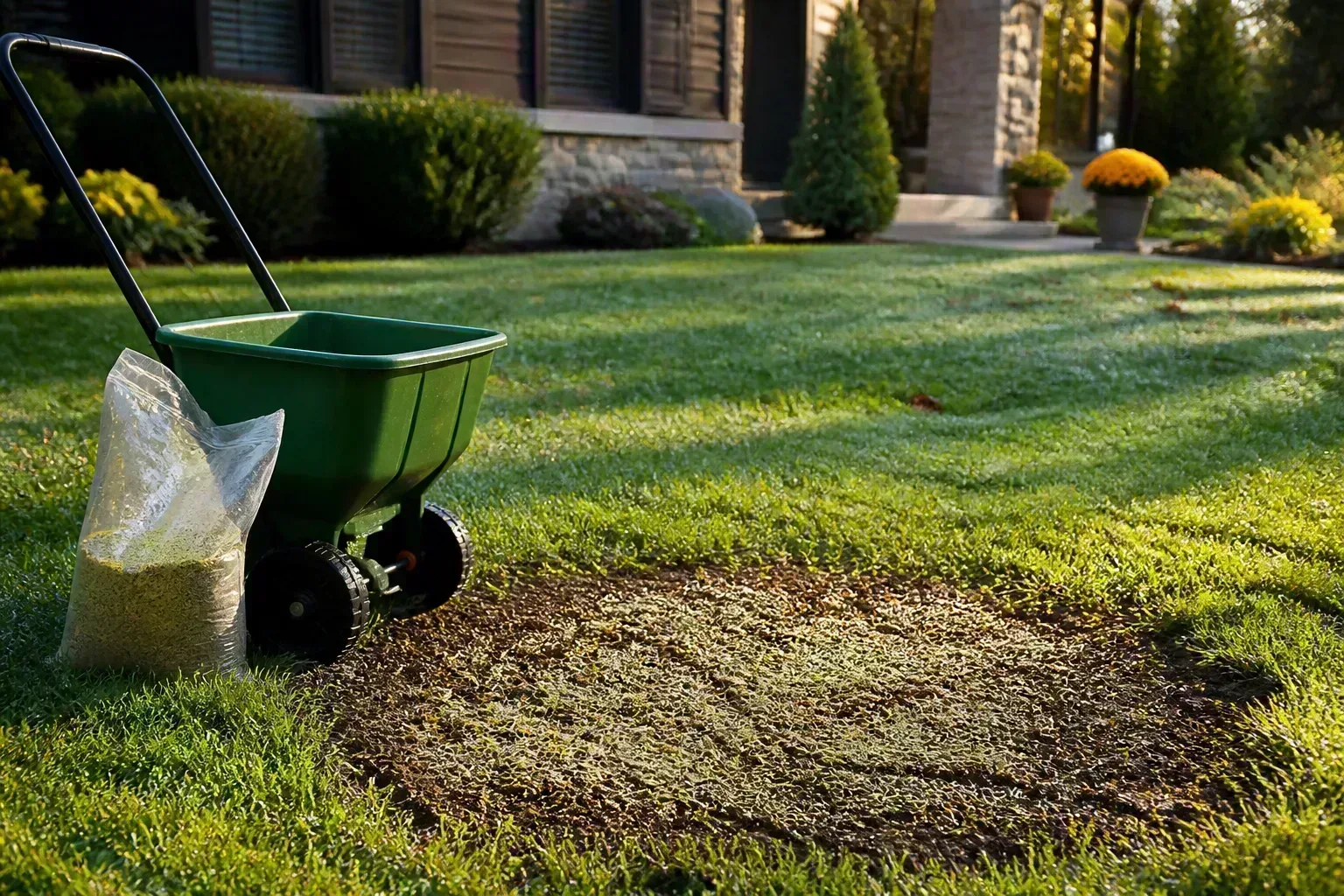
Yes, you can overseed after pre-emergent—but only after the product’s reseeding interval has passed and the fall growing window still has enough time left for the new grass to establish. For many common pre-emergent herbicides, that interval is somewhere around 8 to 12 weeks, but “wait 12 weeks” is a cautious rule of thumb, not a universal law. Some products persist for less time, some for longer, and some labels set a specific interval for particular grasses or application rates.
The safest first move is to find the product container, receipt, or application record. Look for the active ingredient, application date, rate, and wording such as “reseeding,” “newly seeded areas,” or “interval before seeding.” NC State Extension explains that most pre-emergents remain active for roughly 8–12 weeks, while some last longer or shorter; the product label and local Cooperative Extension guidance control the decision. NC State’s pre-emergence explanation is a useful reference for the underlying biology.
If you cannot identify the product, do not guess that a light watering or one mowing has neutralized it. Treat the lawn as potentially protected until at least the conservative interval has elapsed, and ask a local Extension office or licensed lawn professional for help if the application was heavy, repeated, or made with a combination product. You may still reach a workable fall window, but the answer has to account for grass type, soil temperature, moisture, and the first hard frost—not just the number of days since spraying.
Why pre-emergent and grass seed conflict
Pre-emergent herbicides are designed to stop weeds at the vulnerable stage between germination and seedling establishment. They do not usually destroy a dormant seed sitting in dry soil; they create a residual zone that interferes with the emerging root, shoot, or both once the seed begins to grow. That is why the same chemistry that prevents crabgrass from establishing can also prevent tall fescue, ryegrass, or Kentucky bluegrass seed from becoming a lawn.
The conflict is easy to miss because an application can look harmless on the surface. You may spread seed over green existing turf, see no obvious chemical injury, and assume the new seed is fine. The seed may have absorbed water and begun germinating underground, only for its first root to encounter the residual barrier. The result is often a patch that looks as if the seed was old, eaten by birds, or poorly watered.
Timing also matters in the other direction. Applying a crabgrass preventer immediately after overseeding can interrupt the very seedlings you are trying to establish. Do not combine products because they are both marketed for lawns. Read both labels for reseeding restrictions, or choose a non-chemical weed strategy while the new grass is too young for ordinary herbicide use.
What the 12-week rule really means
The product label comes before the calendar
“Twelve weeks” is useful as a conservative planning marker when someone knows only that a conventional pre-emergent was applied. It is not a guarantee that every seed type can be planted on day 85. NC State’s teaching materials describe a typical residual range of 8–12 weeks and explicitly note that products vary. Soil microbes, moisture, temperature, application rate, active ingredient, and repeat applications all affect how long a product remains effective.
Read the full label, not just the front of the bag. The label may distinguish between overseeding an established lawn and seeding bare soil, name specific grass species, require a longer wait at higher rates, or prohibit use on newly seeded areas. A product that is acceptable around established turf is not automatically acceptable over a seedbed. If the label says to wait 16 weeks, that instruction outranks a generic 12-week article—even if it pushes you into an uncomfortable summer or late-fall decision.
Active ingredient and grass type change the risk
Pre-emergent is a category, not one chemical. A crabgrass product containing dithiopyr may behave differently from a product containing pendimethalin, prodiamine, or another active ingredient. Combination products add another layer of uncertainty because a fertilizer or post-emergent ingredient may have its own reseeding instructions.
Kansas State turf researchers found that seeding tall fescue and Kentucky bluegrass into soil treated with dithiopyr greatly inhibited seedling growth. Their practical conclusion is the part to remember: read the label for the seeding interval, because label instructions can require a longer wait than a small research trial suggests. K-State’s seeding-after-herbicide guidance also shows why a product that is safe for an existing lawn is not automatically safe for new seedlings.
Grass type matters because “overseeding” can describe two different jobs. Adding tall fescue to a cool-season lawn aims to establish permanent turf. Spreading perennial ryegrass over bermudagrass for winter color is a temporary warm-season transition project with different timing, rates, and spring-management consequences. Do not use a warm-season ryegrass label or rate as a shortcut for a cool-season renovation.
Check whether the residual window is over
If you know the product and application date
Write down four details before making a seeding decision: the product name, active ingredient, application date, and rate or number of applications. Then find the current label from the manufacturer or state pesticide database and search for “reseeding,” “seeding,” and “newly seeded.” If the lawn service applied it, request the service record rather than relying on a color-coded calendar reminder.
Count the interval from the final application, not the first spray in a sequence. If you applied a second round four weeks after the first, the second round controls the wait. If heavy rain happened soon after application, do not assume the product washed away; many pre-emergents need rainfall or irrigation to become incorporated into the soil and form the protective zone.
A product label is also where you learn whether a “weed and feed” should be treated differently from a straight pre-emergent. If the label is missing, the active ingredient is unknown, or the treatment was applied by someone else, use the conservative path: delay seeding until the longest plausible interval has passed and get local advice before applying more chemistry.
If you lost the date or product name
The return of a few weeds can suggest that a residual is weakening, but it is not a reliable clearance test. Weeds can escape because the application missed an area, the species is not controlled by that active ingredient, the rate was too low, or the seed germinated before the barrier was fully activated. A wet or poorly covered lawn can show weeds even while a properly treated strip remains protected.
Use weed emergence as supporting evidence only after checking the calendar and lawn pattern. If annual weeds such as crabgrass begin appearing throughout treated areas after the conservative interval, the product may be nearing the end of its effective period. If only one strip has weeds, that tells you more about coverage than chemistry. When the stakes are a full bag of seed, the label or a local turf specialist is stronger evidence than a visual guess.
If you must seed before you can resolve the product history, choose a small test area only when the label and timing are reasonably known, and keep the test away from areas with a second application. A test patch can reveal whether the site supports germination, but it cannot prove that a full-lawn application is safe or compliant.
Decide whether your lawn should be seeded this fall
Overseed thin living turf, not a failing stand
Overseeding works best when desirable grass is still spread across the lawn but the canopy has opened after heat, drought, foot traffic, or summer disease. You should be able to see thin areas between living plants, not just large expanses of soil and weeds. The existing turf protects the soil while the new seedlings fill gaps.
If a section is mostly bare, compacted, waterlogged, heavily shaded, or covered by thick thatch, more seed is not the first fix. Correct the cause, loosen or level the surface, and treat it as a patch or renovation. Advanced Turf Solutions makes the same distinction in its guidance: do not apply pre-emergent to bare spots that you plan to seed, and consider skipping a spring application when an overall poor stand needs seed more urgently. Its pre-emergent and seeding guidance is a useful reminder that weed prevention and turf repair sometimes compete for the same calendar.
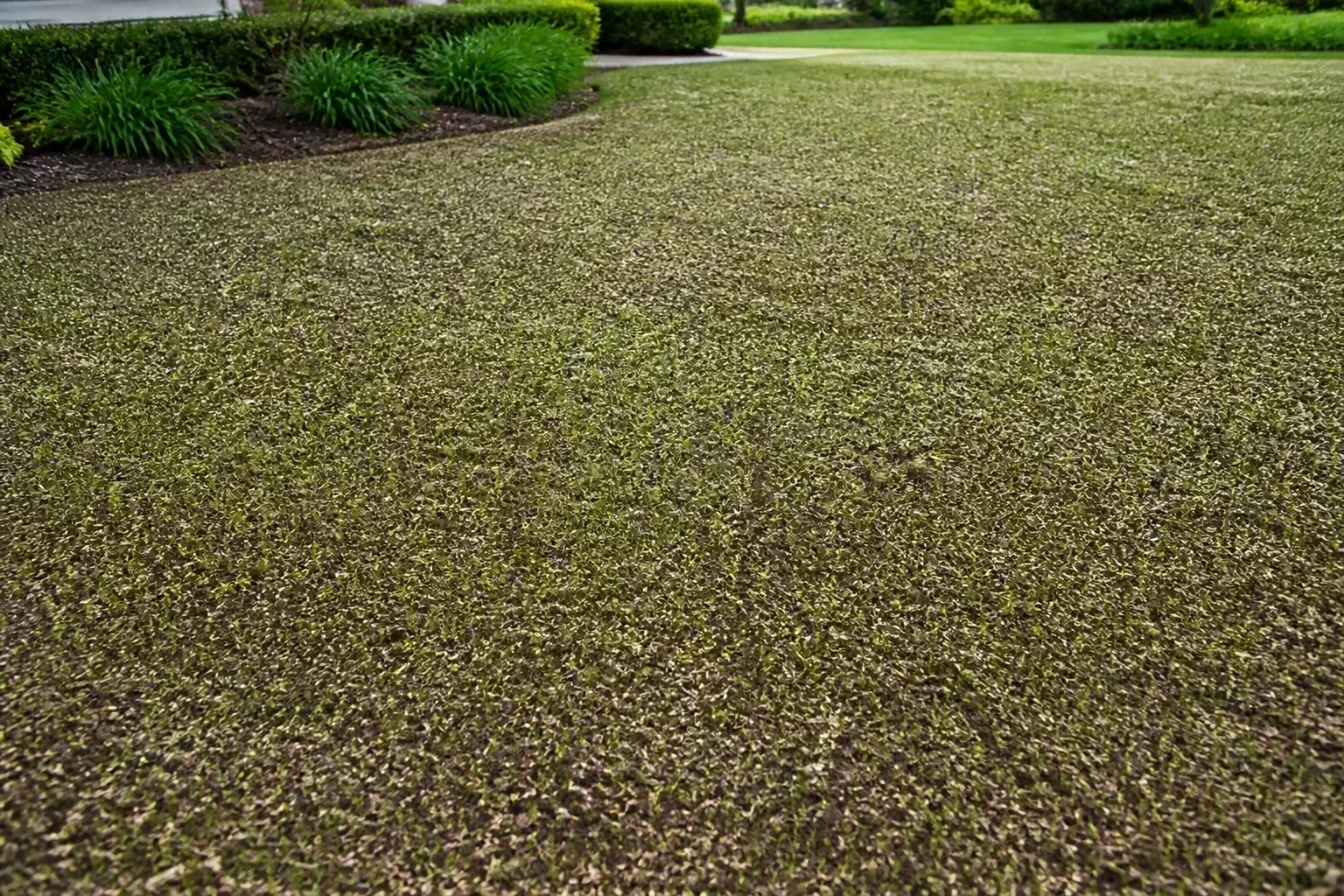
For a small untreated bare spot, mark the boundaries before applying any lawn product. Keep the pre-emergent off that spot, remove perennial weeds and their roots, loosen the top layer, spread compatible seed, and cover it lightly. That exception works only when the seed area truly stayed outside the treated zone; drift, granules scattered into the patch, or runoff from a slope can reintroduce the problem. For a complete patch sequence, see how to repair a bare patch on a lawn.
Treat bare spots and warm-season lawns separately
Warm-season lawns need a different answer. Bermudagrass, zoysiagrass, St. Augustinegrass, and centipedegrass naturally slow as fall cools. Some homeowners overseed bermudagrass with perennial ryegrass for temporary winter color, but that does not repair the permanent warm-season turf. The ryegrass can also complicate spring transition if it remains vigorous while the bermudagrass is waking up.
If your lawn is in a transition climate, decide whether the goal is permanent density, winter color, or a full change of grass type. Use the seed label and local Extension recommendations for the region rather than borrowing a cool-season rate. A temporary ryegrass project can be compatible with some warm-season pre-emergent programs, but only when the product label specifically allows that use and the spring transition is part of the plan.
Time fall overseeding by soil and frost conditions
Once the herbicide interval is complete, the next question is whether the season is still suitable. For cool-season grasses, a practical target is soil around 50–65°F, with air temperatures cool enough to reduce heat stress. LawnStarter’s fall fescue guide places tall fescue overseeding from late August through mid-October in many regions, with soil above 60°F and at least several weeks of growth before hard frost; use those figures as regional guidance, not a universal date. Its fall fescue timing and aftercare guide explains the useful connection between soil temperature, seed choice, and frost runway.
Check soil temperature two to four inches down in more than one part of the yard. A foundation edge can read warmer than an open lawn, and a shaded low spot can remain cooler and wetter. Pair the reading with your usual first hard-frost date. Germination is not establishment: a seedling that appears in ten days still needs time to build roots and tolerate mowing, leaves, and cold.
If the label interval ends in the middle of the ideal window, seed as soon as the soil and moisture conditions are suitable. If the interval ends after the reliable window, do not force a full overseed simply because the bag is already open. You can choose a small priority repair, plan dormant seeding with realistic expectations, or wait for spring and manage weeds by hand or with only label-approved treatments. A late project may sprout during a thaw and then fail when a freeze arrives before roots develop.
Prepare the lawn for seed-to-soil contact
Seed must touch moist soil, not perch on a roof of matted blades. Start by mowing the existing lawn modestly short while it is dry and healthy enough to recover. A common target is about 1.5–2 inches for many cool-season overseeding jobs, but do not scalp a drought-stressed lawn or ignore the mowing height recommended for your grass.
Rake away clippings, leaves, and loose thatch that would hide the soil. Dethatch only when the layer is genuinely blocking contact; aggressive raking can injure crowns and make erosion worse. Aerate when compaction is the limiting factor—hard soil, foot-traffic lanes, poor infiltration, or runoff—not as a ritual for every lawn. Core aeration removes plugs and creates openings, while a verticutter or slit seeder can be more direct when the main goal is catching seed in shallow grooves.
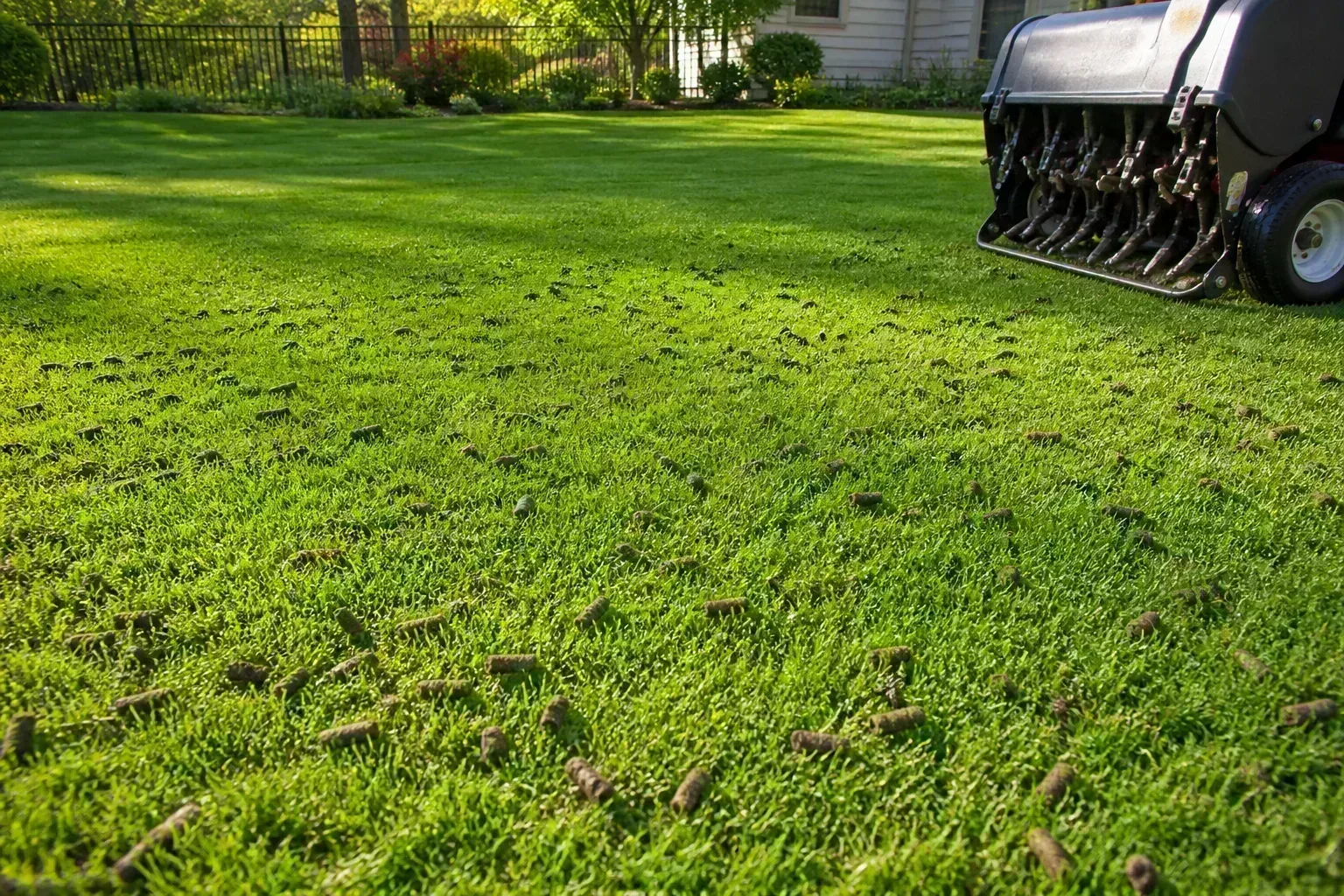
If you aerate, work soil that is moist enough for the machine to pull cores but not wet enough to smear. Seed soon after so rain or irrigation can settle seed into the openings. A thin top-dressing of screened compost or soil can help a small patch, but a deep layer over existing turf can smother it. BBC Gardeners’ World’s weed-and-reseed sequence recommends removing roots, adding a light soil-based compost layer, sowing evenly, watering, and protecting the repair from birds.
Spread compatible seed at a measured rate
Match seed to the lawn’s existing grass, sunlight, soil, traffic, and climate. A tall-fescue blend may suit a sunny or transition-zone lawn better than Kentucky bluegrass, while fine fescue can make more sense for a lightly used shady edge. If the lawn is a blend, choose a compatible blend rather than adding a single species that will look different and compete differently.
Read the seed label’s purity, weed-seed percentage, germination percentage, sell-by date, species mix, and coverage rate. LawnStarter cites 3–4 pounds of turf-type tall fescue seed per 1,000 square feet as a practical overseeding example, about half the rate for establishing a new lawn on bare soil. Do not transplant that number to every species or climate; the label and local turf recommendations take priority.
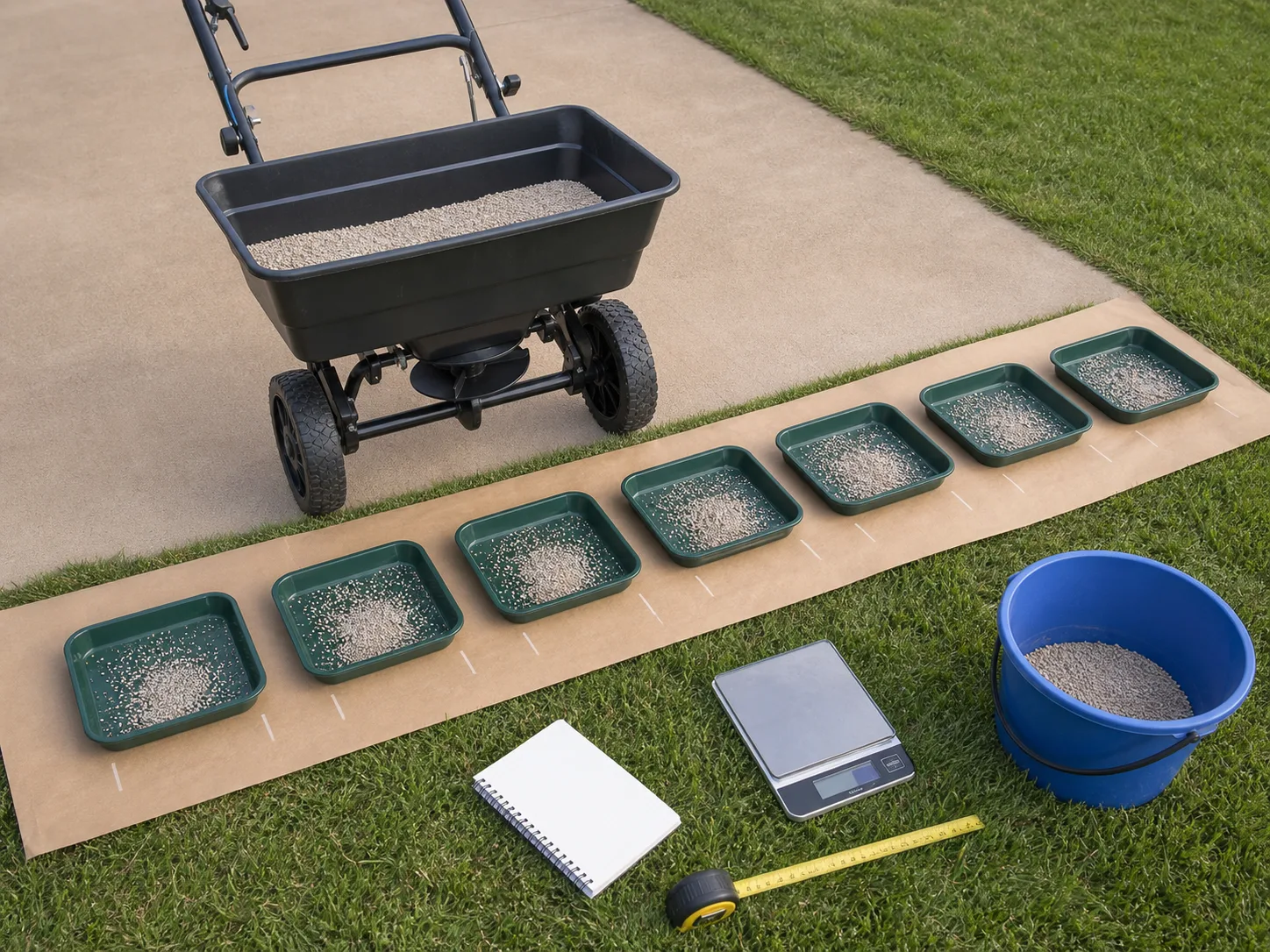
Measure the area before you buy. A 20-by-50-foot lawn is 1,000 square feet; a 10-by-20-foot patch is 200 square feet. Calibrate the spreader over a tarp or driveway with a small quantity, then apply half the planned seed in one direction and the other half perpendicular to it. This two-pass method reduces striping and makes it easier to spot an empty hopper before one side of the lawn is finished.
Do not double the rate because emergence feels slow. Overcrowded seedlings compete for light, water, and nutrients, and a dense, constantly wet stand can increase disease pressure. If the lawn is less than half desirable grass, stop calling it an overseed and budget for a renovation or a series of smaller repairs.
Water from sowing through the first mow
Water the seed zone, not the clock. Before germination, the upper half-inch to inch of soil should stay evenly moist without puddling, crusting, or running downhill. That may mean short, frequent cycles on a sunny slope and fewer cycles after a cool rain. A sprinkler that applies water quickly can wash seed away even when the total amount looks reasonable.
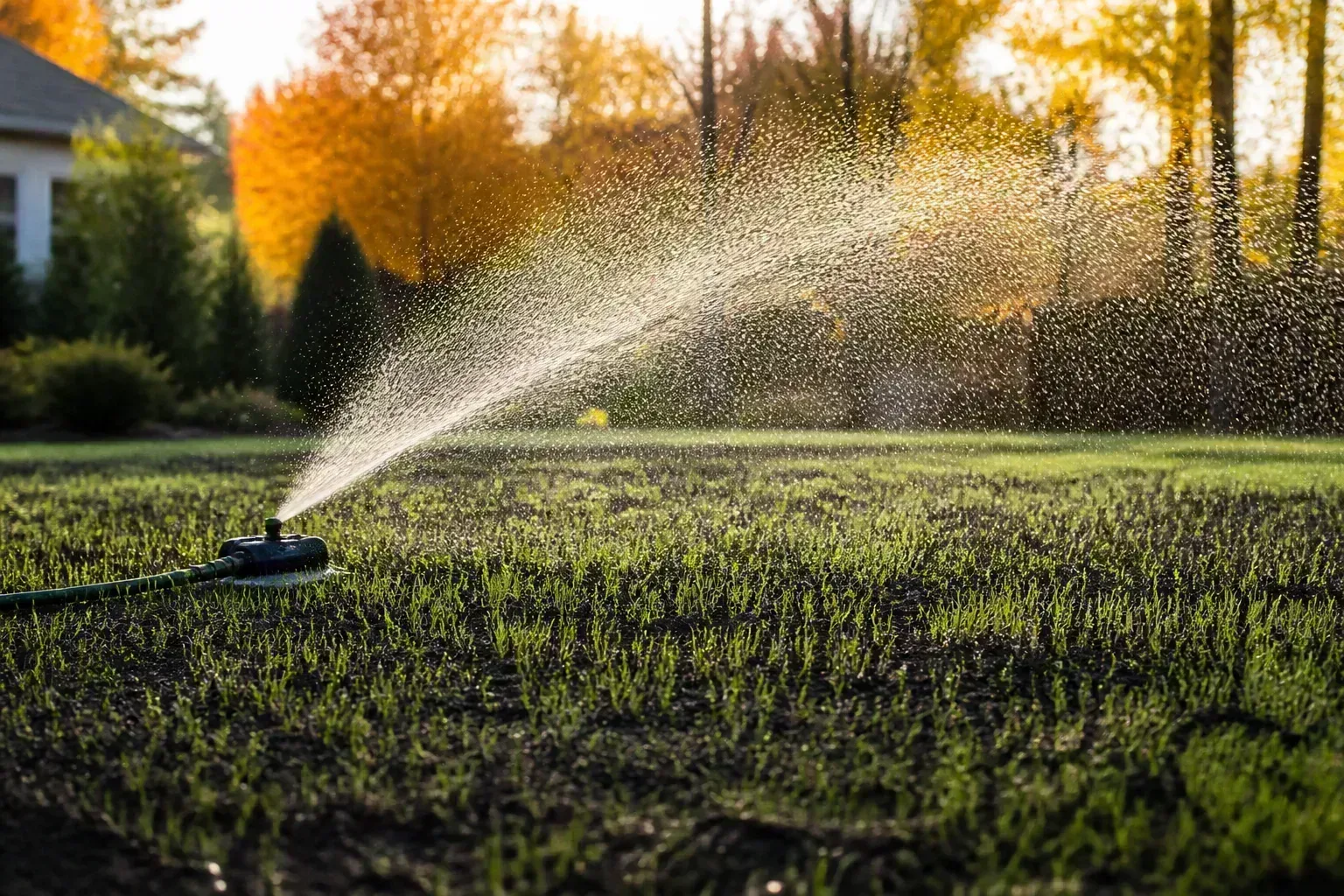
During the first one to three weeks, inspect the soil and seed rather than copying a fixed timer schedule. LawnStarter’s practical schedule uses light watering two or three times daily at first, then once daily during weeks three and four, followed by deeper, less frequent watering as roots develop. That is a starting framework, not a prescription: wind, soil texture, rainfall, slope, shade, and sprinkler output can change the correct frequency. The site’s detailed guide to how often to water new grass seed explains how to adjust by phase.
Once seedlings are visible across the area, taper gradually. Let the surface dry slightly between irrigations while keeping the root zone from becoming dusty and hard. Mixed seed can emerge unevenly—perennial ryegrass may show before fescue, and Kentucky bluegrass can take two to three weeks—so do not reseed a quiet area until the slowest species on the label has had a fair chance.
Keep dogs, children, and repeated hose traffic off the seedbed while roots are shallow. Make the first mow when the new grass is tall enough to cut without removing more than one-third of the blade, using a sharp mower on dry turf. A clean, moderate cut is safer than letting seedlings flop into a wet mat and then removing half their height at once.
Manage fertilizer, weeds, and fall leaves
Starter fertilizer can help if the label permits application at seeding and a soil test shows the nutrients are appropriate. Do not add phosphorus automatically; local rules and soil-test results may limit it, and extra fertilizer cannot compensate for poor contact, dry soil, or the wrong season. A standard pre-emergent plus fertilizer product is not interchangeable with a starter fertilizer for new grass.
Plan weed control around the seedlings. Hand-pull isolated weeds in the first weeks and avoid broad herbicides until the new lawn has reached the label’s mowing or establishment threshold. Kansas State’s herbicide research found that some post-emergent broadleaf products were safe in its tall-fescue trials at short intervals, while other products injured roots or had longer label delays. That variation is exactly why the product label, not a general “safe after X days” rule, must guide you.
Do not apply a spring crabgrass preventer over a young overseed unless the label explicitly allows that timing and grass. If prevention is essential, the best solution is often to plan the prior season’s application so the residual interval ends before fall seeding. For established-lawn weed strategies, this guide to getting rid of lawn weeds covers cultural, manual, and product-based options by risk.
Keep heavy leaves from matting over new seedlings. Mulch a light layer finely with the mower or remove it gently; do not drag a leaf rake across a fragile stand. A thin layer of clean straw or screened compost can slow evaporation on an exposed patch, but too much cover blocks light, holds moisture, and can smother the grass.
Fix poor emergence before buying more seed
Sparse emergence is a clue to investigate, not an automatic reason to spread more seed. First wait for the slowest species listed on the bag. Then inspect the pattern: uniform failure suggests timing, residual activity, old seed, or a watering problem; stripes suggest spreader coverage; isolated bare bands suggest soil contact, runoff, traffic, or a site problem.
Use the failure pattern to choose the next action:
- Seed is still sitting on top: improve contact with a light rake or press it into exposed soil if the seasonal and label windows are still open. Do not bury it deeply.
- Seed germinated, then disappeared: check for a dry-out event, washout, puddling, foot traffic, disease, or an early freeze. Germination proves viability, not successful establishment.
- Ryegrass is visible but fescue or bluegrass is not: wait for the slower species’ expected germination time before changing the blend or rate. A guide to how long grass seed takes to grow can help you distinguish slow from failed.
- The same shady, wet, or compacted strip fails: correct light, drainage, or compaction before reseeding. The site is the limiting factor.
- Weeds dominate the openings: review whether the barrier was still active, whether the seed made contact, and whether the chosen blend matches the site. Do not respond with an unapproved herbicide application over seedlings.
If the lawn pulls up like loose carpet, develops spreading circles, or repeatedly fails despite good seed contact and irrigation, investigate insects or disease. Overseeding replaces missing plants; it does not cure a soil, pest, drainage, or pathogen problem.
The low-waste decision checklist
Before opening the seed bag, run this sequence:
- Identify the grass. Confirm cool-season versus warm-season turf and define whether you want permanent density or temporary winter color.
- Reconstruct the application. Find the product, active ingredient, rate, and final application date. Follow the label’s reseeding interval.
- Choose the job. Overseed a thin living lawn; repair or renovate a mostly bare area; correct shade, drainage, compaction, thatch, pests, or disease first.
- Check the fall runway. Measure soil in several locations, look for a cool-season target around 50–65°F, and leave enough time before the usual first hard frost.
- Expose soil without damaging turf. Mow modestly short, remove heavy leaves, dethatch only when needed, and aerate or verticut according to the actual limitation.
- Measure and calibrate. Buy compatible, fresh seed; follow the label rate; apply in two directions at half-rate per pass.
- Keep the seed zone moist. Use short, frequent watering until emergence, then taper toward deeper watering as roots grow. Avoid puddles and runoff.
- Protect the stand. Limit traffic, keep leaves from matting, delay herbicides until permitted, and mow only when the seedlings can tolerate a clean cut.
- Diagnose before repeating. If emergence is poor, inspect product timing, seed age, spread pattern, contact, water, and site conditions before purchasing more seed.
Conclusion: protect the seed and use the window
You can overseed after pre-emergent, but the correct answer is after the label’s reseeding interval, not automatically 12 weeks after every product. Most common pre-emergents fall in an 8–12-week residual range, while some last longer or shorter. If the product is unknown, use a conservative interval and get local guidance rather than trusting a weed-free appearance as proof of clearance.
Once the interval is complete, let the lawn—not the calendar alone—make the fall decision. The best candidates are thin, living cool-season lawns with compatible seed, exposed soil, reliable moisture, and enough cool weather for roots to develop before hard frost. Prepare for contact, measure the seed, water the surface consistently, protect seedlings from traffic and leaves, and reserve spring pre-emergent for a time when it will not undo the overseed you just paid for.



