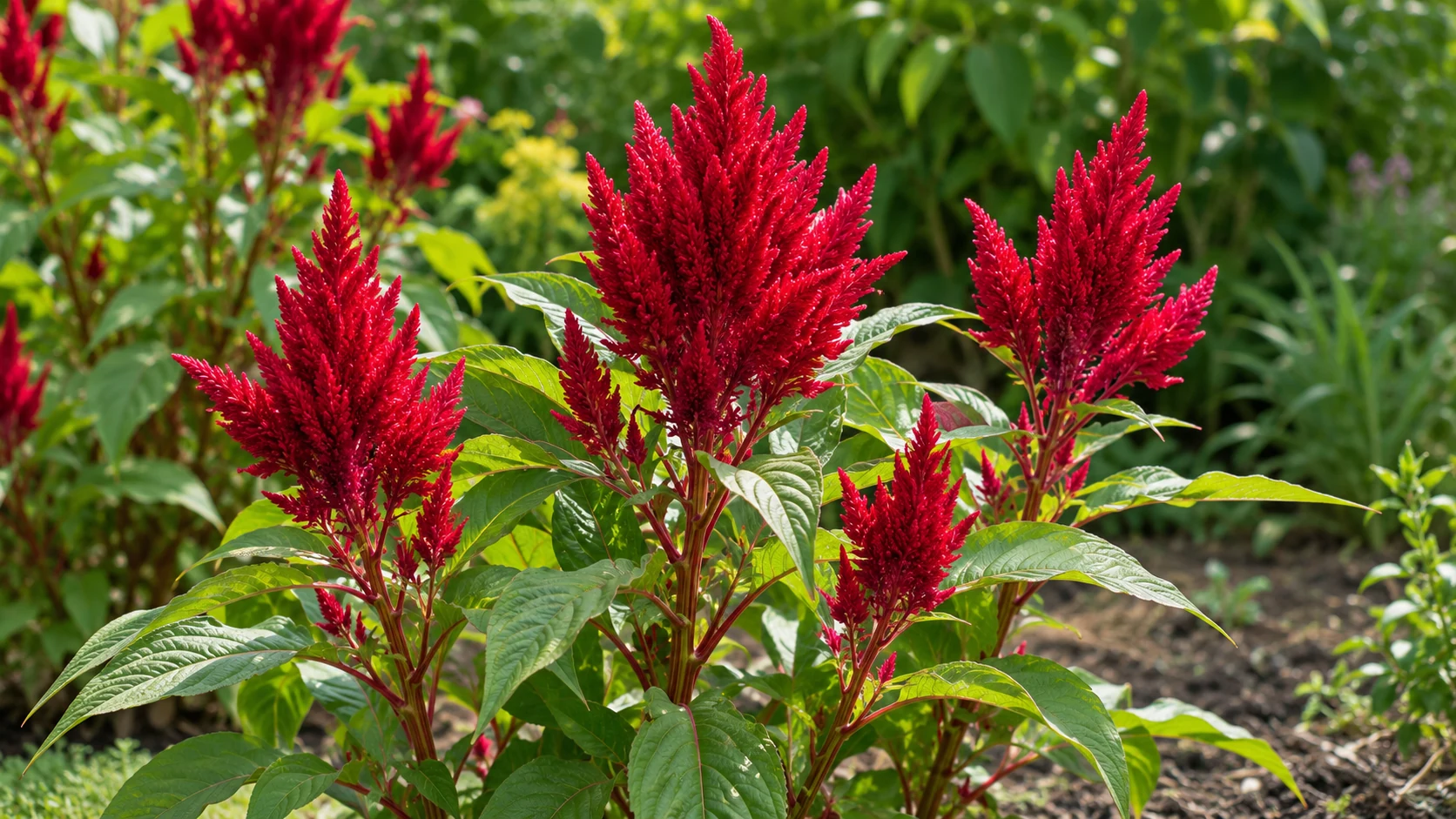
What is the difference between plume, cockscomb, and wheat celosia?
They describe different flower forms. Plume types have feathery upright heads, cockscomb types have broad crested heads, and spicata types carry narrow wheat-like spikes. Check the cultivar label because names and botanical groupings vary.
Is celosia an annual or a perennial?
It is frost-tender and is usually grown as a warm-season annual in places with cold winters. In frost-free tropical climates, some celosias can persist longer, and plants may also reseed where conditions suit them.
How much sun does celosia need?
Choose a spot with full sun for the best flowering. Celosia can tolerate some partial shade, but it may produce fewer blooms and weaker stems.
How often should I water celosia?
Check the soil rather than following a fixed schedule. Water when the top inch begins to dry, and check sunny pots more often in hot weather. Keep the soil from staying waterlogged.
Can celosia grow in a container?
Yes. Use a pot with drainage holes and a free-draining potting mix. Compact cultivars fit small containers, while taller plants need room and may need shelter or support in windy places.
Are celosia leaves and flowers edible?
NC State Extension notes that young Celosia argentea leaves and flowers are edible. Only eat plants grown as food with a known pesticide history; do not assume florist or ornamental nursery plants are suitable to eat.
What light does Celosia need?
Celosia needs bright, indirect light for steady indoor growth.
Written by Sai AnanthLead content writer at LeafyPixels. B.Pharmacy graduate from Andhra University with a background in pharmacognosy, turned indoor gardening writer after a long-time plant hobby became a research-led resource for home growers.View Sai Ananth's profile · Reviewed by LeafyPixels Review Board
This Celosia problems problem guide was researched and written by Sai AnanthLead content writer at LeafyPixels. B.Pharmacy graduate from Andhra University with a background in pharmacognosy, turned indoor gardening writer after a long-time plant hobby became a research-led resource for home growers.View Sai Ananth's profile. Problems symptoms on Celosia, lookalike causes, and step-by-step fixes are cross-checked against extension pest, disease, and care references before publication.
We prioritize sources that hold up under scrutiny:
University cooperative extension bulletins and fact sheets (Penn State, Clemson, UMD, NC State, and similar programs)
Botanical garden and horticultural society publications
Peer-reviewed plant science and veterinary toxicology references where pet safety matters (including ASPCA Animal Poison Control)
Established reference works on indoor plant culture
The LeafyPixels editorial team then reviews the draft for clarity, step-by-step usefulness, and fit with real apartment and home conditions-not ideal greenhouse setups. When guidance changes materially, we update the page and note the revision date.
Epic Gardening — How to Plant, Grow, and Care for Cockscomb Flowers (n.d.) Cockscomb cultivar forms, warm-season timing, self-seeding, cut and dried flowers, seedling care, and practical growing notes. [Online]. Available at: https://www.epicgardening.com/cockscomb/ (Accessed: 1 March 2024).
NC State Extension Plant Toolbox — Celosia argentea (n.d.) Scientific identity and synonyms; Africa native range; flower groups; full-sun, heat, and drainage preferences; reseeding; pest and disease cautions; edible young leaves and flowers; and non-toxic pet tags. [Online]. Available at: https://plants.ces.ncsu.edu/plants/celosia-argentea/ (Accessed: 1 March 2024).
Royal Horticultural Society — Celosia argentea (n.d.) Full-sun position, moist but well-drained fertile soil, frost-sensitive cultivation, sowing in spring, size range, and tropical genus context. [Online]. Available at: https://www.rhs.org.uk/plants/157502/celosia-argentea/details (Accessed: 1 March 2024).
The Spruce — How to Grow and Care for Celosia (n.d.) Practical watering, sunlight, drainage, container, frost, staking, seed-starting, deadheading, pest, and cut-flower guidance. [Online]. Available at: https://www.thespruce.com/celosia-flowers-1315717 (Accessed: 1 March 2024).