Do Mothballs Repel Skunks? What to Use Instead
Find out whether mothballs repel skunks, what the pesticide label allows, and how to secure trash, close den sites, and use humane deterrents.

If you are looking for a quick way to keep skunks out of your yard, mothballs can sound tempting. They are cheap, smell strong, and already have a reputation for driving away pests. But mothballs are not a dependable skunk repellent, and scattering them outdoors can create a pesticide-exposure problem for people, pets, and wildlife.
The better fix is less mysterious: remove the food and shelter that make your property worth visiting, then block access once you know the animal has left. Motion-activated lights or sprinklers can make a route less comfortable while you work, but physical exclusion is what stops a skunk from returning to the same porch, shed, or crawl space.
Short answer: no—and do not scatter them outdoors
The National Pesticide Information Center says mothballs have little or no effect as animal repellents and should not be used unless the product label describes that use pattern. Typical mothball labels direct people to place the product in a tightly closed container where vapors can build up against clothes moths—not to toss it under a deck, around a garden, or beside a trash can. (National Pesticide Information Center: mothballs and animal repellents)
That distinction matters because the odor is the product working as a vapor, not a harmless scent sitting on the ground. If you can smell mothballs outdoors, people and animals in the area are being exposed to pesticide vapor, while the skunk is still free to reach the food, shade, or den site that brought it there.
Do not use mothballs as a “test” around a skunk hole, porch, shed, or pet area. If you already placed them outside, keep children and animals away, follow the product label for handling, and contact your local household hazardous-waste program if you need disposal advice. If a child or pet may have swallowed one, contact Poison Control or a veterinarian immediately rather than waiting for symptoms.
Why mothballs fail against skunks
Odor does not remove food or shelter
Skunks are opportunistic omnivores. They may be attracted by grubs in turf, fallen fruit, pet food, birdseed, poultry feed, unsecured garbage, or an open compost pile; they may then stay because a deck, porch, shed, brush pile, or crawl space offers shelter. University extension guidance consistently treats those food and denning opportunities as the problem to change—not as something a stronger smell can permanently cancel.
An odor can alter an animal’s route for a short time, especially if it appears in a place the animal does not need. It cannot make a full trash can disappear, remove a nest site, or prevent a determined skunk from following a familiar food trail. That is why a yard may smell strongly of a home remedy while the holes, overturned bin, or den entrance remain active.
The useful question is not “What smell do skunks hate?” It is “What reward keeps bringing this skunk back, and what barrier will still be there after the smell fades?” That change in question leads to actions that continue working after rain, heat, and habituation reduce the effect of a scent.
Mothballs are pesticides, not open-air repellents
Most modern mothballs contain nearly 100 percent of an active ingredient such as naphthalene or paradichlorobenzene. They slowly change from a solid into a gas. In an airtight storage container, that vapor reaches the concentration intended for clothes moths and their eggs; in an open yard, it escapes into the air and soil without giving you a safe, controlled skunk barrier. (NPIC: proper uses and alternatives)
This also explains why “the skunk seems to avoid the area” is not proof that mothballs solved the problem. The animal may have moved temporarily because people disturbed it, the food was gone for another reason, or its nightly route changed. You still have an exposed pesticide outdoors, and you have not addressed the den or attractant that can bring the next skunk back.
What mothballs are and why outdoor use is risky
Vapor exposure matters
The National Pesticide Information Center notes that when you smell mothballs, you are inhaling the pesticide. Outdoor use can expose people, dogs, cats, birds, and wild animals to vapors that were meant to be contained. Reported effects can include headache, nausea, vomiting, diarrhea, nose and eye irritation, and coughing; swallowing a mothball can be especially dangerous for a small child or pet. (NPIC: health effects of mothballs)
Skunks are not the only wildlife that can encounter pellets near a porch or fence line. A curious dog can pick one up, a child can mistake one for candy, and a bird or other animal can be exposed in a place where you intended to affect only a nocturnal visitor. Using more mothballs does not make the method more humane or more reliable; it simply increases the amount of pesticide available outdoors.
Never mix mothballs with ammonia, cleaners, essential oils, or homemade “repellent” formulas. Combining chemicals can create new exposure hazards, and adding a second strong smell does not turn an unlabeled use into a legal or effective one.
The pesticide label is the legal boundary
In the United States, pesticide products are regulated and their labels specify where and how they can be used. NPIC explains that using mothballs in a way the label does not describe can be illegal and can harm people, pets, or the environment. The fact that a product is sold in a store—or that an old tip recommends it—does not expand the approved use.
This is also why advice about mothballs can look contradictory online. Older products and older publications may have described repellent uses that are no longer on current labels, while some products sold through informal channels may not have been evaluated or labeled properly. Check the label on the product in your hand and follow local rules; do not rely on a remembered gardening trick.
If the product was placed outdoors and you are unsure what to do next, do not sweep it into a drain, compost pile, or garden bed. Keep people and animals away from the area, read the label’s cleanup instructions, and ask local hazardous-waste officials for disposal guidance. If there has been a possible ingestion or anyone develops symptoms after exposure, use Poison Control, a veterinarian, or medical care as appropriate.
First identify the skunk problem
The most efficient control plan depends on whether you have a passing visitor, a food-driven repeat visitor, or an animal denning under a structure. Watch from indoors or from a safe distance after dusk and look for patterns before moving anything.
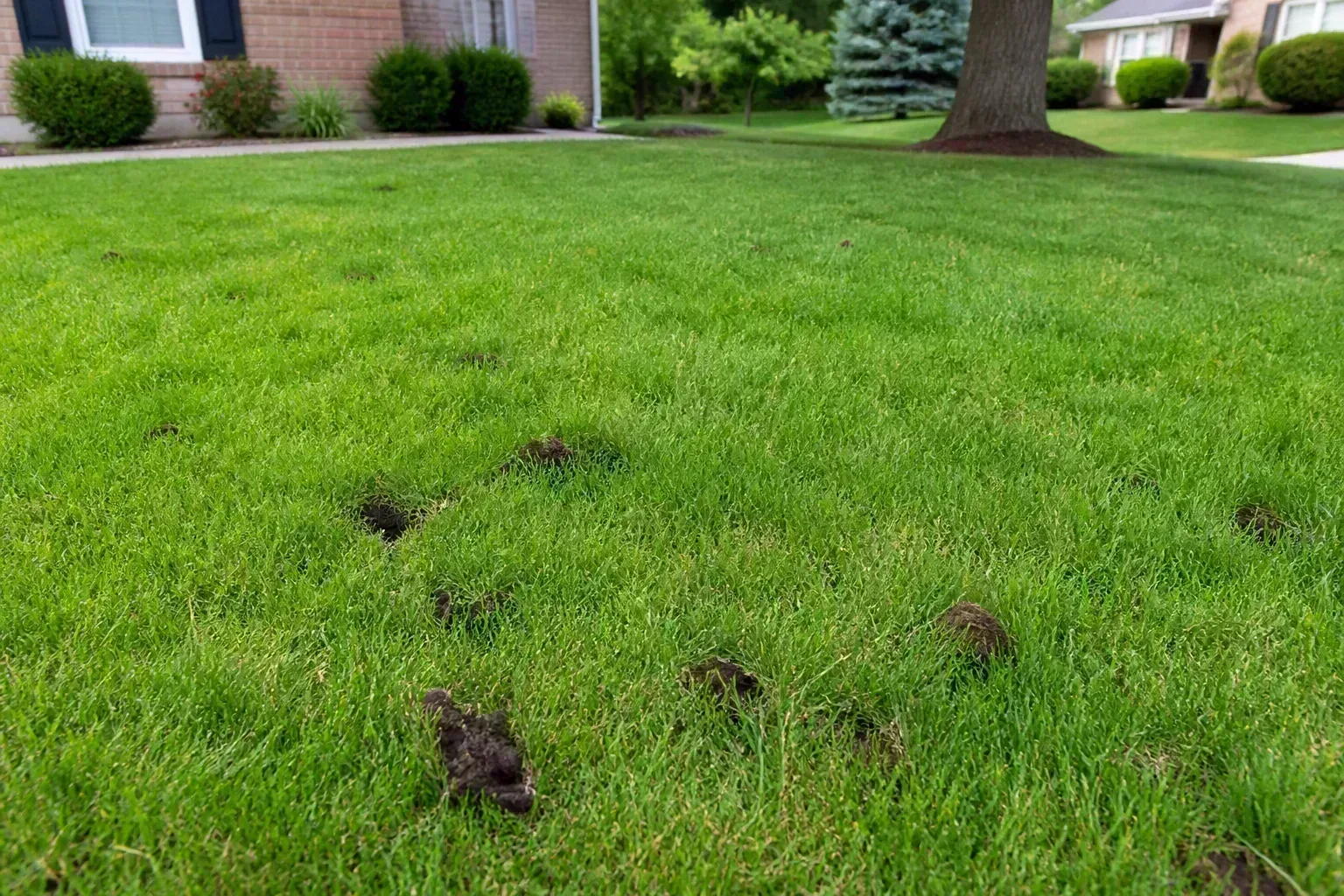
Give yourself two or three nights of observation if there is no immediate safety risk. Note the time the animal appears, the route it takes, where it stops to dig, and whether the same opening is used each night. That small log prevents a common mistake: screening the first hole you notice while leaving a better food source or a second den entrance untouched.
Think of the property as three zones. The reward zone includes trash, feed, compost, fruit, and grubs; the shelter zone includes decks, sheds, brush piles, and crawl spaces; and the travel zone includes the fence line, side yard, and dark route between them. Remove the reward first, inspect the shelter second, and use lights or sprinklers in the travel zone while you complete the work.
Signs you are dealing with skunks
Skunks are mostly active at night and can leave several recognizable clues:
- Small, cone-shaped holes or patches of lifted soil in a lawn or garden bed, often made while searching for insects and grubs.
- Rummaged trash, scattered pet food, missing birdseed, or compost disturbed overnight.
- A low opening beneath a deck, porch, shed, steps, wood pile, or crawl space.
- Tracks with five toes and visible claw marks in soft soil or flour placed temporarily near, but not inside, a suspected entrance.
- A lingering sulfurous odor or spray on a pet, plant support, fence, or walkway.
The hole pattern is a clue, not a final diagnosis. Raccoons, dogs, armadillos, and other animals can also disturb soil or trash. Confirming the visitor helps you choose a mesh size, food-control plan, and professional response that fit the actual animal.
Utah State University Extension describes skunks as mostly nocturnal animals that can den under structures and leave small cone-shaped holes while foraging. (Utah State University Extension: skunks) Those clues are useful for deciding where to watch, but they are not a reason to disturb a den at close range.
When to keep your distance
Do not approach a skunk, shine a flashlight directly at it, corner it, or send a dog toward it. A skunk may stamp its front feet, arch its back, shuffle backward, or raise its tail before spraying; retreat slowly and quietly when you see those warning signals. Bright daytime activity, unusual aggression, staggering, circling, or a skunk that seems disoriented deserves extra caution and a call to local animal control or wildlife professionals.
If a person or pet is bitten or scratched, wash the wound thoroughly with soap and water and contact a healthcare provider, veterinarian, and local public-health or animal-control authority promptly. Do not try to catch or handle the animal to “prove” what happened. Rabies rules and testing procedures vary by location, so the right response is local professional guidance.
Colorado State University Extension also advises extra caution around skunks that are active in daylight or behaving aggressively, because abnormal behavior can signal illness. (Colorado State University Extension: coping with skunks) A daytime sighting alone does not diagnose rabies, but it is a good reason to create distance and avoid sending a pet outside.
The durable skunk-control sequence
Use this order: remove the reward, identify the shelter, confirm the animal has exited, exclude it, and then use deterrents as backup. Reversing the order is how people accidentally trap a skunk under a porch or spend weeks replacing a scent that never addressed the cause.
Remove food rewards
Start at dusk, because that is when a skunk is most likely to begin foraging. Bring pet food and water bowls indoors, close chicken or livestock feed in sturdy containers, secure garbage with a tight-fitting or latching lid, clean up spilled seed, and keep ripe fruit from sitting on the ground. If you feed birds, pause the feeder for a short period or move it where dropped seed cannot accumulate near the house.
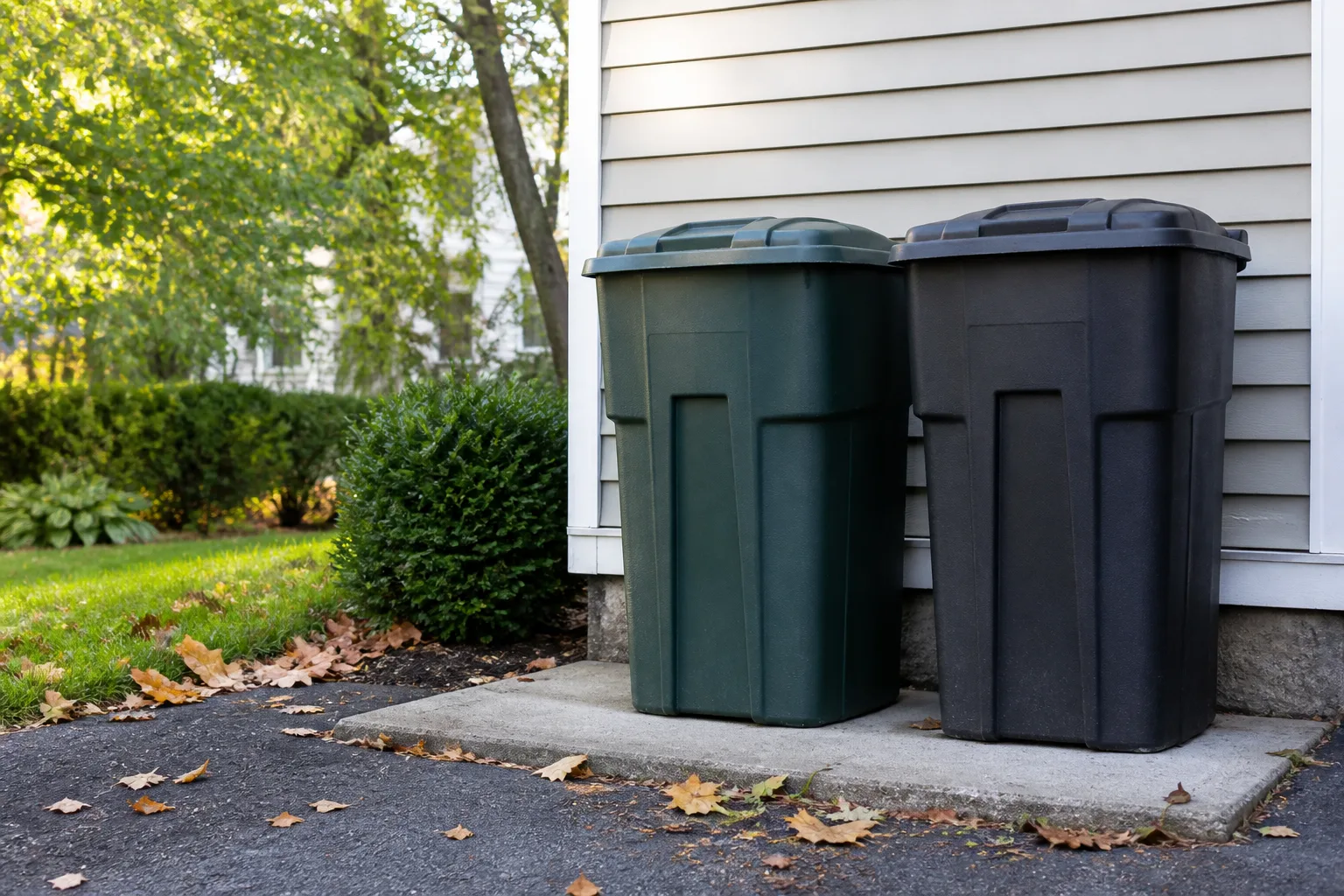
Compost can be an attractant when it contains kitchen scraps, meat, oily leftovers, or accessible fruit. Use a wildlife-resistant bin, keep the lid secured, and clean up spills around it. A low fence can help protect a vegetable bed or poultry area, but it must be installed as a digging barrier rather than treated as a decorative border that a skunk can push under.
Skunks often dig for grubs, but that does not mean you should automatically drench the lawn with insecticide. First confirm that grubs are actually present and determine whether treatment is justified for your turf and region. If you use any pesticide, follow its label and local extension guidance; reducing an insect food source can help, but unnecessary pesticide use can expose pets and other wildlife and may damage beneficial organisms.
This food-first approach is also more durable than a repellent-only routine. Gardening Know How’s practical skunk guidance groups the problem around food and shelter, including trash, pet food, grubs, compost, fallen produce, bird feeders, and ponds. (Gardening Know How: skunks in gardens) You do not need to remove every living thing from a garden; you need to make the easy, concentrated meals and sheltered resting places less available.
Remove or screen hiding places
After the food audit, inspect the quiet, sheltered edges of the property. Remove or elevate brush, lumber, and junk piles; trim dense vegetation where it creates a hidden corridor; keep shed doors closed; and check the space beneath decks, porches, steps, and low additions. A clean yard does not guarantee that a skunk will never visit, but it reduces the number of easy places where it can settle.
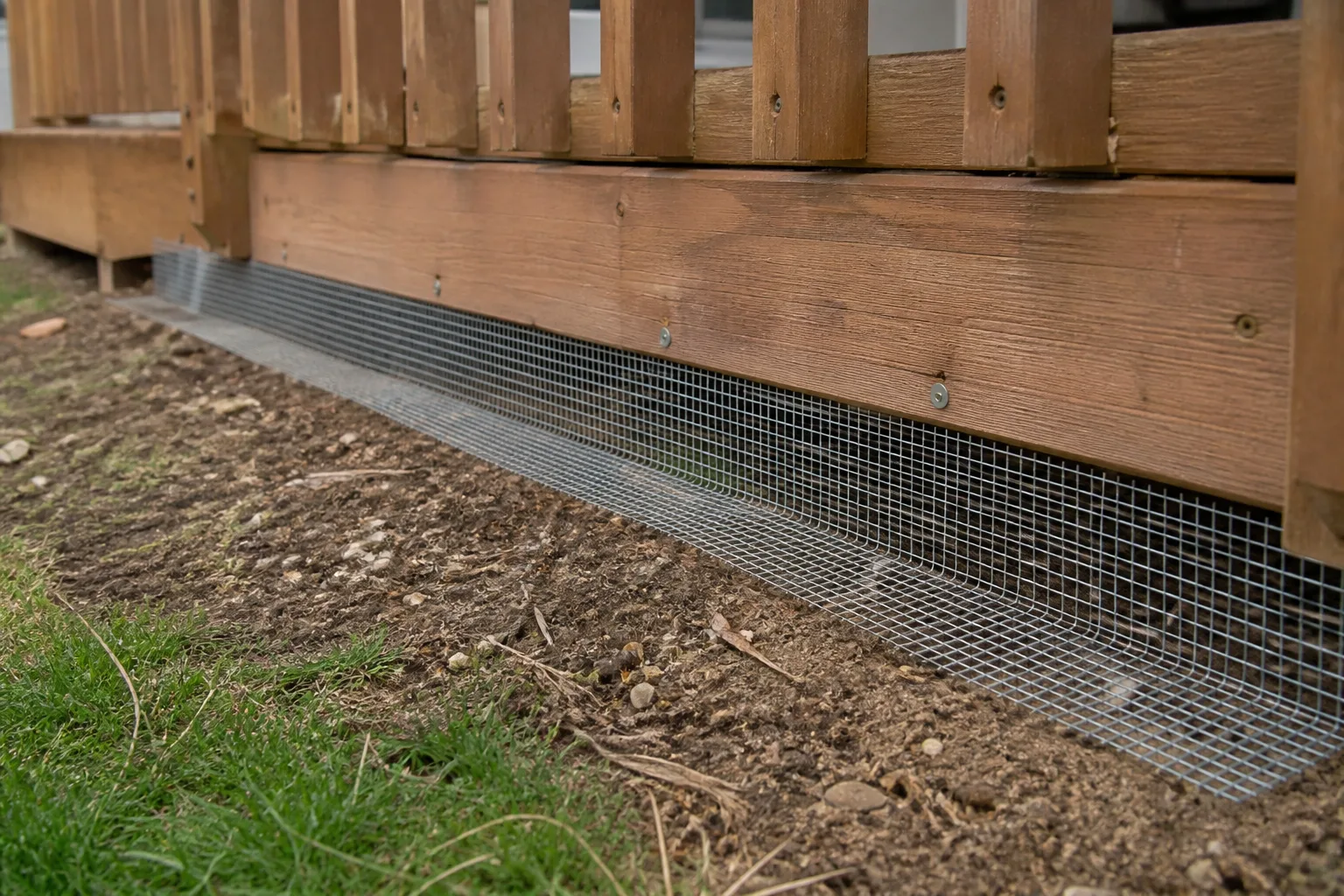
For a building or deck, use sturdy hardware cloth or another code-appropriate barrier rather than chicken wire that can flex or leave a digging gap. Extension recommendations commonly call for burying the lower edge about 12 inches where digging is likely and bending part of the buried skirt outward to make it harder to push beneath. Adapt the construction to the structure and local building or wildlife rules, and do not block ventilation openings that the building needs.
Before installing a permanent barrier, check whether the space is occupied. A barrier that seals in a mother can leave kits trapped inside, while a barrier that seals in an adult can produce a desperate attempt to escape—and a spray problem in a confined area.
Montana State University Extension recommends confirming that a building opening is no longer being used before closing it and taking extra care in spring, when young may be unable to leave on their own. (Montana State University Extension: non-chemical skunk control) That seasonal check is more important than finishing the repair on a particular day.
Use one-way exclusion carefully
If a skunk is already under a structure, do not fill the hole immediately. Place a loose plug of paper or another temporary indicator at the opening, or use a light layer of flour outside the entrance to see whether tracks show the animal leaving; check at the times skunks are normally active. The goal is to learn the direction of movement without reaching into the den or putting your hands near the opening.
Spring requires extra caution because young may be present and unable to leave with the adult. If you suspect kits, hear movement, see more than one animal, or cannot confidently tell whether the den is empty, stop and call a wildlife control professional. A professional can choose a one-way device or other exclusion method that allows the animal to leave while reducing the chance of separating a mother from young.
Once you have reliable evidence that the animal is out and no young are trapped inside, install the barrier securely and extend it below grade so the skunk cannot simply dig around the edge. Keep checking the perimeter for fresh soil, new tracks, or a second opening. Exclusion fails when one obvious hole is screened but a hidden gap remains along the other side of the deck.
Add nonchemical deterrents as backup
Motion-activated lights and sprinklers can help make a favorite travel lane less appealing, particularly because skunks are nocturnal. Aim a light at the approach route rather than directly into a den, and place a motion sprinkler where it will not soak electrical fixtures, erode a slope, or surprise pets. A device is most useful while you remove attractants or complete exclusion; it is not a substitute for either one.

Better Homes & Gardens makes the same practical distinction: lights and sprinklers may help, but they work best as part of a wider plan that removes food and secures buildings. (Better Homes & Gardens: ways to get rid of skunks) Use a device to buy time and change a route, not to justify leaving an open compost bin or an accessible den in place.
Expect diminishing returns. Wildlife can learn that a light or sprinkler is harmless, and a device that activates constantly can annoy neighbors or waste water. Use it as one layer in a changing yard routine, then judge success by whether visits, fresh tracks, and new digging decline over several nights.
Commercial wildlife repellents are not interchangeable. If you choose one, verify that it is labeled for the animal and use site, follow directions, keep it away from children and pets, and reapply only as directed. “Natural” does not mean risk-free, and a product that merely smells strong may be no more durable than mothballs.
There is also a reasonable middle ground when a skunk is only passing through. Skunks eat insects and other small animals, so a single visitor that is not digging, denning, or threatening people may move on once the easy food disappears. The goal is to prevent a recurring conflict, not to make every wild animal on the property vanish.
What not to use as a skunk fix
Skip mothballs, loose ammonia-soaked rags, gasoline, bleach, smoke, and improvised chemical combinations. These methods can poison or injure wildlife, contaminate soil or water, harm pets, or cause a skunk to panic and spray without solving the den or food problem. The fact that an animal moves away from a harsh smell for one night is not evidence that the method is safe or effective.
Do not pour irritants into a den or try to smoke an animal out. Do not seal an opening while you still see fresh tracks going in, hear movement, or suspect kits. Do not grab a live trap, relocate an animal across county lines, or release it in a park without checking local law and understanding that relocation can be stressful, restricted, or harmful to the animal.
It is also a mistake to treat every lawn hole with a pesticide. Diagnose the cause first, preserve beneficial insects where possible, and use the least disruptive step that addresses the actual problem. The durable solution is usually a combination of sanitation and exclusion, not an escalating battle of odors.
When to call wildlife control
Get professional help when a skunk is inside a building, denning beneath a porch or foundation, returning despite food removal and barriers, or appearing injured, sick, or unusually bold. Professional help is also the right choice when a dog has been sprayed repeatedly, a child or pet had direct contact, you cannot tell whether kits are present, or local rules make trapping and relocation unclear.
Ask prospective operators how they handle young, whether they use one-way exclusion when appropriate, what permits or local rules apply, and what repair work will prevent re-entry. A good visit should address the opening and the attractant—not simply remove one animal and leave the same accessible den behind.
Until help arrives, keep pets indoors after dark, close doors and low windows, secure trash and feed, and keep people away from the den. If a skunk sprays a pet, do not use mothballs or harsh household cleaners on the animal; call a veterinarian or follow a veterinary-approved odor-removal method, keeping any solution away from eyes and mouth.
Conclusion
Do mothballs repel skunks? No—not in a reliable, safe, or label-appropriate way. Their strong odor is a sign that pesticide vapor is escaping, not proof that you have created a humane wildlife barrier.
Take mothballs out of the skunk plan. Start by securing food and garbage, then inspect likely den sites and wait until you can confirm the animal has left before installing buried mesh or a carefully managed one-way exclusion. Add motion lighting or a sprinkler if it helps, but call a local wildlife professional when a den, kits, a building entry, unusual behavior, or a bite makes the situation more than a simple yard visit.



