How to Grow and Care for Bee Balm
Learn how to grow bee balm (Monarda): sun, soil, watering, mildew-resistant cultivars, division, seed starting, and why your plant stopped blooming.
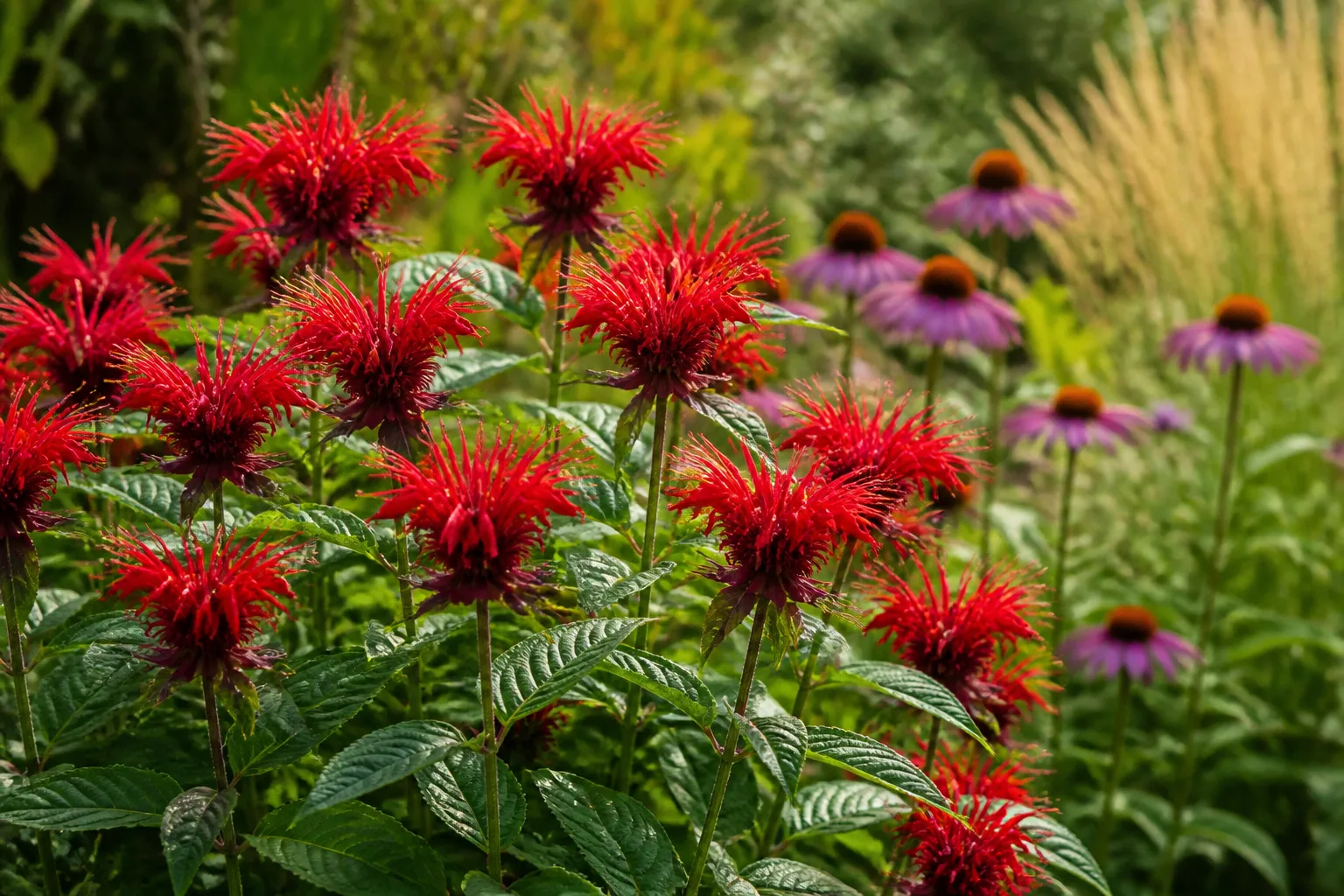
Bee balm (Monarda spp.) is the North American perennial that turns a midsummer border into a hummingbird buffet — tubular flowers in red, pink, purple, and white above fragrant, mint-family foliage. It is easy to start and genuinely useful for pollinators, yet many gardeners abandon it after one humid summer when leaves coat over with powdery mildew. The plant is not difficult; it is specific. Give bee balm bright light, steady moisture in well-drained soil, breathing room, and a cultivar matched to your climate, and it will reward you for years. Skip those details and you get leggy stems, fungal foliage, and a clump that spreads faster than you planned.
This guide covers the decisions that actually matter: which Monarda species or cultivar fits your site, how to plant and water without encouraging mildew, when to divide aggressive clumps, and what to do when a formerly floriferous patch goes quiet.
Why Bee Balm Belongs in a Pollinator Garden
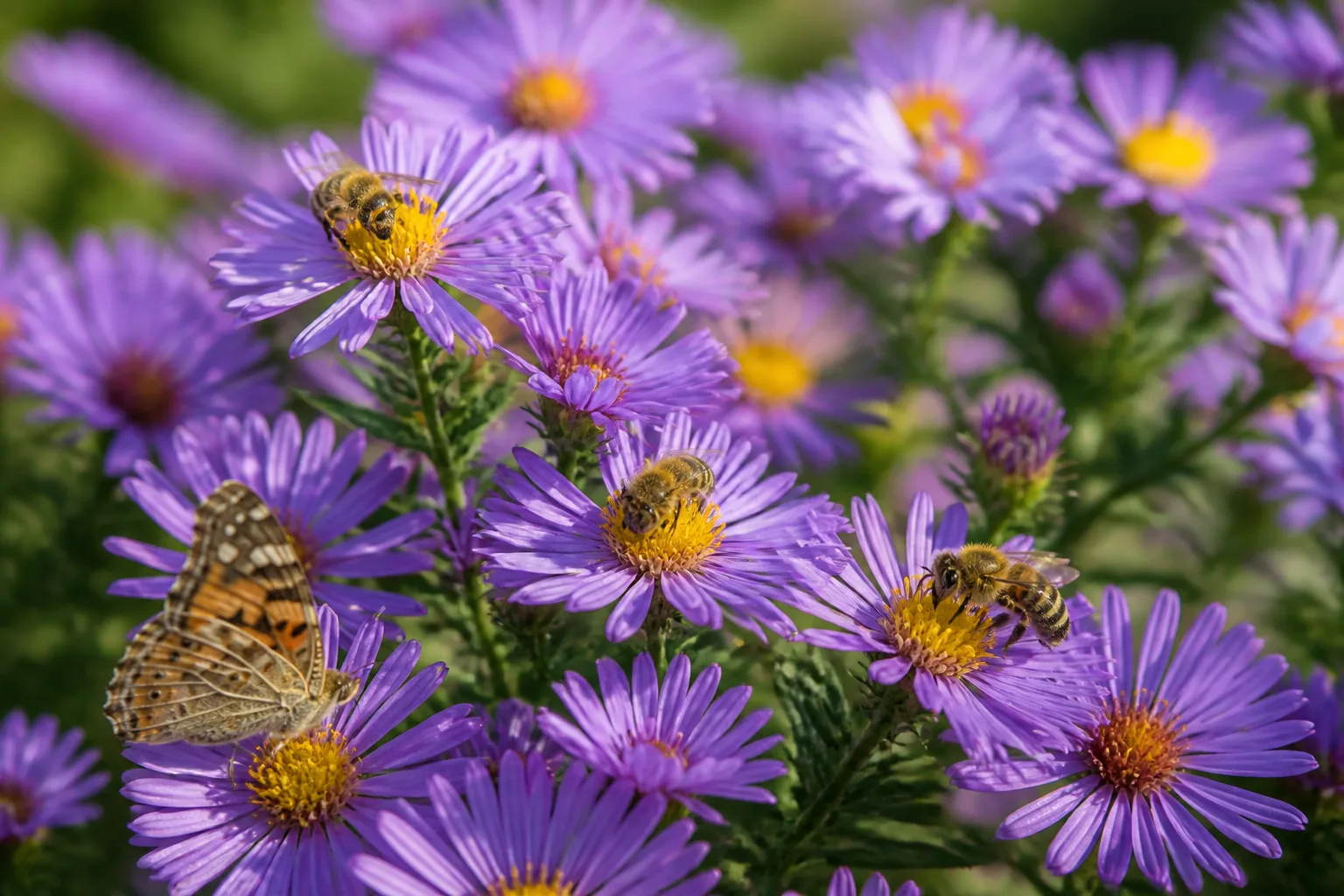
Bee balm sits in the mint family (Lamiaceae), and you can tell the moment you crush a leaf — sharp, herbal, slightly citrusy. That fragrance is part of its wildlife value. Bees, butterflies, and especially hummingbirds work the nectar-rich tubular blooms from mid- to late summer. NC State Extension notes that scarlet bee balm (M. didyma) attracts hummingbirds, butterflies, and specialized native bees, while the square stems and opposite leaves are classic mint-family markers.
Unlike one-and-done annuals, bee balm returns from hardy crowns and spreads by underground stolons — a gift when you want a pollinator patch to fill in, a headache when you plant it too close to slower perennials. The spread is manageable with division every two or three years, and the ecological payoff is real: dead hollow stems left through winter can shelter stem-nesting native bees, a detail most generic care pages skip entirely.
Bee Balm at a Glance
| Feature | Details |
|---|---|
| Common names | Bee balm, bergamot, Oswego tea, horsemint, wild bergamot |
| Botanical genus | Monarda (multiple species and hybrids) |
| Family | Lamiaceae (mint family) |
| Type | Herbaceous perennial |
| Mature size | 2–4 ft tall × 2–4 ft wide (dwarf cultivars 10–15 in.) |
| Sun | Full sun best; tolerates partial shade with fewer flowers |
| Soil | Moist, rich, well-drained loam |
| Soil pH | Slightly acidic to neutral |
| Bloom time | Summer through early fall (species-dependent) |
| Flower colors | Red, pink, purple, lavender, white |
| Hardiness | USDA zones 3–9 |
| Native range | North America |
| Spread | Moderate to aggressive via rhizomes/stolons |
| Deer/rabbit | Generally resistant (NC State) |
| Main disease | Powdery mildew; rust possible |
One honest caveat up front: bee balm is not a set-it-and-forget-it perennial forever. Clumps peak, exhaust the soil locally, and thin in the center. Plan on dividing or replacing tired sections every few years rather than expecting a single planting to look perfect for a decade without intervention.
Species and Cultivars: Choosing the Right Monarda
Garden centers rarely label plants with enough precision. “Bee balm” might be scarlet bee balm, wild bergamot, or a hybrid selected for mildew resistance. The species you choose changes flower color, moisture needs, and how hard hummingbirds work your garden.
Monarda didyma (Scarlet Bee Balm)
Monarda didyma is the eastern North American species behind most red and pink garden bee balms. It prefers moist, organically rich soil and full sun, though it tolerates light shade. Stems are square, leaves are coarse and fragrant, and flower heads are dense clusters of two-lipped tubular blooms. NC State describes mature height at 2–4 feet with rapid spread by underground stolons.
If hummingbirds are the goal, this is the species to prioritize — bright red cultivars like ‘Jacob Cline’ are magnets. The trade-off is moisture demand and mildew susceptibility in hot, dry, or crowded sites.
Monarda fistulosa (Wild Bergamot)
Monarda fistulosa — wild bergamot — carries lavender to pinkish flowers and tolerates drier, leaner conditions better than M. didyma. It is a strong pollinator plant but a weaker hummingbird draw than scarlet types; hummingbirds already in your yard will visit, but bergamot alone rarely pulls them in from a distance.
Choose wild bergamot for meadow plantings, drier slopes, and native pollinator mixes where you want a sturdier, less thirsty Monarda. Cultivars like ‘Claire Grace’ improve flower show and mildew resistance compared to straight species seed.
Modern Mildew-Resistant Cultivars Worth Planting
Powdery mildew is the reason bee balm gets a bad reputation. Breeding has helped, not solved, the problem. NC State’s Monarda profile highlights several cultivar groups:
- Balmy™ series — compact, mildew-resistant, mixed flower colors; good for front-of-border and containers.
- ‘Jacob Cline’ — large red flowers; fair resistance to downy mildew.
- ‘Raspberry Wine’ and ‘Purple Rooster’ — strong mildew resistance; flower show varies by cultivar.
- ‘Petite Delight’ — dwarf (roughly 1–2 ft), mounded, pink-lavender blooms; excellent for pots.
No cultivar is mildew-proof in a wet, shaded, overcrowded border. Resistance means the plant fights longer and recovers faster — not that you can ignore airflow and watering discipline.
Where to Plant Bee Balm
Site selection is the highest-leverage decision you make. Bee balm forgives many sins once established, but it will not forgive dense shade, waterlogged clay, or planting six inches from a fence with no air movement.
Sun and shade trade-offs: Bee balm grows best with at least six hours of direct sun daily. In partial shade — especially afternoon shade in hot southern gardens — plants survive but stretch, flower less, and mildew pressure rises because foliage stays damp longer. A north-facing bed that looks “bright” to you often produces thin, pale stems reaching for light. In the hottest zones, a touch of afternoon shade can prevent leaf scorch on moisture-stressed plants, but that is a rescue strategy, not the default. If bloom volume matters, prioritize sun first.
Soil, drainage, and pH: In the wild, Monarda didyma grows in moist woodland edges and along streams. In gardens, translate that to moist but well-drained loam — not a bog, not a dust bowl. Heavy clay needs compost worked in and slightly raised planting to shed excess rain. Pure sand dries too fast and stresses plants into mildew vulnerability. Slightly acidic to neutral pH suits most bee balms. A spring mulch of compost feeds soil biology and buffers moisture swings better than a heavy synthetic fertilizer blast.
Planting Bee Balm: Timing and Technique
Plant bee balm in spring after the soil warms and frost risk drops, or in early fall while soil is still warm and autumn rain helps establishment. Avoid midsummer planting during heat waves unless you can irrigate consistently for six to eight weeks.
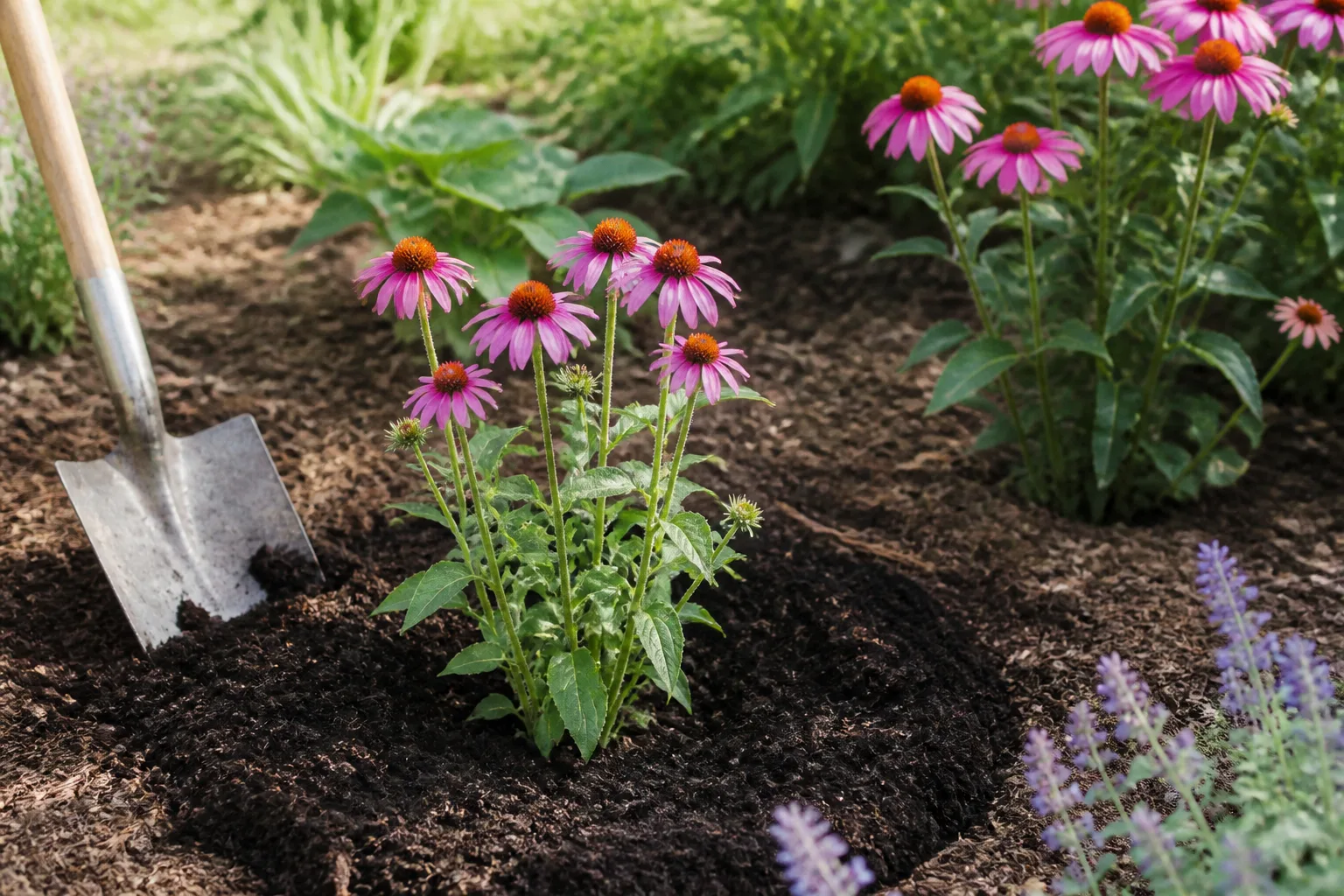
Dig a hole twice the width of the root ball and just deep enough that the crown sits at soil level — burying the crown invites rot. Space standard varieties 18–24 inches apart; compact cultivars can go slightly closer. Backfill with native soil mixed with compost, water deeply, and mulch 2 inches deep without piling mulch on the crown.
For bareroot divisions, fan spreading rhizomes horizontally and cover with no more than a quarter inch of soil, as White Flower Farm’s bee balm guide recommends. Water weekly through the first growing season if rain is inconsistent; established clumps tolerate brief dry spells but bloom best with even moisture.
Watering Without Inviting Powdery Mildew
Bee balm wants consistent soil moisture, not wet leaves. The most common cultural mistake is overhead sprinkling in the evening, which leaves foliage damp overnight — ideal for powdery mildew spores. NC State explicitly recommends avoiding overhead watering to minimize mildew.
Water at the base early in the day. Soaker hoses or drip irrigation beat sprinklers for this plant. A 2–3 inch organic mulch ring preserves soil moisture and reduces splash-borne disease. In containers, check daily in summer heat; pots dry faster than in-ground plantings.
If plants wilt in afternoon sun but recover by morning, they are heat-stressed, not necessarily thirsty. If wilt persists into evening, water deeply. If lower leaves yellow while staying wet, you may be overwatering — pull mulch back and let the surface dry slightly between soakings.
Fertilizer: When Less Produces More Flowers
Rich soil produces strong bee balm. Excess nitrogen produces lush foliage and fewer flowers — the plant shifts energy to leaves when it already has more nitrogen than it needs for bloom. If you amended planting holes with compost and mulch annually, skip supplemental fertilizer entirely for in-ground plants.
When soil is genuinely poor (sandy new construction beds, for example), apply a balanced slow-release organic fertilizer once in early spring as new shoots emerge — not monthly, not mid-summer. Container plants need more frequent feeding because leaching is constant; use half-strength liquid feed every three to four weeks from spring through midsummer, then stop so new growth can harden before fall.
Yellowing lower leaves with green veins sometimes indicate iron chlorosis in alkaline soils — a soil test clarifies whether you need pH adjustment rather than more fertilizer.
Pruning, Deadheading, and Fall Cleanup
Bee balm does not need aggressive pruning, but light maintenance changes how long it looks good.
Pinch stem tips in early spring when shoots are 6–8 inches tall if you want bushier plants with more flowering side shoots. Stop pinching by late spring or you delay bloom.
Deadhead spent flower clusters through summer to encourage secondary blooms on many cultivars. Deadheading is optional — seed heads feed birds and allow self-sowing in meadow settings — but it extends color in formal borders.
Fall cutback is a values decision as much as a horticultural one. Traditional advice cuts stems to a few inches after frost. Pollinator-focused gardeners leave 12–24 inches of hollow stem standing through winter for native bee nesting, then trim as stems break down naturally. NC Extension’s pollinator cleanup guidance recommends cutting back dead stems to 12–24 inches in the first winter rather than ground level, allowing stem-nesting bees to use the cavities.
Remove and discard — do not compost — any stems heavily infected with mildew to reduce spore carryover.
Dividing and Propagating Bee Balm
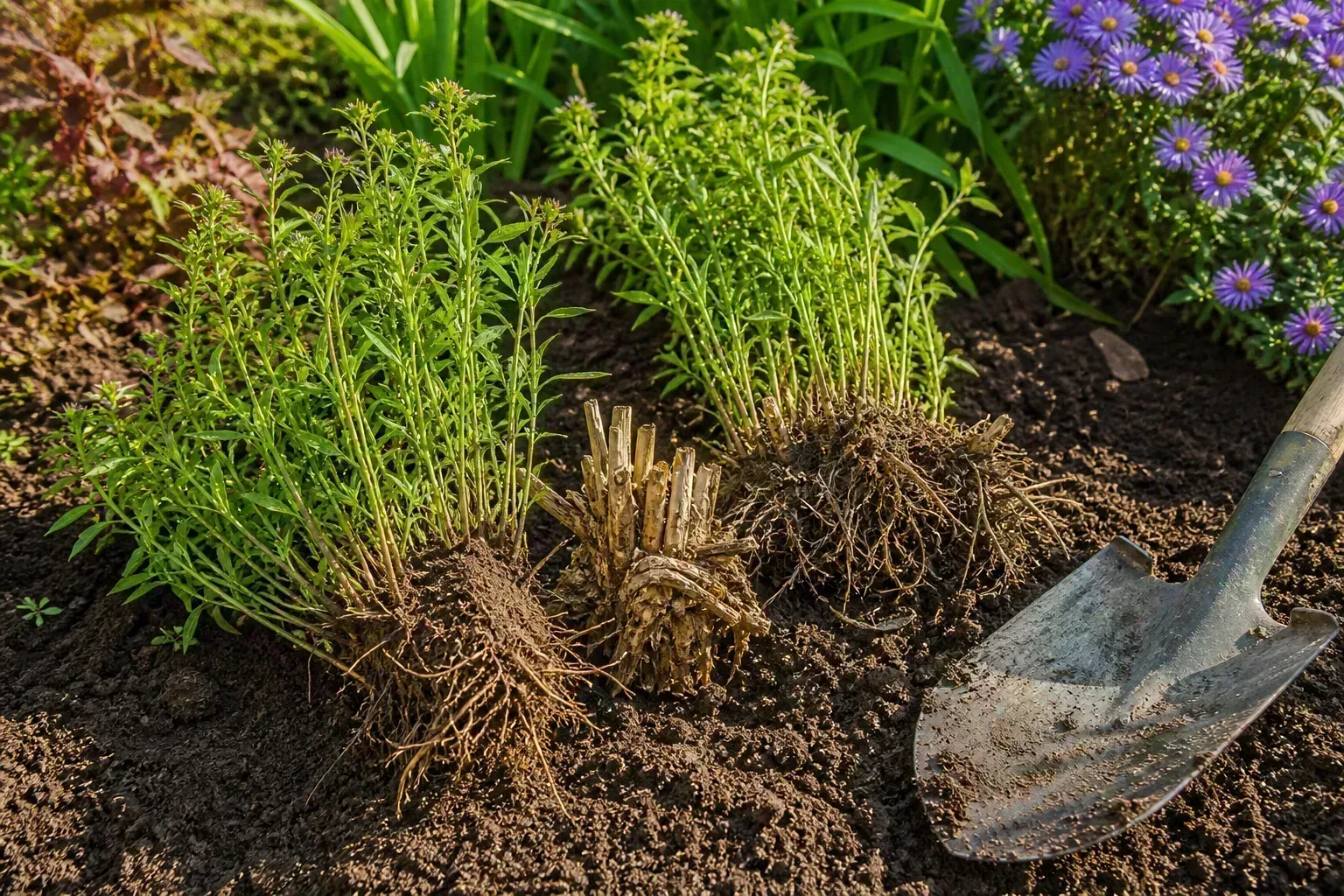
Spreading is a feature until it isn’t. Divide when the center dies out, bloom count drops, or the clump outgrows its space — typically every two to three years in spring just as new growth appears.
Division Step-by-Step
- Water the clump the day before digging to soften soil.
- Dig a wide circle with a spade or garden fork, lifting the entire crown with rhizomes intact.
- Shake off excess soil and split the clump with a sharp spade or two forks back-to-back. Each division needs healthy roots and several growing points.
- Replant immediately at the same depth, water deeply, and mulch lightly.
- Discard woody, hollow centers — they rarely re-sprout vigorously.
Never divide in late summer or fall unless you accept higher winter-loss risk. Plants need six to eight weeks of active growth to re-root before dormancy.
Growing Bee Balm from Seed
Bee balm germinates best after cold stratification — a period of moist cold that mimics winter. Sow seeds outdoors in fall for natural stratification, or mix seeds with damp sand in a sealed bag in the refrigerator for four to eight weeks before indoor sowing in late winter.
Sow stratified seeds on the surface of pre-moistened seed mix; light aids germination. Keep at 65–70°F under bright light. Transplant seedlings into individual pots when they have two true sets of leaves, harden off outdoors, and plant out after the last frost. Seed-grown plants may not bloom until their second year and will not come true to named cultivar colors — expect variation.
Softwood cuttings offer a slower alternative for preserving a specific cultivar. Take 3–4 inch cuttings in mid- to late summer from non-flowering shoots. Strip lower leaves, dip in rooting hormone if desired, and stick in moist perlite or seed mix under humidity cover. Rooted cuttings overwinter in a cold frame or bright cool indoor spot and transplant the following spring.
Growing Bee Balm in Containers
Compact cultivars — ‘Petite Delight’, Balmy™ series, and other dwarf selections — suit pots on sunny patios. Choose a container at least 12–14 inches wide with drainage holes. Use quality potting mix, not garden soil.
Container bee balm needs more water and occasional feeding than in-ground plants. Repot or divide when roots circle the pot or growth stalls — often every one to two years. In zones at the cold end of hardiness, move pots to an unheated garage or against a sheltered wall after the first hard freeze; soil in pots freezes more severely than ground soil.
Powdery Mildew: Prevention and Early Response
Powdery mildew appears as white grayish coating on leaves, usually starting lower on the plant and climbing stems in humid weather. It rarely kills bee balm outright but makes it ugly and weakens the plant over repeated infections.
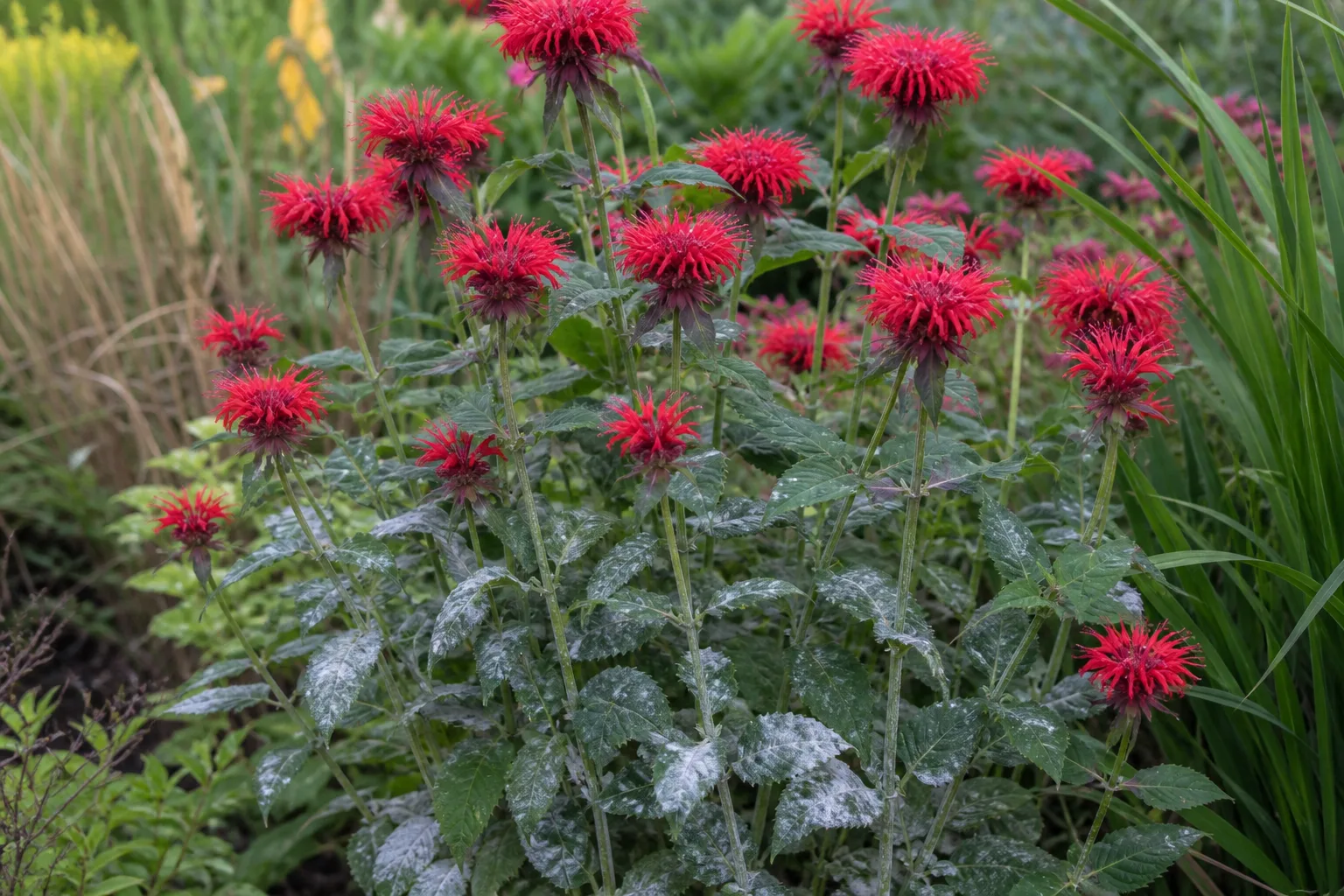
Prevention checklist:
- Choose resistant cultivars for humid regions.
- Plant in full sun with generous spacing.
- Water at soil level, morning preferred.
- Divide overcrowded clumps before centers die and airflow collapses.
- Avoid high-nitrogen fertilizer that pushes tender leaf growth.
Early response: Remove the worst affected leaves and stems; improve airflow by thinning adjacent plants; switch irrigation method if overhead water is the culprit. Severe infections on finished bloom cycles can be cut back to healthy basal growth — the plant often pushes clean foliage if moisture and spacing improve.
Fungicides are a last resort for high-value display beds. If you spray, follow label directions exactly and treat at first sign; mildew is far easier to slow than to reverse once leaves are fully coated.
Other Pests and Common Problems
Bee balm is not a pest magnet, but routine garden insects appear:
- Aphids on tender new growth — blast with water or treat with insecticidal soap if colonies persist.
- Spider mites in hot dry spells — increase humidity at soil level (not leaves) and rinse undersides of leaves.
- Stalk borers — rare but damaging; remove affected stems and destroy.
- Rust — orange pustules on leaves; remove infected foliage and avoid overhead water.
Deer and rabbits generally avoid bee balm’s aromatic foliage, one reason it works in suburban pollinator borders.
Troubleshooting: Why Bee Balm Stops Blooming
A bee balm that bloomed last year and quit this year is sending a message. Work through causes in this order:
Insufficient light is the most common issue after a neighboring shrub grows or a tree canopy expands. Move or divide into a sunnier spot in spring.
Over-fertilization pushes leaves over flowers. Stop feeding and let the plant reset; next year rely on compost mulch only.
Overcrowding starves the center and reduces bloom. Divide the clump.
Drought stress during bud formation reduces flower count. Establish consistent watering through late spring and early summer when buds set.
Young plants from seed or small divisions may skip a year while building root mass — patience, not panic.
If none of these fit, dig one division and inspect roots. Mushy roots mean rot from poor drainage; dry brittle roots mean chronic drought or vine weevil damage in containers.
Companion Plants and Placement Mistakes
Bee balm pairs naturally with other sun-loving natives and summer perennials: purple coneflower (Echinacea), black-eyed Susan (Rudbeckia), blazing star (Liatris), and ornamental grasses that provide contrast without competing for the same root zone. In herb gardens, it sits comfortably near sage, thyme, and other Mediterranean herbs — just give it the extra moisture it expects.
Avoid planting bee balm where:
- Tall neighbors block afternoon sun without providing compensating morning light.
- Slow, low spreaders (dianthus, thrift, alpine plants) will be swallowed by rhizomes within two seasons.
- Powdery-mildew-prone phlox or tall garden phlox sit inches away — disease pressure compounds in still air.
- Automatic sprinklers hit foliage nightly — pick a different zone or change the head pattern.
If spread worries you, sink a 6–8 inch deep root barrier around the planting zone or plan division as routine maintenance rather than emergency rescue.
Conclusion
Bee balm earns its place when you treat it as a moisture-loving, sun-hungry, mint-family spreader that happens to be gorgeous. Pick the right species or mildew-resistant cultivar for your site, plant in spring or fall with generous spacing, water the soil instead of the leaves, and divide clumps before the center dies out. Deadhead if you want longer color; leave stem height if you want nesting habitat. When bloom falters, check light and fertilizer before reaching for a spray bottle.
Get those basics right and bee balm becomes one of the most reliable hummingbird and native-bee plants in a North American garden — not a mildew casualty waiting to happen.



