Zinnia Care Guide: Light, Watering, Soil and Problems
Grow outdoor zinnias with full sun, base watering, spacing, deadheading, and mildew-resistant series for continuous summer color.
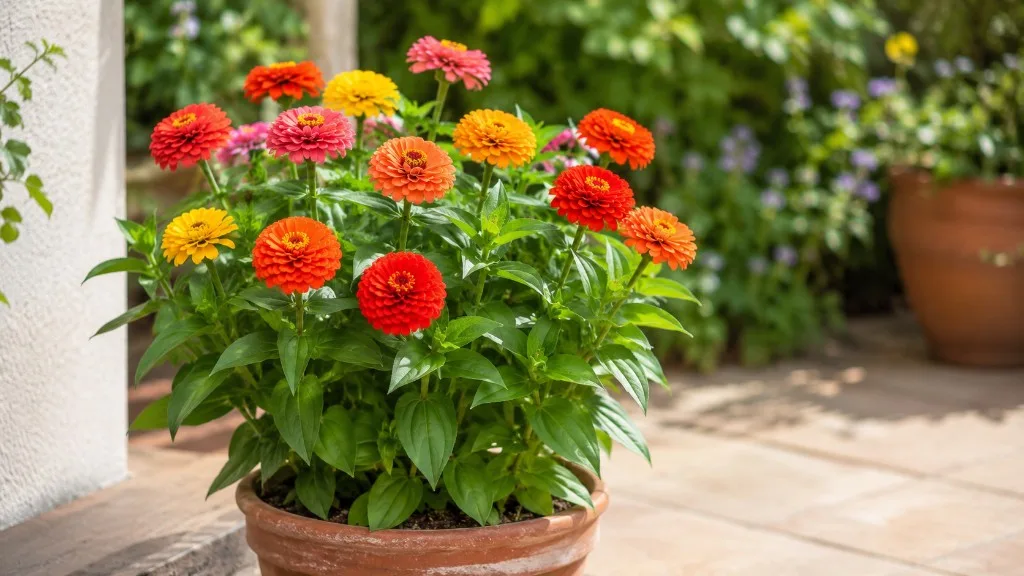
Zinnias fail in predictable ways. Plants stretch and flop in “bright” shade. Leaves coat white in humid August when tall doubles sit shoulder-to-shoulder. Patio pots wilt by midafternoon because the mix cooked dry while you watered on a bed calendar. Good zinnia care is not a mystery fertilizer schedule. It is full sun, deep water at the soil line, airflow between plants, and a series that matches your climate and job—cut flowers versus low-fuss bedding.
This guide is the season framework for outdoor annual zinnias: site, water, soil, spacing, deadheading, mildew prevention, pests, timing, and pet safety. Written by Sai Ananth (LeafyPixels lead writer; pharmacy background in pharmacognosy, outdoor annual and container practice in humid, hot summers) and reviewed by the LeafyPixels Review Board.
What Usually Goes Wrong First
Most “difficult zinnias” are site problems wearing plant labels. Three patterns show up first:
- Shade flop — stems elongate, blooms shrink, and mildew arrives early because leaves stay damp longer. Fertilizer cannot replace photons.
- Crowded mildew — tall Zinnia elegans doubles in humid weather with overhead watering and tight spacing. White powder on leaves is predisposition plus environment, not proof you failed as a gardener.
- Container drought vs bed sog — pots in full sun may need water every one to two days; in-ground plants often need about one deep soak a week. Treating both the same way produces wilted pots or soggy beds.
Fix sun, base watering, and spacing before you chase sprays or new fertilizer. Choose mildew-tolerant series when your August feels steamy.
How This Guide Fits the Zinnia Hub
Use this page for one complete outdoor framework. Use the Zinnia care hub when you already know the symptom and want depth on light, watering, soil, fertilizer, pruning, propagation, powdery mildew, leggy growth, or no flowers.
What Zinnias Are (and Why Shade Disappoints)
Zinnia covers warm-season annuals grown for bold summer color, stiff cutting stems, and pollinator traffic. The classic tall garden type is Zinnia elegans in the daisy family (Asteraceae). Ancestors are native to Mexico and the southwestern United States—open sun, warm soil, fast one-season life. That history is why heat and light reward them so clearly, and why shade, cold wet ground, or crowded humid corners disappoint.
Large seeds germinate quickly. Plants often flower within roughly six to twelve weeks of sowing in warm weather, and the show runs from midsummer until frost when you keep removing spent blooms on tall types. Survival and peak performance are not the same. A plant in partial shade may stay green while producing thin stems, sparse buds, and earlier mildew. One in full sun, well-drained soil, and regular deadheading usually delivers the continuous color people plant for. (Clemson HGIC) (Wisconsin Horticulture)
Botanical Profile: elegans vs angustifolia vs Disease-Tolerant Hybrids
Garden tags often say only “zinnia,” but groups behave differently.
Zinnia elegans is the upright cut-flower group—single, semi-double, or fully double blooms from about 1 inch to 6+ inches across, heights from dwarf bedding plants to 3–4 foot giants. It is also the group most likely to show powdery mildew in humid late summer.
Zinnia angustifolia (narrow-leaf or creeping zinnia) stays compact, spreads into low mounds, handles heat and drought well, and generally shows stronger disease resistance. Many gardeners treat it as lower-maintenance edging that needs little or no deadheading. (Clemson HGIC)
Zinnia marylandica and interspecific hybrids such as Zahara and Profusion were bred for compact habit plus heat, humidity, and disease tolerance. NC State Extension notes that Profusion combines traits of Z. elegans and Z. angustifolia, with superior disease and drought resistance and flowers that often sit above spent blooms so routine deadheading is less critical. (NC State Extension) If your summers are steamy, start cultivar selection with resistant bedding series before committing an entire cutting bed to tall heirloom doubles.
Choose Cultivars for Your Job and Climate
Match the series to the job first, then humidity, then color.
Want armloads of cut flowers? Tall Z. elegans lines such as Benary’s Giant, Oklahoma, State Fair, or California Giant give long stems and large blooms—accept that mildew vigilance and spacing matter more. Oklahoma and State Fair types are often noted for better mildew tolerance within the tall group. (Clemson HGIC) (Wisconsin Horticulture)
Want low-fuss color through humid August? Lean on Profusion, Zahara, Crystal/Star-type Z. angustifolia, or other disease-tolerant hybrids. Illinois Extension HortAnswers groups short Dreamland/Magellan types, mid-height mixes, tall State Fair/Oklahoma/Giant series, and mildew-minded Profusion and Zahara lines for exactly this reason. (Illinois Extension)
RHS guidance is practical for cooler or changeable summers: zinnias want a sheltered, warm, free-draining site and perform best in a genuinely good summer; heavy cold soils slow them down. In less ideal conditions, Profusion-type hybrids have performed more reliably than many tall elegans cultivars in trials. (RHS)
Cut-Flower Bed vs Low-Fuss Humid-Climate Bedding
| Goal | Better fit | Trade-off |
|---|---|---|
| Long stems for bouquets | Tall Z. elegans (Benary’s Giant, Oklahoma, State Fair, California Giant) | More mildew pressure; needs spacing, base water, and regular deadheading |
| Color with less weekly work in humid heat | Profusion, Zahara, Z. angustifolia (Crystal/Star types) | Shorter stems; not the best “giant dahlia” look for cutting |
| Cool or unreliable summers | Compact disease-tolerant hybrids; warmest sheltered bed | Tall heirlooms may sulk or mildew early |
Pick height for the bed first, disease resistance for your humidity, then color—not the other way around.
Quick Care Snapshot
For healthy flowering zinnias, plant in full sun (6+ hours of direct light), water when the top 1–2 inches of soil are dry, apply about 1 inch of water per week at the base for established beds, use well-drained soil with organic matter, space plants for airflow, and deadhead spent blooms on tall cut-flower types. Containers dry faster than beds and need more frequent checks. In humid climates, mildew-resistant series reduce midsummer disappointment. (Clemson HGIC)
| Care factor | Baseline target | Deeper guide |
|---|---|---|
| Light | Full sun, 6–8+ hours direct | Zinnia light guide |
| Water | Top 1–2 in dry; ~1 in/week at base | Zinnia watering guide |
| Soil | Well-drained, moderately fertile loam | Zinnia soil guide |
| Feed | Light feeding; avoid excess nitrogen | Zinnia fertilizer guide |
| Bloom care | Deadhead or harvest to a leaf node | Zinnia pruning guide |
Three checks beat a rigid calendar: Is the site truly sunny? Is water reaching roots without wetting foliage all afternoon? Is air moving between plants?
Light and Sun Requirements
Zinnias are full-sun annuals. Clemson lists them under warm-season annuals that need full sun (6+ hours). In practice, 7–8 hours of unobstructed direct sun produces sturdier stems and heavier bloom sets in most gardens. Dappled light under trees is not enough—expect stretch, flop, and fewer flowers. (Clemson HGIC)
Place beds and pots where morning through midafternoon sun is realistic. South- or west-facing open ground, rooftop edges, and unshaded patio corners usually outperform north walls and tree-line borders. Reflected heat from pale walls can help urban plantings, but it also increases water demand—pair brighter exposures with deep base watering rather than frequent leaf-wetting sprinkles.
Full Sun vs Partial Shade Outcomes
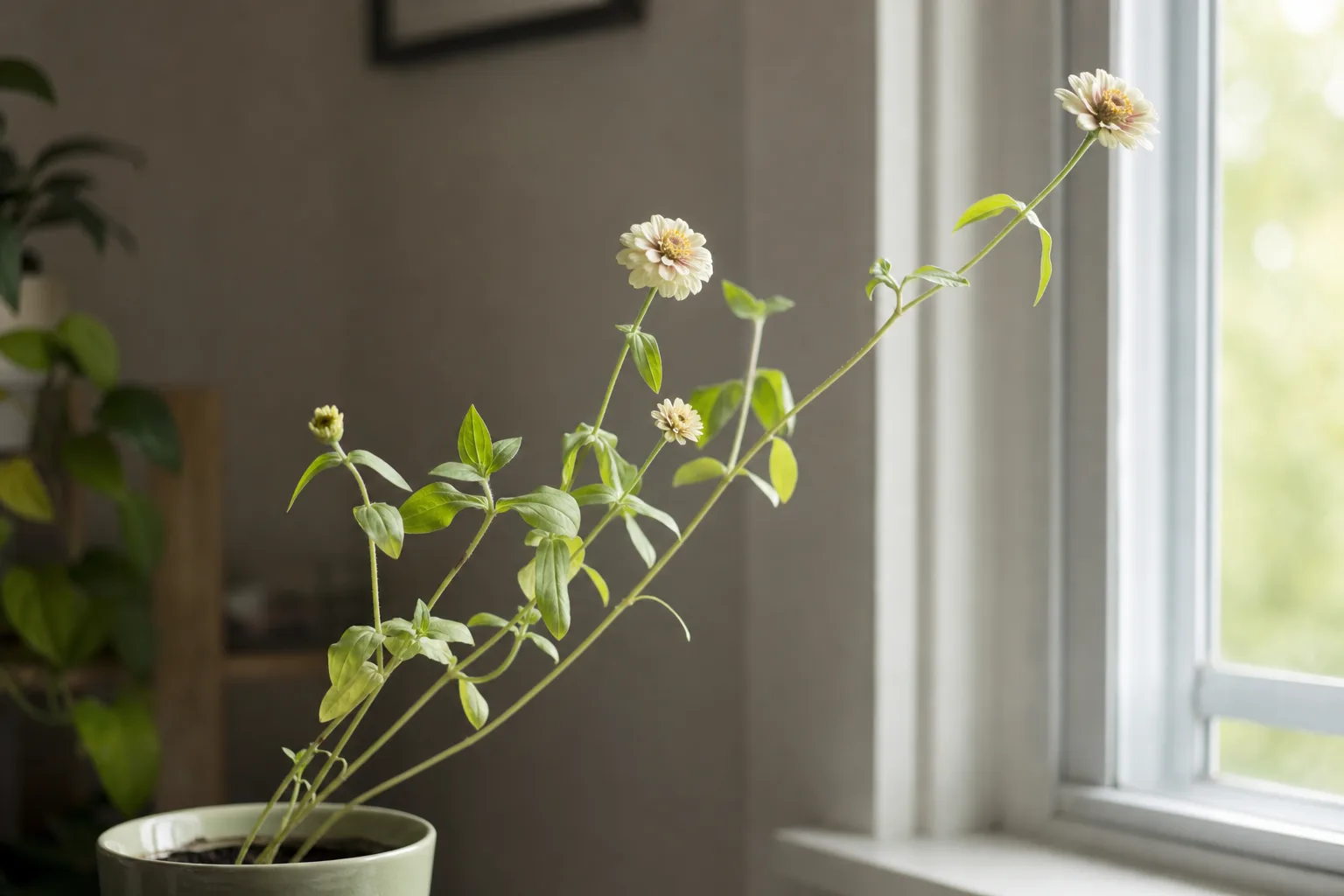
In full sun, internodes stay shorter, stems thicken under flower weight, and bud production stays continuous when you deadhead. In partial shade, plants often survive while looking “fine” for a few weeks, then reveal the cost: elongated stems, smaller blooms, and inner leaves that stay humid long enough for mildew to settle. Wisconsin Horticulture notes that many zinnias are affected by powdery mildew in humid conditions and that spacing for air circulation helps—shade stacks humidity on top of weak light and makes that problem worse. (Wisconsin Horticulture)
Use new growth as the diagnostic, not old lower leaves. Compact, deep-green tips with steady buds mean light is probably adequate. Thin, leaning stems with long gaps between leaves mean the plant is searching for sun. Move containers immediately; for in-ground beds, plan a sunnier site next season rather than overfertilizing a shaded planting.
Watering: Beds vs Containers, Always at the Base
Zinnias want consistent moisture without soggy roots. Clemson’s practical rule is to water when the top 1 to 2 inches of soil feel dry and to apply about 1 inch of water per week, always at the base. Overwatering invites root stress; chronic underwatering during establishment produces thin stems and small flowers. Once established, zinnias tolerate short dry periods better than many bedding annuals, but bloom quality still tracks steady deep watering. (Clemson HGIC) (RHS)
Deep, infrequent soaks beat daily surface sprinkles. Wet the root zone several inches down, then let the surface dry before the next session. Shallow daily misting trains roots to stay near the surface, increases afternoon wilt, and keeps foliage damp—the opposite of what mildew-prone annuals need. If leaves yellow while soil stays wet, check overwatering and drainage. If plants collapse only at midday and soil is bone dry several inches down, see underwatering.
Water at the base. Overhead irrigation that soaks leaves and flower heads encourages foliar diseases. Use a watering can at soil level, drip lines, or a soaker hose. If overhead sprinklers are your only option, run them early in the morning so foliage can dry quickly—but treat that as a compromise. RHS likewise recommends keeping foliage dry while watering in hot weather. (Clemson HGIC) (RHS)
Clemson’s pest-and-disease guidance is blunt: keep foliage dry; water near the base; if you must water overhead, do it early morning—not late afternoon or evening when leaves stay wet overnight. (Clemson HGIC insect & disease)
Container Dry-Down in Full Sun Heat
Containers and garden beds are different watering systems. In-ground zinnias access a larger soil volume and often need deep soaking once or twice weekly in dry summer weather, adjusted for rainfall and soil type. Patio pots, window boxes, and fabric grow bags heat from all sides, hold less water, and may need checking daily in peak heat—sometimes every one to two days for small pots in full sun.
LeafyPixels practice note (labeled experience, not universal law): In our humid, hot-summer patio trials with 10–12 inch pots of Profusion and compact elegans in unshaded positions, the top inch often dried by late morning after a clear day. We stopped using a shared “Tuesday/Friday bed schedule” for pots. The check that worked: finger or wooden skewer into the top 1–2 inches; water thoroughly until runoff; empty saucers. Small dark plastic pots needed water more often than larger light-colored ones. Beds next to those pots still followed roughly weekly deep soaks unless rain intervened.
RHS notes container plants also benefit from feeding once they are in flower; pair that with the faster dry-down cycle rather than keeping mix constantly wet. (RHS) If a container plant wilts repeatedly despite wet mix, suspect root rot or a clogged drainage hole rather than “more water.”
Soil, Warm Ground, Spacing, and Airflow
Zinnias are not fussy about exact soil recipes, but they are unforgiving about cold, heavy, waterlogged ground. Aim for well-drained soil with moderate fertility and organic matter. NC State recommends loam or soil high in organic matter with good drainage and full sun; pH is flexible for most garden soils in the common ornamental range. RHS adds that heavy soils that stay cold and wet prevent plants from thriving. Illinois lists full sun in moist, well-drained soil. (NC State Extension) (RHS) (Illinois Extension)
For garden beds, work compost into the top 6–10 inches before sowing or transplanting. For containers, use a quality potting mix amended for drainage—a practical blend is roughly 60% potting mix, 20% compost, and 20% perlite or coarse sand. Avoid packing garden clay into pots. Wait to direct-sow until soil is warm; Clemson cites ideal soil and air temperatures around 70°F (21°C), with seeds sown about ¼ inch deep and seedlings thinned for airflow once they reach a few inches tall. (Clemson HGIC)
Spacing is part of disease prevention. Overcrowding is one of the fastest ways to invite mildew and leaf spots. Thin or plant dwarf types roughly 8–9 inches apart and taller cultivars closer to 12 inches (or follow the packet), with rows about a foot apart so leaves can dry. For cut-flower blocks, RHS suggests roughly 30–40 cm (1–1.5 ft) as a typical working spacing. (Clemson HGIC) (RHS)
Cold, wet seed-starting media also invite damping-off. Do not sow into chilly, soggy trays; wait for warmth, use clean mix, and avoid overwatering seedlings. See damping-off if stems collapse at the soil line.
Deadheading, Pinching, and Cut-Flower Harvest
If you want nonstop color from tall Zinnia elegans, deadheading is bloom management, not optional cosmetics. Removing spent flowers keeps the plant from shifting energy into seed and encourages new buds at the nodes below. Clemson recommends deadheading and pruning spent blooms for a long season, and cutting stems just above a leaf node when harvesting for bouquets so new buds form cleanly. (Clemson HGIC)
Practical method: when petals fade and the center begins to dry, cut the stem back to the first strong pair of leaves or side shoot with clean snips. Check plants every few days at peak season. Harvesting for the vase counts as deadheading if you cut to a node and leave healthy foliage. Cut in the morning when stems are hydrated; choose flowers whose centers are just opening; strip lower leaves before the vase.
Many gardeners also pinch young tall plants once when they are about 8–12 inches tall and still bud-free, removing the tip to encourage branching—a one-time structural cut, not weekly shearing.
Self-cleaning or compact hybrids such as many Profusion and narrow-leaf types often need less deadheading because new flowers cover old ones. Still remove diseased or collapsed blooms. Step-by-step cut points and recovery timing live in the pruning column of the care snapshot above.
LeafyPixels practice note: On tall Oklahoma and State Fair rows grown for cutting, a quick every-other-day pass during peak bloom kept fresh stems coming. Skipping a week after vacation produced a flush of seed heads and a noticeable pause before new buds. Compact Profusion mounds next to those rows still looked full with far less snipping—useful when you want color without a cutting schedule.
Powdery Mildew: Prevention First, Then Response
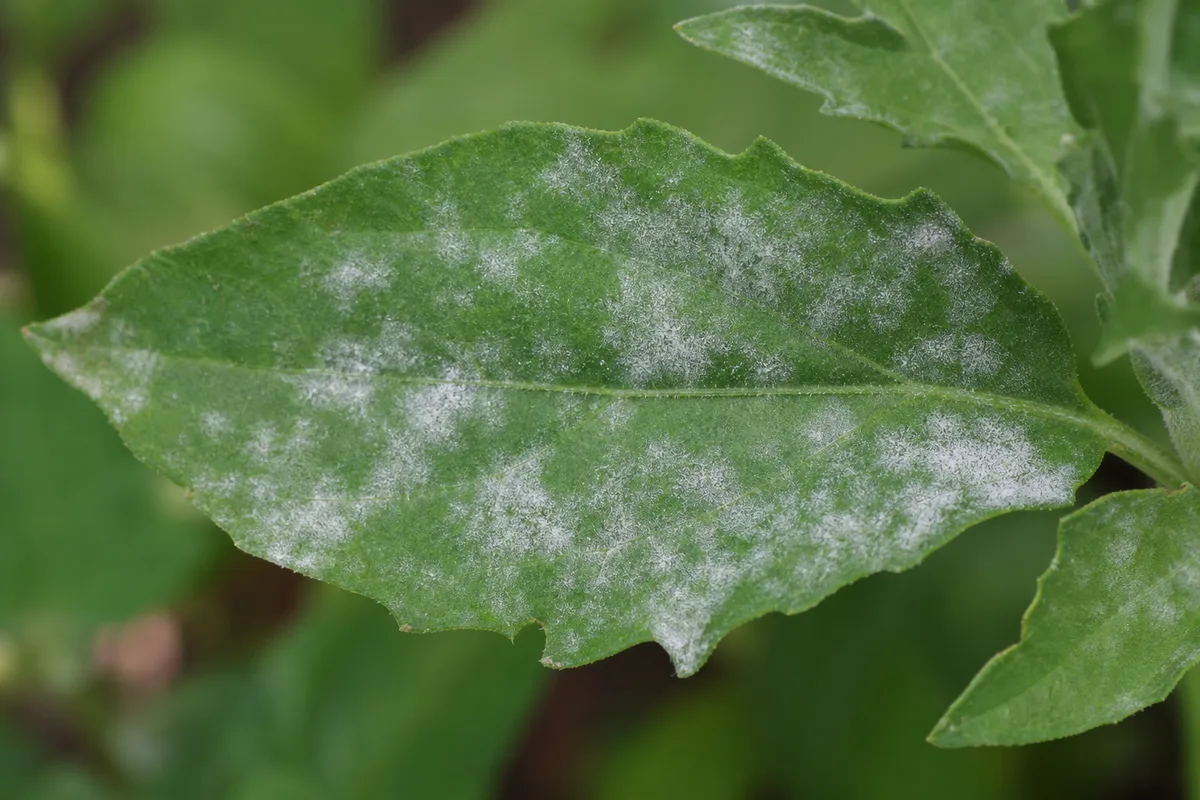
Powdery mildew is the signature mid-to-late summer zinnia problem: a dry, white, flour-like coating on leaves and stems that spreads in humid, crowded plantings. University of Arkansas Extension notes that zinnias are often plagued by powdery mildew and that cleanup of plant debris plus resistant varieties are key for the next season. UC IPM describes powdery mildew as white powdery growth managed first by resistant varieties and better growing conditions; zinnia is among the ornamentals commonly affected, and full sun plus good cultural care limit outbreaks. UC IPM specifically lists Zahara and Profusion series among resistant zinnia options. (University of Arkansas Extension) (UC IPM)
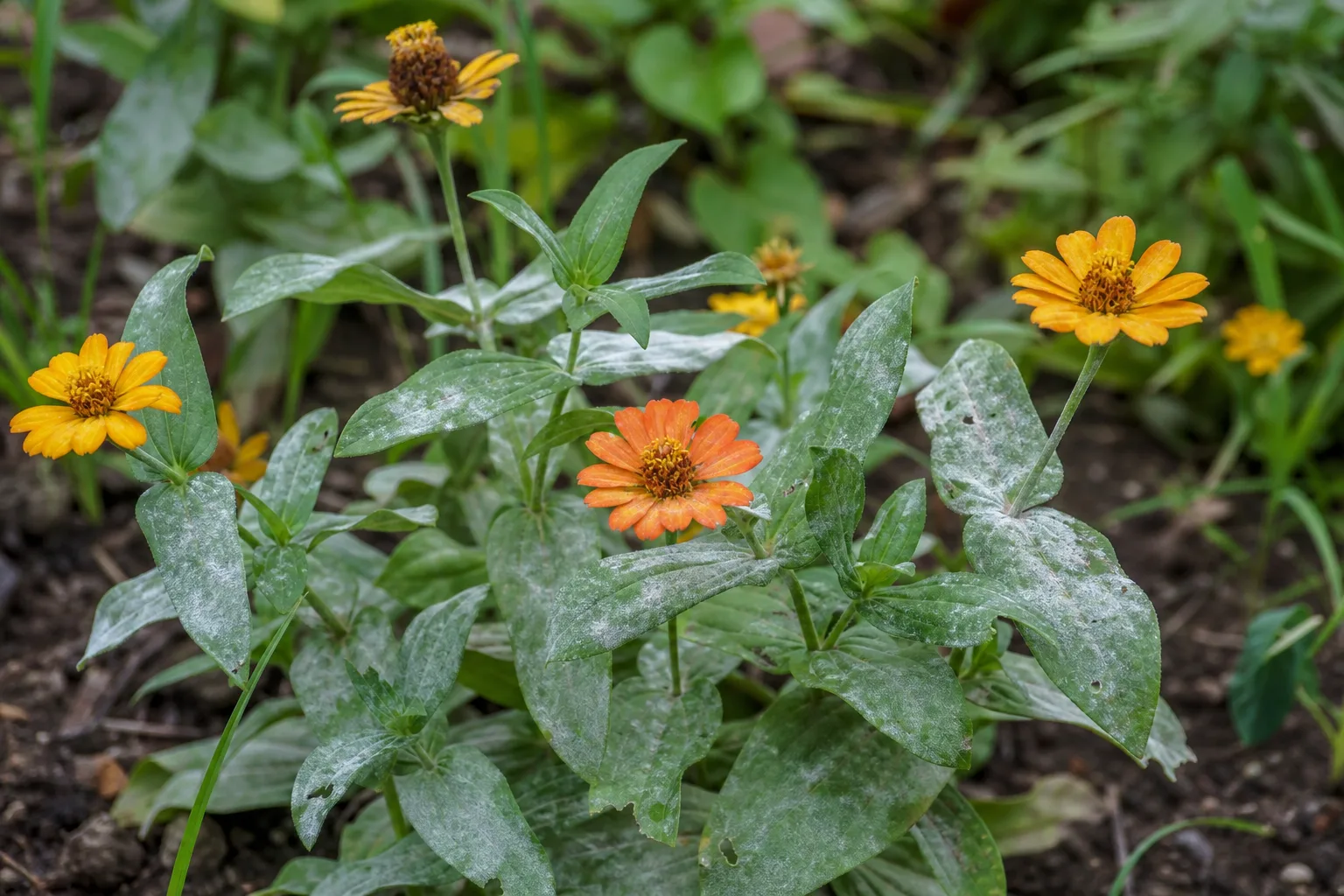
Mildew does not mean you failed as a gardener. Tall double elegans types in a humid August are biologically predisposed. Act early: thin overcrowded stems, remove the worst coated leaves, improve airflow, and stop overhead watering. Heavily coated leaves rarely turn fully green again; success means new growth stays clean. For symptom confirmation and treatment detail, use powdery mildew on Zinnia.
Prevention beats spray cycles on fast annuals:
- Choose resistant series (Profusion, Zahara, many Z. angustifolia cultivars, and some improved elegans lines such as Oklahoma/State Fair types noted for better tolerance).
- Plant in full sun and avoid shady, stagnant corners.
- Space for airflow and thin seedlings instead of leaving every seed where it sprouted.
- Water at the base in the morning so foliage dries quickly.
- Clean up infected debris and spent plants at season end so next year’s bed starts cleaner.
Wisconsin Horticulture and Clemson both emphasize spacing and resistant varieties as primary tools. If fungicides are used on high-value plantings, follow the product label exactly, spray in late evening to reduce pollinator impact where labels allow, and never expect chemistry to rescue a shaded, overcrowded bed. When an entire bed collapses under disease, contact your local cooperative extension or master gardener help desk for diagnosis rather than stacking random products. (Wisconsin Horticulture) (Clemson HGIC) (Clemson HGIC insect & disease)
What We See in Humid Summers
Labeled LeafyPixels experience (humid hot summers, patio and bed plantings—not a climate-zone guarantee): Tall fully double elegans in tight rows often showed visible mildew film by mid-to-late season—sometimes within a few weeks after canopy closed—especially after stretches of warm nights and overhead rain. Compact Profusion and Zahara plantings in the same season stayed cleaner longer when spaced and base-watered. We treat that as a series-and-spacing decision for humid August, not as proof that tall cut-flower types are “impossible.” If you want both, grow a cutting block of Oklahoma/State Fair with generous spacing and a separate low Profusion strip for reliable color when mildew pressure peaks.
Other Problems: Leggy Growth, No Flowers, Leaf Spot, Pests
Beyond mildew, watch for leggy growth from insufficient sun, few or no flowers from shade or excess nitrogen, seedling damping-off in cold wet media, leaf spots after repeated wet foliage, and pests such as aphids, spider mites, or Japanese beetles depending on region. NC State lists powdery mildew, leaf spots, root rots, and blights among common disease issues, with fungal problems more frequent in shaded or moist southern conditions, and notes Japanese beetles, aphids, and mites among insect pests. (NC State Extension)
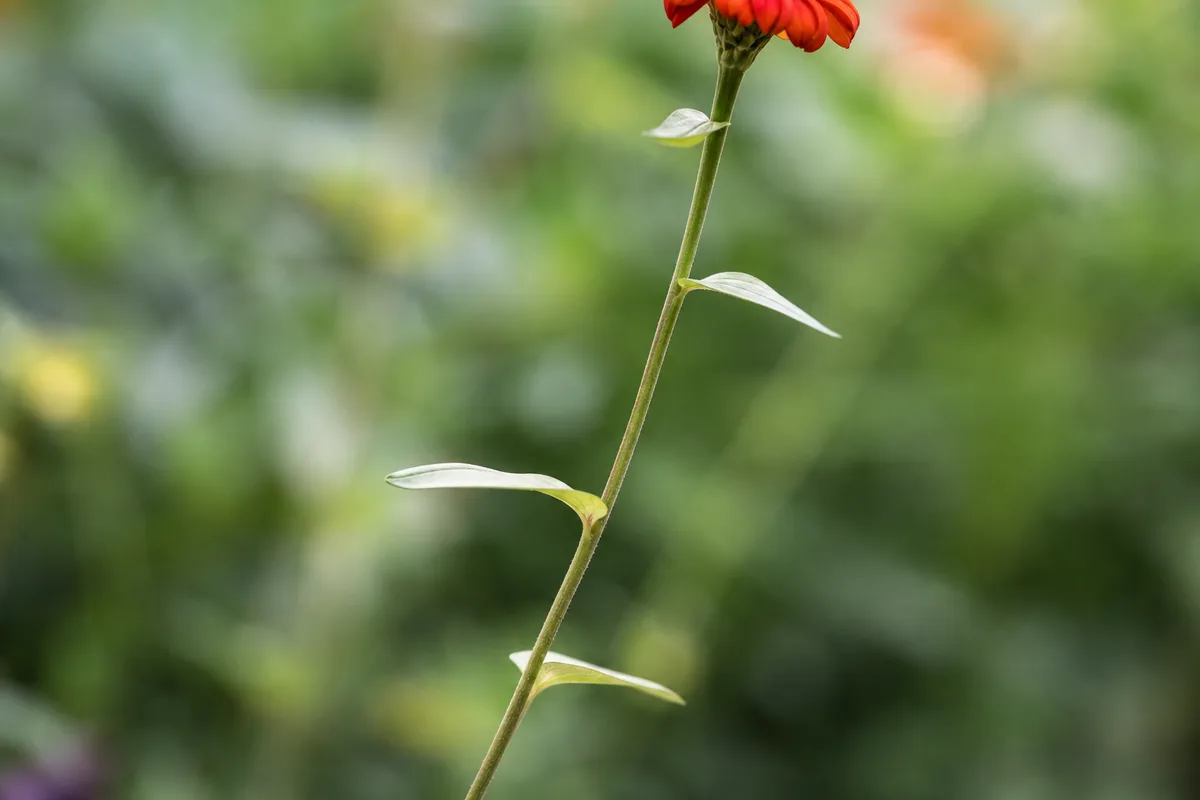
Triage by checking light and soil moisture first, then spacing, then pests. Sparse blooms in a shady patio pot is a site problem. Soft stems in soggy clay is a drainage problem. White film in a crowded humid row is mildew. Jump to leggy growth, no flowers, yellow leaves, or leaf spot disease rather than treating every symptom with fertilizer.
Pest actions that help without nuking pollinators: Clemson notes zinnias feed many beneficial insects, so culture comes first and broad insecticides are discouraged beyond careful insecticidal soap use. Aphids and spider mites can often be hosed off with a strong stream of water; keep plants from drought stress because mites thrive in hot, dry conditions; if soap is needed, spray undersides of leaves in late evening and follow the label. Promptly remove heavily infested plants and clean up debris at season end. (Clemson HGIC insect & disease) For Japanese beetles, handpick into soapy water early when numbers are low; heavy outbreaks may need region-specific extension guidance—do not default to blanket spraying flowering beds that bees are working.
Fertilizer and Season Timing (Frost to Frost)
Zinnias are moderate feeders. Rich soil plus compost at planting is often enough for bedding types. If growth is pale in poor sand, use a balanced fertilizer lightly after plants are established, or a high-potassium feed for containers in flower as RHS suggests—and avoid heavy nitrogen that pushes soft foliage at the expense of blooms. A soil test beats guessing when a whole bed underperforms. Follow product labels for rates. (RHS) (Clemson HGIC)
Compact frost-to-frost calendar:
| Window | Action |
|---|---|
| 4–6 weeks before last frost (optional) | Start seed indoors at about 65–70°F; do not start so early that seedlings sulk in cool nights (Wisconsin Horticulture) (RHS) |
| After frost risk; soil ~70°F | Direct-sow ¼ inch deep, or transplant hardened seedlings no deeper than the root ball (Clemson HGIC) |
| Midsummer | Deadhead tall types; succession-sow every 2–3 weeks for continuous bloom if space allows |
| Humid peak | Favor resistant series; thin for airflow; base-water only |
| First hard frost | Plants finish; remove debris; do not save seed from heavily diseased plantings (Clemson HGIC insect & disease) |
RHS warns against sowing too early because cool nights leave young plants vulnerable to disease. Harden transplants before full sun placement. In hot climates, zinnias generally love heat once established; in cool maritime summers, choose the warmest sheltered bed and consider the most compact heat-tolerant hybrids. (RHS)
Pet Safety and Seed Saving
The ASPCA lists Zinnia species as non-toxic to dogs, cats, and horses, which makes them one of the safer flowering annuals for pet-aware yards. Non-toxic does not mean unlimited salad—large amounts of any plant material can still upset a stomach, and pesticide-treated nursery plants should be handled with normal caution. Contact a veterinarian if a pet eats a large amount and shows persistent distress. (ASPCA)
If you want seed for next year, stop deadheading selected blooms late in the season and let heads dry fully on the plant before collecting. Hybrid series may not come true from saved seed; for matching colors and disease resistance, buy fresh packet seed of the series that worked. Tall open-pollinated mixes are more predictable for home seed saving than complex F1 bedding lines. Do not save seed from plantings that had severe leaf-spot outbreaks—seed can carry disease. (Clemson HGIC insect & disease)
Conclusion: Where Most Zinnia Failures Start
Zinnia care succeeds when you treat the plant as a sun-driven summer outdoor annual, not a shade bedding filler or an indoor houseplant. Give it full sun, well-drained warm soil, deep base watering, and space for air. Deadhead tall cut-flower types for continuous bloom, choose mildew-resistant series where summers are humid, and water containers more often than garden beds. Most failures trace to shade, wet foliage, overcrowding, or cold soggy soil—not a mysterious lack of fertilizer.
In humid summers, the highest-leverage decision is often the series you buy: Profusion or Zahara for reliable color, tall elegans for stems when you can space and deadhead. Use this guide for the full-season framework, then open the hub linked above when you need a topic deep-dive or a symptom-specific fix.
Related guides
- Zinnia aphids — hose-off and soap triage when soft tips and sticky leaves show up.
- Zinnia white spots — when white leaf markings need a lookalike check beyond mildew.
- Petunia care guide — another full-sun summer annual with container vs bed watering differences.
- Portulaca care guide — heat-loving outdoor annual for the same sunny patio when you want sharper drought tolerance.
- Container petunias: fuller pots that bloom longer — pot sizing and feeding rhythm for summer containers.