Petunia Care Guide: Light, Watering, Soil and Problems
Petunia care for beds and baskets: choose grandiflora or Wave, water by dry-down, feed containers, and fix midseason stall.
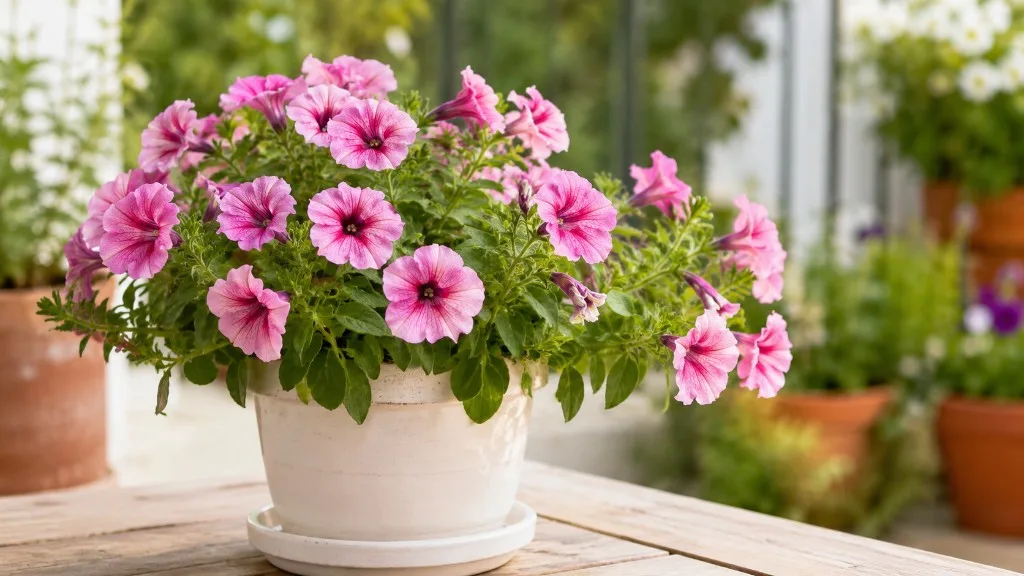
Petunias are the annual people buy for fast color — and the annual people abandon when blooms stall, stems stretch, or a hanging basket collapses on a hot afternoon. The gap between those outcomes is not mysterious. It comes down to four decisions you make early and keep adjusting: enough direct sun, a watering rhythm that matches pots versus beds, deadheading or grooming matched to your variety, and feeding that container plants actually need. Get those aligned and petunias are among the easiest flowering annuals you can grow. Miss one and the plant looks “finicky” when placement was wrong.
This guide covers modern garden petunia — Petunia × atkinsiana — for outdoor beds, hanging baskets, window boxes, and spreading groundcovers. Written by Sai Ananth and reviewed by the LeafyPixels Review Board against extension and botanical sources, outdoor annual constraints, and container notes from our own patio trials. Use it to plant and maintain with confidence; open deeper topic pages only when one symptom needs its own workflow.
Quick Petunia Care Snapshot
For healthy outdoor petunias, give full sun (at least 5–6 hours of direct light daily), water when the mix needs it rather than on a shared calendar, use well-draining soil around pH 6.0–7.0, and feed containers more often than beds. Deadhead large-flowered and double types; many smaller-flowered and vegetative spreading types are self-cleaning. Petunias are frost-tender display plants, not permanent houseplants.
| Care factor | Baseline target | Deeper guide |
|---|---|---|
| Light | 5–6+ hours direct sun; full day is better | Petunia light |
| Water | Pots: top 2–3 cm dry, then soak; beds: deep weekly soak | Petunia watering |
| Soil | Lightweight potting mix + 15–20% perlite; pH 6.0–7.0 | Petunia soil |
| Feed | Timed-release at planting; liquid midseason (weekly for Wave) | Petunia fertilizer |
| Grooming | Deadhead grandiflora/double; cut back leggy stems midseason | Petunia pruning |
Clemson HGIC states petunias should be planted in full sunlight and become spindly with few flowers in shade, with best growth in well-drained, light soil of medium fertility and pH 6.0 to 7.0. That single paragraph is most of the care model: sun first, drainage second, then water and feed to match how hard the plant is blooming.
What Garden Petunia Is (and Why Flowers Are the Report Card)
Garden petunia belongs to the Solanaceae — the nightshade family that includes tomatoes and peppers. Missouri Botanical Garden describes petunias as tender perennials winter-hardy only in USDA Zones 10–11, grown as annuals in most temperate gardens, performing in average, medium-moisture, well-drained soils in full sun to light shade. UF/IFAS Gardening Solutions notes today’s garden plants are hybrids (Petunia × atkinsiana) derived from South American ancestors. NC State Extension likewise frames garden petunia as a tender perennial (Zones 10a–11b) that behaves as an annual in cooler states.
The useful mental model is simple: flowers are the report card. Leaves may stay green in mediocre light, but bloom count tells you whether the plant is truly getting what it needs. If buds disappear while foliage looks acceptable, start with sun hours and water rhythm before buying a new fertilizer or a bigger pot.
Mature size in cultivation is typically about 15–40 cm tall with a 30–90 cm spread for upright bedding types; trailing and Wave-type cultivars can cascade much farther from a basket. Growth is fast in cool, bright weather and slows when nights stay hot and humid. In Florida and similar hot climates, petunias are often treated as cool-season / winter annuals planted in fall rather than summer bedding. Match your season to your climate before copying a “plant after last frost” schedule from a northern guide.
Field Notes From Our Containers
These are honest editorial notes from LeafyPixels patio and balcony trials (warm-temperate site, full afternoon sun on most days), not greenhouse production data. They will not match every climate, but they show what the care stack looks like in real pots.
In a 12-inch hanging basket of Wave Purple on a west-facing rail, July days near 90°F (32°C) meant morning and late-afternoon soaks whenever the basket felt light and the top 2–3 cm of mix were dry. Skipping the afternoon check once left the cascade limp by 4 p.m.; it recovered after a deep soak, but flower edges browned. The same Wave series in a 16-inch window box with deeper mix often went a full day between drinks in the same heat — volume buys buffer.
A Daddy Blue grandiflora in a 10-inch patio pot bloomed hard with deadheading every two to three days through June. After a week of sticky tropical rain, spent blooms stuck to foliage and gray fuzz showed on a few petals. Removing stuck flowers, watering at the base only, and spacing the pot away from a humid wall cleared new infections within days. Bloom count dipped for about a week, then rebuilt.
In mid-July, an Easy Wave basket that looked open and one-sided got a one-third cutback, a thorough soak, and a flowering-plant liquid feed at label rate. New branching showed in about a week; useful color returned in roughly 10–14 days. That timing matches what extension writers describe after hard cutbacks — expect a short bald window if you cut hard all at once.
Choose the Right Petunia Type Before You Plant
The label on the pot changes deadheading labor, water demand, spacing, and whether the plant belongs in a border, a pot, or a hanging basket. NC State Extension (Richmond County) groups practical shopping into seeded versus vegetative lines, then by flower size and habit: grandiflora, multiflora, milliflora, and spreading types. Seeded types are often cheaper and usually need deadheading because seed set ends the bloom push. Vegetative “self-cleaning” types were bred to keep flowering without weekly seed removal — often at a higher price, with denser bloom from fewer plants.
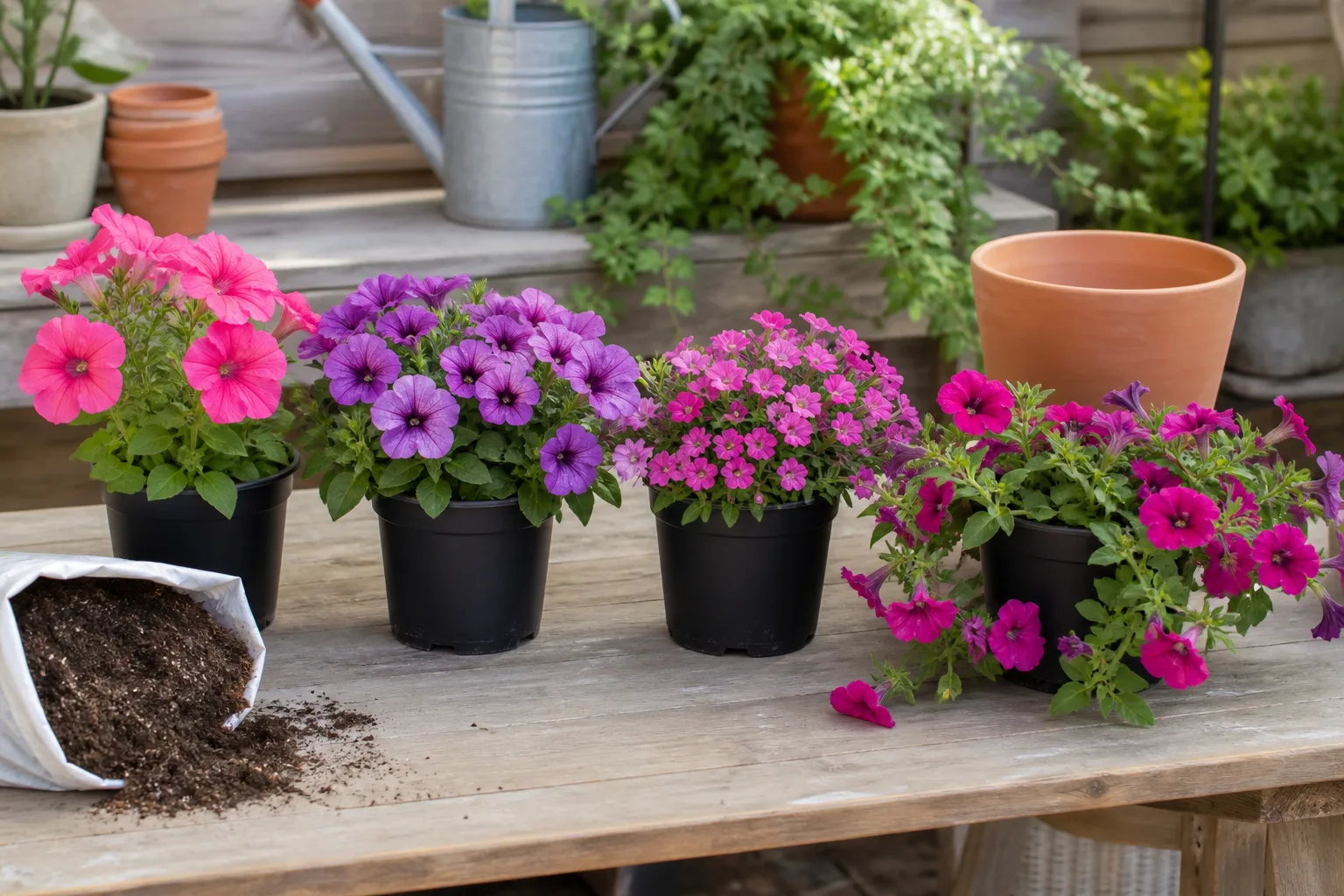
Grandiflora, Multiflora and Milliflora
Grandiflora petunias carry the largest flowers — often several inches across — on upright or slightly mounding plants. They deliver strong close-up impact in patio pots and formal beds. Clemson notes many grandifloras struggle in hot, humid summers because large blossoms are prone to rain damage and rot, so southern gardeners often prefer weather-tougher series such as Storm, Ultra, and Daddy.
Multiflora types produce more flowers at once with slightly smaller blooms. They tend to be more compact and weather-tough for massed garden color. Both grandiflora and multiflora usually benefit from an early tip pinch and regular deadheading of spent blooms. UF/IFAS and Clemson agree: large-flowered and double petunias need deadheading, while many smaller-flowered cultivars are self-cleaning.
Milliflora petunias stay compact with 1–1½ inch flowers in huge numbers. Clemson notes they rarely need midsummer rejuvenation pruning and work well in containers — useful when you want color without basket-scale water drama.
Spreading Wave Types and Type × Placement Matrix
Spreading / Wave types stay low but can run 3–4 feet or more, flowering along the stem length. They shine as seasonal groundcovers, window-box spillers, and hanging baskets. Ohio State PlantFacts describes Wave petunias as full-sun crops that want at least six hours of full sun for maximum flower production, keep mix moist in warm weather, and may need watering twice a day in heat. Treat spreading types as high-demand plants for water and fertilizer whether they sit in beds or baskets.
| Type | Deadheading | Water demand | Best use |
|---|---|---|---|
| Grandiflora | High (every few days) | Moderate; rain-sensitive blooms | Feature pots, formal beds |
| Multiflora / floribunda | Medium–high | Moderate; tougher in rain | Mass bedding color |
| Milliflora | Low / often self-cleaning | Moderate | Compact pots, tight spaces |
| Wave / spreading | Low (self-cleaning) | High — baskets may need twice daily | Baskets, boxes, groundcover |
If you want near-black drama rather than general culture detail, use the design-focused black petunias guide after you lock sun and watering here.
Light and Sun Requirements for Continuous Bloom
Petunias are outdoor sun annuals. Clemson is blunt: plant in full sunlight or plants become spindly with few flowers. NC State Extension recommends at least 6 hours of sunlight per day and notes shadier spots simply produce fewer blooms — choose impatiens, coleus, or begonias instead. NC State’s plant profile lists full sun (6 or more hours of direct sunlight a day) as the primary light class, with partial shade as a secondary option that costs flowers.
Think of 5–6 hours as the minimum for acceptable flowering, not the target for show baskets. In full sun all day, spreading types can become so flower-covered that foliage nearly disappears. Grandiflora and multiflora bedding types spaced in full sunlight keep stronger form than the same cultivars tucked into afternoon shade.
“Direct sun” means unfiltered light hitting leaves and flowers — not a bright room ten feet from a window. A cheerful north balcony can deliver zero direct hours at the pot rim. If you must choose between “a little shade to be safe” and “full sun with careful watering,” petunias choose sun. Temporary afternoon shade in extreme heat can reduce stress for large-flowered types, but it is a compromise — not a substitute for morning and midday direct light. For hour counts and basket placement detail, use the dedicated Petunia light guide.
Watering Petunias in Containers Versus Beds
There is no honest single answer to “how often should I water petunias?” The honest answer is a placement framework plus a dry-down check. Limited soil volume in containers dries fast in full sun; established in-ground plants reach deeper moisture. NC State Extension notes petunias wilt dramatically when dry but usually perk up after watering, while chronic wetness invites disease — and containers may need water twice on the hottest days.
For hanging baskets, window boxes, and patio pots, expect a summer check every 1–2 days — sometimes twice daily for small baskets in peak heat — and water when the top 2–3 cm feels dry and the pot feels light. For upright in-ground bedding, Clemson and UF/IFAS both recommend about 1–2 inches of water every 7–10 days once established, avoiding frequent light sprinkles that encourage shallow roots. Wave and spreading types in beds drink more like thirsty containers than like once-weekly upright bedding. Never share one calendar between a basket and a bed.
Water at the base, not overhead, whenever you can. Wet flowers and foliage invite petal blight and gray mold in humid weather. Clemson and UF/IFAS both advise avoiding wet foliage and flowers when watering. If you must overhead-water, NC State recommends doing it early enough that leaves dry before sunset; drip irrigation is often worth it. Soak containers until water runs from drainage holes, then empty saucers. Missouri Botanical Garden lists susceptibility to root rot when drainage fails. Afternoon wilt on dry, light pots usually means water; wilt on heavy, wet pots usually means root stress. Temporary midday soft wilt that recovers by evening on adequately moist soil is heat response, not a cue to flood again. For tables and overwatering diagnosis, use the Petunia watering guide.
Soil, Drainage and Potting Mix
Soil is the hidden system that decides whether roots get oxygen between waterings or sit anaerobic after every drink. Clemson recommends well-drained, light soil of medium fertility and pH 6.0–7.0, with raised beds where drainage is poor. Missouri Botanical Garden confirms average, medium-moisture, well-drained soils and notes petunias tolerate poorer soils if drainage stays good. NC State similarly allows poor soils when drainage is sound.
For containers, use a lightweight peat- or coco-based potting mix with about 15–20% perlite (bump toward 20–25% for large Wave baskets in hot sun). Do not fill pots with unamended garden soil — it compacts, cuts oxygen, and drives rot despite careful watering. RHS container guidance stresses that drainage holes are essential and that waterlogged compost causes roots to rot. Refresh mid-season mix when peat collapses, water channels down the sides, and plants wilt twice daily despite watering. Full recipes live in the Petunia soil guide.
Feeding Petunias for Nonstop Color
Petunias are hungry annuals, especially in containers where frequent watering leaches nutrients. Clemson recommends monthly balanced fertilizer for rapid growth and heavy bloom. UF/IFAS suggests monthly balanced feed or a controlled-release product at planting. NC State Extension goes further for peak performance: fertilize once or even twice a week with a complete water-soluble fertilizer by replacing some clear waterings with fertilized ones. Ohio State notes Wave types are aggressive nutrient users and lists frequent soluble feeding in commercial production.
A practical home schedule:
- In-ground beds: work balanced granular (such as 8-8-8, 10-10-10, or 12-12-12) into soil at planting; liquid every few weeks midseason; weekly for spreading types.
- Containers and baskets: mix timed-release fertilizer into potting mix at planting; add flowering-plant liquid every 1–2 weeks from midseason, weekly for Wave/spreading types. For a typical 10–12 inch pot, follow the product’s “container” rate rather than bed rates — a common water-soluble flowering formula at half to full label strength once weekly is enough when timed-release is already in the mix.
- Never fertilize bone-dry soil — water first, then feed.
- Stop feeding when frost ends the season or when sustained heat collapses bloom quality beyond recovery.
Avoid very high nitrogen alone in containers; it pushes leaves over flowers. Salt crust, brown tips, and wilt on wet soil after heavy feeding point to overfertilization — flush with plain water and pause. Details: Petunia fertilizer guide.
Deadheading, Pinching and Midseason Cutbacks
Deadheading is the highest-return grooming task for seeded and large-flowered types. NC State Extension explains why: once a plant sets seed, it has less reason to keep blooming. Remove not only the wilted petals but the small ovary structure behind the flower. Pinch or snip at the green calyx, not just the petals. Grandiflora and double types need this every few days in peak bloom; many smaller-flowered and vegetative spreading types are self-cleaning, though a tidy pass after wet weather still helps.
Pinch the top inch of young grandiflora/multiflora plants at planting or when about 15 cm tall to encourage branching — Clemson and UF/IFAS both recommend this. Skip tip pinching on Wave and milliflora types that are already self-branching. Space plants about 12–18 inches apart for ground cover (Clemson); Wave and cascading hybrids may need closer to 1–3 feet depending on vigor (NC State).
When plants go leggy or stop flowering midseason, cut shoots back hard. Clemson advises pruning to about half length (or nearly to the base if needed, without stripping all leaves), then liquid-feeding and watering to force new growth. NC State suggests removing about 20% at a time if you want to keep some color, or a larger cut with a week or two of recovery. Missouri Botanical Garden likewise recommends cutting back leggy plants and plants that decline in summer heat to stimulate later bloom. Step-by-step cuts: Petunia pruning guide.
Container Culture for Baskets and Window Boxes
Most petunia failures happen in containers because the care stack is stricter: full sun on the cascade, frequent water, aggressive feeding, and drainage that never traps runoff. Choose a pot with open drainage holes. Use fresh lightweight mix each spring. Plant short, compact nursery stock rather than leggy, already-blooming stems that struggle outdoors — Clemson notes young plants not yet in bloom often settle faster. Harden off transplants before exposed beds or windy balconies.
Hang baskets where the rim and trailing canopy both receive direct sun, and rotate weekly so one side does not go bare. Expect daily moisture checks in heat. Pair heavy bloomers with timed-release fertilizer plus midseason liquid. If the basket stalls by July, combine a one-third cutback, a soak, a feed, and a sun audit before you replace the plant. For fuller pots and longer bloom windows, use container petunias: grow fuller pots. For cold nights and overwintering attempts, use container petunias winter care.
Climate and Planting Calendar
Match planting time to climate, not to a single national calendar.
| Region | Typical timing | Notes |
|---|---|---|
| Cool North (short season) | After frost risk; soil warm (Wave often wants ~60°F / 16°C soil) | Spring to frost display; start seed 8–10 weeks early indoors if growing from seed |
| Transition / temperate | After last frost; peak bloom late spring–fall | Midseason cutback common in July heat |
| Hot-humid / subtropical South | Often fall / cool season (Florida: Oct–Nov) | Summer heat stalls many series; prefer weather-tough multiflora, milliflora, Wave |
UF/IFAS treats petunias as a popular winter annual in Florida, with October and November as prime planting months. Ohio State notes Wave petunias are not frost hardy and soil should be at least 60°F before planting outside. In humid South Carolina summers, Clemson prefers multifloras, millifloras, and spreading types over fragile grandifloras — and names Storm, Ultra, and Daddy when large flowers are still desired.
Common Petunia Problems: First Fixes
Most petunia problems are care-stack failures, not mysterious diseases. Run these first-response steps on the plant in front of you before you open a symptom page. Then use the Petunia care hub when you already know the failure mode.
Leggy Growth, Few Blooms and Heat Stall
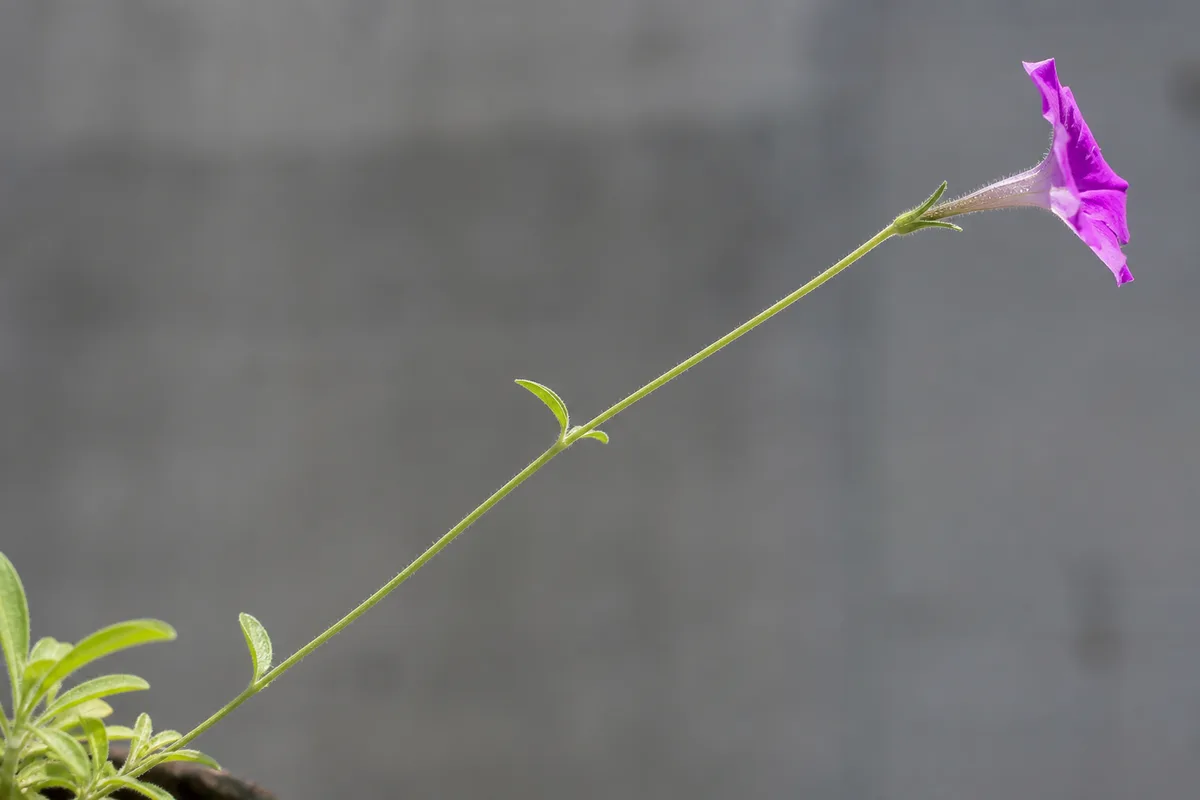
Long internodes and sparse flowers almost always mean not enough direct sun, overcrowding, or a plant that stretched under greenhouse lighting then sat in shade. Move the pot or choose a sunnier bed before you increase fertilizer. Count real sun hours on the canopy for a week. If the plant already sits in full sun but looks tired in midsummer heat, cut back one-third to one-half, water, feed lightly, and wait for cooler nights — heat stall is common and often temporary. Faded or small flowers can also track weak light, missed feed in containers, or heat stress rather than a single pest. Dedicated pages: leggy growth, no flowers.
Dry Wilt vs Wet Wilt and Root Rot
Use pot weight and finger depth before you add water. Dry wilt: pot feels light, mix is dry 2–3 cm down, leaves soft and limp — soak until drain, then empty the saucer; recovery is usually quick. Wet wilt: pot feels heavy, mix stays soggy, leaves wilt anyway, sometimes with yellowing or a sour smell — stop watering, improve drainage and airflow, and only salvage into fresh mix if roots remain firm and white rather than brown and mushy. Missouri Botanical Garden lists susceptibility to root rot when drainage fails. Do not “fix” wet wilt with more water. Deeper workflows: overwatering, root rot, wilting.
Botrytis, Petal Blight and Pest Watch
Avoid wetting flowers in humid weather. Pacific Northwest Pest Management Handbooks describes Botrytis cinerea colonizing senescent and wounded tissue, then attacking healthy petals and stems in moist, humid conditions — with fuzzy gray sporulation on infected tissue. First actions at home: remove all stuck and dying blossoms from plants and from the soil surface, increase spacing and airflow, water at the base early in the day, and discard infected debris (do not compost soft, moldy tissue). Clemson and UF/IFAS both flag petal blight in rainy, humid weather.
Watch for aphids, slugs, caterpillars, and viruses. Missouri Botanical Garden and NC State list gray mold, root rot, and tobacco mosaic virus among disease risks. Do not smoke around plants if you handle tobacco; sanitize tools if mosaic symptoms (mottled leaves, stunting) appear, and remove badly infected plants. Pest-specific steps: aphids, slugs and snails, botrytis/blight.
Pet Safety, Seasonal Limits and Midseason Triage
The ASPCA lists Petunia species as non-toxic to dogs, cats, and horses. Non-toxic does not mean food — large ingestion of any plant can still cause mild stomach upset, and pets can be harmed by fertilizer salts, pesticides, or digging in pots. Hanging baskets and raised planters help keep curious pets out of the root zone.
Seasonally, treat petunias as frost-tender annuals in most gardens. Plant after frost risk passes and soil warms. In hot southern and subtropical climates, plant for the cool season instead. Missouri Botanical Garden notes favorite plants may be overwintered indoors in a bright, cool location, but most hybrids do not come true from seed. For most gardeners, replacing plants next season is simpler than forcing a second year. Petunias are poor permanent indoor houseplants — a bright sunroom may hold a plant briefly, but year-round indoor bloom is not a realistic care goal.
Midseason triage checklist (use when bloom stalls):
- Count direct sun hours on the canopy — aim for 6+.
- Check dry vs wet wilt with finger and pot weight.
- Deadhead or tidy stuck blooms; cut back one-third if leggy.
- Confirm container feed has not been skipped for weeks.
- Look for gray mold, aphids, or mosaic patterns before buying replacements.
Related guides
Use this page as the baseline care stack and type chooser. Go deeper here when you already know the next job:
- Petunia care hub — topic pages and symptom-first fixes for this species.
- Container petunias: fuller pots that bloom longer — basket density, mix volume, and midseason revival tactics.
- Container petunias winter care — frost, cold snaps, and overwintering realism.
- Black petunias — near-black cultivar design notes after sun and watering are locked.
Conclusion
Good petunia care is a short stack done consistently: full sun, placement-smart watering, draining soil, regular feed in containers, and deadheading or cutbacks matched to type. Flowers tell you when the stack is working. When bloom stalls, run the midseason triage above — sun and moisture first — before you assume the plant is spent. Choose the type that matches your labor and climate, then keep baskets and beds on separate watering clocks. That is the difference between a July basket that collapses and one that still covers itself in color.