Plant Pot Too Large: Overpotting Signs and Fixes
Is your plant pot too large? Spot wet-mix overpotting, use the 1–2 inch step-up rule, and choose careful watering or downsizing.
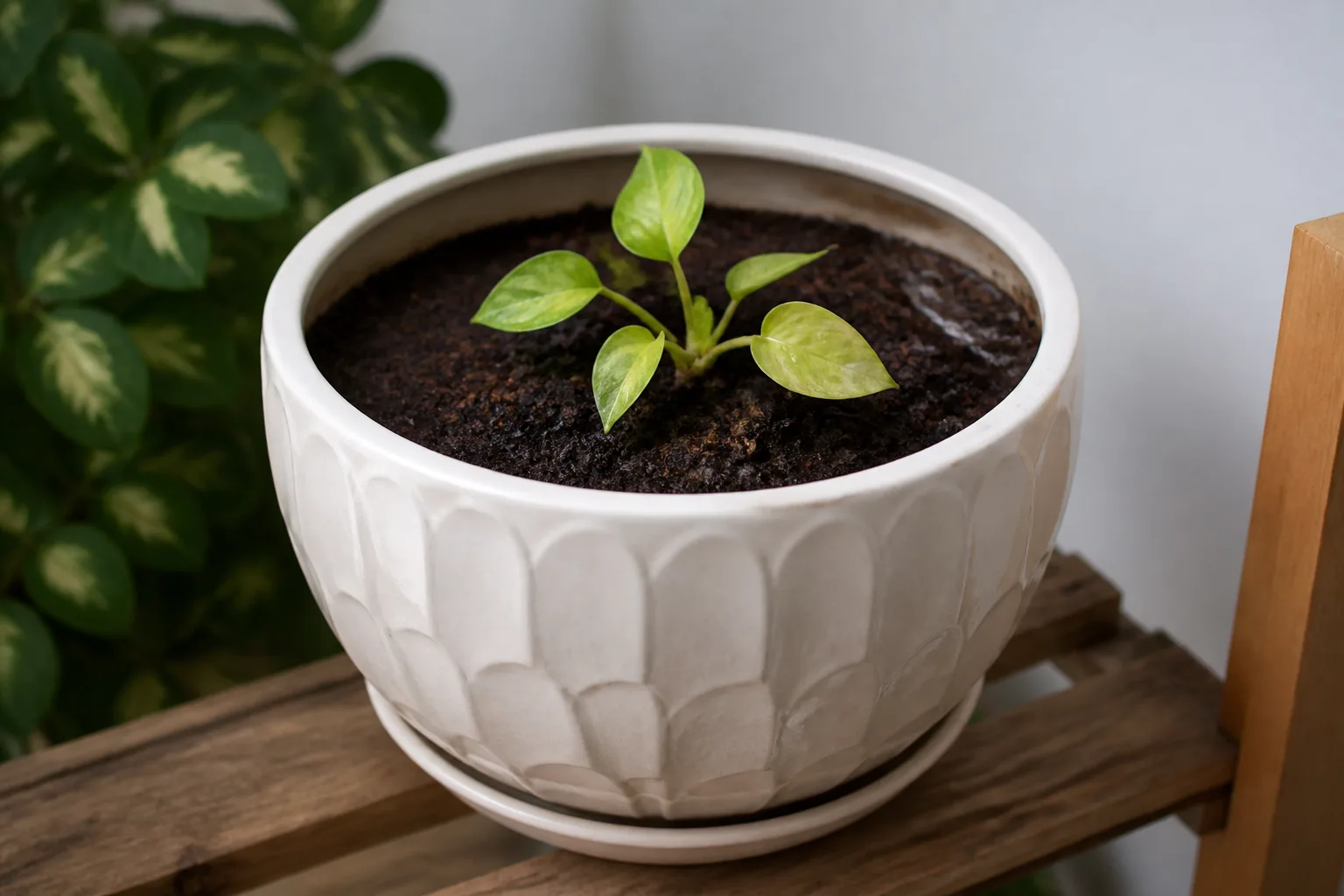
You moved a healthy plant into a “roomy” new pot so the roots would not feel cramped. A few weeks later the mix still feels wet, the lower leaves yellow, and the plant looks thirsty even though you barely watered. That mismatch is the classic signature of a plant pot that is too large for the current root system — a problem gardeners call overpotting.
An oversized container is not automatically fatal. It becomes dangerous when unused potting mix stays saturated around a small root ball, cutting off oxygen and inviting root rot. This guide shows how to tell if your pot is too big, which sizing rules actually work indoors, and how to fix an already overpotted plant without guessing.
Quick Answer: How Big Should a Houseplant Pot Be?
For most houseplants, step up only 1–2 inches (2.5–5 cm) in diameter — or at most about one-third larger than the current pot — when you repot. RHS and Clemson HGIC both push that modest jump. Bigger leaps leave a thick ring of wet mix the roots cannot use yet.
Repot in spring or early summer while the plant is growing, use a pot with real drainage holes, and water only when the mix has started to dry — not on the old schedule from the smaller pot. If the plant is already struggling in an oversized container, either water extremely carefully or downsize to a pot that barely clears the root ball.
Do this in the next 10 minutes: lift the pot. If it still feels heavy a week after watering and the plant looks limp, stop watering, empty any saucer or cachepot, and plan a gentle unpot to check whether you see an “island” root ball inside unused wet mix.
Use this hub when the problem is too much unused wet media after an upsize — not when roots have filled the pot (root-bound), not when soft dark roots already need surgical rescue (root rot), and not when the main failure is holes or saucers (poor drainage). Sizing facts overlap with repotting pages on purpose; the unique job here is the wet outer ring and the watering-more trap after you jumped pot sizes.
What Overpotting Means (and Why Cachepots Are Different)
Overpotting means a containerized plant has been moved into a pot that is too large relative to its root mass and growth rate, and it is suffering because of that mismatch. RHS notes that a large pot for a small plant does not always cause trouble — problems spike when growth is slow (winter, low light, naturally slow species) or when watering stays generous.
This is different from buying a tall decorative cachepot. A cachepot is a sleeve; the plant should still live in a nursery pot with drainage. Penn State Extension describes cachepots (potholders) as decorative overpots that usually lack drainage and are not meant for planting directly into. Overpotting is about the volume of wet media touching the roots, not how stylish the outer pot looks. Standing water in a cachepot base is a poor-drainage problem layered on top of size — empty it after every watering.
Why Extra Soil Stays Wet and Starves Roots of Oxygen
Roots pull water out of mix. Unused mix around a small root ball does not have that demand, so it dries mainly by slow evaporation. RHS describes the result as a soggy ring of compost around the root ball: roots fail to colonize the new mix and instead sit in low-oxygen conditions until tissue softens and rots.
Clemson HGIC states the moisture math bluntly: a large plant in a small pot needs water more often than a small plant in a large pot. Upsizing without changing your watering habit locks the root zone in the wet half of that equation. Depth matters as much as width — deep “long tom” shapes can create as much unused wet volume as a wide jump in diameter (RHS).
How Oversized Pots Drive Root Rot
Root rot is rarely caused by “one bad watering.” It is usually a duration problem — roots spending too many consecutive days in saturated media. An oversized pot lengthens that duration even when you water the same way you always have.
Oxygen Starvation in Saturated Mix
Roots need both water and oxygen. When media stays waterlogged, roots cannot take up oxygen, tissue declines, and the plant may die. Clemson HGIC identifies overwatering as the main cause of death for potted plants and notes that overwatering and underwatering can look similar above the soil because both damage roots.
In an oversized pot, that oxygen deficit often starts in the outer wet ring while the original root ball still looks intact. Wilting then tricks people into watering again, which makes the wet ring worse. RHS warns that stressed overpotted plants are often watered more, not less.
Pathogens That Prefer Wet Media
Once roots are weakened, soil-borne organisms finish the job. Wisconsin Horticulture lists Pythium, Phytophthora, Rhizoctonia solani, and Fusarium among the most common root-rot fungi on houseplants, noting that most prefer wet soil and that some water molds produce durable spores. Missouri Botanical Garden likewise ties severe underground rots such as Phytophthora to free moisture and flooding conditions.
Overpotting does not “create” these organisms from nothing. It creates the long wet window they need. Pair that with blocked holes, saucers that hold runoff, or dense mix, and the risk climbs fast. When roots are already soft and dark, switch to the dedicated root-rot rescue guide for trim-and-repot steps — this page owns size diagnosis, not full surgical rescue.
Signs Your Pot Is Too Large
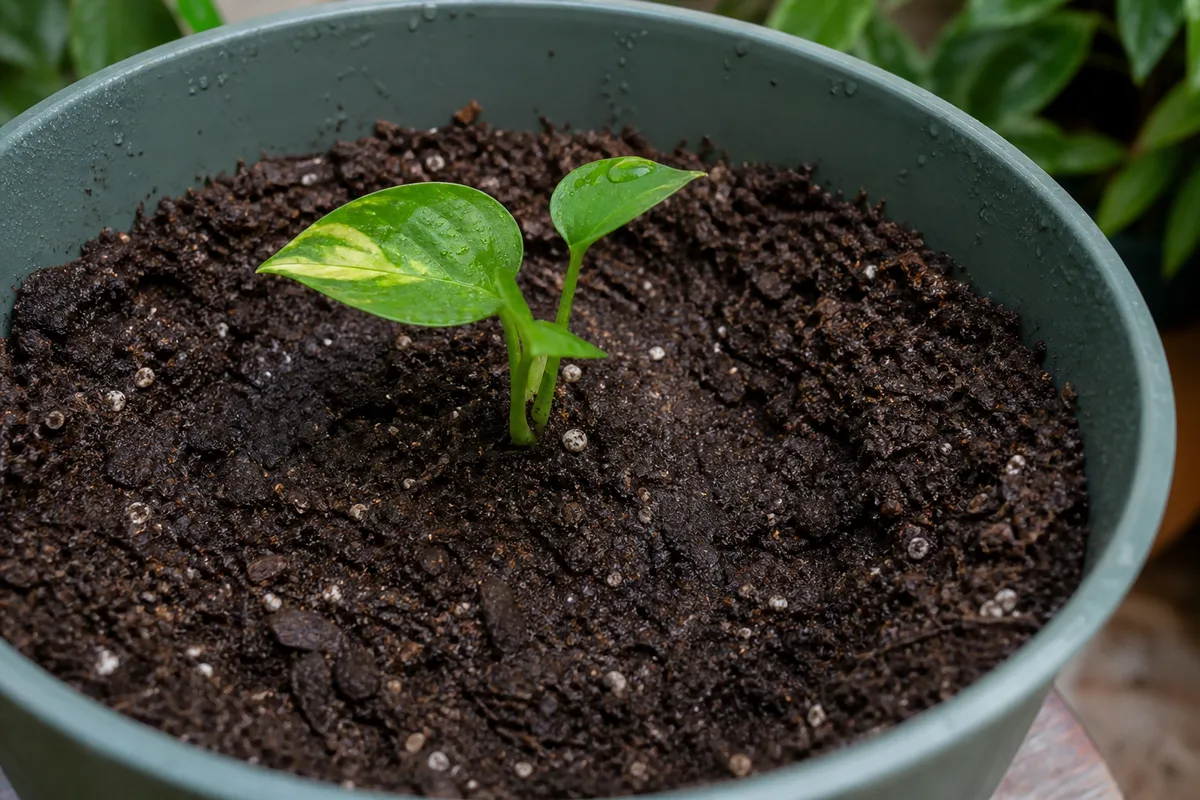
Overpotting symptoms often show up weeks or months after the upsize, not the next morning. RHS lists leaf yellowing, browning, leaf fall, wilting, stunted growth, and soggy compost on the surface as common clues.
Above-Ground Clues That Mimic Thirst
Watch for wilted or soft leaves while the pot still feels heavy, yellowing that starts on older leaves, slowed or stalled growth after an otherwise successful repot, and mix that stays dark and damp for a week or more in normal indoor conditions. Fungus gnats also love persistently wet surface media, so a sudden cloud of flies after upsizing is a moisture clue, not a reason to water more.
Do not treat wilt as automatic underwatering. Clemson HGIC notes that root injury — including rot from excess water — reduces uptake and causes wilting where more water makes the problem worse. If you are seeing classic overwatered plant patterns after a big pot jump, check pot size before you change fertilizer or light.
What the Root Ball Tells You
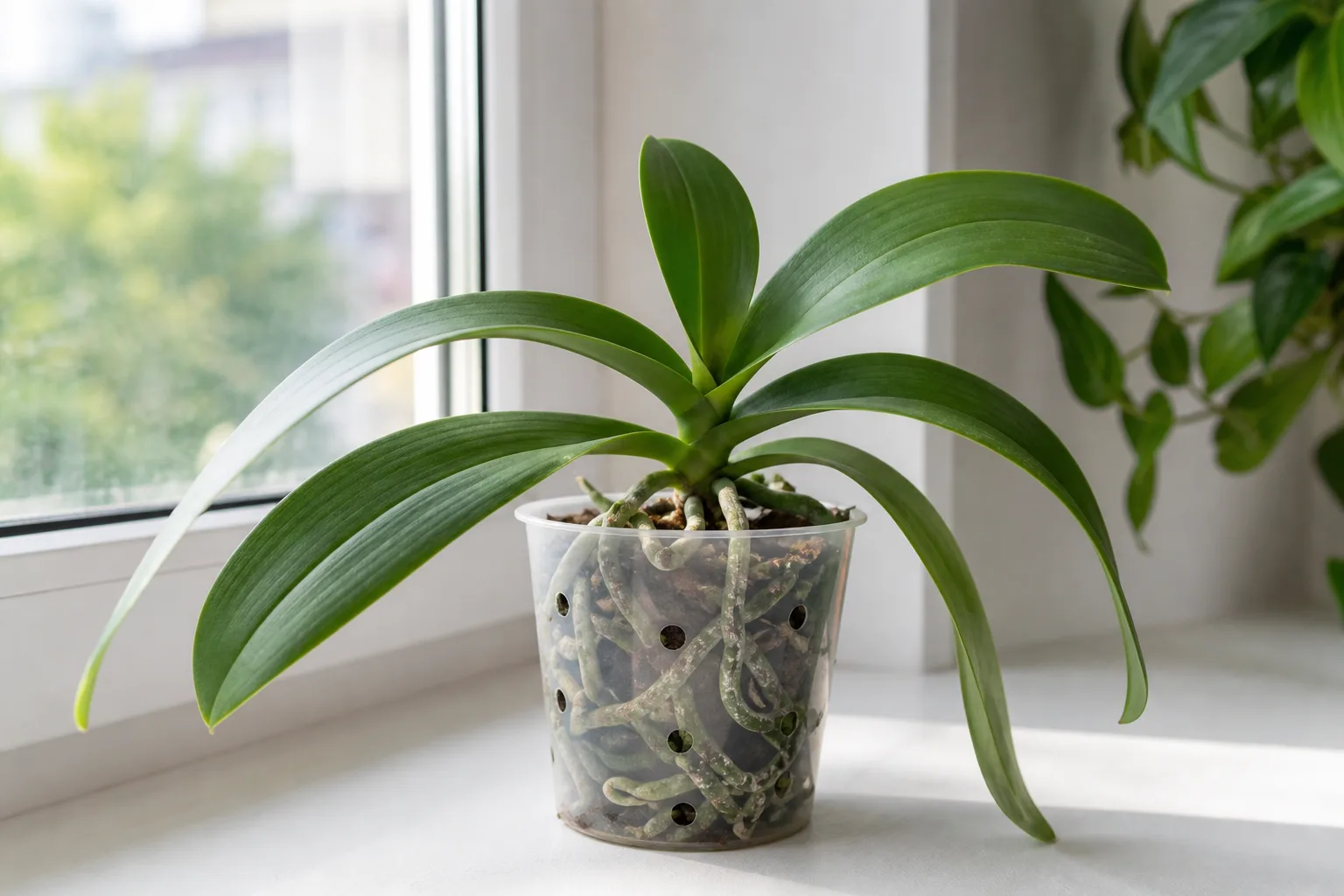
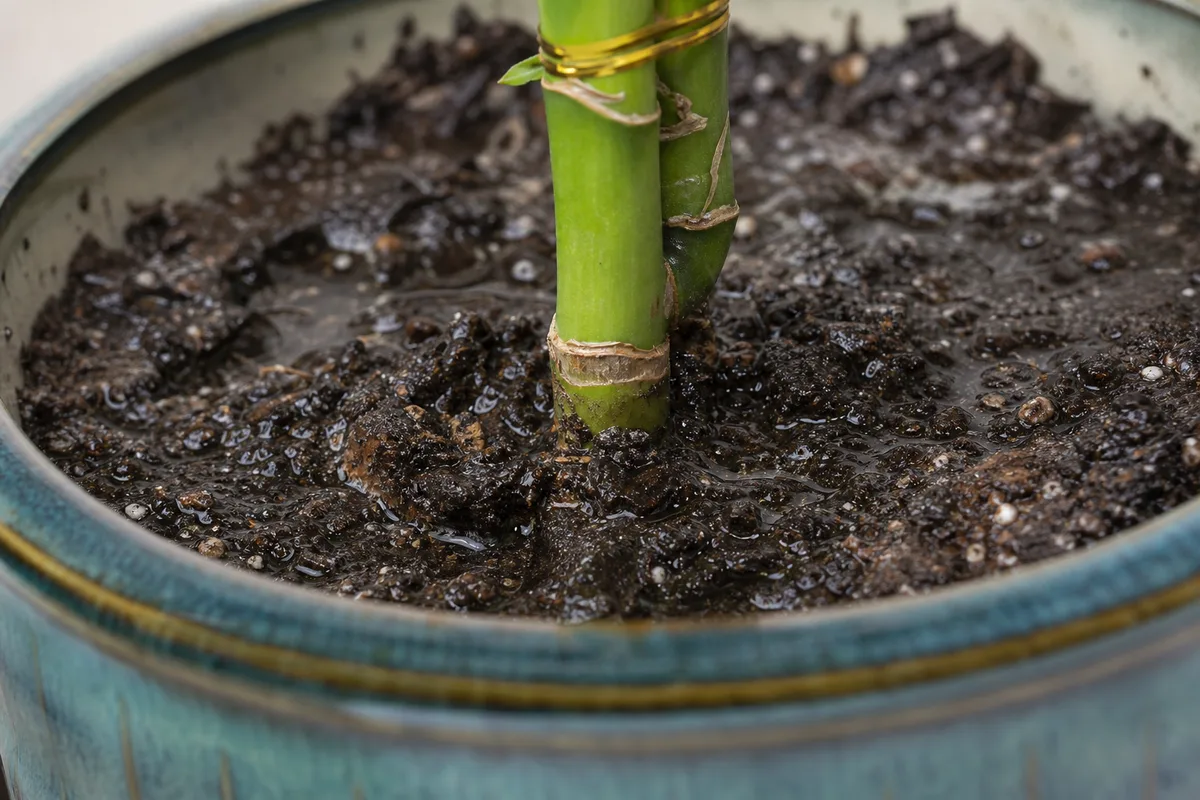
Slide the plant out carefully. In a healthy, correctly sized pot you expect roots throughout much of the volume, with some visible mix still present. In an overpotted plant you often see a dense original root ball sitting like an island inside a thick shell of barely rooted, still-wet mix. Soft, brown or black roots on the outer edge of that island are early rot.
Contrast that with a root-bound plant, where roots form a solid circling mass with little mix left and water may run straight through. Overpotting is excess unused media; root-bound is media displaced by roots. The fixes go in opposite directions.
Pot-Size Rules That Prevent Overpotting
Sizing is the cheapest prevention step you have. Choose the next pot for the current root ball and growth rate, not for the furniture silhouette you want in six months.
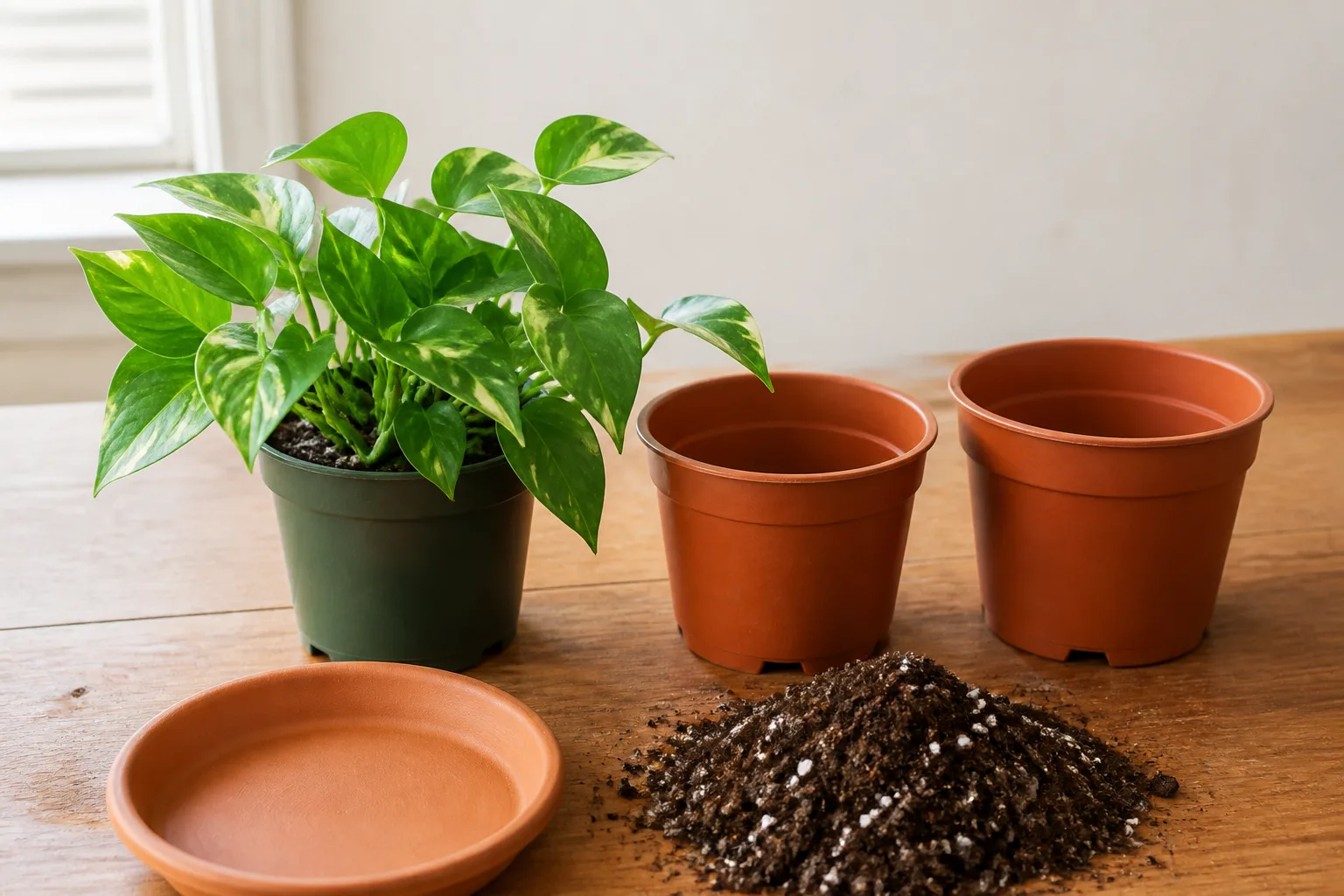
Clemson HGIC recommends selecting a pot 1 or 2 inches larger in diameter than the current pot. RHS gives the same range for containers under about 10 inches (25 cm) and adds that the new pot should be no more than one-third larger overall — any bigger risks overpotting. Penn State Extension also advises a container that is only slightly larger than the current one.
Diameter step-up chart (LeafyPixels editorial):
| Current pot diameter | Typical next pot | Avoid jumping to |
|---|---|---|
| 4 in (10 cm) | 5–6 in (12–15 cm) | 8 in+ “for growth room” |
| 6 in (15 cm) | 7–8 in (18–20 cm) | 10–12 in in one step |
| 8 in (20 cm) | 9–10 in (23–25 cm) | 14 in decorative giants filled with mix |
| 10 in (25 cm) | 11–12 in (28–30 cm) | Doubling to 16–20 in |
These are diameter guards, not guarantees. A slow grower in low light may still struggle at the high end of each band if you keep a weekly watering habit.
When Going Larger Is Still Safe (and Who Should Never Jump)
A bigger jump can work for fast growers in peak season with bright light, chunky fast-draining mix, and a grower who checks moisture by weight — not by calendar. RHS allows a larger container when you know the plant will fill that volume by the end of the growing season. Late-season upsizing (after midsummer for many temperate indoor setups) is riskier because growth slows and wet weather or lower light keep media damp longer.
Houseplant risk matrix (editorial synthesis):
| Plant type | Overpotting risk | Why |
|---|---|---|
| Fast tropical vines (e.g. pothos) in bright light | Lower if mix is chunky | High water use can colonize new mix faster |
| Snake plant, ZZ plant, many peperomias, cacti | High | Low water use leaves unused mix wet for weeks |
| Newly purchased nursery plants in winter | High | Slow growth + generous watering after “welcome repot” |
Slow growers almost never need a dramatic jump. Some plants even prefer being somewhat pot-bound; Clemson HGIC notes that certain species thrive that way. If you only want a taller look, slip a correctly sized nursery pot into a decorative cachepot instead of filling a giant container with mix.
Pot Material, Mix, and Drainage Amplifiers
Pot size is the headline risk. Material and mix decide how forgiving the mistake is. Unglazed terracotta is porous and pulls moisture from the mix, so it can buffer a slightly oversized pot better than sealed plastic or glazed ceramic. Penn State Extension notes that terracotta reduces waterlogging (and therefore needs more frequent watering), while plastic suits plants that prefer steadier moisture. Compare options in our terracotta vs plastic pots guide before you upsize moisture-sensitive plants.
Mix texture matters as much as diameter. Fine, peat-heavy blends hold water longer in that unused outer ring; barky or gritty blends dry faster and leave more air space. If your plant already sits in dense media, fix the wrong soil mix when you correct pot size — do not bury a small root ball in a spongey peat block inside a bigger pot. For recipes by plant type, see best potting mix for indoor plants.
Skip the gravel layer at the bottom. Wisconsin Horticulture and Clemson HGIC both warn that rocks or clay shards under the mix can slow drainage rather than improve it. Use drainage holes, empty saucers, and a potting mix matched to the plant.
Fix Option A: Careful Watering in Place
If roots still look mostly firm and pale, you can leave the plant in the large pot and water only when the mix shows clear dry-down — especially in the first weeks after the upsize. RHS recommends this cautious approach and suggests foliar feeding to encourage growth without soaking the root zone.
Houseplant caveat on foliar feeding: misting dilute fertilizer onto foliage is an outdoor/container trick that can leave hard-water spots or leaf damage on many indoor foliage plants in low airflow. Prefer bright light, warmer growth temperatures, and restrained root-zone watering first. Skip foliar feed unless you know the species tolerates it and your water is clean.
Lift the pot: water when it is clearly lighter, not when the surface looks a little pale. Water thoroughly when you do water, then empty the saucer so the base does not sit in runoff (Clemson HGIC).
When NOT to downsize yet: roots firm, mix drying within a reasonable window for that species (often under ~10–14 days in warm rooms for tropicals), no sour smell, and you can reliably break calendar watering. Winter overpotting with firm roots often survives on careful watering until spring growth resumes.
This path fails if you cannot break the habit of frequent light watering, or if the mix already smells sour and roots are mushy. In those cases, downsizing or a full root-rot rescue is safer than hoping the wet ring evaporates.
Fix Option B: Downsize to a Root-Matched Pot
Tip the plant out over newspaper or a tarp and let loose, unused mix fall away. Move it into a container only slightly larger than the remaining root ball, then water sparingly until new growth appears. RHS describes this as the second-stage remedy when careful watering is not enough. Trim only roots that are clearly dead and soft; do not aggressively prune healthy roots just to force a smaller pot.
Expect a recovery window. Disturbing roots can trigger transplant shock — temporary droop, leaf drop, or stalled growth — even when the new pot size is correct. Bright indirect light, stable temperatures, and restrained watering usually beat fertilizer as a recovery plan. Hold fertilizer until you see consistent new growth; feeding a plant still repairing roots adds salt stress without speeding colonization.
Time the move for active growth when you can; emergency downsizing for rot is still worth it in winter if the alternative is a permanently wet coffin of mix. Remoisten hydrophobic peat before you judge the new pot “too dry” — a bone-dry peat brick that sheds water is not proof you should soak daily.
Overpotting vs Root-Bound vs Transplant Shock
These three get blended in search results and in living rooms. Separate them before you act.
| Clue | Overpotting | Root-bound | Transplant shock |
|---|---|---|---|
| Pot weight / dry-down | Heavy; stays wet for many days | Light; dries too fast | Often normal for size |
| Root look | Island ball in unused wet shell | Circling mass, little mix left | Firm roots; torn fine roots possible |
| Above ground | Wilt while wet; yellowing; stall after upsize | Wilt when dry; water runs through | Temporary droop after the move |
| First fix | Water less or downsize | Modest size-up + tease roots | Stabilize light/temp; do not overwater |
Penn State Extension says it is time to repot when roots circle the ball or fill the bottom third with little visible mix. NC State Extension describes the same pattern — roots displacing media so the container stops holding water. Fix that congestion on the root-bound guide linked below, not by filling a giant pot “for the future.”
If you need the mechanics of a clean size-up, pair this page with repotting houseplants and how to water indoor plants so the new pot does not inherit the old watering calendar.
Prevention Checklist Before Every Repot
Before you buy the next pot, confirm the plant actually needs more root space: circling roots, roots from drainage holes, mix that dries in a day, or stalled growth in season. Clemson HGIC and Penn State Extension both treat spring active growth as the preferred window and warn against repotting ailing or dormant plants unless it is an emergency.
- Pick a pot only 1–2 inches wider, with drainage holes.
- Skip bottom gravel.
- Match mix to the plant type; pre-moisten so it wets evenly (Penn State Extension).
- Set the root ball at the original depth; leave a watering gap at the rim.
- Reset moisture checks: finger test, pot weight, and color — not the old day-of-the-week habit.
- Want a bigger silhouette? Use a cachepot around the correct nursery pot instead of filling the outer vessel with mix.
First-Hand Notes From Overpotted Houseplants
These are LeafyPixels editorial notes from plants we track in real rooms — not lab trials. They show how the wet-ring problem behaves when pot diameter jumps.
ZZ plant, two-size jump (January–February 2026). A ZZ moved from a 4-inch nursery pot into a 8-inch plastic decorative pot filled with peat-heavy mix — the same pattern covered on our ZZ pot-too-large page. After a thorough welcome watering, the pot stayed heavy for 12+ days in a cool east room (~68°F). New leaflets stalled; lower petioles yellowed while the surface still looked damp. Unpotting showed a firm central root mass inside a thick, barely rooted wet shell. We downsized to a 5-inch pot with a chunkier mix. Within three weeks the pot began cycling between heavy and light again, and one new spear emerged. Lesson: low-water-use plants turn unused volume into a long wet window.
Pothos, 1-inch step-up that colonized (April 2026). A golden pothos moved from 6 inches to 7 inches in barky mix beside a bright north window (see also pothos pot too large). Pot weight returned to “needs water” in about 5–6 days — similar to the old pot. Roots had reached the outer mix within a month when we peeked. Lesson: modest jumps plus faster growers can fill volume before rot has a long window.
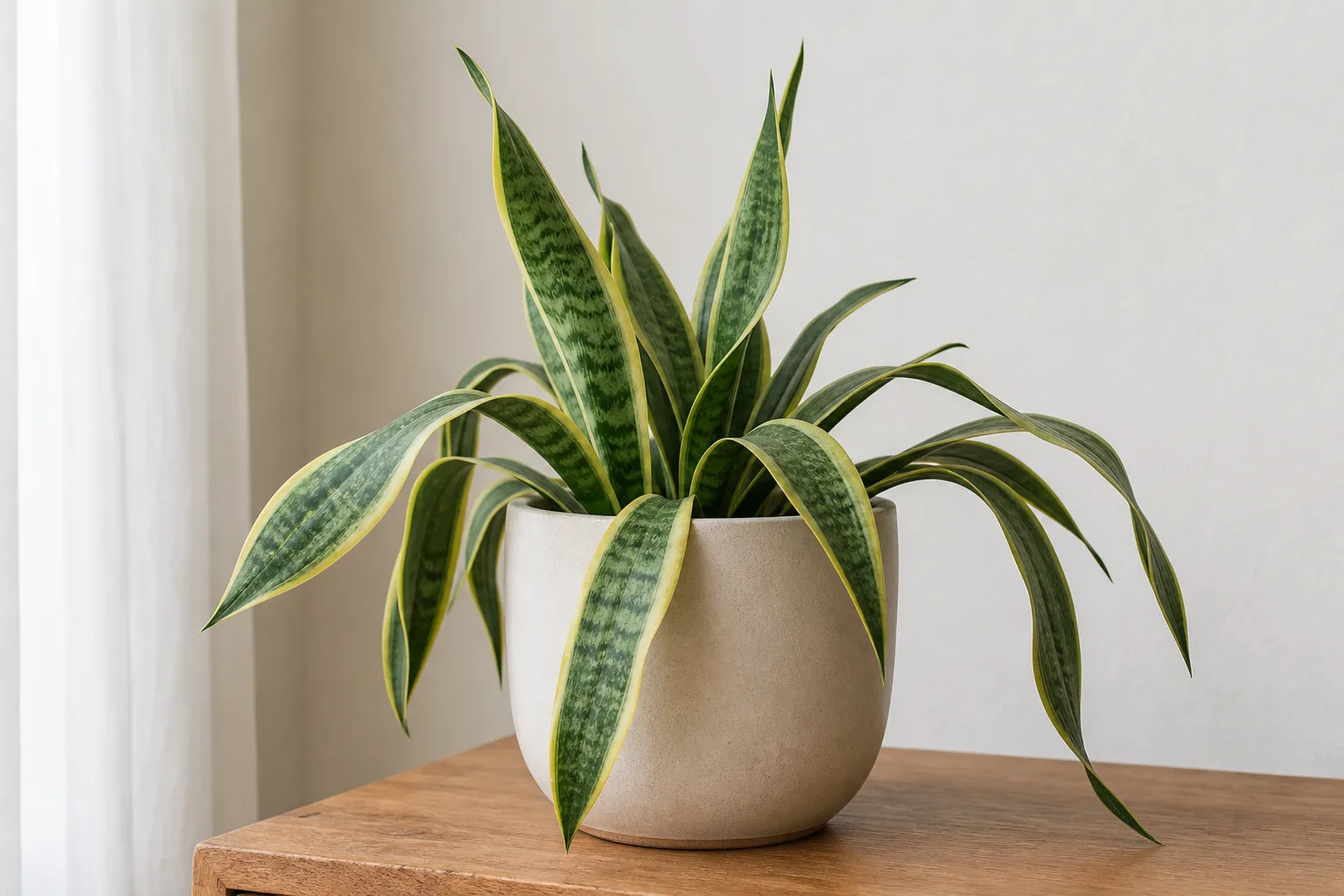
Snake plant, late-summer upsize that stalled (August 2025–March 2026). A snake plant jumped from 6 inches to 10 inches in August “so it would not need repotting again” — a classic snake plant overpotting trap. Mix stayed cool and wet through winter under a weekly habit. No soft roots yet by January, but zero new leaves and repeated fungus-gnat flushes. Switching to weight-based watering (often 18–21 days between soaks) kept roots firm until a spring downsize to 8 inches. Lesson: you can sometimes babysit an oversized pot all winter if roots stay firm — but slow growers rarely reward big late-season leaps.
Editorial method note. Diameter rules and pathogen lists come from the cited extension and RHS sources. The cases, dry-down intervals, and houseplant risk matrix are LeafyPixels framing for indoor collections — treat them as calibration stories, not universal schedules.
Related guides
- Root-bound houseplants — when roots have filled the pot instead of drowning in unused mix
- Poor drainage in houseplants — holes, saucers, and perched water that amplify overpotting
- Transplant shock after repotting — recovery timeline when the move itself stresses the plant
- Root rot in houseplants — rescue steps once roots are soft and dark
- Repotting houseplants — technique for a clean, modest size-up
- How to water indoor plants — reset the watering habit after any pot change
Conclusion
Do this now. Lift the pot and finger-check depth. If it is still heavy and the plant looks limp after an upsize, stop watering and empty saucers or cachepots. Unpot if the mix stays wet for a week or more: an island root ball in a wet shell means downsize or babysit moisture aggressively. Soft, dark roots move to the root-rot protocol. Next time, step up only 1–2 inches, skip gravel, match the mix, and use a decorative sleeve when you want height without filling a giant vessel with unused media.