Transplant Shock After Repotting: Symptoms Timeline
Leaf drop after repotting? Learn transplant shock symptoms, pot-size mistakes, and a week-by-week houseplant recovery timeline.
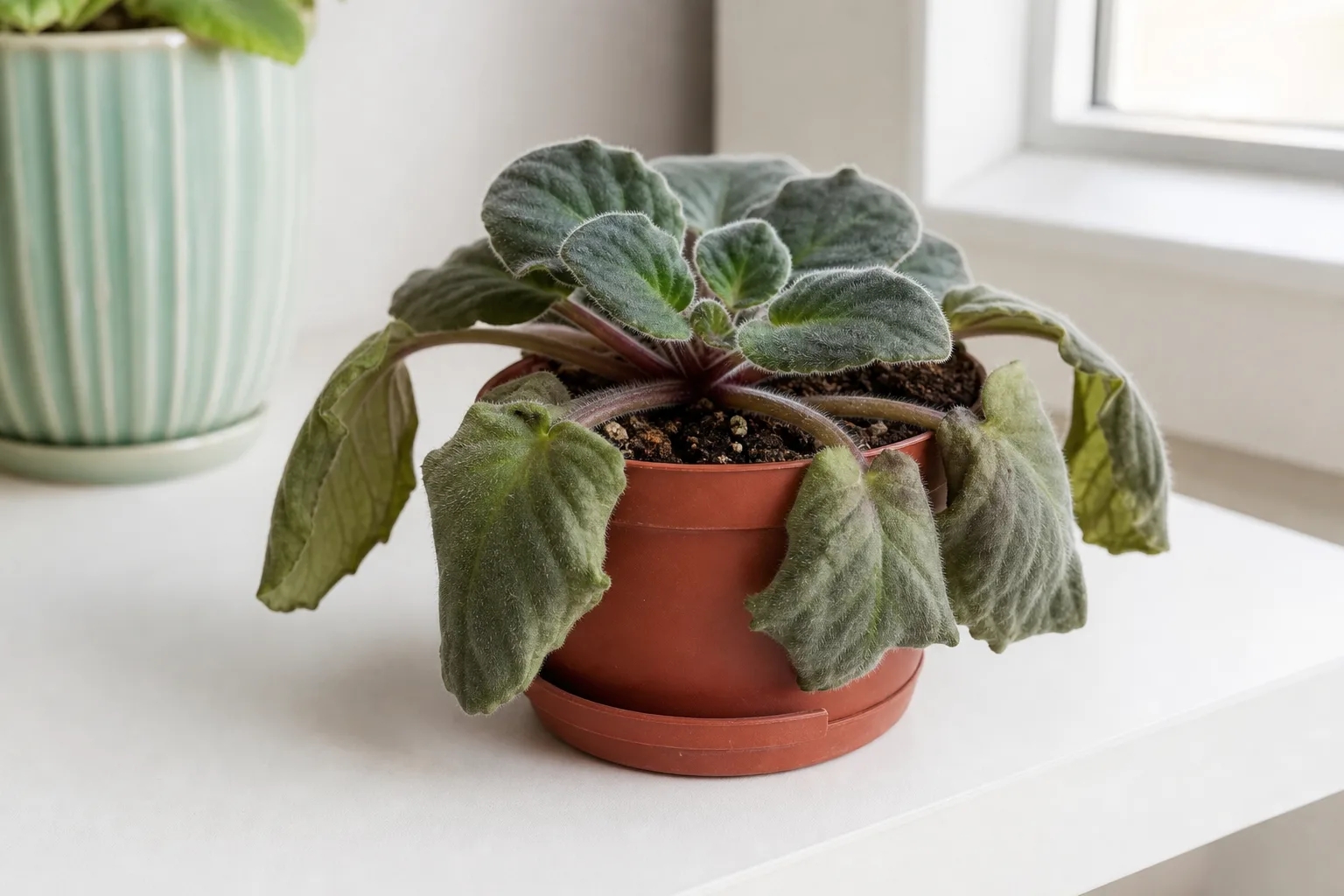
You finished a careful repot. Fresh mix. Clean pot. Extra room for roots. Then the plant wilted, dropped leaves, or stalled like you had done something wrong. You probably did not. You interrupted the root system that was keeping the canopy hydrated, and the plant is renegotiating that balance.
Transplant shock after repotting is a temporary mismatch between leaf demand and root supply. Fine roots and root hairs get broken, air pockets form in the new mix, and watering habits that worked in the old pot can drown or dry the new one. Outdoor transplant research on woody plants describes the same core problem: a plant that has not rooted well yet struggles to take up enough water and becomes vulnerable to secondary stress — useful physiology, even though those trials are landscape settings, not apartment pots. (Purdue Extension) Indoor containers follow the same supply-demand story on a faster, smaller scale.
This guide is the houseplant recovery map: what symptoms mean, how pot size makes shock better or worse, what a realistic timeline looks like, and when leaf drop after a repot is actually root rot or chronic wilting instead.
What Transplant Shock Means for Houseplants
Transplant shock is not a pathogen name. It is a cultural stress pattern that shows up when roots cannot keep up with the shoots after a move into new media or a new pot. Washington State University’s Hortsense fact sheet groups transplant failures with inadequate roots, improper planting, over- and underwatering, bad timing, dried or frozen roots, and severe root pruning. (WSU Hortsense)
Indoors, the usual triggers are more specific: sliding a rootbound plant free, scoring circling roots, swapping dense old mix for airy new mix, jumping pot diameter too far, then watering on a schedule that ignores the new soil volume. Montana State University Extension notes that yellowing leaves or leaf drop after houseplant repotting is normal, and recommends keeping the plant in indirect light for a few days while roots settle. (Montana State University Extension)
Think of it as temporary drought at the leaf level even when the pot feels moist. Damaged absorbing roots cannot refill what the canopy loses to dry indoor air. That is why soft watering, stable placement, and patience beat “rescue fertilizer” every time.
Start Here: 10-Minute Check and Exit Rules
Do this first (next 10 minutes):
- Confirm the plant was recently repotted or heavily root-teased in the last 1–3 weeks.
- Finger-check moisture 5 cm / 2 in deep — do not water on leaf drama alone.
- Count fresh fallen leaves and note whether stems and the crown still feel firm.
- Lift the pot: heavy and soggy for days after a small drink is a different problem than a light, dry pot.
Exit the “just shock” diagnosis when:
- Soft stems, a collapsing crown, foul smell, or mushy brown roots → unpot now and treat as root rot.
- Fresh leaf falls still climbing in week four and the pot stays heavy/wet → overpotting or oxygen stress; see pot too large.
- Mild wilt days 1–3, crown firm, mix evenly moist → stabilize light, hold fertilizer, and track weekly fall counts (stay on this page).
University of Minnesota Extension notes that overwatering is a common path into houseplant root rot because wet media starves roots of oxygen. (University of Minnesota Extension) Use that as your hard exit: limp leaves in a swampy oversized pot are not a reason to water again.
Symptoms You See After a Repot
Shock rarely announces itself with one neat symptom. You usually see a cluster that starts within days of the disturbance and then either slows or escalates depending on aftercare.
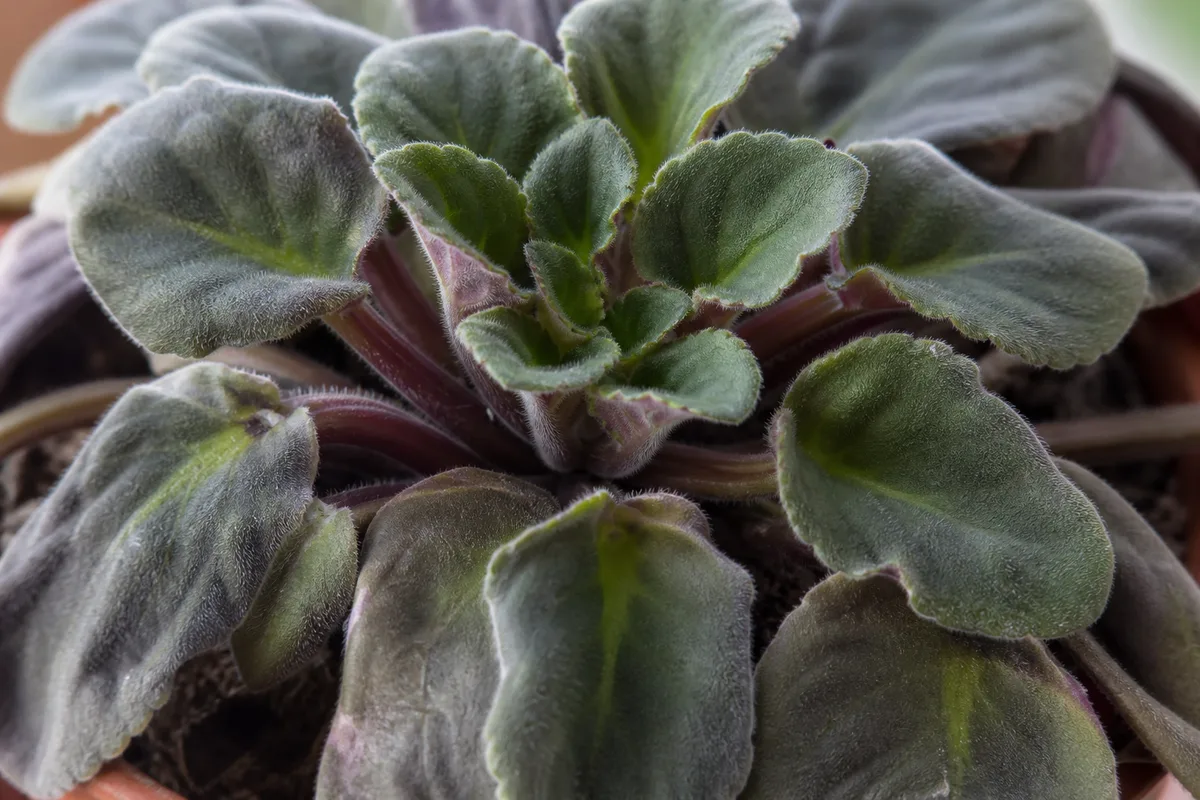
Leaf Drop, Wilt, and Yellowing
The most common apartment complaint is leaf drop after repotting — older leaves yellow and fall, or a burst of still-green leaves detaches after a big environmental change. Clemson HGIC notes that either over- or underwatering can cause leaf drop, that plants in pots that are too small will drop leaves, and that leaf drop after a significant environmental change should last about three weeks. (Clemson HGIC) RHS adds that yellowing in large numbers can come from watering extremes, overpotting into too large a container, deep shade, cold, a sudden temperature drop, or draughts. (RHS)
Wilting with moist soil is the second classic pattern. Soft leaves, dull color, and a heavy pot point to oxygen stress or root injury — not automatic thirst. Use the leaf drop guide when falling leaves continue without a clear repot timeline, and stay here when the clock started the day you changed pots.
Bud Drop and Stalled Growth
Flowering houseplants often abort buds when root uptake dips. Clemson lists dry soil, overwatering, fertilizer mistakes, and cold sprays among bud-drop triggers. (Clemson HGIC) If you repotted a plant that was already setting buds, expect some losses even with careful technique. Pair this page with bud drop when buds keep failing after the recovery window while foliage otherwise looks stable.
Stalled tip growth for one to several weeks is also common. Outdoor transplant guidance often describes reduced growth while roots re-establish; indoors, you should see slower but similar “pause then resume” behavior if the crown stays firm. (Purdue Extension) Judge recovery by firm tissue and a slowing fall rate — not by whether every stressed leaf turns green again.
Why Disturbed Roots Cause the Crash
Healthy leaves assume a dense network of fine roots is pulling water on demand. Repotting breaks that network even when you are gentle. Circling roots need teasing or light scoring so they grow outward instead of strangling the ball — Montana State and Penn State both describe teasing matted roots as part of correct technique. (Montana State University Extension) (Penn State Extension)
Those cuts are useful long term and stressful short term. New potting mix also changes how water moves. Fresh peat-heavy mix can stay wet longer than the compacted nursery plug the plant knew. Clemson’s watering guidance is blunt: overwatering is the main cause of death in potted plants because waterlogged roots cannot take up oxygen and may rot. (Clemson HGIC) A plant in shock is especially easy to drown because limp leaves look like thirst.
Air gaps around a rootball that was not watered in to settle create the opposite problem: dry pockets next to soggy corners. Thorough initial watering that drains freely, then a pause until the upper mix starts to dry, closes that gap without recreating a swamp.
Normal Adjustment Versus Real Trouble
Use the table before you tear the plant out again.
| Pattern after repot | Usually means | First move |
|---|---|---|
| Mild wilt day 1–3, mix evenly moist, crown firm | Expected shock | Soften light slightly, hold fertilizer, check moisture before watering |
| Yellow or green leaf drop for up to ~3 weeks, then slowing | Environmental adjustment | Stabilize placement; track weekly drop rate |
| Soft yellow leaves + heavy wet pot that never lightens | Overwater / early root decline | Improve drainage; reduce frequency; inspect roots if progressive |
| Collapse with mushy stems or foul smell | Root or crown rot | Unpot, trim soft roots, fresh mix or propagate |
| New buds abort while older foliage holds | Sensitive bloom stage | Stabilize moisture and drafts; see bud-drop guide |
Clemson’s roughly three-week leaf-drop window after a big environment change is a useful houseplant benchmark, not a hard medical deadline. (Clemson HGIC) If fresh falls are still climbing in week four while soil stays wrong, stop calling it “just shock” and re-diagnose moisture and roots.
Fresh-fall scoring (LeafyPixels editorial rule of thumb):
- Improving: fewer new fallen leaves each week, remaining canopy firm.
- Flat: similar weekly count, but no soft stems and pot dries on a normal cycle — keep waiting if you are still inside weeks 2–3.
- Worsening: weekly count rising into week 4+, or soft tissue appears — exit to rot/overpot paths.
Pot Size Mistakes That Deepen Shock
Pot diameter is the most preventable amplifier of transplant stress. The plant needs a little new room — not a decorative planter it will occupy someday.
When the Plant Was Root-Bound
If roots circled the ball, exited drainage holes, or left almost no mix in the bottom third, repotting was the right call. Penn State lists fast-drying mix, roots through holes, and stalled seasonal growth as pot-bound cues, then confirms by unpotting. (Penn State Extension) NC State’s Wayne County guidance adds lower-leaf yellowing and roots at the surface as common signals. (NC State Extension)
Root-bound plants often rebound harder after a correct one-size step up because the previous pot was already creating drought stress between waterings. For crowded-root diagnosis before you touch a new container, use the root-bound symptom hub and when to repot.
When the New Pot Is Too Large
Clemson recommends selecting a pot only 1 or 2 inches larger in diameter than the current pot. (Clemson HGIC) NC State says the new container should be no more than 2 inches larger in diameter. (NC State Extension) Montana State’s rule of thumb is about one-third wider and deeper than the previous pot — still a modest step, not a leap. (Montana State University Extension)
An oversized pot holds a collar of wet mix the small root system cannot dry. RHS explicitly lists overpotting among causes of mass yellowing and advises moving into a smaller container when roots do not fill the pot. (RHS) That pattern is pot-too-large stress layered on top of transplant shock — and it will not resolve until the wet volume shrinks or roots catch up, which can take a long time indoors.
Also skip the gravel layer myth. NC State notes that research shows stones under the mix decrease drainage because water will not enter the coarse layer until the soil above is saturated. (NC State Extension) Clemson makes the same point for indoor transplanting. (Clemson HGIC)
If you already jumped pot sizes and the mix stays wet into week three or four, downsizing one step is often kinder than waiting for roots to “catch up” through a permanently wet collar. Unpot gently, keep as much firm root as you can, and settle into a pot closer to the original diameter plus 1–2 inches.
Recovery Timeline Week by Week
Timelines vary by species, season, root damage, and room climate. Use this as an apartment default for a healthy plant that was stepped up one pot size in spring or early summer.
Days 0–2: Mild wilt or dull leaves are common. Water thoroughly once after potting so mix settles and drains, then leave the plant alone. Keep it in bright indirect light, not harsh midday sun. Montana State recommends a few days of indirect light to reduce shock. (Montana State University Extension)
Days 3–7: Some yellowing or older-leaf drop can start. The weekly fresh-fall count should not explode upward if moisture and placement are stable. Do not fertilize. Do not rotate the plant to five new windows “to help.”
Weeks 2–3: Leaf drop from environmental change should be tapering toward Clemson’s roughly three-week adjustment window. (Clemson HGIC) Look for firm remaining foliage and the first hints of tip activity rather than a full canopy rebuild.
Weeks 3–6: Many tropicals show clearer new growth if roots have colonized the fresh mix. If the pot still stays heavy for many days after a small drink, suspect overpotting or compacted wet media rather than “slow shock.”
Beyond 6–8 weeks: Persistent decline, mushy roots, or a still-climbing drop rate means shock is no longer the working diagnosis. Unpot and inspect. University of Georgia Extension notes — for landscape woody plants — that fertilizer can further stress plants already struggling to establish, and that severe dieback often means replacement rather than endless hope. That outdoor lesson transfers indoors as “do not force top growth on broken roots,” not as a houseplant death sentence. (UGA Extension)
Recovery flowchart (exit criteria):
- Crown firm + falls slowing by week 3 → stay the course.
- Falls climbing + heavy wet pot → overpot / oxygen path.
- Soft stem base or foul mix → rot path immediately.
- Pot light and dry with wilt → water thoroughly once, then reassess in 12–24 hours.
First 48 Hours of Aftercare
Treat the first two days as stabilization, not optimization.
Water the newly potted plant thoroughly until water exits the drainage holes, then empty the saucer. Clemson’s transplanting sheet says to water well so excess drains and to repeat as needed to wet peat-heavy mixes without packing wet media. (Clemson HGIC) Penn State likewise ends the process with a thorough watering and free drainage. (Penn State Extension)
Then stop. Keep temperatures steady, away from AC blasts and cold glass. Soften light if the plant normally sat in a bright south window. Resist the urge to mist as a cure — humidity helps tropical foliage over time, but wet leaves do not rebuild roots. If you used a cachepot, empty standing water after every watering so the inner pot does not sit in a reservoir.
Checking roots in week two is reasonable only if soft stems, foul smell, or a never-lightening wet pot appear. Slide the plant out, inspect, and either settle it back carefully or follow rot triage. Do not unpot every two days “just to look” — each disturbance resets absorbing surface again.
Watering Rules While Roots Rebuild
Water by evidence, not calendar. Stick a finger into the mix; Clemson recommends watering when the mix feels dry to about the first knuckle for many houseplants, then watering thoroughly and emptying the saucer. (Clemson HGIC) After a repot, that check matters more because pot weight and dry-down speed both changed.
If leaves wilt and the mix is still wet deep in the pot, you are looking at uptake failure. Adding more water worsens oxygen debt. Improve airflow around the pot, confirm drainage holes are open, and wait for the top layer to begin drying before the next drink. If wilt continues with a heavy wet pot into the second week, slide the plant out and check for brown, soft roots — then follow root-rot triage. Penn State’s houseplant-problems guidance likewise ties many post-stress declines back to cultural moisture mistakes rather than mystery disease. (Penn State Extension)
If leaves wilt and the pot is light with dry mix, water thoroughly once and reassess in 12–24 hours. A rootbound plant that was chronically thirsty can look dramatic after the first correct soak; that is recovery starting, not a new disease.
Light, Humidity, and Placement Stability
Shock plus a sudden light jump is a classic leaf-drop stack. Keep the plant in a familiar brightness band for at least two to three weeks. Indirect light is safer than a scorched sill while roots are short-handed. Avoid drafty hallways and radiator edges; RHS ties draughts and sudden temperature drops to yellowing and leaf problems. (RHS)
Humidity helps thin-leaved tropicals reduce demand on injured roots, but it is a support tool, not a substitute for correct soil moisture. Group plants or use a humidifier if winter indoor air is harsh. Do not relocate the pot every time a leaf yellows — each move resets the acclimation clock. For species that already dislike dry air, pair this recovery page with their plant hub — for example peace lily or African violet — rather than inventing a new window every afternoon.
Fertilizer, Pruning, and Products to Skip
Do not fertilize a freshly repotted, stressed houseplant. Montana State advises waiting at least two weeks so roots can regenerate. (Montana State University Extension) UGA Extension’s landscape transplant guidance warns that fertilizer can force top growth roots cannot yet support — again, outdoor research applied indoors as a restraint rule. (UGA Extension) Fresh potting mixes often already contain a starter charge; stacking liquid feed on damaged roots adds salt stress.
Skip sugar water, aspirin cocktails, and “shock tonic” myths. They do not rebuild root hairs. Skip heavy pruning unless tissue is clearly dead or diseased — leaves still feed root repair. Remove only fully collapsed or rotting material. If the plant was flowering, accept that some buds may abort; forcing a bloom feed now makes things worse.
Clemson also says not to repot ailing, dormant, or plants beginning to flower when you can avoid it. (Clemson HGIC) Emergency root-rot repots are the exception — and those plants need an even quieter recovery.
When Shock Is Not the Real Diagnosis
Re-label the problem when evidence conflicts with a simple recovery timeline.
Chronic wet mix in an oversized pot is overpotting and oxygen stress. Downsize or wick less water, then reread the pot-too-large path in Related guides below.
Mushy roots, sour smell, collapsing crown is disease or advanced rot, not polite shock. Unpot immediately and use the root-rot guide linked below.
Leaf drop that started before the repot may be light, pests, drafts, or underwatering you tried to “fix” with a new pot. Use the leaf-drop diagnostics linked below when the clock did not start with the repot.
Pest stippling, webbing, or sticky residue means insects used the stress window. Treat pests; do not keep blaming the repot alone.
Cold damage after a porch delivery or icy window can look like wilt and leaf death with a different timeline. Check placement temperature before assuming roots failed — see cold damage when the chill story fits better than the repot clock.
How to Prevent Transplant Shock Next Time
Prevention is mostly timing and restraint. Repot in spring or early summer while the plant is actively growing — Clemson, Penn State, and NC State all favor the active season for establishment. (Clemson HGIC) (Penn State Extension) (NC State Extension)
Step up only 1–2 inches in diameter for most houseplants. Use a quality potting mix, not garden soil. Moisten mix before filling. Tease circling roots with a clean blade when needed, but do not scalp a healthy ball for sport. Water in thoroughly, drain, then stabilize light and temperature. Hold fertilizer for at least two weeks. For technique detail beyond shock recovery, use repotting houseplants.
Species That Sulk and First-Hand Notes
Ficus: Often drops green leaves after any change in room, light, or root zone. In spring upsizing, expect a dramatic first 10–14 days, then a taper if stems stay firm.
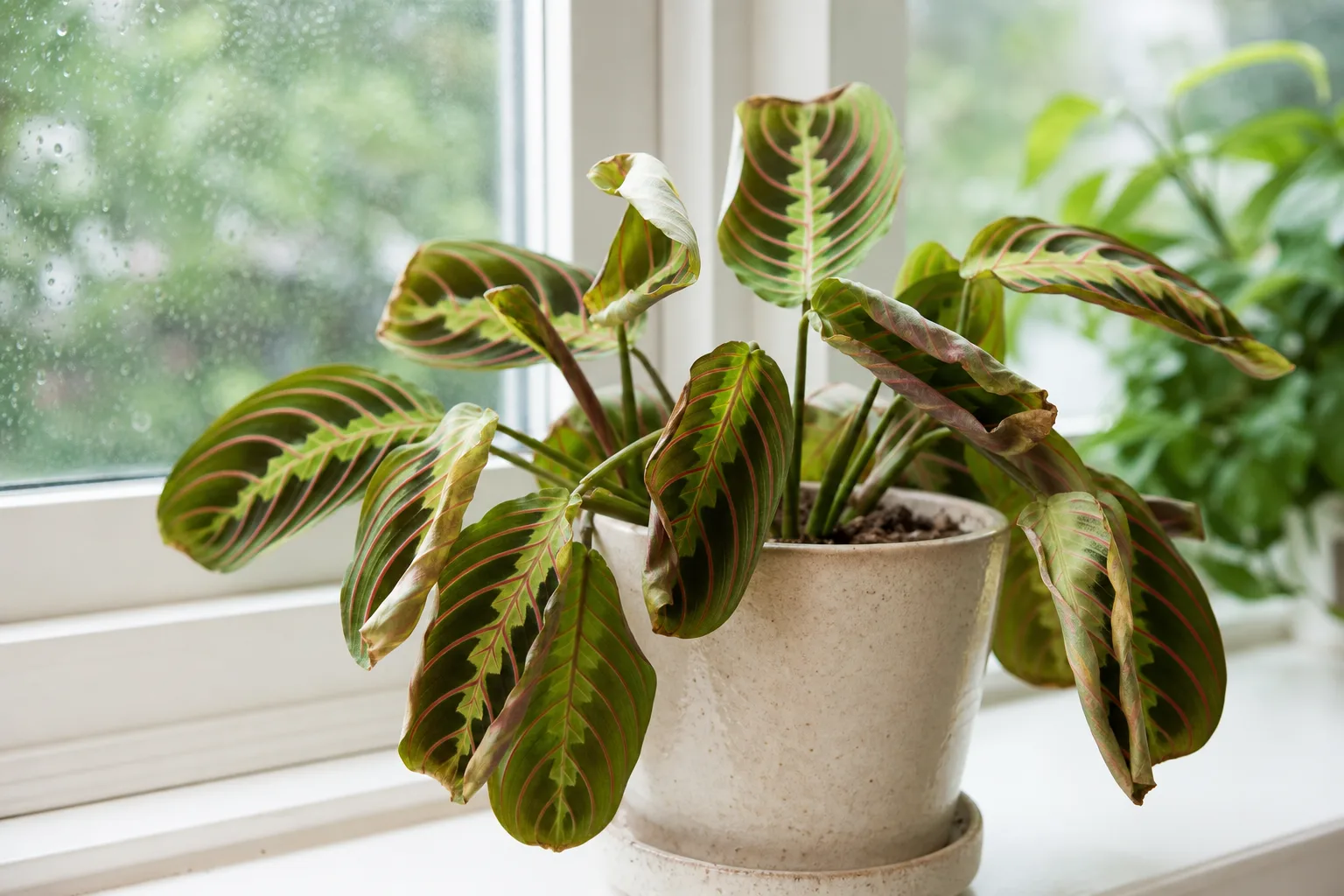
Prayer plants and thin-leaved ferns: Advertise wilt quickly when roots are disturbed. Keep humidity supportive and never “cure” limp leaves with daily sips into wet mix.
African violets: Resent cold water and rough crown handling. Keep water room-temperature and the crown clear of packed mix; limp leaves after a crown bury are technique stress more than mystery disease. See African violet care for species detail.
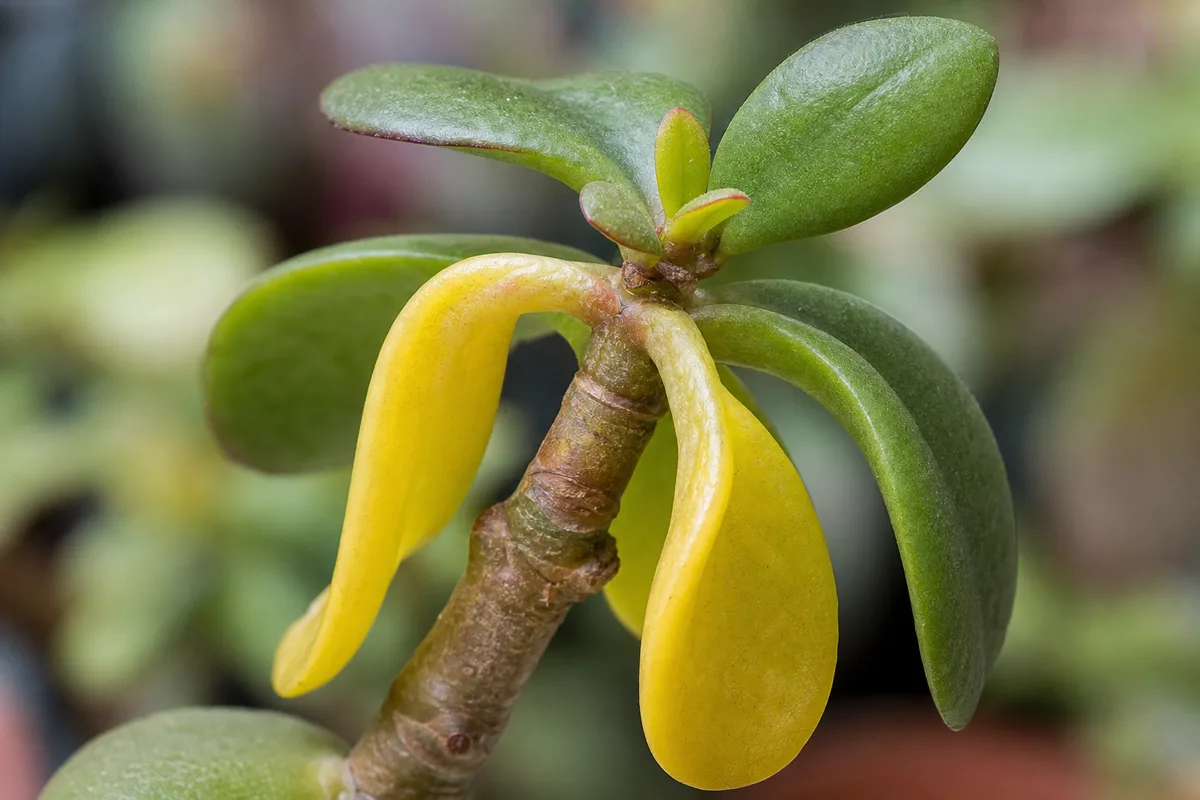
Succulents and jade-type plants: Need a drier recovery than tropical aroids. Wet oversized pots are their main post-repot killer — wait longer between waterings than you would for a pothos or monstera.
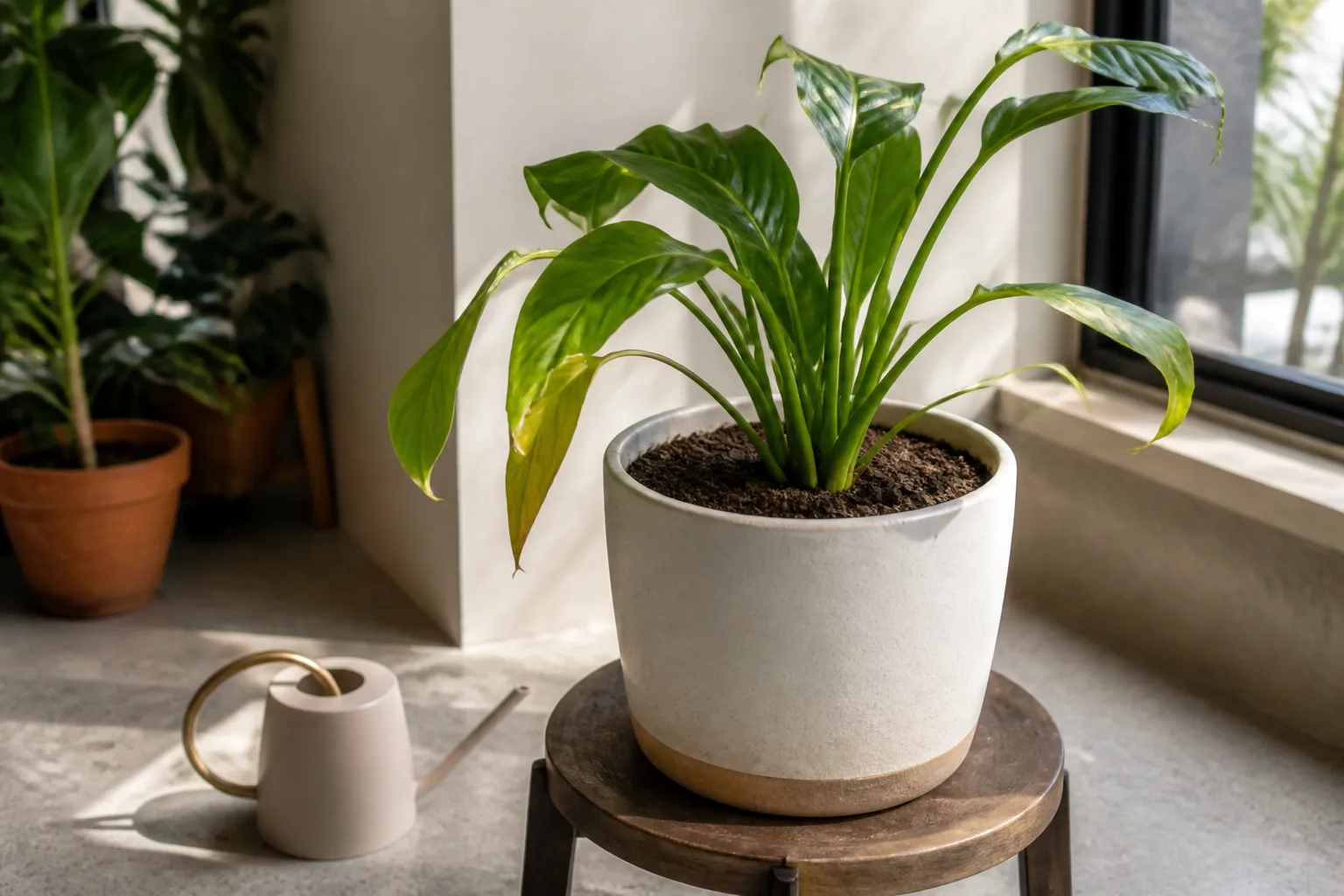
Peace lilies: Flop theatrically when dry and also sulk when freshly disturbed; always verify soil depth before the next pour. Pair with the peace lily hub for watering personality.
Monstera and pothos: Tougher, but they still stall if you jump from a 6-inch nursery pot into a decorative 12-inch tub.
These LeafyPixels editorial grow-space notes are apartment observations from post-repot recoveries we tracked while building this hub — not controlled trials.
-
Ficus benjamina, spring, 6-inch → 8-inch plastic nursery pot: Green leaf drop started on day 3. Fresh falls: 11 (week 1), 7 (week 2), 2 (week 3). Mix dried to knuckle depth on a normal cycle. No fertilizer. New tip growth visible week 5. Outcome: canopy thinner but stable — classic shock that tapered inside Clemson’s roughly three-week environmental window.
-
Peace lily overpot, winter window, 5-inch → decorative 9-inch ceramic: Pot stayed heavy for 5–6 days after small drinks. Soft yellow leaves increased into week 4. Unpotted: outer mix anaerobic, inner ball still firm. Downsized to 6.5-inch with drainage. Recovery began after moisture cycle normalized — overpotting layered on shock, not “slow adjustment.”
-
African violet, crown packed too deep after a rushed repot: Day-2 limp foliage with cool tap water used for the first soak. Cleared mix from the crown, switched to room-temperature water, bright indirect light only. Firm crown returned within a week; two outer leaves were sacrificed. Technique error, not a need for fertilizer or a larger pot.
Track your own case the same way: pot diameters, season, weekly fresh-fall count, pot weight pattern, and whether the crown stayed firm.
Conclusion
Houseplant transplant shock is the ugly middle of a correct repot: roots temporarily cannot feed the canopy, so leaves wilt, yellow, or drop while the plant rebuilds absorbing surface. Use this recovery checklist:
- Confirm the timeline started with a recent pot change.
- Finger-check moisture; do not water on wilt alone.
- Keep pot step-up to about 1–2 inches in diameter for most houseplants.
- Water in thoroughly once, drain, then stabilize light and temperature.
- Hold fertilizer at least two weeks.
- Track weekly fresh-fall counts through week three.
- Exit to overpotting or root-rot paths if decline climbs in a heavy wet pot or tissue softens.
- Judge success by firm remaining growth and a slowing drop rate — not by re-greening every stressed leaf.
Mild drama for up to a few weeks can be normal. Climbing decline in a heavy wet oversized pot is not.
Related guides (If X → open Y):
- Leaves keep falling without a clear post-repot clock → leaf drop
- Flower buds abort during or after the move → bud drop
- Mix stays wet for days past the shock window → pot too large
- Decide whether the plant needed the repot → root-bound and when to repot
- Limp foliage triage by soil moisture → wilting
- Soft roots, foul mix, collapsing crown → root rot
- Technique and timing to prevent a repeat → repotting houseplants
- Symptom hub → transplant shock