Why Running Bamboo Becomes a Yard Disaster
Bamboo can screen a fence in one season and haunt your pool, neighbors, and budget for years. Learn the risks before you plant—and how to contain or remove it.
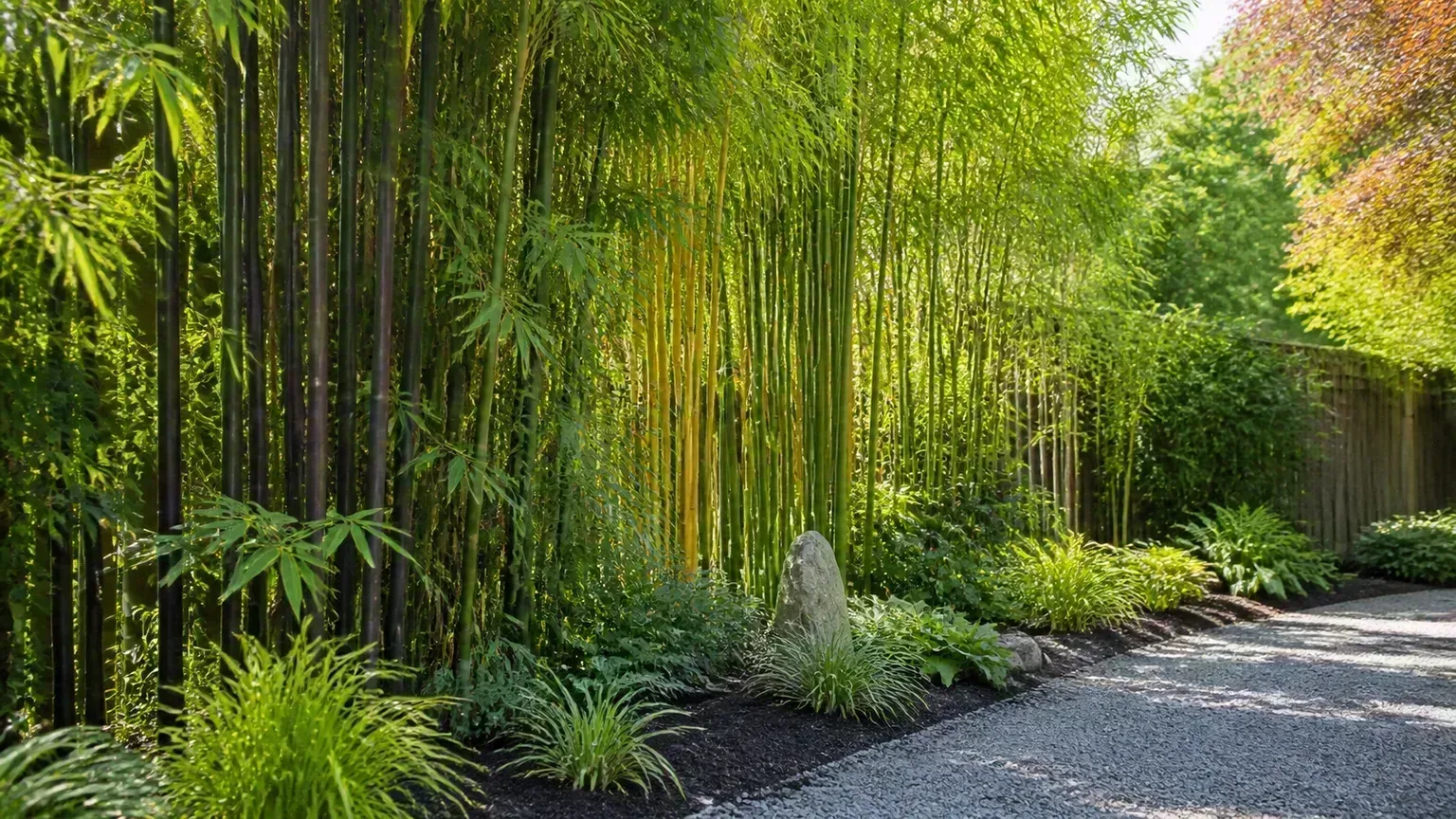
Bamboo sells itself easily at the nursery: evergreen height, fast growth, and a tropical screen that fills in before slower trees ever could. Plant it along a short fence beside a pool in a hot climate like Houston, and the pitch sounds almost logical—quick privacy without deep roots threatening the pool shell. That is exactly the kind of decision that looks smart in year one and expensive in year five.
The regret is rarely about aesthetics. Running bamboo can be genuinely beautiful. The problems show up in the maintenance ledger: leaves in the pool skimmer, canes leaning over play space, rhizomes crossing a property line you assumed was solid, and removal quotes that keep coming back because the plant does too. If you are weighing bamboo for privacy—or trying to escape a planting someone else put in—this guide covers the failures that matter before you commit, and the containment or removal steps that actually work afterward.
What Looks Like a Quick Privacy Win on Paper
Privacy planting decisions usually optimize for speed and height. Bamboo wins both on the tag: some running species can send up new culms that reach full height in a single growing season, and the Royal Horticultural Society notes that shoots can grow to the mature height of the grove within one season when conditions are favorable. In Gulf Coast heat with irrigation nearby, that vigor is a feature—until it is not.
Shallow rhizomes also sound pool-friendly compared with tree roots. Alabama Cooperative Extension explains that most bamboo rhizomes sit in the upper 12 inches of soil, which is why homeowners assume they are safer near hardscape than oaks or maples (Alabama Cooperative Extension System). That is partly true for foundations, but shallow does not mean contained. Horizontal spread is the real risk, and it happens quietly underground long before you notice shoots in the lawn.
The Shopping-List Mistakes That Set You Up for Regret
The most common error is buying “bamboo” without a botanical name or growth habit. Golden bamboo, black bamboo, and dwarf ground-cover bamboos are not interchangeable privacy plants. Some are aggressive runners; others are clumpers that widen slowly. A nursery tag that says “fast-growing screen” tells you nothing about whether rhizomes will visit your neighbor’s patio.
Second mistake: assuming low water need equals low maintenance. Drought tolerance after establishment does not cancel leaf drop, cane thinning, or the annual shoot flush that sends new culms through mulch and mowing strips. Third: planting along a boundary without a barrier, trench, or written plan for yearly rhizome inspection. The RHS growing guide treats physical barriers as standard practice for running types—not an optional upgrade for fussy gardeners.
If you have not answered runner or clumper, barrier or container, and who will maintain the edge every year, you are not ready to dig the hole. Our types of bamboo guide walks species-level choices; this page is about what happens when those choices go wrong.
Running Bamboo Versus Clumping Bamboo: The Decision Most People Skip
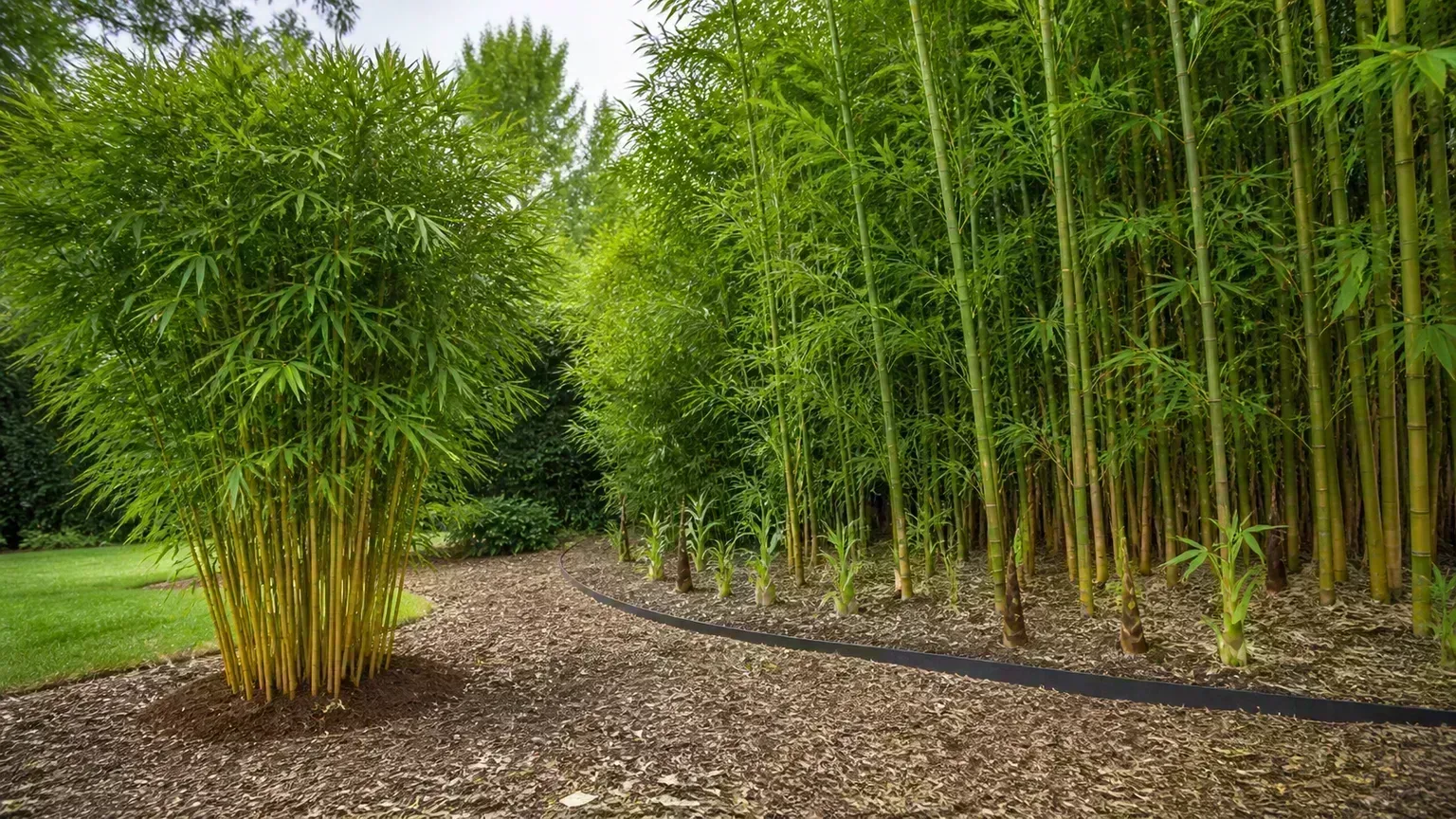
Not all bamboo behaves like the horror stories. Clumping bamboos—many Fargesia species are the usual recommendation—produce short rhizomes that turn upward into new culms near the parent plant. They can still outgrow a narrow bed, but they do not send exploratory rhizomes across the yard each season.
Running bamboos are a different plant in garden terms even though they share a name. Genera such as Phyllostachys, Pleioblastus, Pseudosasa, and Sasa spread through long horizontal rhizomes that can produce shoots and roots from nodes along their length. The RHS warns that running types in fertile, moisture-retentive soil can spread more than 1 meter (about 3⅓ feet) per year, often unnoticed until shoots appear in the lawn (RHS bamboo control).
| Trait | Running bamboo | Clumping bamboo |
|---|---|---|
| Rhizome pattern | Long horizontal runners | Short, curved offsets |
| Typical spread | Feet per year in good soil | Inches to low feet per year |
| Privacy speed | Very fast | Moderate |
| Containment need | Barrier, trench, or container | Space planning usually enough |
| Removal difficulty | High—networked rhizomes | Moderate—localized clump |
How Rhizomes Turn One Plant Into a Yard-Wide Network
Here is the part that makes “we removed it four times” stories believable. A bamboo grove is often one genetic individual connected underground. Culms you see are shoots from a shared rhizome system, not separate shrubs you can delete one at a time.
Rhizomes typically travel in the top 12 to 30 inches of soil—Alabama Extension’s upper-12-inch note aligns with RHS guidance that most growth sits in the top 30 cm (1 foot), though Fairfax County documents rhizomes reaching about 3 feet deep in tough infestations (Fairfax County Park Authority). Any rhizome segment with a viable node can regenerate after digging, mowing, or rototilling. That is why chopping the soil can worsen spread instead of ending it.
Energy flows both ways in a connected grove. If your neighbor’s side still has healthy top growth, their plants can subsidize rhizomes on your side even while you cut yours back—a point Alabama Extension stresses when full eradication is impossible and trench containment becomes the long-term fix (Alabama Cooperative Extension System).
The Mess Nobody Models Before Planting
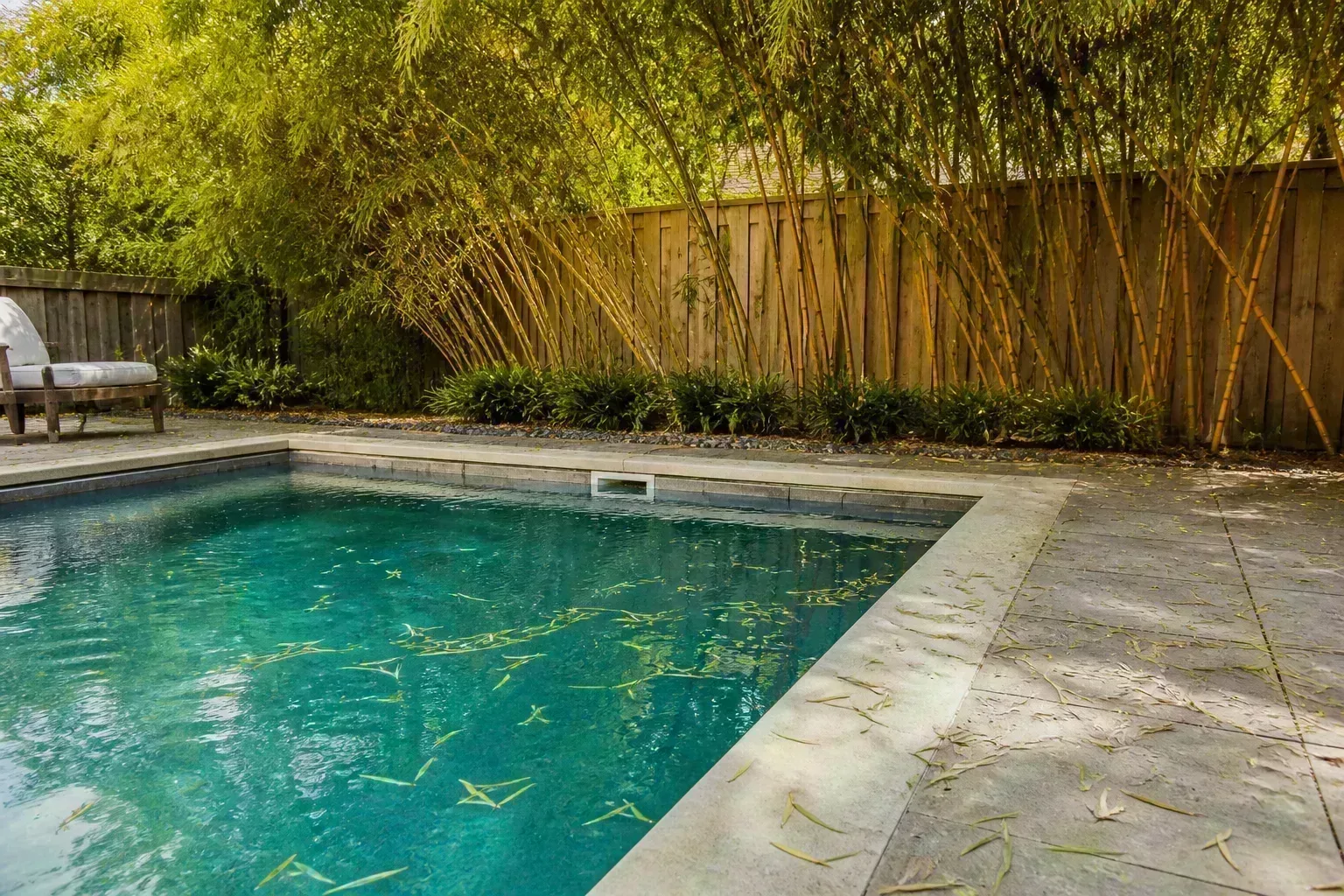
Bamboo’s fast growth is paired with constant leaf turnover. Culms are evergreen, but individual leaves age out—particularly in spring when older foliage drops as new shoots expand. In a windy corner or overhanging a pool, that is not a light chore. It is a skimmer-and-deck problem on repeat.
Because culms arch and lean as they lengthen, leaf shed is not confined to a tidy drip line. Leaves land in water features, on neighbor hardscape, and in garden beds where you wanted something else to grow. Fast growth also means fast litter production: more canopy area, more dead leaf mass, more filter backwashing.
Leaf Drop, Pool Filters, and Neighbor Complaints
Pool owners feel this first. Fine bamboo leaves slip past skimmer baskets, clog cartridge filters, and stain plaster if they sit through a hot week. Weekly pool service can turn daily when a bamboo screen overhangs the water—even if the plant is technically on the other side of the fence.
Neighbors experience the same debris on their pools, patios, and cars. Friendship survives a lot; property-line bamboo tests it. In Fairfax County, Virginia, a Bamboo Ordinance effective January 2023 requires property owners to contain running bamboo and prevent spread beyond property lines, with penalties if they do not (Fairfax County running bamboo). Other municipalities have followed with similar rules. Even where no ordinance exists, civil nuisance claims are real when rhizomes or litter cross a boundary.
Before planting, map prevailing wind, pool return jets, and whose yard sits downwind. If the answer is “my neighbor’s pool”, bamboo is not a courtesy plant.
Seasonal Shedding and the Real Cleanup Schedule
Expect three cleanup seasons, not one. Spring brings the heaviest leaf drop plus emerging shoots that need monitoring if you are containing spread. Summer adds wind-stripped foliage and the need to thin arching culms away from paths. Fall and winter are lighter aboveground, but rhizomes are still alive belowground planning next year’s shoots.
Budget time, not just money: raking, netting, filter rinses, and cane ties if you are trying to keep culms vertical. If you will not do that work, bamboo will look neglected quickly—and neglected bamboo leans into walkways.
The Physical Pain Bamboo Inflicts in Active Yards
Bamboo is not soft scenery. Mature culms are woody cylinders with hard nodes. When canes arch over a lawn or pool deck, they become obstacles at head and shoulder height—exactly where kids, dogs, and adults running through a yard do not look.
The pain is not hypothetical. Flexible-looking canes do not yield like shrub branches; they whip and rebound. Skin contact leaves welts. Eye-level nodes are worse than leaf tips. In tight backyards, bamboo can shrink usable play space without technically “taking over” the lot on paper.
Why Bamboo Is Harder to Prune and Thin Than It Looks
Standard hedge shears are the wrong tool. Culms need loppers, a pruning saw, or a reciprocating saw for anything thicker than a finger. Bamboo fibers bind blades; dull tools make the job dangerous. Cutting at the wrong height also triggers messy branching unless you remove whole culms at the base—a technique that takes space to work inside the grove.
Running bamboo also grows out of reach fast. Culms that were chest-high become arching hazards over a pool in a season or two. Thinning requires stepping inside a dense stand on uneven ground, often while dodging new shoots that emerge where you least expect them. Alabama Extension notes that young shoots are fragile and easy to knock over—but mature culms are the opposite problem (Alabama Cooperative Extension System).
If your yard plan depends on “we’ll just keep it trimmed,” price the labor honestly. Many families stop using the space instead.
Why Bamboo Removal Keeps Coming Back
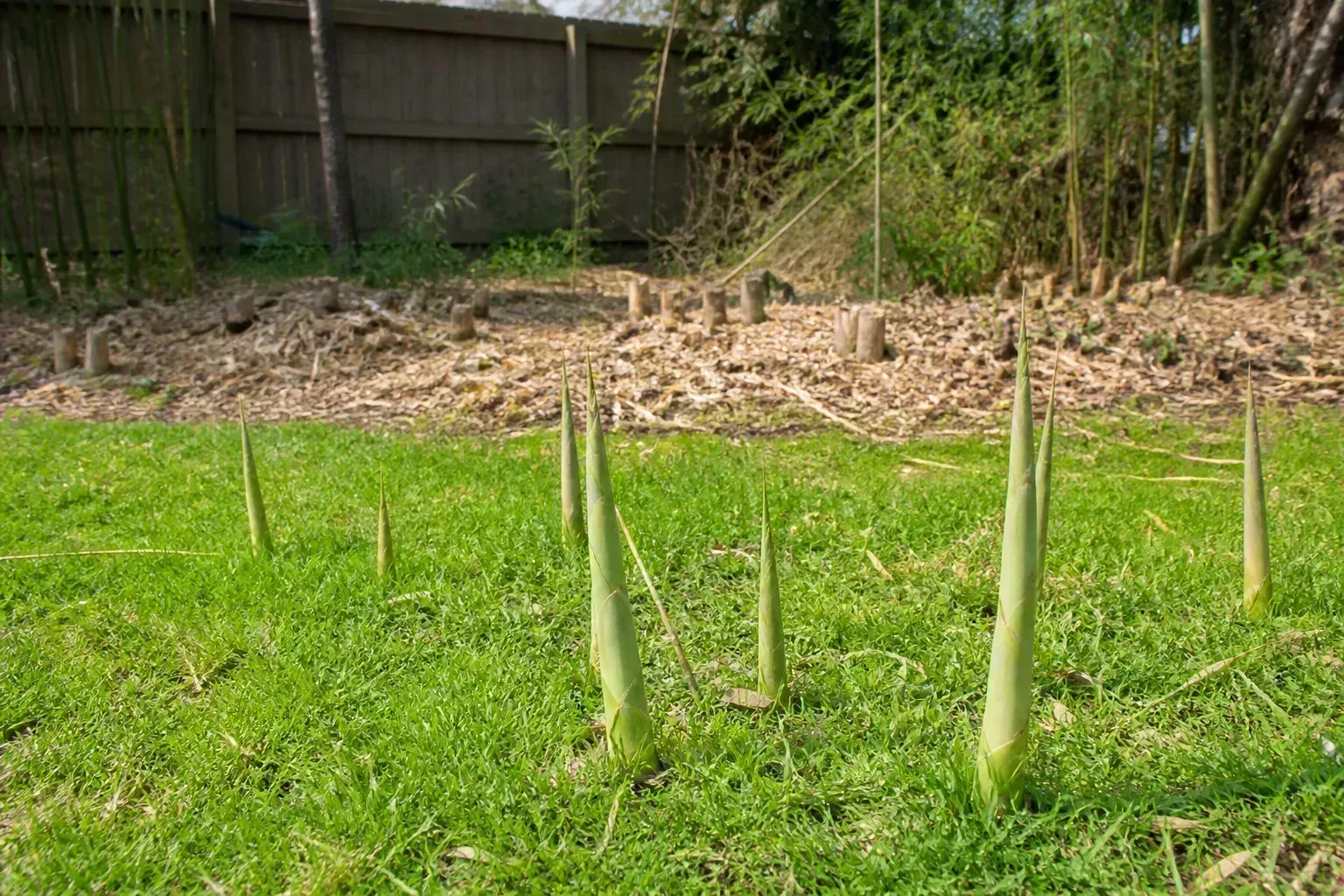
Bamboo earns its reputation as a plant you remove again. The failure pattern is predictable: cut everything visible, haul it away, celebrate—and watch shoots emerge six weeks later from rhizomes you never reached.
Cutting culms without starving the rhizome network can even stimulate spread in some situations, because the plant redirects energy to surviving nodes. Rototilling fragments rhizomes into new propagules. Dumping pulled rhizomes on a brush pile can re-root if moisture is present. The RHS explicitly warns against adding bamboo rhizomes to home compost because domestic piles rarely heat enough to kill them.
What Cutting Culms Actually Does to Underground Rhizomes
Removal has to target the network, not the poles. Complete eradication means excavating rhizomes across the entire infested area—or starving them systematically until reserves collapse. Alabama Extension is blunt: the whole rhizome system must be destroyed for complete control on a site (Alabama Cooperative Extension System).
For large groves, that is mattock-and-shovel work through tough, intertwined rhizomes—often deeper and wider than homeowners expect. Fairfax County notes rhizomes and roots require complete removal, and fragments left behind will likely resprout (Fairfax County Park Authority). Professional crews exist because the job scales past DIY quickly on a mature planting.
Realistic Timelines for Digging, Mowing, and Hiring Help
Mechanical shoot suppression can work but is a campaign, not an afternoon. Mow or break off new shoots weekly as they emerge in spring and summer, extending 15 to 20 feet beyond the original patch edge to catch advancing rhizomes—similar logic to extension buffer recommendations of at least 20 feet around a grove (Alabama Cooperative Extension System). Fairfax County cautions that mowing may take more than two years of frequent mowing before growth weakens noticeably (Fairfax County Park Authority).
Dig-out gives faster visual relief but only wins if you follow every runner. Plan to monitor for regrowth for several seasons regardless. Chemical control, where legal and appropriate, is multi-year as well; Fairfax County notes infestations may need two to five years of treatment plus monitoring, with herbicides used strictly per label near water and wetlands (Fairfax County Park Authority). The RHS prefers non-chemical methods for gardeners and notes even repeated systemic herbicide can take years on extensive rhizomes (RHS bamboo control).
Professional removal for established running bamboo commonly falls in the hundreds to low thousands of dollars depending on acreage, access, and disposal—cheap compared with repeating the job because rhizomes survived. If bamboo is near paving, drains, or structures, the RHS documents cases of rhizomes exploiting gaps in hard surfaces; get a survey if damage is suspected.
Containment Options If You Already Have Bamboo
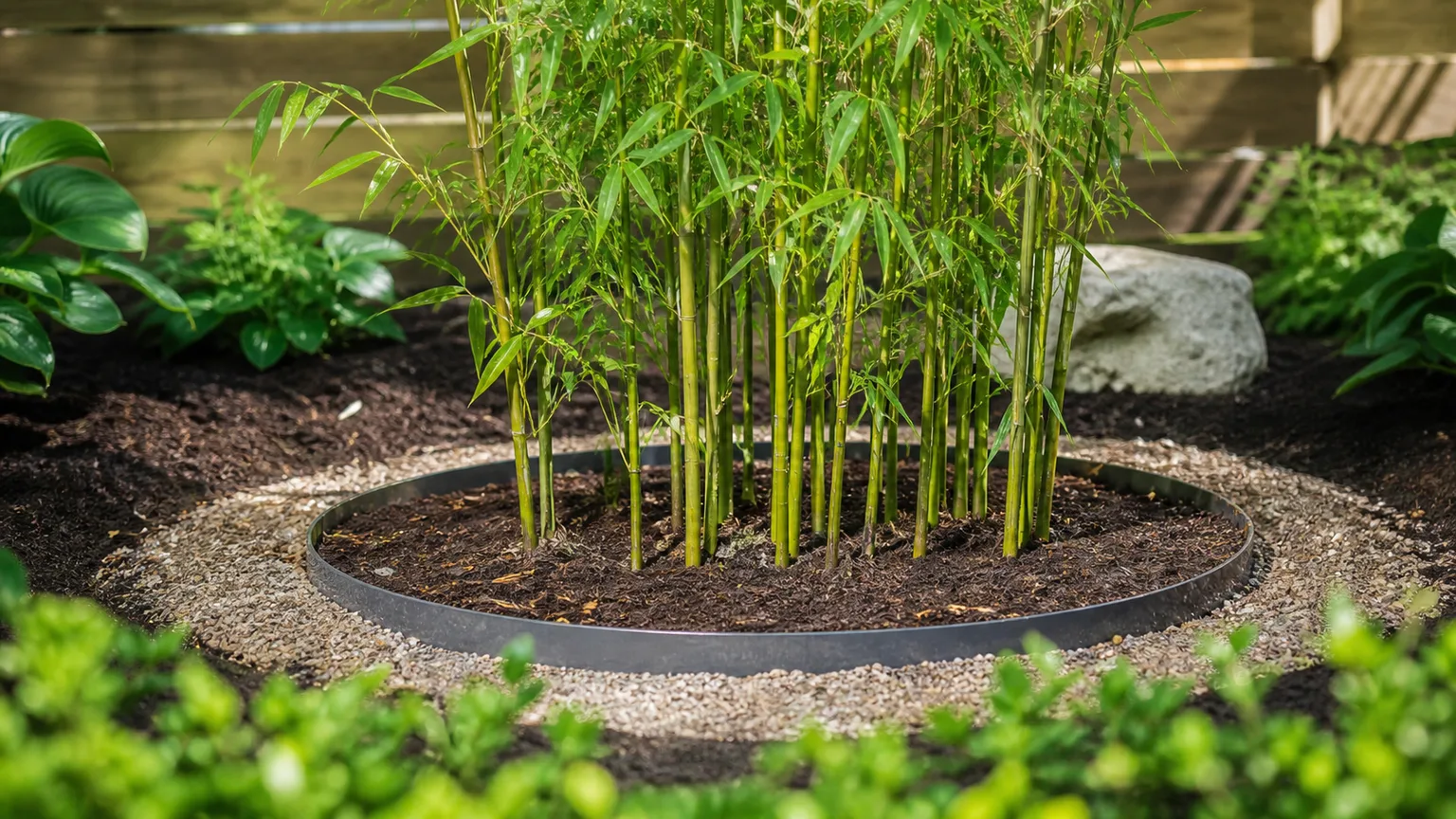
If eradication is not realistic—neighbor groves feeding your side, rental property, or a grove you will manage rather than remove—containment is the job. Treat it like infrastructure, not pruning.
Root barriers are the standard for new running plantings. RHS guidance: trench at least 60 cm (2 feet) deep, ideally 1.2 m (4 feet) for large Phyllostachys; overlap fabric ends by 30 cm (1 ft) bonded with mastic; leave 7.5 cm (3 in) above soil so rhizomes cannot step over the top (RHS growing guide). Fairfax County recommends barriers about 36 inches tall with 30 inches below ground and 6 inches above (Fairfax County Park Authority). Alabama Extension suggests burying barriers at least 2 feet and angling them outward so rhizomes rise toward the surface where you can cut them (Alabama Cooperative Extension System).
Trenches are the lower-cost long game: a 12-inch-wide trench roughly 1 to 2 feet deep at the grove edge, inspected yearly to sever rhizomes crossing the line. Alabama Extension calls trenching the most cost-effective long-term containment in many situations (Alabama Cooperative Extension System).
Shoot mowing buffers work during shooting season: maintain a 20-foot mowed or manually cleared zone and knock down every emerging culm until the flush ends—species and weather dependent.
Root Barriers, Trenches, and Property-Line Rules
Install barriers before spread reaches the fence, not after shoots appear in the neighbor’s lawn. On shared boundaries, communicate in writing: who maintains the trench, who pays for barrier install, and what happens if shoots cross the line.
Check local rules. Fairfax County’s ordinance is one visible example; your county may have reporting forms, containment standards, or fines. Even without a statute, allowing running bamboo to invade adjacent property can create liability. Document containment efforts if a dispute arises.
If bamboo is only on the neighbor’s side, you may still need a barrier on your property line to protect your beds—because rhizomes do not respect deeds. Alabama Extension notes that controlling shoots from a neighbor’s planting while their grove remains healthy is an uphill battle; trench isolation is often the practical endpoint (Alabama Cooperative Extension System).
Better Privacy Alternatives Worth Planting Instead
If the goal is fast height without rhizome roulette, choose plants whose spread you can predict.
Evergreen shrubs and trees—arborvitae, upright junipers, cherry laurel in mild climates, or a mixed native hedge—grow slower than bamboo but stay where planted and drop less fine debris into pools. See our privacy in yard guide for layout ideas.
Ornamental grasses and native screens—switchgrass, fountain grass in non-invasive cultivars, or a staggered row of Ilex—give movement without woody cane hazards. They are not instant, but they do not require rhizome archaeology at retirement.
Trellised vines on a proper support—star jasmine, coral honeysuckle, or climbing hydrangea on a freestanding panel—add height without underground runners. Match the vine to the wall material; our climbing plants that don’t cause damage guide covers attachment types.
Fence upgrades—trellis toppers, horizontal slat panels, or a shorter decorative fence combined with shrubs—solve privacy directly without living risk on a property line.
For a broader warning list, pair this page with worst invasive plants and fast-growing plants that crowd out other plants.
When Bamboo Might Still Make Sense
Bamboo is not evil; unmanaged running bamboo in the wrong site is. It can still be the right plant when all of these are true:
You know the botanical name and habit (clumping, or running with a engineered barrier). You have space for the mature footprint plus an inspection strip. You are not overhanging pools, play lawns, or neighbor patios without their buy-in. You will maintain shoots and trenches yearly—not “eventually.”
Clumping Fargesia in a cool-summer climate can be an excellent contained screen. Running Phyllostachys in a designed grove with 4-foot barriers, irrigation discipline, and annual rhizome checks can be stunning—on acres, not between a pool and a fence line.
Containers work for smaller species but are not permanent without division; roots escape through drainage holes that touch soil. Treat pots as a 5-year plan, not a forever moat.
If none of those sentences sound like your yard, bamboo is not saving you money on privacy—it is borrowing against future labor.
Conclusion
Bamboo becomes a backyard regret when speed and height overshadow spread, litter, and removal physics. Running species can deliver a privacy screen in one season and a multi-year eradication project soon after—complete with pool skimmer duty, painful arching culms, and rhizomes that survive repeated professional removals.
Before you plant, decide runner versus clumper, install a real barrier or choose another plant, and model cleanup on the worst windy week—not the quiet nursery afternoon. If bamboo is already entrenched, stop tilling, pick containment or full-network removal, and measure success in seasons—not weekends. The bamboo that wins is the one you planned for. The bamboo that loses homeowners is the one sold as “low maintenance” without the fine print about rhizomes, neighbors, and leaves that never stop falling.