How to Grow and Care for Virginia Bluebells
Learn how to grow Virginia bluebells (Mertensia virginica) with the right shade, moisture, planting timing, companion plants, propagation, and dormancy care.
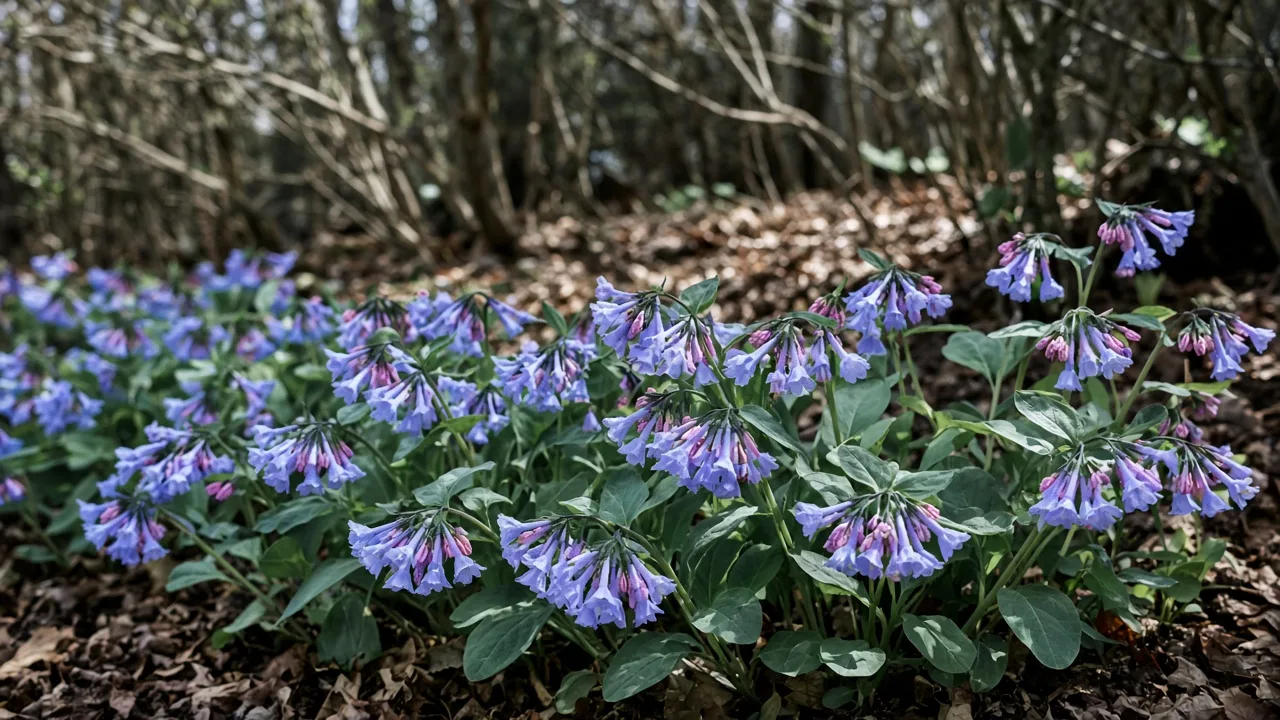
Virginia bluebells (Mertensia virginica) are one of the most satisfying native spring flowers you can add to a shade garden—if you treat them like the spring ephemerals they are, not like a summer anchor plant. In the right moist woodland bed, they push up purple-tinged foliage in early spring, open pink buds into nodding true-blue bells for roughly three weeks, feed the season’s first pollinators, then retreat underground by early summer as heat and longer days arrive.
That disappearing act catches new gardeners off guard every year. The stems look succulent but hollow, the clumps are fragile, and the long taproot resents being moved once settled. Success comes from matching the site to a floodplain-forest habit, watering through the spring growth window, and planting companions that cover the empty space left behind. Get those three decisions right and Virginia bluebells will self-seed and slowly colonize into one of the prettiest blue drifts you can grow east of the Rockies.
What Virginia bluebells actually need from your garden
Virginia bluebells are not difficult because they demand constant fuss. They are difficult because their entire life happens in a compressed spring season. They need deep to partial shade, rich moist soil that still drains, and protection from late-spring drought while they are flowering and setting seed. After that, they want to be left alone.
Think in terms of habitat, not houseplant rules. NC State Extension describes the native range as nutrient-rich, moist soils of floodplain forests and thickets across eastern Canada and the central and eastern United States. University of Wisconsin–Madison Extension notes the same woodland and river-floodplain pattern from New York to Minnesota and south into Alabama and Kansas. Your job is to recreate that spring moisture pulse under deciduous trees—not to keep the bed soggy all year.
If your garden is a hot south-facing foundation strip, a dry shade pocket under evergreens, or a raised bed that bakes by April, Virginia bluebells will struggle no matter how often you water. If you have a north or east woodland edge, a rain-garden swale in part shade, or a tree border where spring sun reaches the ground before leaves unfold, you are already halfway there.
Quick profile: Mertensia virginica at a glance
Virginia bluebells belong to the borage family (Boraginaceae). Common names include eastern bluebells, Virginia cowslip, Roanoke bells, and smooth lungwort, which reflects how many regional names this one species carries.
| Trait | Typical range |
|---|---|
| Hardiness | USDA Zones 3–8; some extension references list through Zone 9 with extra shade and moisture |
| Height / spread | About 18–24 inches tall and 12–18 inches wide in clumps |
| Light | Partial to full shade; morning sun under deciduous trees is often fine |
| Soil | Humus-rich, moist, well-drained; tolerates acid to alkaline pH |
| Bloom | Mid-spring, often March–May depending on zone; display lasts ~3 weeks |
| Flower color | Pink buds opening to sky-blue bells; occasional pink or white variants |
| Habit | Clumping perennial with rhizomes; self-seeds in favorable sites |
| Summer presence | Foliage dies back to the ground by early summer |
| Wildlife | Attracts bumblebees, long-tongued bees, butterflies, skippers, hummingbird moths, syrphid flies, and hummingbirds; deer generally avoid; slugs may nibble new growth |
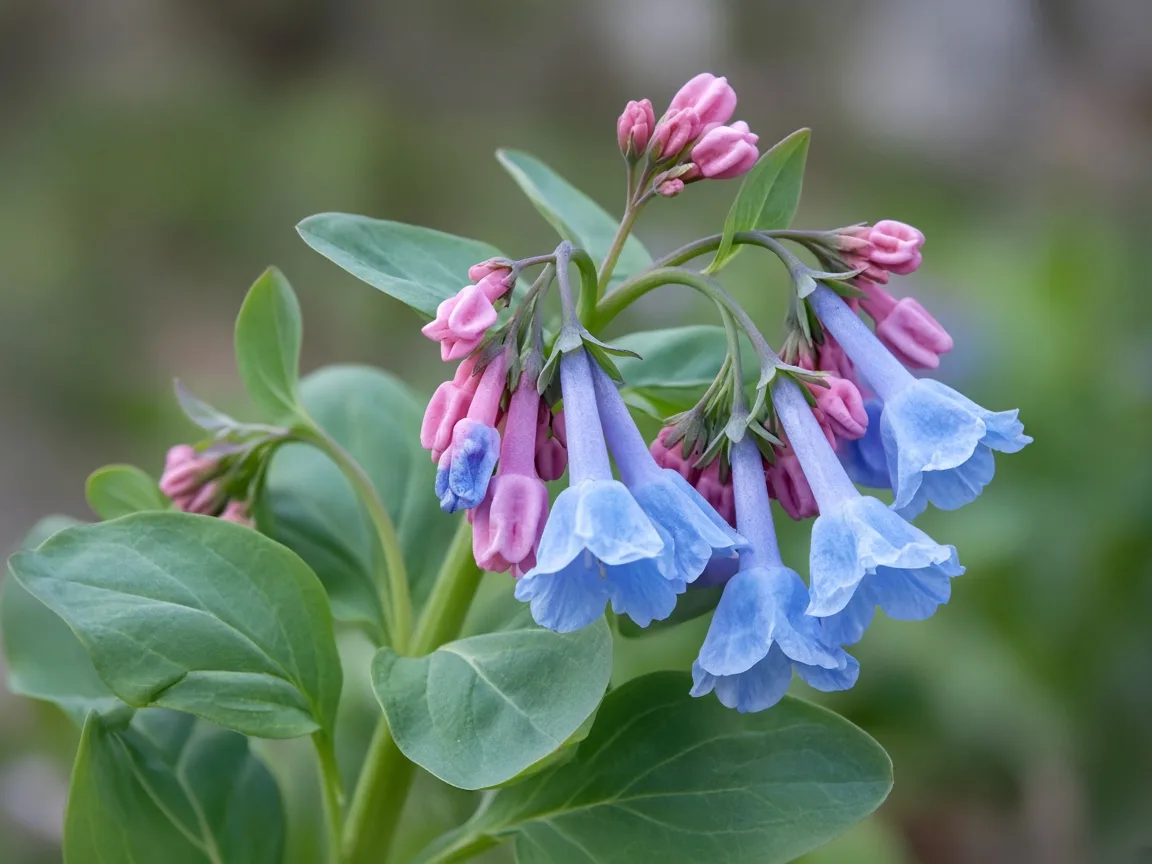
The closed pink buds look like tiny deflated balloons before they open—one of the easiest ID clues in a woodland garden. Mature leaves are smooth, oval, and bluish green to gray green, often 2–8 inches long with the largest leaves at the base of the stem.
Understand the spring ephemeral life cycle
Calling Virginia bluebells a “long-lived perennial” is technically true and practically misleading. Individual clumps can persist for years, but what you see above ground is a short spring performance. Emerging shoots start with deep purple foliage that quickly greens up. Stems elongate, flower clusters form at the tips, pollinators visit, and fertilized flowers produce four-lobed fruits with nutlets that ripen as the plant shuts down.
By the time hostas and ferns are fully expanded, Virginia bluebells have often yellowed and vanished. Wisconsin Extension warns that novice gardeners routinely assume the plants died, then get surprised the next spring when clumps return more vigorous than before. That underground persistence is the whole point of the ephemeral strategy: capture early spring light before the canopy closes, reproduce, then sleep through summer drought stress.
Plan your maintenance calendar around dormancy, not around midsummer tidiness. Do not dig, divide, or plant summer annuals on top of dormant crowns. Mark clumps in June when you still remember where they are. A labeled stake, a ring of stones, or a photo on your phone beats guessing in October when you are planting bulbs.
Choose the right site before you buy plants
Site selection matters more than fertilizer, more than cultivar hunting, and more than any single watering hack. Virginia bluebells tolerate a range of soil textures if organic matter and spring moisture stay consistent. They do not tolerate baking root zones, competing evergreen roots, or hard dry spells during bloom.
Light rules by climate and canopy timing
In northern gardens (Zones 3–5), dappled spring sun under leafless deciduous trees is ideal. The plants evolved to use the brief bright window before maples, oaks, and basswoods leaf out. Bright morning sun with afternoon shade often works well in these climates.
In warmer zones (Zones 7–8 and marginal 9), lean toward deeper shade and more consistent moisture. Afternoon sun on rising soil temperatures can shorten bloom and push dormancy early. Under evergreen canopies, light is too dim and soil too dry year-round—avoid those pockets unless you can irrigate reliably every spring.
A practical rule: if the bed is still visibly sunny at noon in July, it is probably too bright for Virginia bluebells in the South. If it is dark all winter under spruce or pine, it is too dry and too dim in spring.
Soil moisture, drainage, and a simple site test
Virginia bluebells want moist soil, not swampy soil. That distinction saves more plants than any product label. NC State Extension lists good drainage and moist conditions together for a reason: roots need oxygen even while the humus layer holds water.
Dig a hole 12 inches deep in your proposed spot after a rain event. If water stands for many hours, improve drainage by raising the bed, adding organic matter on a slope, or choose a different location. If the hole is dusty dry three days later in April, plan on supplemental watering through bloom or pick a shadier, mulched site.
Penn State Extension includes Virginia bluebells among rain-garden candidates because they handle periodic saturation in spring while still needing drainage between storms. That makes them useful under downspout spreads, creek margins, and low woodland swales—places many summer perennials rot.
Work 2–4 inches of compost or leaf mold into the top 8–10 inches of soil before planting if your native soil is sandy or heavy clay. Sandy sites need organic matter to hold spring moisture. Clay sites need pore space so roots do not suffocate during wet weeks.
Plant Virginia bluebells the right way
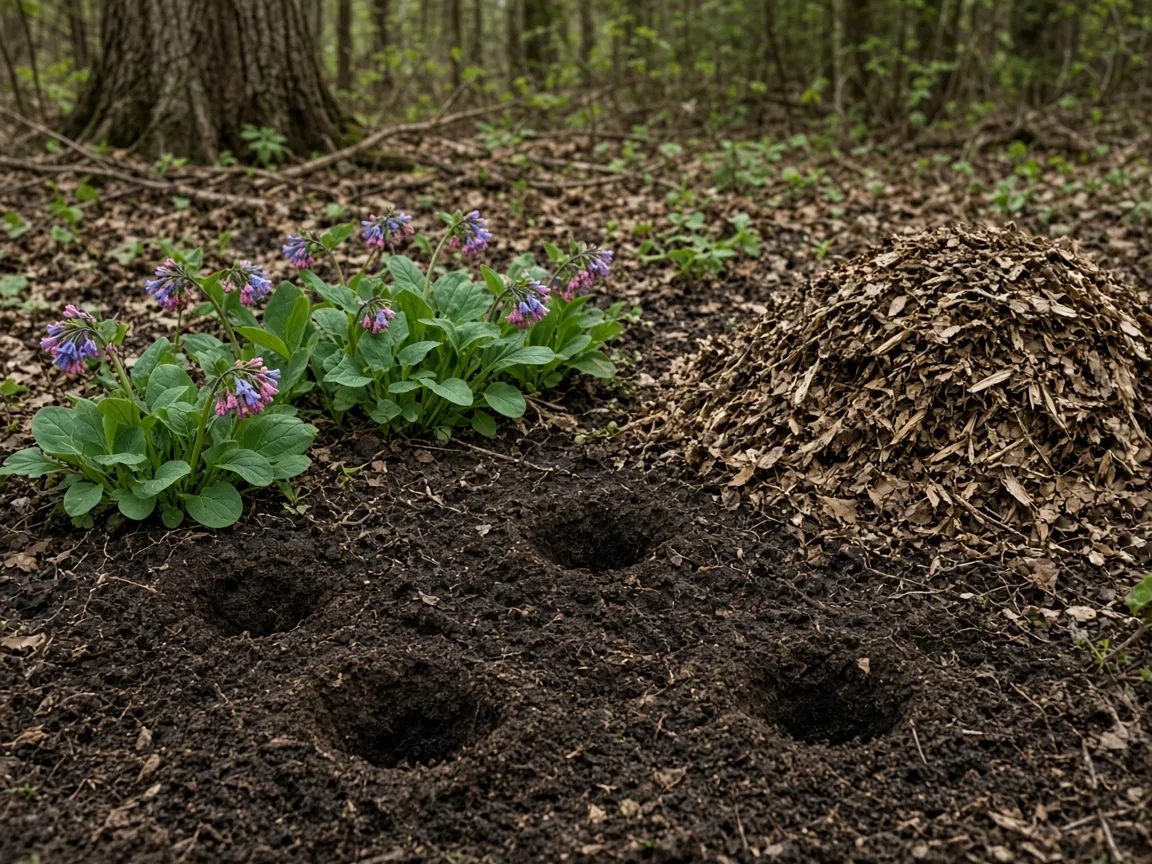
Fall planting is often best in mild climates because roots can establish while tops are dormant. Early spring planting works everywhere once soil is workable and before heat arrives. Avoid midsummer planting unless you are willing to irrigate constantly; dormant crowns do not need much, but fresh spring transplants do.
Bare roots, potted plants, and spacing
Nurseries sell Virginia bluebells as potted plants, bare-root rhizomes, and occasionally as seed-grown liners. Bare roots are economical for naturalizing large areas; pots give you visible crowns and faster establishment in mixed borders.
Plant crowns 1–2 inches deep, level with or slightly above the surrounding soil surface. Burying too deep invites crown rot. Space clumps 12–18 inches apart if you want a filled drift within a few seasons; use wider spacing in a mixed border where companions need air.
Water in slowly until the root zone is evenly moist, then mulch with shredded leaves or fine bark. Keep mulch off the crown itself. If you are planting under trees, minimize aggressive root trenching that severs tree roots; shallow preparation plus top-dressing compost protects both partners.
Virginia bluebells have a long taproot once established. Wisconsin Extension recommends moving plants only during dormancy if you must, and warns that small seedlings transplanted from self-sowing may take several years to bloom. Buy larger starts if you want flowers within the first season.
Water through the spring window, then step back
Watering Virginia bluebells is seasonal, not constant. From emergence through seed set—often roughly six to ten weeks depending on climate—keep soil evenly moist. Check the top 2–3 inches; if it crumbles dry, soak slowly with a hose at soil level rather than a overhead sprayer that knocks off fragile blooms.
New plantings and bare-root divisions need the most attention in their first spring. Established colonies under trees may need little beyond rainfall unless a dry spell hits during peak bloom. In that case, one deep soak beats daily sprinkles that wet leaves without reaching roots.
After foliage yellows, stop watering unless you are irrigating companions. Dormant crowns sitting in soggy summer soil invite rot. This is the opposite habit of hosta or astilbe beds that still want summer moisture; mark where bluebells sit so you do not accidentally keep that zone saturated for later plants.
Feed lightly and mulch like a woodland floor
Virginia bluebells are not heavy feeders. A single spring top-dress of compost or well-rotted leaf mold mimics the litter layer of native woodlands and supports both moisture retention and gentle nutrition. If you already amended soil at planting, skip annual fertilizer unless a soil test shows a clear deficiency.
Avoid high-nitrogen synthetic feeds during bloom; they push soft foliage at the expense of flowers and can attract slug damage on tender new growth. If you must fertilize, use a balanced organic product at low rates in early spring before buds swell.
Refresh leaf mulch each fall after deciduous trees drop foliage. Two inches is enough. In colder parts of Zone 3, a slightly deeper winter mulch protects crowns from frost heaving; pull it back in late winter so emerging shoots are not smothered.
Design beds that survive midsummer dormancy
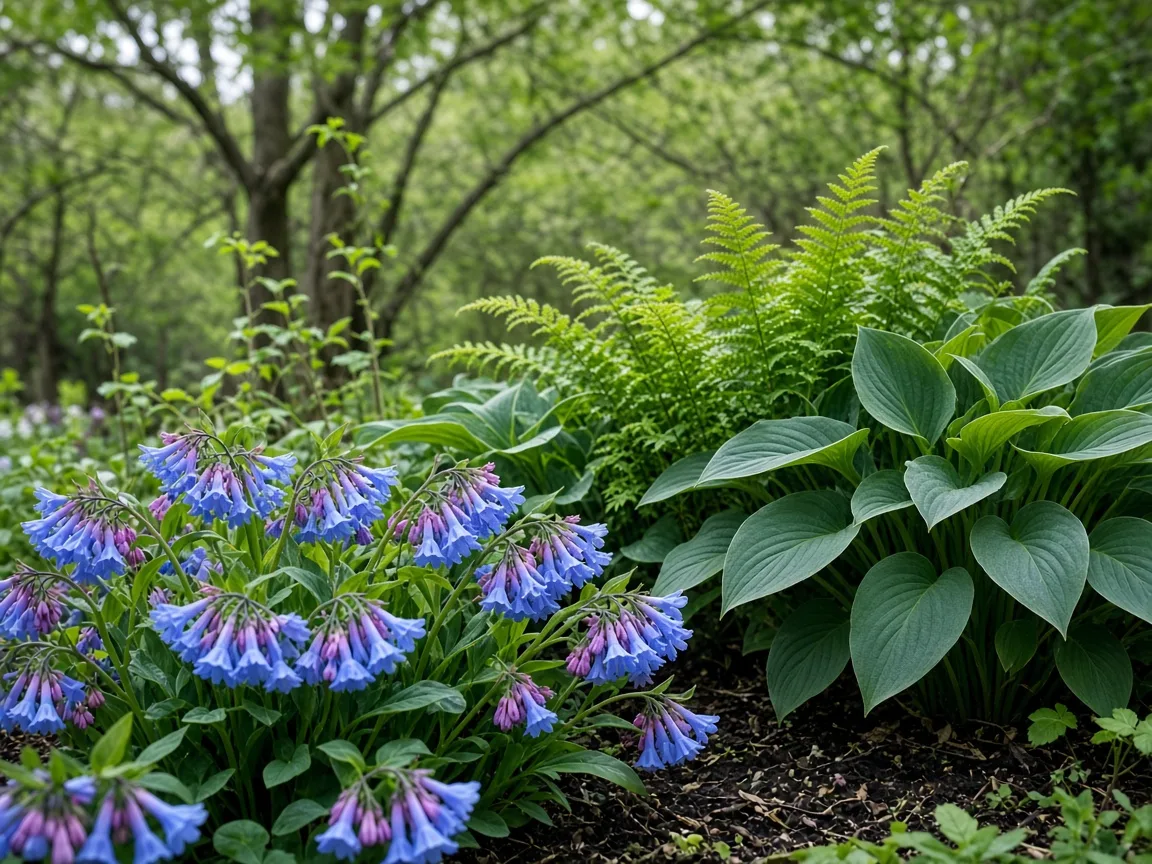
The hardest design problem with Virginia bluebells is not color—it is the blank space they leave from June onward. Treat them as the opening act in a shade bed, not the whole show.
Mass plantings under shrubs or at woodland edges look most natural. Loose drifts read like a native colony; rigid rows look like a catalog photo that falls apart by July. Photograph your bed at peak bloom so you remember the effect you liked when planning summer coverage.
Interplant with later-emerging shade perennials whose foliage expands as bluebells fade. Good structural partners include hosta, ferns, astilbe, Solomon’s seal, cimicifuga (bugbane), and twinleaf. Wisconsin Extension also suggests bleeding heart, celandine poppy, and large trillium for an all-spring woodland vignette, then hostas to carry summer.
Best companion plants for the blank-season gap
Match companions by emergence time, not flower color alone. Hostas are the classic gap-filler because they stay dormant until soil warms, then unfurl bold leaves exactly when bluebell foliage collapses. Ferns work similarly; ostrich and lady ferns rise later and love the same moist shade.
For spring color layering, pair Virginia bluebells with yellow daffodils or pink tulips while trees are still bare. The contrast is striking and bloom times overlap in many climates. Avoid aggressive groundcovers like vinca or wintercreeper that smother dormant crowns or compete for spring moisture.
If you prefer a cleaner formal border, use shallow-rooted summer annuals inserted after bluebells die back—but only if you marked crown locations so you do not stab rhizomes when inserting cell packs. Caladiums, impatiens, or browallia can fill pots near bluebell clumps without deep digging.
Propagation: seed, division, and when to leave colonies alone
Virginia bluebells spread by short rhizomes and self-sown seed when conditions suit them. They are not invasive in the sense of aggressive exotic groundcovers, but a happy patch can widen noticeably within five years. Many gardeners never propagate deliberately; they simply stop deadheading and let colonies thicken.
Seed is the slow, patient path. Seeds need cold, moist stratification—a winter outside or six weeks in moist sand in a refrigerator at roughly 34–41°F—before they germinate. Sow stratified seed in flats six to eight weeks before last frost, or direct-sow in prepared beds in fall. First-year seedlings produce small cotyledons and take two to three years to reach blooming size, sometimes longer if transplanted young.
Division works but conflicts with the taproot habit. If you must divide, do it in early fall or very early spring while dormant, dig deeply, and accept that bloom may skip a year while roots recover. NC State Extension lists division and root cuttings as possible but notes plants can be difficult to propagate commercially for that reason.
For most home gardeners, the best propagation method is letting ripe seed fall in place or collecting dry nutlets to sow immediately in a prepared shady bed. Transplant volunteer seedlings in early spring when they are small, knowing bloom may wait.
Bloom timing and how to encourage a strong show
Virginia bluebells bloom in mid-spring, commonly March through May depending on latitude and weather. Individual clumps flower for about three weeks. Bloom may begin in the second or third year from seed; nursery divisions often flower the first spring if planted early enough.
Flowers start as pink buds, then open into sky-blue pendulous bells with a light sweet fragrance noticeable mainly in large patches. Stems are somewhat succulent and hollow, so wind, dogs, and careless foot traffic can snap them—another reason to plant inside beds, not along narrow paths.
To maximize bloom:
- Plant where spring moisture stays steady through bloom and seed set.
- Avoid disturbing roots after establishment; stress delays flowers.
- Top-dress with compost in late winter, not midsummer.
- Accept that transplanted clumps may skip a year after a spring move.
Deadheading is optional. Remove spent flowers if you want to limit spread into lawns or paths. Leave seed heads if you want the colony to thicken. Virginia bluebells do not rebloom in the same season.
They make ** mediocre cut flowers** because stems wilt quickly; enjoy them in the garden instead.
Pests, diseases, and wildlife interactions
Virginia bluebells are remarkably trouble-free compared with many shade perennials. NC State Extension reports no serious insect or disease problems but advises monitoring slugs and snails on emerging shoots. Shiny slime trails and ragged holes on new leaves are the tell. Hand-pick at dusk, use iron-phosphate baits if needed, and avoid heavy mulch pressed against crowns.
Deer and rabbits generally leave Virginia bluebells alone, which makes them valuable in woodland gardens where hostas get browsed. Pollinator value is high in early spring when fewer nectar sources exist. Gardeners Path and Birds & Blooms both highlight bumblebees, butterflies, and hummingbirds as frequent visitors when colonies are left pesticide-free.
Fungal issues—powdery mildew, leaf smut, rust—appear mainly when crowns are crowded in stagnant, overly wet shade. Improve air movement by thinning competing weeds, divide overcrowded companions, and remove heavily spotted foliage before spores spread. Organic fungicides may suppress spread but will not restore already distorted leaves.
Virginia bluebells are tagged black-walnut tolerant in NC State’s plant toolbox, a useful detail if you garden under juglone-producing trees where many spring bulbs fail.
Virginia bluebells versus other “bluebells”
Name confusion causes real planting mistakes. Virginia bluebells (Mertensia virginica) are native North American wildflowers in the borage family. English bluebells (Hyacinthoides non-scripta) and Spanish bluebells (Hyacinthoides hispanica) are European bulbs in the asparagus family with strap-like leaves and different moisture needs.
English bluebells prefer woodland conditions but behave like true bulbs with different planting depth and spread patterns. Spanish bluebells are more aggressive and can become weedy. Neither is a drop-in substitute for Mertensia virginica in a native rain-garden or floodplain planting.
Within Mertensia, western species such as mountain bluebells (Mertensia ciliata) and alpine bluebells (Mertensia alpina) suit Rocky Mountain gardens, not humid eastern woods. Match the species to your region’s moisture and elevation rather than forcing a western plant into a Midwestern shade bed.
Common mistakes and how to fix them
Planting in dry sun because “shade perennial” sounded flexible. Move divisions in early fall to a moister, darker site, or install temporary shade cloth the first spring while roots establish. Do not expect recovery in a baking mailbox bed.
Assuming the plant died in July. Wait until the following April before digging. Mark the spot now. If nothing emerges after two springs, the crown may have rotted from summer soggy soil or rodent damage.
Digging dormant clumps for division every year. Leave established taproots alone. Expand by seed or buy additional starts for new areas.
Forgetting where crowns sit before fall bulb planting. Use markers every June. Plant daffodils and tulips between bluebell clumps, not through them.
Overwatering in August. Let the bed dry toward summer norms once yellowing begins. Water hostas and ferns on their schedule, not the bluebells’ dormant crowns.
Starting seeds without stratification. Expect near-zero germination. Cold-moist treatment is non-negotiable indoors; outdoor fall sowing lets winter handle it naturally.
Conclusion
Virginia bluebells reward gardeners who read the calendar instead of fighting it. Give them a moist, humus-rich shade bed with a strong spring moisture pulse, plant early, water through bloom, then let them sleep while hostas, ferns, or astilbes carry the bed through summer. Mark dormant crowns, choose companions for the gap, and propagate by seed or self-sowing if you want wider drifts without disturbing taproots.
Done well, a colony becomes a reliable early-spring event: pink buds swelling, true-blue bells humming with bees, and a woodland floor that feels alive weeks before the rest of the shade garden wakes up. That is the whole reason to grow Mertensia virginica—not as a year-round foliage plant, but as the blue signal that spring has actually arrived.