8 Climbing Plants That Don't Damage Structures
Want lush vines without cracked mortar or strangled trees? Compare eight damage-conscious climbers by zone, support type, and maintenance load.
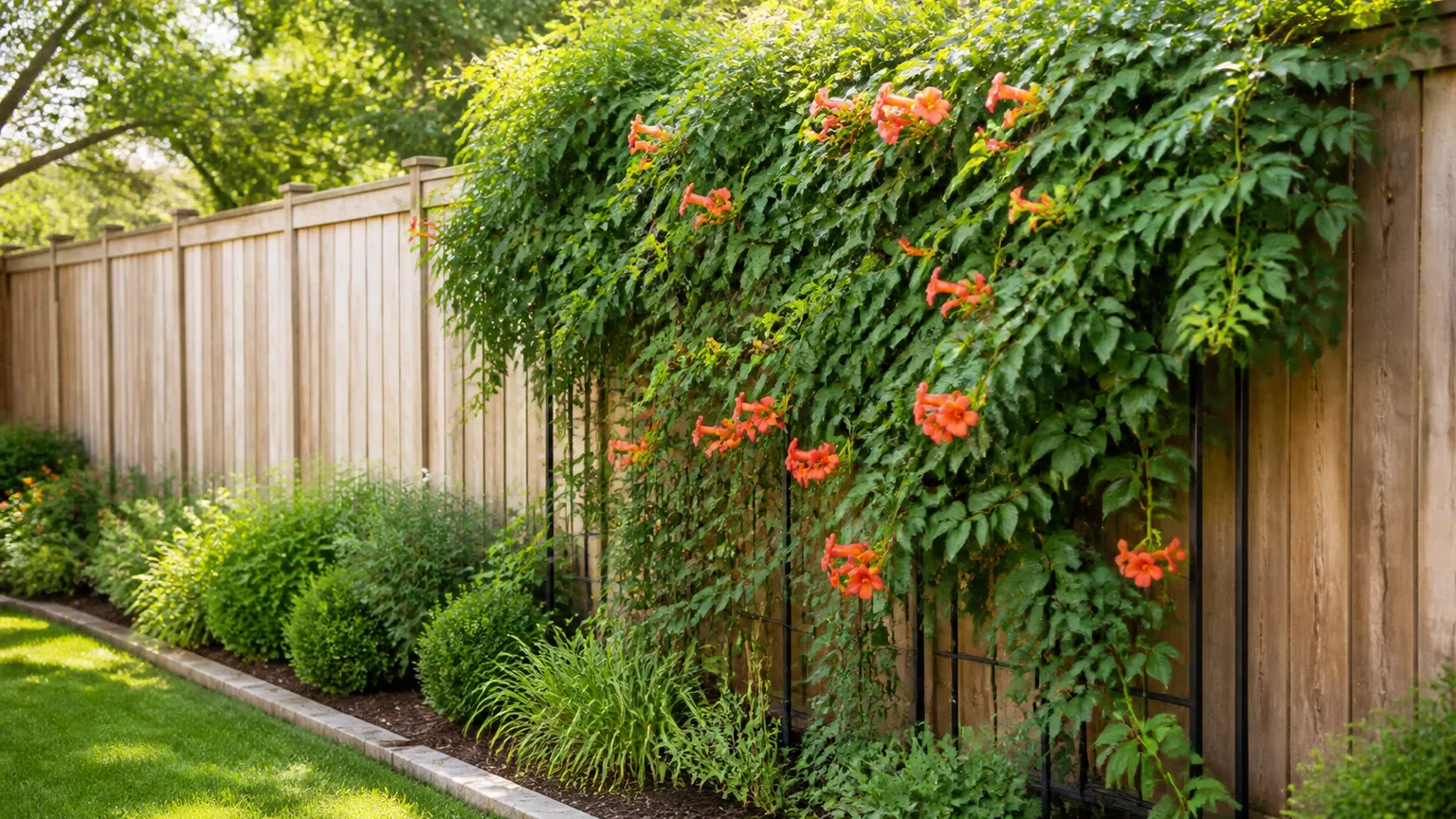
A flowering vine on a bare fence or pergola post can transform a flat yard into something layered and alive. The wrong vine can do the same thing to your mortar joints, painted siding, and favorite oak tree—just not in a way you will appreciate five years from now. Landscapers who specify climbers for clients start with how the plant climbs, not how pretty the nursery tag looks.
The eight plants below are the ones professionals reach for when they want height, privacy, or pollinator appeal without the repair bills that follow English ivy, unchecked trumpet vine, or invasive wisteria. None of them are magic. Even well-behaved vines need the right support, spacing from walls, and yearly pruning. What they offer is a much safer starting point than the aggressive defaults most big-box stores still stock.
Why “damage-free” depends on how the vine climbs
Structure damage from vines usually comes from one of three problems: roots or holdfasts working into cracks, weight pulling down weak supports, or growth that girdles and shades out a tree canopy. A vine that is gentle on brick may still be a nightmare on wood shingles. A native vine that behaves in its home range may reseed aggressively in yours.
“Damage-free” in practice means matching the climbing method to the surface, sizing the support for mature weight, and accepting maintenance—especially on self-clinging species.
Four ways climbers grip—and what each demands from your support
Understanding attachment type is the fastest way to avoid a costly mismatch. Extension and RHS guidance groups climbers into four main strategies:
Twining stems wrap around narrow supports. Star jasmine, coral honeysuckle, and native clematis fall here. They need a trellis, wire grid, or post with openings roughly under 2 inches (5 cm). They do not drill into masonry on their own, which makes them the safest default for fences and painted surfaces—if you provide a proper support.
Tendrils are threadlike organs that grab mesh, wires, or neighboring stems. Crossvine and many clematis hybrids use tendrils. Openings in the support matter; smooth vinyl fence panels without a trellis in front will frustrate them.
Aerial rootlets (adhesive pads) cement stems to rough bark, brick, or stone. Climbing hydrangea is the classic example. Rootlets spread across the surface rather than penetrating deep into mortar the way English ivy can, but mature plants are heavy and still deserve sturdy, independently anchored supports.
Adhesive holdfasts at tendril tips let Virginia creeper cling without help. That convenience comes with a trade-off: NC State Extension warns that holdfasts are difficult to remove and can ruin painted surfaces, and unchecked vines may attach to gutters, shutters, or wiring.
Long canes that need tying describe climbing roses. They do not cling at all. You train and tie them horizontally to encourage bloom along a fence or arbor.
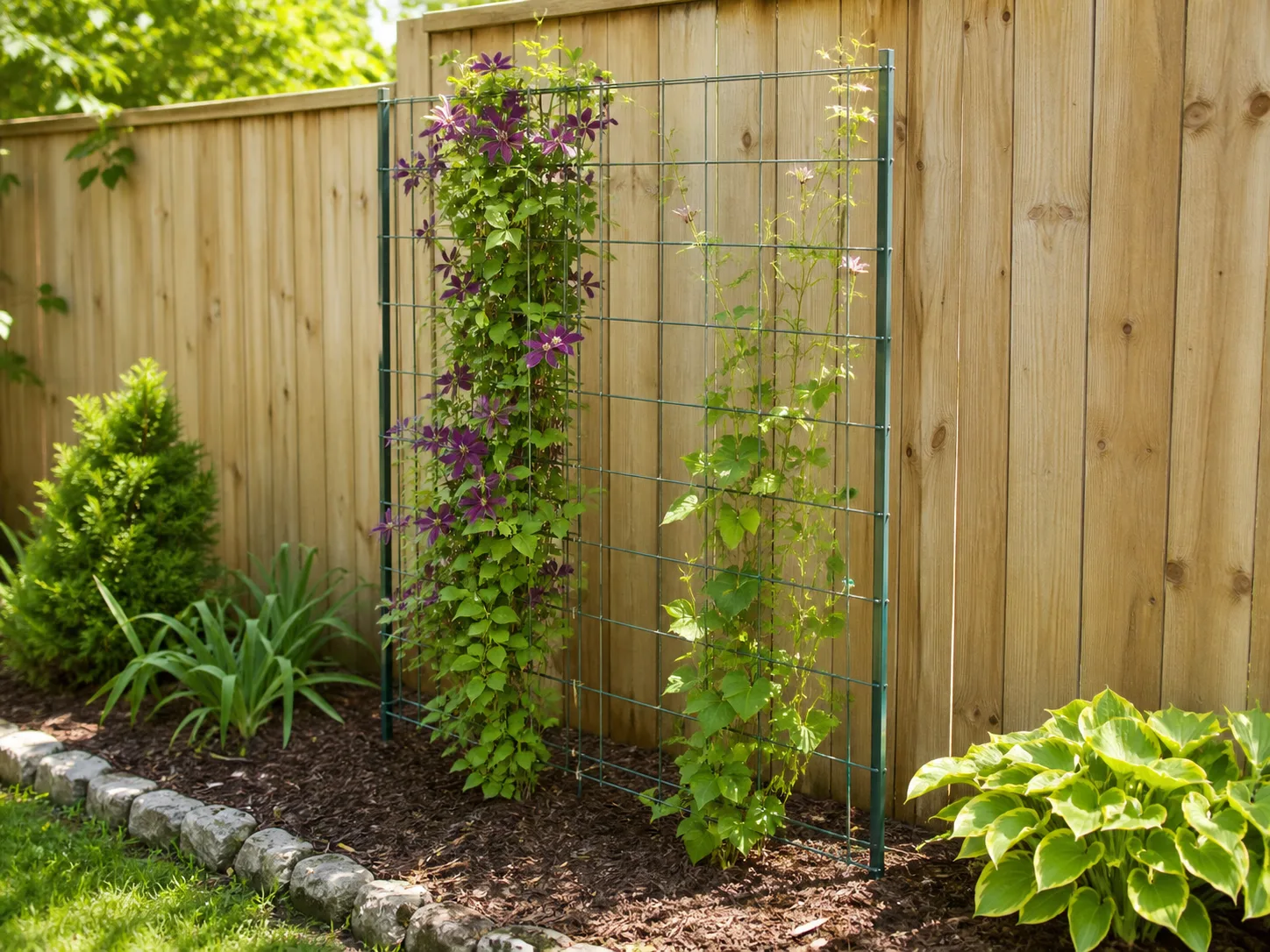 Matching the vine’s grip type to a properly anchored trellis or wire grid is the single biggest step toward structure-safe vertical gardening.
Match the plant to your wall, fence, or arbor before you buy
Write down four facts before you shop: USDA zone, hours of direct sun on the mounting spot, what the vine will climb (lattice, masonry, tree trunk, load-bearing arbor), and how much pruning you will realistically do. A vine that is “low damage” on a freestanding trellis can still overwhelm a 6-foot fence panel if nobody trims it.
Install supports before planting. The RHS guide to planting climbers recommends positioning supports about 2 inches (5 cm) away from a wall or fence and planting most climbers roughly 18 inches (45 cm) out from solid masonry so roots escape the dry rain shadow beside the wall. Spring and autumn are the usual planting windows when soil is workable.
For a broader shortlist of trellis-friendly species—including fruiting and tropical options—see our best climbing plants roundup. If summer heat on a south-facing fence is your limiting factor, pair this list with heat-tolerant climbing plants for fences.
When to install a trellis gap instead of letting vines touch masonry
On painted wood, stucco, or older brick with soft mortar, the safest approach is a freestanding trellis or wire panel mounted in front of the wall—not flush against it. Twining vines like star jasmine and coral honeysuckle never need to touch the structure at all.
Self-clinging vines (climbing hydrangea, Virginia creeper) are a different calculation. Climbing hydrangea’s aerial rootlets are widely considered less destructive than English ivy, but the RHS climbing hydrangea growing guide still advises sturdy independent supports because mature plants are heavy. Virginia creeper is more aggressive: NC State explicitly recommends not placing it near wood or shingle walls because holdfasts are hard to remove.
If you are covering a north- or east-facing wall in shade, climbing hydrangea and native clematis are strong candidates; our perennial vines for shade guide covers additional options.
Vines to avoid on structures and trees you want to keep
Skipping bad actors matters as much as choosing good ones. Landscapers routinely steer clients away from:
- English ivy (Hedera helix) — evergreen aerial roots work into mortar and create moisture traps on walls.
- Japanese honeysuckle (Lonicera japonica) — invasive in much of North America; do not confuse it with native coral honeysuckle.
- Chinese and Japanese wisteria — woody weight and rampant spread; see our worst invasive plants guide.
- Trumpet vine (Campsis radicans) — self-clinging, extremely vigorous, and difficult to remove once established; read how to stop trumpet vine spread before planting it anywhere.
- Sweet autumn clematis (Clematis terniflora) — looks like native virgin’s bower but seeds aggressively and is invasive in many states.
When in doubt, check your state or provincial invasive-plant list before buying a fast-growing vine online.
Star jasmine (Trachelospermum jasminoides)
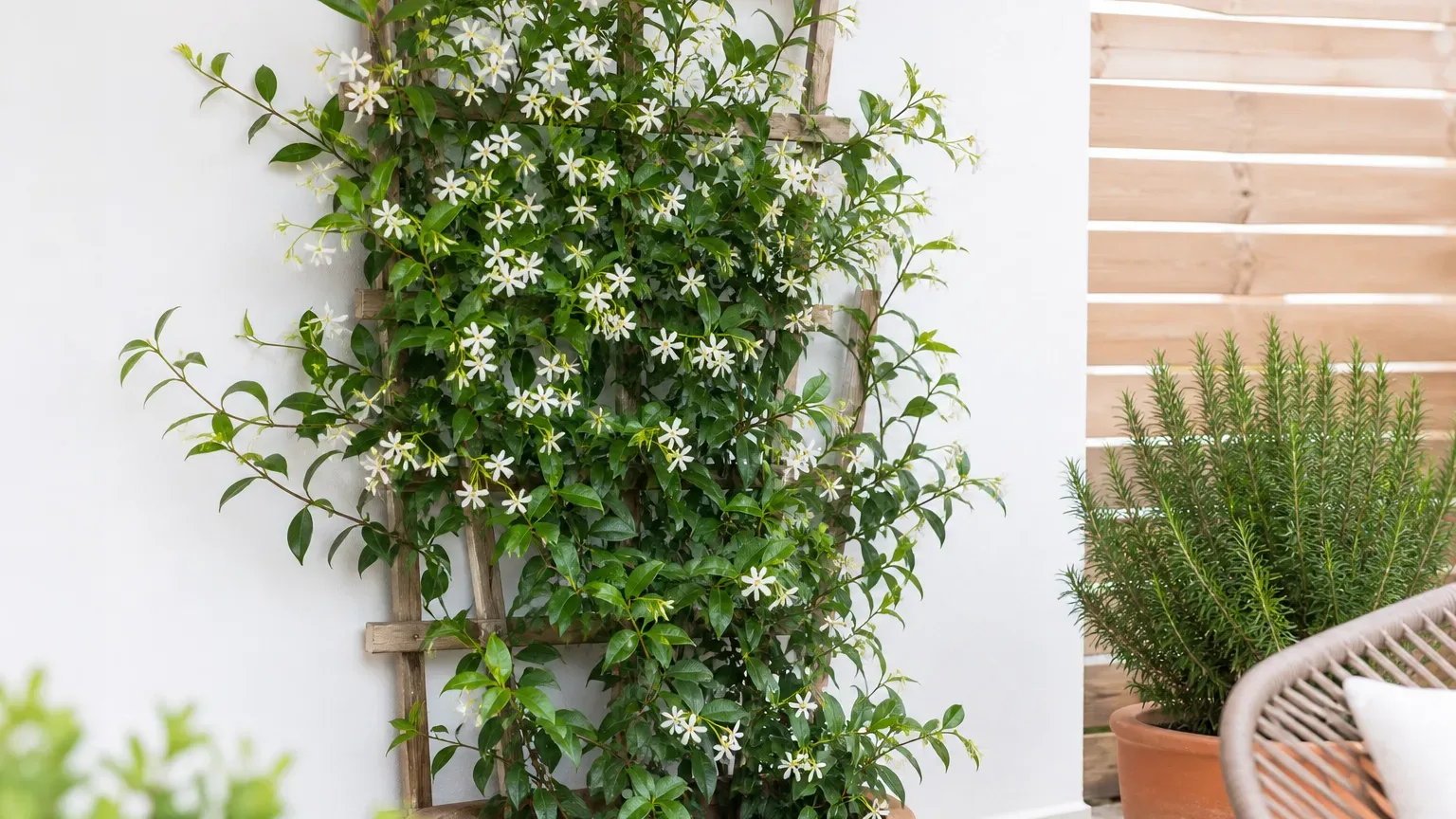 Star jasmine is the evergreen twiner landscapers specify when clients want fragrance without masonry risk. NC State Extension notes that as a vine it can reach about 20 feet on a support structure, with creamy-white, heavily scented spring flowers and glossy leaves that read well on pergolas and gateway arches.
Why it is structure-friendly: Twining stems need a trellis or wires—they do not cling to brick on their own. That separation is exactly what you want on painted fences and stucco.
Hardiness and siting: USDA zones 8a–10b per NC State. In zone 7 and colder, treat it as a container plant overwintered indoors or accept it as an annual. Full sun to partial shade; best bloom in sun.
Maintenance reality: Fast-growing and salt-tolerant, which makes it popular near coasts—but plan on pruning after flowering to keep it off rooflines and neighboring trees. NC State lists it as non-toxic to cats and horses, a useful datapoint for pet-heavy yards.
Best for: Freestanding trellises, pergola posts, fence panels with a wire grid, and containers on patios where fragrance matters.
Coral honeysuckle (Lonicera sempervirens)
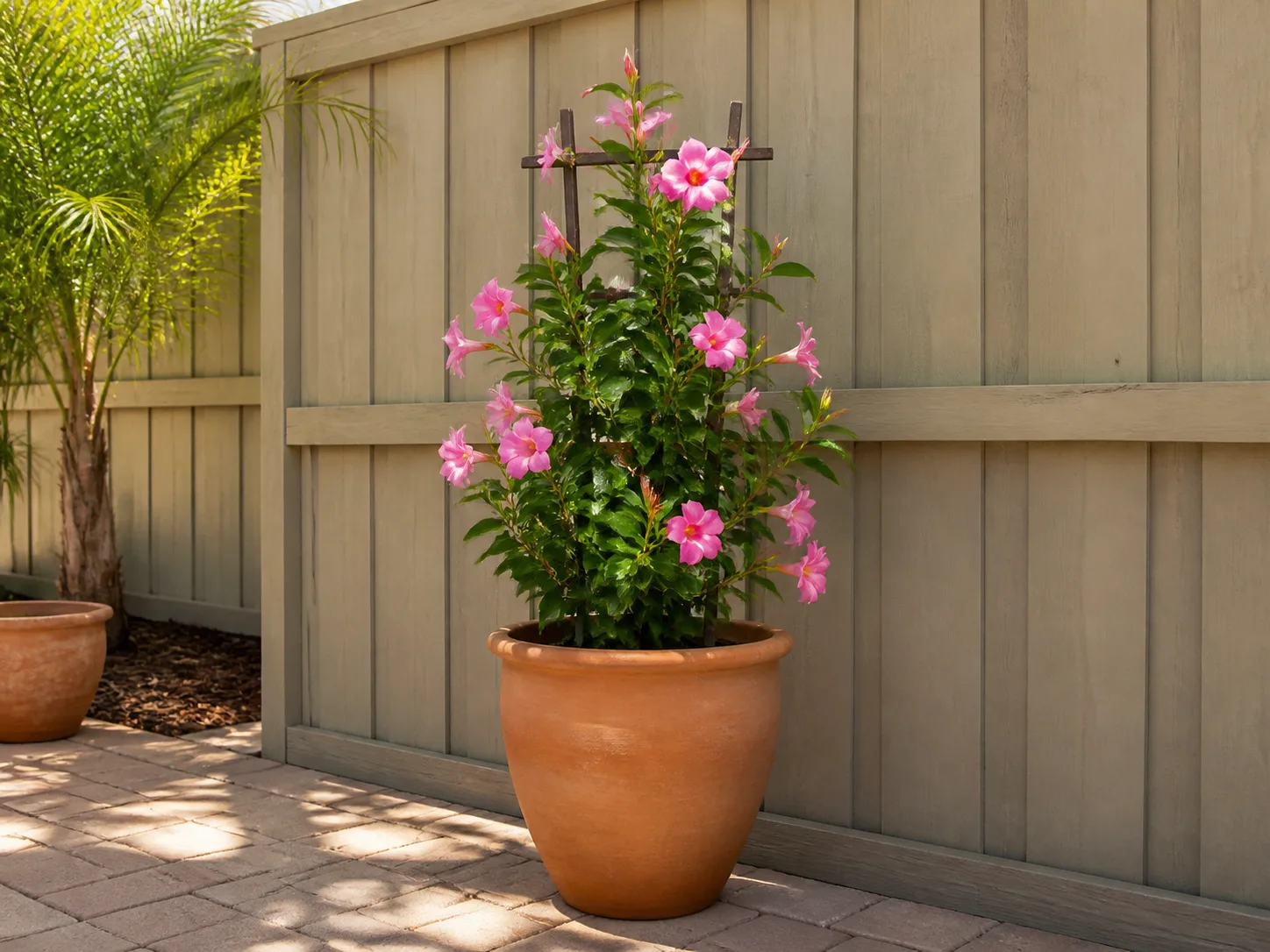 If your goal is native pollinator value on a supported fence, coral honeysuckle (trumpet honeysuckle) is the honeysuckle to learn—not the fragrant but invasive Japanese species. NC State Extension describes it as a vigorous twining native reaching 10 to 20 feet, with tubular red-orange flowers in mid-spring that attract hummingbirds as primary pollinators.
Why it is structure-friendly: It needs a trellis, arbor, or fence grid and does not bore into masonry. Stems are manageable with annual pruning.
Cultivars worth knowing: ‘Major Wheeler’ repeats bloom with reddish-orange flowers; ‘John Clayton’ offers compact yellow bloom and rebloom tendency; ‘Alabama Crimson’ delivers deep red on blue-green foliage.
Caveats: NC State tags it high flammability—keep it out of defensible space immediately adjacent to homes in fire-prone regions. Powdery mildew can appear in humid summers. Flowers are not fragrant, which surprises gardeners expecting Japanese honeysuckle perfume.
Best for: Native and pollinator gardens, hummingbird borders, coastal sites (salt tolerant), and fence lines where you want color without rootlet damage.
Crossvine (Bignonia capreolata)
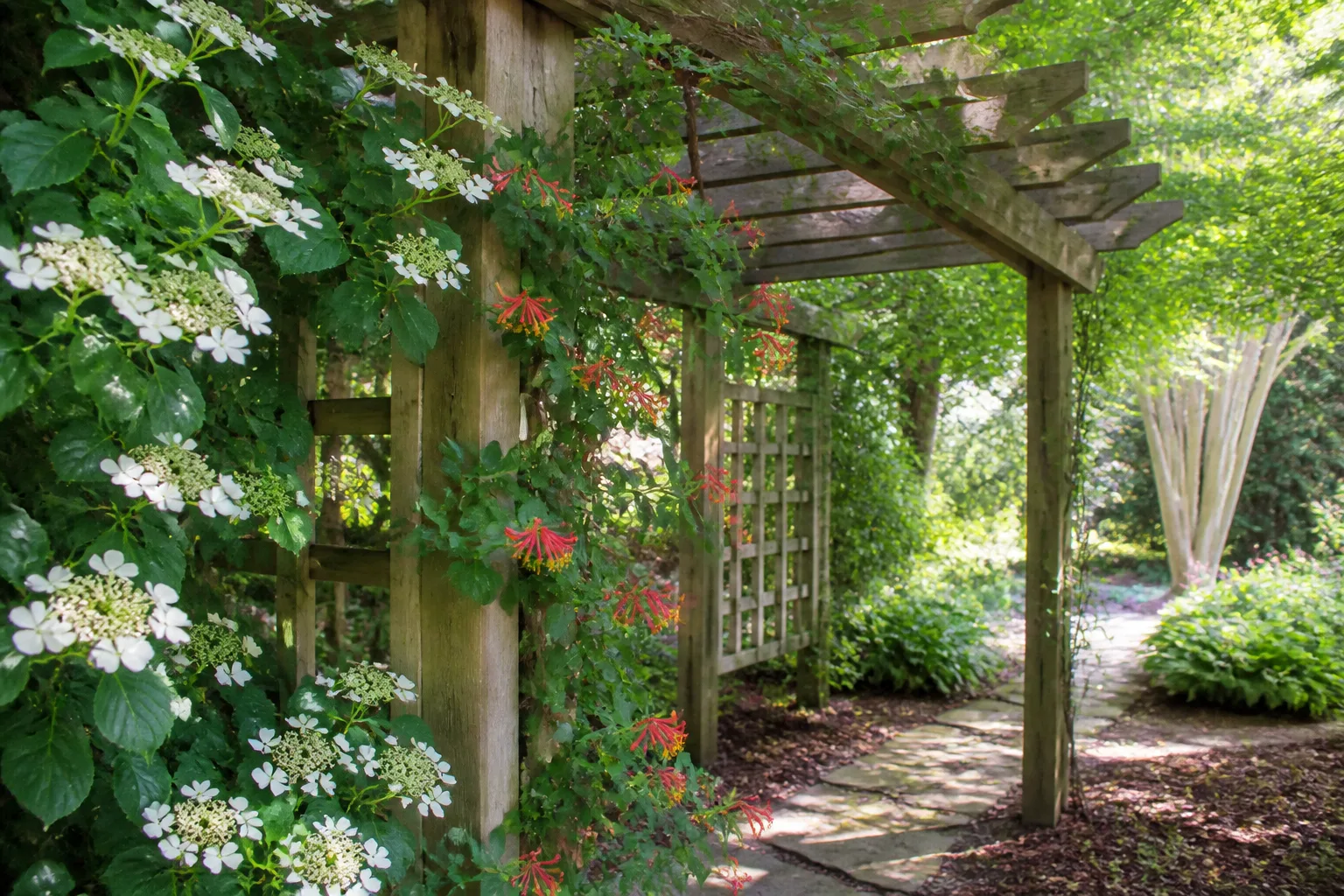 Crossvine is the southeastern native trumpetcreeper relative that gives you orange spring color without trumpet vine’s demolition-crew energy. NC State Extension describes branched tendrils that climb trees in swampy forests, with late-winter to early-spring blooms that feed hummingbirds when little else is open.
Why it is structure-friendly: Tendrils grip supports rather than rooting into mortar. It is easier to manage than trumpet vine (Campsis radicans), though “easier” is not the same as “hands-off.”
Size and spread: Expect a vigorous vine; NC State notes spread by seed and root suckers. Pull suckers promptly if the vine escapes its bed. Cultivar ‘Tangerine Beauty’ (JC Raulston Arboretum selection) is widely sold for deeper flower color.
Caveats: Tagged aggressive and weedy in the NC State toolbox. Also high flammability near structures. In severe winters it may die to the ground but resprout from hardy roots.
Best for: Tall trellises, sturdy arbors, woodland edges, and native gardens in the Southeast where early hummingbird food matters.
Climbing hydrangea (Hydrangea anomala subsp. petiolaris)
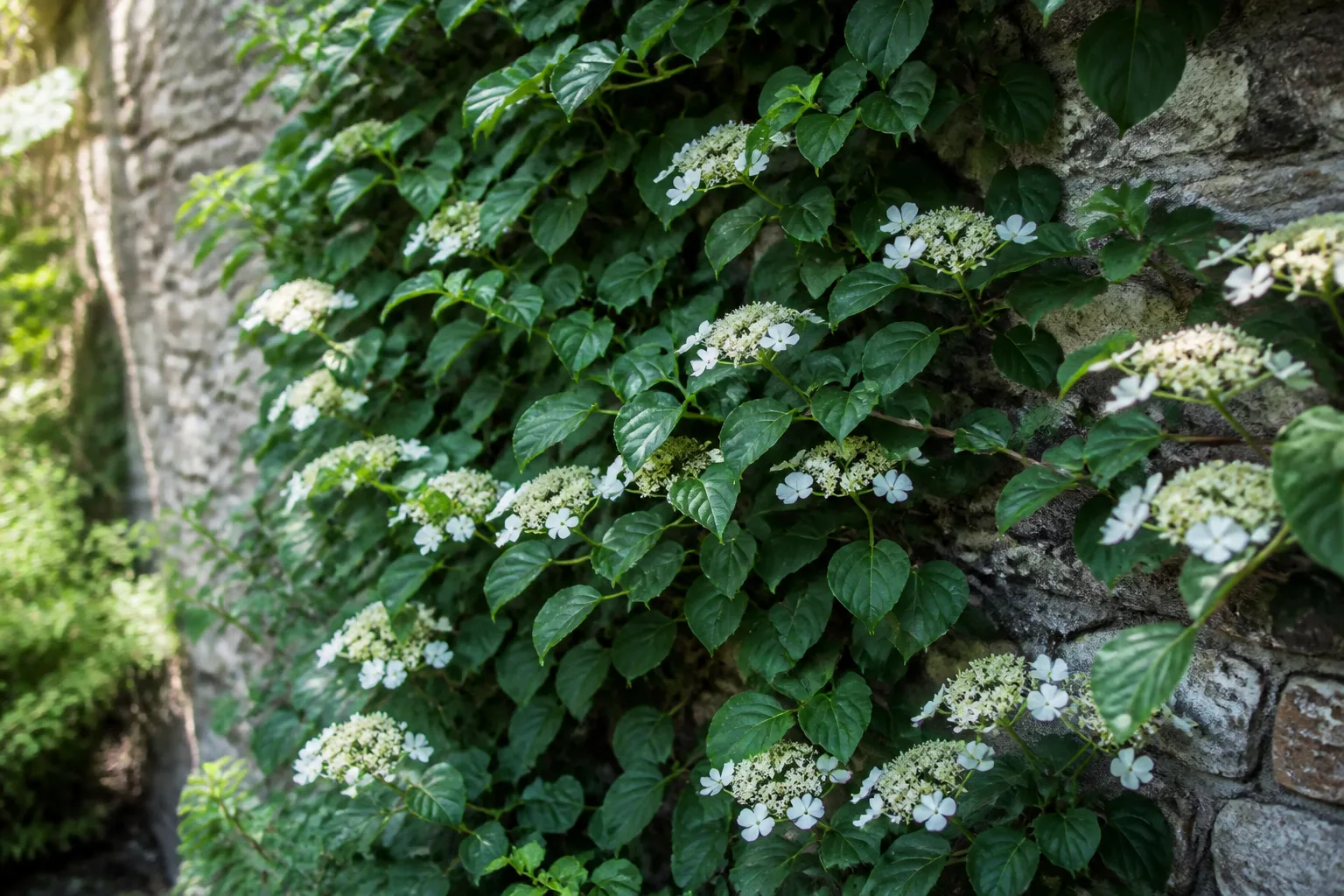 Climbing hydrangea is the shade-tolerant self-clinger landscapers use when clients want white summer lacecap flowers on a north or east wall. The RHS climbing hydrangea growing guide calls it vigorous once established, with flowers on last year’s growth, suitable for most soils except chalky or waterlogged sites.
Why it is structure-friendlier than ivy: Aerial rootlets spread across surfaces rather than probing deep into cracks the way English ivy does. That said, mature plants are heavy; RHS advises sturdy supports from day one and tying in new shoots until aerial roots attach.
Patience tax: First years can feel painfully slow. Budget three to five seasons before the wall looks lush. The payoff is decades of coverage, exfoliating bark, and yellow fall color on deciduous stems.
Planting spacing: RHS recommends about 45 cm (18 in) between plant and wall when planting against masonry—roots need room outside the dry rain shadow.
Caveats: Contact with foliage may aggravate skin; wear gloves. All parts can cause mild stomach upset if ingested. Not a quick fix for a bare wall you need screened this summer.
Best for: North- and east-facing masonry or heavy trellises, large shade gardens, and pairing with hostas at the base.
Native clematis (Clematis virginiana and regional alternatives)
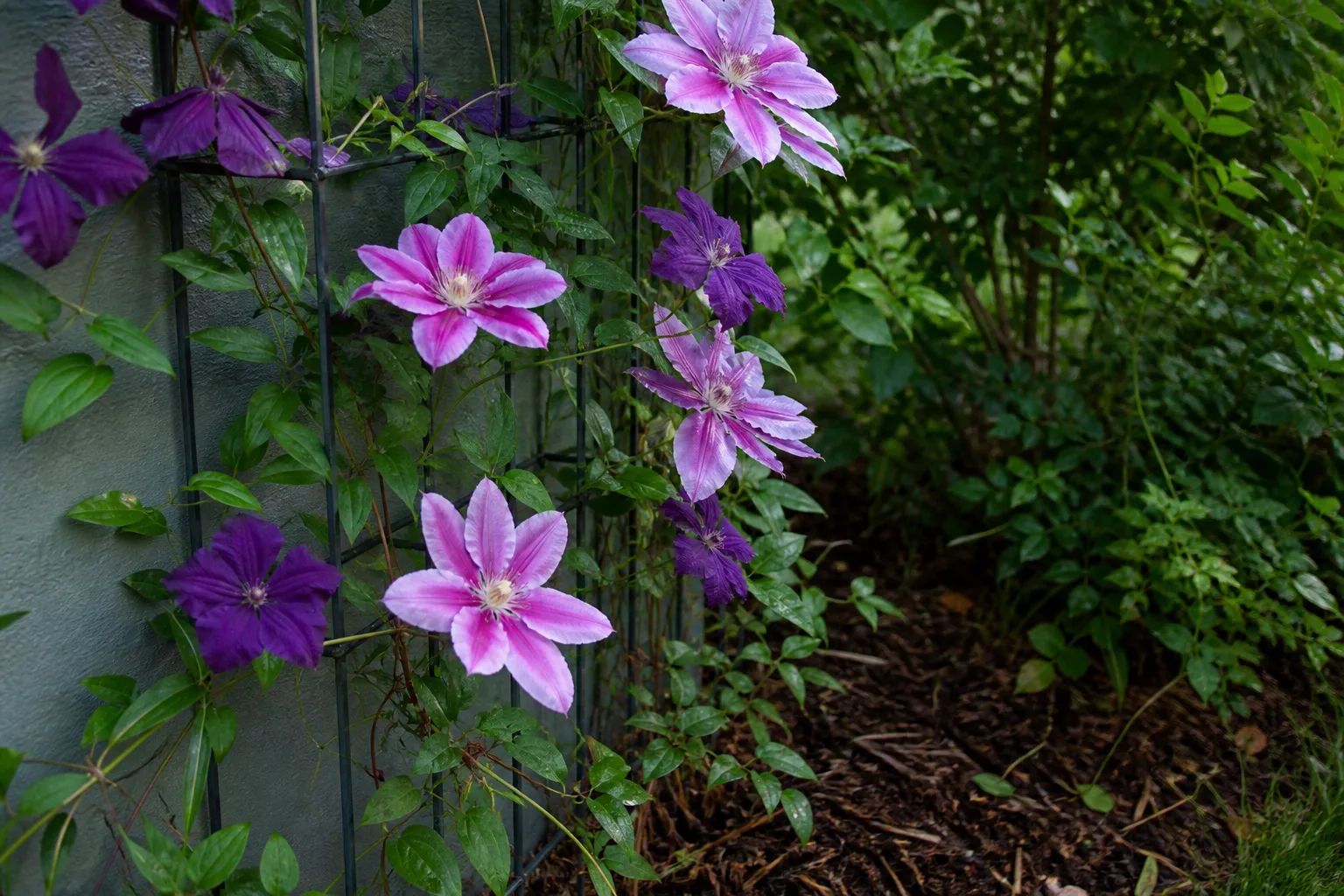 Clematis is a huge genus, and species choice matters enormously for both ecology and structure safety. For North American gardeners, virgin’s bower (Clematis virginiana) is the native white-flowered vine that screens without rootlets. NC State Extension notes it climbs by twining leaf stalks, reaches 15 to 20 feet, and flowers in autumn with fragrant blooms—one of the few vines that still performs in partial shade.
Why it is structure-friendly: No adhesive pads; it wants a trellis or open fence it can scramble through.
Critical ID step: Do not buy sweet autumn clematis (Clematis terniflora), the invasive look-alike with similar white fall flowers. Western gardeners can consider western virgin’s bower (Clematis ligusticifolia) instead of the eastern species.
Caveats: NC State lists medium-severity poison characteristics—problematic for cats, dogs, and horses. It self-seeds and can become weedy, overtopping shrubs if unpruned. Cut back hard in late fall to early spring (Group 3 pruning).
Best for: Woodland edges, pollinator gardens, shade fences, and screening where you can prune yearly.
Climbing roses
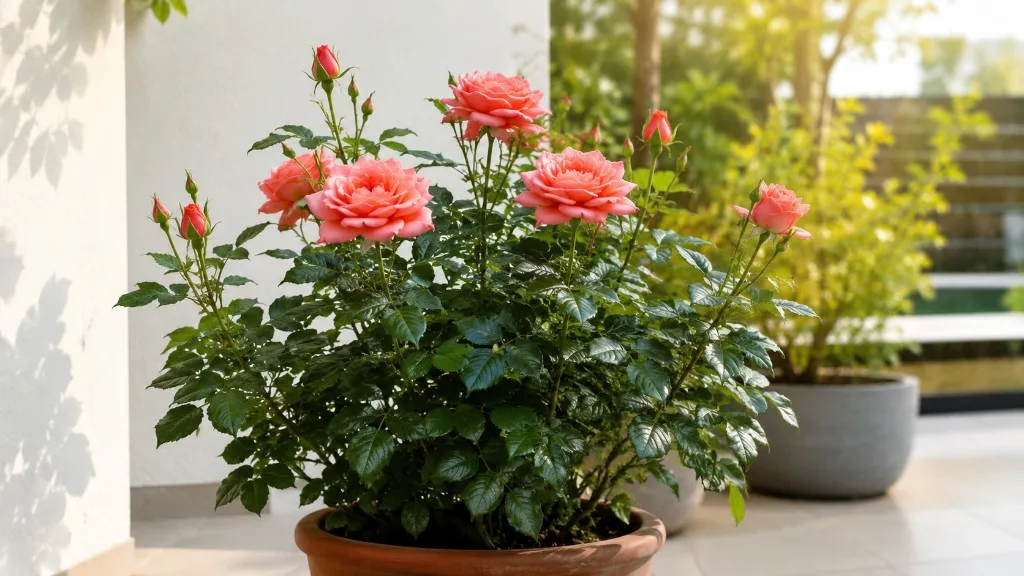 Climbing roses deliver the cottage-garden look without any self-clinging risk because they do not cling at all. Long flexible canes need soft ties to a trellis, arbor, or fence, trained horizontally to encourage flowers along the length of the stem rather than only at the top.
Why they are structure-friendly: Weight rests on your support system, not adhesive pads on siding. Damage comes from neglected ties girdling stems or a too-weak trellis pulling off a fence—not from roots in mortar.
Cultivars landscapers specify: ‘New Dawn’ (repeat pale pink, zones 5–9), ‘Zephirine Drouhin’ (thornless fragrant magenta, shade tolerant), and ‘Royal Sunset’ (apricot fragrance) remain reliable performers. Avoid multiflora rose (Rosa multiflora), which is invasive in many regions.
Maintenance reality: Expect annual pruning to remove dead wood, tie new canes, and keep the center open for airflow. Roses are not low-maintenance, but they are predictable.
Best for: Decorative arbors, gate posts, and fence panels where you want repeat bloom and are willing to prune.
Virginia creeper (Parthenocissus quinquefolia)
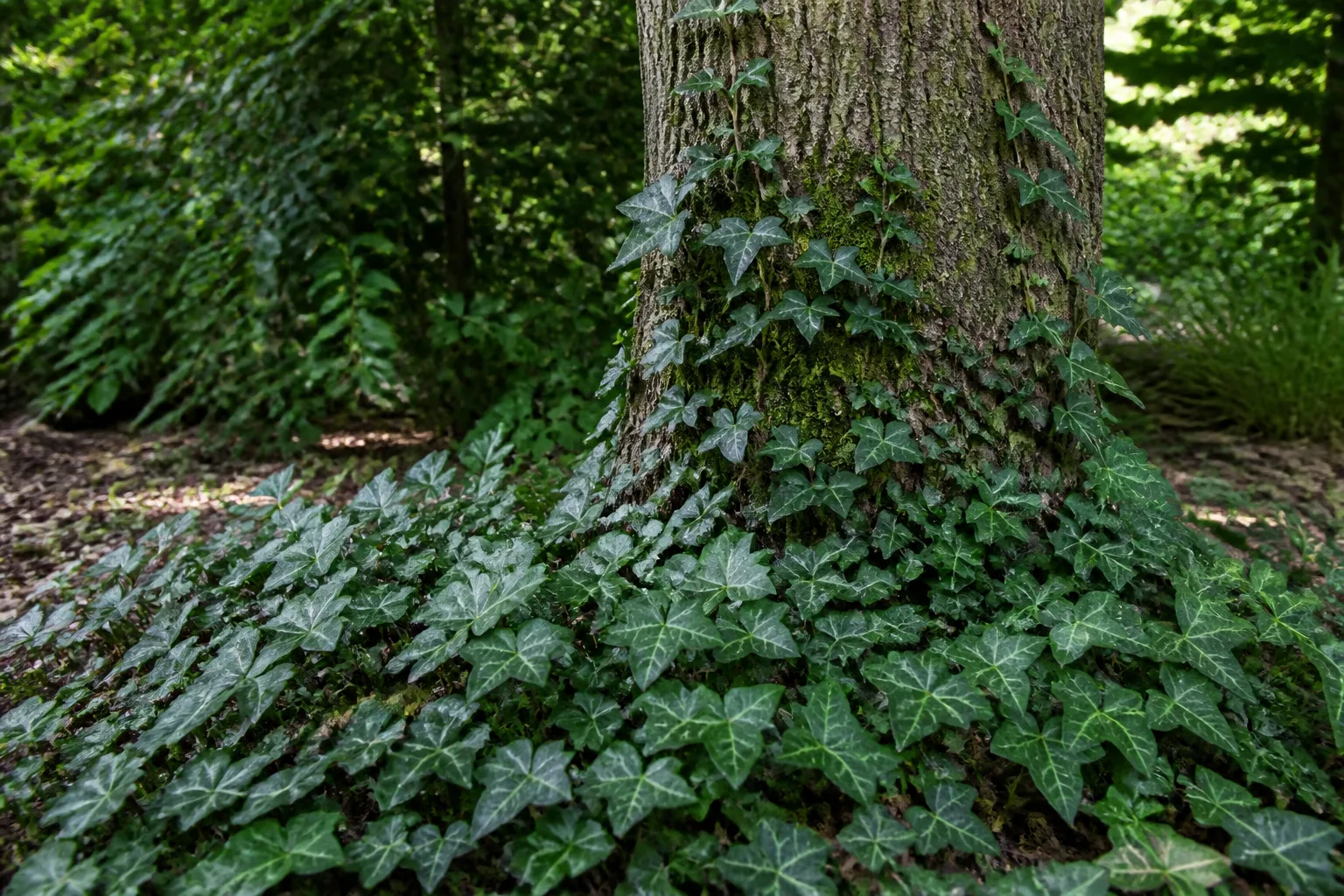 Virginia creeper is the native answer when you want blazing red fall color and bird-friendly berries without planting invasive ivy. NC State Extension describes a tendril climber with adhesive holdfasts that can reach 30 to 50 feet without any support at all.
Why landscapers still recommend it—with conditions: On a sturdy trellis away from painted surfaces, it provides fast coverage and erosion control on slopes. Berries feed songbirds; fall color is exceptional in full sun.
Where it is NOT damage-free: NC State is explicit: do not place near wood or shingle walls because holdfasts are difficult to remove and can ruin painted surfaces. Unchecked vines may attach to gutters, shutters, or wiring. It is also tagged high flammability near homes and carries poison characteristics (medium severity).
Management: Trim regularly to keep it in bounds. Treat it as a plant that needs a designated zone—not a free pass up the chimney.
Best for: Freestanding trellises, erosion-prone slopes, woodland edges, and masonry you do not mind dressing seasonally—not fragile historic stucco.
Morning glory and moonflower (annual screening)
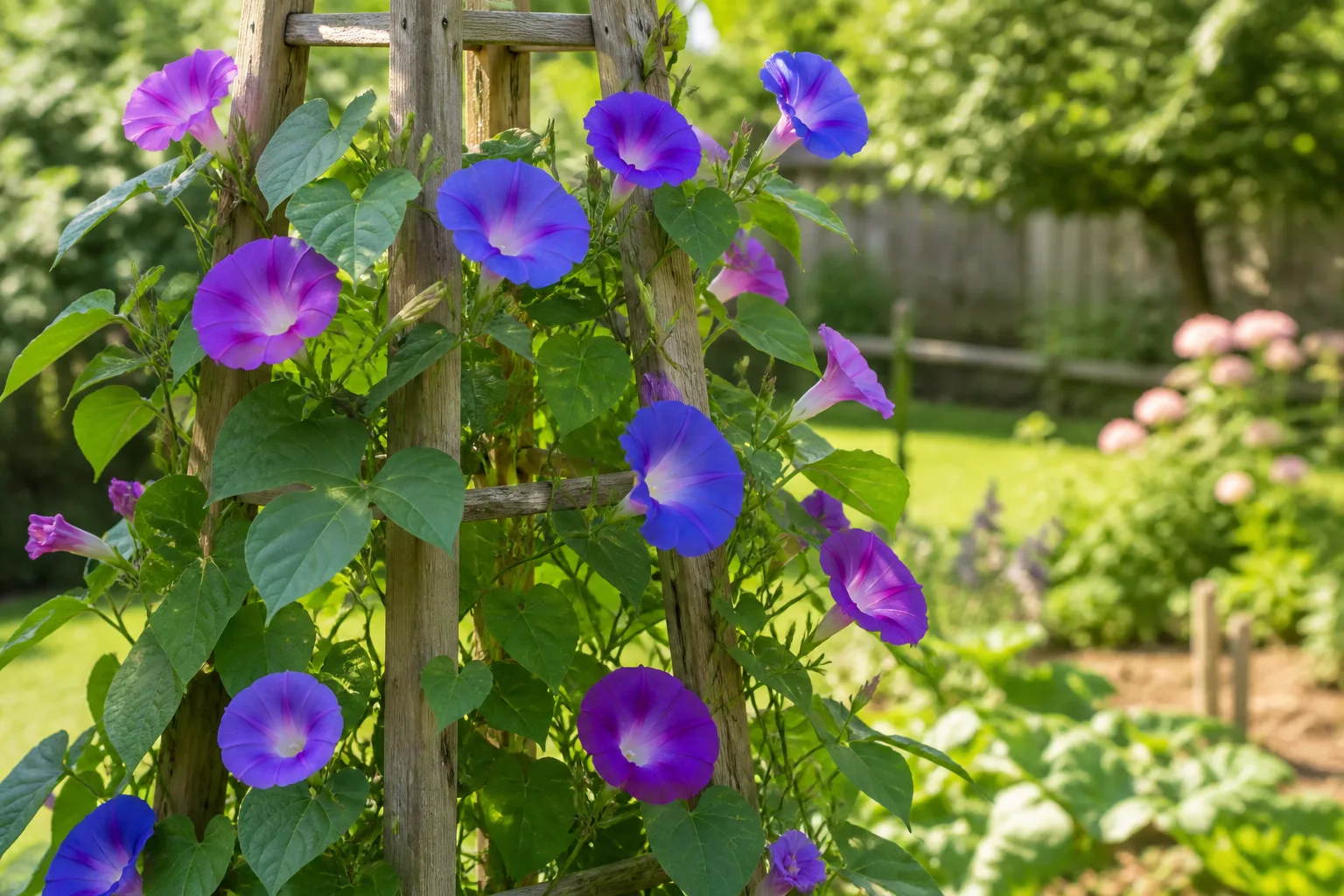 Morning glories (Ipomoea spp.) are the instant-gratification play: fast from seed, trumpet flowers all summer, and no permanent rootlets on your house because the plant dies with frost in most climates. They are twining annuals that need string, mesh, or a light obelisk.
Why they are structure-friendly: The entire plant is gone after frost (in zones below about 9), so there is no decades-long holdfast legacy. Perfect for renters, seasonal privacy, or masking an ugly chain-link fence for one summer.
Caveats: Self-seeding can surprise you the following year. Some states restrict ornamental morning glories; check local rules. Moonflower (Ipomoea alba) opens at dusk for night gardens but shares the same annual habit.
Best for: Quick seasonal screens, children’s garden teepees, and container obelisks on patios.
Installation and maintenance rules landscapers actually follow
Professionals treat vine jobs as small construction projects, not impulse nursery buys. The rules that prevent callbacks:
Size the support for year-five weight, not year-one appearance. A wobbly fan trellis from a home store will not carry mature climbing hydrangea or a heavy rose.
Never plant a twining vine against bare vinyl without a trellis in front. Smooth panels give nothing to grip.
Leave air space behind foliage. Dense mats against wood siding trap moisture and invite pests—even when the vine itself is not drilling in.
Check ties every spring. Loose fabric ties beat wire that cuts swelling stems.
Pull invasive look-alikes the moment they appear. One Japanese honeysuckle seedling today is a fence takeover in three years.
Pruning schedules that keep lush vines from becoming liabilities
| Vine | When to prune | Why it matters |
|---|---|---|
| Star jasmine | After spring flowering | Controls roofline encroachment |
| Coral honeysuckle | After spring bloom; light summer shape | Flowers on new growth; avoid heavy spring chop before bloom |
| Crossvine | After flowering; remove suckers anytime | Contains spread beyond bed |
| Climbing hydrangea | After summer flowering | Blooms on old wood |
| Native clematis | Late fall to early spring hard cut | Controls self-seeding and shrub engulfment |
| Climbing roses | Late winter structure; deadhead for repeat | Airflow and bloom distribution |
| Virginia creeper | Anytime to bound growth | Prevents gutter and wiring attachment |
| Morning glory | Not needed; remove before seed drop if reseeding unwanted | Prevents volunteer thickets |
Fire-wise gardeners should note that coral honeysuckle, crossvine, and Virginia creeper all carry high flammability tags in NC State’s toolbox. Plant them outside the immediate defensible space around structures in wildfire-prone regions.
Conclusion
Lush vertical gardening does not require English ivy or another vine you will fight forever. Star jasmine and coral honeysuckle give you fragrance and hummingbirds on trellises that protect your walls. Climbing hydrangea and native clematis solve shady fences without the invasiveness of ivy. Crossvine and Virginia creeper deliver native punch if you respect their spread and keep them off painted wood. Climbing roses and morning glories round out the list for romance and instant seasonal cover.
Choose by climbing method first, structure second, and maintenance third. Install sturdy supports with proper wall gaps before you plant. Prune on schedule. Skip the invasive look-alikes. Do that, and these eight climbers will give you the layered, professional look landscapers spec—without the repair invoices that follow the wrong vine.



