16 Invasive Plants to Avoid in North America
Avoid planting these 16 invasive ornamentals—from English ivy to Japanese knotweed. Learn ID tips, regional lists, and what to do if you already have them.
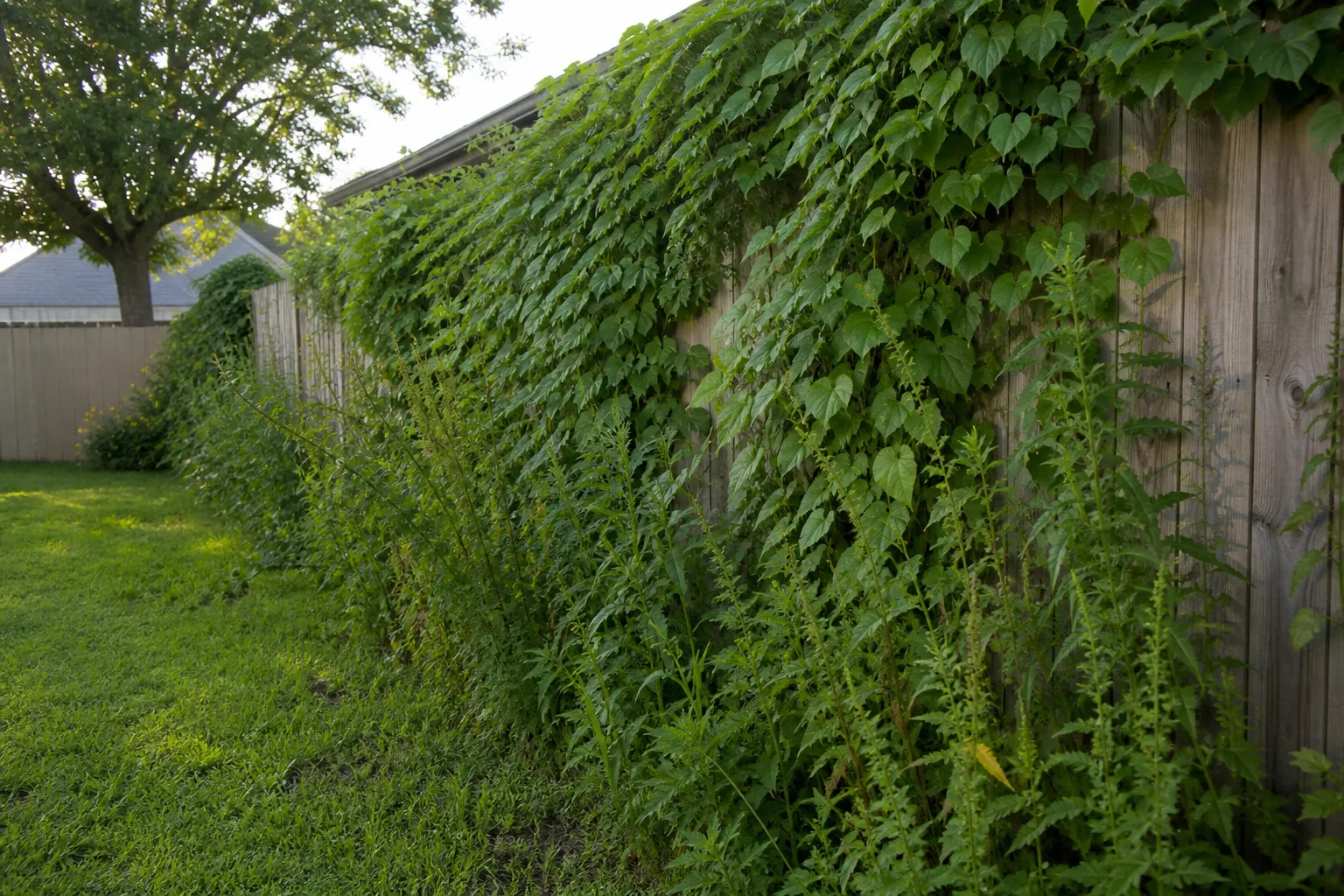
The worst invasive plants in North America are not always ugly. Many arrived as ornamentals—showy vines, purple groundcovers, fiery fall shrubs—and only became problems after birds, wind, mowers, or discarded clippings carried them beyond the fence. A plant that behaves in a container or cold climate can turn thuggish where winters are mild, soils are disturbed, or waterways sit nearby.
This guide covers 16 species that still show up in yards, old hedgerows, and discount nursery tables. Use it as a screening list, not a universal ban: invasiveness is regional. Before you buy, search the scientific name plus your state and check your cooperative extension, state invasive species council, or the Invasive Plant Atlas of the United States. What is reckless near a wetland in Ohio may be harmless in a Tucson courtyard.
Why invasive status is regional (and why the prettiest plants are often the worst)
An invasive plant is a non-native species that establishes in the wild and causes ecological, economic, or human harm—outcompeting natives, degrading habitat, increasing erosion, or creating long removal bills. The Nature Conservancy frames prevention as the cheapest control: verify nursery plants, replace known invaders, and keep seeds and fragments from leaving your property.
Nonnative vs invasive vs merely aggressive
Nonnative simply means the plant evolved elsewhere. Aggressive describes fast growth in a garden bed—mint running in rich soil, for example—without necessarily escaping into natural areas. Invasive adds harm beyond your property line: seeding into parks, rooting along streambanks, or forming monocultures that wildlife cannot use.
That distinction matters because gardeners routinely confuse “spreads in my bed” with “safe if I prune it.” A hedge you trim every year can still fruit abundantly; a vine you “keep in check” can layer stems that root 30 feet away. Pretty flowers are not a safety signal. They are often how the plant got planted in the first place.
Five-minute nursery screening before you bring anything home
Run this checklist on anything sold as fast coverage, deer resistance, or low maintenance:
- Write the scientific name on your phone. Common names hide multiple species (bittersweet alone covers three different plants).
- Ask how it spreads—runners, rhizomes, suckers, wind seed, bird fruit, or stem fragments that root.
- Map escape routes—adjacent woods, alleys, creeks, storm drains, unmowed verges, and neighbors’ beds.
- Search “[scientific name] invasive [your state]” and read an extension page, not a forum thread.
- Shop by function, not impulse—if you need a purple vine, a red hedge, or a shade mat, choose a locally vetted native or well-behaved cultivar before grabbing the first glossy tag.
If step four turns up warnings, put the pot down. Replacing a plant at the register is cheaper than renting a chipper five years later.
Watch for red-flag marketing language: “vigorous,” “self-sows freely,” “naturalizes easily,” “deer-proof groundcover,” and “no maintenance once established.” Those phrases are not always wrong, but they are how invasive ornamentals are sold to busy gardeners. A pot labeled “pollinator magnet” does not tell you whether caterpillars can use the plant—or whether seed will sprout in the park behind your house.
Worst invasive vines
Vines cause disproportionate damage because they travel vertically and horizontally, add weight to trees, and hide their spread under leaves. Horticulturist Melinda Myers groups English ivy, Japanese honeysuckle, and oriental bittersweet among the common garden vines that have “escaped the boundaries of our gardens” into forests and roadsides—crowding natives and girdling trunks.
Oriental bittersweet and bittersweet look-alikes
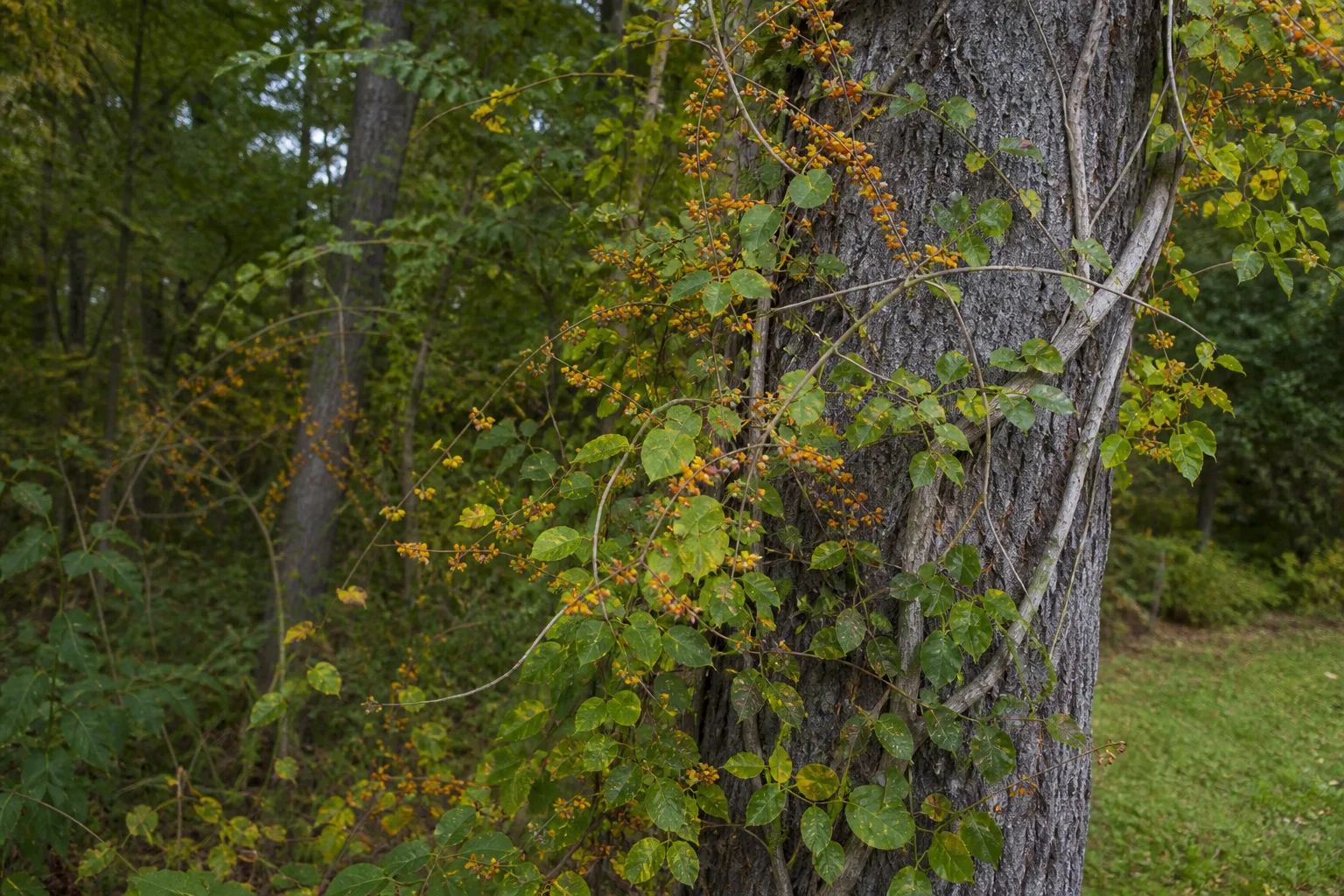
Oriental bittersweet (Celastrus orbiculatus) is the vine most Midwest and Northeast lists flag first. It twines up trees, shades crowns, and can kill supports through sheer mass. Its yellow-orange capsules split to reveal red arils birds eat, spreading seed far from parent plants. The USDA plant guide for American bittersweet (Celastrus scandens) exists partly because buyers confuse the native species—with flowers and fruit clustered at stem tips—with the invasive, which often bears fruit along the entire stem.
Do not confuse either with bittersweet nightshade (Solanum dulcamara), a different plant with purple flowers and red berries that is weedy and toxic but not the same vine problem. For fall color without the invasion risk, ask your extension office about American bittersweet planted where you can monitor it, or choose a native vine suited to your structure.
Chinese wisteria, English ivy, and sweet autumn clematis
Chinese wisteria (Wisteria sinensis) builds heavy woody stems and seed pods; NC State’s Plant Toolbox describes it as a rapid-growing invasive vine that forms dense thickets. American wisteria (Wisteria frutescens) is the comparison species for the Southeast; UF IFAS Gardening Solutions notes Chinese wisteria twines counterclockwise and poses a genuine threat south of USDA zone 4, while American wisteria is the less aggressive native alternative. Always confirm stem twist, flower timing, and pod shape before planting near trees.
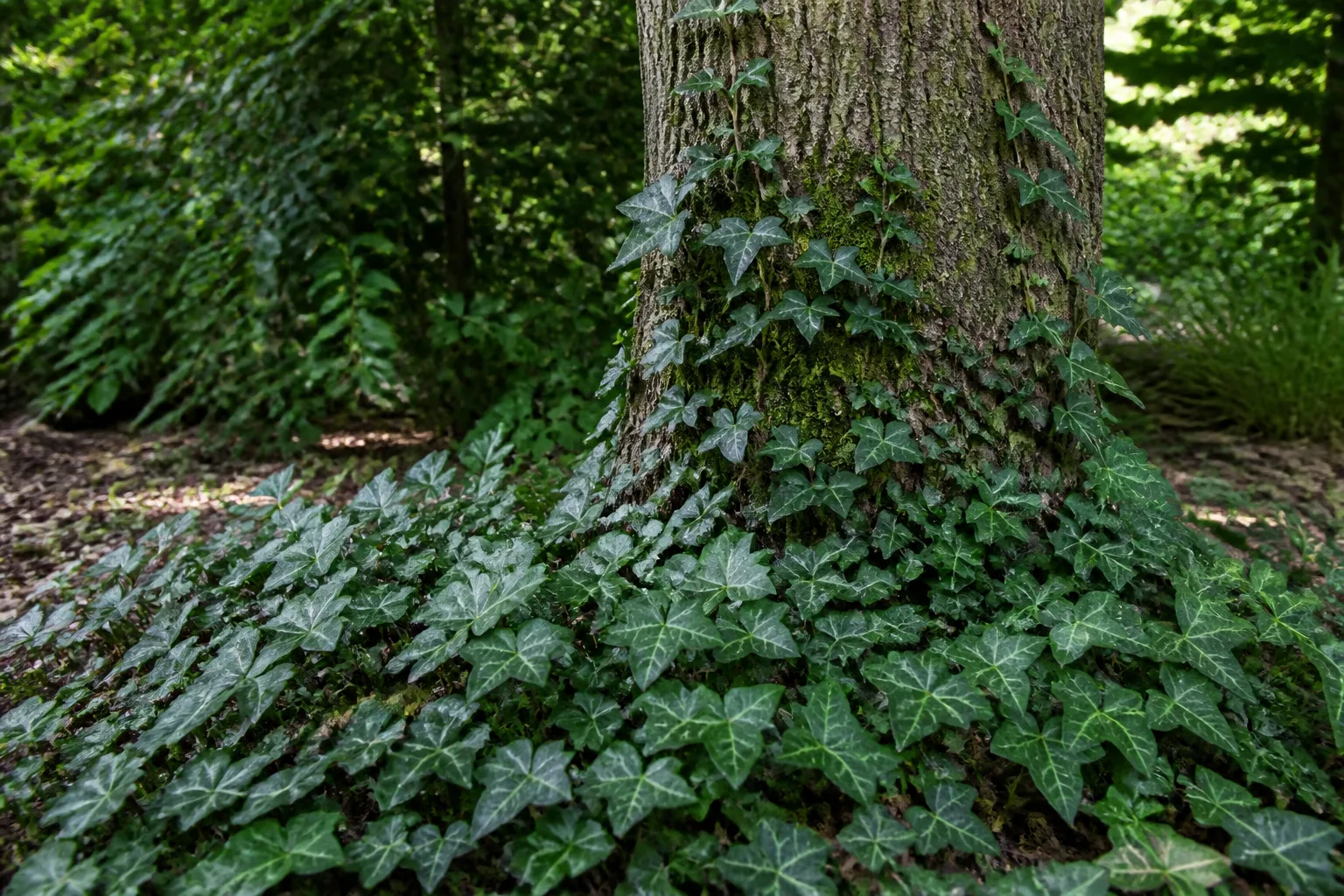
English ivy (Hedera helix) is sold as a shade groundcover and wall climber. Clemson HGIC documents its ability to root along stems, climb bark, and dominate forest floors—especially problematic in the Pacific Northwest and much of the East. Mature ivy produces berries. Do not yank heavy vines off living trees; cut at the base, let upper growth die, then remove roots from soil. For shade mats, use locally recommended native sedges, ferns, or wild ginger instead.
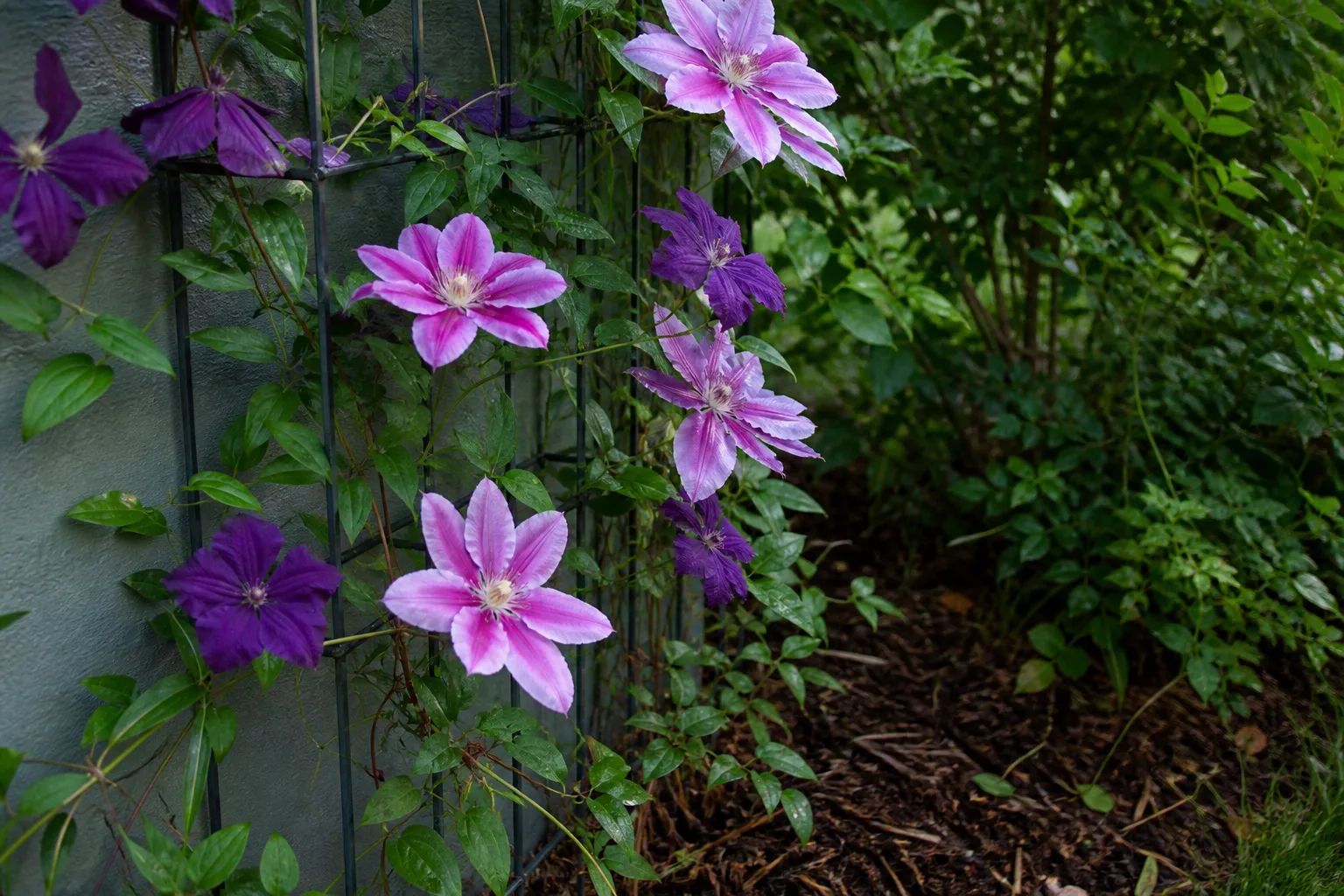
Sweet autumn clematis (Clematis terniflora, also sold under older names) perfumes the fall air and then blankets fences with thousands of wind-blown seeds. UF IFAS lists it as especially problematic in the East and lower Midwest. Do not assume every white autumn clematis is the same species—verify the label. Native or sterile clematis selections recommended by your extension are safer near woods.
Japanese honeysuckle and kudzu
Japanese honeysuckle (Lonicera japonica) pairs fragrant summer flowers with evergreen leaves in mild climates and stems that root where they touch soil. It climbs into canopies, girdles small trees, and shades forest floors. Myers notes it adapts to roadsides, wetlands, and woods. Control starts with cutting vines at the base and treating regrowth; do not compost pulled vines if they may root.
Kudzu (Pueraria montana var. lobata) is the emblematic Southern vine—sometimes called “the vine that ate the South.” Introduced for erosion control and porch shade, it grows in sun or shade, spreads by runners and rhizomes, and can smother trees and structures at rates that made headlines when it escaped plantation plantings. Land managers use repeated mowing, systemic herbicide on regrowth, and in some cases targeted goat grazing on contained plots. If you inherit kudzu on a rural lot, treat it as a multi-year land-management project, not a weekend weeding job—and photograph the boundary each season so you can prove you are containing spread if a neighbor raises concerns.
Native swaps for vine jobs: coral honeysuckle (Lonicera sempervirens) for hummingbird color; crossvine (Bignonia capreolata) in the Southeast; American wisteria on a heavy arbor; native clematis for late-season bloom. Match the support to mature weight—many invasive problems began with a decorative trellis that was never sized for a 30-foot woody vine.
Groundcovers that spread by runners
Ajuga (bugleweed)
Ajuga (Ajuga reptans) is a purple-flowered mat that nursery tags praise for weed suppression. In warm climates without hard winter kills, it can march through lawns and beds by stolons, leaving a uniform carpet that is hard to dig out once it interweaves with grass roots. It is not a wetland destroyer on the scale of loosestrife, but it exemplifies the groundcover trap: the same traits that block weeds also block your ability to change the planting later. For shady mats, consider clumping natives such as wild ginger (Asarum spp. where hardy), sedges (Carex spp.), or foamflower (Tiarella) in moist shade—always checking regional native ranges first. If you must use ajuga, confine it between paving and a mowed edge you inspect monthly.
Invasive shrubs sold for hedges, fall color, and butterflies
Thorny or fast-growing shrubs dominate old subdivision hedges—and seed into nearby woods with help from birds.
Japanese barberry, common barberry, burning bush, and privet
Japanese barberry (Berberis thunbergii) and common barberry (Berberis vulgaris) were planted for deer resistance and security hedges. Many Midwestern states now restrict sale because barberry invades woodlands and, in humid regions, research has linked dense barberry understories to higher tick habitat—another reason to phase it out near play areas. Burning bush (Euonymus alatus), prized for fluorescent fall foliage and orange berries, escapes into forests across the northern United States and is banned or phased out in several New England states. Retailers may still stock it under alternate cultivar names; verify Euonymus alatus on the tag.
Common privet (Ligustrum vulgare) tolerates pollution and shearing, which is why it lines urban yards—then fruits and seeds into fencerows. If you need a hedge, choose a native or sterile cultivar vetted for your region (ninebark, inkberry holly, or local viburnums where appropriate) and plant at mature width so you are not fighting constant rejuvenation pruning that leaves berries behind. A hedge that requires three shearings a year to look tidy is often a hedge that produces three crops of fruit you never see.
Butterfly bush and lantana in warm climates
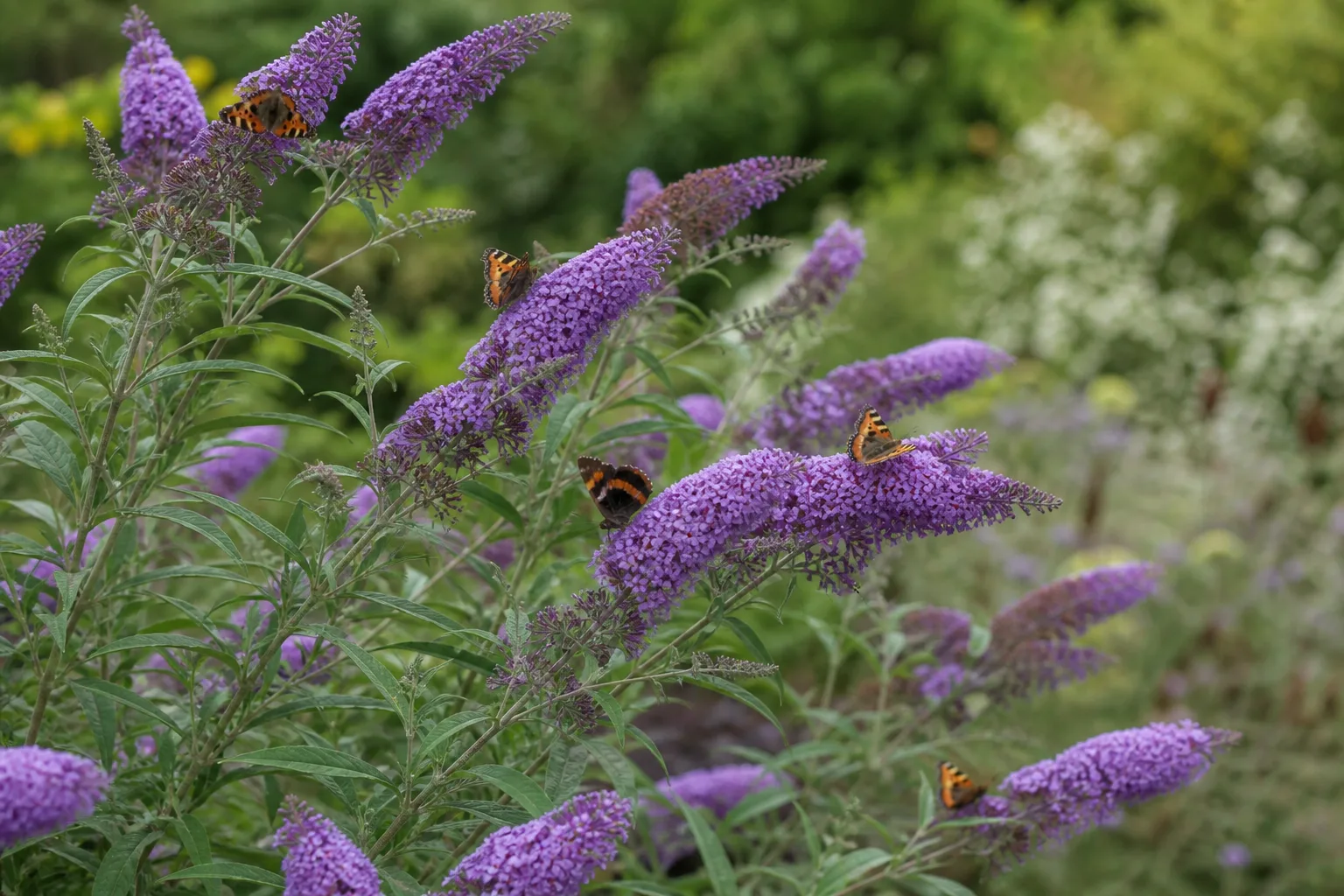
Butterfly bush (Buddleja spp.) attracts adult butterflies with nectar but is not a caterpillar host plant. In the Pacific Northwest and parts of the Southeast it seeds aggressively into disturbed ground. Colder zones see die-back that limits spread, and some marketed “sterile” cultivars reduce seed set—but sterility does not stop every form from rooting or appearing on local do-not-plant lists. Pair any pollinator shrub with native host plants such as milkweed (Asclepias spp.) if your goal is butterflies, not just visits.
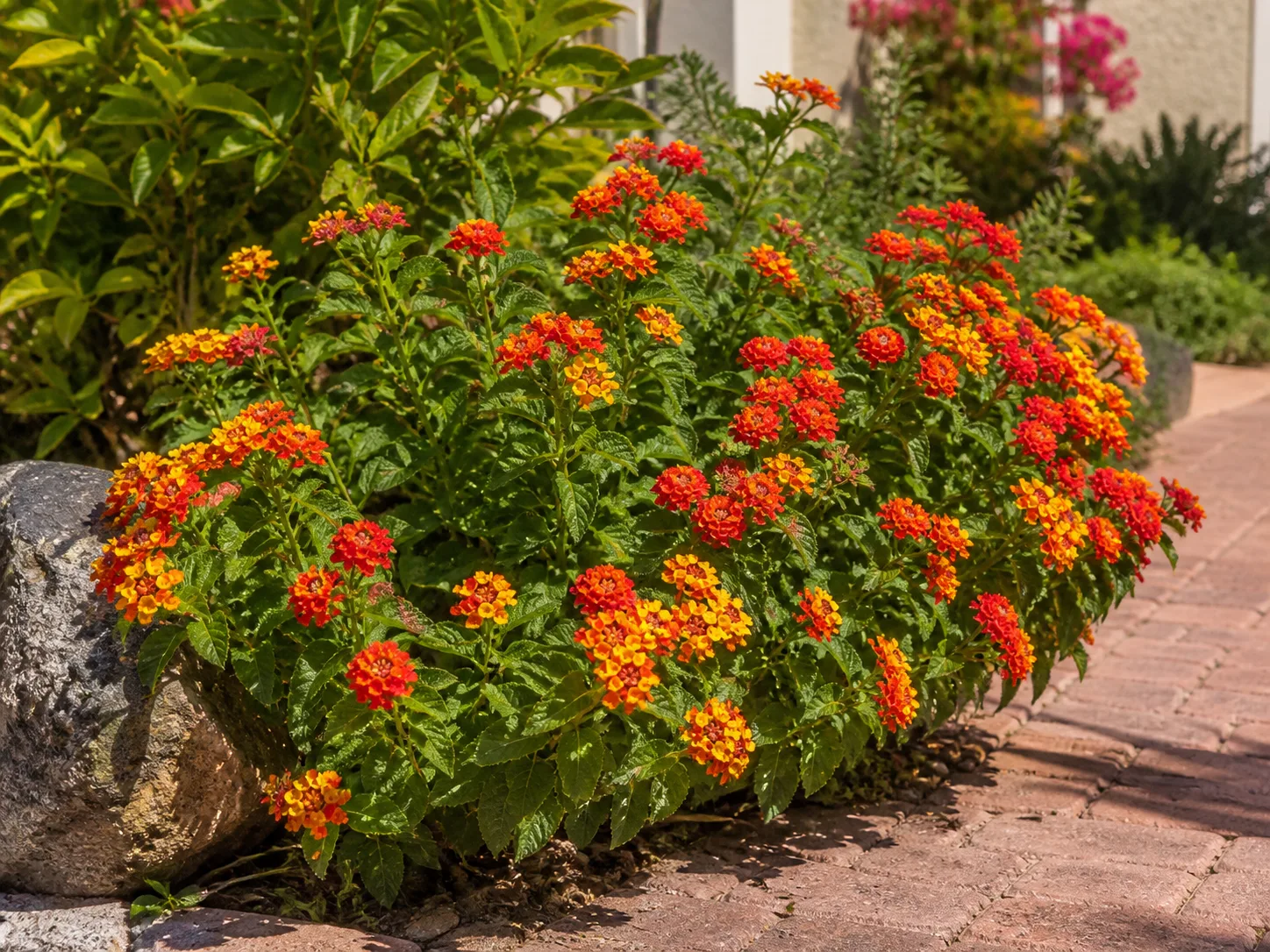
Lantana (Lantana camara) is a tropical shrub that becomes a serious invader in Florida, Georgia, and the warm West, while northern gardeners treat it as a frost-tender annual. Do not dump frost-killed containers near greenways; seeds can survive mild winters in zone 9 and warmer.
Norway maple and other invasive trees
Norway maple (Acer platanoides) was planted for tough urban conditions and dense shade. Its wind-borne samaras establish in woodlots, where shade and shallow roots suppress native wildflowers such as trillium and spring ephemerals. Northeastern states from Maine through Massachusetts list it as a high-priority invader. Field ID tip: break a leaf petiole—Norway maple exudes a milky sap; native sugar maple does not. Before planting any maple, compare with native red or sugar maple (Acer rubrum, Acer saccharum) unless your site truly requires the exotic’s salt tolerance—and even then, check current municipal planting lists, because many cities now prohibit Norway maple street trees.
Wetland and roadside spreaders: purple loosestrife and tansy
Purple loosestrife (Lythrum salicaria) colonizes wetlands, ditches, and shorelines with purple spikes that look beautiful in mass—which is exactly the problem. Dense root mats displace sedges and bird nesting habitat. It likely arrived in North America in the 1800s in ship ballast soil and now occurs in every state except Hawaii and Alaska. Since the 1990s, managers have released specialist Galerucella beetles as biological control; populations in some regions have declined, but loosestrife remains on watch lists nationwide and can resurge if beetle populations crash after drought. Never plant it near water “for color,” and pull isolated roadside plants before they set seed.
Common tansy (Tanacetum vulgare) is an herb with ferny leaves and button flowers, historically used in repellents and teas. University of Minnesota Extension notes it spreads by rhizomes and seed, forming patches along roadsides and in pastures. All parts are toxic if eaten in quantity—keep livestock and curious toddlers away from large stands. Pull new patches before rhizomes intertwine with desirable perennials; older patches may need repeated cutting plus careful herbicide on regrowth if extension approves.
Japanese knotweed: treat it as a serious infestation
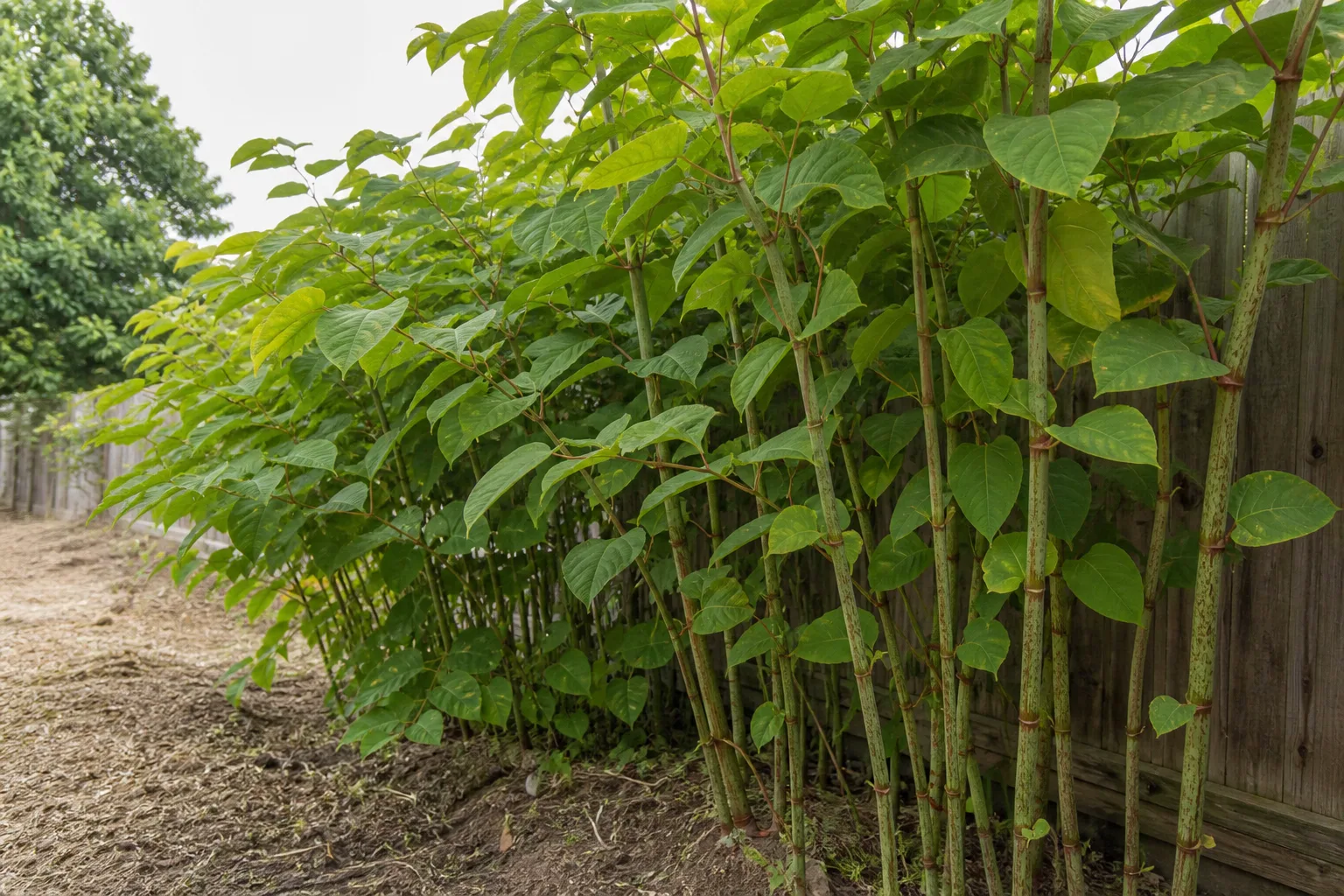
Japanese knotweed (Reynoutria japonica, also cited as Fallopia japonica) is in a different league from ajuga or privet. Rhizomes survive cutting, smothering, and casual digging; fragments as small as a coin can sprout. The National Park Service documents its spread along roads and rivers in dozens of states. It has negligible ornamental value and can complicate property sales where disclosure laws apply.
If you find bamboo-like jointed stems with spade-shaped leaves, stop digging and read a dedicated control plan. Our Japanese knotweed removal guide walks through identification, legal disposal, and multi-season cut-and-treat timing extension services recommend. Do not compost knotweed material.
What to do if these plants are already on your property
Inherited landscapes are common. You do not need to panic, but you do need a plan:
- Stop seed and fruit first. Remove berries, pods, and seed heads before birds spread them. Bag material if local rules require it.
- Never compost rhizomatous weeds—knotweed, loosestrife, tansy, kudzu, or ivy stems that can root. Use municipal yard-waste rules; many facilities reject invasives.
- Cut vines at the base before pulling canopy growth off trees. Live vines tear bark; dead vines are easier to remove safely.
- Mark the calendar for follow-up. One mowing or pull rarely finishes a rhizome-backed plant. Schedule monthly checks through the growing season.
- Ask extension before herbicides near water, on large stands, or when children and pets use the area.
- Replace with function, not just “native” branding. A coral honeysuckle (Lonicera sempervirens) on a strong trellis solves a vine desire differently from a privet hedge replacement with ninebark.
For broader screening beyond these 16, see our guide to popular invasive plants to avoid planting and invasive plants that take over quickly.
Conclusion
Sixteen familiar ornamentals—vines, mats, shrubs, trees, and wetland perennials—account for a large share of North American invasive plant headaches. None of them look dangerous in a one-gallon pot. The risk shows up years later when seeds ride the wind, runners cross property lines, or a former owner planted “low maintenance” groundcover on every shady slope.
Your best defense is regional homework: scientific name, extension search, and honest assessment of where fragments could go. Your best offense on an existing infestation is patience—stop reproduction, dispose carefully, and follow proven multi-season control rather than one heroic weekend. Choose plants that stay where you put them, and you keep both your garden budget and your local woods in better shape.