7 Invasive Plants to Avoid in Your Garden
Identify seven invasive garden plants, prevent seeds and runners from spreading, and choose better alternatives for groundcover, shade, flowers, and screening.
The most troublesome plants in a garden are not always the ones that look weedy at the nursery. Some arrive as glossy groundcovers, dramatic ornamental grasses, fast shade trees, or flower spikes that seem perfect for a difficult corner. The problem starts later, when a plant makes seeds, runners, rhizomes, or root suckers faster than you can contain them.
The seven plants below deserve a pause before planting. They are not equally risky in every climate or legally restricted in every state, so use this list as a screening tool, not a substitute for your local invasive-species list. The useful question is not simply “Is this plant pretty?” It is How does it reproduce, where can it escape, and what will removal require if I change my mind?
What makes an ornamental plant invasive in a home garden?
“Invasive” is not just a synonym for fast-growing. A vigorous plant may be easy to manage if it stays in its bed, does not reproduce successfully, and does not spread into habitats where it displaces native species. An invasive plant is a non-native species that establishes and spreads in a way that causes ecological, economic, or social harm; the exact list and legal definition can vary by jurisdiction.
For a homeowner, the warning signs are practical. A plant deserves extra scrutiny when it reproduces in more than one way, roots wherever a stem touches soil, sends shoots up far from its crown, produces bird- or wind-dispersed seed, climbs into trees, or thrives in both a maintained bed and a nearby woodland edge. Those traits turn a small planting into a maintenance obligation that can outlast the gardener who planted it.
The spread mechanism also predicts the mistake that will make the problem worse. Mowing a plant that resprouts from roots is not the same as removing it. Pulling a vine out of a tree can tear bark and scatter pieces. Cutting a flower head after it has released seed may simply move the problem. Good control starts by identifying the plant’s route of escape.
Check your local invasive-plant list before you buy
No list of seven plants can be universal. A species that is a serious invader in the Northeast may be uncommon or unable to survive outdoors farther south or west, while a plant that behaves well in one climate may spread aggressively in another. Cultivars can differ in seed production and growth habit, but a cultivar name is not proof that a plant is sterile or safe.
As one regional example, Pennsylvania’s Department of Conservation and Natural Resources includes English ivy, Oriental bittersweet, wintercreeper, Chinese silvergrass, Norway maple, tree of heaven, and purple loosestrife in its invasive-plant fact-sheet collection. That is evidence of regional concern, not a claim that every state treats every plant the same way. Check your state department of agriculture, county extension office, native plant society, or local invasive-species council before buying or moving a questionable plant. Pennsylvania DCNR’s invasive-plant fact sheets are a useful example of the kind of official resource to look for.
Read the label for the botanical name, not only the common name. “Ivy,” “bittersweet,” “loosestrife,” and “maiden grass” can refer to several species with very different behavior. If a nursery tag says “non-invasive,” ask what evidence supports that claim and whether the plant is safe in your county. When the answer is vague, choose a locally native species that performs the same job instead.
Seven plants that deserve a pause
The list is organized by how each plant gets out of bounds. That distinction matters more than the plant’s height or whether it is sold as an ornamental.
| Plant | Main escape route | First concern |
|---|---|---|
| English ivy | Seeds, rooted cut stems, climbing vines | Smothers trees and hides rodents near trunks |
| Oriental bittersweet | Seeds and woody vines | Girdles plants and adds weight to trees |
| Purple loosestrife | Abundant seed and persistent roots | Forms dense wetland stands with little habitat value |
| Maiden grass | Vigorous roots, rhizomes, and sometimes seed | Escapes into open or sensitive habitats where locally listed |
| Tree of heaven | Wind seed and root suckers | Returns after cutting and spreads underground |
| Norway maple | Wind-dispersed samaras and shade-tolerant seedlings | Creates dense shade and suppresses understory plants |
| Wintercreeper | Rooting stems, aerial roots, and bird-dispersed seed | Becomes a ground mat, then climbs into tree canopies |
English ivy (Hedera helix)
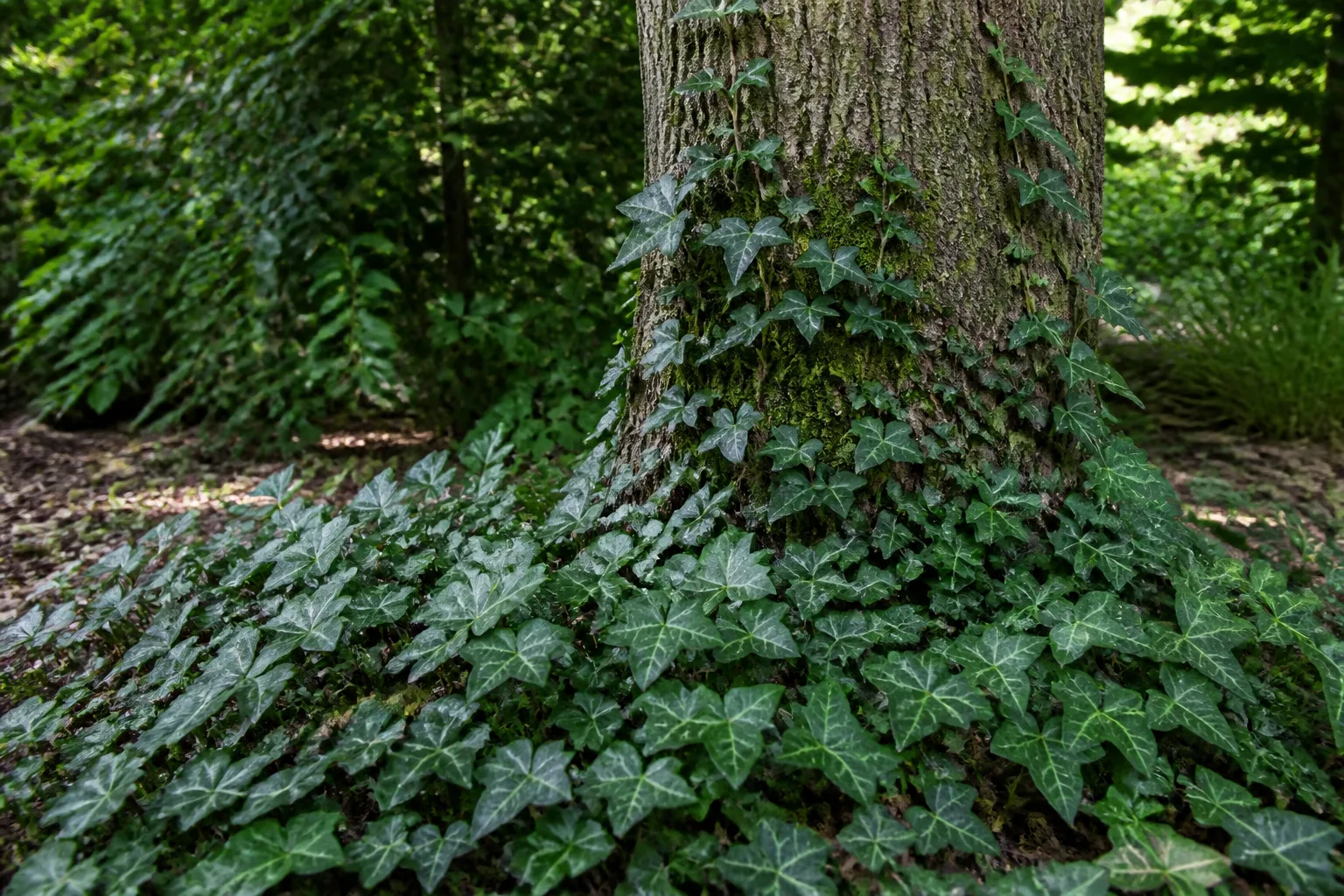
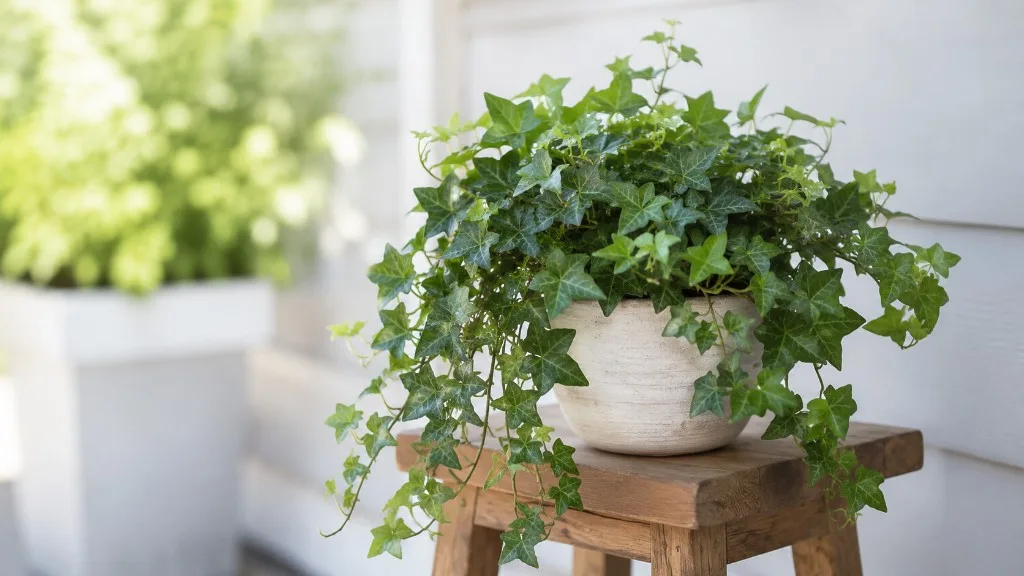
English ivy is sold for the exact qualities that make it hard to manage: evergreen foliage, shade tolerance, and fast ground coverage. It can reproduce from seed after mature growth flowers and fruits, and pieces of stems can root. As a groundcover, it can move toward shrubs, tree trunks, fences, and neighboring property; once it climbs, it changes from a low mat into a woody vine with a much larger consequence.
The first thing to notice is not simply a patch of ivy but where it is headed. Penn State Extension describes English ivy as a non-native woody perennial that can cover tree foliage, add weight that increases limb-failure risk, provide hiding places for rodents around trunks, and use adhesive rootlets that make it difficult to remove from structures. Penn State’s English ivy guidance explains why “it is only groundcover” is not a reliable long-term description.
If you already have it, cut every climbing stem at the base of the tree and leave the upper vines to die and fall naturally. Do not climb a tree to pull living ivy out of the canopy, and do not yank hard enough to strip bark. On the ground, work when the soil is moist, follow each runner, remove rooted sections, and bag viable fragments rather than leaving them on the bed or adding them to an ordinary compost pile. NC State Extension notes that mowing can work only when repeated frequently across the entire infestation, while spring treatment of young regrowth is more effective than spraying old, waxy leaves; any pesticide must be legal for the site and used exactly as its current label directs. NC State’s English ivy control guidance gives the research-based timing and follow-up caveats.
Oriental bittersweet (Celastrus orbiculatus)
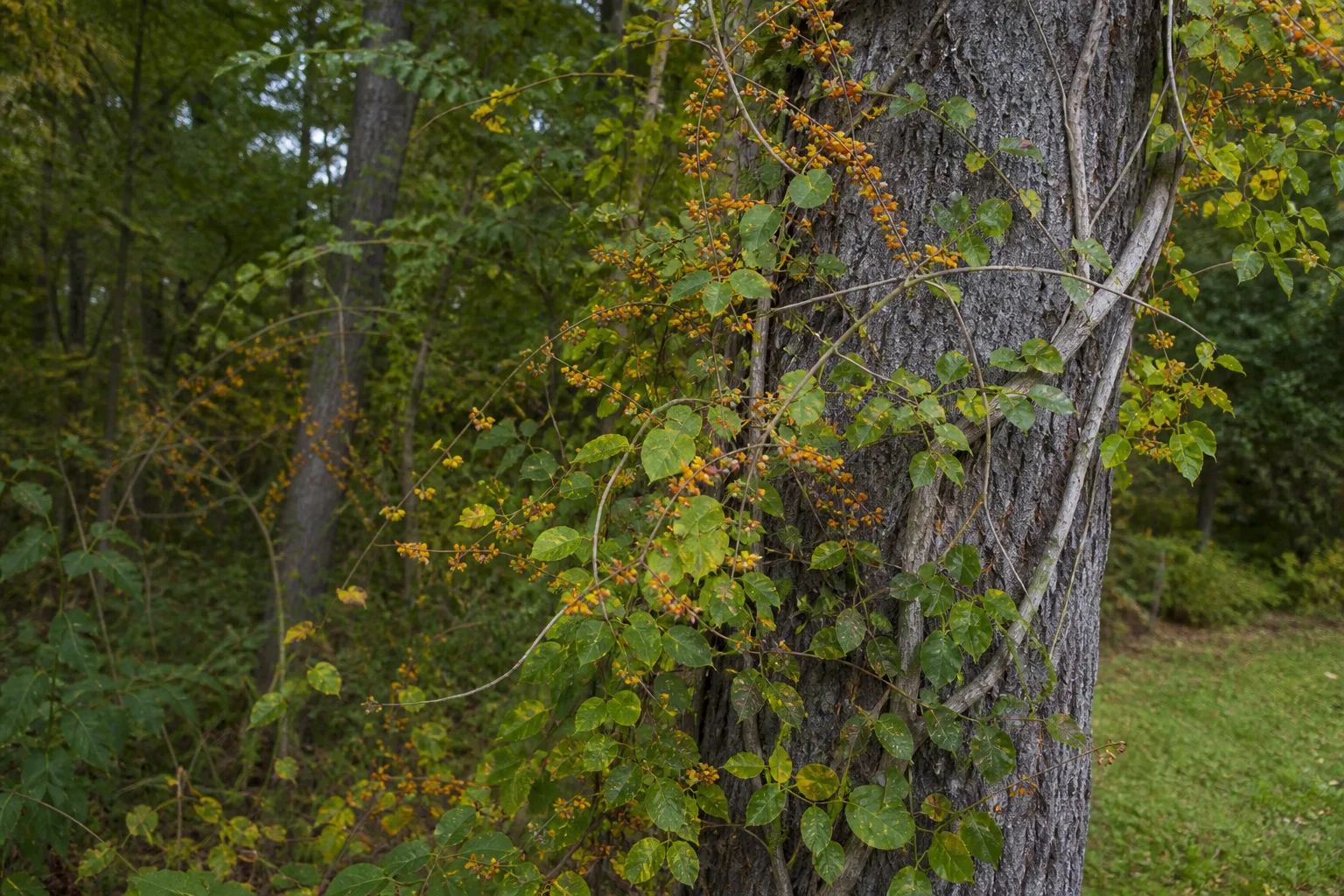
Oriental bittersweet is a woody twining vine that can look ornamental when its yellow-orange fruit capsules appear in fall. That display is also a warning: fruit-bearing vines can spread seed beyond the garden, and the vine’s weight and wrapping habit can damage plants that it uses for support.
Cornell Cooperative Extension describes Oriental bittersweet as an ornamental and erosion-control introduction that can girdle and smother plants and even uproot trees under the weight of the vine. It is also easily confused with American bittersweet, so do not remove a vine solely because its common name contains “bittersweet.” Compare the leaf, flower, and fruit characteristics with a regional identification guide before acting. Cornell Cooperative Extension’s Oriental bittersweet profile points readers to identification and management resources.
The safest first move is to prevent seed production and stop the vine from reaching trees. If the plant is small, dig out the crown and trace the woody runners. If it is wrapped through a shrub or tree, cut the stems at ground level and let the canopy portion die before removing it when it is loose and dry. Do not drag a fruiting vine through uninfested beds, and clean tools after working. A locally native, non-climbing vine or a trellis-trained annual can provide seasonal coverage without making a neighboring tree the support system.
Purple loosestrife (Lythrum salicaria)
Purple loosestrife is the classic example of a beautiful flower that becomes a habitat problem. Tall magenta flower spikes can be tempting near a pond or drainage swale, but the plant is especially risky around waterways, marshes, and wet ground where a small escape can spread into a connected habitat.
Penn State Extension reports that purple loosestrife forms dense stands that reduce food and nesting habitat for birds, mammals, and waterfowl. It also warns that even cultivars marketed as non-seeding can cross with established plants and produce seed. That makes “sterile” on a garden label a claim to verify, not a reason to ignore local restrictions. Penn State’s purple-loosestrife guidance includes the prevention steps and regional legal context.
If it is already flowering, remove the flower heads first, bag them, and repeat during the flowering season so seed does not mature. Then pull young plants or dig older plants while removing the full root system. Do not rely on cutting stems alone: Penn State notes that cut stems can resprout and root. Keep equipment, footwear, and soil from an infested area away from a clean wetland or pond edge, and ask your extension office about disposal rules for a larger colony.
Maiden grass or Chinese silvergrass (Miscanthus sinensis)
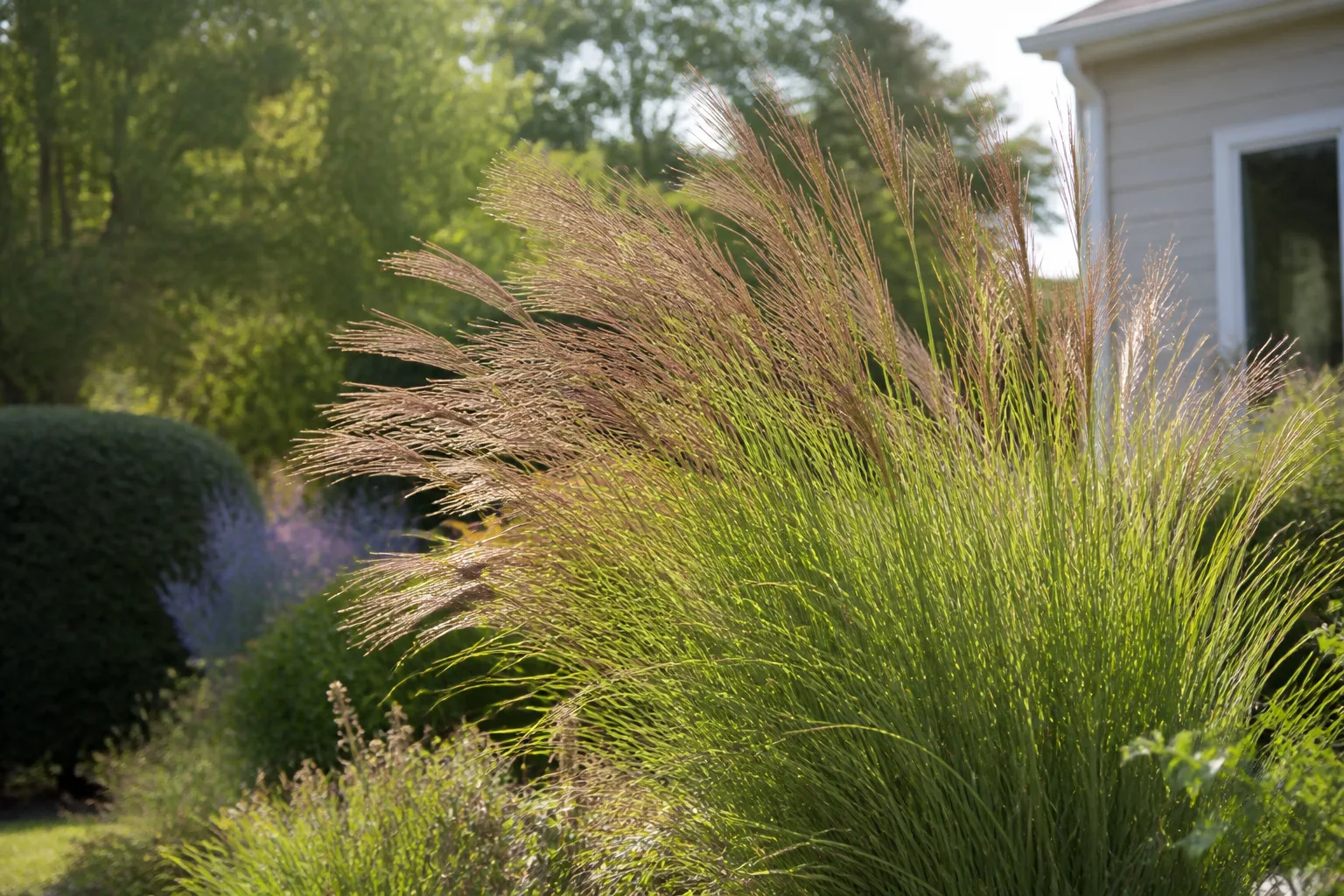
Maiden grass is often planted for height, movement, and its late-season plumes. The common name covers cultivars with different sizes and appearances, so the practical question is not whether every clump behaves identically. It is whether this species or cultivar is listed as invasive where you garden, and whether your site gives it a route into open ground or a sensitive habitat.
Pennsylvania DCNR describes Chinese silvergrass as a tall, clumping grass that spreads through vigorous roots and rhizomes. That does not mean every ornamental clump will immediately escape, but it does mean that a large, established planting can be difficult to divide or remove cleanly. Seed heads may add a second route of spread in places where the plant flowers and sets viable seed.
Before buying, check the botanical name and ask whether a sterile or low-seed alternative has been independently evaluated for your region. If you already grow it, remove unwanted flower heads before they mature, keep the clump inside a maintainable bed, and divide or dig it while the crown is still small enough to handle. Do not rototill an unwanted clump; chopping rhizomes into pieces can create more planting material. Choose a native bunchgrass or another locally appropriate architectural grass when your primary goal is texture rather than this particular species.
Tree of heaven (Ailanthus altissima)
Tree of heaven is the plant on this list for which casual cutting is most likely to backfire. It grows quickly, makes wind-dispersed samaras, and sends root suckers away from the parent. Penn State reports that female trees can produce more than 300,000 seeds in a year and that suckers may emerge as far as 50 feet from the parent tree. The exact distance in a yard will vary, but the lesson is consistent: the visible trunk is not the whole plant.
Identification matters because young tree of heaven can resemble native sumac, walnut, or hickory. Look for compound leaves with many leaflets, smooth leaflet margins, a strong unpleasant odor when foliage or twigs are crushed, and the distinctive glandular teeth near the leaflet bases. A misidentified native tree is not a harmless mistake, so use a local extension or arborist identification service before treating a mature specimen.
Penn State’s tree-of-heaven profile explains that mowing or cutting can trigger stump sprouts and root suckers. Its control-strategy guidance emphasizes late-season root-directed treatment and follow-up rather than one-time top-kill. Hand-pull true seedlings when the soil is moist and the entire root comes out; treat larger trees as a professional or extension-guided job, especially near buildings, utility lines, desirable trees, or waterways. Never improvise a pesticide mixture or apply a product off-label.
Norway maple (Acer platanoides)
Norway maple can pass as a dependable street or shade tree because it tolerates conditions that defeat fussier species. Its dense canopy, shallow spreading roots, and ability to germinate in shade are exactly why it can become a woodland problem. A yard tree that produces a carpet of seedlings beyond the property line is not just a pruning issue; it is a source population.
UConn Extension describes Norway maple as a broad-canopied tree that invades urban landscapes, roadsides, and increasingly undisturbed woodlands. It notes that the winged seeds mature by late summer, disperse by wind, and can germinate in shade. The leaf petiole releases milky sap when broken, a useful clue when distinguishing it from native maples; its samaras also lie nearly flat rather than forming the more closed angle typical of sugar maple. UConn’s Norway maple fact sheet provides the identification details and lists sugar maple and red maple as native alternatives in its region.
Do not plant a Norway maple simply because a named cultivar is less seedy in a short trial. Long-lived trees have many years to reproduce, and cultivar behavior can vary. If seedlings are small, pull or dig them in moist soil and remove the full root. For a mature tree, plan around safety, seed production, and the possibility of resprouting; a certified arborist can combine removal with follow-up monitoring and advise on a suitable replacement tree.
Wintercreeper (Euonymus fortunei)
Wintercreeper is a shape-shifter: a low evergreen groundcover in its juvenile stage, a shrub in some settings, and a climbing vine when it finds a wall, fence, or tree. Stems can root where they touch moist soil, while mature climbing growth can produce flowers and fruit. This is why trimming it flat is not always containment; the plant may simply keep a hidden route along the ground.
NC State’s plant profile notes that wintercreeper can form new rootlets where branches touch soil, attach to trees with aerial rootlets, and produce seed after reaching mature climbing growth. The Woody Invasives of the Great Lakes Collaborative profile adds a practical warning: controlling it before it climbs and fruits is easier and reduces the risk of moving seed. Pennsylvania DCNR also lists wintercreeper as an evergreen woody vine that aggressively invades forest edges and openings.
For a small patch, pull or dig when the soil is moist and follow the stems until every rooted section is removed. For a dense carpet, opaque sheet mulching may take more than one growing season and requires edge checks. Do not mow or top-kill a large infestation and walk away; the WIGL guidance warns that some top-killing methods can promote root suckering. A locally native evergreen groundcover or a contained, non-climbing plant is a safer long-term choice.
Match the replacement to the garden job
The best alternative is not “any native plant.” It is a plant that performs the same job without creating a new containment problem. Start by writing down the job in plain language: evergreen shade cover, wet-soil flowers, a large shade tree, a privacy screen, fall texture, or a vine for a trellis. Then choose from local native plant lists and check mature size, moisture, light, wildlife value, and how the plant reproduces.
Groundcover and shade
For English ivy or wintercreeper, compare the site with locally native woodland groundcovers, sedges, ferns, or low shrubs rather than selecting another generic “fast-spreading” groundcover. A slow-to-moderate plant that fills in over two seasons may be a better bargain than a quick mat that escapes for ten years. If you need immediate soil coverage, use temporary mulch while the replacement establishes instead of filling the bed with another aggressive runner.
Ask three questions before planting: Can stems root where they touch soil? Does the plant fruit and feed birds that can move it? Can I see and patrol the edge? A plant that fails any of those checks is a poor substitute near a woodland, stream, fence, or neighbor’s property.
Flowering wet-area plantings
Do not replace purple loosestrife with another showy plant chosen only because it tolerates wet soil. Water moves seeds and fragments farther than a typical border does. Use a local wetland or rain-garden plant list, and select species appropriate to the depth, flooding pattern, and local watershed. Keep nursery soil, pots, and tools out of natural water, and never move a wetland plant from the wild into your garden.
Color is easy to replace; the habitat role is more important. A mix of locally native sedges, rushes, wet-meadow perennials, and shrubs generally provides a more resilient planting than one dramatic flowering species repeated across a bank. Your county extension office can help match the plant palette to the water regime.
Screening, shade, and ornamental grass
For Norway maple, ask for a native shade tree that fits the mature height and root zone of the site. UConn Extension names sugar maple and red maple as regional alternatives, but the right choice depends on soil, heat, drought, overhead wires, and available planting space. For tree of heaven, do not replace a dangerous, fast-growing tree with another tree selected for speed alone; select for mature size and a root system that fits the property.
For maiden grass, compare native bunchgrasses and other clump-forming ornamental grasses that stay within the bed and are appropriate for your region. A clumping habit is not a guarantee of non-invasiveness, so verify the species rather than trusting the word “ornamental.” BBC Gardeners’ World makes the broader practical point that some plants take years of vigilance to remove once established; choosing a plant with a manageable mature footprint is the cheaper intervention. BBC Gardeners’ World’s invasive-plant overview is useful for that prevention mindset.
If one is already growing, use the least risky removal sequence
Do not begin by reaching for the strongest product or the fastest-looking tool. First identify the plant, determine whether it is flowering or fruiting, locate its likely escape route, and decide whether the work is within your skill and equipment. Mature trees, vines in canopies, plants beside water, and infestations crossing a property boundary call for an extension office, qualified arborist, or local invasive-species group.
Start with identification and seed prevention
Photograph the whole plant, leaves, stems, flowers, fruit, and the surrounding site. Compare those images with a university or state fact sheet, and keep a sample only if it can be stored safely and legally. Do not dig first and identify later when a plant could be a native look-alike such as a maple, sumac, or hickory.
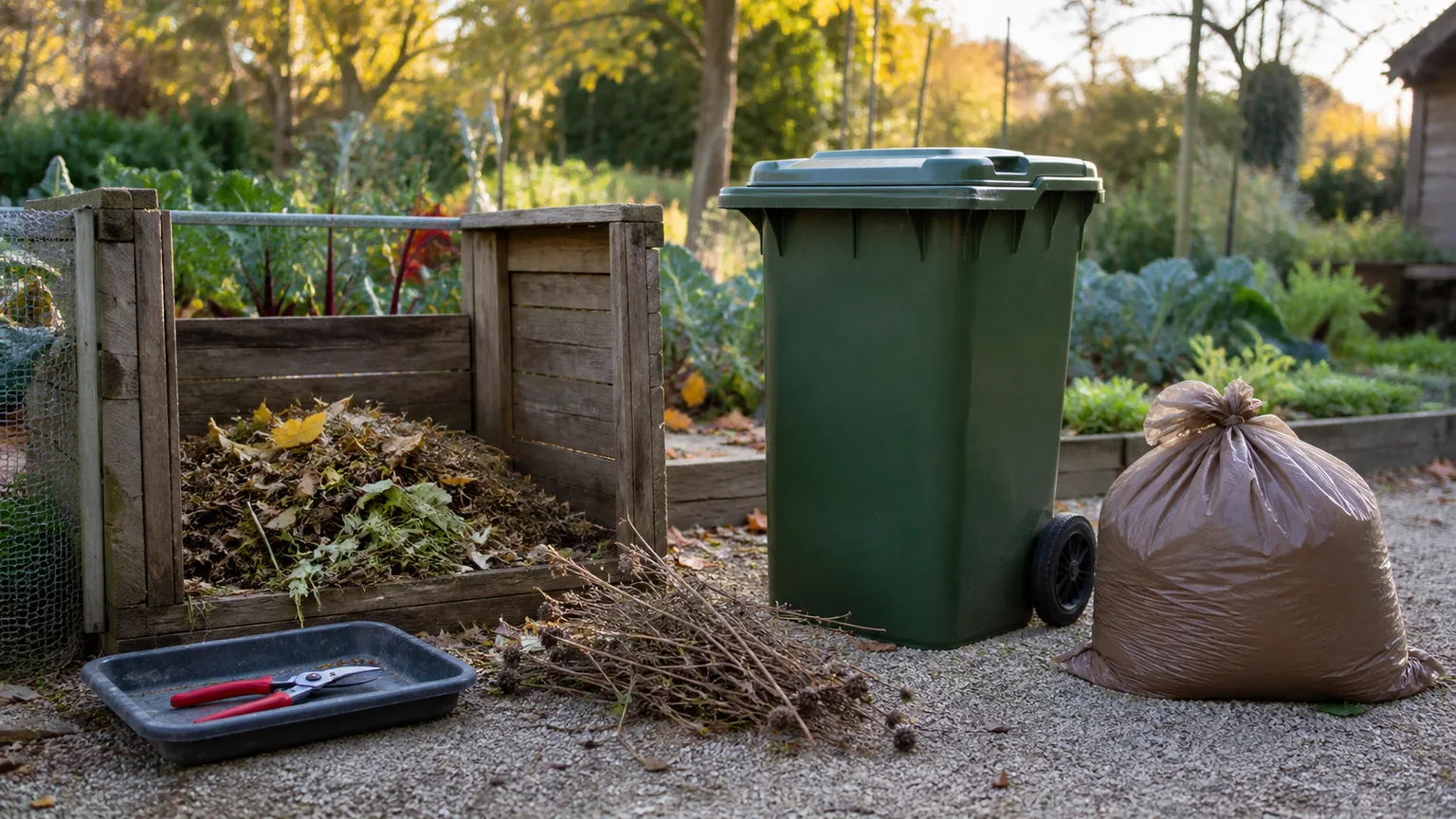
If seed is present, prioritize containment. Remove flower heads or fruit clusters before they mature when the source recommends that approach, bag them, and keep them out of casual compost. Clean pruners, gloves, shoes, mower decks, and digging tools before moving to a clean bed. The goal is to reduce the number of new plants while you address the parent.
Remove vines and runners without spreading fragments
For a small groundcover patch, work in moist soil, loosen the crown, and follow runners or rhizomes instead of tearing the foliage away from the roots. Lay a tarp beside the bed so fragments are visible, shake soil back into the infested area, and remove viable plant pieces for disposal according to local guidance. Return after rain or irrigation and pull new shoots while they are small.
For vines in trees, cut the stems at ground level and leave the canopy growth to die before removing it from the tree. For fruiting vines, avoid dragging material through clean areas. Fine Gardening’s practical removal advice emphasizes winter or dormant-season work, patient hand-pulling, following each runner, discarding viable debris, and using sheet mulch as a follow-up rather than treating one pass as a permanent cure. Fine Gardening’s invasive-ground-cover guide supports that sequence.
Sheet mulching can help on a cleared, unplanted area: remove as much root material as practical, overlap opaque layers so light cannot reach the soil, weigh them down, and inspect the edges. It is not a universal solution. Do not smother a valued tree’s root zone indiscriminately, cover a wetland without permission, or place mulch over plants you intend to keep.
Treat suckering trees as a root problem
Tree of heaven is the clearest example, but the principle applies to any woody plant that resprouts from roots. Cutting the trunk may remove the visible canopy while leaving a large underground system ready to send up shoots. Norway maple seedlings and young saplings can often be pulled or dug, but mature trees require a different safety and follow-up plan.
If herbicide is appropriate, use only a product whose label allows the target plant, site, timing, and application method. Extension recommendations can differ by species and region; do not copy a rate from a different product or use a mixture from an online comment. Avoid spraying near desirable plants, open water, drains, or windy conditions, and hire a licensed professional for tall trees or high-risk sites.
Monitor the original planting area and the surrounding yard for at least the next growing seasons. Record where new shoots appear, whether they are connected to the parent, and whether seedlings are coming from seed. A removal plan succeeds when the new generation stops appearing, not merely when the first trunk or mat disappears.
Conclusion
The safest invasive plant is the one you do not introduce. Before buying a groundcover, vine, shade tree, or ornamental grass, verify the botanical name against your local list and ask how it reproduces, whether it can climb or sucker, and what happens if it reaches a fence, stream, or woodland edge.
If one of these plants is already in your yard, start with identification and seed prevention, then match the removal method to the spread mechanism. Pull and dig small plants, cut climbing vines at the base instead of stripping trees, treat suckering trees as root systems, dispose of viable fragments carefully, and monitor the site. A locally appropriate plant that fills the same garden job may grow more slowly, but it will not leave you with a bigger problem than the one it replaced.



