How to Tell If Your Christmas Tree Is Drying Out
Learn how to tell if a Christmas tree is drying out, which signs matter, how to restore water uptake, and when a dry tree should leave the house.
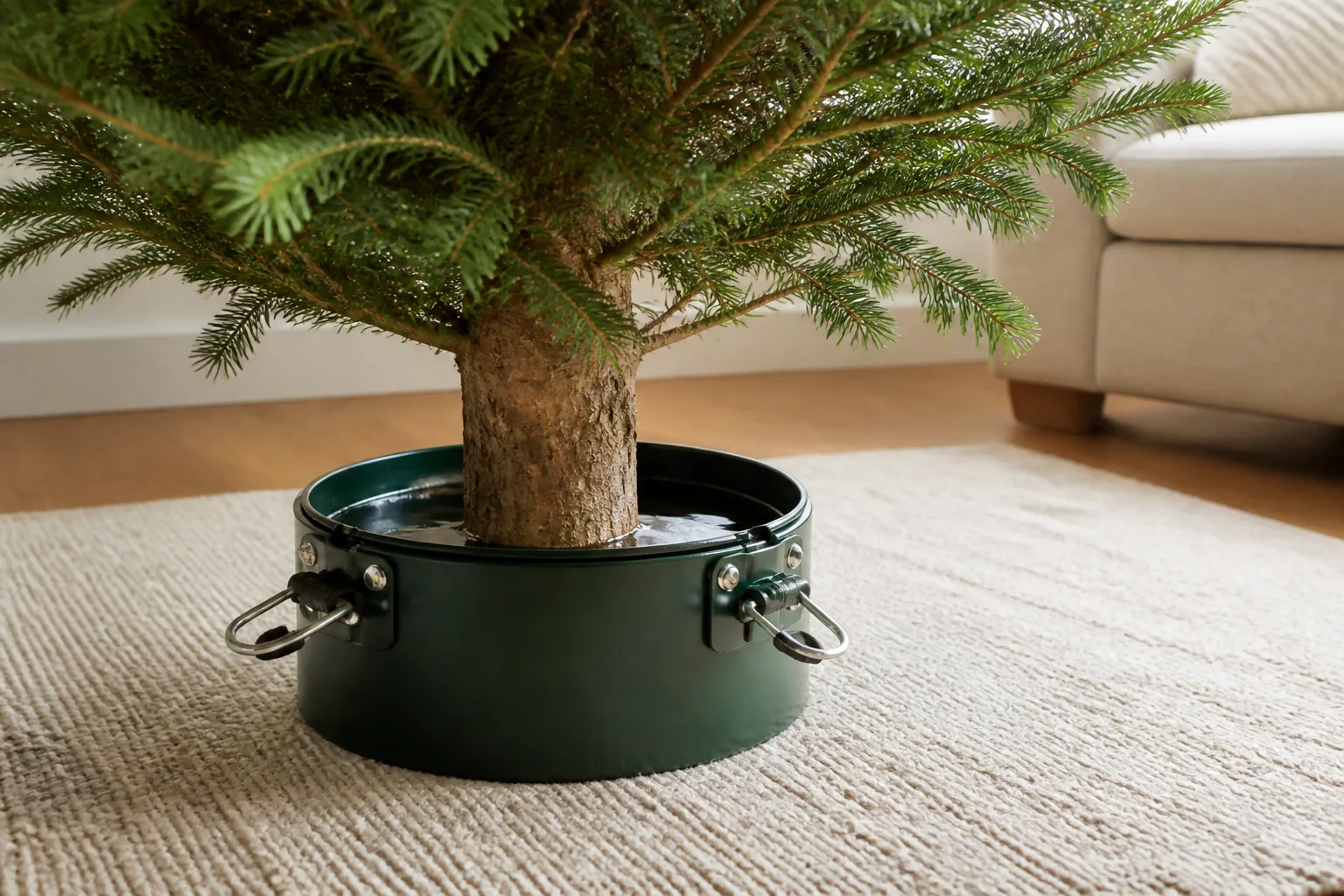
The quickest way to judge a real Christmas tree is to inspect water uptake, needle texture, and fresh outer growth together. A few needles on the floor or a fading scent do not automatically mean the tree is finished. A stand that stays full while the branches become brittle, the newest needles shed, and the trunk no longer sits below the water line is a much more serious pattern.
If the tree is already dry enough that branches snap, needles fall in sheets, or the foliage looks dull and brittle, remove the lights and plan to take it out of the house. A cut tree cannot grow new roots or reverse dead needles. Early water stress may be corrected; a severely dehydrated tree is a household fire concern, not a plant-revival project.
The Fastest Way to Decide Whether the Tree Is Still Fresh
Start at the bottom, not the top. Look into the reservoir and confirm that the water actually touches the cut trunk; some stands hold water around a trunk that has lifted slightly above the surface. Then check a small branch from the outside of the canopy, where current-season needles should still look full and firmly attached.
Use this quick decision rule: green, flexible outer growth plus a submerged trunk usually means “correct the care routine”; brittle outer growth plus widespread needle loss means “remove the tree.” A tree that has stopped drinking for only a short period after transport or a cold storage spell deserves a careful setup check. A tree that has been sitting above the water line or has not taken up water for multiple days is on a different track.
Species and handling change the timeline. With attentive care, a cut tree can often remain attractive for about four weeks, but that is an estimate rather than a promise; the harvest, storage, transport, species, room temperature, and first few days at home all matter. The RHS guide to Christmas tree types and care uses about four weeks as a careful-care expectation, while NC State Extension’s freshness guidance emphasizes that handling and moisture can matter more than the calendar.
What “Drying Out” Actually Means in a Cut Tree
A cut Christmas tree is still made of living wood for a while, but it no longer has roots supplying water. The cut surface at the trunk is its only drinking point. Needles continue to lose water to the room through transpiration, especially when warm air moves across them, so the tree must pull replacement water upward through the outer wood.
That is why “dead” is a blunt word for this problem. A tree may be freshly cut but thirsty, or it may still look green after the internal water balance has begun to fail. The practical question is not whether the tree is botanically alive in the abstract; it is whether the cut trunk can still take up enough water to keep the foliage supple and the display safe.
The most common interruption is simple: the reservoir drops below the trunk and the exposed cut seals with sap. A stand that is too small, a trunk shaved to fit, a cut made at an angle, or a dirty or bruised cut can also reduce the useful drinking surface. Heat and direct sun increase the amount of water the foliage loses, which makes a marginal setup fail faster.
The First Warning Sign: Water Level Falls or Stays Unchanged
Water level is the most useful daily measurement because it tells you what the tree is doing before the foliage looks terrible. Mark the level on the stand or check it at the same time each day for the first several days. After setup, many trees drink most heavily during the early period, particularly after a fresh cut.
The National Christmas Tree Association recommends planning for a stand that provides about one quart of water per inch of trunk diameter, not per foot of tree height. A four-inch trunk may therefore need a stand with room for several quarts, and early use can be substantial. That is a sizing guide, not a guarantee that every tree will consume the same amount.
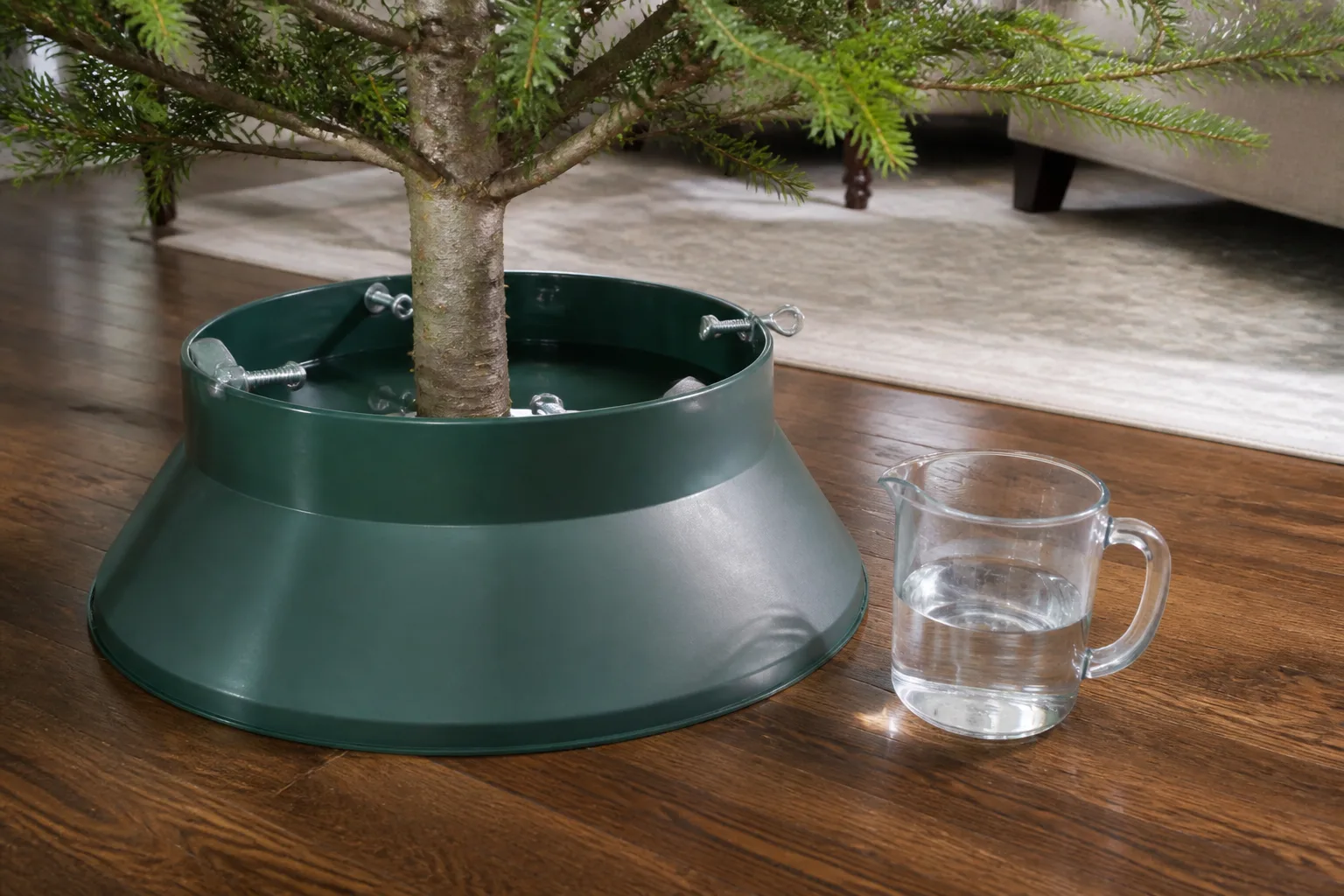
A full stand can still hide an exposed trunk
Do not judge the reservoir by whether you can see water in it. Shine a flashlight down the side of the stand or feel carefully around the trunk with a clean tool if the design makes the water line hard to see. The base of the trunk must remain submerged; water sitting beside a raised trunk does nothing for hydration.
If the stand was empty overnight, refill it immediately and reassess the foliage over the next several hours. The tree may resume uptake if the cut has not sealed badly. If the trunk was dry for long enough that the foliage is now crisp, refilling the stand will not make brown needles green again, although it may prevent further loss in the parts that remain flexible.
How Needles and Branches Change as a Tree Dries
Healthy current growth feels full rather than papery. Gently run two fingers along a small outer branch without tugging. A few older interior needles may come loose naturally, but a steady stream of green or brown current-season needles from the outside canopy indicates a moisture or handling problem.
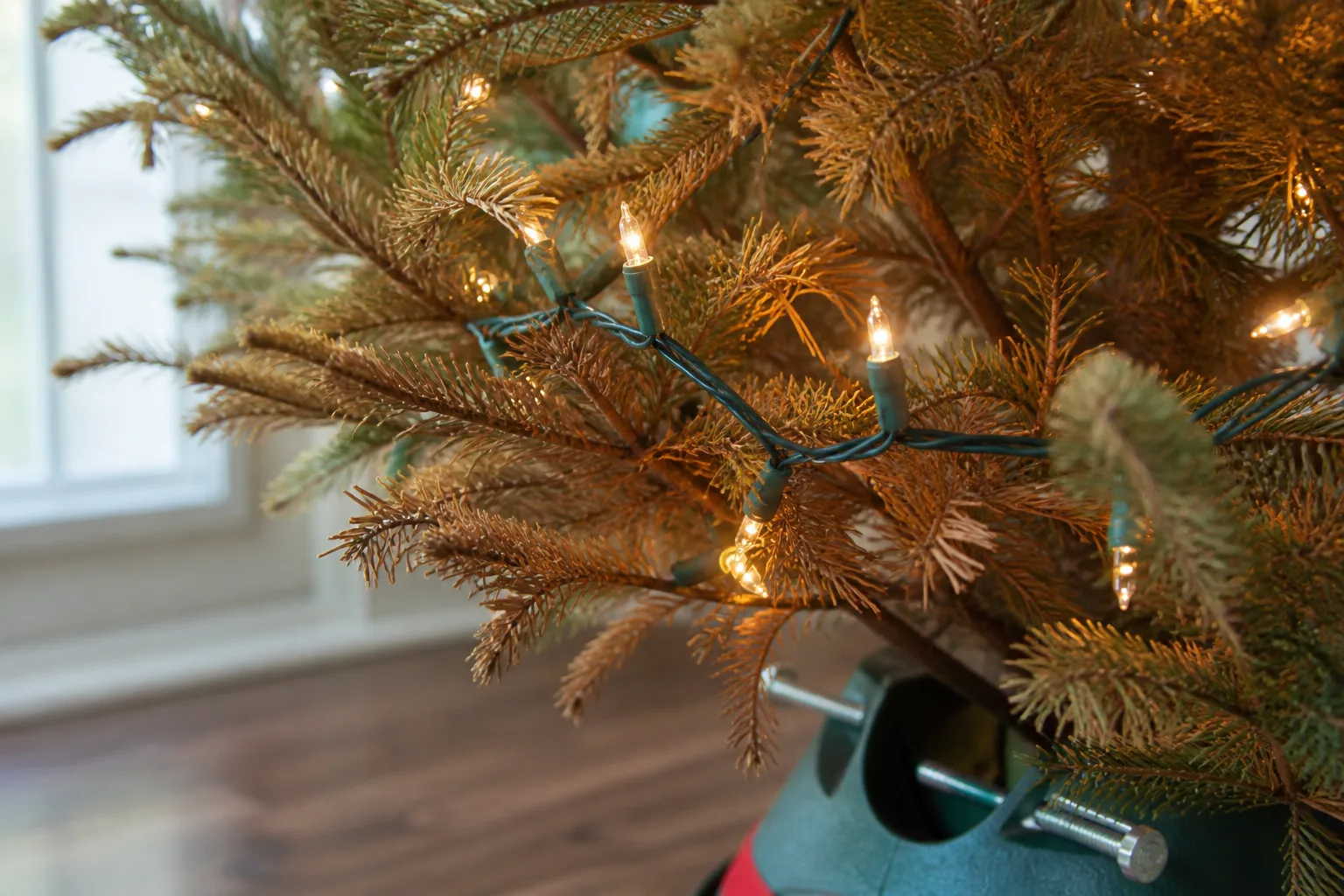
Next, bend a small twig tip rather than forcing a thick branch. Flexible wood should give without an abrupt dry snap. Brittle tips that break under light pressure, branches that droop instead of holding their normal shape, and a growing layer of dry needles under the skirt together point toward significant dehydration.
Do not use prickliness as the only test. Spruce needles are naturally stiff and sharp even when the tree is in better condition, so compare the texture with the species’ normal habit. Fir needles tend to feel softer, while color, retention, and branch flexibility are more useful than one universal bend test.
Use Color, Texture, and Needle Drop Together
Look for a change from a rich, even green to a washed olive or gray-green, especially on the outer branches. Color alone can mislead you because some trees naturally have blue or pale foliage, and indoor light can make green look dull. The stronger signal is color change paired with needles that feel dry and fail to stay attached.
A gentle branch shake can reveal the difference between normal housekeeping and rapid decline. A modest fall of older needles from inside the canopy is not automatically alarming. Needles dropping from the newest growth, leaving bare twigs and a dry carpet beneath the tree, are far more concerning.
The National Christmas Tree Association’s care tips describe a useful progression: stressed needles may lose plumpness and bend, while the driest needles become stiff and break easily when brushed. That gives you a better answer than “some needles fell”: ask which needles, how easily, and what do the outer branches feel like?
Fragrance and Odor Are Clues, Not a Verdict
A fading pine smell is not proof that the tree is dead. Different species release different amounts and types of fragrance. Norway spruce is known for a strong traditional scent but can shed needles sooner, while Nordmann fir generally holds needles longer with a subtler fragrance; Fraser fir is another popular choice for good retention and a noticeable scent. These differences are summarized by RHS cultivar guidance and BBC Gardeners’ World’s Christmas tree advice.
Treat a sudden loss of scent as a supporting clue if the tree is also thirsty, hot, or shedding. A stale or musty odor deserves a closer inspection of the trunk, stand, and lower branches, particularly if there is visible slime or mold. Do not add fragrance oils to the reservoir to disguise the smell; the problem is the tree’s condition and household safety, not the room’s scent.
Run a Five-Minute Christmas Tree Triage
When you notice a change, work in this order: check the water line, check the trunk, check the outer foliage, then check the room. This sequence prevents a common mistake—blaming the species or buying an additive before noticing that the trunk has been dry since yesterday.
- Check the stand. Is the cut end below the water surface? Has the reservoir been empty, or is the stand too shallow to stay filled overnight?
- Check the cut. Is it flat and clean, or was the trunk shaved, split, drilled, or cut into a point? The outer wood is important for uptake.
- Check current growth. Do outside needles stay attached and feel flexible, or do they break and fall when brushed?
- Check exposure. Is the tree beside a fireplace, radiator, heat register, space heater, sunny window, or strong air stream?
- Check the lights. Are the cords intact, the bulbs low-heat, and the lights turned off when people are asleep or away?
If the water is low or the trunk was exposed
Refill with plain, clean water now, then keep the cut submerged. Move the tree away from heat before you do anything more complicated. If most outer branches are still pliable, give the tree time to resume drinking and monitor the level again later the same day.
If the base has been exposed and the tree is not already brittle, a fresh cut may reopen the water pathway. Remove decorations first, secure the tree with another adult, and use a proper pruning saw on a stable outdoor work surface. Do not try to saw the trunk while the decorated tree is standing in the living room.
If the trunk is submerged but uptake has stopped
Confirm that the stand fits the trunk without compressing it or holding it above the water. Check for cold storage or recent transport: NC State Extension notes that a very cold or dry tree may take a day or two to resume uptake. That delay is different from widespread brittle needle loss.
If the tree remains supple but the water level stays unchanged, a clean recut is the most defensible next step when the tree is undecorated. If it is decorated and already declining, do not improvise with a drill, boiling water, or a dangerous lift just to keep it displayed. The association’s care guidance says drilling holes does not improve uptake, and NC State describes hot-water success as anecdotal rather than research-tested.
How to Recut the Trunk Without Making the Problem Worse
Take off roughly one-half inch of wood from the bottom, making a straight cut perpendicular to the trunk. The goal is to remove the sealed end and expose fresh conductive tissue. Have the stand ready before cutting so the tree can go into water promptly; the UF/IFAS Extension checklist recommends placing the tree in water within about 15 to 30 minutes after recutting.
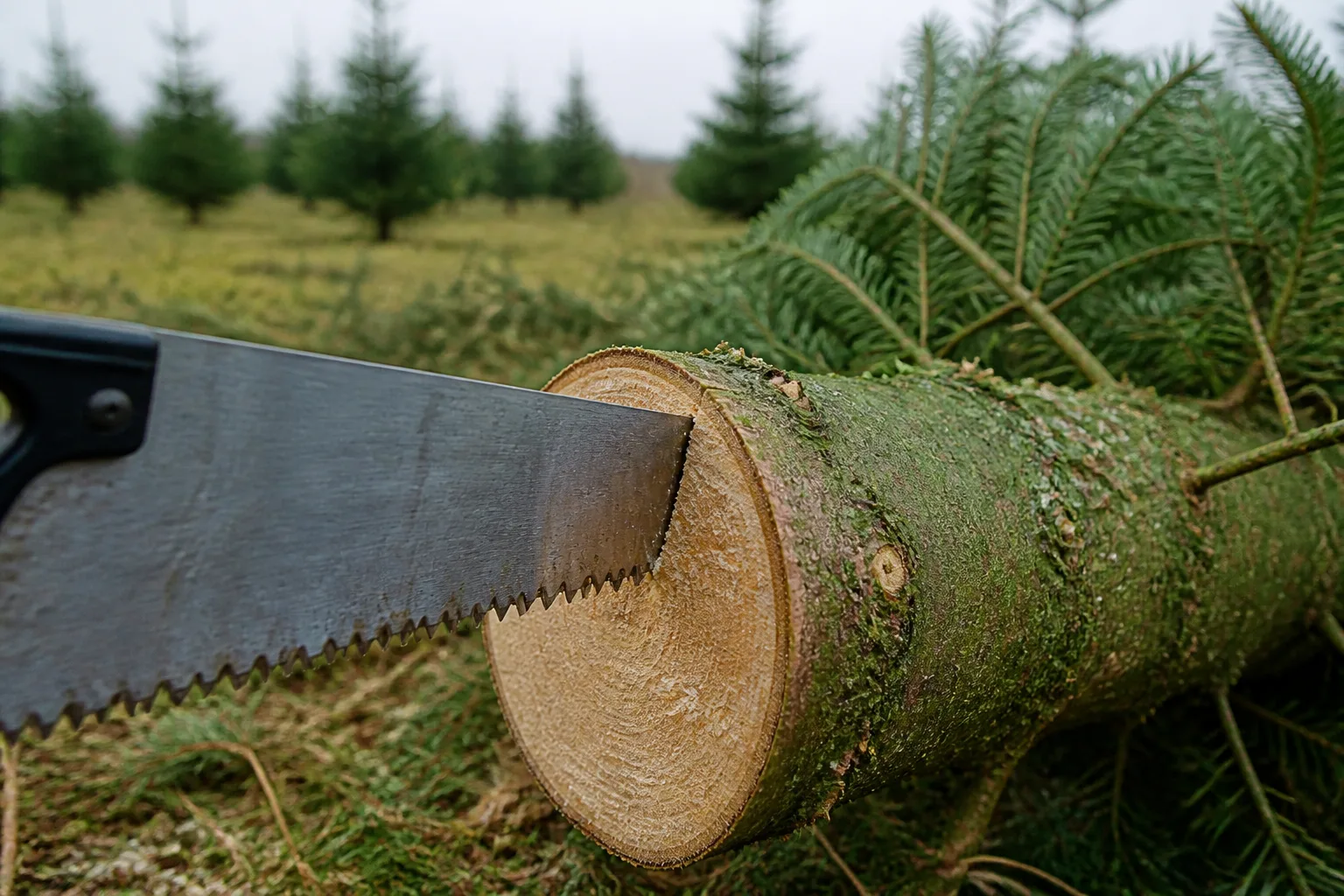
Do not cut a V shape or a long angle. An angled base is harder to stabilize and does not create a magical larger drinking surface. Do not whittle the sides to force a wide trunk into a narrow stand: the outer layers are efficient at water uptake, so the safer fix is a stand that fits.
Do not drill holes into the base, add bleach, or pour in boiling water. A fresh, clean, perpendicular cut followed by immediate immersion is the useful intervention. If the tree is already brittle, recutting is not a reason to keep a fire-prone tree indoors.
Match the Stand to the Trunk, Not the Tree’s Height
A tall, slender tree may have a smaller trunk than a shorter, dense one, so stand choice should follow trunk diameter and reservoir capacity. The stand should grip the trunk securely while leaving enough water beneath the cut to remain submerged between checks.
Avoid decorative covers that make the water invisible unless you can still inspect the level. A hidden reservoir is a maintenance failure waiting to happen. The National Christmas Tree Association recommends a traditional reservoir-type stand and warns against removing the outer wood to make a poor fit work.
If you are buying the stand at the same time as the tree, measure the trunk before you leave the lot or choose a model with a generous, easy-to-check reservoir. The extra capacity matters most during the first few days, when a missed refill can expose the cut before you realize the water was gone.
Keep Heat and Direct Sun From Accelerating Drying
Water cannot compensate for a bad location forever. Keep the tree at least three feet from fireplaces, radiators, space heaters, and heat vents, and avoid a bright sunny window that warms the foliage. The U.S. Fire Administration’s holiday guidance specifically recommends a three-foot distance from heat sources and says a dry tree should be removed.
Lower room temperatures slow moisture loss, but you do not need to turn the home into a refrigerator. A comfortable, less-heated room away from a heat blast is the important change. A humidifier may make the room more comfortable for people, but it is secondary to a submerged trunk and a cool placement; humid room air does not repair a sealed cut.
Air circulation is useful around the room, but a concentrated stream from a vent can dry one side of the canopy quickly. If only the branch side facing a register is browning, treat that pattern as a location clue. Move the tree first, then keep observing before assuming the whole tree was poor quality.
Lights, Pets, and Exit Safety Matter Too
Dryness changes the safety decision. Use lights in good condition, prefer low-heat LED sets, avoid overloaded circuits, and turn lights off when leaving or sleeping. Check that the tree does not narrow a doorway, cover an exit, or sit where a fallen branch can obstruct a path.
Pets add a second layer of risk. Cats may climb, chew cords, or knock the tree over; dogs may drink stand water or pull ornaments. Secure the tree against tipping, keep cords out of reach, and do not leave a curious pet unsupervised with a tree that is already unstable.
If the foliage is brittle or falling rapidly, unplug the lights before moving the tree. Do not wait for the last holiday gathering if the tree has become a dry fuel source. The U.S. Fire Administration explains that a dry Christmas tree can burn very hot and fast, which is why watering and prompt removal are safety measures rather than cosmetic preferences.
What to Put in Christmas Tree Water—and What to Skip
Use plain, clean water. You do not need sugar, aspirin, bleach, soda, fertilizer, or a homemade preservative recipe to keep a cut tree hydrated. Additives can complicate cleanup, encourage odors, or create a false sense that the stand can be neglected.
Water temperature is not the key variable. The National Christmas Tree Association’s care guidance says the temperature of the water does not affect uptake; keeping the fresh cut submerged does. If a product comes with a stand or is sold as a preservative, follow its label rather than combining it with household chemicals, but start with fresh water as the reliable baseline.
The practical routine is simple: fill the reservoir, make sure the trunk is submerged, check daily, and check twice daily during the first 48 hours or whenever the room is unusually warm. Wipe up spills promptly, especially if children or pets can reach the stand.
Dry Cut Trees and Potted Trees Need Different Care
Most advice about a reservoir and a recut applies to a fresh-cut tree. A potted or balled-and-burlapped tree still has roots and should not be treated like a trunk standing in a reservoir. Its root ball should stay slightly damp, not flooded, and it should spend only a short period in a warm home.
The RHS recommends bringing a living potted tree indoors as late as possible and keeping it inside no longer than about 12 days, guided by the plant’s condition. Afterward, move it through a sheltered transition space rather than taking it straight from a warm room into freezing air.
If a potted tree has brown needles, check the root ball and its drainage instead of cutting its trunk. Brown foliage may reflect drought, heat, root damage, or a tree that was never suited to the indoor conditions. A cut trunk cannot be replanted; a rooted tree may have a future outdoors if its species and local climate fit.
Think in terms of condition, not a fixed end date. A well-handled cut tree kept watered and away from heat can look good for around four weeks, but a tree that spent days in sun, wind, or a dry stand can deteriorate much sooner. Conversely, a properly stored tree may be fresher than its harvest date suggests.
Species shifts the balance between scent and retention. Fir trees are often chosen for needle-holding ability, while some spruces offer a stronger fragrance but shed sooner. Ask the grower or lot attendant which species you are buying and when it arrived, but treat that answer as context—not a substitute for inspecting the actual tree.
The BBC Gardeners’ World care sequence recommends a fresh level cut, temporary storage in a bucket of water when needed, a water-retaining stand, and regular topping up. Those steps give the tree its best chance; they cannot guarantee a specific number of days for every home.
When to Remove, Recycle, or Compost the Tree
Remove the tree when it is very dry, when the outer needles break and fall readily, when the branches are brittle, or when the tree can no longer remain safely watered. Take off ornaments and lights first, and ask another adult to help with a large or unstable tree. Do not drag it past a heat source or leave it blocking an exit while you decide what to do.
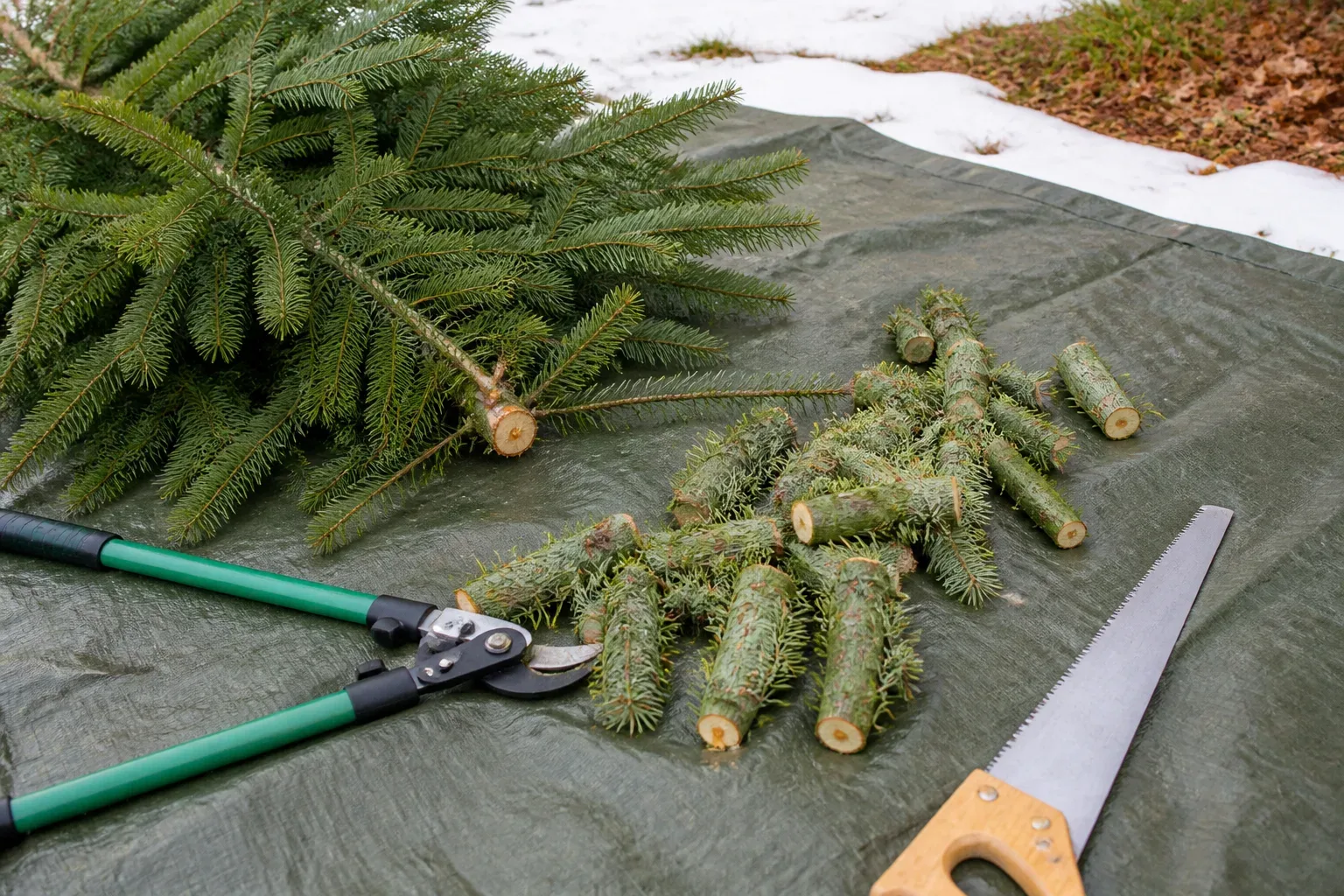
Use your city or county’s tree collection, chipping, or drop-off program where available. A chipped tree can become mulch through a local program, and clean branches may be useful as a garden mulch after shredding. The BBC Gardeners’ World guide also notes shredding branches for use under shrubs.
Never burn a Christmas tree in a fireplace or wood stove. Resin, needles, and the tree’s shape can make the fire unpredictable, and the National Christmas Tree Association advises against burning any part of a Christmas tree in either appliance. Follow local disposal rules instead of improvising.
A Simple Daily Routine That Prevents Most Problems
Once the tree is set up, the care routine takes less time than sweeping a dry skirt. Check that the trunk is submerged, top up with plain water, look at the newest outer needles, and scan the room for a heat source or damaged light cord. During the first two days, repeat the water check morning and evening.
Keep a short note on your phone with the water level and any change in needle drop. That turns a vague impression—“the tree looks tired”—into a useful trend. If the level is falling and the foliage remains supple, continue the routine; if the level is static despite a submerged trunk and the outer growth is becoming brittle, move to the recut-or-remove decision rather than adding products.
The best preventive measure is a good first setup: choose a tree with fresh outer growth, protect it from wind and sun during transport, make a straight fresh cut, place it in water promptly, use a properly sized stand, and keep it away from heat. Those choices address the problem before the floor is covered in needles.
Conclusion
To tell whether your Christmas tree is drying out, do not rely on one fallen needle or a fading scent. Check whether the trunk is submerged and taking up water, then evaluate the newest needles for color, flexibility, and retention. A flexible, mostly green tree may respond to a fresh cut and better placement; a tree with brittle branches, widespread dry needle drop, or a reservoir it cannot use should be unplugged, removed, and recycled.
The goal is not to keep a tree indoors at any cost. It is to enjoy a fresh-cut evergreen while it can safely hold moisture, then recognize the point when the responsible care step is taking it down.



