How to Get Rid of Japanese Knotweed
Japanese knotweed spreads by rhizomes, not just seeds. Learn ID, legal disposal rules, tarp smothering, cutting, digging, and glyphosate timing that extension services recommend.
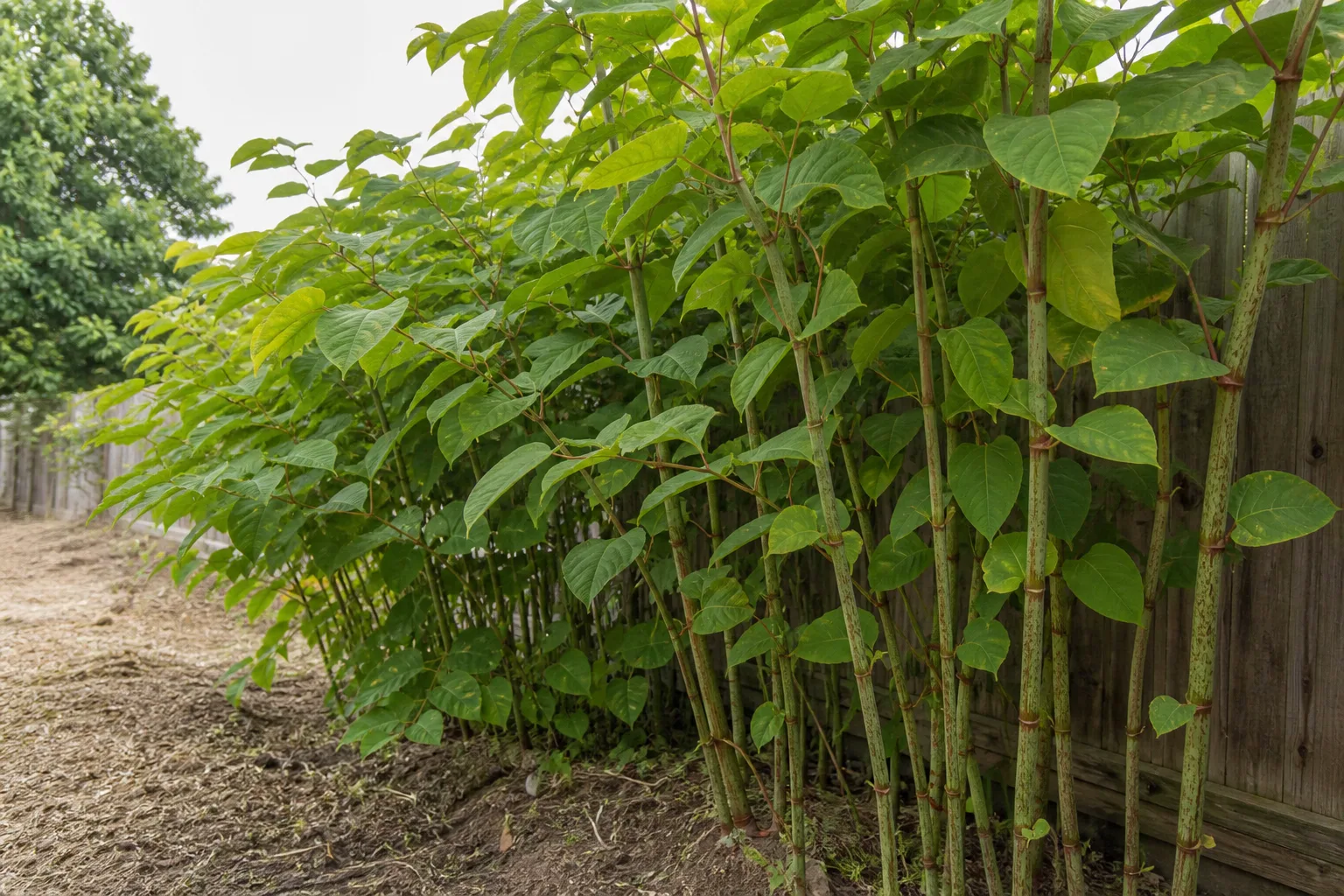
Japanese knotweed (Reynoutria japonica, also sold and cited as Fallopia japonica or Polygonum cuspidatum) is not a weed you eliminate with one afternoon of pulling. It is a rhizomatous perennial that stores energy underground, regenerates from stem and root fragments as small as a fingernail, and can push shoots through pavement joints and foundation cracks once established. Homeowners call it “Godzilla weed” for a reason — and the reason control fails is usually underestimating the rhizome system, not choosing the wrong product once.
The Short Answer: Identify First, Then Commit to a Multi-Season Plan
Confirm the plant is actually knotweed before you cut, dig, or spray. Misidentification wastes seasons and can damage desirable bamboo, pokeweed, or young red-stemmed shrubs.
For a small, young patch — roughly under 25 square feet with stems you can still count — combine weekly cutting or mowing, targeted rhizome digging in spring or fall, and late-summer glyphosate on regrowth if local rules allow. Bag every stem fragment; never compost knotweed material.
For a mature stand — dense bamboo-like canes taller than your shoulder, rhizomes spreading beyond the visible crown — plan on three to five growing seasons minimum. The most reliable homeowner approach is a staged cut-and-spray program using glyphosate when the plant is moving sugars toward rhizomes in late summer, combined with perimeter cutting and optional tarp smothering on sections you are not actively treating. Smothering alone can take five or more years and still miss rhizomes at the tarp edge.
Full eradication — zero viable rhizome tissue — is rare without professional equipment and often impractical on large sites. What extension services and land managers actually achieve is long-term suppression: no above-ground growth, no spread to neighbors, and a documented plan if you sell property. That is a realistic win.
Why Japanese Knotweed Is So Hard to Eliminate
Japanese knotweed arrived in North America in the late 1800s as an ornamental screening plant and escaped within decades. Today it is documented in more than 40 U.S. states and ranks among the world’s most problematic invasive herbs. The National Park Service notes it thrives along roadsides, trails, and construction sites where soil disturbance and full sun meet — exactly the edges of residential lots.
Above ground, stems are hollow, jointed, and bamboo-like, often reaching 6 to 10 feet in a single season. Below ground, the story is worse. Thick woody rhizomes form a crown and spread outward, with the RHS reporting depths beyond 3 feet and lateral reach that can extend 20 feet or more from the parent plant in favorable soil. Some long-established riverbank colonies spread rhizomes 65 feet or more from the parent crown — that upper range reflects decades of undisturbed growth, but even suburban patches commonly reach well past the visible stand.
Rhizomes, Fragments, and the Eradication vs Control Distinction
Knotweed’s superpower is vegetative reproduction. Cut a stem and lay it on moist soil, and it roots. Chop a rhizome with a shovel and leave a 1-centimeter fragment, and you may get a new plant — the RHS warns sections that small can regenerate. Rhizomes also survive winter dormant, then send up reddish-purple shoots as early as late winter in mild climates.
That biology explains why large field research matters. A global field trial published in Biological Invasions tested 19 control methods across 225-square-meter plots for five years and found glyphosate-based herbicides significantly outperformed all other chemical groups, while physical methods like tarping and repeated cutting did not achieve reliable control at field scale. Researchers framed success as extended dormancy — no regrowth above ground — rather than guaranteed eradication. That distinction should set your expectations before you buy a roll of black plastic.
Ecologically, knotweed shades out native vegetation, alters soil nutrient cycling, and produces leaf litter and root exudates that suppress competitors. It has few North American herbivores or pathogens to check its growth. Biological control research (sap-sucking psyllids and fungal pathogens) continues, but homeowners should not wait for biocontrol to solve an active backyard infestation.
How to Identify Japanese Knotweed Before You Treat It
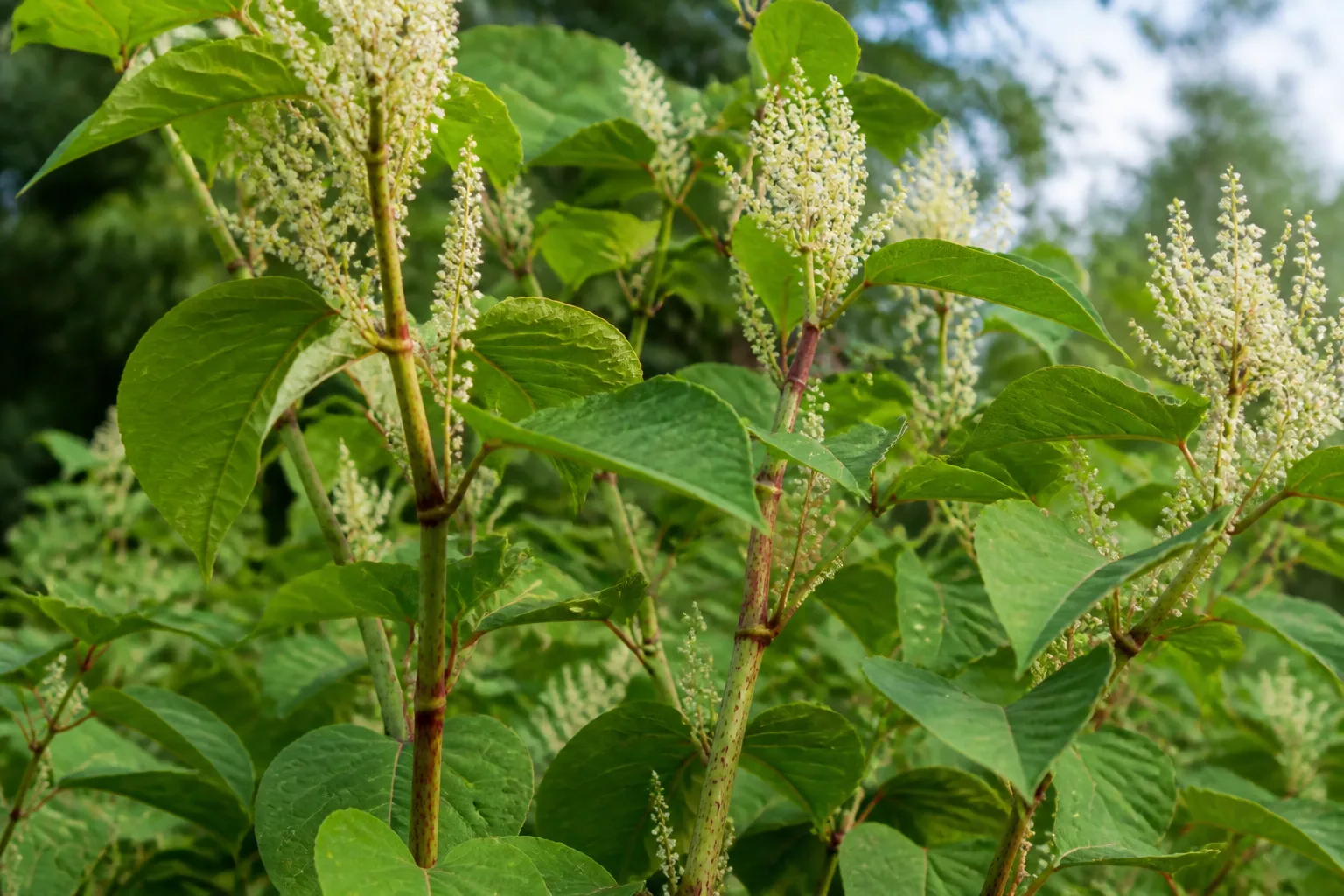
Treat the wrong plant and you waste herbicide, disturb soil for nothing, and may injure a desirable ornamental. Japanese knotweed is in the buckwheat family (Polygonaceae), not a true grass or bamboo — but the stems fool plenty of people.
Spring. Rounded pink buds at ground level open into reddish-purple shoots that grow fast. Young stems are soft and speckled.
Summer. Mature stems turn green with red-purple speckling, prominent swollen nodes, and hollow centers. Leaves are spade-shaped, 4 to 6 inches long, with a flat base and alternate zig-zag arrangement along the stem. Stems arch at the top and can exceed 6 feet by late summer.
Late summer to fall. Creamy-white flower clusters appear at stem tips — not showy individually, but distinctive in mass. After frost, stems die back to brown, brittle canes that may persist through winter.
Rhizomes. If you expose underground tissue, knotweed rhizomes are woody, dark on the outside, and often show orange flesh beneath the bark — a useful field mark when you are digging.
Seasonal ID Cues and Common Look-Alikes
Bamboo has persistent woody culms year to year; knotweed stems are herbaceous and die back annually. Red-stemmed pokeweed (Phytolacca americana) has alternate leaves without the zig-zag knotweed pattern and produces dark purple berries, not creamy flower plumes. Himalayan balsam and Russian vine (Fallopia baldschuanica) share the genus history but differ in leaf shape and growth habit — the RHS look-alike list is worth scanning before you treat.
Giant knotweed (Reynoutria sachalinensis) and the hybrid Bohemian knotweed are equally invasive in many regions and respond to the same control tactics. If leaves are noticeably larger than your hand and stems exceed 10 feet routinely, suspect giant or hybrid forms and escalate your timeline.
When in doubt, photograph shoots, nodes, leaves, and flowers and send images to your county extension office rather than mailing plant material. Many offices maintain invasive-species ID pages — University of Minnesota Extension hosts a dedicated knotweed profile for the Upper Midwest.
Legal Obligations and Safe Disposal Rules
United States law does not mirror the UK’s knotweed property panic, but obligations still exist. Japanese knotweed appears on state noxious weed lists in many jurisdictions, and some states require landowners to control listed plants and prohibit transport of propagules. Check your state department of agriculture or invasive species council before you dig, haul, or burn material.
In the UK, knotweed is listed on Schedule 9 of the Wildlife and Countryside Act — planting or causing it to grow in the wild is an offence — and knotweed waste is controlled waste requiring licensed carriers and disposal sites. U.S. homeowners rarely face identical paperwork, but local landfill rules vary: many yard-waste facilities refuse knotweed because composting does not reliably kill rhizomes. Call your municipal waste authority before you load a truck.
Never add knotweed to home compost, curbside green-waste bins, or community mulch piles. Bag cut stems and rhizomes in heavy contractor bags, seal them, and follow local guidance for invasive-plant disposal. If you hire a contractor, request waste transfer documentation so you know material reached an authorized facility.
Neighbor disputes are civil matters in most U.S. states — there is no federal knotweed police — but allowing rhizomes to spread onto adjacent property can trigger nuisance claims. Document your control plan if a neighbor raises concerns, and keep treated material on your side of the line.
Choosing Your Control Strategy by Patch Size and Location
Match the tool to the job before you invest in tarps or sprayers.
Tiny outbreak (a few shoots, first season). Hand-dig the crown if soil is loose, bag all material, and monitor weekly. One missed fragment resets the clock.
Small patch (under ~25 sq ft, stems under 4 feet). Combine cutting, selective digging, and late-summer glyphosate on regrowth. Tarp smothering can work here if you extend plastic 10 feet beyond the visible edge.
Medium stand (25–200 sq ft). Plan three-plus seasons. Use perimeter glyphosate on regrowth, interior tarping or repeated cutting to starve the center, and spring/fall rhizome excavation along the leading edge. Do not rototill — fragmentation spreads the infestation.
Large or property-line stand (200+ sq ft, near structures or water). Hire a licensed invasive-plant contractor. They carry higher-volume application tools, understand riparian buffer restrictions, and can issue insurance-backed treatment guarantees that mortgage lenders sometimes require in UK transactions and that U.S. buyers increasingly ask about in disclosure forms.
Near open water. Glyphosate use near streams, ponds, and wetlands is heavily restricted. Contact your state environmental agency or NRCS office before spraying. Hand-cutting and tarps may be the only legal options in buffer zones.
When to Start Each Japanese Knotweed Control Method
Timing ties directly to plant physiology. Knotweed moves carbohydrates into rhizomes in late summer and early fall — that is when systemic herbicides deliver the most root kill. In spring, energy flows upward into new shoots — ideal for smothering setup and first cuts, poor for expecting one spray to finish the job.
| Method | Best start window | Why |
|---|---|---|
| Tarp smothering | Early spring, before shoots elongate | Catches the full growing season under darkness |
| Cutting/mowing | Throughout growing season | Denies photosynthesis if repeated relentlessly |
| Rhizome digging | Spring or fall, when soil is workable | Easier to trace leading edges; combine before tarping |
| Glyphosate spray | Late July through September (adjust by zone) | Nutrients translocate to rhizomes; foliage still absorbent |
| Professional survey | Any time; winter for property sales | Dead canes still signal presence; plan before construction |
Severe infestations need repeated attacks every year — not one heroic weekend.
How to Smother Japanese Knotweed With Tarps
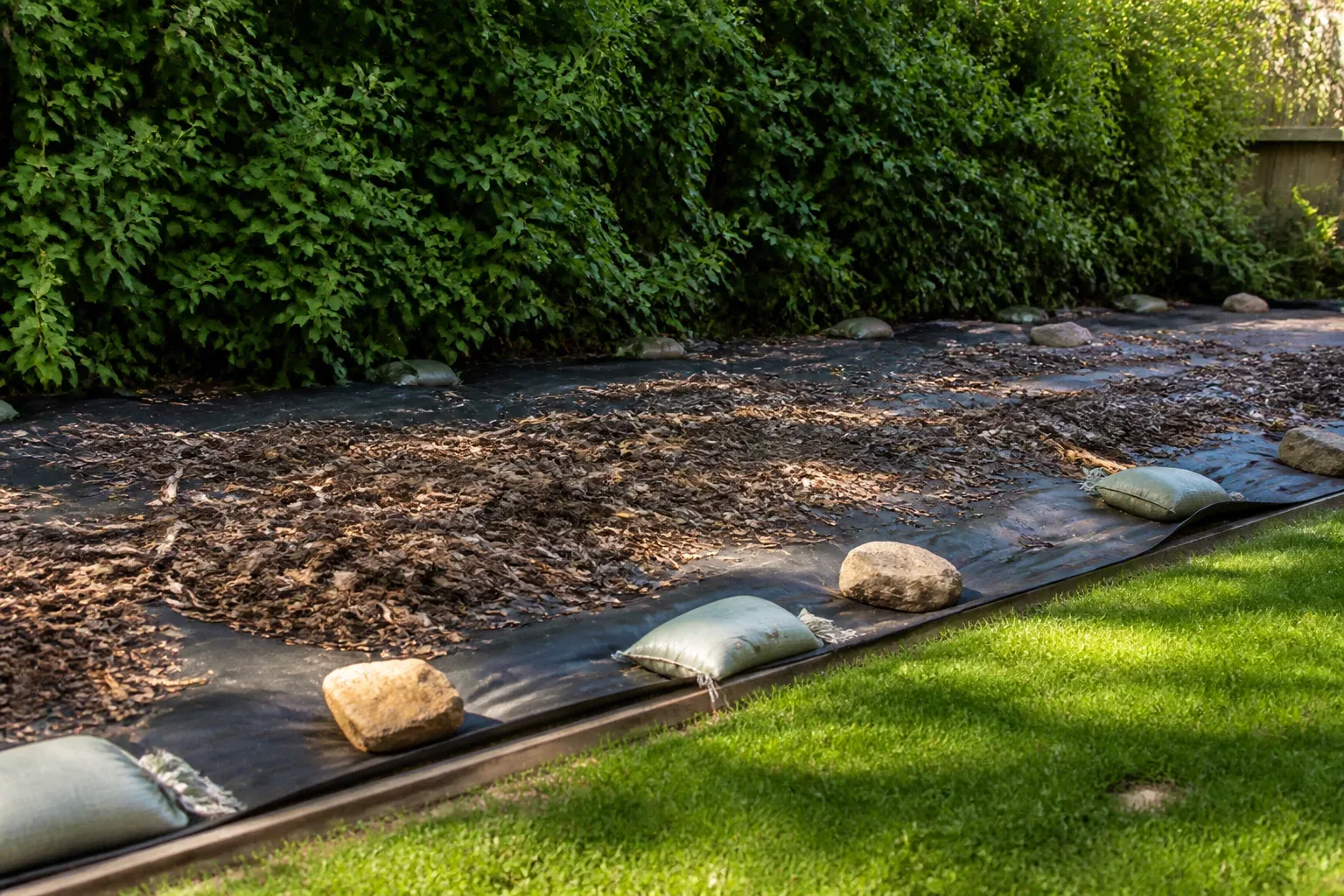
Smothering — also called occultation — excludes light so shoots cannot photosynthesize. It is the lowest-chemical option and the slowest. Extension guides often cite roughly five years under cover for full kill; research at field scale shows tarps alone often fail when rhizomes survive beyond the tarp edge or puncture the plastic.
Site Prep, Barrier Layout, and Realistic Timelines
Step 1 — Cut stems to the ground. Use loppers or a brush cutter. Bag every piece; knotweed stems root on contact with soil.
Step 2 — Cushion sharp stubs. Spread 4 to 6 inches of wood chips, leaves, or straw over the cut crowns. Knotweed stems can puncture thin plastic.
Step 3 — Lay heavy black polyethylene (6 mil or thicker) or woven landscape fabric rated for multi-year UV exposure. Overlap seams by at least 2 feet. Extend the barrier 5 to 10 feet beyond the visible stand on all sides — rhizomes outrun a tight footprint.
Step 4 — Weight the perimeter. Use rocks, sandbags, or buried edges. Check monthly for blowouts and shoot push-through; stomp new bumps from above.
Step 5 — Disguise if needed. A mulch layer over the tarp improves appearance for long campaigns.
Expect three to five years minimum before you probe soil for live rhizomes. When you lift the tarp, dig test holes at the old perimeter. Any orange-centered rhizome fragment means another season covered — or a switch to cut-and-spray on regrowth.
Smothering pairs well with glyphosate on the perimeter where tarps cannot reach sidewalks, fences, or tree roots.
Cutting and Mowing Japanese Knotweed
Cutting alone rarely eradicates knotweed, but it is a useful stress tool when you commit to frequency. The NPS invasive plant team at Acadia combines yearly stalk cutting with herbicide on regrowth because digging entire rhizome systems disturbs soil, damages natives, and still leaves fragments.
How to cut without making the problem worse. Cut stems to ground level as often as new growth appears — weekly during peak summer if you are pursuing exhaustion. Collect every cutting immediately; do not leave piles on soil or lawn. A mower set low can manage large flat areas, but bag clippings or blow them onto pavement for pickup — never mulch them into turf.
Cutting stimulates new shoots if you stop mid-season. That is not failure if you planned for it: the tender regrowth that follows a hard cut is exactly what you spray with glyphosate one to two weeks later. Abandoning a single cut mid-summer is worse than never cutting at all.
Digging Out Japanese Knotweed Rhizomes
Digging is feasible only for small, young patches where you can remove the full rhizome network and legally dispose of soil if needed. On mature stands, complete excavation is rarely practical — rhizomes interweave with utilities, foundations, and tree roots.
Locate the crown where shoots cluster thickest. Dig outward in a grid, following woody rhizomes that may exceed 1 foot in diameter on old plants. Sift soil through a screen or hand-pick fragments; a 1-centimeter piece can regrow.
Bag rhizomes separately from stems. Heavy clay soil attached to rhizomes may need to stay on site under tarp or be treated as contaminated — verify local rules.
Backfill and monitor. Do not plant desirable ornamentals immediately. Mark the zone and inspect every two weeks for two full growing seasons. Any red shoot means you missed tissue — dig again or spray regrowth.
Digging before tarping removes top biomass and helps you see how far rhizomes already traveled — a smart sequence for small beds.
Using Glyphosate Herbicide on Japanese Knotweed
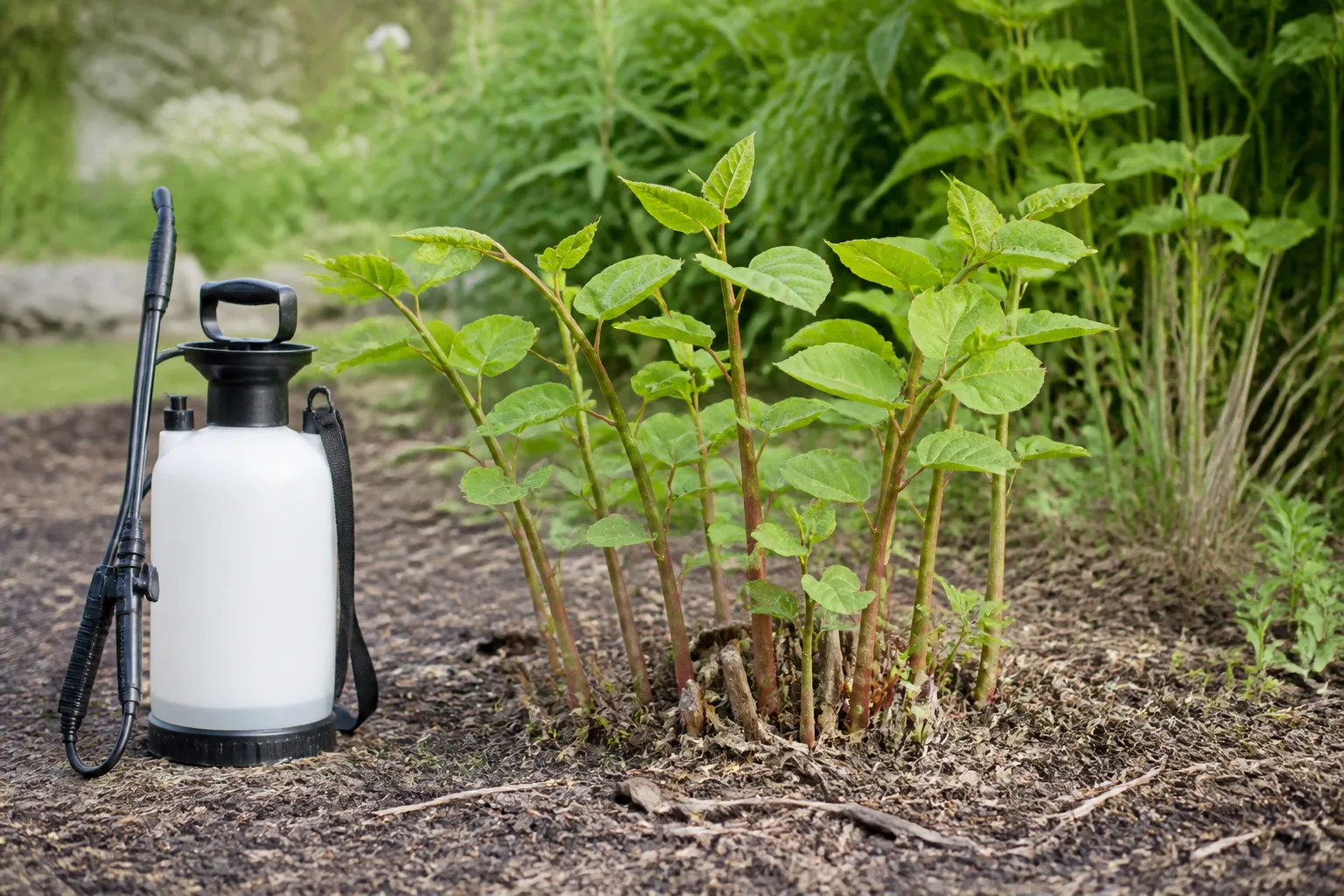
For homeowners who can legally apply herbicide, glyphosate remains the most evidence-backed chemical control. The five-year field trial in Biological Invasions ranked glyphosate formulations above other herbicide groups for knotweed suppression. The RHS likewise identifies glyphosate as the most effective garden-product option when cultural methods cannot keep pace — while emphasizing label compliance and environmental care.
Glyphosate is a systemic herbicide: it enters foliage and moves with sugars to roots and rhizomes. It is not a soil sterilant. It works poorly on woody, waxy mature leaves and best on tender regrowth.
Safety basics. Read the entire product label — concentration, surfactant requirements, rain-free window, and protective gear. Wear long sleeves, gloves, and eye protection. Never spray on windy days; drift injures desirable plants and violates label law. Keep pets and children off treated areas until dry.
Riparian caution. Products labeled for aquatic use differ from backyard formulas. Near water, use only explicitly approved formulations and applicators certified for those sites — or hire a professional.
Cut-and-Spray Timing That Moves Chemical Into the Roots
The sequence extension services and land managers repeat:
- Cut mature stems to 3 to 4 inches in late summer (August in many northern zones; adjust southward).
- Wait 10 to 14 days for soft, bright regrowth 12 to 24 inches tall with minimal waxy cuticle.
- Apply glyphosate per label rate with a hand sprayer or wipe applicator, coating leaves until just before drip-off. Avoid runoff into soil or water.
- Watch for yellowing and collapse over three to six weeks. Dead stems can remain standing; that does not mean rhizomes are gone.
- Treat dwarf regrowth next spring. Glyphosate-killed knotweed often returns as bushy, small-leaved shoots distinctly different from normal canes. Hit that regrowth early or repeat the late-summer cut-and-spray cycle.
Plan at least three growing seasons of treatment. Professionals sometimes achieve faster results with stem injection or higher-volume equipment, but homeowner backpack sprayers need patience.
Methods That Usually Fail (Bleach, Salt, Vinegar, Diesel)
Desperation drives bad advice. These shortcuts either do not reach rhizomes or poison your soil.
Household vinegar and horticultural vinegar burn foliage on contact but do not translocate to rhizomes. University of Maryland Extension notes vinegar is not a reliable substitute for glyphosate on perennial weeds with deep root systems. Knotweed recovers.
Bleach damages leaves and contaminates soil without killing the rhizome bank. You trade a weed for sterile, toxic dirt.
Diesel, motor oil, and gasoline are illegal pesticides when poured on plants in most jurisdictions, hazardous to groundwater, and ineffective on rhizomes beyond brief top kill. The Center for Invasive Species and Ecosystem Health weed handbook classifies such practices as environmentally harmful and operationally weak.
Rock salt and heavy salt doses sound natural but knotweed tolerates salinity better than most garden plants. A PubMed-indexed study on invasive knotweeds found high salt stress tolerance relative to native competitors — salting your patch may weaken turf and ornamentals while knotweed persists.
Pulling tops without follow-up is the most common failure mode. If you are not bagging, monitoring, and repeating, do not bother.
Building a Multi-Year Combined Control Plan
Single tools lose to knotweed. Combined, sequenced pressure wins.
Year 1 — Contain and assess. Map the stand perimeter with stakes. Cut perimeter shoots monthly. Lay tarps on sections you will not spray near desirable plants. Perform one late-summer cut-and-spray on the active front. Bag and legally dispose of all material.
Year 2 — Press the rhizomes. Repeat late-summer glyphosate on regrowth. Dig leading rhizome edges in spring. Keep tarps weighted; expand outward if shoots appear beyond the plastic. Do not disturb the center with a tiller.
Year 3 — Verify dormancy. If no normal canes emerge, probe for dwarf spring regrowth and treat immediately. Lift a corner of tarps only for rhizome checks. Begin replanting only after a full season with zero shoot emergence — and even then, monitor quarterly for two more years.
Ongoing — Construction and sharing soil. Excavation, fence posts, and utility trenches can fragment rhizomes into clean soil. Screen equipment, refuse borrowed topsoil from unknown sources, and educate neighbors — spread is often human-assisted.
If you are preparing to sell property, disclose known knotweed and document your management plan. In the UK, TA6 forms require explicit knotweed declarations; in the U.S., disclosure laws vary by state, but misrepresentation claims are rising as buyers learn to recognize dead winter canes.
When to Hire a Professional Knotweed Specialist
Call a specialist when:
- The stand exceeds what you can monitor weekly across multiple seasons.
- Knotweed sits against your foundation, driveway, or retaining wall.
- A neighbor, lender, or municipality is demanding documented control.
- You need an insurance-backed guarantee for a property transaction.
- Spraying near water or in a conservation easement requires licensed applicators.
Reputable contractors survey the site, propose a multi-year treatment schedule, use labeled products at legal rates, and provide waste transfer receipts. Ask for references, written guarantees, and clarity on what “eradication” means in the contract — often it means no visible regrowth for a defined period, not literal zero rhizome DNA in soil.
Costs vary widely by region, stand size, and access — from a few hundred dollars for a minor outbreak survey to thousands for large residential lots requiring excavation and off-site disposal. Get three quotes and verify licensing with your state pesticide regulatory agency.
Conclusion
Japanese knotweed rewards patience and punishes shortcuts. Identify it correctly, accept that rhizomes — not top growth — are the real target, and choose a strategy scaled to your patch size. Small outbreaks yield to digging and vigilant monitoring; most homeowners with established stands need a three-to-five-year program combining repeated cutting, late-summer glyphosate on regrowth, and tarp smothering where chemistry is not an option.
Skip bleach, salt, diesel, and vinegar fantasies. Bag every fragment, follow local disposal law, and document your work if property lines or sales are in play. When the stand is bigger than your weekends, hire licensed help rather than half-treating and spreading fragments. Control is achievable; pretending otherwise is how Godzilla weed wins.