Best Plants for East-Facing Balconies in India
Morning sun, not afternoon fry: eight east-balcony plants for Indian rails, with pet flags, monsoon saucer tips, and micro-zone placement.
Written by Sai Ananth; horticulture review by Dr. Priya Menon (botanist and indoor plant specialist).
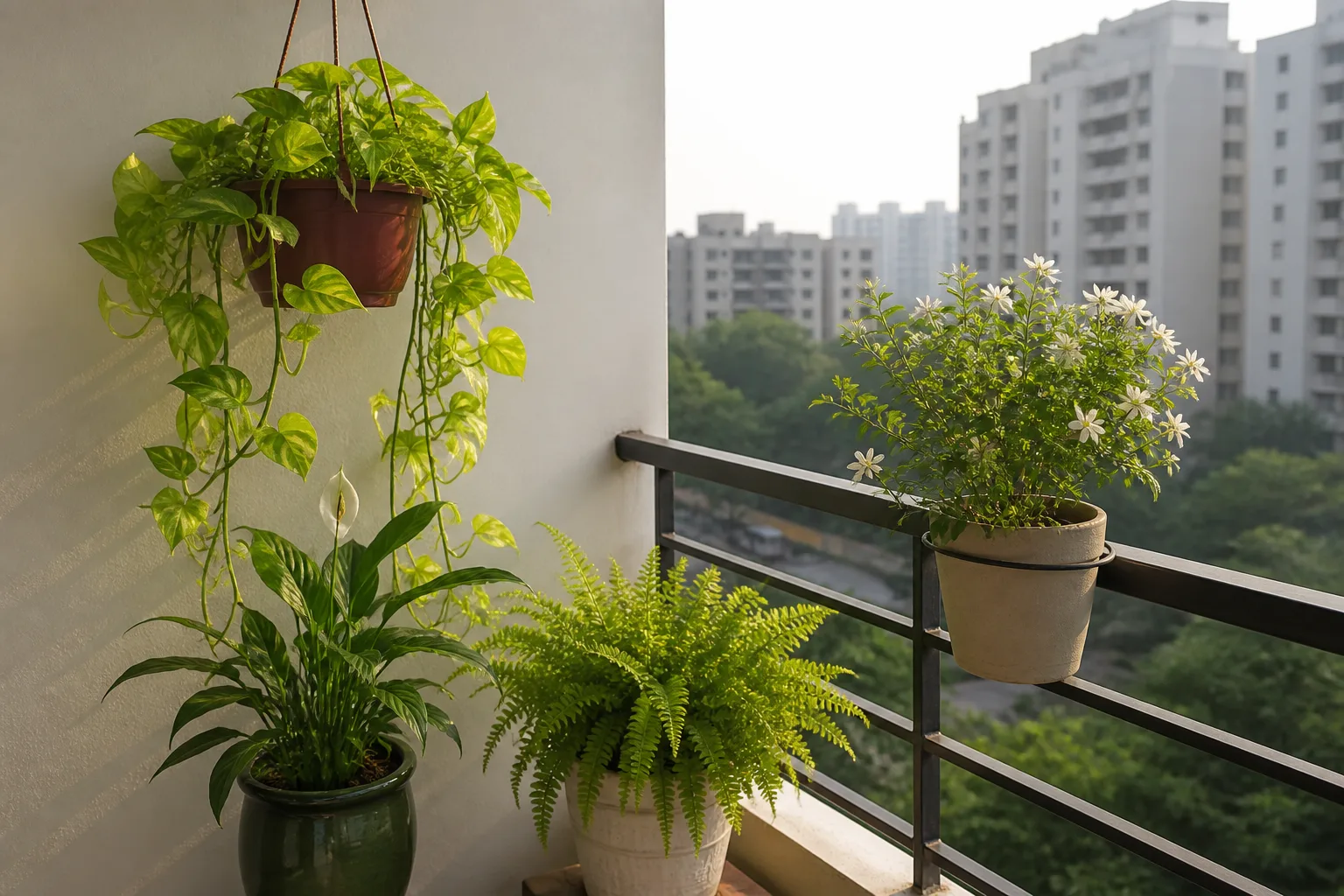
Three failure modes kill more east-balcony plants in India than “bad luck”: stocking a west-heat shortlist on a cool morning rail, leaving saucers full through monsoon week, and parking toxic money plant or peace lily at pet floor level. An east-facing Indian balcony is the gentler sibling of a west rail — cool morning sun, then building shade through the hottest afternoon — but it still needs plant-to-zone matching and drainage discipline.
This page is the aspect decision guide for open or lightly buffered east rails: what morning light does, which inventory plants earn a place by micro-zone, how monsoon changes watering, and which picks are safer when pets share the floor. For the hot afternoon shortlist, use west-facing balcony plants in India. For broader pre-monsoon season context across exposures, see best balcony plants for Indian summer.
Species biology below cites extension and ASPCA sources. India placement, watering intervals, and monsoon moves are editorial synthesis from Indian balcony practice — not claims that US fact sheets are Indian climate authorities. Edible greens and kitchen herbs beyond tulsi are out of scope here; this shortlist stays ornamental-apartment inventory plus tulsi for puja/kitchen use.
The eight picks are golden pothos (money plant), spider plant, syngonium, jasmine, tulsi, boston fern, peace lily, and areca palm.
What East Light Actually Does on Indian Balconies
University of Georgia Extension notes that eastern exposures stay cooler because the house absorbs less radiant heat, and that light from the east causes less water loss from plants than hotter southern or western light. (UGA Extension) On Indian east balconies that physics shows up as:
- Cool morning sun for a few hours, then shade or bright indirect light
- Lower leaf-scorch risk than open west rails after 1 p.m.
- Slower pot dry-down than baking west tiles — still fast in May heat and wind
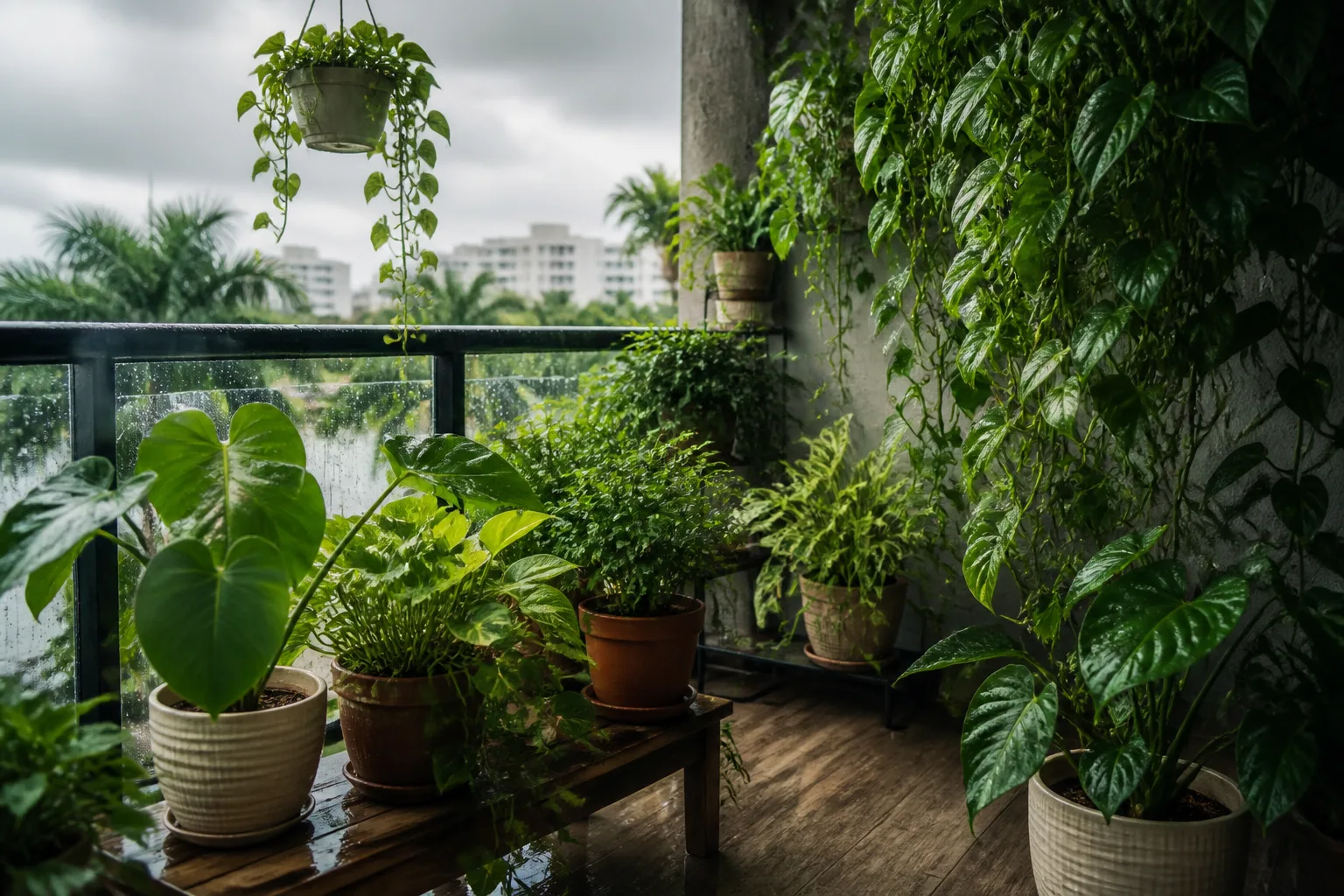
- Monsoon advantage for humidity lovers — and a root-rot trap if saucers stay full
Tamil Nadu Agricultural University’s roof-garden guidance stresses drainage layers so plants are not drowned, wind-tolerant choices in exposed positions, and regular additional watering on elevated growing surfaces — the same container logic that applies when an apartment balcony is open to sun, rain, and wind. (TNAU Agritech — Roof Garden)
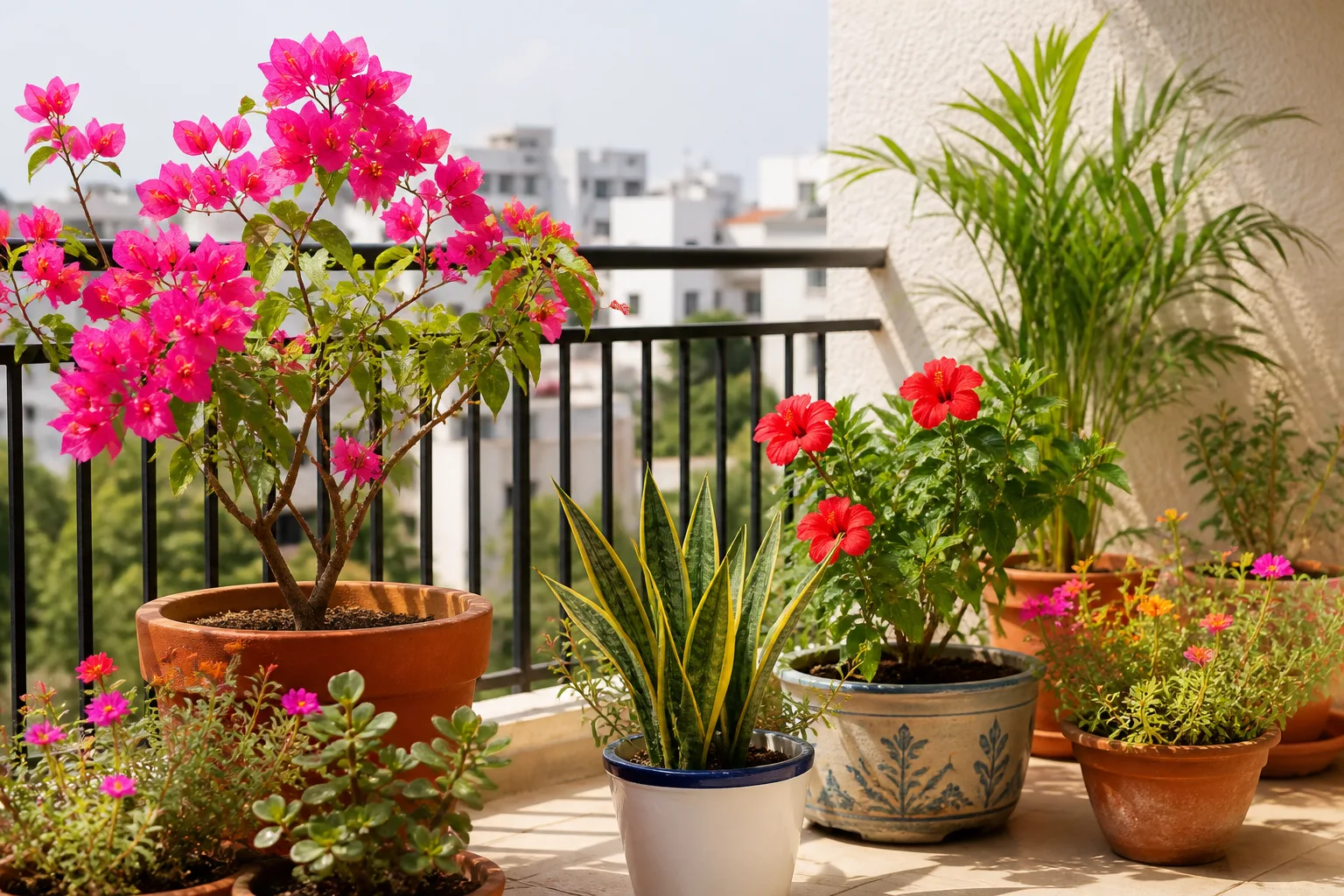
West balconies collect harsh afternoon sun and wall glare — better for bougainvillea, adenium, and dry-tolerant succulents. Soft houseplants (ferns, peace lily, many syngoniums) belong on east, under the slab overhang, or indoors — not on an open west ledge.
Observed east-rail notes (editorial)
Anonymized notes from mid-rise east balconies in humid coastal and dry inland bands (May–July windows):
- Open east rail, humid coastal city: A 6–8 inch hanging money-plant basket often needed a mid-morning moisture check on windy May days; the same plant in a floor pot on the mid shelf stayed moist a day longer.
- Deep slab overhang (~1–1.5 m): Peace lily and Boston fern held color with almost no direct beam; tulsi on the same overhang stayed lanky until moved to the outer rail for 4–6 morning hours.
- Monsoon near-miss: A Boston fern hanging basket under light rain looked lush until a saucer trapped runoff for three days — crown sogginess appeared before frond tip burn. Emptying the saucer and shifting under cover stopped the slide.
- Dry inland April–May: Spider-plant hanging baskets browned tips faster than coastal setups when municipal hard water met dry wind — rested or rainwater reduced tip burn more than “more fertilizer.”
When “east” still feels hot
If a neighboring tower or glass facade throws reflected west glare onto your “east” rail after midday, treat the hottest corner like a west microclimate: move soft foliage back under the overhang, skip ferns on the outer edge, and use the west-facing balcony plants shortlist for that corner only. East advice fails when the light is east on the map but west in practice.
Regional nuance (editorial): Humid coastal east balconies (Mumbai–Chennai–Kolkata band) favor ferns and peace lilies once monsoon humidity arrives, but demand aggressive saucer emptying. Dry inland / northwest winters (Delhi–Rajasthan–Gujarat band) often force ferns and peace lilies indoors to a bright window when outdoor air turns harsh — do not “fix” dryness by flooding a cold pot.
How We Chose These Plants (and What We Left Out)
Only LeafyPixels inventory plants with live /plants/ pages were considered. Each pick had to clear five filters:
- Documented morning-sun, partial-shade, or bright-indirect tolerance from extension sources
- Realistic pot culture on Indian apartment balconies
- A distinct east-rail role (trailer, hanging pet-safer, fragrance, puja herb, monsoon fern, shade flowerer, statement palm)
- A clear care trade-off so you can choose by watering and humidity workload
- Honest pet or handling risk where ASPCA or extension flags toxicity
Excluded on purpose: full-sun west specialists (bougainvillea, adenium, portulaca) as primary picks; deep-shade-only indoor plants with no useful morning-light response; rare imports Indian nurseries rarely stock; and a full edible-herb shortlist beyond tulsi.
Quick Comparison: Zone, Sun, Water, Pot Size, Pet Risk
| Plant | Best micro-zone | Sunlight | Water workload | Pot size | Pet risk |
|---|---|---|---|---|---|
| Golden pothos | Rail / hanging | Morning sun–bright indirect | Let mix dry between waterings | Small–medium | ASPCA toxic if ingested |
| Spider plant | Hanging / soft rail | Soft morning / filtered | Moist to lightly dry | Small–medium | ASPCA non-toxic |
| Syngonium | Mid shelf | Morning–partial shade | Keep evenly moist | Small–medium | ASPCA toxic if ingested |
| Jasmine | Bright rail | Full morning sun–partial shade | Moist, well drained | Medium–large | Confirm taxon; true Jasminum often listed non-toxic — verify label |
| Tulsi | Brightest rail edge | Full morning sun (4–6+ hrs ideal) | Moist, never waterlogged | Medium | Culinary herb — still keep pets from heavy chewing |
| Boston fern | Overhang / monsoon hang | Bright indirect / dappled | Keep moist; high humidity | Medium hanging | Generally low pet flag vs aroids — still not food |
| Peace lily | Back wall / overhang | Partial–deep shade | Moist, not soggy | Medium | ASPCA toxic if ingested |
| Areca palm | Floor corner (≥3 ft deep) | Bright + morning sun; PM shade | Moist, well drained | Large | ASPCA non-toxic |
Start Here by East-Balcony Situation
- Small east rail, want easy green: golden pothos + spider plant
- Fragrance for evening sit-outs: jasmine (prefer J. sambac / mogra from Indian nurseries — see species note below)
- Puja / kitchen herb: tulsi on the brightest morning edge
- Monsoon humidity hanging: boston fern under the slab, saucer emptied after rain
- Shaded back wall / overhang: peace lily or syngonium
- Larger balcony, want a screen: areca palm only if the ledge is deep enough
- Pets on the balcony floor: prefer spider plant and areca palm; elevate pothos, syngonium, and peace lily
- High-rise wind: favor heavier pots; skip floppy hanging ferns on the outer rail; stake jasmine
- Your balcony faces west instead: switch to west-facing balcony plants in India
Easy Trailers and Pet-Safer Hangings
These two carry most small east rails. Cards stay shorter on purpose — deep species care lives on each plant hub.
1. Golden pothos (money plant)
Best for: East rails, hanging pots, beginners who want fast green trails
Sunlight: Bright indirect to soft morning sun
Water: Let well-drained mix dry between waterings
Pot size: Small–medium
Difficulty: Easy
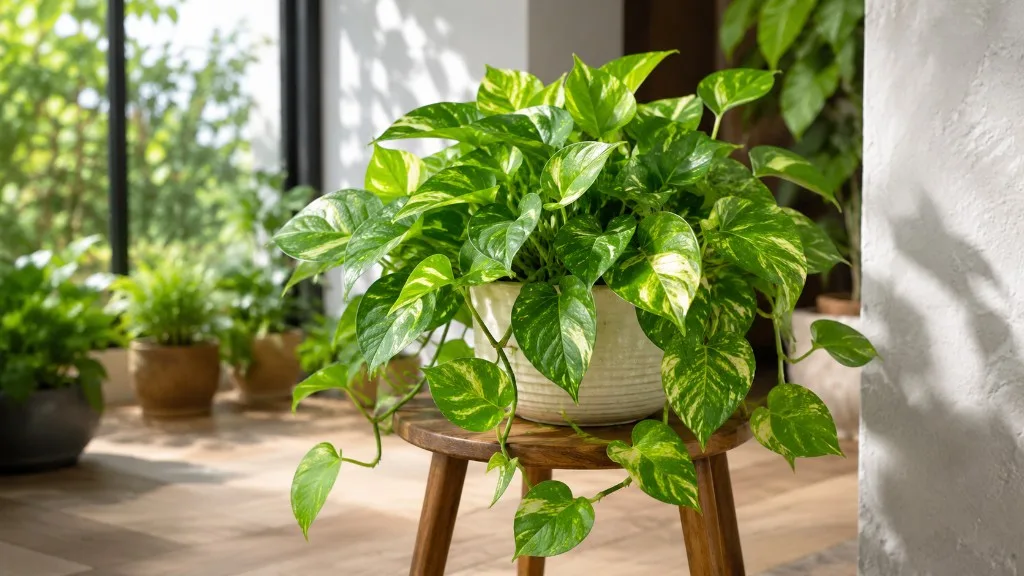
If one plant defines an Indian east balcony, it is golden pothos — the nursery “money plant.” NC State Extension describes pothos as easy to grow, preferring bright indirect light while surviving long stretches in lower light, with mix that should dry between waterings. (NC State Extension) Clemson’s pothos guidance aligns: bright locations without prolonged harsh direct sun keep variegation stronger than deep shade. (Clemson HGIC) ASPCA lists golden pothos as toxic to cats and dogs (insoluble calcium oxalates). (ASPCA)
East placement: Outer-to-mid rail where vines trail away from pets and foot traffic. Morning sun brightens yellow variegation without the west-afternoon fry that bleaches leaves.
East tip (editorial): In May heat, check hanging baskets mid-morning — wind dries them faster than floor pots even on east. In monsoon, empty the saucer every rain day or move the basket under the slab overhang.
Common mistake: Leaving money plant on a bare west ledge “because it is tough,” then blaming the plant when leaves bleach.
Deeper care: golden pothos watering · golden pothos overview
2. Spider plant
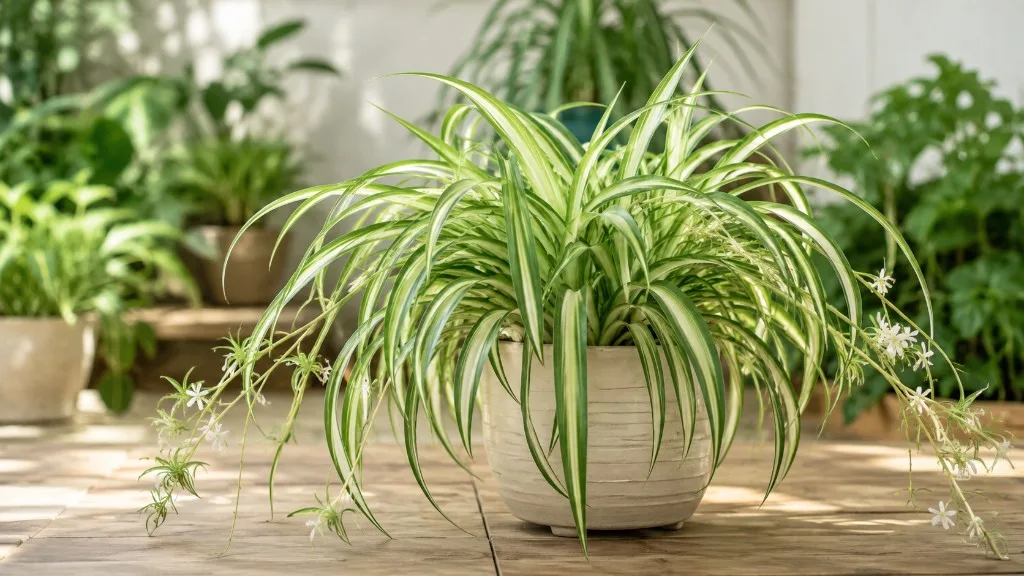
Best for: Hanging baskets on east rails, homes with pets
Sunlight: Medium / soft morning light; intolerant of hard direct sun
Water: Keep evenly moist; do not leave soggy
Pot size: Small–medium hanging
Difficulty: Easy
Spider plant is the pet-safer hanging pick when money plant is off the table. NC State notes it prefers medium light, can tolerate deep shade, and is intolerant of direct sunlight — keep it behind the rail or under light morning filter, not in a hard midsummer beam. (NC State Extension) ASPCA lists spider plant as non-toxic to dogs and cats. (ASPCA)
East tip (editorial): East rail + hanging basket is ideal; if summer mornings feel harsh through glass doors, slide the pot one foot back under the overhang for June–July. Tip burn often tracks hard municipal water plus dry wind more than “weak plants.”
Common mistake: Placing spider plant on the hottest outer rail edge in peak summer, then bleaching the stripes.
Deeper care: spider plant light · hard water and houseplants
Fragrance and Puja on the Morning Rail
Give these the brightest morning edge. They fail in deep overhang shade.
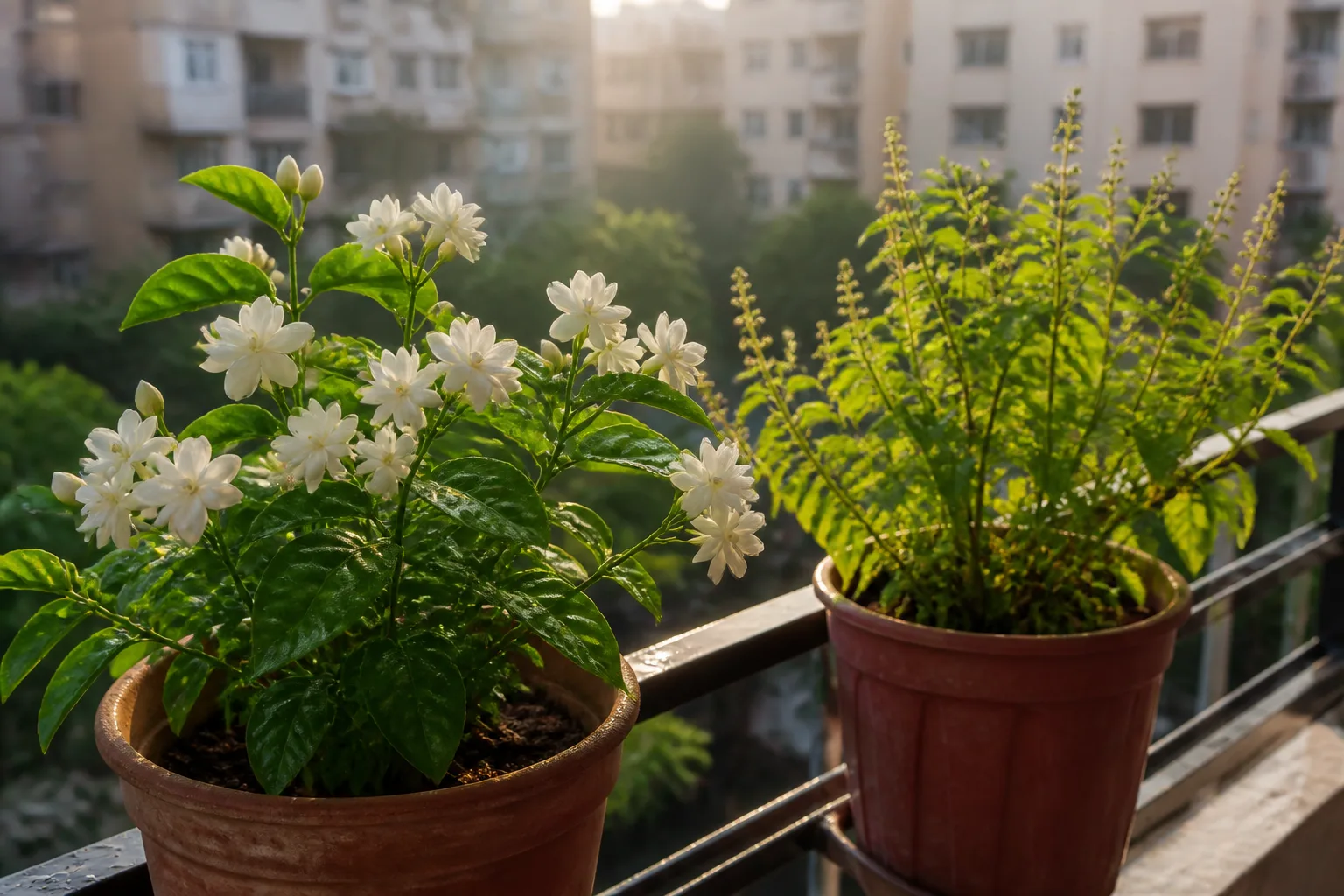
3. Jasmine — and why Indian “mogra” matters
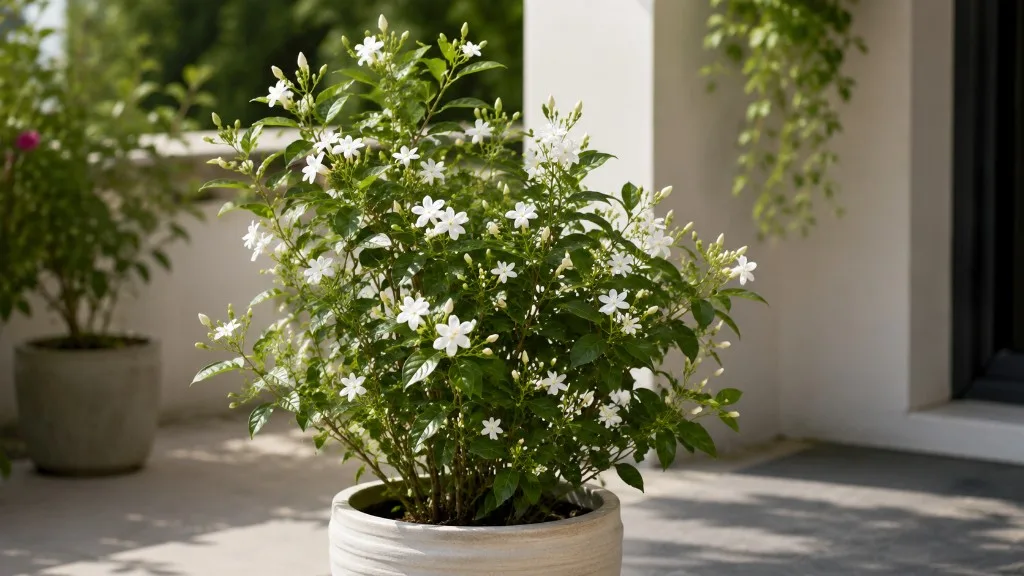
Best for: Fragrant east rails and evening sit-outs
Sunlight: Full morning sun to partial shade
Water: Moist, well-drained mix
Pot size: Medium–large with support
Difficulty: Medium
Indian nurseries usually sell fragrant white balcony jasmine as mogra / motia / Arabian jasmine (Jasminum sambac), not temperate common jasmine (Jasminum officinale). Missouri Botanical Garden places J. sambac in full sun to part shade with evenly moist, well-drained soil and notes container culture. (Missouri Botanical Garden) The RHS describes Arabian jasmine as suited to partial shade, moist but well-drained loam, sheltered positions, and patio/container growing, with bright light and shade from hot sun when grown under glass. (RHS) Clemson’s genus-level indoor jasmine guidance calls for at least four hours of direct sun or strong artificial light for bloom. (Clemson HGIC) NC State’s common jasmine (J. officinale) page still usefully confirms full sun to partial shade and moist well-drained container culture for the temperate climber — useful if your label truly says officinale, not sambac. (NC State Extension)
On east balconies, several hours of cool morning sun plus bright ambient light the rest of the day is often enough for blooms without west-afternoon leaf fry. For sambac-specific Indian balcony depth, also see the mogra care guide.
East tip (editorial): In humid coastal cities, keep airflow around the canopy and avoid crowding jasmine against a wet wall during monsoon — fungal leaf issues climb fast in still air. Use a sturdy pot; light plastic on a windy high-rise tips when the vine loads up.
Common mistake: Expecting heavy bloom in a deeply shaded east corner, or applying cool-winter rest advice meant for temperate jasmines to tropical mogra.
Deeper care: jasmine overview · mogra care guide
4. Tulsi (holy basil)
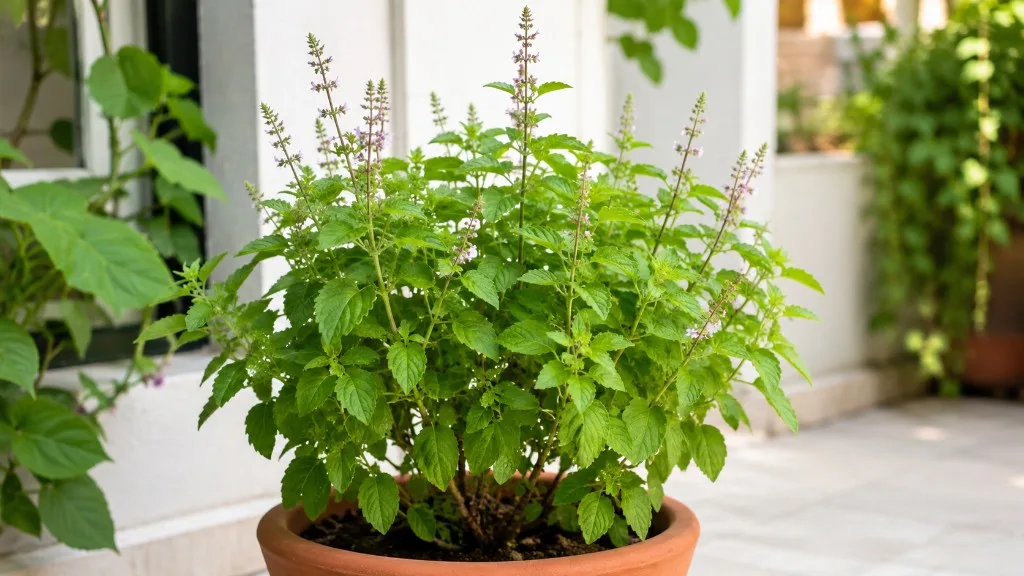
Best for: Puja use, kitchen herbs, sunny east ledge
Sunlight: Full sun — east morning sun is the practical apartment match
Water: Moist, well drained; hates waterlogged soil
Pot size: Medium
Difficulty: Easy–medium
Tulsi (Ocimum tenuiflorum) is the cultural east-balcony staple. NC State notes it prefers full sun in moist, well-drained soil and does poorly in waterlogged mix. (NC State Extension) East balconies that deliver 4–6 hours of morning sun usually grow tighter, more aromatic plants than a dim north ledge.
East tip (editorial): Pair tulsi on the brightest rail edge with money plant or syngonium one shelf back — one watering zone for “moist herb,” one for “drier aroid.” In peak monsoon, move the pot under cover during multi-day rain so roots do not sit anaerobic.
Common mistake: Keeping tulsi in a saucer of standing monsoon water “so it never dries.”
Deeper care: tulsi watering · tulsi overview
Shade and Monsoon Specialists
These belong behind the rail beam — not on the hottest outer edge all summer.
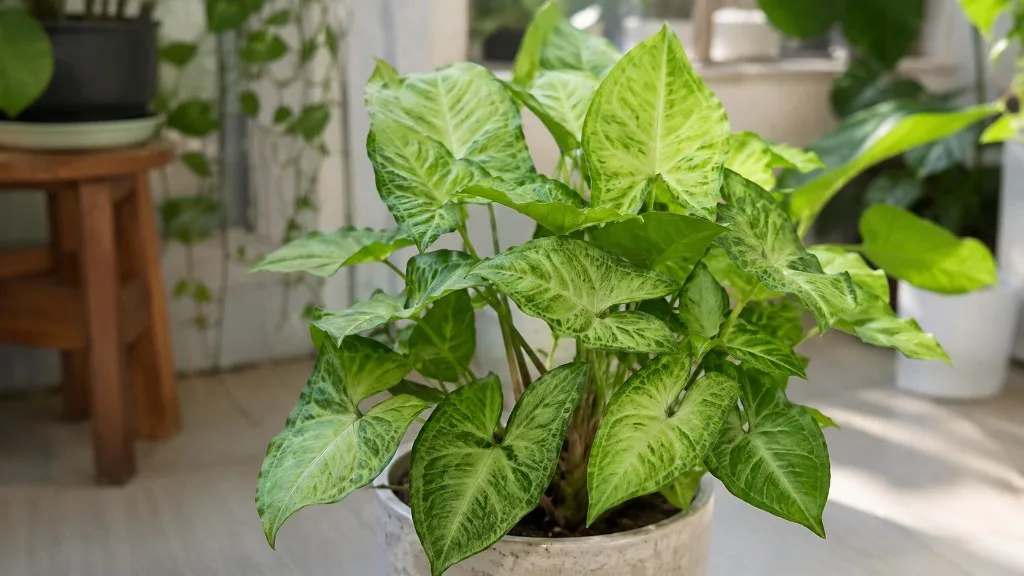
5. Syngonium (arrowhead vine)
Best for: Compact tabletop color on east shelves
Sunlight: Partial shade / soft morning sun
Water: Keep moist; do not sit waterlogged
Pot size: Small–medium
Difficulty: Easy
Syngonium is a familiar Indian nursery plant that looks intentional on a small east shelf. NC State advises a warm, humid spot and warns that full sun tends to burn or bleach foliage. (NC State Extension) ASPCA lists arrowhead vine / nephthytis as toxic to cats, dogs, and horses (insoluble calcium oxalates). (ASPCA)
East tip (editorial): Place behind tulsi or jasmine so the sunnier rail edge goes to plants that need more direct morning light. Trim climbing stems if you want juvenile arrow-shaped leaves.
Common mistake: Buying a pink-flash cultivar for deep shade and expecting the color to hold.
Deeper care: syngonium light
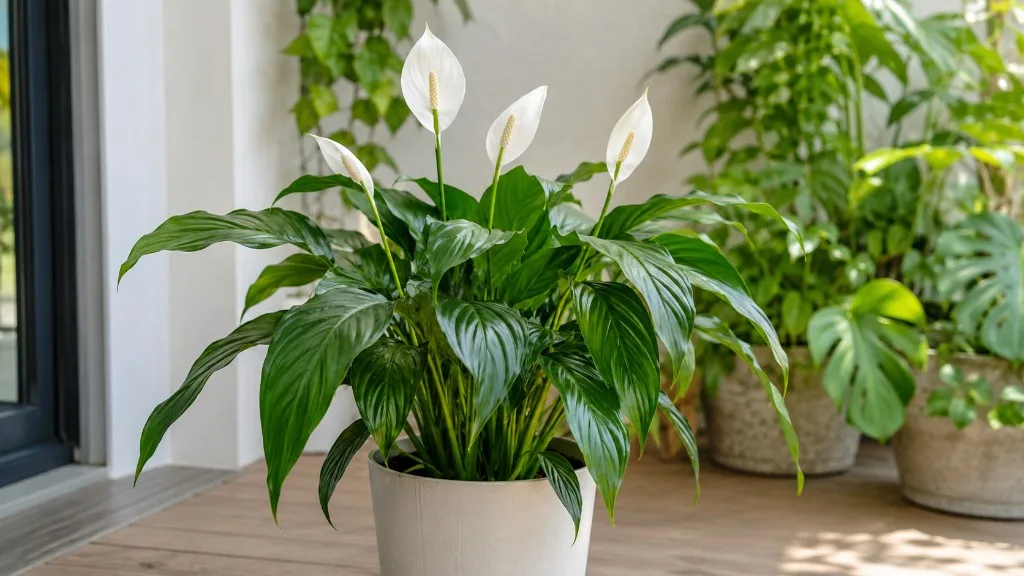
6. Peace lily
Best for: Shaded back wall of an east balcony
Sunlight: Partial to deep shade; no hard direct sun
Water: Moist but not soggy
Pot size: Medium
Difficulty: Easy–medium
Peace lily is the flowering option for the darkest east zone — against the wall, under the overhang, not on the outer rail. NC State says peace lilies prefer partial to deep shade, should not sit in direct sun, and need moist (not soggy) soil; brown tips often track excessive sun, underwatering, or low humidity. (NC State Extension) UF/IFAS treats peace lily as a classic indoor foliage plant for lower light. (UF/IFAS) ASPCA lists peace lily as toxic to cats and dogs. (ASPCA)
East tip (editorial): In monsoon, reduce watering frequency even though air feels wet — the mix stays saturated longer. Empty saucers to cut fungus-gnat pressure. Expect fewer spathes in very dim overhangs; prioritize foliage health.
Common mistake: Putting peace lily on the sunny outer east rail “for more flowers” and getting bleached, tipped leaves instead.
Deeper care: peace lily watering · peace lily overview
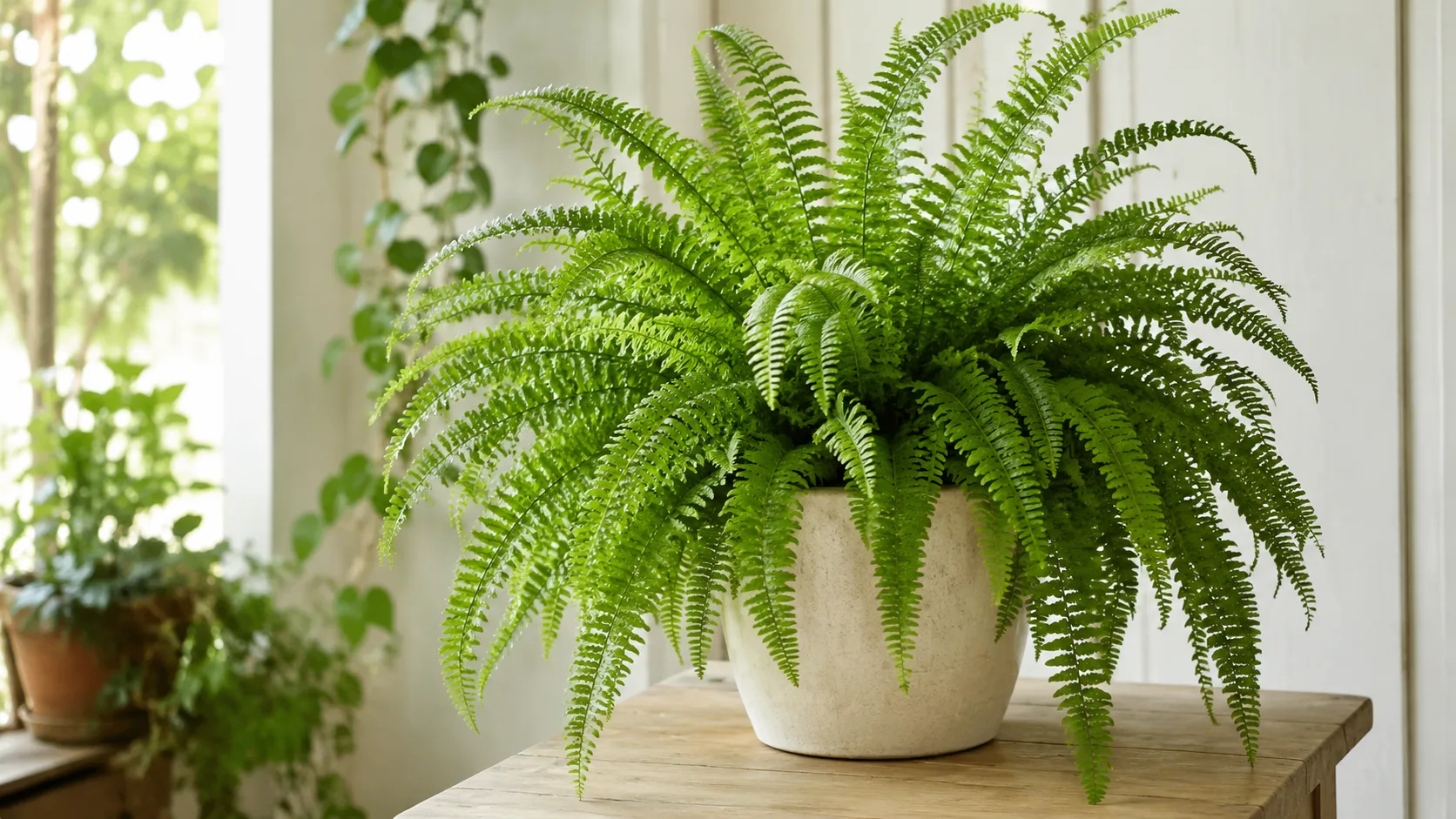
7. Boston fern
Best for: Monsoon hanging baskets and humid east corners
Sunlight: Bright indirect / dappled; little hard direct sun
Water: Keep moist; never bone dry; high humidity preferred
Pot size: Medium hanging
Difficulty: Medium
Boston fern is why east balconies beat west ones in the rainy season. NC State recommends bright indirect light, warmth, high humidity, and moist soil that should never dry out — hanging baskets suit the form. (NC State Extension) West afternoon sun usually crisps fronds; east shade after morning is the safer outdoor setup.
East tip (editorial): Peak monsoon is this plant’s best outdoor window — hang under the slab so rain softens the air without filling the crown. On windy high-rise east rails, prefer a sheltered mid-shelf over a swinging outer basket. When dry winter air arrives in north Indian cities, move ferns indoors near a bright window rather than flooding a cold pot. See monsoon houseplant care in India.
Common mistake: Buying a fern for a dry, windy east rail in April and expecting summer survival habits meant for west heat plants.
Deeper care: boston fern watering · monsoon houseplant care in India
Statement Corner Plant — Areca Palm
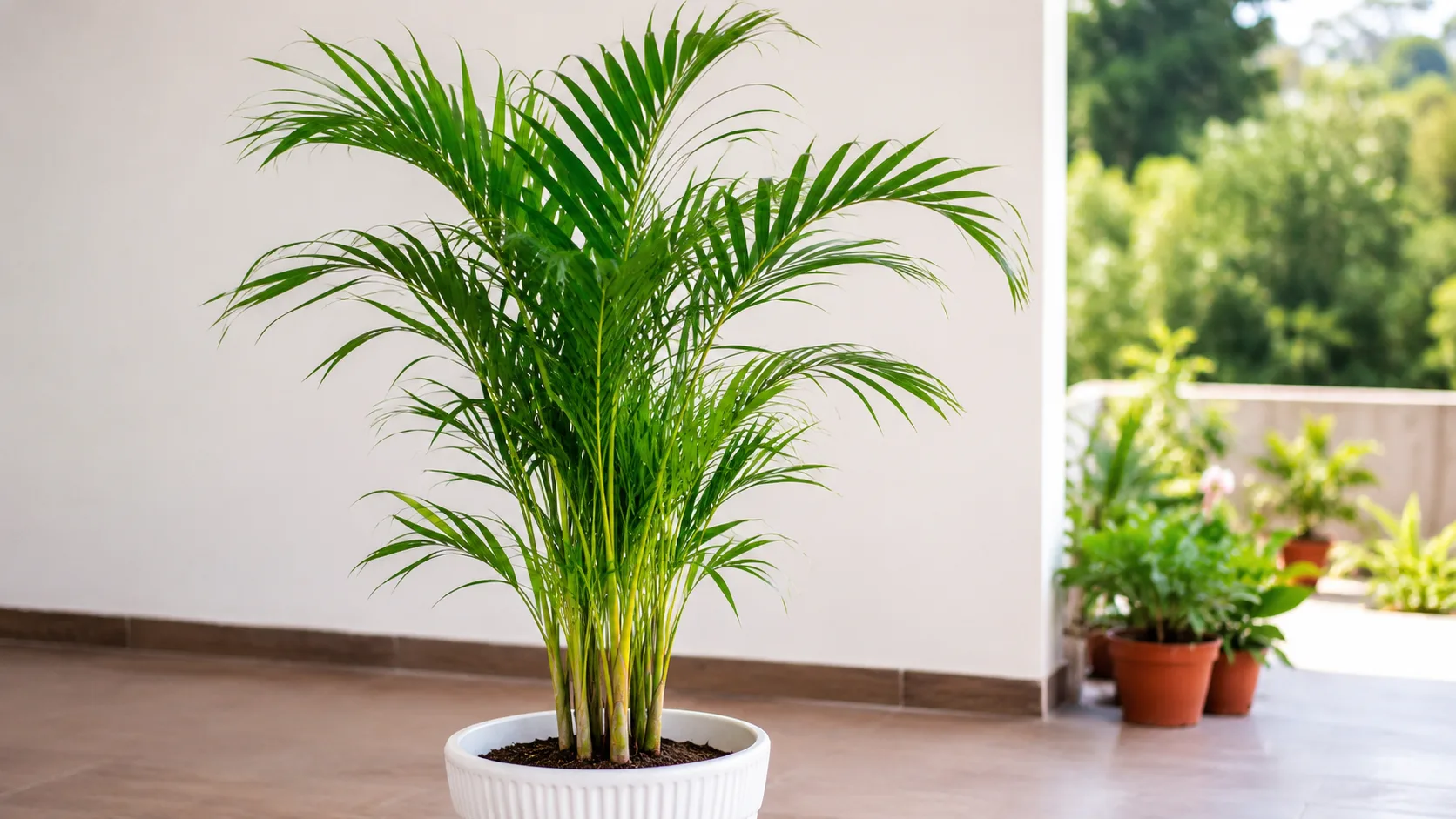
8. Areca palm
Best for: Corner screen on larger east balconies
Sunlight: Bright with morning sun; partial shade outdoors preferred over hard afternoon sun
Water: Moist, well drained — never swampy
Pot size: Large
Difficulty: Medium
Areca palm (Dypsis lutescens) fills a corner when you have floor space and a large pot. NC State notes indoor plants want bright locations and high humidity; outdoors in warm zones the palm tolerates full sun but prefers partial shade with moist, well-drained soil. (NC State Extension) East morning sun plus afternoon shade matches that preference better than an open west rail. ASPCA lists areca palm as non-toxic to dogs and cats. (ASPCA)
East tip (editorial): On narrow ledges under about 3 feet deep, skip areca and use money plant + spider plant instead — palm fronds need swing room. Brown leaflet tips often track dry air, fluoride/hard water, or irregular watering.
Common mistake: Buying a tall areca for a windy high-rise ledge in a light plastic pot with no drainage.
Deeper care: areca palm watering · areca palm overview
East Balcony Care for Indian Climates
- Map micro-zones. Outer rail = morning beam (tulsi, jasmine). Mid shelf = soft sun (pothos, syngonium). Back wall / overhang = shade (peace lily, fern).
- Water by soil feel, not a shared calendar. Clemson advises watering when the mix feels dry at fingertip depth; sunny warm spots need water more often than cool shaded ones. (Clemson HGIC)
- Summer still dries pots. East is cooler than west, not “no water.” Hanging baskets and black plastic dry fastest in May wind — TNAU’s roof-garden note that elevated plantings need regular additional watering fits balcony reality. (TNAU Agritech — Roof Garden)
- Monsoon switch. Reduce watering for most plants, improve drainage, move ferns and peace lilies under cover during multi-day rain, and empty saucers daily. Details: monsoon houseplant care in India and root rot in houseplants.
- Pot material trade-offs: Terracotta breathes on humid coastal east balconies; plastic often buffers dry inland mornings. See terracotta vs plastic pots.
- Hard water tip burn on spider plant and areca: see hard water and houseplants.
- Do not copy west shade-net defaults. East usually needs placement and overhang management more than 50% shade cloth — save heavy netting for reflected glare or heat-wave mornings.
Already stressed this week?
- Move scorched or soggy plants into the correct micro-zone (overhang for soft foliage; brighter rail only for tulsi/jasmine).
- Check knuckle-depth moisture — water only if dry; empty any standing saucer water.
- For fern tip browning in dry pre-monsoon wind, raise humidity/shelter before adding fertilizer.
- Hold fertilizer until new growth stabilizes.
- If the hot corner is reflected glare, treat it as west for plant choice.
Common Mistakes on East-Facing Balconies
- Buying west-sun specialists (bougainvillea, adenium) for a deeply shaded east overhang
- Assuming east = zero scorch risk in peak summer on the outer rail
- Putting peace lily or Boston fern in hard morning sun all summer
- Watering every plant on the same daily schedule through monsoon
- Leaving saucers full after rains
- Ignoring pet toxicity on floor-level pothos, syngonium, and peace lily
- Choosing areca palm for a ledge too narrow for fronds and wind
- Treating nursery “jasmine” as one species and applying the wrong seasonal rest advice
Related guides
- West-Facing Balcony Plants in India — afternoon-sun heat specialists when your rail bakes after 1 p.m.
- Best Balcony Plants for Indian Summer — seasonal heat overview across west and east exposures
- Monsoon Houseplant Care in India — drainage and watering switch when humidity arrives
- Mogra Care Guide — Arabian jasmine (J. sambac) bloom and monsoon detail
- Hard Water and Houseplants — tip burn patterns on spider plant and areca
- Root Rot in Houseplants — what happens when monsoon moisture meets poor drainage
Conclusion
For most Indian east-facing balconies, start with golden pothos for easy trailing green and spider plant when pets share the floor. Add jasmine (usually mogra / J. sambac from Indian nurseries) for fragrance and tulsi on the brightest morning edge. Use syngonium and peace lily on shaded shelves, boston fern when monsoon humidity arrives, and areca palm only if you have a large pot and corner space.
Match the plant to morning-sun micro-zone first, then watering workload and pet risk. Empty saucers in monsoon. Keep soft foliage off open west heat — that shortlist lives on west-facing balcony plants in India. That sequence keeps more east-balcony plants alive than any interchangeable “top 10” list.