Mogra Care Guide: Arabian Jasmine Light, Water and Soil
Arabian jasmine (mogra) care for Indian balconies: sun for buds, monsoon watering, soil drainage, cool-rest myths, and lookalike warnings.
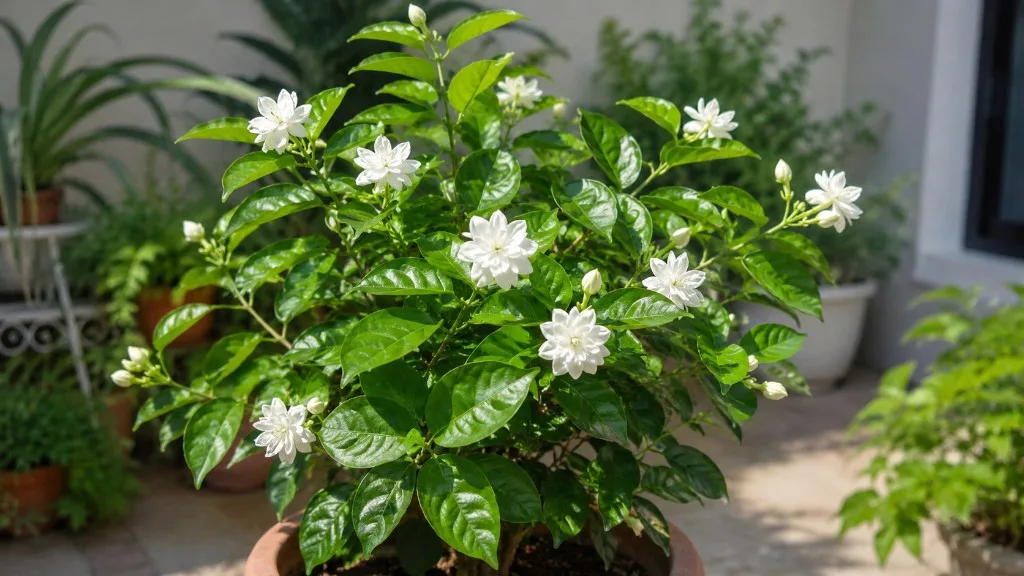
Mogra is grown for evening fragrance, not for surviving in a dim corner. The plant behind Motia, Mallige, Bela, sampaguita, and Arabian jasmine is Jasminum sambac — a tropical evergreen in the olive family (Oleaceae) that rewards strong light and steady moisture with clusters of waxy white flowers. Leaves can stay respectable for months in mediocre care. Flowers tell you whether light, water, and drainage are actually working.
If your plant opens intensely fragrant white blooms toward evening and fades by morning, you are in the right place. If you bought a temperate climbing jasmine such as Jasminum officinale, or a plant that needs a cool winter rest to set buds, use the separate jasmine care guide instead — that page centers cool-rest climbers, not sambac.
Who This Guide Is For (and How We Reviewed It)
This page is for growers who bought “mogra,” “motia,” or “Arabian jasmine,” want reliable fragrance, and keep hitting the same walls: lush leaves with no buds, buds that form then drop, confusion with other plants labeled jasmine, or watering that works in April and fails in July monsoon humidity.
Written by Sai Ananth (B.Pharmacy; LeafyPixels lead writer) and reviewed by the LeafyPixels Review Board. Care ranges were checked against Missouri Botanical Garden, Kew Plants of the World Online, the Royal Horticultural Society, Clemson HGIC, UC IPM, NC State Extension (lookalike and common-jasmine contrast), and ASPCA toxic-plant listings via primary-page research, then aligned with LeafyPixels mogra hub data and real pot constraints. Clemson’s indoor light and temperature numbers below are genus-level indoor jasmine guidance, not sambac-only lab data — use them as a brightness floor, then judge your plant by buds.
Honest experience notes (not a lab trial): On a west-facing Bengaluru balcony in peak May heat, a double-form motia in a 20 cm terracotta pot needed a full soak almost daily to keep buds from aborting; the same plant in a plastic decorative cachepot that trapped runoff yellowed within two weeks until we drilled drainage and resumed the finger-check rule. Separately, an indoor winter plant kept only in “bright room” light with no direct sun stayed leafy and budless; after moving within 45 cm of a south window and adding a full-spectrum LED for about 13 hours, tight buds appeared in roughly three to four weeks. Your climate and pot will shift timelines — treat these as condition-and-outcome notes, not guarantees.
Confirm You Have Jasminum sambac
Kew’s Plants of the World Online places the native range of Jasminum sambac from Bhutan to India, in a seasonally dry tropical biome. Missouri Botanical Garden describes it as probably native to India or Southeast Asia, grown as a broadleaf evergreen shrub or short twining vine. Unsupported, it sprawls as a bushy shrub; with a support, stems can scramble. In containers in temperate gardens it is often kept to about 4–5 feet; in its native territory the same species can climb much taller and flower through warm months.
The flowers are the product. They are typically white, about 1 inch across, borne in clusters of 3–12, and intensely fragrant. That biology is why placement near doorways, balconies, and courtyard seating beats a forgotten corridor. If the tag does not say Jasminum sambac (or at least Jasminum), stop before you copy any jasmine advice from the internet.
Identity Matrix: Mogra vs Common Jasmine, Star Jasmine, Jessamine
| Plant | Botanical name | Bloom cue | Care trap |
|---|---|---|---|
| Mogra / Arabian jasmine | Jasminum sambac | Repeated warm-season flushes; evening fragrance | Applying cool-rest advice meant for temperate houseplant jasmines |
| Common / poet’s jasmine | Jasminum officinale | Summer climber bloom; different hardiness | Copying sambac monsoon rhythm onto a temperate climber |
| Star / Confederate jasmine | Trachelospermum jasminoides | Evergreen twiner; milky sap | Treating it as Jasminum for pruning and pet assumptions |
| Carolina jessamine | Gelsemium sempervirens | Yellow trumpet flowers | Mislabeling as “jasmine” — high toxicity risk |
Mogra (J. sambac) is warm-climate Arabian jasmine. It wants heat and strong light. It does not need the cool winter rest that many temperate jasmine articles assume for J. polyanthum or similar tender climbers sold as houseplants in cold countries.
Common / poet’s jasmine (Jasminum officinale) is a different species: a vigorous temperate climber often pruned after summer bloom. NC State notes it prefers moist, well-drained, light soil enriched with organic matter and full sun to partial shade. Broader temperate climber culture lives on the jasmine care guide.
Star jasmine (Trachelospermum jasminoides) is not a Jasminum at all — see the star jasmine hub. Carolina jessamine (Gelsemium sempervirens) is a yellow trumpet vine with high-severity poison characteristics. White, intensely fragrant evening clusters on glossy simple leaves usually point to sambac; yellow funnel-shaped flowers do not.
Regional Names and Single vs Double Forms
Commercial growers recognize multiple cultivars of J. sambac that differ in petal count, flower shape, fragrance intensity, and growth habit. Indian nurseries add regional names on top of that, which is why two plants both called “mogra” can look different and still be the same species. Knowing your form sets bloom expectations; core care — sun, even moisture, prune-after-flush — stays the same.
In English-language trade the same species appears as Arabian jasmine, sambac jasmine, or Hawaiian pikake. In the Philippines it is sampaguita. In South India it is Mallige; in North India Mogra or Motia often points to beloved double forms, while single-petaled types may be called Motiya or Bela. Treat the Latin name as the source of truth when common names collide.
| Form | Trade / regional cues | Typical bloom density | Prune emphasis |
|---|---|---|---|
| Single | Maid of Orleans, sampaguita, pikake, many “bela” plants | Often generous flushes when light is adequate | Light tip work after each flush keeps branching dense |
| Double | Grand Duke of Tuscany, rose jasmine, gundu malli / motia doubles | Often fewer buds per flush; rose-like stacked petals | Post-flush thinning matters more — doubles need flowering wood renewed |
Do not change light or watering rules just because petals are stacked; change your patience and pruning timing. Doubles that look “lazy” in shade usually need sun and post-flush cuts, not more nitrogen.
Light for Blooms on Balconies and Bright Windows
Missouri Botanical Garden lists cultural light for Arabian jasmine as full sun to part shade. For mogra, treat that as a flowering threshold, not a foliage survival range. Bright indirect light alone often keeps stems green while bud set collapses. Aim for roughly 4–6 hours of direct sun on the canopy outdoors, or the brightest practical indoor exposure you can give without scorching unacclimated leaves.
Clemson’s jasmine fact sheet notes that indoor jasmines (genus-level indoor culture, not sambac-exclusive) need at least four hours of direct sunlight daily or 14–16 hours of strong artificial light, with day temperatures around 68–72°F (20–22°C) and cooler nights listed for general indoor jasmine care. Sambac still wants warmth and will sulk if a dim heated room is its only home. The RHS species notes for J. sambac advise growing it in bright light with shade from hot sun under glass — useful when afternoon rays through a west window cook leaves that never saw outdoor sun. UC IPM similarly places jasmines in full sun or light shade.
On Indian balconies and terraces, morning-to-midday sun with light afternoon shade in extreme heat is a reliable formula. Indoors, prioritize a south- or west-facing window within about two feet of the glass. East windows can work for foliage; they often underdeliver for heavy flowering in winter.
Acclimation and Grow Lights When Windows Fall Short
Acclimate nursery plants over a week if you move them from shade to full terrace glare — bleached patches and crisp margins mean pull back temporarily, not abandon sun forever. Potted plants dry faster in full sun; raise watering frequency before you blame “too much light.”
If buds never form despite fertilizer, light is still the first variable to raise — add a full-spectrum grow light for 12–14 hours during the active season rather than doubling feed. Judge success by new tips and swelling buds, not old leaves. Compact internodes mean light is working; long gaps between leaves mean move brighter before you change fertilizer. For placement diagnostics, open the mogra light guide and the grow lights complete guide.
Watering by Soil Check Through Summer, Monsoon, and Winter
MBG describes the target as evenly moist but well-drained soil with medium water needs. The RHS echoes moist but well-drained conditions and tells growers of greenhouse sambac to water sparingly in winter. UC IPM summarizes jasmines as wanting moderate to regular water in good soil.
Translate that into a check, not a calendar. Water when the top 2–3 cm of mix feels dry, then soak until a little water exits the drainage holes and empty the saucer. In warm active growth that often lands every 2–4 days for indoor pots and every 1–3 days for small terrace pots in full sun — sometimes daily in peak heat. During bud swell, avoid swinging between bone-dry and waterlogged: both drought and oxygen-starved roots abort flowers.
Use three quick checks together. Press a finger 2–3 cm deep. Lift the pot to compare weight after a thorough watering versus a dry day. If leaves wilt and perk within an hour or two after a soak, thirst was real. If leaves wilt while the pot stays heavy and wet, stop watering and inspect roots.
Summer (and hot dry spells): Check daily. Wind and reflected heat empty pots fast. Thorough soaks beat tiny sips that wet only the surface crust.
Monsoon / cloudy weeks: Evaporation slows. Probe depth before watering just because it “is the day.” Surface wetness from rain can hide a dry core — or a soggy base in a decorative cachepot holding runoff. For wet-season habits across houseplants, see monsoon houseplant care in India.
Winter / cool semi-rest: Reduce frequency toward roughly weekly or longer when growth slows, still guided by the finger and pot-weight tests. Keep cold wet soil off frost-sensitive pots; sambac is a tropical plant for USDA zones 9–11 outdoors, and container plants north of that should come inside before frost into a bright room with reduced watering.
Hard water and salinity tip-burn: UC IPM flags salinity and salt toxicity among jasmine disorders and notes that excess salts concentrating at leaf margins and tips turn tissue yellow, then brown — especially where hard irrigation water and heavy fertilizer stack. On terrace pots with mineral-heavy tap water, flush the mix with a thorough clear-water soak every few weeks in active growth, ease feed strength, and refresh compacted mix on about a two-year rhythm. Tip burn alone is not automatically “underwatering.”
Field note on mix dry-down: In our 50/30/20 potting-mix / compost / perlite blend, the same root mass in terracotta often needed water one to two days sooner than in plastic under May west-balcony heat. In monsoon humidity, that plastic pot stayed wet at the core for three-plus days after a soak while terracotta returned to a light finger-check sooner — which is why drainage and pot material matter as much as the recipe. For symptom depth, see mogra watering, bud drop, and overwatering. Moisture-check habits that transfer across houseplants also live in how to water indoor plants the right way.
Soil, Pot Size, and Drainage
Build for “moist but free-draining,” not for garden dirt in a decorative bowl. A practical container recipe that matches fertile, open mix guidance is:
- 50% quality potting mix
- 30% compost or worm castings
- 20% coarse perlite, pumice, or horticultural sand
Target roughly pH 6.0–7.5 (RHS notes neutral preference for cultivated sambac). Always use a pot with open drainage holes. In humid monsoon balconies or dim AC rooms, shift toward more perlite so the mix dries on a healthier rhythm. Avoid packing field soil into pots — it compacts, drains poorly, and invites rot.
Slightly root-bound plants often flower better than plants sitting in a huge reservoir of unused wet mix. For most balcony shrubs, a 20–30 cm pot is a workable middle ground once the nursery bag is outgrown; upsize only when roots circle heavily or the pot dries in a day despite normal heat. Refresh the mix about every two years, or sooner if water runs straight through without absorbing, the pot stays soggy for days, or the mix smells sour near the drainage hole. Pair soil work with the mogra soil and repotting pages when you need a full procedure — and time major repots after a flush, not while buds are tight.
Temperature, Humidity, and India Climate Bloom Cycles
Mogra is a tropical blooming shrub. In warm Indian climates it flowers in cycles through the hot season and monsoon — flushes of buds, a short rest, then another round — rather than one spring show and done. MBG notes that in native territory flowers can appear throughout the year, while temperate container culture often concentrates bloom in summer (roughly June–August in cool climates). Comfort for active growth sits roughly in the 20–35°C (68–95°F) band; protect from frost and from cold, wet root zones below about 10°C.
Humidity in the 50–70% range suits tropical origins, but humidity alone will not create flowers in a dark room. Dry AC air can crisp tips and invite spider mites; a pebble tray or nearby humidifier helps foliage comfort after light and watering are fixed. Place pots near evening seating when possible — blossoms open late and perfume strongly overnight.
On a Delhi summer terrace, expect faster dry-down and more frequent soaks than a shaded Bengaluru monsoon balcony; the plant’s bloom calendar follows heat and light income more than a fixed festival date. Frost after a warm spell can damage pots left outdoors in marginal climates — bring containers inside before nights threaten.
Why Cool-Rest Advice Does Not Apply to Mogra
Many English-language jasmine articles tell you to chill a plant for weeks so buds set. That advice usually targets tender climbers such as J. polyanthum, or temperate outdoor species, not Arabian jasmine grown as mogra in India. Applying a cool, low-light rest to sambac while keeping the mix wet is a common way to get yellow leaves and root stress without extra flowers.
Keep mogra warm and bright through winter indoors if you want continuity. Reduce water because growth slowed — do not refrigerate the plant. If you specifically grow common jasmine (J. officinale) or Chinese jasmine as a houseplant, follow temperate jasmine care guidance for that seasonal script instead of this page.
Feeding Without Trading Blooms for Leaves
During active growth, the RHS advises a low-nitrogen fertiliser monthly for J. sambac under glass. In practice, a balanced or bloom-leaning liquid feed every 2–4 weeks in spring–summer works for many balcony pots; ease off in cool, low-light months. Overfeeding leafy nitrogen in a dim room produces stems and leaves without buds — we have watched a heavily fed indoor plant push soft green tips while remaining budless until light was raised and feed dialed back.
Salt buildup from hard water plus heavy feed shows as tip burn and stalled growth. Flush the pot with clean water occasionally and reset the mix on the two-year rhythm. Do not heavy-feed a plant that is already dropping buds from drought or root rot — stabilize moisture and light first. Deeper schedules live on the mogra fertilizer page.
Pruning After Each Flush
Prune after each flowering flush, not while tight green buds are forming. Remove spent clusters and thin weak stems, cutting just above a node; you can take off up to about one-third of congested growth to encourage branching that carries the next flush. UC IPM notes jasmines benefit from year-round pruning to control tangle. MBG simply advises pruning as needed to maintain shape.
Avoid shearing the plant into a hedge mid-flush. Light removal of dead or crossing stems can happen any time; the main bloom-promoting cut belongs after flowers fade. Hard renovation on a woody double form can delay the next heavy flush by several weeks to a couple of months while new flowering wood rebuilds — plan that cut after a flush, not the week before guests expect perfume. For technique detail, use the mogra pruning guide.
Propagation Snapshot
MBG recommends propagating Arabian jasmine from cuttings in summer. The RHS likewise lists semi-ripe cuttings in summer (and layering in autumn). Take semi-ripe stem cuttings with several nodes, remove lower leaves, and root in a free-draining mix kept lightly moist in bright, indirect light and warmth.
One-sentence success check: a cutting is on track when new tip growth appears and the stem stays firm after gentle tug resistance develops — usually within several weeks in warm humidity, not overnight. Do not expect a cutting to bloom like a mature terrace shrub in the first months — build roots and canopy first; many home cuttings need a warm season or more before a meaningful flush. Full steps live on the mogra propagation page.
Troubleshooting No Flowers, Bud Drop, Yellow Leaves, and Pests
MBG lists aphids and spider mites as occasional pests, with leaf spot and root rot as disease concerns. RHS adds scale, mealybugs, and glasshouse red spider mite under protection. UC IPM also flags scales, mealybugs, salinity issues, and water deficit or excess. Most “mystery” flower failures still start with light and moisture, not a missing miracle tonic.
| Symptom | Likely cause | First move |
|---|---|---|
| Lush leaves, no buds | Weak direct light; wrong species assumptions | Raise daily sun / grow light hours |
| Buds form then drop | Dry/wet swings; soggy cachepot; moves mid-bud | Stabilize moisture; empty saucers |
| Yellow leaves, wet mix | Overwatering / poor drainage / low light | Stop water; inspect roots |
| Tip burn on older leaves | Hard water + fertilizer salts | Flush pot; ease feed |
| Speckling, fine webbing | Spider mites in dry AC air | Rinse undersides; raise humidity |
Open the matching problem pages when a symptom needs a full walkthrough: no flowers, bud drop, yellow leaves, spider mites, root rot.
Decision Path for Indian Balcony vs Indoor Winter
Use this short path before rewriting the whole care routine:
- No buds at all — Count hours of direct light on the canopy. On an Indian balcony, aim for the 4–6 hour sun band before you change fertilizer. Indoors in winter, “bright room” across the floor is usually not enough — move to the glass or add a timed grow light for 12–14 hours.
- Buds form, then drop — Stabilize moisture during swell (no bone-dry then flood cycles), stop relocating the pot, and empty cachepots that hold monsoon runoff. See bud drop.
- Yellow leaves while the pot stays wet — Overwatering or blocked drainage is first, not more water. Probe roots; improve drainage; reduce frequency in cloudy monsoon weeks. See overwatering and root rot.
Pet Safety and Toxic Lookalikes
The ASPCA lists Jasminum species as non-toxic to dogs, cats, and horses. That covers true mogra / Arabian jasmine when the botanical name is confirmed. Pet-safe does not mean unrestricted chewing — large ingestions of any plant material can upset a stomach, and soil pesticides are a separate risk.
The hard rule is identity. Plants sold as “jasmine” that are actually Carolina jessamine (Gelsemium) are highly poisonous. Yellow funnel-shaped flowers are a stop sign. Star jasmine and gardenia (“cape jasmine”) are different genera with different care and, in gardenia’s case, different toxicity profiles. Read the Latin name before you trust a common-name care chart. If an unidentified plant was ingested, contact your veterinarian or ASPCA Animal Poison Control at (888) 426-4435 (a fee may apply).
30-Day Setup Checklist
- Days 1–3: Confirm botanical name (Jasminum sambac). Quarantine and check leaf undersides for mites. Do not repot unless the mix is failing or the cachepot holds water.
- Days 3–7: Place the plant for 4–6 hours of direct sun outdoors, or the strongest south/west window indoors. Learn pot weight after a thorough drain-through watering.
- Days 7–14: Water only when the top 2–3 cm are dry. Note how fast terracotta vs plastic dries in your humidity — especially useful before monsoon weeks.
- Days 14–21: Hold fertilizer until new tips look stable. If indoor winter light is weak, add a full-spectrum LED for 12–14 hours rather than forcing feed.
- Days 21–30: After the first flush fades, tip-prune spent clusters. Only then consider light feeding in active growth, or open no flowers if tips stay empty after light is fixed.
- What success looks like: In about 30 days, expect stable new growth and a watering rhythm you trust. Across the next flush cycle (often several weeks in warm weather once light and moisture are right), expect bud swell — not overnight perfume from a dim shelf.
Related Mogra and Lookalike Guides
- Mogra plant hub — overview, topic guides, and problem index for Jasminum sambac
- Mogra light needs — window and balcony placement for blooms
- Watering mogra — soil checks, monsoon rhythm, and bud-drop prevention
- Best soil for mogra — mix ratios, drainage, and repot timing
- Why mogra has no flowers — bloom troubleshooting after light checks
- Mogra bud drop — moisture swings and mid-bud stress
- Jasmine care guide — temperate Jasminum climbers (not sambac-first)
- Star jasmine hub — Trachelospermum lookalike, different genus
- Monsoon houseplant care in India — wet-season watering and drainage habits
- Grow lights for indoor plants — supplemental light when windows cannot bloom mogra
- How to water indoor plants the right way — soil-check habits that prevent root rot
- Hard water and houseplants — tip burn and salt buildup on terrace pots
Conclusion
Mogra care is bloom care. Give Jasminum sambac strong sun or the brightest indoor substitute, keep the mix evenly moist with real drainage, feed lightly in active growth, and prune after each flush. Match watering to Indian summer, monsoon, and winter drying rates instead of a fixed weekday. Confirm you own Arabian jasmine — not common jasmine needing a different seasonal script, and not a toxic yellow jessamine.
This week’s actions: confirm the botanical name, move the plant into stronger direct light (or add a timed grow light), water only after a 2–3 cm finger check, and empty any cachepot that holds runoff. When a symptom needs depth, open the mogra hub and follow the matching topic or problem page instead of guessing from leaf color alone.