5 Perennials to Fertilize in Late Winter for Better Blooms
Learn when and how to fertilize five perennials in late winter, including roses, daylilies, geum, coreopsis, and hostas, without overfeeding.
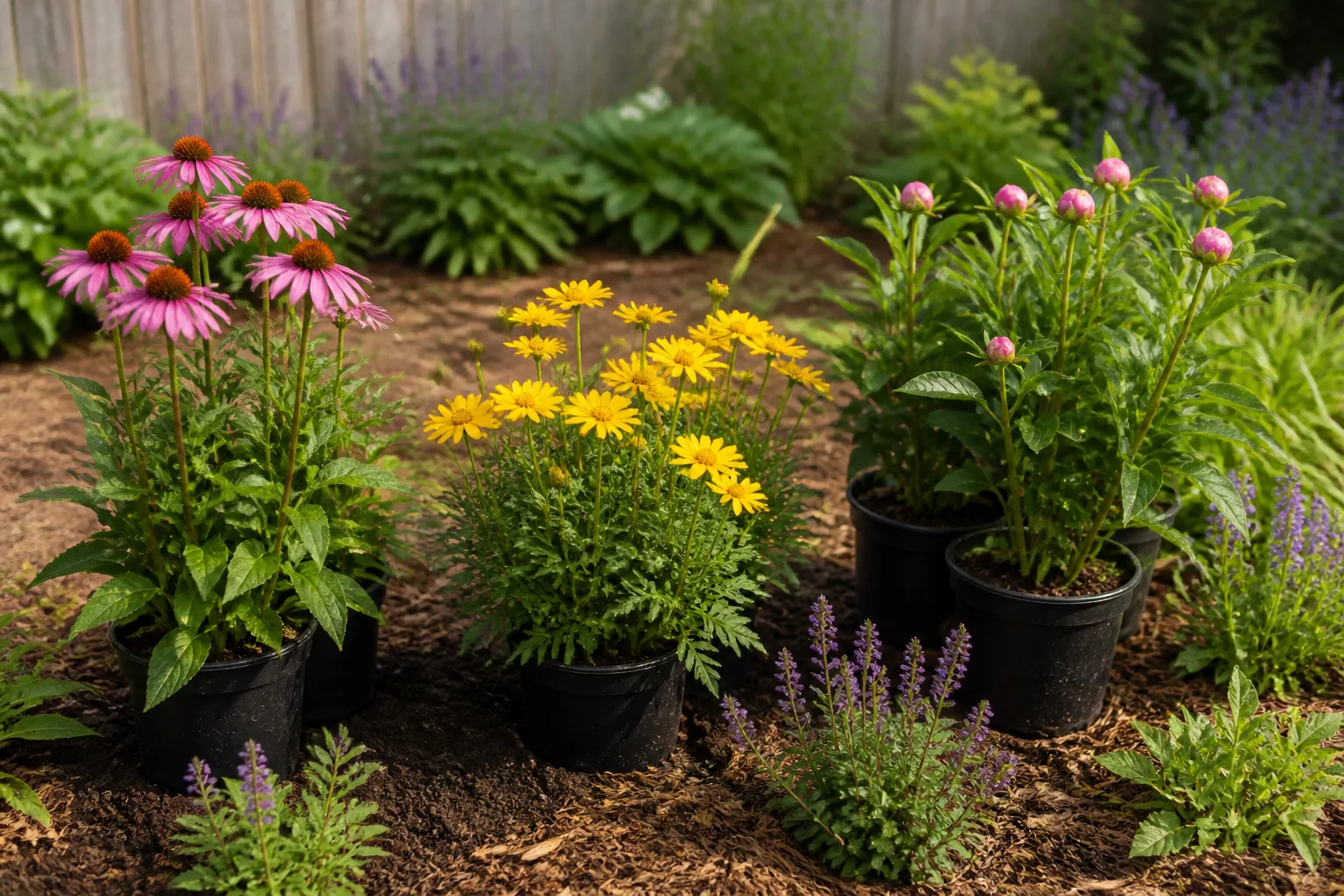
Late winter is a useful feeding window for some established perennials, but the calendar is only a rough guide. The better signal is a combination of thawed, workable soil and visible growth: new shoots pushing through, buds swelling, or the first leaves beginning to open. That is when roots can begin using available nutrients instead of sitting in cold soil with fertilizer dissolving around them.
The five perennials most likely to benefit from a carefully timed late-winter or very early spring feed are roses, coreopsis, daylilies, geum, and hostas. They do not all need the same amount, and a healthy plant in fertile soil may need only compost—or nothing at all. Think of fertilizer as a targeted correction for a hungry root zone, not a guaranteed switch for bigger flowers.
The right late-winter signal is new growth, not a calendar date
In a mild climate, late winter may mean February; in a cold climate, the same job may belong to March or April. A “feed now” reminder cannot account for a bed that is still frozen, a warm spell followed by hard frost, or a wet clay site where roots have no air. Watch the plants and the soil instead of forcing the same weekend on every perennial.
The most useful moment is just before or as active growth resumes. For herbaceous perennials, that may be the first firm shoots emerging from the crown. For roses, it is often when buds swell and the first leaves begin to open. This timing gives roots access to nutrients as the plant begins building foliage, stems, roots, and flower structures, a principle also reflected in Epic Gardening’s spring fertilizing guidance.
When soil is too cold, wet, or frozen to feed
Wait if the ground is frozen, crusted with ice, or too wet to work without smearing and compacting it. Fertilizer cannot solve a drainage problem, and walking repeatedly through a saturated bed can damage soil structure before the plants have even started growing. A short delay is safer than placing soluble nutrients around dormant roots and then losing them to runoff or leaching.
Do not feed a perennial that is visibly declining until you know why. A wilted plant in dry soil may need water; a wilted plant in saturated soil may have damaged roots. Likewise, sparse flowers can come from shade, crowding, drought, incorrect planting depth, disease, deer browsing, or the natural habit of a cultivar. Correct the bottleneck first, then decide whether nutrition is still missing.
Fertilizer or compost: choose the lightest useful feed
Start with what the bed already has. Established perennials growing in deep, dark, well-drained soil with strong foliage may not need a granular fertilizer every year. Horticulturist Melinda Myers recommends a one- to two-inch compost layer every other year for properly prepared perennial soil, with a low-nitrogen slow-release fertilizer in spring only if additional feeding is needed. That approach builds the soil while reducing the risk of applying nutrients the plants cannot use.
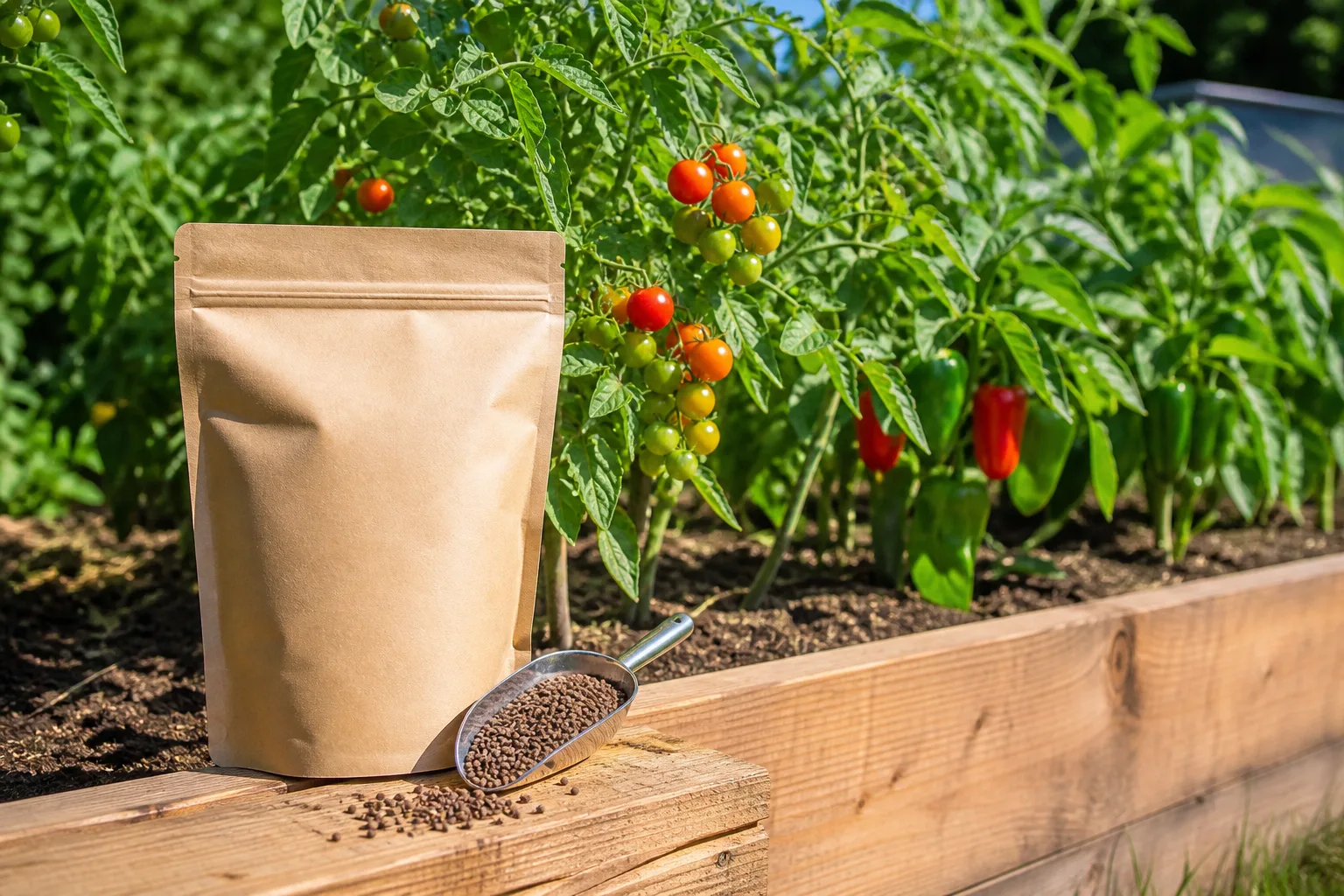
Compost is usually the gentler choice when the soil needs organic matter, moisture buffering, and a small, gradual nutrient contribution. Spread finished compost on the soil surface without burying crowns or piling it against stems. It is not a precise substitute for a soil test, however, and repeated compost or manure applications can still raise nutrient levels over time.
Use a measured fertilizer when a soil test or plant history suggests a nutrient shortage, when the bed is sandy and nutrients leach quickly, or when a heavy-feeding plant such as a rose is making weak growth despite good light and moisture. Choose a slow-release granular product when you want a steady supply over several weeks. It is easier to control than a series of strong liquid applications, especially in an outdoor bed where rain already changes the dose.
Read N-P-K without chasing a bloom booster
The three numbers on a fertilizer label describe the percentage by weight of nitrogen (N), phosphorus (P), and potassium (K). Nitrogen supports leaves and new green growth, phosphorus supports normal root and reproductive development, and potassium supports water regulation and overall plant function. None of the three is a simple “more flowers” button; Gardenia’s daylily guidance makes the same important distinction.
A balanced or gently low-nitrogen formula is a reasonable general starting point when a soil test does not point elsewhere. A fertilizer with numbers such as 5-5-5 or 10-10-10 provides all three primary nutrients in an even ratio, but the lower number is not automatically safer if you apply too much. Product concentration and the label rate matter more than a bag’s promise of “bigger blooms.”
Avoid adding a high-phosphorus bloom booster just because flowers are scarce. If phosphorus is already adequate, adding more will not fix shade, an overcrowded clump, drought during bud formation, or too much nitrogen. Use the soil test when you need to correct a specific deficiency, and use the plant’s growing conditions when you need to explain poor flowering.
Apply granular fertilizer around the root zone, not the crown
Clear away dead debris so you can see the crown and the soil surface. Measure the product according to its label, then distribute it in a broad ring over the active root zone rather than dumping it in one pile beside the stem. For a clump-forming perennial, that usually means from a few inches away from the crown toward the dripline; for a rose, it means around the shrub’s root zone without touching the woody base.
Apply to soil that is already slightly moist, not to a powder-dry root ball. Scratch granules lightly into the top layer only if the label allows it and the roots will not be disturbed, then water as directed. Epic Gardening’s application advice emphasizes moist soil, label dilution, and keeping fertilizer beneath mulch so it stays in place. Replace mulch afterward, leaving an open ring around stems and crowns.
If you use a liquid product, dilute it exactly as directed and apply it to the soil, not as a concentrated splash on foliage. Never combine slow-release granules, fertilizer spikes, liquid feed, compost tea, and a bloom booster in the same week. One product, one measured rate, and one observation period gives you a much safer read on whether feeding helped.
1. Roses need an early-season meal
Roses are the strongest candidates on this list for regular feeding because many modern roses produce repeated flushes of foliage and flowers. Their woody structure and long growing season create a larger nutrient demand than a low-maintenance native perennial, but even roses should not be fed while the soil is frozen or the plant is still completely dormant.
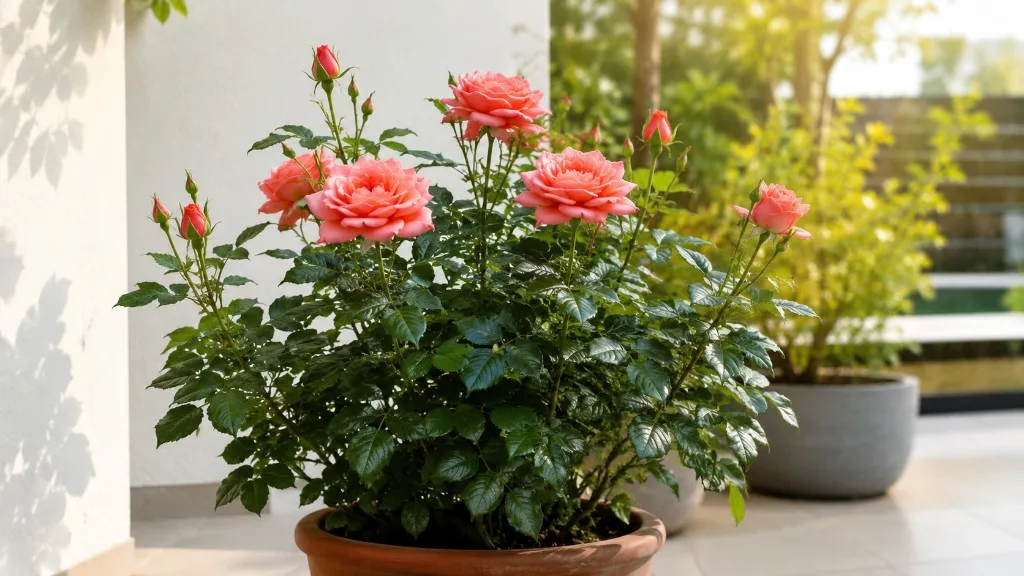
Look for swollen buds and the first leaves beginning to open. That is a more useful spring cue than a fixed date, and it agrees with the advice in Homes & Gardens’ rose-feeding guide. Apply a rose fertilizer or balanced slow-release fertilizer at the product’s label rate around the root zone, then water thoroughly if the label calls for it.
Roses prefer full sun, good air circulation, and well-drained soil, so check those conditions before you blame fertility. Colorado State University Extension’s rose maintenance guidance lists an all-purpose fertilizer such as 8-10-8 during the growing season and advises stopping by mid-August in its climate to reduce late succulent growth before frost. In your own garden, use the local first-frost pattern and the product label: stop feeding early enough that new growth can harden before cold weather.
Newly planted roses are an exception to the “feed the established shrub” rule. Prioritize root contact, even moisture, and a well-prepared planting hole; do not pack concentrated fertilizer against bare roots. Container roses also dry and leach nutrients faster, so they may need a separate label-directed feeding plan once they are actively growing.
2. Coreopsis benefits from a modest spring start
Coreopsis is a bright, long-flowering perennial, but it is not automatically a heavy feeder. A modest application can help a plant in poor soil build the foliage and stems needed for a long display, while repeated rich feeding can produce floppy growth or simply waste nutrients. The right amount depends on the species, soil, and whether the clump is actually growing strongly.
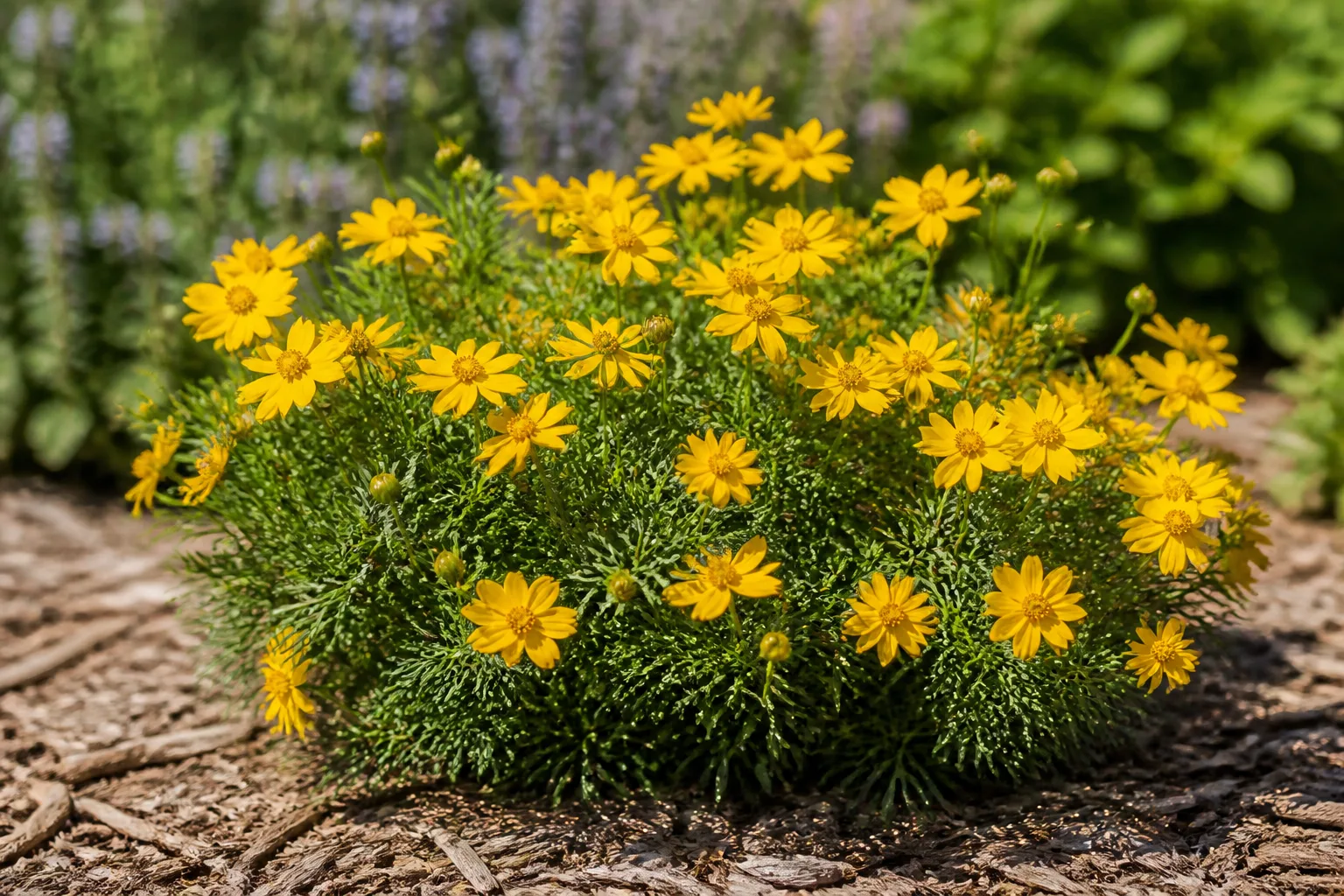
Wait until the crown shows firm new shoots or green growth at soil level. For example, NC State’s profile of Coreopsis auriculata ‘Nana’ describes a low-growing tickseed with spring to early-summer yellow flowers and a preference for moist, well-drained soil in sun to partial shade. Use that kind of plant behavior as the cue: feed at the start of growth, not in the deepest part of winter.
Choose a balanced, slow-release fertilizer at a conservative label rate and scatter it around the clump, keeping it off the crown. If the plant is already dense, green, and flowering well, skip the extra fertilizer and use a thin compost top-dressing instead. Coreopsis often needs more help from adequate sun, drainage, and occasional deadheading than from an aggressive nutrient program.
3. Daylilies respond to one well-timed spring feeding
Daylilies are resilient, adaptable perennials, and an established clump in reasonably fertile garden soil may flower for years with little supplemental fertilizer. Their name reflects the short life of each individual flower, but that does not mean you need to feed after every bloom. The plant’s stored energy, light, moisture, and cultivar habit all influence how many scapes it produces.
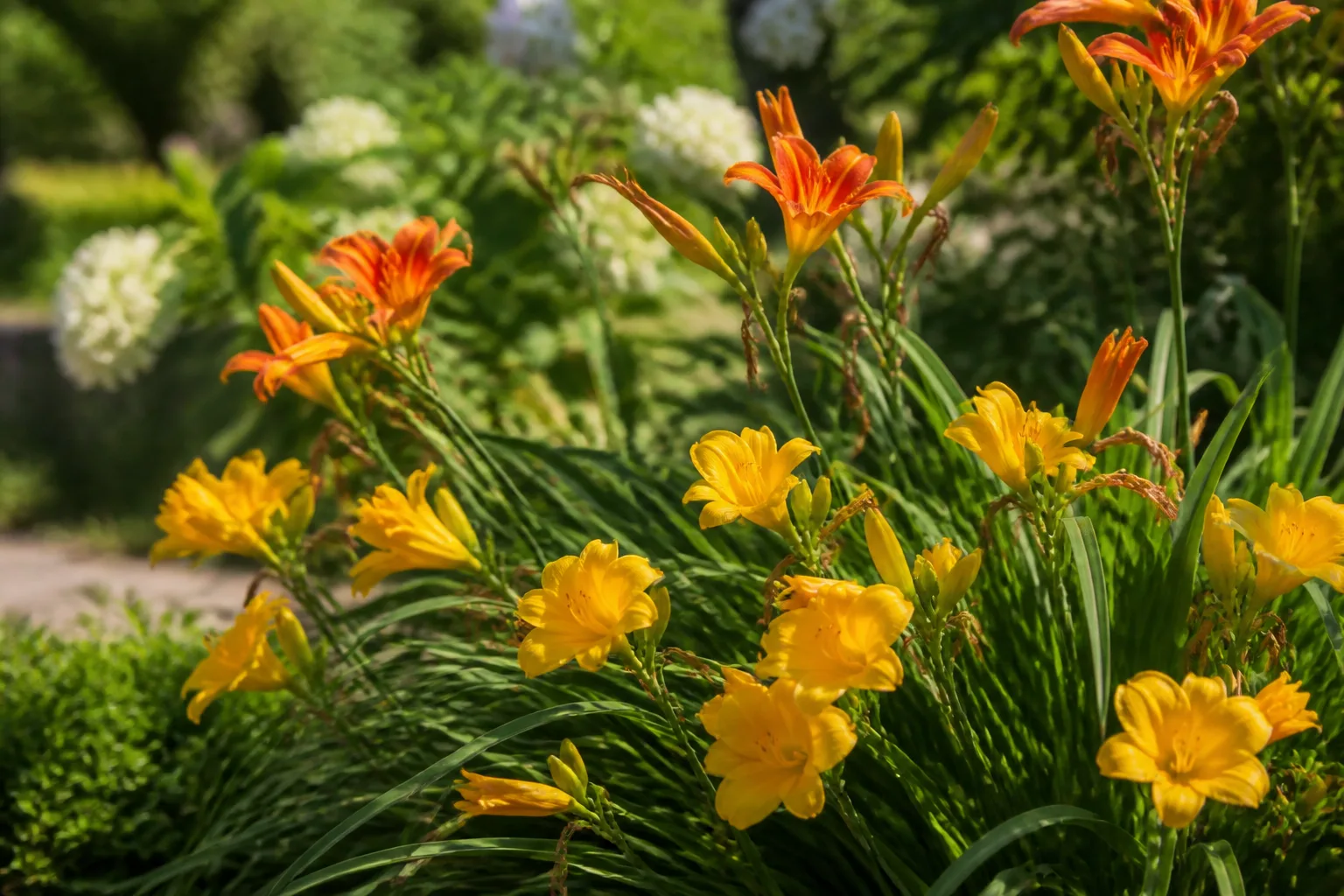
If the bed needs nutrition, apply one general-purpose or balanced slow-release fertilizer as the new foliage begins to emerge. NC State’s daylily profile describes daylilies as clump-forming perennials for full sun to partial shade and well-drained soil high in organic matter. Spread the fertilizer over the soil around the clump, never in a concentrated band against the crown, and water it in according to the label.
Do not feed by habit every year if the plant is already vigorous. Gardenia summarizes American Daylily Society and Royal Horticultural Society guidance by noting that one spring application is generally enough when feeding is needed—and may not be necessary annually in an average home garden. A soil test is especially useful when a bed has received years of fertilizer or compost, because adding more phosphorus to already adequate soil can make the chemistry less balanced without improving bloom.
When daylilies produce lush leaves but few scapes, inspect light, planting depth, crowding, and moisture before reaching for a stronger fertilizer. A crowded old clump may need division. A plant in shade may need relocation. A dry spring can interrupt scape and bud development even when nutrients are present. Feed only after those basic conditions pass inspection.
4. Geum needs support before its early bloom
Geum, also called avens, is a useful late-winter candidate because it is naturally early flowering and begins making its low foliage while many summer perennials are still quiet. A light, balanced, slow-release feeding can support that first push when the soil is poor or the clump has been depleted by years of growth, but geum is particularly unforgiving of winter wet.
NC State’s geum profile describes moist but well-drained soil, full sun to partial shade, and a preference for cool conditions. It also warns that geum can die in wet winter soil and may be short-lived in heavy clay or hot, humid summers. That is a crucial limit: if the crown is sitting in saturated soil, fertilizer is not the next step. Improve drainage, reduce compaction, or move the plant before trying to stimulate it.
Once the soil is workable and the clump is actively pushing new leaves, scatter a modest balanced fertilizer around—not on—the crown. A thin compost layer can be enough in a well-fed bed. Avoid a heavy nitrogen dose that creates soft foliage before the weather stabilizes, and do not keep adding fertilizer to compensate for a site that is too hot, too wet, or poorly drained.
Geum can benefit from deadheading when you want to extend flowering, and division can help maintain vigor in an aging clump. Those jobs may matter more than another feeding if the plant has gradually declined. Fertilizer supports a good site; it cannot redesign the site for the plant.
5. Hostas are hungry when their crowns unfurl
Hostas are best known for foliage, but strong leaves are the plant’s engine for producing its summer scapes and flowers. The crown makes a rapid spring push, so hostas can benefit from a modest balanced, slow-release feed as the tightly rolled shoots begin to unfurl. This is especially useful in a bed with thin soil, heavy competition from tree roots, or a history of nutrient loss.
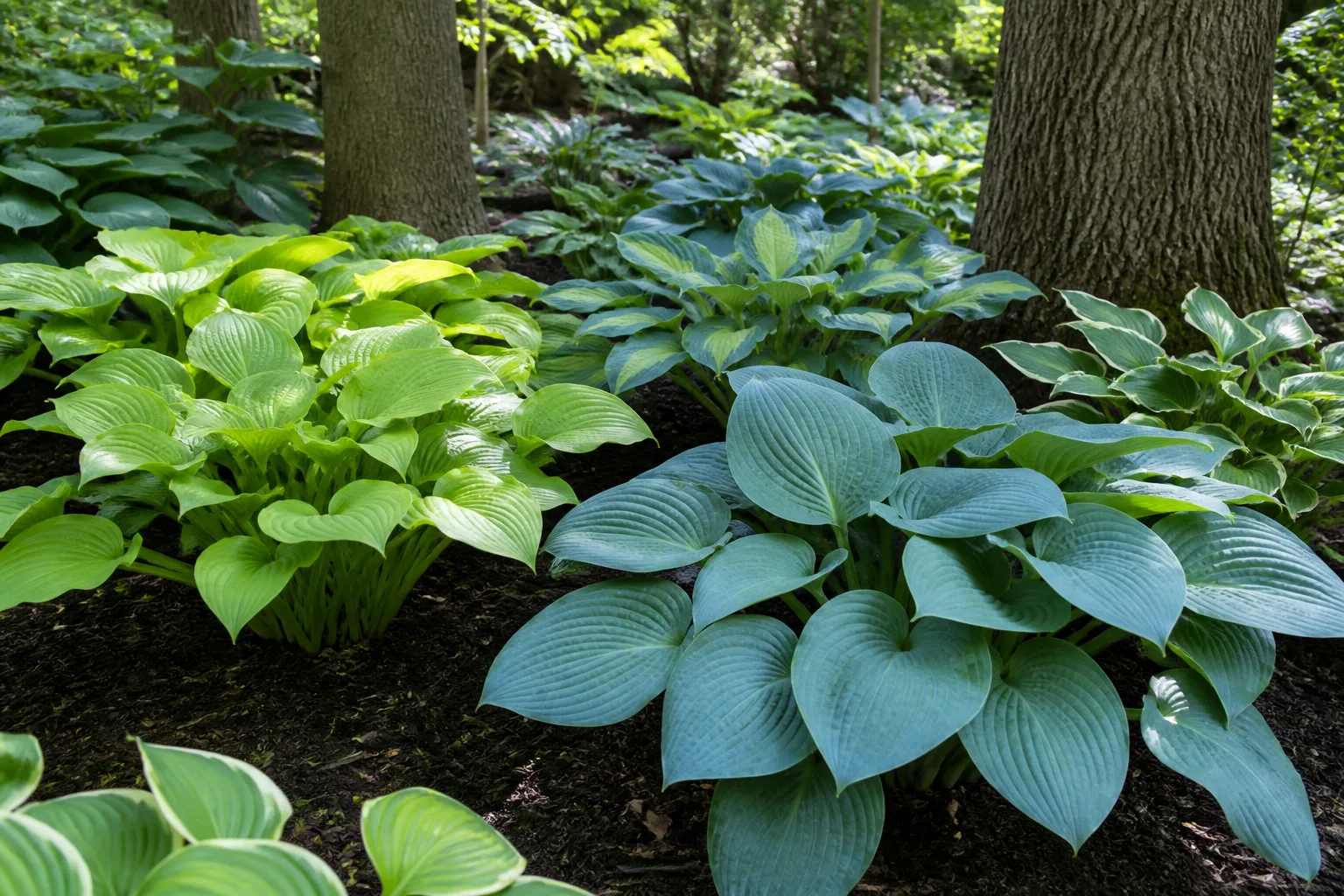
NC State’s hosta profile describes hostas as clumping herbaceous perennials that prefer shade or partial shade, high organic matter, and good drainage. If a hosta is bleaching in hot sun, drying repeatedly beneath a tree, or being eaten by deer, fertilizer will not solve the main problem. Mulch, moisture management, shade, and browsing protection may produce a larger improvement.
Keep hosta fertilizer away from the crown
Pull back old mulch, clear decaying foliage, and distribute the measured fertilizer in a ring beneath or just beyond the leaf canopy. Keep granules off the emerging shoots and crown because concentrated fertilizer can burn tender tissue. Home for the Harvest’s hosta guidance recommends early-spring slow-release feeding, careful watering, and keeping granules away from the plant base.
Do not continue feeding into late summer. Late nitrogen can encourage soft, tender growth that is more vulnerable to early frost and can make the plant especially attractive to slugs. A healthy hosta generally needs its main feeding in spring, perhaps with an early-summer follow-up only when the soil and plant history justify it. Keep the crown open, maintain an even moisture supply, and let the plant finish its season naturally.
Match the plan to your soil, climate, and container
The same perennial can need different care in a sandy coastal bed, a compost-rich raised bed, and a heavy clay garden. Sandy soil drains quickly and can lose soluble nutrients, while clay may hold nutrients but remain too wet for roots. A soil test can show whether nitrogen, phosphorus, potassium, pH, or another factor is actually limiting. When a plant is growing well, its performance is evidence too; do not add fertilizer merely because spring has arrived.
In a fertile established bed, start with compost or skip feeding. In a weak bed, use the soil test and the fertilizer label to calculate a measured amount over the actual area rather than estimating with handfuls. If a fertilizer bag gives a rate per 100 square feet, scale that rate to the bed size. A small notebook with the product, amount, date, rainfall, and plant response can prevent accidental repeat applications.
Climate changes the timing. Warm regions may see roses and evergreen coreopsis grow earlier, while colder regions may still have dormant crowns in late winter. Wet climates need more restraint with soluble fertilizer because rain can move nutrients away from the root zone. In every region, avoid feeding just before a heavy storm and avoid working a bed when the soil is sticky and saturated.
Container perennials need different monitoring
Perennials in containers have a smaller root zone and lose nutrients each time excess water drains from the pot. Roses and daylilies in pots may need more regular feeding during active growth than the same plants in the ground, but the limited medium also makes overfertilizing easier. Use a container-plant product or the label’s container rate, and never assume a ground-bed dose belongs in a pot.
Check the drainage holes, pot weight, and moisture before feeding. A container that stays wet for days needs a drainage or mix correction first; a pot that dries in one day may need a larger container, more organic matter, or a different watering rhythm. Feed only when the plant is actively growing, and flush accumulated salts only when the product and plant can tolerate thorough drainage.
Common late-winter fertilizing mistakes
The first mistake is treating fertilizer as insurance. A healthy perennial with deep green foliage and normal flowering does not become healthier because you add another product. The second is feeding a plant that is stressed by drought, frozen roots, standing water, root rot, or a late cold snap. Nutrition is useful when roots can function; it is not a first-aid treatment for every visible problem.
The third mistake is placing fertilizer against the crown or woody stem. Granules create a concentrated zone that can injure tender tissue, especially when the soil is dry. The fourth is using raw manure or an unmeasured homemade mixture. Use finished compost or well-aged, properly handled organic material, and follow the fertilizer label for any commercial product.
The fifth mistake is chasing flowers with nitrogen. Excess nitrogen often gives you abundant green growth at the expense of flowers, while a high-phosphorus product can accumulate without addressing the actual reason for poor bloom. The sixth is feeding too late in the season, when new growth should be slowing and hardening before frost. Stop according to the local climate, plant, and label rather than extending the schedule because a plant has not met an imagined flower count.
What yellow leaves and weak blooms can—and cannot—tell you
Yellow leaves are a clue, not a fertilizer prescription. Older leaves turning yellow in persistently wet soil may indicate root stress; pale new growth may relate to light, pH, or nutrient availability; a whole clump that collapses after winter may have crown or root damage. Adding fertilizer before checking the soil moisture and root zone can make the problem worse.
Weak blooms also need a broader diagnosis. Check whether the plant gets the light it needs, whether a tree or shrub has taken over the root zone, whether the clump is overcrowded, and whether drought arrived during bud formation. Look for mulch piled over the crown, browsing, disease, frost injury, and planting depth. If the foliage is lush but flowers are absent, more fertilizer is particularly unlikely to be the first fix.
A simple late-winter feeding checklist
Use this sequence for any of the five perennials:
- Check the signal. Confirm that the soil has thawed and new growth is beginning; wait if the bed is frozen or saturated.
- Inspect the plant. Look at foliage, crowns, moisture, drainage, light, crowding, and last year’s feeding history.
- Choose the lighter option. Use finished compost in a fertile bed; use fertilizer only when a soil test, poor soil, or plant demand supports it.
- Measure the product. Follow the label and scale the dose to the actual bed or container, not to a guess.
- Protect the crown. Spread fertilizer around the root zone, keeping it off crowns, stems, leaves, and exposed roots.
- Water correctly. Apply to slightly moist soil and water as the label directs; never leave a container or saucer standing in fertilizer runoff.
- Record and wait. Note the date and observe new growth for several weeks before adding anything else.
For the five plants in this guide, the short version is: feed roses as buds and first leaves open; feed coreopsis when the crown starts growing; feed daylilies once in spring only when nutrients are needed; feed geum after thaw and active growth begin, provided the soil drains; and feed hostas as their crowns unfurl, keeping granules away from the crown.
Conclusion
The best late-winter fertilizer for perennials is not the strongest formula; it is the smallest useful dose applied when roots and shoots are ready to use it. Roses usually have the greatest demand, while coreopsis, daylilies, geum, and hostas often need a modest spring start only when soil fertility, plant history, or container conditions justify it.
Begin with thawed, workable soil, inspect the plant, and choose compost or no feed when the bed is already fertile. If fertilizer is appropriate, use a measured slow-release product, place it around the root zone rather than the crown, water as directed, and stop before late-season growth becomes soft. Bigger, better blooms come from the whole growing system—light, moisture, roots, spacing, and the plant’s natural habit—not from adding more fertilizer than the plant can use.



