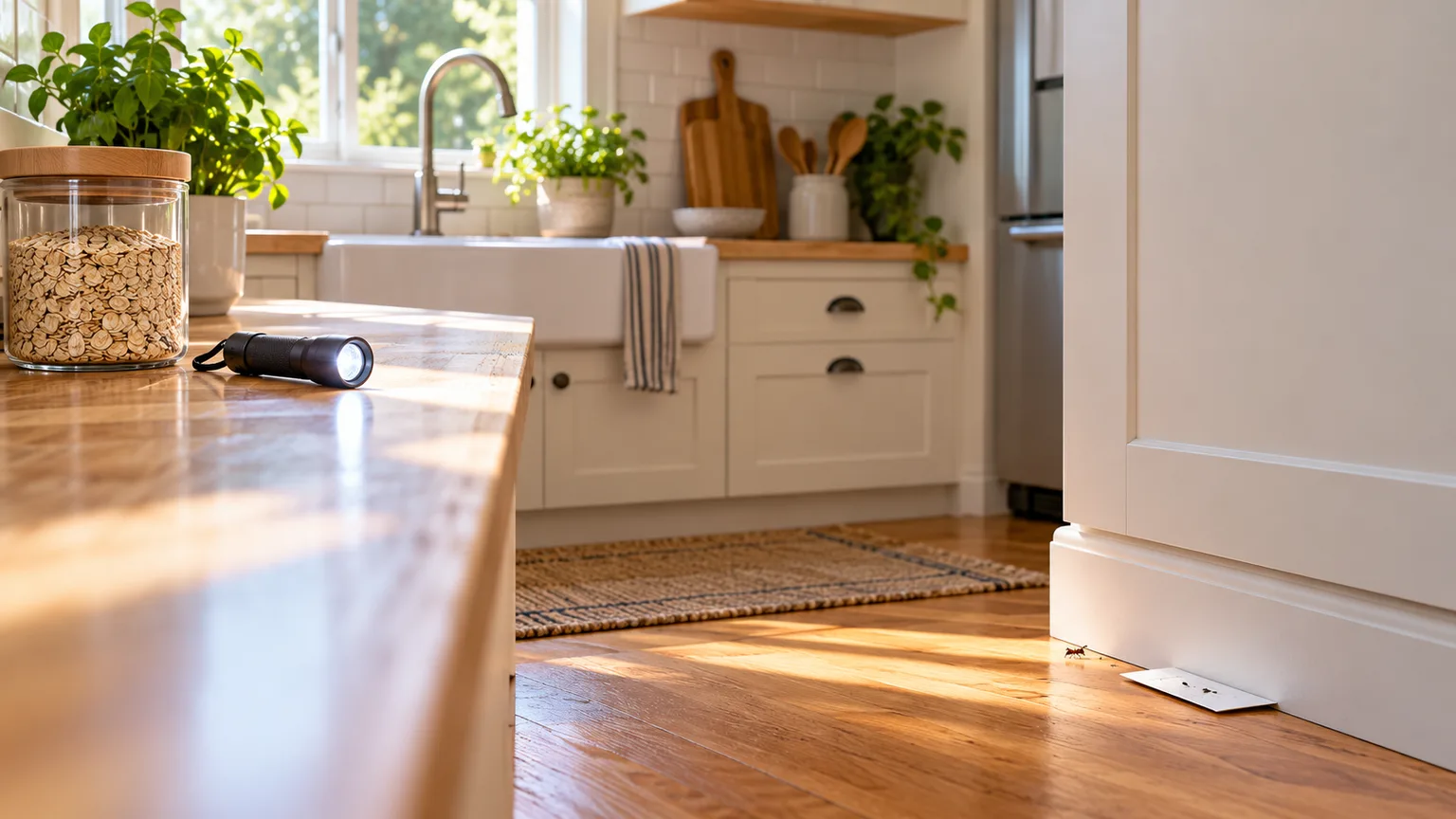
How to Get Rid of Clothes Moths Year-Round
Stop clothes moth damage with a practical inspection, cleaning, freezing, storage, trap, and prevention plan that protects wool, silk, cashmere, and rugs.

If you find a small moth near a sweater, do not start by spraying the adult. The holes are usually made by larvae, which may be hidden in a hem, rug edge, drawer, or forgotten storage box while the adult moth is simply the brief, visible stage of the life cycle.
The reliable response is a sequence: identify the pest, isolate suspect items, treat every fabric that may harbor eggs or larvae, vacuum the storage zone, then put clean and completely dry textiles into sealed storage. Fragrance sachets can make a closet smell pleasant, but they are not a substitute for that sequence.
The quick answer: remove the food source, not just the flying moth
Clothes moth control works when you break the life cycle. Start by taking wool, cashmere, fur, feathers, silk, felt, natural-fiber rugs, and other suspect items out of the affected area. Seal anything you cannot treat immediately in a plastic bag so larvae cannot spread while you inspect the rest.
Next, look for the actual food source. Wash or dry-clean items according to their care labels, freeze suitable non-washables in sealed bags for a long enough cycle, and vacuum cracks, shelf joints, baseboards, rug edges, and the floor under furniture. The National Pesticide Information Center (NPIC) recommends laundering or dry-cleaning, freezing small non-washable items for two weeks, and using pheromone traps to monitor activity. (National Pesticide Information Center)
Do not put an untreated cashmere sweater back into a freshly cleaned drawer because the adult moths are gone. Nor should you discard an entire wardrobe after seeing one unidentified moth. The right level of response depends on evidence: a single outdoor moth is different from larvae, webbing, repeated holes, or trap catches in a dark storage area.
What clothes moths actually eat—and why clean wool still needs protection
The two textile pests most often called clothes moths are the webbing clothes moth (Tineola bisselliella) and the casemaking clothes moth (Tinea pellionella). Their larvae feed on animal-derived materials such as wool, fur, hair, feathers, hides, and sometimes silk or felt. They are drawn to textiles with perspiration, food, urine, pollen, or other organic residue because contamination makes the material more usable as food. (Illinois Department of Public Health; National Pesticide Information Center)
That does not mean a visibly clean wool coat is safe forever. A garment can collect skin oils at a collar, cuff, or underarm while looking clean, and a folded item can sit undisturbed for months. The safest rule is to clean garments before long-term storage, then protect them from new access with an intact sealed container or garment bag.
Cotton and synthetics are less typical targets, but “synthetic” does not make a closet immune. Blended garments can contain wool or silk, and insects may feed on residue, lint, pet hair, feathers, or adjacent natural materials. If holes are appearing in polyester-only clothing, widen the investigation to carpet beetles, pantry pests, abrasion, or snagging rather than assuming clothes moths.
Moths or another fabric pest? Identify the culprit before treating
Not every moth in a bedroom eats clothing. Clothes moth adults are small, pale gold to tan, weak flyers, and inclined to hide in darkness rather than circle lamps. Pantry moths are more likely to show up around dry foods, packaging, and webbed grain; carpet beetle larvae are hairy and can damage wool, rugs, and stored animal fibers without any moth flying nearby.
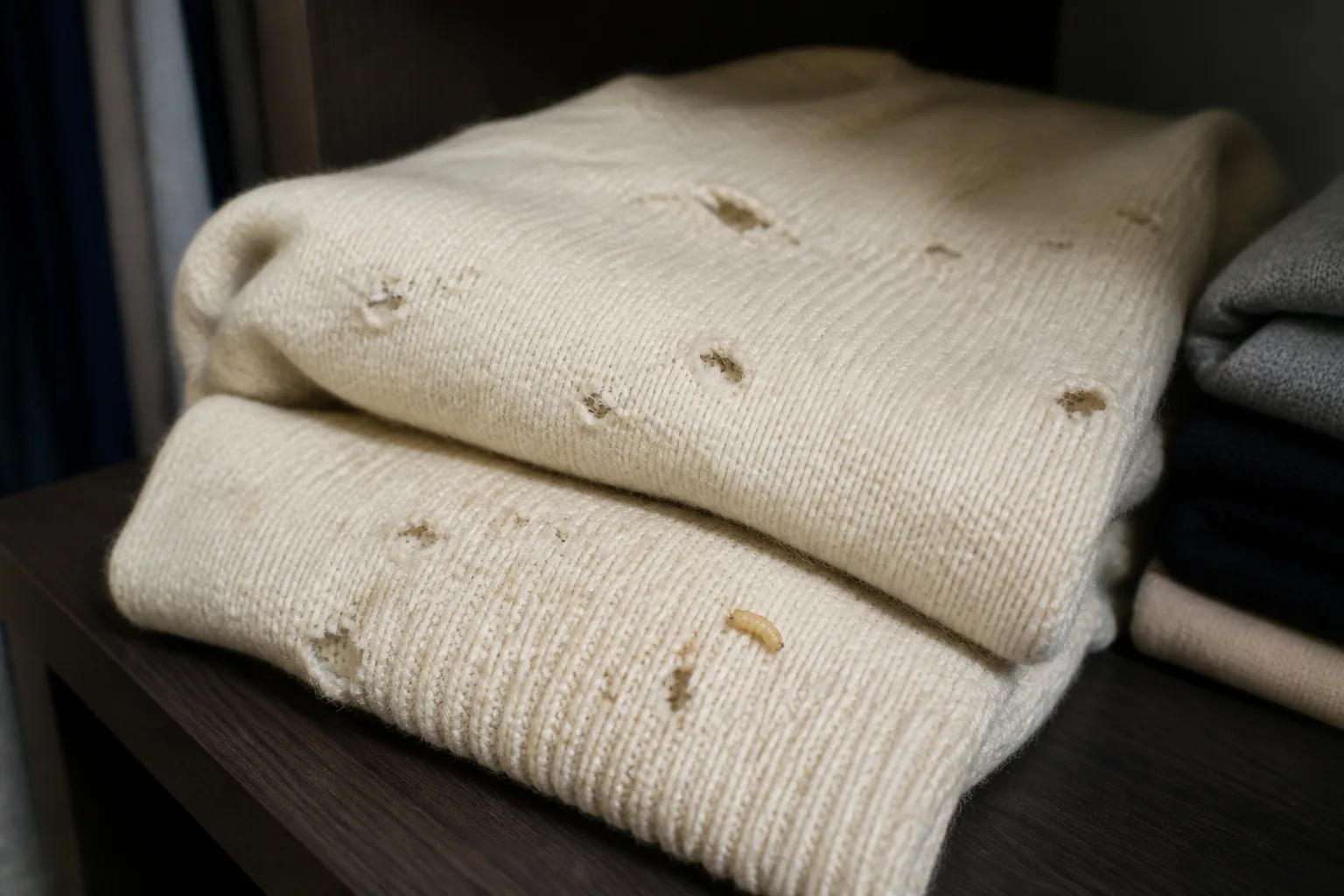
Use location and evidence together. A moth near a window with no fabric damage is weak evidence. A creamy larva with a dark head, silken webbing, a fabric case, or matching grit around irregular holes is stronger evidence. The Maine Department of Agriculture, Conservation and Forestry describes clothes moths as pests of stored clothing, carpets, and furniture that prefer dark, undisturbed places. (Maine Department of Agriculture, Conservation and Forestry)
| What you find | More likely explanation | First place to inspect |
|---|---|---|
| Small pale moths and holes in wool or cashmere | Clothes moth larvae | Folded knits, seams, collars, rug edges |
| Moths around flour, cereal, nuts, or pet food | Pantry moths | Open packages and dry-food shelves |
| Hairy larvae, shed skins, and irregular fabric damage | Carpet beetles | Carpet edges, lint, pet hair, upholstery |
| Large moth outdoors or at a bright window with no damage | Often a non-textile moth | Window screens, plants, outdoor entry points |
If you are unsure, save a specimen or a clear photograph and contact a local Cooperative Extension office, university insect diagnostic lab, or qualified pest professional. Misidentification does not always change the first cleaning steps, but it changes where you look and which trap, if any, is meaningful.
The signs that tell you where the infestation is hiding
The most useful clue is not the number of adult moths. It is the pattern of damage and the places that have been quiet longest. Check the underside of folded sweaters, the back of drawers, coat pockets, collar seams, cuffs, under rugs, and the carpet beneath beds or heavy furniture.
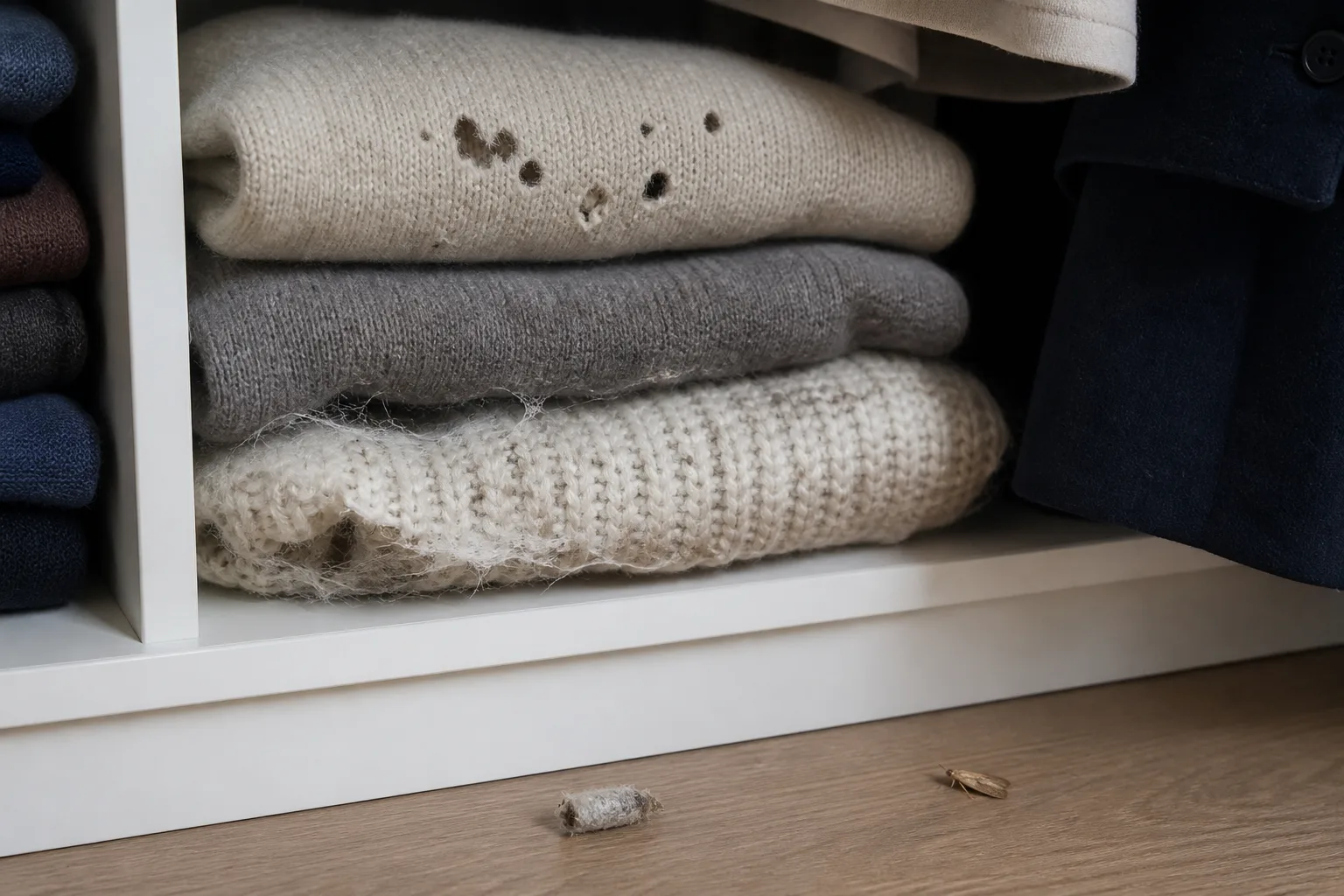
Look for irregular surface grazing, small holes, thin patches, silky webbing, a tube-like case, pale larvae with dark heads, shed skins, or granular droppings that resemble the color of the eaten textile. A case-making larva may carry a fabric-colored case, while a webbing clothes moth larva may leave silk or a silken tube near the feeding area.
One damaged sweater does not prove the closet is the only source. Clothes moth larvae can travel away from food before pupating, so inspect the route between closet, hamper, bedroom furniture, attic boxes, basement storage, and rugs. Finding a cocoon on a wall or ceiling is a reason to search more broadly, not a reason to clean only the visible spot.
Your first 30 minutes after finding a moth or larva
Containment buys you time. Do not carry a suspect sweater through every room to examine it under a brighter light. If you can, inspect it over a hard floor or outside, and use a flashlight to check seams, folds, pockets, and the underside.
Use this order:
- Bag suspect items. Put damaged or questionable garments into sealed plastic bags or lidded containers. Keep untreated pieces separate from clean pieces.
- Stop sharing storage. Do not move clothing into another closet, attic, or guest room until it has been treated.
- Photograph the evidence. Record holes, webbing, larvae, cases, and the storage location before cleaning. This helps if the problem returns.
- Choose one safe treatment per fabric. Check the care label before washing, drying, steaming, freezing, or sending an item to a cleaner.
- Empty the affected storage zone. Place loose lint, dust, and debris directly into a closed trash bag and take it outdoors.
Killing a few adults is not the same as controlling the infestation. The adult stage can be the clue that reveals larvae, but the larvae, eggs, and pupae in protected places are what your cleanup must address.
Inspect the closet, drawers, rugs, and forgotten storage
Work from the clothing outward. Remove every natural-fiber item, then inspect the empty shelves, drawer corners, peg holes, floor-wall joint, baseboard, and the underside of the closet lip. Use a crevice attachment and a flashlight; larvae and cases can be much easier to see once the space is empty.
Continue into nearby places that are dark, humid, or rarely disturbed: under a bed, behind a dresser, in a hamper, beneath a rug, in a suitcase, inside seasonal-decor boxes, and in an attic or basement. Check natural-bristle brushes, feather items, felt pads, wool blankets, taxidermy or hide materials, and pet bedding when relevant. NPIC specifically advises inspecting used clothes, rugs, and furniture containing animal fibers before they enter the home. (National Pesticide Information Center)
Also inspect what comes into the house. Secondhand wool, vintage upholstery, used rugs, moving boxes, and stored garments from a damp space can introduce eggs or larvae without an adult moth being noticed. Quarantine and treat those items before they join the rest of the wardrobe.
Clean every suspect garment without damaging it
Treatment is a fabric-care decision, not a race to use the hottest possible setting. The goal is to kill or remove every life stage while preserving the textile. When an item is expensive, fragile, lined, beaded, leather-trimmed, or sentimental, the cost of a professional cleaner or textile conservator is usually lower than the cost of an irreversible home experiment.
Washing, drying, and dry-cleaning: match the treatment to the label
Washable items can be laundered according to their care labels, then dried completely. NPIC advises hot-water laundering for 20–30 minutes to kill clothes moth eggs, larvae, and adults; Illinois guidance also lists washing and a hot dryer setting as control options. (National Pesticide Information Center; Illinois Department of Public Health)
Do not translate that into “put every wool sweater in a hot, agitating wash.” Heat, agitation, and moisture can shrink or felt wool, distort knits, loosen dyes, or damage trims. For a machine-washable item, follow the label, use a dryer only if allowed, and make sure the center of the garment is fully dry before storage. For dry-clean-only clothing, use a reputable cleaner and mention the suspected infestation so the item is handled as a pest-exposed textile.
Clean clothes that were near the source even if they show no holes. Eggs can be hard to see, and larvae may be in seams or folds. Keep treated items in a clean, temporary bag or bin until the closet has been vacuumed and wiped down.
Freezing and outdoor treatment for non-washable textiles
Freezing is useful for small non-washable items, but it needs time and careful packaging. Place the item in a sealed plastic bag, remove excess air without crushing the textile, and keep it frozen for two weeks in a household freezer. NPIC gives that two-week period and advises allowing the item to return to room temperature before opening the bag, which helps prevent condensation from landing on the textile. (National Pesticide Information Center)
Do not open a cold bag on the clean closet shelf. Let it warm while sealed, then inspect and clean it. A bulky blanket or tightly packed container may not freeze through as quickly as a thin scarf, so use professional treatment for valuable or heavily infested pieces. A freezer also does not repair holes or remove stains; it only addresses the living pest if the cold reaches the whole item for long enough.
For sturdy larger items, brush and beat them outdoors, then vacuum or clean them as the material permits. Sunlight and movement can dislodge eggs and larvae, but outdoor airing is not a guaranteed stand-alone treatment. Keep the item isolated until you complete a reliable cleaning method.
Deep-clean the storage area and remove hidden food sources
After the clothes are out, vacuum slowly. Run the crevice tool along shelf joints, drawer runners, baseboards, closet corners, floor edges, under furniture, and rug borders. Empty a bagged vacuum outdoors immediately; if your machine is bagless, empty the canister into a sealed trash bag and wash the removable parts according to the manufacturer’s instructions.
Wipe hard surfaces with soapy water, then let them dry. Do not soak unfinished wood, leather, or delicate furniture. If a natural-fiber rug or upholstered item has damage, treat it as part of the infestation rather than assuming the closet cleanup solved everything. Dust, pet hair, lint, dead insects, and old nests can sustain fabric pests in places no one associates with clothing.
Reduce humidity and improve access for inspection. A closet does not need to be brightly lit all day, but doors that are never opened, packed shelves, and damp walls create the stillness these pests prefer. Fix leaks, dry damp storage, leave air space around stored items, and avoid pressing bags or boxes directly against a cold exterior wall.
What pheromone traps can—and cannot—tell you
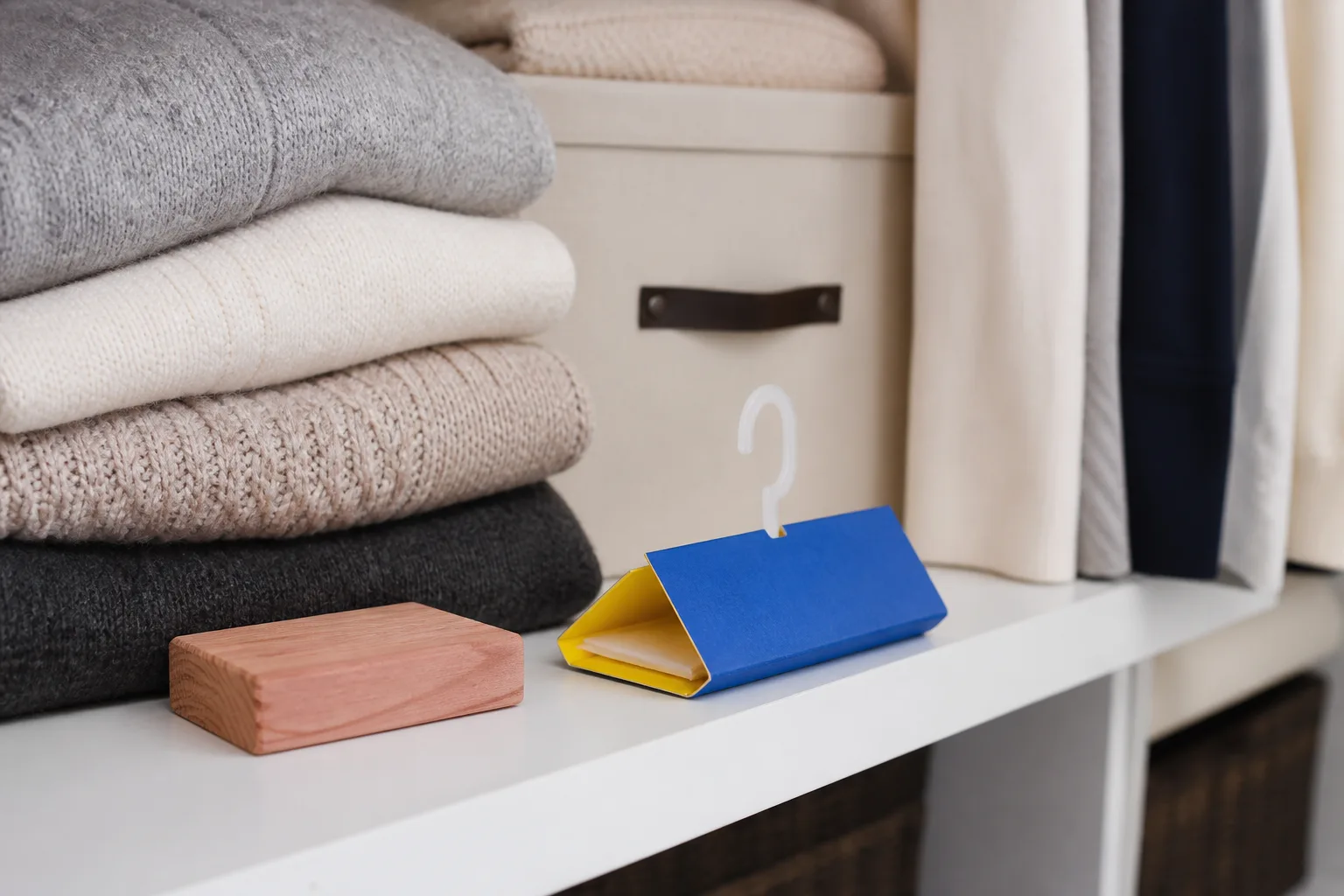
Use a pheromone trap as a species-specific monitor, not as proof that the closet is now safe. Some traps target webbing clothes moth males and can reveal activity or help locate a source; they do not catch every clothes-moth species, and they do not remove larvae feeding inside a sweater, rug, or wall void. Illinois guidance distinguishes pheromone traps from ordinary sticky monitors and recommends them for alerting residents and pinpointing infestations. (Illinois Department of Public Health)
Place the trap according to its label in the dark storage area, away from competing strong odors, and record the date. Check it on a regular schedule rather than reacting to one glance. A catch confirms that the lure’s target is present; no catch does not prove that larvae are absent, especially if the product targets a different species or the source is elsewhere.
Traps become most useful after cleaning. If a trap continues catching moths after every garment has been treated and the closet has been vacuumed, expand the search to rugs, upholstered furniture, stored blankets, pet-hair accumulations, attic boxes, and adjacent rooms.
Choose storage that moth larvae cannot reach
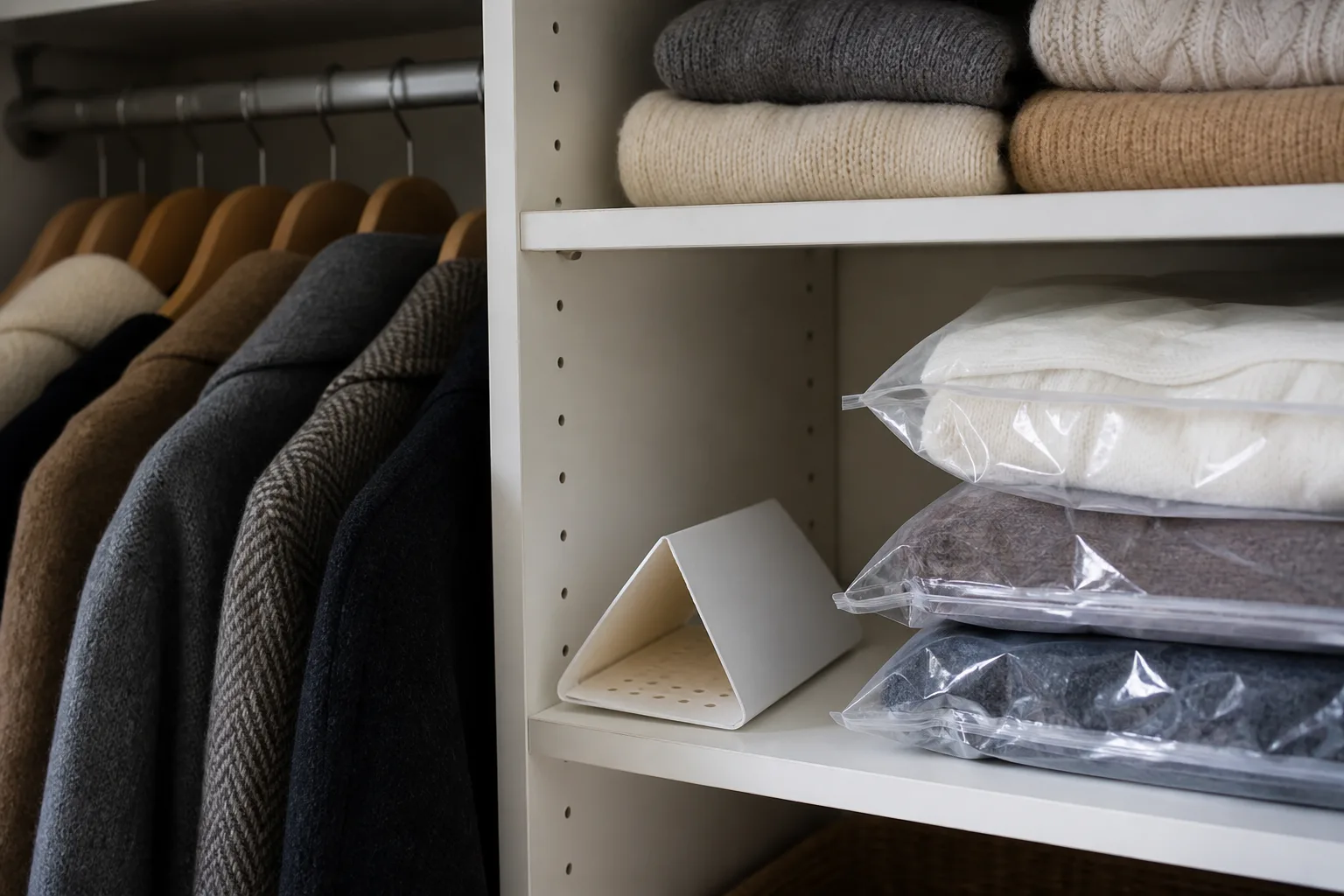
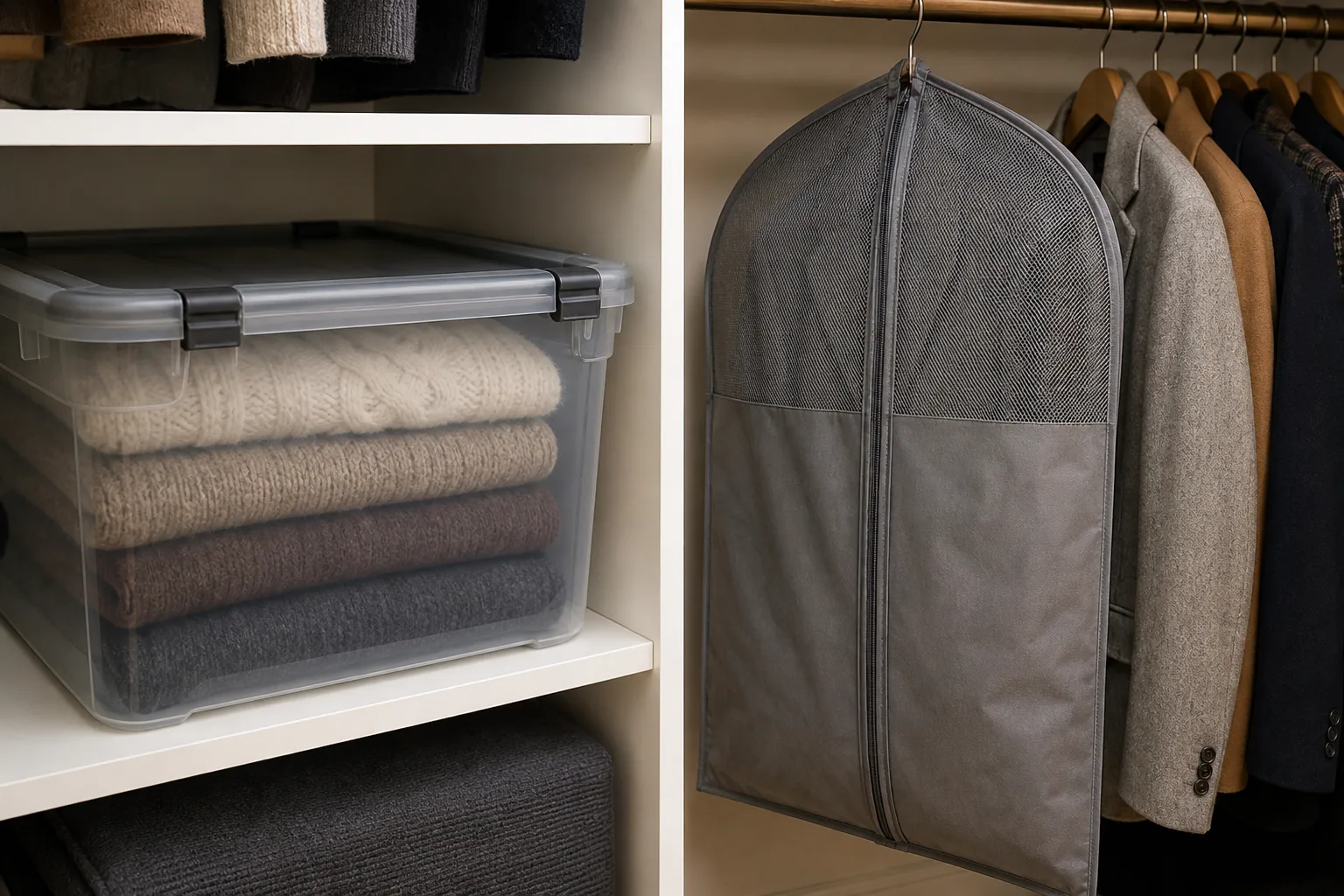
Clean, dry textiles are easiest to protect when the container is genuinely closed. Use a lidded plastic bin with an intact gasket or a garment bag that closes completely and has no holes. A breathable fabric box, cardboard carton, or loosely draped sheet may organize a wardrobe, but it does not create a dependable pest barrier; larvae can enter very small cracks and feed through some textile storage materials.
Before sealing anything, inspect the container, wash or dry-clean the garment, let it dry fully, and record what is inside. Do not seal damp clothing, and do not place cedar or mothballs into a container as a substitute for treating the clothes first. Compression or vacuum bags save space, but they can also hide damage and encourage long periods of neglect, so open and inspect seasonal storage instead of treating it as permanent quarantine.
For hanging suits and coats, choose an intact zippered garment bag and check the bottom, zipper, seams, and hanger opening. For folded knits, use a clean hard-sided bin sized so the contents are not crushed into a damp mass. Store the bin in a dry location that you can reach and inspect; a sealed box under a bed is only protective if you remember what is there.
Cedar, lavender, and “natural” repellents: useful boundary, not a cure
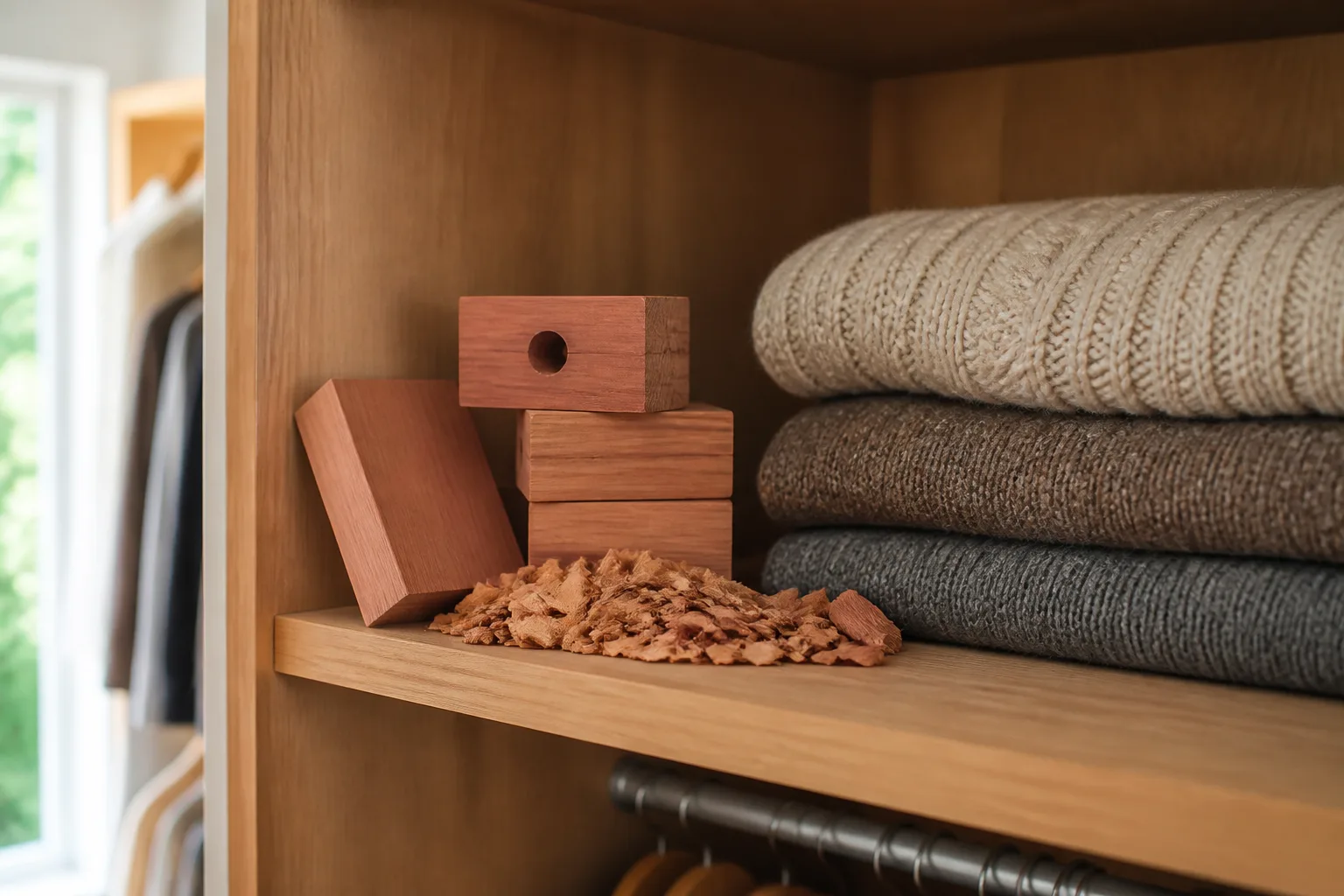
Cedar blocks, cedar rings, lavender sachets, bay leaves, and herbal oils are popular because they are simple and pleasant. They may make a storage area less appealing or help you notice that a container has an odor, but evidence and performance are inconsistent, scents fade, and none of these options replaces treating an infested textile.
The most important “natural” defense is clean, sealed storage. Wirecutter’s review of clothes-moth control notes uncertainty about cedar and herbal scents and points out that cedar chests often work mainly because they seal tightly; Illinois guidance likewise says cedar oil loses potency and that these products are not dependable repellents before an infestation. (Wirecutter; Illinois Department of Public Health)
If you use a sachet, keep it from direct contact with delicate fabric, replace it when the scent fades, and treat it as a reminder to inspect rather than as a pesticide. Essential oils can stain textiles and may be irritating to pets or people. Never spray an untested oil mixture onto cashmere, silk, leather, or a finished garment.
Mothballs: why they are a last-resort pesticide
Mothballs are not harmless closet fresheners. Products containing naphthalene or paradichlorobenzene turn into pesticide vapor, and they work only when used at the labeled amount in a properly sealed space. A few balls scattered in an open bedroom closet usually create odor and exposure without producing the concentration needed for control.
NPIC says naphthalene mothball vapor can be inhaled, and that small children and pets may eat the balls because they resemble treats. Reported exposure effects include headache, nausea, dizziness, vomiting, and more serious blood-related toxicity. (National Pesticide Information Center: Naphthalene Fact Sheet)
If a product label permits use for clothes moths, follow that label exactly, keep the treated items inside the specified sealed container, and keep the container away from children, pets, sleeping areas, and food. Never use mothballs outdoors, in open rooms, or for a pest the label does not list. If someone or an animal may have swallowed one, contact Poison Control or a veterinarian promptly rather than waiting for symptoms.
For most household situations, source removal, laundering or dry cleaning, freezing where appropriate, vacuuming, sealed storage, and monitoring are safer first choices. If those steps fail, a licensed pest professional can select a treatment that fits the building and the textile instead of turning the whole closet into a vapor source.
Protect carpets, upholstered furniture, and other overlooked items
A closet can be clean while the infestation continues under a rug or at the back of a sofa. Inspect rug edges, the carpet beneath furniture, felt pads, upholstered seams, blankets, fabric luggage, feather pillows, stuffed items, and storage in attics or basements. Pay special attention to rooms with low traffic, pet hair, lint, or natural-fiber furnishings.
Vacuuming is valuable because it removes debris, hair, larvae, and eggs from cracks and edges, but it is not magic. Move furniture enough to reach the floor beneath it, empty the vacuum safely, and repeat on a schedule. If the rug or upholstery is valuable, structurally damaged, or impossible to clean without spreading debris, consult a textile conservator or pest professional before applying a spray.
Do not use a room fogger as a shortcut for a pest hidden inside a thick rug, sofa, or pile of clothing. Illinois guidance notes that surface sprays and total-release aerosols do not reliably kill pests deep inside larger items. (Illinois Department of Public Health)
A year-round closet routine that prevents repeat infestations
Treat prevention as a small recurring inspection, not a once-a-year panic. During each seasonal wardrobe change, inspect garments before they go into storage, clean anything that has been worn, and make sure every piece is completely dry. Homes & Gardens recommends using the seasonal rotation as a chance to review, clean, and store garments rather than simply moving an untouched pile from one dark place to another. (Homes & Gardens)
Use this rhythm:
- When clothes come off: Empty pockets, brush visible debris, and do not return sweaty or stained natural fibers to long-term storage.
- Monthly: Open packed closets and drawers, move folded knits, vacuum accessible edges, and check the trap if one is installed.
- At seasonal rotation: Inspect seams, collars, cuffs, hems, and the underside of rugs; treat and seal items before storing them.
- After bringing in used goods: Keep secondhand clothes, rugs, and upholstered pieces separate until they have been inspected and cleaned.
- After damp weather or a leak: Dry the storage space, check for condensation or mold, and inspect the quietest corners first.
- If activity is detected: Return to isolation and treatment instead of adding another scent product or simply replacing the trap.
Regular use also helps. Clothes that are moved, aired, and inspected are less likely to provide the undisturbed conditions larvae need, and damage is found sooner. Good Housekeeping’s practical guidance likewise emphasizes cleaning garments before storage, ventilating the wardrobe, using sealed storage, and treating cedar as something that needs refreshing rather than a permanent barrier. (Good Housekeeping)
When to call a pest-control professional or textile conservator
Get help when the source is not obvious after a thorough inspection, when new damage appears after two complete cleanup cycles, or when moth activity spans several rooms. Professional help is also sensible for wall-to-wall natural-fiber carpeting, inaccessible voids, large upholstered pieces, extensive storage, or a building with repeated moisture problems.
Use a textile conservator or a cleaner experienced with historic textiles for heirlooms, uniforms, wedding clothing, rugs, fur, feathers, and fragile fabrics. Do not put a valuable item in a kitchen oven, an untested freezer, or a pesticide container based on a generic internet temperature. The wrong treatment can destroy dyes, adhesives, finishes, or the fabric structure while leaving the infestation unresolved.
When calling, bring photographs, a trapped specimen if available, the product labels for anything already used, and a list of where damage has appeared. Ask what species the treatment targets, which items need removal, how treated textiles should be stored, and how follow-up monitoring will work. A good plan should address the source and the life cycle, not only the insects visible on the day of service.
Common mistakes that keep moths coming back
Mistake 1: Treating only adult moths. Adults are easy to notice, but larvae cause the holes. Clean the food sources and storage zone.
Mistake 2: Sealing dirty or damp clothes. A closed bin protects against new access only when its contents are clean and dry. Otherwise it can preserve the problem.
Mistake 3: Trusting one pheromone trap. A trap may target one species and mostly adult males. Use it to monitor and locate, not to certify that every larva is gone.
Mistake 4: Assuming cedar or lavender is an eradication treatment. Odor fades and performance varies. Scent products cannot replace laundering, freezing, vacuuming, and sealed storage.
Mistake 5: Washing every fabric on the hottest setting. Follow care labels. Heat and agitation can ruin wool, silk, leather, trims, and heirlooms.
Mistake 6: Cleaning the closet but ignoring the room. Rugs, furniture undersides, pet hair, blankets, and attic boxes may be the real reservoir.
Mistake 7: Opening a frozen bag too soon. Keep the item sealed while it warms, then inspect and clean it. Condensation and surviving insects can undo a rushed treatment.
Mistake 8: Using mothballs in an open closet. The vapor is a pesticide exposure hazard and the product is not meant to be scattered around a bedroom.
Conclusion: make clean, sealed, inspected storage the default
You do not need to make your closet smell like chemicals or throw away every natural-fiber garment. You do need to take moth damage seriously enough to look past the flying adult and find the larvae, eggs, and quiet food source.
Isolate suspect items, identify the pest, use a fabric-safe treatment, vacuum the whole storage zone, and protect clean textiles in intact sealed containers. Then keep a light maintenance rhythm: inspect at seasonal changes, move and air clothing, control dampness, check overlooked rugs and furniture, and use traps as monitors. That combination is what protects a wardrobe year-round.